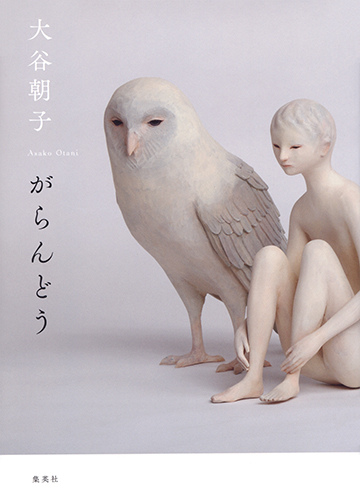
Asako Ōtani’s novella Garandō (がらんどう), which won the 46th Subaru Literary Prize in 2023, follows two 40yo women as they settle into a cozy life as adult flatmates.
Hirai recently moved in with her friend Suganuma, who suggested that they live together so they can afford a nicer apartment. The two women met as adults through their shared fandom of the boy band KI Dash, and they managed to remain friends during the pandemic despite drifting away from their other friends and family members.
Hirai works in an office, while Suganuma is a self-employed artist who uses a 3D printer to create custom memorial figurines of her clients’ deceased pets. The two women share chores and meals, sometimes cooking for each other and sometimes going out to eat. Although they’re not romantically involved, they often fall asleep together in the living room while watching KI Dash performances on DVDs that they play on an old PlayStation 2.
When Suganuma’s star idol suddenly marries an adult video actress, Hirai takes her flatmate to the beach for a breakup vacation. Afterward, Suganuma begins dating a married man she met at the hotel bar. Hirai is jealous but understands that this is simply the way of the world.
In resignation, Hirai signs up for a dating app, but this goes poorly. Her lack of success is partially because she’s aggressively targeted by someone involved in a multi-level marketing scam, but it’s mostly because Hirai is about as asexual and aromantic as someone can be. She has a vague aspiration of having a child one day, but is that really what she wants?
For Hirai’s birthday, Suganuma ends her relationship with the sleazy married man and uses her 3D printer to manufacture a baby as a gift for her flatmate. The story closes in much the same place it began, with the two women happy and secure in one another’s company. The title of the novella, Garandō, means “empty,” and it most directly refers to the hollow centers of Suganuma’s 3D-printed figurines. This title might at first be taken to refer to the relationship between Hirai and Suganuma as well, but their friendship is anything but hollow.
Because really, what’s to stop two adult women from spending their lives happily together as flatmates? Why do two people need to be married or related in order for it to be “normal” for them to live together? Is your life really “empty” if you don’t get married and have children?
More than anything, Garandō reminds me of Banana Yoshimoto’s bestselling 1988 novel Kitchen, which presents alternate models of modern families while comforting the reader that, even if you’re not “normal,” life is still well worth living. Granted, Hirai and Suganuma are older than the characters in Kitchen, and they’re not living in the lap of Japan’s bubble-era luxury. In addition, Ōtani’s writing style is relatively sardonic and dry, especially when compared to the bubblegum pop of Kitchen. Still, Garandō is a positive story about two weirdos who manage to find happiness. Even if their lives don’t follow the standard model, they’re doing okay.
At a slim 112 pages, Garandō is a quick read. Ōtani has a wonderful sense of pacing, juxtaposing scenes of comfort inside the home with scenes of (highly relatable) social awkwardness in the outside world. I really enjoyed this book, which pulls off something I appreciate – the normalization of “difference” without resorting to sentimentality or melodrama.
What Ōtani demonstrates in this meticulously crafted novella is that people like Hirai and Suganuma are less uncommon than you might think, and that’s cool. And honestly, given that a house and a nuclear family have become distant dreams for many of us, why not join them?
 Contemporary Japanese Literature