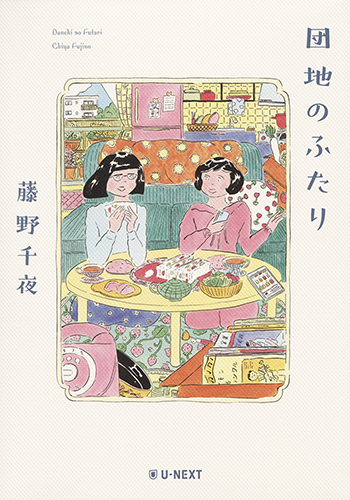
Chiya Fujino’s 2022 novella 団地のふたり(Danchi no futari) chronicles the daily lives of two 55yo women who were childhood friends and still live in the same danchi apartment building.
Natsuko Sakurai is an illustrator whose once-popular art style is no longer in demand. To make ends meet, she sells nostalgic items like old toys and sheet music collections on online auctions, and she’s also become extremely proficient at cooking on a budget.
Noe Ota has returned to her childhood home after getting divorced. Though she was once hailed as a prodigy, gendered harassment prevented her from succeeding in academia, and she now works part-time as a lecturer at a university.
Instead of dwelling on their faded ambitions, Natsuko and Noe find comfort in the low-stakes routines of midlife. They fix window screens for elderly neighbors, collect twentieth-century memorabilia to sell online, and share conversations over Natsuko’s home-cooked dinners.
Chiya Fujino has transformed the slightly dilapidated retro danchi apartment complex into a warm and friendly community. None of the women who live there feel the need to update their lives; they’re just happy to enjoy the pleasures of a low-pressure lifestyle in a charming old building.
This five-chapter novella feels very light and breezy, and I get the feeling that it’s aimed at readers in their 20s and 30s looking for an alternative to sky-high Tokyo rents. Instead of an overarching plot, the book features a series of loosely connected episodes, allowing the reader to dip into Natsuko and Noe’s slice-of-life adventures at their leisure.
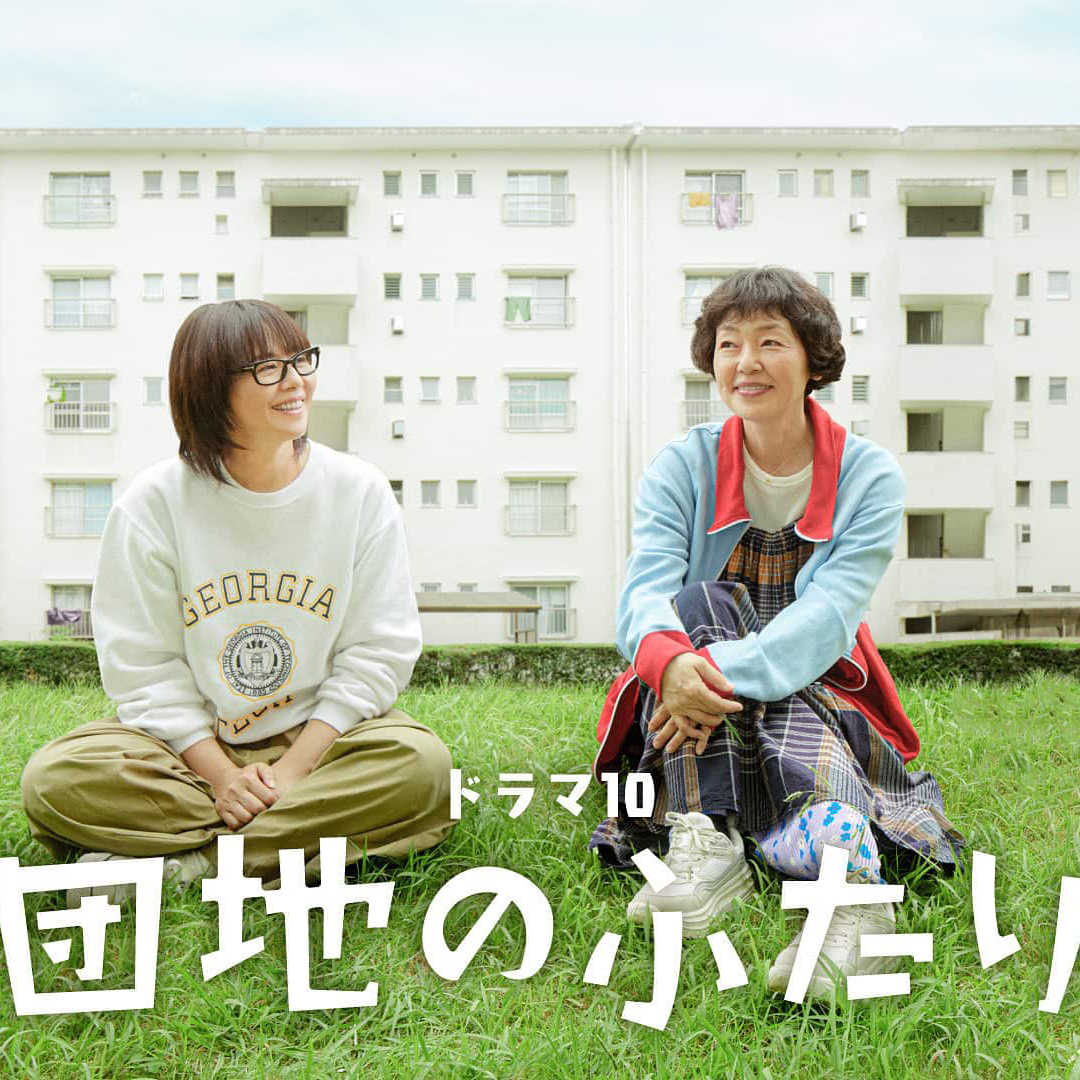
団地のふたり was adapted into an NHK television drama in 2024, and a manga version has been serialized since April 2026. Apparently a story about happily single women being friends while enjoying the benefits of beautiful and affordable housing is quite popular! Who would have thought?
Exit 8 is a 2025 prose adaptation of a video game of the same name that was released in November 2023 and achieved viral success after being streamed by popular YouTubers like Markiplier and The Game Grumps.
The game version of Exit 8 (on Steam here) is a liminal space walking sim in which you loop through a (very) short passage in the Tokyo subway system endlessly. The only choice you can make is to keep moving forward or to go back the way you came, and you must do this according to a set of rules: (1) If something in the current loop is different, go back; and (2) if nothing is different, keep going forward. The “anomalies” occur randomly, so being observant is key.
If the player gets it right eight times, they can escape to the end credits, which play over Tokyo urban sounds that are like heaven after the underground corridor. If there’s any sort of mistake, though, the loop count resets to zero. (This) no-commentary video playthrough is about ten minutes long, and it’s worth watching for a minute or two if you’re curious.
Genki Kawamura’s novel adaptation maintains the same scenario and rules as the video game but creates a story centered around an original protagonist, an unnamed man in his mid-twenties who works as a freelancer in an unspecified field. Though he moved from his hometown to Tokyo with his girlfriend, the Lost Man has recently ended the relationship after he and his girlfriend grew distant.
As he exits a subway train several weeks after the breakup, the Lost Man’s ex-girlfriend calls to tell him that she’s pregnant. Before he can respond, the call drops. He rushes to get outside and call her back, and this is when he finds himself stuck in the endless loop.
Along with the Lost Man, Kawamura also gives a backstory to a figure referred to as the Salaryman, a featureless middle-aged office worker who travels through the loop in the opposite direction without ever changing his behavior or acknowledging his surroundings. In addition, the novel introduces an original character called the Boy, a shy child who cooperates with the Lost Man to escape the loop.
Exit 8 is one of the many horror-themed loop games to emerge in the wake of P.T., a “playable teaser” designed by Hideo Kojima and set in a single looping hallway. As the player walks through endless versions of this hallway, the game semi-randomly triggers instances of disturbing imagery that hints at a story of a man who murdered his pregnant wife.
In writing the backstory for the Exit 8 game, I get the feeling that Kawamura is likewise borrowing from its predecessor P.T., as well as the Silent Hill horror series that the demo was intended to showcase. While the Silent Hill games excel at exposing the psychology of an unreliable narrator protagonist, however, Kawamura’s adaptation of Exit 8 is remarkably shallow. Kawamura never provides the details of his protagonist’s backstory or attempts to explain his behavior. There is no complexity to this character’s motivations, nor is there any sort of nuance regarding his situation with his ex-girlfriend.
For some readers – including myself, if I’m being honest – this lack of psychological depth may detract from the story. If we don’t know anything about the protagonist or understand the conflict he’s facing, why should we root for him to escape the loop?
In fact, if we imagine the Lost Man giving up his easygoing lifestyle to join the corporate workforce in order to spend his adult life trapped in a relationship with a high-school girlfriend whom he no longer loves and a child he never wanted, is life outside the loop really going to be better for him? This isn’t the sort of question Exit 8 thinks to ask, nor does the novel attempt to interrogate the cultural symbolism of its setting and scenario.
At the same time, I think it’s worth pointing out that the novel version of Exit 8 reflects the stylizations of a genre of internet-based weird fiction called creepypasta (netto kaidan, or “internet ghost story,” in Japanese), which itself mirrors the “this could happen to anyone” anonymity of urban legends. Though creepypasta is presented as fiction instead of a recounting of a real event, one of the conventions of the genre is not to provide too many details about the characters, who are often framed as people posting anonymously to online message boards.
I also appreciate that, by refusing to give the reader any sort of emotional anchor in the Lost Man’s character or backstory, Kawamura emphasizes the sense of being disoriented while allowing the liminality of the setting to shine. Though none of the POV characters are inclined to wax poetic about the Tokyo Metro’s underground corridors, the book is filled with screen stills from Kawamura’s own movie adaptation of the book (here’s the trailer), allowing the reader to see for themselves just how uncanny it is. As in many images of liminal spaces that circulate online, a major element of this uncanniness is, as Freud aptly pointed out, the familiarity of the setting. You’ve never been to this place; but, then again, you totally have. Somewhere in your mind, you’re still there.
At 109 pages, Exit 8 moves quickly and ends before the reader can develop a sense of complacency. This short book is a special treat for fans of internet creepypasta like The Backrooms mythos, as well as fans of contemporary urban horror more broadly. Also, if you enjoyed Strange Houses or another of Uketsu’s books currently in translation, Exit 8 is for you.
Though I have to admit that the novelization of Exit 8 didn’t leave as strong an impression as my original experience of playing the game itself, I’d love to see more professionally published Japanese creepypasta in translation, and I’m always happy to see authors adapt the ludic aspects of video games into experimental prose.
Banana Yoshimoto’s landmark 1988 novella Kitchen once inspired a great deal of heated discussion as a miserable chain of respected literary critics dismissed it as shallow and frivolous. Haters gonna hate, but I loved Kitchen when I first discovered it in high school, and I still think it’s a beautiful book that’s well worth reading.
After her parents died in a car accident, Mikage Sakurai was raised by her grandmother, who suddenly passes away when Mikage is in college. Now Mikage feels that she has well and truly become an orphan, and she doesn’t know what to do.
Yuichi Tanabe, a young man who was friendly with Mikage’s grandmother, invites her to stay with him and his mother at their apartment while she gets her life sorted out. Though Mikage has never met either of these people, Yuichi’s kindness is exactly what she needs, and she’s so stressed out and dispirited that she takes him up on his offer.
The apartment turns out to be gorgeous – it’s bright and sunny and spacious, and also outfitted with a thoroughly modern kitchen and a giant sofa that Mikage immediately falls in love with. Yuichi’s mother Eriko is just as friendly and charming as she is beautiful, and Mikage instantly feels at home. Though she knows she’ll have to leave eventually, she makes the best of her time in a warm and comfortable space in the care of two lovely people.
Eriko is clearly the star of this story, especially as she relates her own experience of loss to Mikage. Yuichi’s mother was the only woman she would ever love, she says, and she didn’t know what to do when her wife died after a long illness. She felt like the only reasonable course of action was to take on the role of “mother” by changing her name, getting surgery, and becoming a woman herself. She still misses Yuichi’s birthmother, but life goes on, and she couldn’t be happier. As Mikage describes Eriko at the end of the story:
Her hair rustled, brushing her shoulders. There are many days when all the awful things that happen make you sick at heart, when the path before you is so steep that you can’t bear to look. Not even love can rescue a person from that. Still, enveloped in the twilight coming from the west, there she was, watering the plants with her slender, graceful hands, in the midst of a light so sweet it seemed to form a rainbow in the transparent water she poured.
Kitchen is full of similar passages in which Mikage takes in the beauty of her surroundings while reflecting on her feelings. These moments are refreshingly light, and it’s as if the writing is washing over you in a gentle shower. Yoshimoto says that her goal is to create precisely this sense of peace, writing in her Afterword to Kitchen that “I know no greater happiness than that it may have cheered you, even a little.”
Kitchen includes a continuation of the story, “Full Moon,” which begins with Eriko’s murder. Mikage has gotten back on her feet, moved out of the Tanabes’ apartment, and become an assistant to a celebrity chef. Now that tragedy has visited Yuichi, it’s her turn to comfort him.
Mikage is comforted and supported by Chika, a transwoman who has taken over the cabaret club that Eriko managed. Chika helps Mikage to understand that, despite being disowned by her family, Eriko lived a full life, and she encourages Mikage to find her own happiness with Yuichi. Chika’s advice feels like the central thesis of Yoshimoto’s writing: the world can be dark and confusing, so you have to actively create your own sanctuary alongside the people you love.
All of this feels very much like shōjo manga created for teenagers, from the quiet and nonsexual love story between Mikage and Yuichi to the way that everyone seems to sparkle. The normalization of queer identity also has its roots in shōjo manga, as does the mundanity of the supernatural events depicted in “Moonlight Shadow,” the short companion story included at the end of the book. Yoshimoto’s language is filled with onomatopoeia and other cute expressions that feel directly lifted from manga, so much so that Megan Backus’s natural-feeling English translation is a genuine miracle.
If you’re not in the target demographic for Kitchen, it would make sense that Yoshimoto’s manga-inspired style of writing might not resonate with you. And that’s okay! Lord knows that there are enough works of literary fiction written by and for older adult men.
When I discovered Kitchen as a teenager, though, this book was definitely for me. In fact, it felt like the first book I’d encountered that took me seriously as a person. Having run the gauntlet of Ernest Hemmingways and William Faulkners and John Steinbecks in my high school English classes, I felt extremely alienated by fiction as a medium. I can’t even begin to describe what an amazing stroke of good fortune it was to find that Banana Yoshimoto had reached out with her writing and spoken to me specifically.
It’s not an exaggeration to say that the pop culture of the 1990s and early 2000s was a toxic slurry of homophobia and misogyny. In that sort of cultural environment, the independent young women and kind men and gentle queer sexuality of Kitchen were nothing short of revolutionary. I’m sure it was easy for older male literary critics to say that Yoshimoto’s writing was empty pablum, but it was something else entirely for me to encounter my first fictional depiction of gay adults who were treated as real human beings instead of stupid jokes or beleaguered minorities.
It felt like a revelation to see people being openly gay and also completely normal, and it would be disingenuous to say that this realization wasn’t political. Banana Yoshimoto showed me the rainbow, and sure, it was magical. How could it not be? But also, when I put this book down, I felt like I’d gained a sense of identity and purpose. When Chika tells Mikage that you have to fight for a world that accepts you, I took that advice to heart.
I was far from alone in being moved by this story. Kitchen was an instant bestseller in Japan, and it went on to gain fame overseas during the 1990s. In the 2000s and 2010s, Banana Yoshimoto enjoyed a degree of international recognition on the same level as Haruki Murakami. And she deserved it. She still does, honestly. I may have aged away from Kitchen, but that doesn’t mean I don’t respect it immensely.
Admittedly, Mikage sometimes seems as though she lives in a different world, and it can occasionally be a bit painful to look back on the prosperity and optimism of the 1980s. Still, Kitchen feels as fresh as the day it was written, and maybe you’re exactly the person who needs to read it now.
Natsuko Imamura’s novella This Is Amiko, Do You Copy? is about a neurodivergent preteen girl who’s neglected by her family and bullied at school. Though Amiko herself is quite charming, Imamura asks serious questions about the society that denies her support and understanding.
Amiko is ten years old and extremely friendly, but she has trouble fitting in. She speaks and behaves like someone much younger, and she often wanders away from class to read manga in the library. Her classmates avoid her when they can, but she’s oblivious to her alienation and remains cheerful and outgoing.
When her mother (who is actually her stepmother) has a miscarriage, Amiko does her best to comfort her, but her well-intentioned efforts are misinterpreted as malicious by both of her parents, who begin to neglect her. Without anyone to feed or bathe her, Amiko goes slightly feral, and she spends her early teenage years in almost total social isolation despite still attending school every day.
To protect Amiko from bullying, her older brother Kota toughens up, eventually joining a gang so that his reputation can shield his little sister. Kota loves Amiko and does his best to care for her, but he doesn’t have the emotional resources to deal with his clinically depressed stepmother or the lack of concern demonstrated by his workaholic father.
By the time she’s fifteen, Amiko still hasn’t matured, and she can barely read or write. She has trouble communicating and expressing herself, and she takes to singing made-up songs loudly and off-key whenever the mood strikes her. Torn between a child he can’t understand and a wife who never leaves the bed so that she’ll never have to see her stepdaughter, Amiko’s father sends her to live with her grandmother in the countryside.
The walkie talkies that Amiko’s parents give her as a gift at the beginning of the story are a chillingly direct analogy for her situation – she’s transmitting, but nobody’s responding. On a broader level, you can’t help but wonder why nobody ever reaches out to help Amiko or her parents.
This Is Amiko, Do You Copy? is narrated from a limited third-person perspective that shows the world as Amiko might see it, and Amiko is so happy and good-natured that it’s easy to skim through this short novella without really understanding the profound anger that Natsuko Imamura is expressing through the story. Amiko is a sweet and happy-go-lucky girl, but I could almost feel the author writing with clenched teeth.
I’ve seen multiple reviews of this novella (and its 2022 cinematic adaptation Amiko) that shy away from identifying Amiko as being on the autism spectrum, maintaining instead that she transcends labels. I feel like a bit of critical thinking might be necessary here. Specifically, does not labeling Amiko as autistic help her (or her family) in any way? Because it sure seems like the lack of a formal diagnosis has resulted in nothing but neglect and abuse. On the other hand, would a greater awareness of neurodiversity, as made concrete through an imperfect but still useful label, perhaps help Amiko’s community understand and support her?
I enjoyed Imamura’s novel The Woman in the Purple Skirt, whose meaning also dwells in the seemingly empty spaces of what its alienated and unreliable narrator doesn’t say. Just as the label of “autistic” would presumably make life much easier for Amiko, I imagine that a formal diagnosis of “schizophrenia” would probably help the Purple Skirt narrator get the help she needs. Imamura’s project in these two stories is not to normalize neurodivergence, necessarily, but to demonstrate that neurodivergent people aren’t abnormal. It’s only when neurodivergent people are denied community support and resources that unfortunate things happen.
This isn’t to say that This Is Amiko is didactic or unpleasant. It’s actually quite lovely, and I hope it doesn’t make me sound like a bad person to say that I genuinely enjoyed this book. Still, Natsuko Imamura is staging a serious critique through what may initially seem like a light and breezy story, and it’s important not to ignore the subtext.
Kudos to Hitomi Yoshio (and her seven-year-old daughter) for creating a fantastic translation of the distinctive narrative voice of this novella, and much love to Pushkin Press for bringing it to a wider audience. I’ve got my fingers crossed that Imamura’s 2017 novel Hoshi no ko (Child of the Stars), which is something of a sibling to This Is Amiko, finds a home in translation too.
There’s an expression in Japanese that I really appreciate: shikata ga nai, which essentially means “what can you do.” Shikata ga nai is the verbal equivalent of a shrug of resignation. Sure, the situation may not be ideal, but shikata ga nai. What can you do.
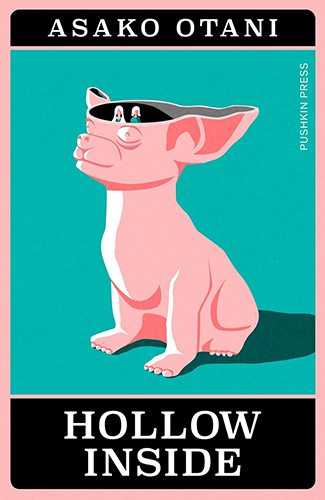
Asako Otani’s 2023 novella Hollow Inside is about as close to a literary expression of shikata ga nai as you can get. Otani was born in 1990, which makes her a little younger than I am, but I feel like we’re part of the same Millennial generation that came of age right in time for the 2008 global economic recession and then got our feet kicked out from under us by the pandemic. This situation isn’t ideal, obviously. But what can you do.
Hirai, the narrator of Hollow Inside, has recently moved from a small and inconvenient flat into a nicer two-bedroom apartment. She’s able to afford a better place by splitting the rent with her friend Suganuma, who proposed the idea to Hirai because she was tired of her own tiny apartment. Both women are around 40, and neither has any real desire to get married.
Hirai works in the accounting office of a printing company, while Suganuma formerly worked for the consulting division of a company specializing in administration systems. The two women met through their jobs but became friends when they realized that they were both fans of the same idol group, KI Dash. Their social circles narrowed during the pandemic, but their friendship with each other survived.
After working more than twenty years in corporate jobs, neither has enough money to afford a decent apartment in the city. That’s not great, but what can you do. Suganuma confesses to being “desperately lonely” while working from home during the pandemic, and Hirai knows exactly what she means. The pandemic wasn’t great, but again – what can you do.
What they can do, it turns out, is to move in together. Perhaps this isn’t how either of them imagined that their lives would turn out, and perhaps this isn’t what society in general expected of them. Hirai confesses to feeling shy about explaining her situation to her colleagues at work, knowing that two women in their forties sharing a home together isn’t the usual situation. And indeed, when she gets a chance to explain her living arrangements at a work dinner with colleagues, everyone makes polite noises and before swiftly changing the topic of conversation.
Still, Hirai and Suganuma get along well together, and they support one another through the small tragedies of their lives, such the marriage of Suganuma’s favorite idol from KI Dash and Hirai’s disastrous date with a man who wants to induct her into a pyramid scheme. The two women eat out together, cook dinner for each other, take a spur-of-the-moment holiday to the beach, and fall asleep while watching DVDs of KI Dash concerts on an old PlayStation 2.
The title of Hollow Inside comes from Suganuma’s post-pandemic freelance job as a manufacturer of custom figurines memorializing the deceased pets of her clients. She’s set up a 3D printer in a corner of the living room, which also houses a wastebin of defective models. Hirai feels a kinship with these rejected memorial figurines, as she herself feels somewhat hollow during the transition between the life she assumed she’d live and the unmapped territory ahead.
This sense of hollowness isn’t necessarily a bad thing, however. As Hirai explains about a fantasy she occasionally indulges in when she’s stressed out after work…
I let all the strength drain from my body. I gave myself over to gravity and sharpened all my awareness right up to my fingertips. I lay on the bed not moving an inch. Pretending to be dead. I sometimes did this.
I was dead. Nothing in the world had anything to do with me. I thought about the dead dogs. The dead dogs that had been doted on by their owners. They had left fake bodies in the world as figurines, and their souls were running in the other worlds wagging their tails. My soul joined them frolicking there.
…there’s a certain lightness that allows her to imagine herself as free and unburdened.
There are a range of different readings of Hollow Inside, of course. Some readers might find this novella depressing; but, to me, it’s a breath of fresh air.
In Japan and elsewhere, fewer women are getting married; and, as much as I enjoy the fantasy of romance, the reality of single life as an adult is no less interesting. Hollow Inside captures a moment in the transition of one woman’s life that happens to be representative of a major demographic shift. To me, this novella also serves as an eerily accurate reflection of the economic realities of the 21st century. We might not be able to enjoy the stability and middle-class lifestyles that our parents did, but what can you do. Shikata ga nai.
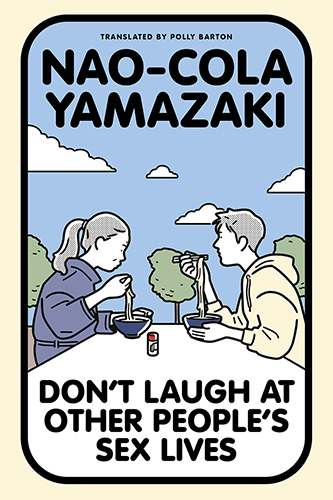
Nao-Cola Yamazaki’s prizewinning debut novella Don’t Laugh at Other People’s Sex Lives is a bittersweet love story that, to be fair, is mostly sweet. There’s not much depth here, and that’s okay.
An art school student named Isogai has a crush on his painting instructor, a woman on the verge of middle age named Yuri. Partially on her invitation, he initiates a love affair. Their relationship is destined to end, but it’s nice while it lasts.
In real life, this sort of relationship isn’t a great idea for any number of reasons. In the romantic fantasy spun by Yamazaki, there are zero consequences, and Isogai and Yuri gently help each other realize fundamental truths about themselves so they can grow as people.
Yuri is something of a space cadet who moves according to her own mysterious whims, and her husband is a kind and loving man who gives Yuri the space she needs and supports her endeavors – even her affair. Meanwhile, Isogai is a sensitive young man straight out of a shōjo manga. He cries, he journals to process his feelings, and he notices whether women moisturize their elbows. He never gets angry or makes demands, and he accepts all of Yuri’s decisions with compassion.
Don’t Laugh at Other People’s Sex Lives reminds me of the worldview often expressed in Banana Yoshimoto’s novels: while the world at large is difficult and imperfect, it’s possible for two people to create a small refuge in the space between them. This novella was first published in 2004 during the cultural fallout of the severe economic recession of the 1990s, and I imagine that Yamazaki’s playful pen name and gentle writing style would have felt very refreshing and wholesome at the time.
As someone closer to the character Yuri’s age, this story was a bit too starry-eyed for me personally, but I imagine that its light humor, appealing characters, and (mostly) happy ending will be a source of comfort to readers looking for a short but sweet escape from the pressures of the real world in the form of cozy fiction.
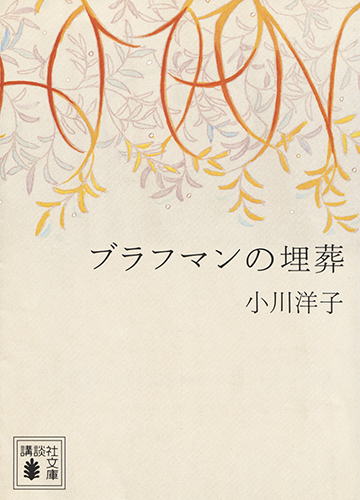
Yōko Ogawa’s 2004 novel Burafuman no maisō (Brahman’s Funeral) is a story about the lonely caretaker of an isolated artist’s retreat who adopts a forest creature of indeterminate species. Though this short novel features many of the tropes common in bestselling stories of animal companions, it was awarded the Izumi Kyōka Prize for literary fiction that explores the darker side of the human condition.
On the first day of summer, the unnamed caretaker finds a forest creature outside the back kitchen door. The creature is injured, and he doesn’t object when the caretaker picks him up and takes him inside. In fact, the creature almost seems to be asking for help, and his puppylike tameness inspires the caretaker to adopt him as an indoor pet.
The mansion where the narrator lives and works used to belong to the wealthy owner of a publishing company, but it has since been converted into an artist’s retreat. After a conversation with the stonemason who maintains a permanent studio on the grounds, the narrator decides to name the creature Brahman after the Sanskrit word the mason has carved onto a gravestone.
While Brahman recovers, the caretaker keeps the creature in his room. The caretaker’s personal space is stark and empty, but Brahman finds ways to keep himself occupied by opening drawers and gnawing on the coat hangers in the closet. At night, Brahman sleeps on the bed while curled up against the caretaker.
Once Brahman figures out how to operate the door handle, the caretaker begins taking him outside. The scenes in which he describes the meadows and forests surrounding the retreat through Brahman’s eyes are gorgeously written. Brahman delights in the sun and the wind and the grass, and he especially loves the garden pond, swimming and diving to his heart’s content as the caretaker watches.
Though the caretaker seems amiable enough, he seems to have no friends save for the stonemason. Aside from the artists visiting the retreat, the only person the caretaker speaks with is the young woman who works at the small general store outside the train station. Though the caretaker clearly has a crush on her, she’s dating an older man who lives in the city, and all she wants is to move away from the isolated village. The caretaker clearly doesn’t have a chance with her, and his yearning for connection is poignant yet gently pathetic.
The purpose of contemporary popular pet fiction is to comfort the reader, often by anthropomorphizing the animals in service to the human protagonists. Burafuman no maisō is certainly beautiful and joyous in many places, but Ogawa has little interest in cozy vibes. To me, at least, this is an intensely gothic novel.
Brahman dies at the end, but hints of death suffuse the entire story. Aside from the artists’ retreat managed by the caretaker, the most notable feature of the town is its sprawling cemetery, which has a strange but poetic history.
Because the mountainside town has a plentiful supply of both stone and stone carvers, people who lived upriver once commissioned its artisans to create coffins for their dead. Stone coffins were difficult to transport, however, and so the remains would be placed in wooden coffins that were sent downstream to be buried in the hillside cemetery. The isolated village thus became the final resting place for the dead who were all but abandoned by the rest of the world, a description that mirrors the position of the caretaker himself.
Ogawa has something of a fetish for sensitive but lonely men, and I have to admit that the caretaker breaks my heart a little. Along with having no name, he also seems to have no family, nor any past at all. What he has instead is an old family portrait photo that he buys from a Sunday antique market in the town square. The traveling merchant gives him an old wooden frame to go with it, so the caretaker hangs the photo in his room, where he sits on the bed and imagines the lives of the long-dead family. The only living joy in the caretaker’s life comes from his interactions with Brahman.
The genre of “cozy pet fiction” is almost always about people. As such, it often treats animals as human, even going so far as to give them human narrative voices so that the reader can better understand the human characters they observe. Burafuman no maisō does the opposite by using its nameless human narrator as a vehicle to document the short life of Brahman.
Though a human reader can never perceive the world in the way that an animal does, Ogawa asks us to sympathize with Brahman through the narrator’s documentation of his umwelt: what he sees and tastes and smells, and how he reacts to the world. To the caretaker, the behavior of other humans makes little sense, but he joyfully devotes himself to chronicling Brahman’s appearance and behavior through a series of annotated lists of observations with titles such as “Brahman’s Tail,” “Brahman’s Meals,” and “Brahman’s Footsteps.”
And finally, through no fault of his own, the caretaker is forced to close his account with a list titled “Brahman’s Funeral.” Through Brahman’s death and subsequent burial in a tiny stone coffin, Ogawa succeeds in making the reader care deeply about a semi-wild animal that was never anthropomorphized in any way. I appreciate the thematic artistry, but it’s nevertheless a difficult ending.
Hikaru Okuizumi (author of The Stones Cry Out) writes in his postscript to the Kodansha paperback edition that Ogawa more than likely started this short novel during a literary festival in the small French town of Fuveau, where she apparently bowed out on a large group dinner to stay alone in her room and write. This makes perfect sense to me, as Okuizumi’s anecdote accurately reflects the tone of the story. Despite Brahman’s death and the caretaker’s loneliness, Burafuman no maisō dwells in the quiet and contemplative corners of the gothic genre, and this short novel feels like a small but meditative retreat.
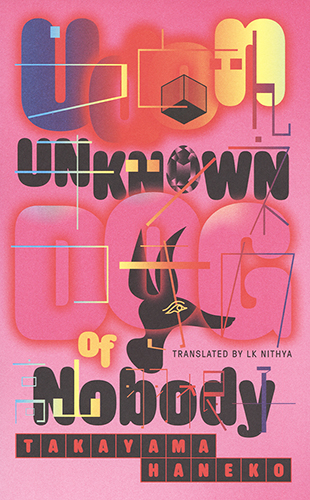
Haneko Takayama’s short story Udon: Unknown Dog of Nobody, published by Strangers Press as a stand-alone chapbook in their Kanata series, follows three sisters connected by their love for their family dog, Udon.
On their way home from school, Kazue and Misa find a newborn puppy abandoned in a styrofoam box. Horrified by the sorry state of the creature, they decide to rescue it. The way they see the matter, leaving the animal to die isn’t an option.
Seven days later, the puppy is still alive. Kazue and Misa’s younger sister Yoko goes to the pet store to get dog food, but she doesn’t know how many cans to buy. What if she gets too many, and the dog dies? After she buys just one can, she meets a classmate who assures her that, “When you care for things, they don’t die as easily as you might think.”
The next chapters provide snapshots of the sisters growing into adulthood as they continue to nurture small relationships with people and animals. In the final chapter, Kazue and Yoko take the train to snowy Toyama City to attend their grandmother’s funeral, where they’re immediately surrounded by the warmth of their extended family. Fifteen years after being rescued, Udon is a gross little gremlin, but he’s still alive and happy.
At the end of the story, Kazue reflects on “the many living things they’d raised, not to eat, not because they were useful. Creatures that weren’t human, weren’t in need of preservation.” She comes to the conclusion that there’s no need for animals to have “value” to be cared for, an observation that would seem trite if not for the dramatic opening of the novella, in which the author presents the newborn Udon as little more than a slimy mass of hideously squally meat.
Haneko Takayama’s fiction has been nominated for a number of prestigious awards, and she won the Akutagawa Award for her 2020 novel The Horses of Shuri, a speculative meditation on the connections between human culture and ecological history that reminded me of Hideo Furukawa’s Belka, Why Don’t You Bark. I’m happy to see Takayama’s fiction in translation, and LK Nithya has done a marvelous job, deftly balancing the casual dialogue of the sisters with the literary touches of the narrative prose. I was also impressed by how smoothly the translator was able to handle the brief touch of science fiction at the end of the story, which was nowhere near as surprising as perhaps it should have been.
Udon: Unknown Dog of Nobody is a slim but striking chapbook that presents an intriguing and artfully translated story about what it means to share our space with animals. If nothing else, after all the cozy books about cats, it’s nice to have a story about a dog for once!
Retrograde collects five short stories and one novella written by a young Osamu Dazai and gorgeously translated by Leo Elizabeth Takada.
The novella, Das Gemeine, follows a 25yo student studying French literature who aspires to become a writer himself. While hovering around an amazake stand in Ueno Park and hoping to catch the attention of the young woman who works there, the narrator meets another student, a violinist who barely attends class at all. The violinist’s friend, himself a painter, warns the narrator not to believe any of the violinist’s tall tales about his supposed talent.
The three young men decide to start a literary journal together (along with their pathetically unattractive acquaintance Osamu Dazai), but petty personality conflicts crash the project before it can get off the ground. Feeling hopelessly at a loss in letters and in love, the narrator meets a sad fate that may not have been entirely an accident.
One of the many myths surrounding Osamu Dazai (the author, not the character) is that he considered himself to be a failure rejected by the mainstream literary establishment. For better or worse, I can relate. I know from personal experience that, as an outsider, you often find yourself placing your work in the hands of upstart editors organizing projects that may, in all likelihood, never see the light of day. More often than not, things fall apart precisely because the creative team had big dreams but no practical skills to realize their ambitions.
I myself am something of a coward who immediately walks away from that sort of unpleasantness, but my familiarity with creative collaboration mishaps makes me respect the truth of the story Dazai tells in Das Gemeine, which is remarkably well-observed. The characters in this novella are deeply frustrating and more than a little cringe, but they’re 100% real – this is exactly what it’s like to work with creatives in their twenties who build castles in the air but haven’t yet developed the artistic discipline to commit their visions to paper. Bless their hearts.
The five shorter stories in the collection read like something that the narrator of Das Gemeine might actually have written. A 25yo man dies tragically and is mourned by his beautiful wife. A college student sits for the final exam of a French literature class he never attended. A high school student obnoxiously flirts with café waitresses but swiftly loses a fight with a grown man who’s not interested in his sophomoric bullshit. A teenage boy experiences a sexual awakening when the circus comes to town. Each of these stories is only a few pages long, and their unguarded sincerity contributes to their charm.
The closing story, “Blossom-Leaves and the Spirit Whistle,” is about two sisters in love with an idealized version of a man who only exists on paper until the strength of their shared storytelling summons his ghost to appear under their window… perhaps. I appreciate this story’s clever touch of Todorovian fantasy, and I’m always here for unapologetic gothic pathos. This aesthetically luxurious story is classic Dazai, in that it’s exactly the sort of work that’s contributed to his popularity among generations of students. I myself am not immune, of course, and this is by far my favorite piece in the collection.
In their “Translator’s Afterword,” Takada describes Dazai’s writing style as “a casual conversation with someone familiar,” and they explain that they want their translation to feel as if they’re “doing this just for you,” the reader. Takada gets the tone exactly right, rendering Dazai’s straightforward prose into an invitation to sympathize with the writer and his characters even despite their naked sincerity. I’ve never responded to overly “literary” renditions of Dazai’s prose, but I found myself flying through this translation. It’s fantastic.
I also want to highlight the care and attention that One Peace Books has put into the layout and typeset of this book, giving the words on the page exactly the room they need to breathe. Retrograde is a lovely object to hold in your hands, so much so that it might even spark the same youthful enthusiasm for literature that Dazai so aptly captures in his early fiction.
Much love to Leo Elizabeth Takada and One Peace Books for breathing fresh life into these classic stories from the 1930s. Retrograde is an admirable achievement, and I hope it brings the work of a fascinating author to new readers.
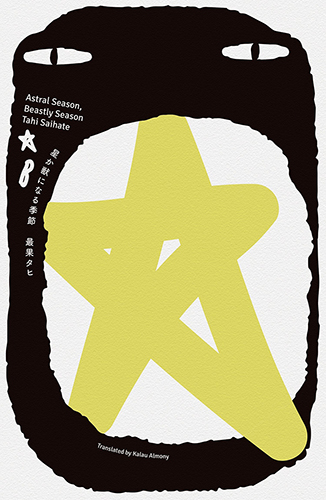
Tahi Saihate’s Astral Season, Beastly Season (translated by Kalau Almony) is a novella about toxic high school friendships and girl group fandom gone horribly wrong.
In the first half of the book, a junior in high school named Yamashiro writes a letter to an unpopular “underground idol” named Mami Aino. Mami, who is still in high school herself, was arrested on the charge of murdering her ex-boyfriend. Another boy in Yamashiro’s class, Morishita, takes the news poorly and decides to commit a series of copycat murders so that he can confess to the crime Mami committed and take the fall in her place.
Unlike Yamashiro, Morishita is attractive, popular, and a model student. Why he’s a fan of a fledgling girl group with such a small following is unclear, and it seems like an incredible coincidence that both Yamashiro and Morishita would be attracted to the same super-indie performer. Although Yamashiro doesn’t seem to be aware of this, I strongly suspect that Morishita is much more attracted to Yamashiro than he is to Mami.
Regardless of motive, Morishita’s intention to commit murders is sincere, and he wastes no time getting started on his grim task.
The second half of the book takes place several years later, when Morishita’s childhood friend Aoyama meets up with Watase, a high school classmate of one of Morishita’s victims. Watase accuses Aoyama of portraying the murderer as “an all-around good guy” in an interview he gave to a tabloid magazine, and she wants him to apologize. Before the two of them get a chance to have a proper conversation, Aoyama is contacted by the brother of another of Morishita’s victims. This young man also wants closure, but what was going on in Morishita’s head will forever remain a mystery.
I have to admit that Astral Season, Beastly Season left me cold. More than anything, this is a book about the friendship dynamics of a small group of high school students. The novella doesn’t dwell on the psychology of the criminals, nor does it offer much description of what underground idol culture is or what it’s like to participate in this sort of fandom.
Instead, the reader is inundated with inane details about who is friends with whom, and who does and doesn’t walk home together, and who ignores other people on the train, and who went to a café together, and who is and isn’t talking to whom, and who said something mean after class, who doesn’t want to be in a group together on a school trip.
Amidst the swirl of teen friendship drama, the actual murders seem like little more than an afterthought. Were it not for the second half of the book, one might even argue that Yamashiro and Morishita are just pretending to plan and commit crimes. In fact, I tend to think that the story might actually be more interesting if this were the case. None of the characters has anything particularly insightful to say after the time skip, and the reader never learns anything about what Mami or Morishita might have been thinking or feeling. It’s all a bit disappointing.
There are two points of comparison that might bring the novella’s story into sharper contrast. The first is Yukio Mishima’s classic novel The Temple of the Golden Pavilion, a psychological drama about the (heavily fictionalized) young man who set fire to the eponymous landmark in 1950. It’s a gorgeous piece of writing, and Mishima is fascinated by the mind of a teenage loner who commits a serious crime, especially with respect to how this crime results from an intense homoerotic friendship. Another interesting companion novel is Rin Usami’s Idol, Burning (which I reviewed here), which I feel offers a much more sensitive and astute portrayal of the role that pop music fandom can play in the life of an emotionally precarious teenager.
I get the feeling that Astral Season, Beastly Season might have benefitted from a translator’s afterword explaining who the writer is and what the context for her work might have been. It might be a worthwhile project to discuss this novella in a college class or an academic paper, especially given Tahi Saihate’s status as an internet-famous visual artist who uses text to create eye-catching public art installations, but I’m not sure it stands on its own as a work of fiction.
If nothing else, the novella is painfully honest about how high school friendship drama can feel life-shattering and world-changing to the people involved. Still, whether this sort of story is worth spending time with really depends on the interests and taste of the reader. It wasn’t for me, but perhaps a younger reader might feel a stronger sense of immediacy and connection to a beautiful high school boy who commits terrible crimes.