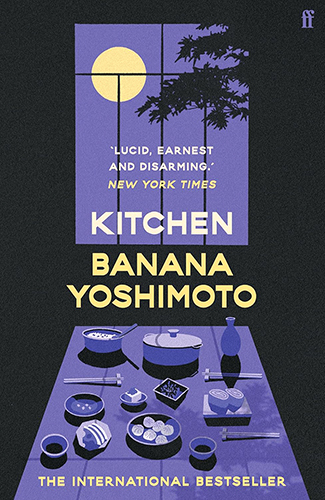
Kitchen

Banana Yoshimoto’s landmark 1988 novella Kitchen once inspired a great deal of heated discussion as a miserable chain of respected literary critics dismissed it as shallow and frivolous. Haters gonna hate, but I loved Kitchen when I first discovered it in high school, and I still think it’s a beautiful book that’s well worth reading. 

After her parents died in a car accident, Mikage Sakurai was raised by her grandmother, who suddenly passes away when Mikage is in college. Now Mikage feels that she has well and truly become an orphan, and she doesn’t know what to do.

Yuichi Tanabe, a young man who was friendly with Mikage’s grandmother, invites her to stay with him and his mother at their apartment while she gets her life sorted out. Though Mikage has never met either of these people, Yuichi’s kindness is exactly what she needs, and she’s so stressed out and dispirited that she takes him up on his offer.

The apartment turns out to be gorgeous – it’s bright and sunny and spacious, and also outfitted with a thoroughly modern kitchen and a giant sofa that Mikage immediately falls in love with. Yuichi’s mother Eriko is just as friendly and charming as she is beautiful, and Mikage instantly feels at home. Though she knows she’ll have to leave eventually, she makes the best of her time in a warm and comfortable space in the care of two lovely people.  

Eriko is clearly the star of this story, especially as she relates her own experience of loss to Mikage. Yuichi’s mother was the only woman she would ever love, she says, and she didn’t know what to do when her wife died after a long illness. She felt like the only reasonable course of action was to take on the role of “mother” by changing her name, getting surgery, and becoming a woman herself. She still misses Yuichi’s birthmother, but life goes on, and she couldn’t be happier. As Mikage describes Eriko at the end of the story:

Her hair rustled, brushing her shoulders. There are many days when all the awful things that happen make you sick at heart, when the path before you is so steep that you can’t bear to look. Not even love can rescue a person from that. Still, enveloped in the twilight coming from the west, there she was, watering the plants with her slender, graceful hands, in the midst of a light so sweet it seemed to form a rainbow in the transparent water she poured.

Kitchen is full of similar passages in which Mikage takes in the beauty of her surroundings while reflecting on her feelings. These moments are refreshingly light, and it’s as if the writing is washing over you in a gentle shower. Yoshimoto says that her goal is to create precisely this sense of peace, writing in her Afterword to Kitchen that “I know no greater happiness than that it may have cheered you, even a little.”

Kitchen includes a continuation of the story, “Full Moon,” which begins with Eriko’s murder. Mikage has gotten back on her feet, moved out of the Tanabes’ apartment, and become an assistant to a celebrity chef. Now that tragedy has visited Yuichi, it’s her turn to comfort him. 

Mikage is comforted and supported by Chika, a transwoman who has taken over the cabaret club that Eriko managed. Chika helps Mikage to understand that, despite being disowned by her family, Eriko lived a full life, and she encourages Mikage to find her own happiness with Yuichi. Chika’s advice feels like the central thesis of Yoshimoto’s writing: the world can be dark and confusing, so you have to actively create your own sanctuary alongside the people you love. 

All of this feels very much like shōjo manga created for teenagers, from the quiet and nonsexual love story between Mikage and Yuichi to the way that everyone seems to sparkle. The normalization of queer identity also has its roots in shōjo manga, as does the mundanity of the supernatural events depicted in “Moonlight Shadow,” the short companion story included at the end of the book. Yoshimoto’s language is filled with onomatopoeia and other cute expressions that feel directly lifted from manga, so much so that Megan Backus’s natural-feeling English translation is a genuine miracle.  

If you’re not in the target demographic for Kitchen, it would make sense that Yoshimoto’s manga-inspired style of writing might not resonate with you. And that’s okay! Lord knows that there are enough works of literary fiction written by and for older adult men.

When I discovered Kitchen as a teenager, though, this book was definitely for me. In fact, it felt like the first book I’d encountered that took me seriously as a person. Having run the gauntlet of Ernest Hemmingways and William Faulkners and John Steinbecks in my high school English classes, I felt extremely alienated by fiction as a medium. I can’t even begin to describe what an amazing stroke of good fortune it was to find that Banana Yoshimoto had reached out with her writing and spoken to me specifically.

It’s not an exaggeration to say that the pop culture of the 1990s and early 2000s was a toxic slurry of homophobia and misogyny. In that sort of cultural environment, the independent young women and kind men and gentle queer sexuality of Kitchen were nothing short of revolutionary. I’m sure it was easy for older male literary critics to say that Yoshimoto’s writing was empty pablum, but it was something else entirely for me to encounter my first fictional depiction of gay adults who were treated as real human beings instead of stupid jokes or beleaguered minorities.

It felt like a revelation to see people being openly gay and also completely normal, and it would be disingenuous to say that this realization wasn’t political. Banana Yoshimoto showed me the rainbow, and sure, it was magical. How could it not be? But also, when I put this book down, I felt like I’d gained a sense of identity and purpose. When Chika tells Mikage that you have to fight for a world that accepts you, I took that advice to heart.

I was far from alone in being moved by this story. Kitchen was an instant bestseller in Japan, and it went on to gain fame overseas during the 1990s. In the 2000s and 2010s, Banana Yoshimoto enjoyed a degree of international recognition on the same level as Haruki Murakami. And she deserved it. She still does, honestly. I may have aged away from Kitchen, but that doesn’t mean I don’t respect it immensely.

Admittedly, Mikage sometimes seems as though she lives in a different world, and it can occasionally be a bit painful to look back on the prosperity and optimism of the 1980s. Still, Kitchen feels as fresh as the day it was written, and maybe you’re exactly the person who needs to read it now.
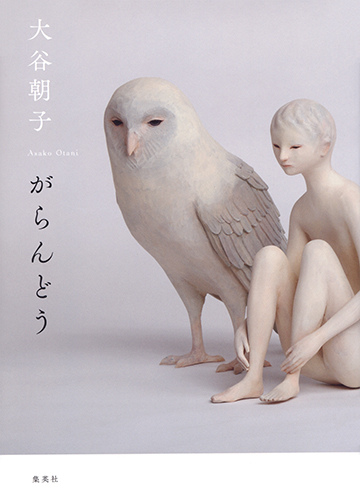
がらんどう

Asako Ōtani’s novella Garandō (がらんどう), which won the 46th Subaru Literary Prize in 2023, follows two 40yo women as they settle into a cozy life as adult flatmates.

Hirai recently moved in with her friend Suganuma, who suggested that they live together so they can afford a nicer apartment. The two women met as adults through their shared fandom of the boy band KI Dash, and they managed to remain friends during the pandemic despite drifting away from their other friends and family members.   

Hirai works in an office, while Suganuma is a self-employed artist who uses a 3D printer to create custom memorial figurines of her clients’ deceased pets. The two women share chores and meals, sometimes cooking for each other and sometimes going out to eat. Although they’re not romantically involved, they often fall asleep together in the living room while watching KI Dash performances on DVDs that they play on an old PlayStation 2.

When Suganuma’s star idol suddenly marries an adult video actress, Hirai takes her flatmate to the beach for a breakup vacation. Afterward, Suganuma begins dating a married man she met at the hotel bar. Hirai is jealous but understands that this is simply the way of the world.

In resignation, Hirai signs up for a dating app, but this goes poorly. Her lack of success is partially because she’s aggressively targeted by someone involved in a multi-level marketing scam, but it’s mostly because Hirai is about as asexual and aromantic as someone can be. She has a vague aspiration of having a child one day, but is that really what she wants?

For Hirai’s birthday, Suganuma ends her relationship with the sleazy married man and uses her 3D printer to manufacture a baby as a gift for her flatmate. The story closes in much the same place it began, with the two women happy and secure in one another’s company. The title of the novella, Garandō, means “empty,” and it most directly refers to the hollow centers of Suganuma’s 3D-printed figurines. This title might at first be taken to refer to the relationship between Hirai and Suganuma as well, but their friendship is anything but hollow.

Because really, what’s to stop two adult women from spending their lives happily together as flatmates? Why do two people need to be married or related in order for it to be “normal” for them to live together? Is your life really “empty” if you don’t get married and have children?

More than anything, Garandō reminds me of Banana Yoshimoto’s bestselling 1988 novel Kitchen, which presents alternate models of modern families while comforting the reader that, even if you’re not “normal,” life is still well worth living. Granted, Hirai and Suganuma are older than the characters in Kitchen, and they’re not living in the lap of Japan’s bubble-era luxury. In addition, Ōtani’s writing style is relatively sardonic and dry, especially when compared to the bubblegum pop of Kitchen. Still, Garandō is a positive story about two weirdos who manage to find happiness. Even if their lives don’t follow the standard model, they’re doing okay.

At a slim 112 pages, Garandō is a quick read. Ōtani has a wonderful sense of pacing, juxtaposing scenes of comfort inside the home with scenes of (highly relatable) social awkwardness in the outside world. I really enjoyed this book, which pulls off something I appreciate – the normalization of “difference” without resorting to sentimentality or melodrama.

What Ōtani demonstrates in this meticulously crafted novella is that people like Hirai and Suganuma are less uncommon than you might think, and that’s cool. And honestly, given that a house and a nuclear family have become distant dreams for many of us, why not join them? 

The Restaurant of Love Regained

Title: The Restaurant of Love Regained
Japanese Title: 食堂かたつむり (Shokudō Katatsumuri)
Author: Ogawa Ito (小川 糸)
Translator: David Karashima
Publication Year: 2011 (United Kingdom); 2008 (Japan)
Publisher: Alma Books
Pages: 193

The ad copy on the back cover of The Restaurant of Love Regained proclaims the book to be “for all fans of Kitchen by Banana Yoshimoto.” I think the comparison between the two books is apt. Both novels are short and fluffy stories of young women who attempt to ameliorate the pain caused by a recent loss through cooking. Both are meant to have a calming and healing effect on the reader. And finally, depending on the reader, the prose of both novels is either refreshingly light and bubbly or infuriatingly infantile. Before you read the rest of this review, you might first want to ascertain how Ogawa’s writing style affects you:

My dream of having my own place was now within reach. Things were still hard work, though. I still trod in [my pet pig]’s droppings at least once a day. I still had chestnuts falling on my head. And I still kept tripping over pebbles along the mountain paths and almost falling flat on my face. But the number of moments that filled my heart with joy far outnumbered those I’d felt while living in the city. Even the tiniest little thing had the power to make me feel happy. Like turning over a beetle struggling on its back and watching it walk away. Like feeling the warmth of a freshly laid egg against my cheek. Like seeing a droplet of water balance on a leaf’s surface, more beautiful than any diamond. Or like finding a Kinugasa mushroom at the entrance to the bamboo forest, carefully plucking it and taking it home to place in my miso soup, with its wonderful flavor and its underside as beautiful and intricate as hand-knitted lace. All of these things filled me with wonder and gratitude and made me want to kiss God on the cheek.

If you like this type of writing, the whole book is written like this. If you don’t like this type of writing, this whole book is written like this. Since the novel has apparently achieved “international bestseller status” and was even turned into a feature film, I suppose that enough people have found Ogawa’s prose charming. It struck me as both forced and superficial at times, and the overwrought analogies and smug statements of self-satisfaction that Ogawa tends to place at the end of her paragraphs occasionally made me cringe in second-hand embarrassment. It took me about thirty pages to get used to Ogawa’s writing; but, once I did, I started to enjoy the book for what it was: food porn. Ogawa’s narrator loves cooking, and she loves eating, and she talks about both incessantly. If nothing else, this novel will fill you with a powerful lust for food.

The Restaurant of Love Regained begins when its first person narrator, Rinko, returns to the apartment she shares with her boyfriend to find it empty. Everything – from her furniture to the food in the refrigerator to the money she had kept stashed away under her mattress – is gone. Since Rinko has neither a cell phone nor a debit card, she uses the last bit of money on her person to take a bus back to her rural hometown. Rinko had originally left this village as a teenager in order to get away from her mother, who works as a bar hostess. After moving to Tokyo and living with her grandmother for a few years, during which time she learned how to cook, Rinko started working at a Middle Eastern restaurant. She was planning on opening her own restaurant when she had saved enough money – or at least she was before her boyfriend absconded with all of her worldly possessions. The shock to Rinko is so great that she ends up losing her voice. Rinko thus can only communicate through writing, but this doesn’t stop her from convincing her mother to loan her enough money to open an “eatery” in the small mountain village where she now lives. Rinko names her eatery “The Snail” and decides to serve only one party of customers a day, a management strategy that will presumably allow her to put her entire heart and soul into each and every meal.

What follows this initial setup is an episodic series of stories about Rinko’s customers and the dishes she prepares for them. Through her cooking, Rinko brings couples and families together while healing sick pets and sick relationships. All of these stories have happy endings, and Ogawa seems to delight in detailing the ingredients and preparation of the food that makes these happy endings possible. Behind the fluffy chick lit and food porn, though, is the story of the complicated relationship between Rinko and her mother, which, in the end, gives the novel the kind of satisfying narrative closure that cannot be provided by erotic descriptions of crème fraiche alone. This mother-daughter relationship is also the only hint of character complexity in The Restaurant of Love Regained, which is otherwise entirely one-dimensional. If you happen to like that one dimension, though, you will love the novel. Ogawa’s formulaic prose and story patterns are enjoyable and relaxing, and her novel is a testament to culinary creativity.

… At least until the last forty-five pages. The first thirty pages of the novel’s closing sequence are grisly and horrific. In these pages, Rinko butchers her pet pig Hermes for her mother’s wedding reception. This process is described in hideously disturbing language. Nothing in the rest of the book will have prepared you for these scenes. Reading them is viscerally upsetting – it’s like biting into a sweet tropical fruit only to find that a many-legged creature has died there while its sickly white larva feast on the flesh of their mother.

Besides an older man named Kuma, who helps Rinko set up her restaurant, Hermes is Rinko’s only friend. Rinko variously describes the pig as her sister, her child, her foster mother, and her grandmother. Rinko has fed Hermes, slept beside Hermes, and taken care of Hermes when the pig was sick. Rinko celebrated her birthday with Hermes, and Rinko rang in the new year with only Hermes to share her joy. Rinko cried to Hermes when she was sad and tried out new recipes on Hermes when she was excited. Throughout the novel, Hermes has proven capable of a wide range of human emotions; and, in many ways, the pig is a more sympathetic character than Rinko herself.

It is therefore not a little upsetting when Rinko acquiesces to her mother’s request that she kill Hermes.

The end of the novel is composed of a series of scenes depicting Rinko preparing Hermes for her mother’s wedding reception dinner. The author uses cruelly precise language to explain everything from the fear in Hermes’s eyes when the pig realizes she will be killed, to the way the pig struggles against being lead to the slaughterhouse, to the pig’s panic and anger when she is strung upside-down from the ceiling, to the pig’s anguished cries when Rinko slits her throat, to the pig’s futile struggles as she slowly bleeds to death. This goes on for pages. What follows is a loving description of the instruments Rinko uses to skin, gut, and carve Harmes, as well as how these instruments cut and slice into the pig’s body. There is a lot of ripping and tearing and blood, which is all the more disturbing when coupled with Rinko’s tender prostrations of how precious Hermes is to her, and how Hermes is just like a child/sister/mother.

This book takes the preparation of food very seriously. However, whereas these food preparation scenes used to be innocent and appetizing…

The rice was cooked a little too soft for my liking, but that didn’t stop me from munching down several mouthfuls and imagining their energy rising from the bottom of my stomach; the energy had come from Kuma’s mother as I’m sure she prepared them with her heart, her soul and kind thoughts for us. So I wasn’t just eating rice. I was taking in her love.

…now they are cruel and disgusting:

Next, I said a final farewell to Hermes’s face and placed it in the middle of the work bench. I took a knife and cut off both ears, planning to use them in a salad. Then I cracked the head in two. As my knife went through her head, it let out a sound like a groan. I was surprised to see that her brain was a lot smaller than I’d expected, and with a different, pearl-like colour to it too.

Pretty gross, right? And this paragraph isn’t even the worst. That particular honor goes to the paragraph in which Rinko muses that Hermes was like a grandmother to her as she pulls out the pig’s intestines.

I think the point of these scenes is supposed to be that we should reflect on where our food comes from and respect the organisms that give their lives so that we may be nourished. In other words, I think the novel’s conclusion is supposed to be a joyous celebration of food and food cultures (oddly paired with a sense of sadness directed towards relationships that cannot last, such as Rinko’s relationship with her mother, who is dying of cancer). Unfortunately, the incestuous and cannibalistic overtones of the language used to describe this bloody and barbaric celebration cancel out any intended joy and thanksgiving. I am not a vegetarian, and I think pork bacon is delicious, but the slaughter and consumption of Hermes was too much even for me, especially since the one hundred and fifty pages proceeding it had lulled me into complacency with uncomplicated stories of delicious food and people being happy.

Such an ending could be interpreted in two ways. The first is that it is simply the incompetent icing on a cake of incompetent writing. The second is that Ogawa is a brilliant writer of subversive horror fiction who has been even more subtle in her project to shock and horrify her audience than director Miike Takashi was in a film like Audition. If we follow this second interpretation, Rinko’s one-dimensional personality takes on sinister overtones. In her mind, there is no distinction between food and family, and she finds just as much pleasure in the bloody butchering of flesh as she does in sipping imported hot chocolate. Such an interpretation, combined with the novel’s vaguely gothic setting, provides a chilling premonition of the grisly future of Rinko’s isolated restaurant in the mountains. Furthermore, what really happened to the lover who abandoned Rinko at the beginning of the novel?

Unfortunately, this second interpretation is somewhat improbable. What we have, then, is a novel about food that gets a little messy at the end. If you love food and can stomach an extended scene detailing the slaughter and butchering of a beloved pet for the sake of thematic closure, you can probably handle The Restaurant of Love Regained. You might even be glad you read it. If you’re looking for serious Literature-with-a-capital-L, an engaging plot, an interesting and multi-faceted cast of characters, and real human drama – or if you’re put out by the prospect of reading thirty pages of intense carnage – you should probably avoid this novel. Personally, I wish I could unread it.