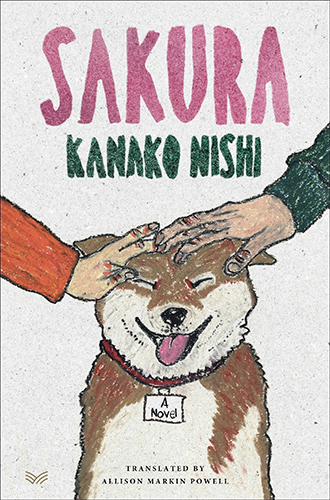
Kanako Nishi’s 2005 debut novel Sakura is a difficult book to write about.
The first part of the novel is a sweet slice-of-life story about three kids growing up in a middle-class household during the late twentieth century. The final 1/3 is a tragic drama that details how the family falls apart.
Unfortunately, I feel that the two parts of this book don’t really talk to each other or complement one another thematically. In addition, the tragedy has dark undertones of gothic horror that feel disturbingly accidental.
The author says she wrote this story to express what it might feel like to live in a large and boisterous family that has its share of ups and downs. The novel does indeed convey that sense of love and belonging, especially in relation to the eponymous family dog, Sakura.
I appreciate that Sakura contains sympathetic depictions of two queer and transgender characters, both of whom are close friends of the family, but…
…I really don’t like how the author equates LGBTQ+ pride with the final monologue of the narrator’s younger sister, who delivers something resembling a pride speech regarding her incestuous sexual desire for her oldest brother, whom she manipulated into suicide during a low point in his life so that he would never have the opportunity to love another woman.
In addition, Sakura features strong disability negativity, as well as unfair gendered double standards relating to grief. In particular, the narrator repeatedly body-shames his mother, calling her “fat” and “piggish” for drinking wine with dinner (in order to cope with the sister loudly masturbating on her dead brother’s bed) and finishing her meals instead of daintily leaving a portion uneaten. I understand that 2005 was a different time, but these parts of the text are still extremely uncomfortable to read.
Nothing inexcusably terrible happens to Sakura, who is a very good dog. That being said, some people may take issue with a certain treatment of pets that was considered standard in Japan (and elsewhere) several decades ago, and readers who are sensitive to depictions of dogs suffering while left outside during extreme temperatures and dangerous weather events may want to give this book a pass.
Sakura starts beautifully, but the ending left me with a very gross feeling. I’d love to see more work by Kanako Nishi in translation, but I kind of wish I’d never read this particular novel, which was once quite popular in Japan but hasn’t aged well.

