Tales from a Mountain Cave

Tales from a Mountain Cave

Title: Tales from a Mountain Cave
Japanese Title: 新作遠野物語 (Shinsaku Tōno monogatari)
Author: Inoue Hisashi (井上 ひさし)
Translator: Angus Turvill
Year Published: 2013 (England); 1976 (Japan)
Publisher: Thames River Press
Pages: 134

In 1910, the famous ethnologist Yanagita Kunio published the Tōno monogatari, a collection of folk legends from the Tōno region of central Iwate Prefecture in northeast Japan. Although the authenticity of these records is debatable, the collection is extremely important and has influenced subsequent generations of folklorists, including the inimitable manga artist Mizuki Shigeru. In 1975, Robert A. Morse translated the work as The Legends of Tono.

Inoue Hisashi was born in Yamagata Prefecture, which is southwest of Iwate but still in the Tōhoku region. Although famous primarily as a playwright, Inoue is also known for his novels, many of which are humorous and contain elements of fantasy and science fiction. Tales from a Mountain Cave, or “The New Legends of Tono” in its Japanese title, is Inoue’s take on the Tōno monogatari, which he sets in the coastal town of Kamaishi, just east of Tōno.

If you’re not a professional historian or ethnologist, the Tōno monogatari can require quite a bit of study to fully appreciate. Robert Morse’s translation is remarkably well done, and the book is nicely published, but the work is still difficult to read for pleasure. Tales from a Mountain Cave, on the other hand, is a lot of fun.

The nine stories in Tales from a Mountain Cave are relayed to the narrator, a young man taking time off from college, by an old man named Inubuse Takichi, who lives in a small cave in the mountains behind the sanatorium where the narrator works. Initially drawn to Inubuse by the sound of his trumpet, the narrator forms a habit of spending his lunch break with the old man, who rewards him with a series of stories about his life.

In these stories, which span from the 1920s through the early postwar period, Inubuse describes his hardships, his various forms of employment, his romantic relationships, and the odd characters he’s encountered. Not all of these characters are human, and each of the tales focuses on a supernatural occurrence, many of which are the doing of the yōkai that inhabit the region. Inubuse’s recollections of these creatures are vivid and refreshingly original. To give an example from the second story, “House up the River,” this is how the narrator summarizes Inubuse’s description of river imps called kappa:

According to him, there were several thousand kappa in the Hashino River, but when in the water they were translucent, like jellyfish. In fact they couldn’t be seen with human eyes at all. Once they were out of the river they took the form of children or travelers. In the mountains they appeared as monkeys or phesants. They could change size as well as appearance – a thousand kappa could hide in the puddle of a horse’s hoof print.

Far from being remixed or modernized versions of legend fragments, each story has a clear and compelling narrative arc; and, although they’re all connected, all but the last of the stories (which ties everything together) can be read by itself. The major theme of the collection seems to be the inability of human beings and yōkai to coexist, which can be understood as representing a fundamentally antagonistic relationship between human society and the dangerous wilderness of the Tōhoku region. If you’re looking for the sort of religious messages common in medieval Japanese folktales, they’re practically nonexistent, but Tales from a Mountain Cave does offer plenty of sexuality and earthy humor.

I really enjoyed this collection. It’s colorful, charming, and highly entertaining. Even if you’re not familiar with Japanese history or folklore, you’ll still enjoy Inoue Hisashi’s outrageous stories and charming prose.

Review copy provided by Thames River Press.
Marshmallow Bungaku Girl

Marshmallow Bungaku Girl

Title: Marshmallow Bungaku Girl
Japanese Title: ましまろ文學ガール (Mashimaro bungaku gāru)
Alternate Title: Mädchen Marshmallow Literatur
Artist: Amano Taka (天乃 タカ)
Publisher: enterbrain (エンターブレイン)
Publication Dates: 6/27/2011 – 2/15/2013
Volumes: 2

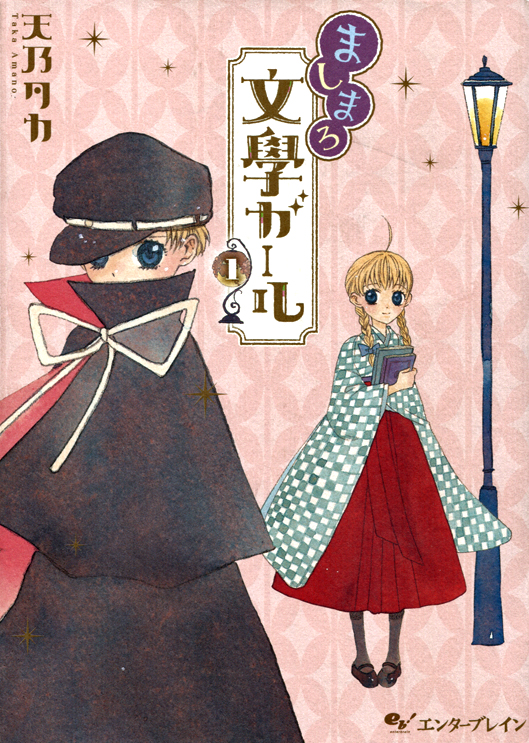
In the late Meiji Period, as Japan undergoes the process of modernization, Hoshino Mone is a student at an all-girls private high school in Tokyo, where she lives with her male guardian, Sei. Although a young woman’s duty is to be beautiful and modest so as to become a suitable bride, Mone has a different dream – she wants to write literature! Literature (the bungaku of the manga’s title) is believed to corrupt women, so Mone cuts off her braids, dons schoolboy clothing, and joins an all-male literature club. Although she must face a bit of drama concerning her choices, the friends Mone makes help her hone her talents and offer her inspiration as they take her on adventures around town. The handsome young literary illustrator Nasuhito knows Mone’s secret but believes in her potential. Nasuhito’s respect for Mone as a fellow artist is not the only source of his warm feelings for her, however.

Although Bungaku Girl was published in the seinen magazine Fellows! – the former name of Kadokawa’s prestige-format monthly serial Harta (ハルタ) – it reads like a shōjo manga from the 1990s, when the influence of series such as Fushigi Yûgi and Cardcaptor Sakura injected elements of gender bending and bishōnen harems into even the most prosaic romance stories. All of the young men in the literature club are impossibly gorgeous, and everyone is decked out in immaculate period dress. There’s a hint of yuri provided by the radiant high school princess Sono, another literature fan who becomes enamored of Mone’s courage and independent spirit, but there are no elements of the male gaze to be found in the manga’s story or art. Instead, there are touches of Mori Kaoru in the close attention paid to historically accurate fabrics, interiors, street scenes, and city vistas.

Bungaku Girl is less about Mone’s cross-dressing and gender identity than it is about her commitment to doing whatever it takes to find a supportive community for what she loves. Many of the story’s most powerful moments occur when the characters are being creative – when Mone is writing, or when Nasuhito is drawing, for instance – and these moments are reinforced by being framed within the sense of belonging to a group of people all working together to share their ideas and produce something tangible. For us nerds who have studied modern Japanese literary history, there are pleasurable echoes of the student groups, coterie magazines, and research trips into pleasure districts associated with real-life literary figures.

This two-volume series is only available in Japanese, but it would be really cool if someone were to license it in North America. The story is simple and charming, the characters are adorable, and the art is clean and attractive. Bungaku Girl offers love, drama, and interesting imagery, not to mention encouragement to leave your comfort zone and live your dreams!

Bungaku Girl Volume 1 Page 23

I… want to join your literature club!

Three Directions

Three Directions

Title: Three Directions: teamLab, Tenmyouya Hisashi, Ikeda Manabu
Editor: Kirstin Pires
Publisher: Chazen Museum of Art and Japan Society Gallery
Publication Year: 2014
Pages: 83

Three Directions was published on the occasion of an exhibition of the work of Tenmyouya Hisashi and Ikeda Manabu at the Chazen Museum in Madison and the Garden of Unearthly Delights exhibition at the Japan Society Gallery in New York, which lasts until January 11, 2015.

The “three directions” of the book’s title refer to the artists’ interpretations of early modern and modern Japanese art, specifically the Nihonga “Japanese-style painting” of the Meiji period (1868-1912). In her short essay on the works of the artists featured in Three Directions, curator Laura J. Mueller provides insight into the influences they have received from medieval and Edo-period (1600-1868) Japanese paintings, prints, sculpture, and garden design. Mueller also explains how the themes of the older art, such as the theme of anxiety surrounding the relationship between humankind and the natural world, have been translated into the work of the contemporary artists. In the main body of the book, which is comprised of extended interviews, the artists discuss their own perceptions of their influences, which are far more temporally immediate.

.

teamLab, whose work must be seen to be believed (check out the video above), is represented in Three Directions by its founder Inoko Toshiyuki, who talks about the power of participatory media in the twenty-first century. Although he references manga such as Dragon Ball and One Piece and the masume ga (mosaics) of the eighteenth-century painter Itō Jakuchū, his most interesting description of the philosophy behind teamLab’s video installation Life Survives by the Power of Life (Seimei wa seimei no chikara de ikite iru) is that Chinese characters function like summon spells from the Final Fantasy series of role-playing video games. Inoko’s emphasis on a range of interlocking influences is deliberate, as teamLab’s work is designed to illustrate the blurring of the boundaries that supposedly separate contemporary media as they collectively exist both as entertainment and as cognitive enhancements.

Tenmyouya Hisashi expresses a markedly different attitude concerning his relationship to contemporary and premodern artistic media. According to Tenmyouya, his “Neo Nihonga” reflect “the subculture of the ‘street samurai,'” which “represents a counter to the traditional values of wabi sabi, zen, and otaku,” aesthetics that are “far from the reality of contemporary Japan.” Instead, he sees himself as tapping into the energy that originally drove the artistic movements of the Sengoku period (1467-1600), an era of intermittent civil war. Tenmyouya envisions his work as being representative of an aesthetic he terms BASARA – the Sanskrit word for “diamond,” which seems to mean “rebellious” in the context of his art and ideology. As one of his primary influences, he cites the yakuza films of Kitano Takashi, especially the violence, chaos, and dynamism they portray.

Ikeda Manabu is less concerned with aesthetics than he is with process. Stating simply that the most dominant theme in his work is “the conflict and coexistence between man and nature,” Ikeda speaks of being influenced by news reports and the ephemera he encounters in his daily life. The rest is a matter of design, focus, and patience, with the result being that many of his ink paintings function almost like diaries.

Ikeda is currently in residence at the Chazen Museum – you can read his residency blog here – where he is putting together a large and richly detailed masterwork. Three Directions includes an eight-page section on Ikeda’s tools, methods, and progress, which are fascinating even from the perspective of a non-artist.

These interviews with the artists, combined with Laura Mueller’s short contextual essay and the many high-quality images on display, make Three Directions an incredible resource for anyone interested in contemporary Japanese art, aesthetics, and culture. A commonality between the artists is the 3.11 “triple disaster,” which each references and responds to either obliquely or quite directly, so the interviews in particular will be of interest to students and scholars curious about how recent events have impacted mainstream art in Japan. I can also imagine the catalog becoming a useful classroom text, as it’s full of discussion points and allusions to both Eastern and Western art history.

Unfortunately, the book is almost impossible to acquire without either physically visiting the Chazen Museum or Japan Society Gallery or writing to one of their curators, as it’s not available through the online shops of either institution or through other online retailers. If you’re on the East Coast and can make it out to the Japan Society, I highly recommend checking out both the Three Directions catalog and the exhibition itself, which is running until January 11, 2015.

Review copy provided the Japan Society Gallery.

Ikeda Manabu, Meltdown

Ikeda Manabu’s Meltdown, image courtesy of Spoon & Tamago.

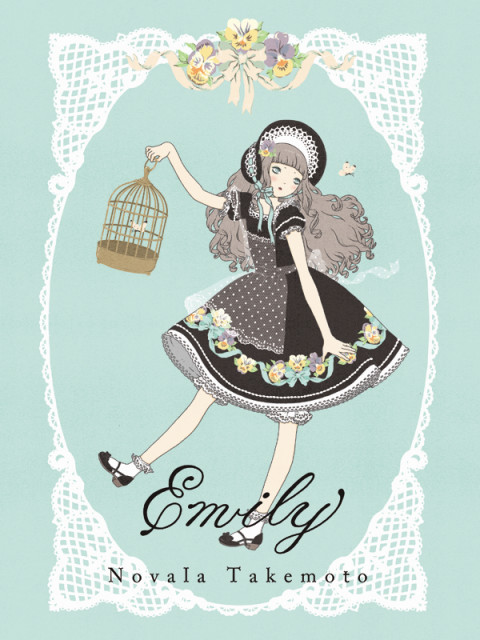
Emily

Emily

Title: Emily
Japanese Title: エミリー (Emirii)
Author: Takemoto Novala (嶽本 野ばら)
Translator: Misa Dikengil Lindberg
Publication Year: 2013 (America); 2002 (Japan)
Publisher: Shueisha English Edition

There are two short stories and one novella included in Takemoto Novala’s collection Emily, which was nominated for the Mishima Yukio Prize (for popular established writers) in 2003. “Readymade,” which is only a few pages long, is written in the form of a confession of a young female office worker to an older male colleague who takes her on a date to an exhibition of French Cubist art at the Ueno Royal Museum. “Corset” is told from the perspective of a male illustrator in Kyoto who plans to indulge in a short romantic relationship with an engaged woman before committing suicide in honor of a deceased friend. The novella Emily is about two high school misfits devoted to street fashion.

The two short stories are wonderfully atmospheric and can be read as treatises on Lolita aesthetics. Both stories follow the pattern of an older and self-assured man aggressively offering instruction to a naïve younger woman characterized as a tabula rasa, and they’re less about suspense and development than they are about establishing a colorful and stylized worldview.

To give an example from “Corset”:

“Wouldn’t it have been great if you and I had been born in the nineteenth century?”

“Yes. Sometimes I really think so. But I also think that if you and I had been born in the nineteenth century, maybe we’d still be complaining, saying, ‘Wouldn’t it have been great if we’d been born in the eighteenth century?’ Perhaps it’s not this era that we dislike, but the state of being in the present that doesn’t agree with us.”

“You mean no matter what era we were born in, we’d always long for the past and have nothing but despair for the present? Maybe you’re right. So there’s no way out except death.”

“Regardless of how the times change, as long as you are alive, you’ll be full of nothing but discord with the world around you.”

Such sentiments provide a fitting prelude to the novella Emily, in which the narrator truly is out of sync with the world in which she lives. This is not her personal failing, but rather a failing on the part of a society that refuses to accommodate diversity and always seeks a scapegoat. Emily‘s narrator, who enjoys visiting the Laforet shopping center in Harajuku and dressing in cute street fashions, has become a target for the other girls in her high school, who subject her to bizarrely cruel forms of bullying:

They sometimes made me stand in the middle of the court with my hands bound, as they spiked balls at me. I had to take the hits directly to my body as the seniors spiked and then ordered others to spike. There was no way I could run. If the balls had been coming from one direction, I could have escaped, but they came from all directions. Every ball hit me. It was a game to them. If a ball hit my body, they scored one point. If it hit my face, they scored five points. And if it knocked me over, they scored ten points.

The narrator isn’t subject to abuse just from her classmates and volleyball club teammates, but also from her mother, who is disappointed that she was unable to become a child television star, a path the narrator refused to follow after she suffered abuse of another kind. Instead of becoming bitter or resentful, however, the young woman finds joy in the self-expression she realizes through clothing that flies in the face of conformity and social expectations. In fact, it seems only natural to the reader that she would use street fashion to carve out a comfortable refuge for herself away from her school and family.

Through a shared interest in the Emily Temple Cute brand, the narrator becomes friends with a boy who also hangs out around Laforet. It turns out that he’s a student at her high school, and he’s also being bullied because he came out as gay to another male student. After one particularly frightening incidence of bullying that threatens the life of the narrator, her friend flies into a rage and attacks her tormentors before fleeing the school grounds. The narrator tracks him down in Shibuya, and they have a long heart-to-heart conversation that is both touching and extremely painful.

Although Emily addresses real social issues, like the two other stories in the collection, its themes are exaggerated, and the style in which it is written is clearly stylized. Readers searching for absolute mimetic realism probably won’t be impressed, but fans of young adult fiction – including young adults – will be moved and swept away by the entire collection.

Included at the end of Emily is a lengthy and illuminating interview with the author, Takemoto Novala.

Although the translation is only available as an e-book, its short length (probably fewer than 150 pages) would make it a perfect classroom text should it ever become available in a paperback edition.

So, you’re intrigued by Emily. You should be! The publisher, Shueisha English Edition, has put up a lovely website to help promote the book. But you’ve searched on Amazon, on Barnes and Noble, on Kobo, and on iBooks, and it’s nowhere to be found. What gives?

It turns out that Shueisha English Edition titles were only available through the Sony Reader digital storefront, which was shut down earlier this year (2014). When the Sony Reader store closed, an announcement was posted stating that all Sony Reader titles would be transferred to Kobo. An April 2 post on the Shueisha English Edition Facebook page reads as follows:

We’re very sorry but our move to Kobo won’t happen very soon. We’re still talking with our possible representative in the States.

On June 29, the following update appeared:

Ours is an editorial team only working for Shueisha English Edition, and has no connection to Shueisha’s other operations. We’ll restart our publication soon when we reach an agreement to our next retailer. Please don’t send any inquiries about Shueisha’s other publications and rights/licensing business. We simply cannot answer to any such questions and requests. Thank you for your patience and we’re working hard on our future titles. Please wait for some more for our official announcements and new titles.

Since then, nothing.

It seems as though the publisher has disappeared, which is a shame, since it was off to a fantastic start, regularly putting out lovely digital books with excellent bonus materials and carefully crafted promotional websites (such as those for Shimizu Yoshinori’s Labyrinth and Makime Manabu’s The Great Shu Ra Ra Boom). In an interview on the SCBWI Japan Translation Group’s webpage, the Shueisha English Edition editor in chief, Yoshio Kobayashi, outlines the care and attention put into the translation, editing, and presentation of each of the publisher’s titles. Although I don’t have access to any of these other titles, Emily is a cool little book, and I imagine that it would have been able to find a sizeable audience through the appropriate distribution channels.

Although I understand that the collapse of the Sony Reader Store must have been a major blow, I can’t even begin to imagine what’s going on with Shueisha English Edition, especially since the publisher is working with such fantastic and high-profile authors and translators. I can only hope that good news is forthcoming from them soon.

Review copy provided by Shueisha English Edition.

Vibrator

Vibrator

Title: Vibrator
Japanese Title: ヴァイブレータ (Vaiburēta)
Author: Akasaka Mari (赤坂 真理)
Translator: Michael Emmerich
Publication Year: 2005 (America); 1998 (Japan)
Publisher: Soft Skull Press
Pages: 155

Vibrator is not an easy book to read.

In the first twenty pages, the 31-year-old bulimic narrator describes her strategies for throwing up after meals. Apparently, the trick is to not allow the food to digest. Soda water helps too, it seems. Alcohol complicates matters, but it’s difficult to give up entirely, because it makes the voices go away.

As you might imagine, the narrator of Vibrator has Issues. The first third of the novel is occupied by her nerve-wracking, stream-of-consciousness jabber. What’s perhaps most disturbing about the narrator’s ranting is not that it so accurately reflects narratives of self-hatred and self-doubt, but that the circumstances she describes make her anxieties and self-destructive behavior seem entirely justified. Being an independent woman in a man’s world is hard, and the narrator knows that her beauty will fade as she grows older, thus depriving her of her only advantage over her male colleagues. Moreover, as a female journalist, the narrator is placed in situations in which she must comment not as a professional but as a representative member of her gender, which she finds banal and insulting. To anyone – male or female – who’s ever resented her job or lamented her relative lack of professional success, the narrator’s complaints will be painfully familiar.

One snowy night, after buying a liquid dinner in a Family Mart on her way home, the narrator almost runs headlong into a tracker-trailer on the edge of the convenience store parking lot. The driver, a twenty-something named Okabe, invites her into the cab. The narrator wants to spend more time observing the white world generated by the snow flurry, and she feels as if she has nothing to lose, so she accepts his offer. They talk while drinking, and before long they’re on the road to the northern Tōhoku region. Sex is involved, but more interesting than the smut is the intimacy of Okabe’s story about dropping out of high school to become a low-ranking member of a yakuza clan.

Vibrator is not quite a love story. At the end of the book, there’s no indication that the sudden relationship between the narrator and Okabe will amount to anything beyond the single ride they share. Still, it’s lovely to witness the garbled voices in the narrator’s head slowly fade as she is calmed by vibrations of the truck’s engine (the “vibrator” of the title) and Okabe’s placid self-assurance. Even if the narrator is unable to achieve any deep or permanent connection with Okabe, her escape from her own head and engagement with the landscapes flashing past the truck’s windows is satisfying and meaningful.

Vibrator may not an easy book to read, but it’s certainly worth reading, if only to witness the skill with which the translator, Michael Emmerich, has rendered its narrator’s many voices.

If you live in the United States, Hiroki Ryūichi’s 2003 cinematic adaptation of Vibrator is streaming on Netflix. The film features gorgeous long shots of the Japanese countryside, and the director effectively removes the characters from the narrator’s incessant stream-of-consciousness commentary, which creates an entirely different atmosphere for the story. Tom Mes highly recommends this movie, and it’s a beautiful interpretation of the novel.

Attack on Titan: Before the Fall

Attack on Titan Before the Fall

Title: Attack on Titan: Before the Fall
Japanese Title: 進撃の巨人 Before the fall (Shingeki no kyojin: Before the fall)
Creator: Isayama Hajime (諫山 創)
Author: Suzukaze Ryō (涼風 涼)
Illustrator: Thores Shibamoto (THORES 柴本)
Translator: Ko Ransom
Publication Year: 2014 (America); 2011 (Japan)
Publisher: Vertical
Pages: 199

The year 743. Mankind was facing extinction at the hands of the Titans that had suddenly appeared at the center stage of history. Where had they come from, and what was their purpose? Some said that they were natural disasters, while others insisted that they were divine retribution. Either way, mankind had been reduced to a simple, clueless prey whose total population had plummeted to 500,000.

I am heavily invested in the Attack on Titan franchise, and I enjoyed this book. If you are as invested as I am, then you will more than likely enjoy this book as much as I did. In fact, you’ve probably already read it.

If you have no idea what the Attack on Titan franchise is, this book is not a good introduction. Give the opening episode of the anime a shot! It’s worth your time, I promise.

This review is for people who have some experience with Attack on Titan and are wondering if the first volume of the Before the Fall light novel series is any good. I think it is! Despite being a bit shallow, it’s a fun read.

The story is set before Isayama Hajime’s original Attack on Titan manga, when the human race has only been living within a massive walled city-state for a few generations. The action of this novel occurs before the events of the Attack on Titan: Before the Fall manga, which adapts the events described in the second and third books in the Before the Fall light novel series.

The first novel in the trilogy is an account of the development of the Three Dimensional Maneuver Gear that allows human beings to fight the giant murderous creatures roaming outside the city walls. This equipment, along with the swords that accompany it, are the work of a young engineer named Angel Aaltonen, who is aided in his efforts by his bright assistant Corina Ilmari and his older colleague Xenophon Harkimo, who specializes in gunpowder and chemical flares. Jorge Piquer, the leader of the Survey Corps military unit specializing in missions outside the walls, is interested in this equipment, hoping that it will allow a human to finally bring down one of the Titans, which are considered immortal. Titans are not the only enemies Angel and Jorge will face, however, as there is considerable political pressure to seal the gate leading outside the wall and thus disband the Survey Corps.

Attack on Titan: Before the Fall is a light novel, and it reads like one. Paragraphs and sentences are short, and the writing is simple and straightforward. There’s also not a great deal of complexity in terms of characterization or character motivations. The reader is assumed to be familiar with the world in which the story is set, so the book doesn’t offer much world building, and nothing is learned that isn’t already covered in the first season of the anime series. As a result of this “lightness,” most of the plot developments in the novel seem too easy. For example, Angel’s inventions are made possible by the discovery of two materials in the lands enclosed by the walls: Iron Bamboo, which is strong and durable despite being light and flexible, and Iceburst Stone, which provides an endless supply of steam energy under certain conditions. Both of these materials are impossibly convenient, and Angel’s team experiences almost no hardship in learning to manipulate them.

What the book can offer the reader are finely crafted action sequences which work well without a visual element, which is no mean feat. Although someone who hasn’t seen the animated adaptation of Isayama’s manga may be confused regarding how large the Titans are relative to humans and what sort of movement the Maneuver Gear allows, a reader already familiar with the visual stylizations of Attack on Titan will be treated to several tense battles. The universe created by Isayama is like Westeros in that important characters can die horribly at any point in the story, so the suspense generated by these fight scenes is gripping.

Suzukaze Ryō’s vision of the world of Attack on Titan is interesting and entertaining, even if it discloses no major revelations. The light novel style of writing makes the book a quick read, and the action scenes are fast paced and attention grabbing.

If you’re not into the animu and mangos, feel free to give this novelization a pass; but, if you’re intrigued by walled cities, government conspiracies, and postapocalyptic struggles against an incomprehensible enemy, you should totally check out Justin Cronin’s The Passage, which is the perfect blend of Attack on Titan madness and highly accessible Stephen King-style storytelling.

Death and the Flower

Death and the Flower

Title: Death and the Flower
Japanese Title: 死と生の幻想 (Sei to shi no gensō)
Author: Suzuki Kōji (鈴木 光司)
Translators: Maya Robinson and Camellia Nieh
Publication Year: 2014 (America); 1995 (Japan)
Publisher: Vertical
Pages: 222

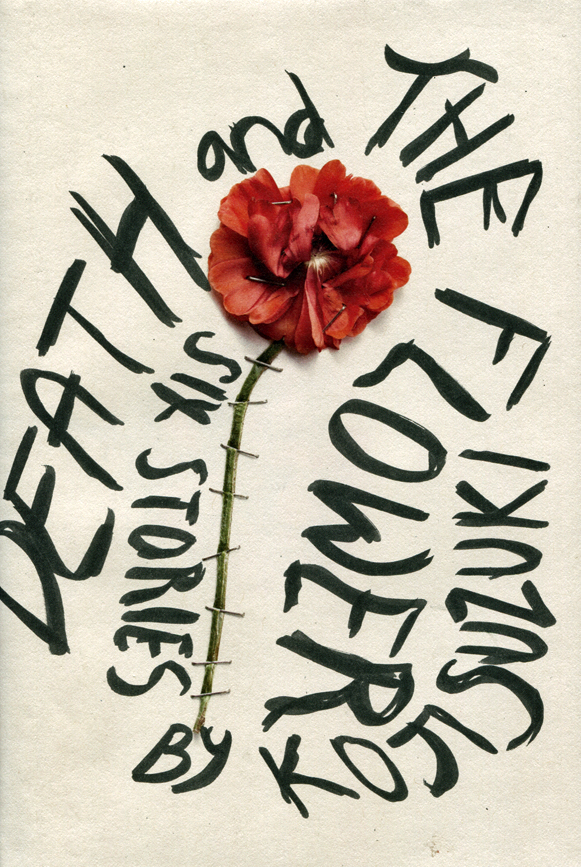
Death and the Flower is beautifully printed. Its paper is deliciously creamy, and its gorgeously designed book cover and dust jacket complement each other perfectly. Veritcal’s hardcover edition is one of those books that makes me happy that publishers still put time and effort into putting out physical books that you can hold in your hands and admire on your bookshelf.

But the stories themselves? They’re not really all that great.

In his Afterword, Suzuki writes:

I tried collecting six works with a common theme – a theme represented by the words “diapers and a race replica.” The softness and warmth of diapers, the speed and power of a racer’s motorbike – I wished to express a balance of the maternal and the paternal by placing symbols of femininity and masculinity side by side.

What this essentially means is that each story is about a father who undergoes various hardships for the direct or indirect benefit of his wife and/or daughter(s), who are nothing more than empty symbols vaguely characterized by emotional damage and blind need. In other words, men are capable of embodying “a balance of the maternal and the paternal,” and girls and women exist merely for the sake of helping men undergo character development in order to realize their full potential. These female characters don’t need to have names, or thoughts, or feelings, or any sort of identities save for their relation to the male heroes.

This in and of itself is not necessarily bad. However, if everything in piece of fiction is going to be diegetically subservient to the ego of the protagonist, then I would prefer for the protagonist to be interesting. Unfortunately, none of Suzuki’s characters really grabbed my attention or sympathy. Instead, just as the female characters of this collection are almost platonic embodiments of Object, each male character isn’t a great deal more than a Subject with a few shallow personality traits pathetically attached like a handful of cheap ornaments haphazardly stuck onto an otherwise bare Christmas tree.

The first story in the collection, “Disposable Diapers and a Race Replica,” can serve to illustrate my point.

The narrator, an obvious author stand-in character, quits his job to devote himself to his writing and the care of his infant daughter. To help his wife make ends meet, he moonlights as a private tutor. His current client is a delinquent high school student who has begun to skip out on tutoring sessions after the school system fails to reward him for his increased efforts, so the narrator tracks him down on his motorcycle and is driven off the road and nearly killed by the kid’s friends. The next day, the narrator shows up unexpectedly at the kid’s house and beats the crap out of him in order to figure out where the driver who almost killed him lives. He then proceeds to go to the other kid’s house and, finding him not at home, beats the crap out of the kid’s car. After he’s satisfied himself, the narrator encounters the driver and condescends to not beat the crap out of him because he, the narrator, is actually a good guy deep down inside. The only thing that saved him from dying when his bike crashed was the huge bag of diapers he had tethered to the back of the bike, you see, and this is some kind of message about how he needs to stop jumping headfirst into fights, even though he could totally win them if he did get into them, because of course he could – he’s just that kind of guy.

Since the narrator interacts with the other male characters by yelling and punching, his character development is guided by his interactions with the story’s two female characters, his student’s mother and his wife. The narrator tries to be kind to his student’s mother, even though privately he thinks she’s a weak and ineffectual parent. This must be because, being a woman, she isn’t clever enough to know that you need to threaten to beat the crap out of boys to make them respect you. As a mentor and role model, the narrator is thus defined by what he is not – female, and thus “stupid.” Meanwhile, the narrator’s wife is a delicate flower who must not be upset or disturbed under any circumstances, as she has some sort of nervous disorder. This disorder is typified by the anxiety she demonstrated when he effectively abandoned her during their engagement to go live on a tuna fishing boat for a year. Why was she so upset about this, and why is she concerned about his level of commitment to their relationship? It must be because of her nervous disorder, obviously. Women and their unreasonable hysteria, amirite? Anyway, as a father and caregiver, the narrator is again defined by what he is not – female, and thus “crazy.”

Character development through negative contrast does not make for good storytelling, especially when the primary conflicts of a story hinges on an internal crisis of its protagonist. In Death and the Flower, each such crisis is resolved by a realization of something along the lines of “I am a burly hairy dangerous manly alpha male, but I need to embrace my more ‘feminine’ side so that I can better protect the utterly helpless women in my life.” Maybe this is just me, but I don’t find that sort of resolution too terribly compelling. For a such a revelation to be truly interesting, there need to be more 1980s seinen manga style swords and/or psychic power attacks demonstrating how a small compromise in an otherwise unadulterated beefcake masculine identity can constitute a genuine sacrifice.

What Suzuki excels at in Death and the Flower are his descriptions of urban and natural landscapes. I was particularly impressed by the third story in the collection, “Key West,” in which a father leaves his young daughter in a rental car by the side of a highway in Florida to walk out to a small offshore island connected to the coast by a sandbar. On the island, the father encounters an abandoned settlement overgrown with jungle. Although his parenting skills leave much to be desired, the father’s accounts of the greenery and derelict buildings, the comparisons he makes to his home in Tokyo, and his detailed examination of the complicated feelings the island evokes in him are all magnificent. The simultaneously intense yet hazy quality of the fever dreams he experiences after being bitten by a sea snake is also expertly conveyed by the author. That being said, the father’s grief for his dead wife as expressed by his half-hearted desire to protect his daughter is largely undeveloped and feels out of place within the larger themes of the story, which mainly seem to involve the narrator’s fear of his own encroaching middle age.

To return to the collection’s Afterword, Suzuki writes:

“Only a peaceful and safe world is worth living in” – far too many people seem to think so.

Putting aside the tastelessness of such a statement, I think the author’s writing is indeed at its best when his characters have a worthy antagonist to battle. The major draw of Ring, for instance, is Sadako, the evil girl who spews her curses out into the world from inside a well. The longest story in Death and the Flower, “Beyond the Darkness,” is perhaps the strongest, as its father protagonist character is provided with a creepy stalker to serve as an acceptable outlet for his anger and tendency toward physical violence. As introspection-driven character pieces, however, the rest of the stories in the collection fall flat.

If you’re a Suzuki completionist, Death and the Flower is of interest for its prototypes of the author’s major themes and character archetypes. If you’re looking for good horror fiction or just some good short stories, though, it’s probably best to ignore the pretty cover and take a pass on this collection.

Parade

Parade Novel

Title: Parade
Japanese Title: パレード (Parēdo)
Author: Yoshida Shūichi (吉田 修一)
Translator: Philip Gabriel
Year Published: 2014 (America); 2002 (Japan)
Publisher: Vintage Books
Pages: 230

Do you remember how, maybe around ten years ago, writers like Nick Hornby and Chuck Palahniuk were really cool? You’d read something like Bret Easton Ellis’s American Psycho or Don DeLillo’s Cosmopolis and go, Wow, that’s brilliant! And do you know how now, when you try to pick up one of those writers again, you’re too jaded by movie adaptations trying to make hard-line masculinity and sexual violence seem edgy to really appreciate what the writers were trying to say about urban culture and the weird bonds that form between people and what happens when you’re no longer young and suddenly running out of opportunities to make a fresh start? Have you ever thought it would be kind of awesome to re-experience the excitement of those stories without the nagging annoyance of an ever-present undercurrent of misogyny?

If so, then you need to read Parade. It’s by far the most enjoyable novel I’ve encountered this year. When I first sat down with it, I thought I would read twenty pages and then call it a day; but then, the next thing I knew, I was ninety pages in and terrified that I wouldn’t be able to stop. The novel’s five chapters are recounted by five different characters, each of whom is crazier than the last. I loved all of them, and I had to pace my progress through the book so that I could spend more time in their presence. Like its narrators, Parade is young, and it’s fun, and it’s clever, and it’s psychologically unbalanced (in a good way).

The story is about four people in their twenties who have no idea what they’re doing with their lives. Almost by accident, they’ve found themselves living together in a two-bedroom apartment, where they’ve established an easy and comfortable social space that one of them likens to an internet chat room. In short, each of them is free to be as dysfunctional as he or she wishes without incurring the judgment of the others, and they get along well.

Sugimoto Ryōsuke is a sophomore in college who adores a protective upperclassman and has found himself in a Sedgwickian love triangle with his friend’s girlfriend. When he’s not stalking this girl (with her tacit approval), he’s aimlessly driving around Tokyo in a derelict Nissan March that he’s named Momoko. Ōkochi Kotomi is twenty-three, unemployed, and may or may not be dating an up-and-coming young actor. She spends all day inside the apartment watching tv and waiting for her maybe-boyfriend to call. Sōma Mirai is only a year older than Kotomi but manages a branch of a boutique that sells clothes and accessories imported from places like India and Bali. She’s also an unrepentant alcoholic who frequents gay bars and stays up all night working on digital illustrations based on close-up photographs of male bodies. Ihara Naoki, the apartment’s last remaining original tenant, is pushing thirty and seems the most normal of the group. He works at a small but successful film licensing company and goes on jogs late in the evening while listening to classical music. Every so often Naoki’s nutty ex-girlfriend Misaki appears without warning, has a few drinks, and spends the night on the apartment couch.

One night, Mirai picks up an eighteen-year-old high school dropout named Kokubo Satoru on one of her pub crawls through Shinjuku. Satoru, who does speed in public restrooms and trolls for clients in parks, has no fixed residence and somehow ends up squatting in the shared apartment. His entry into the lives of the four tenants coincides with a string of assaults in the neighborhood that become increasingly violent over the course of the novel. Meanwhile, the unit next door – Apartment 402 – is fairly obviously serving as the headquarters for some sort of shady operation orbited by creepy old men and weeping teenage girls. Despite all this, Ryōsuke, Kotomi, Mirai, Naoki, and even Satoru continue to drift through life largely untroubled by anything that happens outside the confines of their apartment.

For the reader, there is a certain Gothic appeal in unearthing the secrets hidden under the placid comradery characterizing this pseudo-family, but the lack of concern on the part of the people in question drains most of the shock from each revelation. So Ryōsuke is stalking his older male buddy’s girlfriend because he has a weird father complex? It happens. Kotomi is obsessed with an actor not because of lust or emotional emptiness but because of a half-hearted sense of guilt over something that happened when she was a high school student? Whatever, it’s no big deal. By the time the reader uncovers the more sordid secrets of Parade‘s narrators, they’re become more amusing than upsetting; and, if nothing else, knowledge of these secrets only serves to render the continued companionship of the apartment’s tenants all the more touching.

I understand how some people might interpret Parade as a horror story, but it’s really more like an American sitcom about comically mismatched roommates. “Comically mismatched” happens to mean “weaving in and out of the borderlands of sanity” in this case, but the novel still has the potential to generate a lot of warm fuzzy feelings, at least in readers with a healthy tolerance for black humor and antisocial behavior.

Philip Gabriel’s translation is eminently readable, capturing the grit and immediacy of the narrators’ different styles without resorting to easily dated slang or stereotypes regarding urban speech patterns. Yoshida is a popular writer with a distinctive literary voice, which I feel comes across much more clearly in Parade than in Gabriel’s earlier translation of the author’s 2007 novel Villain. That being said, both books are a lot of fun, and I’m looking forward to more of Yoshida’s work appearing in English.

Isao Yukisada, who won a Japanese Academy Prize for his 2005 adaptation of Katayama Kyōichi’s bestselling romance Socrates in Love, directed a movie version of Parade. The film was well-received at the 2010 Berlin International Film Festival, winning a FIPRESCI Award and going on to screenings at festivals all over Europe and North America. I had a chance to catch the movie at a showing during that year’s Philadelphia Film Festival, and it was really good. I highly recommend Yoshida’s original novel, of course; but, if you get an opportunity to see Isao’s cinematic adaptation, go for it!

A review copy of Parade was kindly provided by Vintage Books.

Parade Movie Poster

The Guest Cat

The Guest Cat

Title: The Gust Cat
Japanese Title: 猫の客 (Neko no kyaku)
Author: Hirade Takashi (平出 隆)
Translator: Eric Selland
Publication Year: 2014 (America); 2001 (Japan)
Publisher: New Directions
Pages: 140

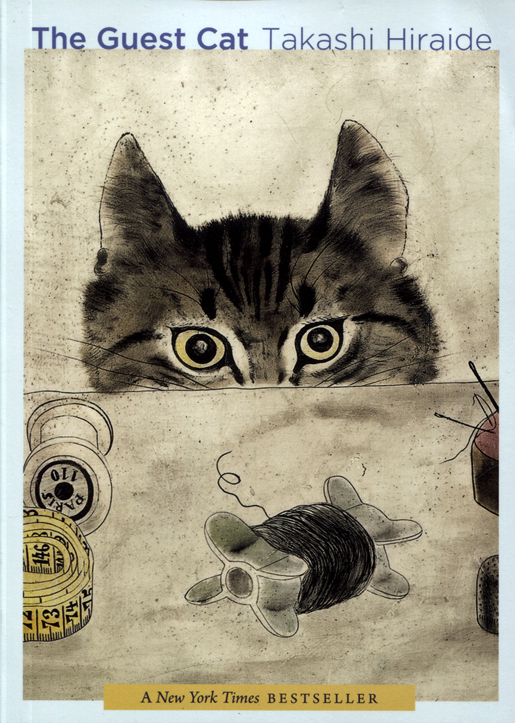
The Guest Cat is set in 1988 in a residential neighborhood not too far away from Shinjuku Station, where the young narrator lives with his wife in a rented house located on the property of an old estate. The narrator’s house faces a narrow side street that he calls “Lightning Alley” because of its sharp, zig-zagging turns. A young housewife and her son live in a house next door that shares the shade of an ancient zelkova tree with the narrator’s house. A cat wanders into the housewife’s garden, and her son becomes enamored with the creature. Despite the protests of the woman living in the main house of the larger estate, who claims that the neighborhood cats ruin her garden and track dirt inside her house, the boy is allowed to keep the small white-mottled cat, which is promptly given the name Chibi, meaning “little one.”

The novel moves elliptically through several stories, gradually passing from point to point by way of meandering descriptions of the outside alley, the estate garden, and the narrator’s house in relation to the space and weather outside. The narrator has just worked up the courage to quit his job as a literary editor in order to pursue his own writing projects, but he only has enough money to help his wife maintain the household for about a year and a half. The narrator’s close friend dies from cancer, and the narrator worries about his own health as the Shōwa emperor grows ever weaker on his deathbed. The woman who owns the estate lives alone save for her aging husband, and she’s not too young herself; it’s uncertain what will happen to the property when she passes away, as land prices have risen exorbitantly in the bubble economy. Most importantly, Chibi develops new mannerisms and behaviors as she becomes more familiar with the narrator and his wife, who in turn grow and change through their interactions with her. The chapters are short (between three to six pages), each focusing less on any sort of ongoing plot and more on brief and vibrant observations on how the world appears differently when it’s centered around a cat instead of around other human beings.

The style of the novel is naturalistic in its minute attention to the detail of mundane life and reminds me of nothing so much as the short fiction of Shiga Naoya or the realistic fiction of Akutagawa Ryūnosuke (of the kind collected in Mandarins), in which the discomfort caused by writer-narrator’s cold is made palpable by a catalog of what can only be noticed when one is confined to bed but cannot sleep, such as how a lizard crawls into a sliver of shade on the bedroom windowsill to escape the sun, or how Chibi admires herself in the mirror before leaping from the mirror stand onto the top shelf of the closet. As one imperial era transitions into another, the narrator and his wife experience major changes in their life, including a particularly traumatic event involving Chibi whose full impact does not become clear until the very last page of the story. Throughout everything, Hiraide focuses on brief moments and small sensory details such as the pleasant chilliness of a breeze or the pattern of light and shadow cast by the sun shining through tree leaves. While it is possible to glean several layers of meaning from each episode (one scene involving a praying mantis eating a locust particularly rewards analysis), it’s also well within the reader’s right to simply allow herself to be carried by the relaxed current of vivid impressions.

I’ve recently started reading about the Deep Ecology movement, which is above all concerned with animal rights, as well as how respect for these rights can shape the nature of the relationship between human and non-human animals. I’ve become a fan of Marc Bekoff’s blog Animal Emotions, which comments on current events and summarizes scientific research in order to build a case for a more inclusive and compassionate understanding of animal psychology. It’s been interesting to read Bekoff’s work alongside The Guest Cat, in which different characters betray vastly different attitudes towards animals through their interactions with Chibi. I was especially intrigued by the shifting tides of the narrator’s wife, who claims not to be a cat person:

As she finished the poor sparrow’s burial my wife repeated her earlier declaration – “I won’t hold Chibi,” she said. “It’s more gratifying to let animals do whatever they like.”

As April came around, gossamer-winged butterflies covered the garden, dancing just above its surface and coloring it a blue-gray. It seemed impossible for anyone walking in the garden to avoid stepping on them.

What’s interesting about animals, my wife explained, is that even though a cat may be a cat, in the end, each individual has its own character.

“For me, Chibi is a friend with whom I share an understanding, and who just happens to have taken on the form of a cat.”

Even though the narrator’s wife is attached to Chibi, she respects the cat’s autonomy and individual character, thus abstaining from direct interaction. The narrator, on the other hand, becomes fiercely jealous of the cat’s affections at a certain point, and it becomes increasingly apparent that Chibi’s primary caretaker, the housewife next door, also possesses strong emotions concerning the cat.

Although other readers may interpret this autobiographical novel differently, to me, the primary dramatic effect of The Guest Cat is not so much a result of its human characters and the socioeconomic environment they occupy, but rather a process arising from the ideas and emotions animals inspire in humans as they become attached to individual creatures and are refracted into the wider world.

The Guest Cat is equally capable of acting either as a quick pleasure read for cat lovers or as a starting point for applied literary ecocriticism. Either way, it’s a neat little book!

The Princess of Tennis

The Princess of Tennis

Title: The Princess of Tennis
Author: Jamie Lynn Lano
Publication Year: 2014
Publisher: Amazon CreateSpace
Pages: 203

The Princess of Tennis the Jamie Lynn Lano’s non-fiction memoir of the year she spent working as an art assistant for Konomi Takeshi’s mega-popular manga Prince of Tennis, which has been serialized in one form or another since 1999. If you’ve ever wondered about the gritty details of the manga industry in Japan, then this the book for you, as the author’s account of her apprenticeship to a successful manga artist is rich with colorful descriptions enhanced by numerous photographs and illustrations.

The book jumps right into Lano’s position as an art assistant without much preamble: she applies for the position on page 3, gets a callback on page 6, and is being driven to Konomi’s studio on page 9. The reader is able to piece together details about her life outside The Princess of Tennis over the course of the following pages as she plunges headlong into her new job. She has graduated from art school, she has never drawn manga-style illustrations using professional tools (such as screentone and a maru-pen), she teaches English in Japan, and she doesn’t speak much Japanese. She’s also more of a fan of the Prince of Tennis anime than she is of the manga, thus rendering her qualifications as an art assistant for Konomi somewhat dubious. Still, she takes the opportunity when it is offered to her, and she ends up having an amazing experience. As she writes in her prologue, “This book is for anyone who has ever wondered if they should make a choice to take the scary but tempting new opportunity in front of them.”

Lano promptly quits her job teaching English, and from that point forward she gets paid to draw, to play golf with Konomi and the other assistants, to draw, to watch a live performance of the Prince of Tennis musical with Konomi and the other assistants, to draw, to drive around Chiba prefecture with Konomi and the other assistants, to draw, to go out to eat with with Konomi and the other assistants, to draw, to attend the JUMP Festa industry-sponsored fan event with Konomi and the other assistants, to draw, and so on. Along the way, Lano learns professional manga illustration techniques such as how to trace backgrounds and how to draw speed lines. She also enjoys several chances to express her talent and creativity, especially concerning character design, and she ends up influencing critical visual aspects of the manga, such as the logo and patterns that adorn the jerseys worn by the main characters. Along the way, she becomes friends with her fellow assistants, her fellow fans, and even one of the actors starring in the Prince of Tennis musical.

The main tension of Lano’s narrative comes in around halfway through the book, when the sparkles have faded from her vision of Konomi Takeshi and the star-studded universe that revolves around him. Although many of the miscommunications in the first half of the book are related to Lano’s self-proclaimed lack of proficiency with the Japanese language, the miscommunication in the latter half of the story stems mainly from industry-standard assumptions regarding the role of manga art assistants, who are apparently allowed very little freedom and personal space while they’re on the job. Assistants eat, sleep, and bathe in the studio, and they aren’t really allowed to leave the building, even when they have no work to do. This is especially hard on Lano as she struggles with relationship and visa issues. After the initial heady rush of drawing marathons and group outings, the frustration arising from the paradoxical combination of impossible work deadlines and being expected to kill time in the studio despite pressing personal concerns forces Lano to question whether she wants to continue her job as an art assistant to Konomi. Her doubts are complicated by similar disappointments on the part of her coworkers, not to mention Konomi’s own admission that he himself hated being an art assistant. Although the reader knows from the beginning that Lano will resign, I still found the details surrounding the ending of this particular chapter in her life to be unexpected and dramatic.

As someone who reads self-published Kindle singles the way that some people eat potato chips, I have encountered my fair share of author-edited writing so awful that it would make any respectable connoisseur of fan fiction cringe with shame and embarrassment. Despite being self-published through Amazon’s CreateSpace independent publishing platform, The Princess of Tennis is beautifully edited and perfectly formatted, with no typos or grammatical errors to be seen. If you’re intrigued by Lano’s story but worried about the presentation of a self-published memoir, fear not; everything about The Princess of Tennis is polished and professional.

Lano’s style is colloquial without being breezy, and her mixture of exposition, explanation, dialog, and interior monolog is fast paced and reader friendly. It’s true that certain aspects of the text, such as emotional reactions rendered in caps lock sentence fragments, are reminiscent of the style of blogging common to fannish social networking hubs like Livejournal and Dreamwidth, but I found such instances of internet language humorous and charming. If you feel that occasional asides such as OMG HOW EMBARRASSING!! inserted into otherwise cleanly structured prose are a deal breaker, then you’re probably not the target demographic for this book anyway.

For the rest of us, The Princess of Tennis is an entertaining glimpse into the lives of the creators working at the top of the manga industry in Japan, not to mention an artfully presented memoir tackling the theme of dealing with intense emotional conflict while following a long-cherished dream. Even if you don’t know anything about the Prince of Tennis manga, it’s still worth checking out Jamie Lano’s lovingly crafted book.

The Princess of Tennis can be purchased as a print or a digital edition on the American and UK Amazon websites, as well as in a digital edition on the Australian Amazon website. Lano frequently updates her blog Living Tall in Japan with illustrated essays on manga and the manga industry, so check her out there too if you’re interested!