The Book of Tokyo

The Book of Tokyo

Title: The Book of Tokyo: A City in Short Fiction
Editors: Michael Emmerich, Jim Hinks, and Masashi Matsuie
Publication Year: 2015
Publisher: Comma Press
Pages: 180

In his introduction to this collection of ten short stories, editor Michael Emmerich writes:

In a sense, you might say that the stories of this anthology unfold within a landscape more imagined than real – that they create a Tokyo of their own by drawing on a rather abstract sense of the moods of certain sections of the city, or on a vision of Tokyo and the smaller areas it comprises that is more conceptual than physical. (x)

This is a perfect description of The Book of Tokyo, which offers the reader less of a detailed illustration of an urban landscape than it does a vivid sense of the energy and potential generated by a city inhabited by 13.5 million people, every one of whom has a story.

In Furukawa Hideo’s “Model T Frankenstein,” a monster that may or may not be a shapeshifting goat escapes one of the Izu Islands on a ferry and makes his way to Tokyo to assume a new identity as a ‘Japanese.’ He has to kill a few people along the way, but he eventually makes a home for himself in Shinjuku. In “Picnic,” Ekuni Kaori sketches a relationship between a disaffected couple whose hobby is to have designer picnics in a park by their house, an activity that makes them marginally less alienated from one another. Kakuta Mitsuyo’s “A House for Two” is an ode to the trendy comforts of urban living. The pleasure the narrator derives from walking through the city has its roots in her relationship with her mother, whom she whom once bonded with over luxurious foreign clothes and who now commands a greater share of her affections than any man ever could.

The cosmopolitanism of Tokyo is on full display in Horie Toshiyuki’s “The Owl’s Estate,” in which the male narrator, a sushi chef and secondhand book dealer, finds himself in a strange rundown building in West Ikebukuro inhabited by foreign girls of dubious employ. In the end, though, there’s nothing particularly French or Australian or American about the way these girls enjoy drinking and laughing and being silly with each other. The single father protagonist of Yamazaki Nao-Cola’s “Dad, I Love You” must navigate his way through a maze of foreign brand names, cuisines, and business owners over the course of his day before coming home to his daughter, who encourages him to keep going with the joy she finds in things that transcend culture, such as how large the full moon looks in a clear night sky. The young woman who narrates Kanehara Hitomi’s “Mambo” doesn’t even care where she’s going when she gets into a taxi with a stranger; she’s just looking for adventure in the city.

Yoshimoto Banana’s “Mummy” encapsulates the theme of the entire collection, which is that every random encounter between strangers is accompanied by a galaxy of possibilities. A female undergrad agrees to be walked home by a male graduate student studying Egyptology. He cautions her that there’s a killer loose in the neighborhood, and it would be unsafe for her to go out alone. She suspects that he might be the murderer, but her physical attraction to him is so strong that she resigns herself to her fate. Although the grad student isn’t a criminal, he does turn out to be a complete weirdo, and the narrator has to forcibly restrain herself from judging him and the course his life takes after they go their separate ways. When surrounded by so many potential paths, she asks herself, how do you know that your own is “necessarily the correct and happiest one” (52)?

My favorite story in the collection is Kawakami Hiromi’s “The Hut on the Roof.” The main setting is an izakaya pub, where the divorced narrator, an English teacher, eats and drinks and hangs out with older men from her neighborhood. After becoming close to them through the process of exchanging casual but repeated interactions, she eventually learns the story behind the peculiar living arrangement of a local fishmonger who has befriended her. The story doesn’t have a plot, exactly, but it conveys an almost palpable sense of living your own individual life surrounded by people whom proximity has drawn into a loose yet friendly community.

Don’t let the cover fool you – despite the flying cranes and Shintō gate and temple and Chinese lanterns, the The Book of Tokyo is refreshingly contemporary. None of the stories translated for the collection was published before 2000, and reading them feels like walking through the twenty-first century just as much as it feels like walking around Tokyo. As Emmerich notes, it’s difficult to pin down the “Tokyo-ness” of these stories, but the reader who encounters them can’t help but be drawn into the living and breathing atmosphere of a huge and dynamic city.

The editing and story selection of The Book of Tokyo is excellent. I was so impressed that I ended up ordering several other titles in Comma Press’s “Reading the City” series, which include The Book of Gaza, The Book of Rio, and The Book of Liverpool.

Review copy provided by the wonderful people at Comma Press.

Ground Zero, Nagasaki

Ground Zero Nagasaki

Title: Ground Zero, Nagasaki
Japanese Title: 爆心 (Bakushin)
Author: Seirai Yūichi (青来 有一)
Translator: Paul Warham
Publication Year: 2014 (America); 2006 (Japan)
Publisher: Columbia University Press
Pages: 182

Although Seirai is a relative newcomer to the Japanese literary scene, having won the Akutagawa Prize for his story collection Seisui (Holy Water) in 2001, he was born in 1958 and was 47 years old when Ground Zero, Nagasaki was first published in November 2006. Although its stories are all set in contemporary Japan, Ground Zero, Nagasaki is deeply engaged with themes of personal and historical legacy.

Each of the six stories in this collection is about the physical and emotional damage suffered by Christians living in Nagasaki in the wake of the atomic bombing. The memory of the atomic bomb is extremely subtle in most of the stories, but it’s never completely absent. Even more powerful than any real or imagined trauma generated by the bomb, however, are the moral dictates of Christianity, which demands that its adherents bear witness to suffering.

The second story, “Stone,” is narrated from the perspective of the brother of a Diet member who is being forced to resign from office because he hired his girlfriend as his secretary. While his brother is giving a talk to local business association at a hotel in Nagasaki, the narrator, a 45-year-old man who calls himself “Adam,” waits in the lobby, where he is approached by a female journalist named Shirotani. Adam is on the autism spectrum, and his conversation with Shirotani is almost frustratingly elliptic.

It gradually becomes clear that Adam’s mother is dying. She has sent Adam to intercept his brother in order to ask that the politician care for him, as he can’t live by himself. Shirotani, who has a brother like Adam, is sympathetic, but the author does not allow this story to become sentimental. Instead, the reader is hit with the full force of Adam’s sexual attraction as he fantasizes about the journalist: “If she wouldn’t marry me, at least I could carry her smell around with me. I would bury my face in her panties and inhale her woman’s scent to my heart’s content” (33). Adam’s mother has punished him for such thoughts in the past, asking him how he could dare to entertain such un-Christian notions “‘after our ancestors went to the stake with pure thoughts and prayers on their lips'” (32).

Adam’s brother Kutani is caught in a the grips of a similar moral vise. He entered politics for the most noble of reasons: to ensure that a doctrine of peace was represented at the highest levels of the Japanese government. The woman with whom he has cheated on his wife had come to him looking for a job after her husband’s family cast her out with her newborn son, who was born severely handicapped. Kutani explains to Adam that he initially wanted to help her as he wants to help all of his constituents, but that he couldn’t help falling in love with her. He says: “‘As long as I had her in my arms, nothing else mattered. Even if war had broken out and nuclear bombs were exploding all over the world, I probably wouldn’t have cared'” (41). His adherence to Christian doctrine, which has guided him along his path as a politician, allows no leeway for his identity as an individual. His affair with his secretary is merely an indication of a deeper emotional dissonance that has also estranged him from his mother and brother, who need him to be a person instead of a politician.

As Kutani struggles with his conscience in the penthouse suite of the hotel where he will offer his resignation, his brother is overwhelmed by feelings he doesn’t understand. After Adam leaves the hotel, he is afraid that his body will turn to stone in response to the emotional overload as it has in earlier catatonic episodes triggered by stressful situations. The story ends with Adam begging God to not leave him alone without a family and without ever having experienced intimacy, his longing for comfort inseparable from his sexual desire.

Another story that I found especially trenchant is “Shells,” which is also told from the perspective of a highly unreliable narrator. Six months ago, the narrator’s daughter Sayaka suddenly came down with a fever and ended up dying of a brain hemorrhage. Since then, he has become convinced that the ocean has been rising during the night, covering entire sections of the city and leaving behind cowrie shells and other assorted sea creatures in his highrise apartment. His delusions became so powerful and persistent that his wife has left him and his brother has placed him under outpatient psychiatric care.

While walking in his neighborhood one day, the narrator encounters an old man named Nagai who tells him that his late sister used to be friends of a sort with Sayaka. His sister had become senile, and the narrator’s daughter was the only one who would listen to her rambling stories. The narrator, overcome with gratitude, invites Nagai back to his apartment, where the old man tells him that his sister spent her entire life trying to forget the day of the atomic bomb, when she was forced to leave her siblings behind in a burning house as she fled with her mother. Nagai’s sister had once spoken to him about the sea of flames engulfing the city, saying, “‘I wish the sea would wash over it all,'” suggesting that she wished her memories would be washed away as well (146).

The narrator, who has his own fantasies of the sea, feels a connection with this woman, but he is terrified of losing his memories, specifically his memories of his daughter and the love he felt for her, which he describes as “the best and brightest, the truest feeling I have ever had” (117). He realizes that the shells that the ocean leaves behind for him every evening after the flood recedes are akin to physical manifestations of his memories, but this insight does not weaken his conviction that the city of Nagasaki sleeps under the waves every night. He tries to convince Nagai that his visions are real but fails. The story ends with his understanding that the saltwater coming in from the bay is not a purifying force like the Biblical deluge but rather indicative of a spiritual wasteland in which God allows the innocent to suffer and perish.

Obviously Ground Zero, Nagasaki is not light reading, and I found that I had to let a week or two pass between the stories, each of which stayed with me long after I had closed the book. Reading Seirai feels a lot like reading Ōe Kenzaburō, yet his style is pellucid where Ōe’s is confoundedly literary. Seirai’s narrators are not philosopher poets citing The Great European Male Thinkers in casual conversation, but this does not make them any less complex and compelling; their proximity to the mundane and mimetic “realness” serves to emphasize how the lasting reverberations of Nagasaki’s violent history have touched the lives of even the most unassuming of its citizens.

I would be remiss if I did not conclude this review by stating that Ground Zero, Nagasaki has the best book design I have seen in a long time. A faded image of the black circle on the cover, an inverse of the red rising sun of the Japanese flag, is on every page of the book, a reminder that the proverbial gross insult to human dignity in the room can never be ignored. Each chapter begins with a progressive series of diagrams illustrating how to fold an origami crane, indicating that somewhere inside this terrible mess is hope. These illustrations suggest that the reader, by sharing the experiences of these stories with the author, is in effect performing a symbolic act of prayer resembling the dedication of a chain of paper cranes to the atomic bomb victims. Kudos to designer Julia Kushnirsky!

Is Ground Zero, Nagasaki worth the $35 asking price for the hardcover? Yes, I think so.

Will the stories in this book be of interest to anyone outside of the academic field of Japanese literary studies? Absolutely. It’s not easy to read this book, but that’s a major part of what allows it to dig so deeply into the reader.

Review copy provided by Columbia University Press.

Yellow Rose

Yellow Rose

Title: Yellow Rose
Japanese Title: 黄薔薇 (Kibara)
Author: Yoshiya Nobuko (吉屋 信子)
Translator: Sarah Frederick
Publication Year: 2015 (America); 1923 (Japan)
Publisher: Expanded Editions

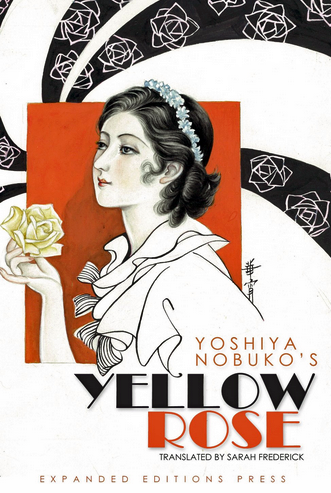
I’m absolutely thrilled to write that one of Yoshiya Nobuko’s stories has finally appeared in a readily available English translation. “Yellow Rose” is drawn from Yoshiya’s acclaimed collection Hana monogatari (Flower Stories), which first appeared in print in the 1920s and has been a major guiding influence in shōjo manga, literature, and aesthetics. Thankfully, Yoshiya’s fiction is not just important from the perspective of literary history but also a true delight to read.

The short story “Yellow Rose” is about Katsuragi Misao, a twenty-two-year-old college graduate who accepts a teaching post at an all-girls prefectural academy “a thousand miles distant from Tokyo” to avoid getting married. On the train departing from Tokyo she meets Urakami Reiko, who happens to be a student entering her final year at Katsuragi’s school. Reiko is running late; and, clutching a bouquet of yellow roses, she dashes across the platform to catch the train, just barely making it:

Perhaps because she had been running so fast her little chest beat wildly, sending the profusion of flowers in that single hand all a-tremble, and this quivering of the yellow rose bouquet moved in unison with the fluttering of the girl’s sleeves – it was a beautiful scene–

Reiko gets a grain of soot in one of her eyes, thus giving Miss Katsuragi a chance to be alone and in intimate contact with her as she administers aid:

The end of her ponytail stretched down below the pillow, and a wisp of stray hair lay on her white forehead; her cool eyes were both gently closed and just her lips moved with her breath like a flower – in the stillness of a moon perhaps her closed eyes were seeing a dream……ah, how lovely!

The two continue their association throughout the summer, and their romance blooms in a series of short vignettes, of which the following is representative:

Thus carries the sound of the bell down to the water at Kiyomigata shore. It must be from the Seikenji Temple bell tower in Okitsu –

The bell sound crosses the twilight waters……

Motionless on the beach shadows……two of them

Two shadows paused silently as if to let the sounds of the bell gently embrace them –

Twilight, the moon thinly visible at the yonder edge of the sky – as they neared the shore only the very faint tips of the breaking waves sported a faint whiteness, like frayed silk tassels.

Miss Katsuragi and Reiko make plans for the girl to attend Katsuragi’s alma mater in Tokyo before embarking on a journey to the United States together, but Reiko’s mother expects her to enter an arranged marriage immediately after her graduation in April. At the end of the story, as Katsuragi boards a ship to Boston alone, she abandons herself to her grief.

As with many of the stories contained within Yoshiya’s Hana monogatari, “Yellow Roses” ends in tears. The story’s focus is not on plot, however, but rather the beauty of the two young women and the depth of their feelings for one another. Entire paragraphs are spent on detailed descriptions of mournful eyes and chiseled cheekbones, and the poetry of Sappho is quoted at length. As in the above passages, Yoshiya’s writing is characterized by fragments and ellipses, which heighten the emotional impact of certain scenes while leaving the reader free to fill in the suggestive gaps in the text with her imagination.

“Yellow Roses” can be a quick and feather-light read, but the reader is rewarded for returning to the story a second time, as many of its passages can be appreciated as jewels in a beautiful setting – or roses in a stunning bouquet.

Although the story alone would be well worth the price of admission, this publication is graced by the addition of an extended translator’s introduction, a fascinating note on the cover illustration, an extensive selection of illuminating endnotes, and a meticulously curated list of selected English-language readings that functions as an invaluable resource to anyone interested in the history and inner workings of shōjo culture in Japan from the nineteenth century onward.

Translator Sarah Frederick’s introduction, which is roughly as long as the translated story itself, functions as something of an abbreviated textbook, touching on not merely the author and the story but also many aspects of the society and publishing culture that form its context. Frederick’s writing is not mired in the academic garble of postmodern theory but is immediately accessible to a casual reader as it paints a picture of a time and place in broad yet deliberate strokes. What I especially appreciate about this short essay is that it directly confronts the issue of female queer sexuality in Japan:

While it is not difficult to frame these desires via the flexible contemporary category of “queer,” it may be surprising to some readers that to invoke the word “lesbian” for Katsuragi and Urakami’s relationship, Flower Stories, or Yoshiya’s work and life more generally, has sometimes been controversial. I think this is a wonderful question to raise and discuss in a classroom or elsewhere using the story itself, and no translator’s introduction can “answer” it. […] While the term “lesbian” or loan word “rezubian” were not used in these stories or by Yoshiya herself in her lifetime, they are used literally here in reference to Sappho from Lesbos. More broadly, the claim that “lesbian” does not apply in the Japanese context or the prewar Japanese context (both arguments are sometimes made) leans far too much toward cultural essentialism and the false sense that Japan was cut off from the rest of the world, including its varied discourses on sexuality. The impression given by “Yellow Rose” and its milieu is rather the opposite: a highly cosmopolitan girls’ culture, aware of Sappho as a figure available to express the desire of one girl for another. It is engaged in active exploration of the rich but incomplete solutions posed by the possibilities of western philosophy, emotional poetry, and travel to America as sources for different ways of thinking about the realities and aesthetics of women’s lifestyles, desires, and conceptions of love.

The words in bold are my own emphasis, because I’ve been waiting for someone to state that very point as clearly and succinctly as Frederick for years now. Yes Virginia, there are queer women in Japan! The next time anyone asks me whether we can really call portrayals of homosexuality in Japan “gay,” as if the Japanese archipelago were home to a bizarre alien society completely removed from the cultural currents flowing across the rest of the world, I am going to quote this passage word for word.

The main appeal of “Yellow Rose” and its introduction really isn’t in any sort of political statement, however. Instead, the reader is invited to enter a sparkling, rose-colored world of radiant young women, their pure yet dangerous emotions, and the tragic pressures of a bygone era that prevent them from expressing their truest selves. As Frederick explains in her introduction, there is no better place to go looking for the roots of shōjo manga and literature. The translation itself expertly captures the language and cadences of the girls’ literature of writers such as Frances Hodsgon and Louisa May Alcott (whose work Yoshiya was almost certainly familiar with), so even the English feels pleasantly nostalgic. I therefore recommend “Yellow Rose” not only to serious academic types and hardcore shōjo fans but to even the casually curious. Within the short span of a train or subway ride, you can be transported into a glittering space removed – but never too removed – from the grittiness of the mundane. It’s quite an experience!

Yellow Rose is currently available exclusively as a digital text, and it can be purchased on Amazon’s Kindle store. It will also soon be available directly from the website of its publisher, Expanded Editions, a shiny new operation with two translations of vintage Japanese science fiction ready to download. Even if you’re not interested in Yellow Rose, be sure to check out Expanded Editions, which has done a fantastic job with its digital texts.

The manageable length and impeccable scholarship of Yellow Rose recommend it for classroom use. For educators hoping to incorporate the text into a printed or PDF course pack, Expanded Editions offers educational sales and will work directly with campus bookstores to make the material available to students. More information can be found on the relevant section of the publisher’s webpage.

Review copy provided by Expanded Editions.

Tales from a Mountain Cave

Tales from a Mountain Cave

Title: Tales from a Mountain Cave
Japanese Title: 新作遠野物語 (Shinsaku Tōno monogatari)
Author: Inoue Hisashi (井上 ひさし)
Translator: Angus Turvill
Year Published: 2013 (England); 1976 (Japan)
Publisher: Thames River Press
Pages: 134

In 1910, the famous ethnologist Yanagita Kunio published the Tōno monogatari, a collection of folk legends from the Tōno region of central Iwate Prefecture in northeast Japan. Although the authenticity of these records is debatable, the collection is extremely important and has influenced subsequent generations of folklorists, including the inimitable manga artist Mizuki Shigeru. In 1975, Robert A. Morse translated the work as The Legends of Tono.

Inoue Hisashi was born in Yamagata Prefecture, which is southwest of Iwate but still in the Tōhoku region. Although famous primarily as a playwright, Inoue is also known for his novels, many of which are humorous and contain elements of fantasy and science fiction. Tales from a Mountain Cave, or “The New Legends of Tono” in its Japanese title, is Inoue’s take on the Tōno monogatari, which he sets in the coastal town of Kamaishi, just east of Tōno.

If you’re not a professional historian or ethnologist, the Tōno monogatari can require quite a bit of study to fully appreciate. Robert Morse’s translation is remarkably well done, and the book is nicely published, but the work is still difficult to read for pleasure. Tales from a Mountain Cave, on the other hand, is a lot of fun.

The nine stories in Tales from a Mountain Cave are relayed to the narrator, a young man taking time off from college, by an old man named Inubuse Takichi, who lives in a small cave in the mountains behind the sanatorium where the narrator works. Initially drawn to Inubuse by the sound of his trumpet, the narrator forms a habit of spending his lunch break with the old man, who rewards him with a series of stories about his life.

In these stories, which span from the 1920s through the early postwar period, Inubuse describes his hardships, his various forms of employment, his romantic relationships, and the odd characters he’s encountered. Not all of these characters are human, and each of the tales focuses on a supernatural occurrence, many of which are the doing of the yōkai that inhabit the region. Inubuse’s recollections of these creatures are vivid and refreshingly original. To give an example from the second story, “House up the River,” this is how the narrator summarizes Inubuse’s description of river imps called kappa:

According to him, there were several thousand kappa in the Hashino River, but when in the water they were translucent, like jellyfish. In fact they couldn’t be seen with human eyes at all. Once they were out of the river they took the form of children or travelers. In the mountains they appeared as monkeys or phesants. They could change size as well as appearance – a thousand kappa could hide in the puddle of a horse’s hoof print.

Far from being remixed or modernized versions of legend fragments, each story has a clear and compelling narrative arc; and, although they’re all connected, all but the last of the stories (which ties everything together) can be read by itself. The major theme of the collection seems to be the inability of human beings and yōkai to coexist, which can be understood as representing a fundamentally antagonistic relationship between human society and the dangerous wilderness of the Tōhoku region. If you’re looking for the sort of religious messages common in medieval Japanese folktales, they’re practically nonexistent, but Tales from a Mountain Cave does offer plenty of sexuality and earthy humor.

I really enjoyed this collection. It’s colorful, charming, and highly entertaining. Even if you’re not familiar with Japanese history or folklore, you’ll still enjoy Inoue Hisashi’s outrageous stories and charming prose.

Review copy provided by Thames River Press.

Emily

Emily

Title: Emily
Japanese Title: エミリー (Emirii)
Author: Takemoto Novala (嶽本 野ばら)
Translator: Misa Dikengil Lindberg
Publication Year: 2013 (America); 2002 (Japan)
Publisher: Shueisha English Edition

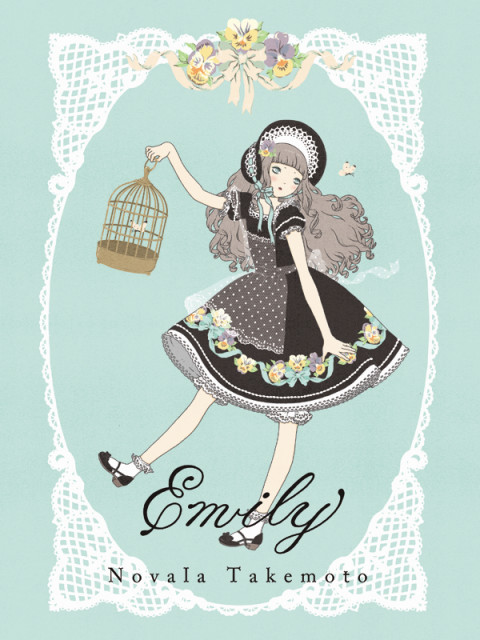
There are two short stories and one novella included in Takemoto Novala’s collection Emily, which was nominated for the Mishima Yukio Prize (for popular established writers) in 2003. “Readymade,” which is only a few pages long, is written in the form of a confession of a young female office worker to an older male colleague who takes her on a date to an exhibition of French Cubist art at the Ueno Royal Museum. “Corset” is told from the perspective of a male illustrator in Kyoto who plans to indulge in a short romantic relationship with an engaged woman before committing suicide in honor of a deceased friend. The novella Emily is about two high school misfits devoted to street fashion.

The two short stories are wonderfully atmospheric and can be read as treatises on Lolita aesthetics. Both stories follow the pattern of an older and self-assured man aggressively offering instruction to a naïve younger woman characterized as a tabula rasa, and they’re less about suspense and development than they are about establishing a colorful and stylized worldview.

To give an example from “Corset”:

“Wouldn’t it have been great if you and I had been born in the nineteenth century?”

“Yes. Sometimes I really think so. But I also think that if you and I had been born in the nineteenth century, maybe we’d still be complaining, saying, ‘Wouldn’t it have been great if we’d been born in the eighteenth century?’ Perhaps it’s not this era that we dislike, but the state of being in the present that doesn’t agree with us.”

“You mean no matter what era we were born in, we’d always long for the past and have nothing but despair for the present? Maybe you’re right. So there’s no way out except death.”

“Regardless of how the times change, as long as you are alive, you’ll be full of nothing but discord with the world around you.”

Such sentiments provide a fitting prelude to the novella Emily, in which the narrator truly is out of sync with the world in which she lives. This is not her personal failing, but rather a failing on the part of a society that refuses to accommodate diversity and always seeks a scapegoat. Emily‘s narrator, who enjoys visiting the Laforet shopping center in Harajuku and dressing in cute street fashions, has become a target for the other girls in her high school, who subject her to bizarrely cruel forms of bullying:

They sometimes made me stand in the middle of the court with my hands bound, as they spiked balls at me. I had to take the hits directly to my body as the seniors spiked and then ordered others to spike. There was no way I could run. If the balls had been coming from one direction, I could have escaped, but they came from all directions. Every ball hit me. It was a game to them. If a ball hit my body, they scored one point. If it hit my face, they scored five points. And if it knocked me over, they scored ten points.

The narrator isn’t subject to abuse just from her classmates and volleyball club teammates, but also from her mother, who is disappointed that she was unable to become a child television star, a path the narrator refused to follow after she suffered abuse of another kind. Instead of becoming bitter or resentful, however, the young woman finds joy in the self-expression she realizes through clothing that flies in the face of conformity and social expectations. In fact, it seems only natural to the reader that she would use street fashion to carve out a comfortable refuge for herself away from her school and family.

Through a shared interest in the Emily Temple Cute brand, the narrator becomes friends with a boy who also hangs out around Laforet. It turns out that he’s a student at her high school, and he’s also being bullied because he came out as gay to another male student. After one particularly frightening incidence of bullying that threatens the life of the narrator, her friend flies into a rage and attacks her tormentors before fleeing the school grounds. The narrator tracks him down in Shibuya, and they have a long heart-to-heart conversation that is both touching and extremely painful.

Although Emily addresses real social issues, like the two other stories in the collection, its themes are exaggerated, and the style in which it is written is clearly stylized. Readers searching for absolute mimetic realism probably won’t be impressed, but fans of young adult fiction – including young adults – will be moved and swept away by the entire collection.

Included at the end of Emily is a lengthy and illuminating interview with the author, Takemoto Novala.

Although the translation is only available as an e-book, its short length (probably fewer than 150 pages) would make it a perfect classroom text should it ever become available in a paperback edition.

So, you’re intrigued by Emily. You should be! The publisher, Shueisha English Edition, has put up a lovely website to help promote the book. But you’ve searched on Amazon, on Barnes and Noble, on Kobo, and on iBooks, and it’s nowhere to be found. What gives?

It turns out that Shueisha English Edition titles were only available through the Sony Reader digital storefront, which was shut down earlier this year (2014). When the Sony Reader store closed, an announcement was posted stating that all Sony Reader titles would be transferred to Kobo. An April 2 post on the Shueisha English Edition Facebook page reads as follows:

We’re very sorry but our move to Kobo won’t happen very soon. We’re still talking with our possible representative in the States.

On June 29, the following update appeared:

Ours is an editorial team only working for Shueisha English Edition, and has no connection to Shueisha’s other operations. We’ll restart our publication soon when we reach an agreement to our next retailer. Please don’t send any inquiries about Shueisha’s other publications and rights/licensing business. We simply cannot answer to any such questions and requests. Thank you for your patience and we’re working hard on our future titles. Please wait for some more for our official announcements and new titles.

Since then, nothing.

It seems as though the publisher has disappeared, which is a shame, since it was off to a fantastic start, regularly putting out lovely digital books with excellent bonus materials and carefully crafted promotional websites (such as those for Shimizu Yoshinori’s Labyrinth and Makime Manabu’s The Great Shu Ra Ra Boom). In an interview on the SCBWI Japan Translation Group’s webpage, the Shueisha English Edition editor in chief, Yoshio Kobayashi, outlines the care and attention put into the translation, editing, and presentation of each of the publisher’s titles. Although I don’t have access to any of these other titles, Emily is a cool little book, and I imagine that it would have been able to find a sizeable audience through the appropriate distribution channels.

Although I understand that the collapse of the Sony Reader Store must have been a major blow, I can’t even begin to imagine what’s going on with Shueisha English Edition, especially since the publisher is working with such fantastic and high-profile authors and translators. I can only hope that good news is forthcoming from them soon.

Review copy provided by Shueisha English Edition.

Death and the Flower

Death and the Flower

Title: Death and the Flower
Japanese Title: 死と生の幻想 (Sei to shi no gensō)
Author: Suzuki Kōji (鈴木 光司)
Translators: Maya Robinson and Camellia Nieh
Publication Year: 2014 (America); 1995 (Japan)
Publisher: Vertical
Pages: 222

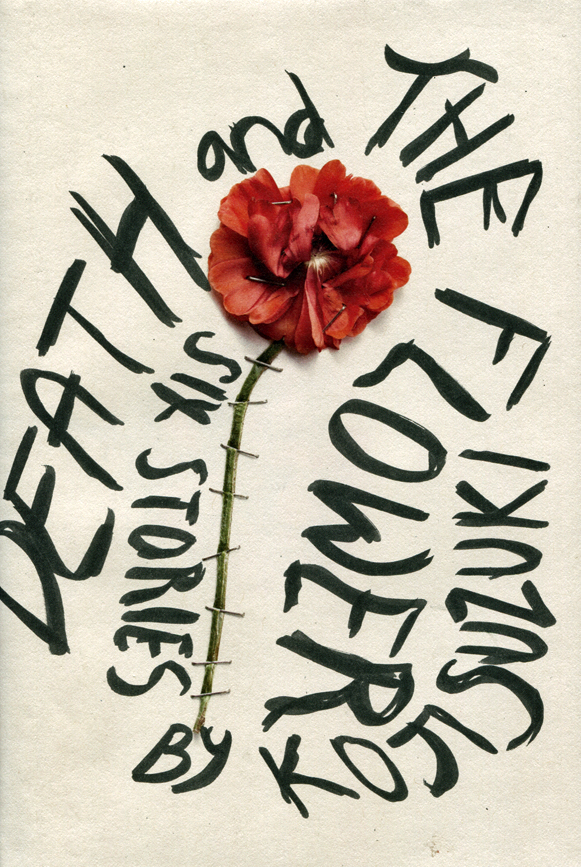
Death and the Flower is beautifully printed. Its paper is deliciously creamy, and its gorgeously designed book cover and dust jacket complement each other perfectly. Veritcal’s hardcover edition is one of those books that makes me happy that publishers still put time and effort into putting out physical books that you can hold in your hands and admire on your bookshelf.

But the stories themselves? They’re not really all that great.

In his Afterword, Suzuki writes:

I tried collecting six works with a common theme – a theme represented by the words “diapers and a race replica.” The softness and warmth of diapers, the speed and power of a racer’s motorbike – I wished to express a balance of the maternal and the paternal by placing symbols of femininity and masculinity side by side.

What this essentially means is that each story is about a father who undergoes various hardships for the direct or indirect benefit of his wife and/or daughter(s), who are nothing more than empty symbols vaguely characterized by emotional damage and blind need. In other words, men are capable of embodying “a balance of the maternal and the paternal,” and girls and women exist merely for the sake of helping men undergo character development in order to realize their full potential. These female characters don’t need to have names, or thoughts, or feelings, or any sort of identities save for their relation to the male heroes.

This in and of itself is not necessarily bad. However, if everything in piece of fiction is going to be diegetically subservient to the ego of the protagonist, then I would prefer for the protagonist to be interesting. Unfortunately, none of Suzuki’s characters really grabbed my attention or sympathy. Instead, just as the female characters of this collection are almost platonic embodiments of Object, each male character isn’t a great deal more than a Subject with a few shallow personality traits pathetically attached like a handful of cheap ornaments haphazardly stuck onto an otherwise bare Christmas tree.

The first story in the collection, “Disposable Diapers and a Race Replica,” can serve to illustrate my point.

The narrator, an obvious author stand-in character, quits his job to devote himself to his writing and the care of his infant daughter. To help his wife make ends meet, he moonlights as a private tutor. His current client is a delinquent high school student who has begun to skip out on tutoring sessions after the school system fails to reward him for his increased efforts, so the narrator tracks him down on his motorcycle and is driven off the road and nearly killed by the kid’s friends. The next day, the narrator shows up unexpectedly at the kid’s house and beats the crap out of him in order to figure out where the driver who almost killed him lives. He then proceeds to go to the other kid’s house and, finding him not at home, beats the crap out of the kid’s car. After he’s satisfied himself, the narrator encounters the driver and condescends to not beat the crap out of him because he, the narrator, is actually a good guy deep down inside. The only thing that saved him from dying when his bike crashed was the huge bag of diapers he had tethered to the back of the bike, you see, and this is some kind of message about how he needs to stop jumping headfirst into fights, even though he could totally win them if he did get into them, because of course he could – he’s just that kind of guy.

Since the narrator interacts with the other male characters by yelling and punching, his character development is guided by his interactions with the story’s two female characters, his student’s mother and his wife. The narrator tries to be kind to his student’s mother, even though privately he thinks she’s a weak and ineffectual parent. This must be because, being a woman, she isn’t clever enough to know that you need to threaten to beat the crap out of boys to make them respect you. As a mentor and role model, the narrator is thus defined by what he is not – female, and thus “stupid.” Meanwhile, the narrator’s wife is a delicate flower who must not be upset or disturbed under any circumstances, as she has some sort of nervous disorder. This disorder is typified by the anxiety she demonstrated when he effectively abandoned her during their engagement to go live on a tuna fishing boat for a year. Why was she so upset about this, and why is she concerned about his level of commitment to their relationship? It must be because of her nervous disorder, obviously. Women and their unreasonable hysteria, amirite? Anyway, as a father and caregiver, the narrator is again defined by what he is not – female, and thus “crazy.”

Character development through negative contrast does not make for good storytelling, especially when the primary conflicts of a story hinges on an internal crisis of its protagonist. In Death and the Flower, each such crisis is resolved by a realization of something along the lines of “I am a burly hairy dangerous manly alpha male, but I need to embrace my more ‘feminine’ side so that I can better protect the utterly helpless women in my life.” Maybe this is just me, but I don’t find that sort of resolution too terribly compelling. For a such a revelation to be truly interesting, there need to be more 1980s seinen manga style swords and/or psychic power attacks demonstrating how a small compromise in an otherwise unadulterated beefcake masculine identity can constitute a genuine sacrifice.

What Suzuki excels at in Death and the Flower are his descriptions of urban and natural landscapes. I was particularly impressed by the third story in the collection, “Key West,” in which a father leaves his young daughter in a rental car by the side of a highway in Florida to walk out to a small offshore island connected to the coast by a sandbar. On the island, the father encounters an abandoned settlement overgrown with jungle. Although his parenting skills leave much to be desired, the father’s accounts of the greenery and derelict buildings, the comparisons he makes to his home in Tokyo, and his detailed examination of the complicated feelings the island evokes in him are all magnificent. The simultaneously intense yet hazy quality of the fever dreams he experiences after being bitten by a sea snake is also expertly conveyed by the author. That being said, the father’s grief for his dead wife as expressed by his half-hearted desire to protect his daughter is largely undeveloped and feels out of place within the larger themes of the story, which mainly seem to involve the narrator’s fear of his own encroaching middle age.

To return to the collection’s Afterword, Suzuki writes:

“Only a peaceful and safe world is worth living in” – far too many people seem to think so.

Putting aside the tastelessness of such a statement, I think the author’s writing is indeed at its best when his characters have a worthy antagonist to battle. The major draw of Ring, for instance, is Sadako, the evil girl who spews her curses out into the world from inside a well. The longest story in Death and the Flower, “Beyond the Darkness,” is perhaps the strongest, as its father protagonist character is provided with a creepy stalker to serve as an acceptable outlet for his anger and tendency toward physical violence. As introspection-driven character pieces, however, the rest of the stories in the collection fall flat.

If you’re a Suzuki completionist, Death and the Flower is of interest for its prototypes of the author’s major themes and character archetypes. If you’re looking for good horror fiction or just some good short stories, though, it’s probably best to ignore the pretty cover and take a pass on this collection.

Revenge

Revenge

Title: Revenge: Eleven Dark Tales
Japanese Title: 寡黙な死骸 みだらな弔い
(Kamoku na shigai, midara no tomurai)
Author: Ogawa Yōko (小川 洋子)
Translator: Stephen Snyder
Publication Year: 2013 (America); 1998 (Japan)
Publisher: Picador
Pages: 162

Ogawa Yōko is a writer of the fantastic who spins softly glittering tales of quiet desperation. In Japan, she’s known for her magical realism, which is so subtle as to be almost Todorovian in the uncertainty it generates. Nevertheless, her first novel to appear in English translation, The Housekeeper and the Professor, is about kind-hearted people behaving nobly in the face of senescence and overcoming emotional adversity by opening their hearts to one another. It’s a good book even despite its clinging miasma of Hallmark-style sentimentality, but the way the novel was marketed made it feel as if its publisher were trying to pass Ogawa off as the next Yoshimoto Banana, which she most decidedly is not. Messages of hope and moral fortitude are few and far between in Ogawa’s work, and her next novel to appear in translation, Hotel Iris, is about ephebophilia and sadomasochism in a decaying seaside town. The novel is quite short and, given its subject matter, an odd choice for translation, but perhaps its publishers saw a faint connection to Yoshimoto’s Goodbye Tsugumi, which explores similar themes (albeit in an infinitely more upbeat and chipper manner).

I am therefore interested in the way in which Ogawa’s newest work to appear in translation, Revenge, is pitched to potential readers. Short blurbs from Junot Díaz and Hilary Mantel appear on the back cover, but the writer who bears the honor of having his praise appear right in the middle of the front cover is Joe Hill. Joe Hill is the author of several novels, comic books, and Kindle singles, and he’s known as a writer of grisly and violent mystery fiction. Hill’s debut work, 20th Century Ghosts, is a collection of stories that contain more subtle disquiet than they do splattered blood. My favorite is “Voluntary Committal,” in which a seriously disturbed man builds an elaborate crawl-through maze of cardboard boxes in his basement, which eventually becomes a portal to another dimension. 20th Century Ghosts has won all sorts of awards, from the Bram Stoker Award to the British Fantasy Award, but Hill is still considered a horror writer; and, by association, Ogawa is positioned as a horror writer as well. As if Hill’s name alone were not enough to convey the message, the cover of the North American edition of Revenge is designed to resemble dead skin stitched with rotting thread.

Despite the implications of its cover, Revenge is less about hideous creepy crawlies lurking at the foot of cellar stairs than it is about the small disturbances in daily routine that hint at the madness waiting patiently on the edges of human civilization. For example, the first story in collection, “Afternoon at the Bakery,” opens with a scene of a peaceful town on a Sunday afternoon:

Families and tourists strolled through the square, enjoying the weekend. Squeaky sounds could be heard from a man off the corner, who was twisting balloon animals. A circle of children watched him, enthralled. Nearby, a woman sat on a bench knitting. Somewhere a horn sounded. A flock of pigeons burst into the air, and startled a baby who began to cry. The mother hurried over to gather the child in her arms.

You could gaze at this perfect picture all day – an afternoon bathed in light and comfort – and perhaps never notice a single detail out of place, or missing.

What you might notice, however, is the author’s focus on children and families. The detail out of place in this scene is a solitary mother who enters a quiet bakery to buy strawberry shortcake for her son’s birthday. The catch is that her son is dead and has been for many years. He died when he was six years old, and his mother responded to the tragedy by piecing together a scrapbook of newspaper articles about other children who died in similarly upsetting circumstances, which she describes in loving detail for the benefit of the reader. The physical deterioration of the cakes she continues to buy for her son’s birthday serves as an analogy for her own decaying sanity, something that used to be as fresh and wholesome as a young boy but now resembles nothing so much as rotting flesh:

Long after I had realized my son would not be coming back, I kept the strawberry shortcake we were meant to have eaten together. I passed my days watching it rot. First, the cream turned brown and separated from the fat, straining the cellophane wrapper. Then the strawberries dried out, wrinkling up like the heads of deformed babies. The sponge cake hardened and crumbled, and finally a layer of mold appeared.

“Mold can be quite beautiful,” I told my husband. The spots multiplied, covering the shortcake in delicate splotches of color.

“Get rid of it,” my husband said.

I could tell he was angry. But I did not know why he would speak so harshly about our son’s birthday cake. So I threw it in his face. Mold and crumbs covered his hair and his cheeks, and a terrible smell filled the room. It was like breathing in death.

The above passage is the dramatic high point of the story, which is otherwise sedated and subdued. The horror Ogawa offers her reader is not the terrified panic of a boy clawing vainly for air as he suffocates in the dark or the emotional turmoil of a distraught mother sobbing wildly in her grief, but rather the unsettling certainty that people who are irreparably damaged walk among us within a world that is constantly growing as filthy and old as we will one day become.

The eleven stories in Revenge are very loosely connected, with each almost fitting into the next like a section of a puzzle box that has been warped by humidity. The major theme connecting the stories is ultimate futility of the attempt to outlast the relentless march of time through creative endeavors or the preservation of a material legacy, and the collection is filled with unremarkable deaths, lonely rooms stuffed with junk, and putrefying fruit and vegetables. It’s dark stuff, to be sure, but Ogawa’s language and narrative skill, rendered beautifully in Stephen Synder’s translation, allow the reader to experience the horror of the stories in Revenge as so mundane as to be almost comforting.

NPR listed Snyder’s translation of Revenge as one of the best books released in 2013, and it’s in good company. Despite Picador’s gruesome cover, Ogawa’s stories have much more in common with her listmate Karen Russell’s debut collection St. Lucy’s Home for Girls Raised by Wolves than any of the recent work by Joe Hill or Peter Straub – or any of the recent work of Murakami Haruki, to whom many reviewers feel compelled to compare Ogawa for some inexplicable reason. Ogawa has her own style of haunting and meticulously crafted fiction, and I can only hope that more of her short stories find their way into English translation, the sooner the better.

Fujisan

Fujisan

Title: Fujisan
Japanese Title: 富士山 (Fujisan)
Author: Taguchi Randy (田口 ランディ)
Translator: Raj Mahtani
Year Published: 2012 (America); 2004 (Japan)
Publisher: AmazonCrossing
Pages: 191

In her Foreword, Taguchi states that she “wrote this anthology of stories as an expression of my veneration and appreciation for this life-affirming mountain; it is my personal tribute to Fujisan.”

Although Mount Fuji is in the background of each of the four stories collected in this volume, the main theme of these stories is an affirmation of life in the face of fairly extreme social maladjustment and malaise. “The Blue Summit” is about a convenience store worker who begins reflecting on his past experiences as a member of a religious cult after he survives an attempted robbery. “The Sea of Trees” is about three high school students with an interest in the occult who go hiking in the Aokigahara forest and come across a failed suicide. “Jamila” is about a public servant who is tasked with dealing with an old woman who lives in a house overflowing with garbage. “Child of Light” is about a nurse at a small gynecological clinic who ponders a teenage abortion patient she recently cared for as she climbs Mount Fuji with a group of older women. The characters of these stories all face death and the more unpleasant aspects of continuing to live and somehow manage to come out okay on the other side.

I liked the opening story, “Blue Summit,” for its description of the appeal of sanitized and familiar spaces like convenience stores and family restaurants to the broken people who seek refuge there in the small hours of the night. As the narrator says of the convenience store where he works as a night shift manager:

I like it here. This convenience store is my sanctuary. There’s a stillness here that’s like the stillness you find in the snowy, bleak plains of Siberia. […] The store’s open twenty-four hours and it’s menacingly bright. There’s no darkness. It’s all so gloriously digital. While intimacy and a sense of reality are effectively absent in the store, a minimum degree of comfort is always guaranteed. The convenience store is stabilized on a low-energy wavelength: it never betrays you. In a convenience store, you can silently snuggle up to the void. (3, 13)

In this story, the convenience store as a comforting space is juxtaposed against the nightmarish interior spaces of the people who enter it. The narrator is haunted by the memories of a friend he made when he was a member of a religious cult headquartered at the base of Mount Fuji who may have been killed by the group when he tried to defect. Kozue, one of the employees who works under the narrator, suffers from a fascination with dissection and enjoys watching herself bleed. As for the anonymous assailant who unsuccessfully attempts to rob the convenience store at the beginning of the story and later shows up with a baseball bat looking for revenge, the narrator suspects that what he’s ultimately after is a validation of his own existence, a concern that the narrator sympathizes with even as he is attacked.

My favorite story in Fujisan has to be “Jamila,” if only for its colorful descriptions of a gomi yashiki, or “garbage mansion,” in Susono City, a small municipality in the foothills of Mount Fuji. The narrator of the story, a native son who has left a corporate job in Tokyo to take a post at Susono’s Office of Environmental Quality, is tasked with dealing with a local hoarder’s residence. He hasn’t made much progress, partly because he is fascinated by the structure:

When I went to investigate the house of trash for the first time, a part of me was genuinely thrilled. I wanted to see for myself who the old garbage lady was, the one reputed to be a goblin, but when I arrived, the horror of it all simply defied imagination. It was a slice of nightmare lying exposed in the heart of a residential area lined with middle-class houses. What bothered me the most was the drabness of all the visible junk, especially in light of the fact that each and every one of the objects was at one time or another brand new. […] The trash, estimated to be sixty tons’ worth, was spilling over from the premises into the public road, where it bore an uncanny resemblance to the entrails of a road-killed cat. (108)

I really don’t find all this trash-hoarding that objectionable. I find it more interesting than, say, staying inside city hall. As I stood there, gazing vacantly, my eyes registered an entire universe of things: wire hangers, torn umbrellas, broken TVs, antennas, vacuum cleaners, plastic bags, tattered clothes, tricycles, flowerpots, bedpans, bamboo blinds, futons… The trash went beyond trash to become works of fantastic, sculptural art. (100)

As in “Blue Summit,” physical spaces have a close relationship with psychic spaces, and the narrator’s meditation on an old woman’s gomi yashiki reveals the disorganization of his own (possibly deranged) mind and the sociological state of a nation that produces and throws away so much physical, cultural, and human garbage.

If I had to describe these stories in one word, it would be “intense.” There’s a bit of navel gazing going on in Fujisan, but it’s never too cumbersome, and the collection’s four stories move quickly and capitalize on topical issues for emotional impact.

If you’re wondering about the publication quality of Amazon’s new translation publisher, AmazonCrossing, it’s actually fairly decent. The front and back covers of the physical version of Fujisan look like printouts of a mid-resolution PDF document, but the inside text is crisp and clear, and the page layout is clean and uncluttered. During the short promotional period when Amazon was offering the book for about as much money as a cup of tea at Starbucks, I also downloaded the digital version of the book from the Kindle store, and it looked great as well.

Several reviewers on Amazon have complained about the translation, but I didn’t mind it so much. There were a few sentences that were awkward (they mostly involved slang), but overall I think Raj Mahtani did a great job conveying the voices of Taguchi’s characters. I have read (and produced) a great deal of clunky awkward translatorese, and I know just how terrible it is, but nothing of the sort appears in Mahtani’s translation of Fujisan. The vast majority of the translated prose in the collection is clear and serviceable. It’s never going to win any literary awards, but Taguchi herself isn’t exactly a “literary” writer; she writes popular fiction, and her writing reads like popular fiction.

In any case, the translated narrative voices of Fujisan are similar to the translated narrative voice of Taguchi’s previously translated work, Outlet, and readers who appreciated the exploration of hidden spaces and raunchiness of Outlet will definitely enjoy Fujisan.

By the way, the author has her own website, which includes an interview translated into English. If you can read Japanese, her blog is also well worth browsing.

Bødy

Bødy

Title: Bødy
Japanese Title: 躯 (Karada)
Author: Nonami Asa (乃波アサ)
Translator: Takami Nieda
Publication Year: 2012 (America); 1999 (Japan)
Publisher: Vertical
Pages: 192

If body horror makes you squeamish, you probably shouldn’t read this book.

If body horror fascinates you, you have come to the right place. Surgery, needles, public bathing, erectile dysfunction, heart attacks, concussions – Nonami Asa’s Bødy has it all.

Bødy collects five short stories, which are all about forty pages long. Each of these stories centers around the body-related neurosis of its protagonist. The short stories in Bødy remind me of the short stories of Patricia Highsmith (particularly those in The Animal-Lover’s Book of Beastly Murder and Little Tales of Misogyny) in that they feature tongue-in-cheek accounts of terrible things happening to people who probably deserve them. In “Blood,” a man who gets off on injuring others learns that he can also get off on injuring himself. In “Whorl,” a man planning on dumping his girlfriend is dumped by her after some mishaps involving an experimental treatment for baldness. In “Jaw,” a man consumed by his training to become a boxer is ultimately defeated by his own physical regimen. The opening story, “Navel,” is about a mother and her two daughters who blow through their savings in order to undergo a series of cosmetic surgical procedures. The last laugh, however, is on the husband and father who doesn’t notice that they look any different until it’s too late.

Although the tone of Bødy is far from jovial, it never takes its subject matter too seriously. With an escalating series of bad things happening to weak-willed and pathetic people, the humor in Bødy is as black as it gets. As soon as the reader thinks that things can’t get any worse for the characters, things get worse in the worst possible way. As a result, these stories are horrifying and fascinating at the same time.

Humor usually works best when the butt of the joke is in a position of power or otherwise represents the status quo, and an element of discomfort tends to creep in when the character being ridiculed truly is a victim. For this reason, the story “Buttocks” stands out for me as the most disturbing story in the collection.

Hiroe, the former queen bee teenage protagonist of “Buttocks,” suffers severe culture shock after she leaves her home in the country to attend a high school in Tokyo. She lives in a dorm, where she has trouble physically and mentally adjusting to a communal lifestyle. She didn’t want to leave home in the first place, her friends from middle school won’t talk to her anymore, and she learns that the only reason she’s able to live in Tokyo is because her father made a large donation to her school. When one of the other girls living in the dorm calls her fat, Hiroe develops an eating disorder. The reader, who is given intimate knowledge of Hiroe’s mindset and methods, sympathizes with the bulimic Hiroe’s improved self-image and sense of renewed control over her life. It actually seems as if the story will have a happy ending before Hiroe collapses and is revealed to be terrifyingly unhealthy. As her parents carry her out of the dorm, Hiroe overhears the same girl who had mocked her for having hips like a duck whispering how creepy she is now that she looks like a skeleton.

Hiroe may have bullied another girl in middle school, but she didn’t deserve this, and the punch line of “Buttocks” is chilling. In this story, the narrative pattern that characterizes the stories in Bødy is less tragicomic and more genuinely upsetting. It’s easy to laugh at the chauvinist pigs of the first three stories in the collection, but the teenage protagonists of the last two stories are genuine victims of forces beyond their control who receive no sympathy from other characters and turn to desperate measures in an attempt to exert some small measure control over their lives. The emotional range Nonami achieves within these stories is remarkable, as is the skill with which she treads the line between amusement and discomfort.

Nonami Asa is a fantastic writer, and I’m happy that more of her work is appearing in translation. She’s primarily known for her detective fiction in Japan, and Juliet Winters Carpenter’s translation of The Hunter is an good example of her gritty hardboiled style. Nonami’s other novel in translation, Now You’re One of Us, is creepy gothic horror that features the black humor and body horror of Bødy without the blunt, cringe-inducing needle-in-your-eye imagery. If you can handle literature with genuinely dark themes, it’s hard to go wrong with Nonami Asa, and Bødy is an excellent introduction to the writer’s work.

Speculative Japan 3

Title: Speculative Japan 3: “Silver Bullet” and Other Tales of Japanese Science Fiction and Fantasy
Editor: Edward Lipsett
Publication Year: 2012
Publisher: Kurodahan Press
Pages: 270

In my review of Speculative Japan 2, I said that I loved the anthology and couldn’t wait until the next installment was released. Speculative Japan 3 is finally here, and it’s everything I hoped it would be: a diverse collection of intelligent and beautifully translated short stories.

Speculative Japan 3 opens with several shorter pieces. These shorter pieces, which range in length from five to twenty pages, run the gamut from hard science fiction to magical realism to fantasy with a sci-fi twist to elegiac horror. Fujita Masaji’s “Angel French” is about the romance between two deep space robotic probes who began life as two college students hanging out in Mister Donut. “To the Blue Star,” written by Ogawa Issui (whose novels The Lord of the Sands of Time and The Next Continent are published in translation by Haikasoru), is another story about a self-aware technological entity. This entity, whose name is X, is a collective intelligence made up of a fleet of robotic star cruisers that represent the last remnants of human civilization. X tells its own story as it travels through the universe, watches civilizations rise and fall, fuses with other advanced life forms, and finally meets God. Matsuzaki Yuri’s “The Finish Line” is a thought experiment in the form of a short story and features a quiet but chilling scenario of the end of all life on earth. Kamon Nanami’s “A Piece of Butterfly’s Wing,” which is probably my favorite story in the collection, is a beautifully creepy ghost story in the literary tradition of writers like Kurahashi Yumiko and Kanai Mieko. Like the work of these masters of the poetics of horror, Kamon’s story is filled with beautiful, atmospheric imagery and resonant symbolism. It also features a delightfully disturbing twist at the end.

The longer stories of Speculative Japan 3 shine just as brightly as the shorter pieces. Even though none of these stories are more than thirty-five pages in length, they’re long enough to allow nuanced character development as they explore their premises in greater depth. Suga Hiroe’s “Five Sisters” is about a woman named Sonogawa Hanako who meets four clones of herself that have all been raised in different households. Each of these women has a different personality, and it’s fascinating to see how each has lived her life with the knowledge that she is a clone created to be harvested for organs. Ueda Sayuki’s “Fin and Claw” is a window into a future where humans have been genetically modified to be more adaptable to an environment covered in seawater. “Fin and Claw” is sort of like Jurassic Park with enormous sea creatures, and the moral of the story is the same. The last three pages of Ueda’s nightmarish vision are particularly terrifying in their visual imagery.

The title story, Yamada Masaki’s “Silver Bullet,” is a Japanese Cthulhu mythos story (more of which are collected in Kurodahan’s Night Voices, Night Journeys). In my experience, there are two main types of Cthulhu mythos stories: pseudo-Victorian and classy, and unabashedly pulpy. “Silver Bullet” belongs to the latter category. Its protagonist is sufficiently hard boiled, and the story contains more cheap sexuality than you can shake a flagella at. Still, all of the story’s thematic elements mesh together nicely, the ending is well earned, and the method used to summon Cthulhu is awesome (as is the instrument used to stop the summoner).

If there’s one story in the collection that feels out of place, it’s “Green Tea Ice Cream,” which is written by Mark Schultz. Perhaps it feels out of place because it’s merely good instead of excellent, but perhaps this is also because it bears the traces of awkwardness that often afflict stories written about Japan in English (a few of which have been recently collected in The Future Is Japanese). It’s difficult to pinpoint what the exact causes or sources of this awkwardness are, but it probably has to do with the writer feeling the need to explain certain “Japanese” things to the reader, as well as with the unstable balance between Japan as a real place and Japan as a fictional creation in these stories. “Green Tea Ice Cream” also revolves around a science fiction trope that I personally find silly and boring, namely, the unnecessary sexualization of a young woman who embodies fears concerning the changing relationship between human beings and technology. If the non-consensual impregnation and subsequent abduction of mindless machine girls is your cup of tea, though, knock yourself out. There are also some uncomfortably sexual father-daughter issues on display, if you’re into that sort of thing. That being said, the unsavory nature of the scenario and the characters of this story gives it greater depth and impact as a speculative commentary on contemporary bioethics.

To counter the sour taste of “Green Tea Ice Cream,” Mori Natsuko’s “It’s All Thanks to Saijō Hideaki” is made of pure sugar. To give a summary would be spoiling the fun, so let it suffice to say that this is one of those stories that you can’t believe you’re reading while you’re reading it and then can’t believe you’ve read once you’re finished. The experience of reading this story filled me with joy. If you’re a fan of yuri or bara stories (or brilliant parodies of such stories), then this is the story of the elegant, fabulous apocalypse you’ve been waiting for.

As in Speculative Japan 2, the translation is smooth and even throughout, with each story retaining the individual characteristics and quirks of its author. It’s a pleasure to read the stories in this anthology not just for the freshness and wonder of their ideas but also for the high quality of their writing and translation. As both an anthology of contemporary science fiction and an anthology of contemporary Japanese literature, Speculative Japan 3 succeeds brilliantly in collecting not the newest or the most popular, but rather the most interesting and the best written. Speculative Japan 3 is an excellent collection of short stories, and I highly recommend it to anyone looking for intelligent and exciting new fiction, speculative or otherwise.

Review copy provided by Kurodahan Press