Ground Zero, Nagasaki

Ground Zero Nagasaki

Title: Ground Zero, Nagasaki
Japanese Title: 爆心 (Bakushin)
Author: Seirai Yūichi (青来 有一)
Translator: Paul Warham
Publication Year: 2014 (America); 2006 (Japan)
Publisher: Columbia University Press
Pages: 182

Although Seirai is a relative newcomer to the Japanese literary scene, having won the Akutagawa Prize for his story collection Seisui (Holy Water) in 2001, he was born in 1958 and was 47 years old when Ground Zero, Nagasaki was first published in November 2006. Although its stories are all set in contemporary Japan, Ground Zero, Nagasaki is deeply engaged with themes of personal and historical legacy.

Each of the six stories in this collection is about the physical and emotional damage suffered by Christians living in Nagasaki in the wake of the atomic bombing. The memory of the atomic bomb is extremely subtle in most of the stories, but it’s never completely absent. Even more powerful than any real or imagined trauma generated by the bomb, however, are the moral dictates of Christianity, which demands that its adherents bear witness to suffering.

The second story, “Stone,” is narrated from the perspective of the brother of a Diet member who is being forced to resign from office because he hired his girlfriend as his secretary. While his brother is giving a talk to local business association at a hotel in Nagasaki, the narrator, a 45-year-old man who calls himself “Adam,” waits in the lobby, where he is approached by a female journalist named Shirotani. Adam is on the autism spectrum, and his conversation with Shirotani is almost frustratingly elliptic.

It gradually becomes clear that Adam’s mother is dying. She has sent Adam to intercept his brother in order to ask that the politician care for him, as he can’t live by himself. Shirotani, who has a brother like Adam, is sympathetic, but the author does not allow this story to become sentimental. Instead, the reader is hit with the full force of Adam’s sexual attraction as he fantasizes about the journalist: “If she wouldn’t marry me, at least I could carry her smell around with me. I would bury my face in her panties and inhale her woman’s scent to my heart’s content” (33). Adam’s mother has punished him for such thoughts in the past, asking him how he could dare to entertain such un-Christian notions “‘after our ancestors went to the stake with pure thoughts and prayers on their lips'” (32).

Adam’s brother Kutani is caught in a the grips of a similar moral vise. He entered politics for the most noble of reasons: to ensure that a doctrine of peace was represented at the highest levels of the Japanese government. The woman with whom he has cheated on his wife had come to him looking for a job after her husband’s family cast her out with her newborn son, who was born severely handicapped. Kutani explains to Adam that he initially wanted to help her as he wants to help all of his constituents, but that he couldn’t help falling in love with her. He says: “‘As long as I had her in my arms, nothing else mattered. Even if war had broken out and nuclear bombs were exploding all over the world, I probably wouldn’t have cared'” (41). His adherence to Christian doctrine, which has guided him along his path as a politician, allows no leeway for his identity as an individual. His affair with his secretary is merely an indication of a deeper emotional dissonance that has also estranged him from his mother and brother, who need him to be a person instead of a politician.

As Kutani struggles with his conscience in the penthouse suite of the hotel where he will offer his resignation, his brother is overwhelmed by feelings he doesn’t understand. After Adam leaves the hotel, he is afraid that his body will turn to stone in response to the emotional overload as it has in earlier catatonic episodes triggered by stressful situations. The story ends with Adam begging God to not leave him alone without a family and without ever having experienced intimacy, his longing for comfort inseparable from his sexual desire.

Another story that I found especially trenchant is “Shells,” which is also told from the perspective of a highly unreliable narrator. Six months ago, the narrator’s daughter Sayaka suddenly came down with a fever and ended up dying of a brain hemorrhage. Since then, he has become convinced that the ocean has been rising during the night, covering entire sections of the city and leaving behind cowrie shells and other assorted sea creatures in his highrise apartment. His delusions became so powerful and persistent that his wife has left him and his brother has placed him under outpatient psychiatric care.

While walking in his neighborhood one day, the narrator encounters an old man named Nagai who tells him that his late sister used to be friends of a sort with Sayaka. His sister had become senile, and the narrator’s daughter was the only one who would listen to her rambling stories. The narrator, overcome with gratitude, invites Nagai back to his apartment, where the old man tells him that his sister spent her entire life trying to forget the day of the atomic bomb, when she was forced to leave her siblings behind in a burning house as she fled with her mother. Nagai’s sister had once spoken to him about the sea of flames engulfing the city, saying, “‘I wish the sea would wash over it all,'” suggesting that she wished her memories would be washed away as well (146).

The narrator, who has his own fantasies of the sea, feels a connection with this woman, but he is terrified of losing his memories, specifically his memories of his daughter and the love he felt for her, which he describes as “the best and brightest, the truest feeling I have ever had” (117). He realizes that the shells that the ocean leaves behind for him every evening after the flood recedes are akin to physical manifestations of his memories, but this insight does not weaken his conviction that the city of Nagasaki sleeps under the waves every night. He tries to convince Nagai that his visions are real but fails. The story ends with his understanding that the saltwater coming in from the bay is not a purifying force like the Biblical deluge but rather indicative of a spiritual wasteland in which God allows the innocent to suffer and perish.

Obviously Ground Zero, Nagasaki is not light reading, and I found that I had to let a week or two pass between the stories, each of which stayed with me long after I had closed the book. Reading Seirai feels a lot like reading Ōe Kenzaburō, yet his style is pellucid where Ōe’s is confoundedly literary. Seirai’s narrators are not philosopher poets citing The Great European Male Thinkers in casual conversation, but this does not make them any less complex and compelling; their proximity to the mundane and mimetic “realness” serves to emphasize how the lasting reverberations of Nagasaki’s violent history have touched the lives of even the most unassuming of its citizens.

I would be remiss if I did not conclude this review by stating that Ground Zero, Nagasaki has the best book design I have seen in a long time. A faded image of the black circle on the cover, an inverse of the red rising sun of the Japanese flag, is on every page of the book, a reminder that the proverbial gross insult to human dignity in the room can never be ignored. Each chapter begins with a progressive series of diagrams illustrating how to fold an origami crane, indicating that somewhere inside this terrible mess is hope. These illustrations suggest that the reader, by sharing the experiences of these stories with the author, is in effect performing a symbolic act of prayer resembling the dedication of a chain of paper cranes to the atomic bomb victims. Kudos to designer Julia Kushnirsky!

Is Ground Zero, Nagasaki worth the $35 asking price for the hardcover? Yes, I think so.

Will the stories in this book be of interest to anyone outside of the academic field of Japanese literary studies? Absolutely. It’s not easy to read this book, but that’s a major part of what allows it to dig so deeply into the reader.

Review copy provided by Columbia University Press.

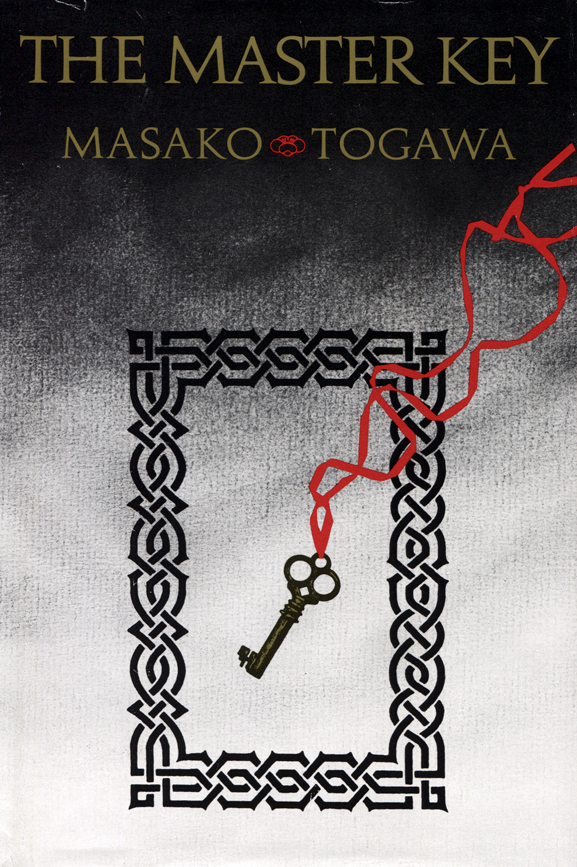
The Master Key

The Master Key

Title: The Master Key
Japanese Title: 大いなる幻影 (Ōinaru gen’ei)
Author: Togawa Masako (戸川 昌子)
Translator: Simon Grove
Publication Year: 1985 (United States); 1962 (Japan)
Publisher: Dodd, Mead & Company
Pages: 198

The Master Key, first published in 1962 and set in the late 1950s, is an interesting window into a period of postwar Japan that we don’t often see represented in Japanese fiction in translation. The story takes place entirely within the closed world of the K Apartments for Ladies, a large, multi-story building located in southeast Ikebukuro and registered as a charitable trust with “rents pegged at wartime levels.”

On its surface, the story is about a 1951 kidnapping of a young boy who is the son of a Japanese woman and an American military officer. Seven years later, when the K Apartments building is lifted and moved to a different location in a grand public works experiment, the body of a child is discovered buried underneath a shared bathing area in the basement. Right around the time the child disappeared, a man dressed as a woman was struck by a van in an intersection near the apartment building, and it’s revealed to the reader early in the novel that this man disguised himself as a woman to help one of the tenants dispose of the body that would later be found in the building’s basement. Who in the apartment buried the body, and what relation does this have to the kidnapping incident?

About twenty pages into The Master Key, however, it becomes clear that the mystery portion of the story is going to take a backseat to an extended exploration of the inner worlds contained within the K Apartments for Ladies and the psychological dysfunctions of its aging tenants.

Ishiyama Noriko, who has been diagnosed with “nervous pains,” has removed herself from the rest of the world and lives in a dark apartment stuffed with other people’s trash, which she occasionally boils and eats to sustain herself. Yatabe Suwa, a former concert violinist who now gives music lessons to children, is haunted by the loss of potential represented by the theft of a violin from her own teacher, even though it’s possible that she herself may have more to do with this incident than she likes to admit. Kimura Yoneko retired from her position as a schoolteacher years ago and spends her days writing letters to her former students, and she is not above checking into the affairs of the other tenants as well. Santo Haru is obsessed with a religious cult, and she is in the palm of its leader, who frequents her apartment to hold prayer meetings centered around the trances of its vestal priestess.

The plot is complicated and circuitous but is centered around the use and whereabouts of the master key of the title, which various tenants use to sneak into one another’s rooms in order to discover the secrets of others while concealing their own. At the end of the novel, it’s revealed that there is a mastermind orchestrating all of their movements, someone who has been spying on everyone for years and has manipulated the women around her for her own amusement. As someone who had essentially done the same thing to these characters through the process of reading this novel, I felt somewhat guilty, but not enough to lessen my enjoyment of how neatly all of the different plot threads are eventually tied together.

I will openly admit that I love stories about women being unpleasant and irrational and absolutely human. All of the female characters in this story are a little pathetic and a little demonic in that they have no power outside the K Apartments but all manner of strange little powers within their closed world. I’m sure this can be read as a metaphor for something, but it need not be, as the haunted and uncanny environment the characters shape through their bizarre actions is absolutely fascinating in and of itself.

For people with more background on Japanese history and urban space, the story’s setting in Ikebukuro is of special interest. In the immediate postwar period, Ikebukuro famously functioned as a heterotopia in which diverse groups of people came together and the norms of mainstream society didn’t necessarily apply. There is all manner of hidden “national polity” history in Ikebukuro, where the family-state of Japan has buried countless failed narratives under highways and skyscrapers. The Master Key thus serves as an excellent example of postwar Tokyo gothic (as similarly exemplified by Kyōgoku Natsuhiko’s The Summer of the Ubume). A reader doesn’t need historical knowledge to appreciate the story, but a bit of research into the setting has the potential to deepen the experience of reading this novel, which has sub-basements under sub-basements under sub-basements.

The Master Key is long out of print but still cheaply available through a number of online used book services. If you have access to your local or university library’s Interlibrary Loan program, it’s well worth requesting this book. It’s a quick read, and it packs a huge impact. To my fellow horror and mystery lovers especially, I highly recommend tracking down a copy of this short, satisfying, and creepy little novel.

Death and the Flower

Death and the Flower

Title: Death and the Flower
Japanese Title: 死と生の幻想 (Sei to shi no gensō)
Author: Suzuki Kōji (鈴木 光司)
Translators: Maya Robinson and Camellia Nieh
Publication Year: 2014 (America); 1995 (Japan)
Publisher: Vertical
Pages: 222

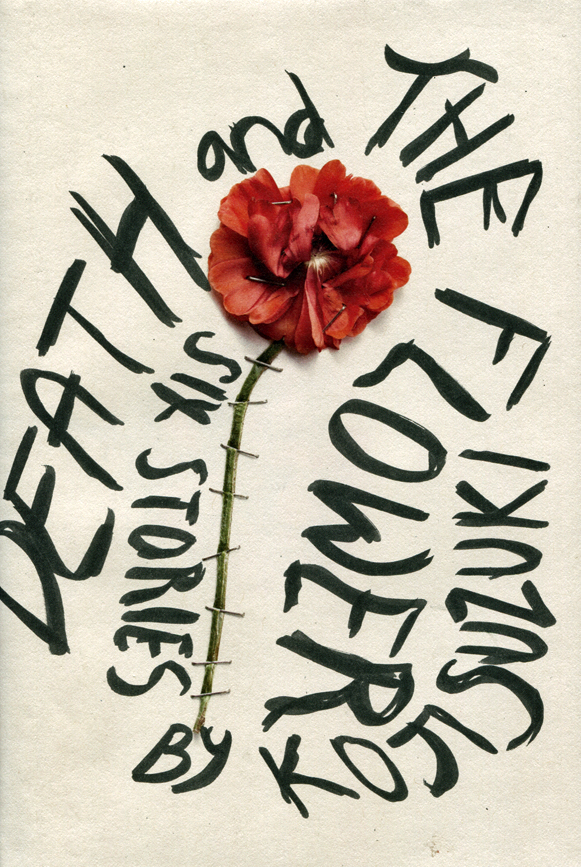
Death and the Flower is beautifully printed. Its paper is deliciously creamy, and its gorgeously designed book cover and dust jacket complement each other perfectly. Veritcal’s hardcover edition is one of those books that makes me happy that publishers still put time and effort into putting out physical books that you can hold in your hands and admire on your bookshelf.

But the stories themselves? They’re not really all that great.

In his Afterword, Suzuki writes:

I tried collecting six works with a common theme – a theme represented by the words “diapers and a race replica.” The softness and warmth of diapers, the speed and power of a racer’s motorbike – I wished to express a balance of the maternal and the paternal by placing symbols of femininity and masculinity side by side.

What this essentially means is that each story is about a father who undergoes various hardships for the direct or indirect benefit of his wife and/or daughter(s), who are nothing more than empty symbols vaguely characterized by emotional damage and blind need. In other words, men are capable of embodying “a balance of the maternal and the paternal,” and girls and women exist merely for the sake of helping men undergo character development in order to realize their full potential. These female characters don’t need to have names, or thoughts, or feelings, or any sort of identities save for their relation to the male heroes.

This in and of itself is not necessarily bad. However, if everything in piece of fiction is going to be diegetically subservient to the ego of the protagonist, then I would prefer for the protagonist to be interesting. Unfortunately, none of Suzuki’s characters really grabbed my attention or sympathy. Instead, just as the female characters of this collection are almost platonic embodiments of Object, each male character isn’t a great deal more than a Subject with a few shallow personality traits pathetically attached like a handful of cheap ornaments haphazardly stuck onto an otherwise bare Christmas tree.

The first story in the collection, “Disposable Diapers and a Race Replica,” can serve to illustrate my point.

The narrator, an obvious author stand-in character, quits his job to devote himself to his writing and the care of his infant daughter. To help his wife make ends meet, he moonlights as a private tutor. His current client is a delinquent high school student who has begun to skip out on tutoring sessions after the school system fails to reward him for his increased efforts, so the narrator tracks him down on his motorcycle and is driven off the road and nearly killed by the kid’s friends. The next day, the narrator shows up unexpectedly at the kid’s house and beats the crap out of him in order to figure out where the driver who almost killed him lives. He then proceeds to go to the other kid’s house and, finding him not at home, beats the crap out of the kid’s car. After he’s satisfied himself, the narrator encounters the driver and condescends to not beat the crap out of him because he, the narrator, is actually a good guy deep down inside. The only thing that saved him from dying when his bike crashed was the huge bag of diapers he had tethered to the back of the bike, you see, and this is some kind of message about how he needs to stop jumping headfirst into fights, even though he could totally win them if he did get into them, because of course he could – he’s just that kind of guy.

Since the narrator interacts with the other male characters by yelling and punching, his character development is guided by his interactions with the story’s two female characters, his student’s mother and his wife. The narrator tries to be kind to his student’s mother, even though privately he thinks she’s a weak and ineffectual parent. This must be because, being a woman, she isn’t clever enough to know that you need to threaten to beat the crap out of boys to make them respect you. As a mentor and role model, the narrator is thus defined by what he is not – female, and thus “stupid.” Meanwhile, the narrator’s wife is a delicate flower who must not be upset or disturbed under any circumstances, as she has some sort of nervous disorder. This disorder is typified by the anxiety she demonstrated when he effectively abandoned her during their engagement to go live on a tuna fishing boat for a year. Why was she so upset about this, and why is she concerned about his level of commitment to their relationship? It must be because of her nervous disorder, obviously. Women and their unreasonable hysteria, amirite? Anyway, as a father and caregiver, the narrator is again defined by what he is not – female, and thus “crazy.”

Character development through negative contrast does not make for good storytelling, especially when the primary conflicts of a story hinges on an internal crisis of its protagonist. In Death and the Flower, each such crisis is resolved by a realization of something along the lines of “I am a burly hairy dangerous manly alpha male, but I need to embrace my more ‘feminine’ side so that I can better protect the utterly helpless women in my life.” Maybe this is just me, but I don’t find that sort of resolution too terribly compelling. For a such a revelation to be truly interesting, there need to be more 1980s seinen manga style swords and/or psychic power attacks demonstrating how a small compromise in an otherwise unadulterated beefcake masculine identity can constitute a genuine sacrifice.

What Suzuki excels at in Death and the Flower are his descriptions of urban and natural landscapes. I was particularly impressed by the third story in the collection, “Key West,” in which a father leaves his young daughter in a rental car by the side of a highway in Florida to walk out to a small offshore island connected to the coast by a sandbar. On the island, the father encounters an abandoned settlement overgrown with jungle. Although his parenting skills leave much to be desired, the father’s accounts of the greenery and derelict buildings, the comparisons he makes to his home in Tokyo, and his detailed examination of the complicated feelings the island evokes in him are all magnificent. The simultaneously intense yet hazy quality of the fever dreams he experiences after being bitten by a sea snake is also expertly conveyed by the author. That being said, the father’s grief for his dead wife as expressed by his half-hearted desire to protect his daughter is largely undeveloped and feels out of place within the larger themes of the story, which mainly seem to involve the narrator’s fear of his own encroaching middle age.

To return to the collection’s Afterword, Suzuki writes:

“Only a peaceful and safe world is worth living in” – far too many people seem to think so.

Putting aside the tastelessness of such a statement, I think the author’s writing is indeed at its best when his characters have a worthy antagonist to battle. The major draw of Ring, for instance, is Sadako, the evil girl who spews her curses out into the world from inside a well. The longest story in Death and the Flower, “Beyond the Darkness,” is perhaps the strongest, as its father protagonist character is provided with a creepy stalker to serve as an acceptable outlet for his anger and tendency toward physical violence. As introspection-driven character pieces, however, the rest of the stories in the collection fall flat.

If you’re a Suzuki completionist, Death and the Flower is of interest for its prototypes of the author’s major themes and character archetypes. If you’re looking for good horror fiction or just some good short stories, though, it’s probably best to ignore the pretty cover and take a pass on this collection.

Parade

Parade Novel

Title: Parade
Japanese Title: パレード (Parēdo)
Author: Yoshida Shūichi (吉田 修一)
Translator: Philip Gabriel
Year Published: 2014 (America); 2002 (Japan)
Publisher: Vintage Books
Pages: 230

Do you remember how, maybe around ten years ago, writers like Nick Hornby and Chuck Palahniuk were really cool? You’d read something like Bret Easton Ellis’s American Psycho or Don DeLillo’s Cosmopolis and go, Wow, that’s brilliant! And do you know how now, when you try to pick up one of those writers again, you’re too jaded by movie adaptations trying to make hard-line masculinity and sexual violence seem edgy to really appreciate what the writers were trying to say about urban culture and the weird bonds that form between people and what happens when you’re no longer young and suddenly running out of opportunities to make a fresh start? Have you ever thought it would be kind of awesome to re-experience the excitement of those stories without the nagging annoyance of an ever-present undercurrent of misogyny?

If so, then you need to read Parade. It’s by far the most enjoyable novel I’ve encountered this year. When I first sat down with it, I thought I would read twenty pages and then call it a day; but then, the next thing I knew, I was ninety pages in and terrified that I wouldn’t be able to stop. The novel’s five chapters are recounted by five different characters, each of whom is crazier than the last. I loved all of them, and I had to pace my progress through the book so that I could spend more time in their presence. Like its narrators, Parade is young, and it’s fun, and it’s clever, and it’s psychologically unbalanced (in a good way).

The story is about four people in their twenties who have no idea what they’re doing with their lives. Almost by accident, they’ve found themselves living together in a two-bedroom apartment, where they’ve established an easy and comfortable social space that one of them likens to an internet chat room. In short, each of them is free to be as dysfunctional as he or she wishes without incurring the judgment of the others, and they get along well.

Sugimoto Ryōsuke is a sophomore in college who adores a protective upperclassman and has found himself in a Sedgwickian love triangle with his friend’s girlfriend. When he’s not stalking this girl (with her tacit approval), he’s aimlessly driving around Tokyo in a derelict Nissan March that he’s named Momoko. Ōkochi Kotomi is twenty-three, unemployed, and may or may not be dating an up-and-coming young actor. She spends all day inside the apartment watching tv and waiting for her maybe-boyfriend to call. Sōma Mirai is only a year older than Kotomi but manages a branch of a boutique that sells clothes and accessories imported from places like India and Bali. She’s also an unrepentant alcoholic who frequents gay bars and stays up all night working on digital illustrations based on close-up photographs of male bodies. Ihara Naoki, the apartment’s last remaining original tenant, is pushing thirty and seems the most normal of the group. He works at a small but successful film licensing company and goes on jogs late in the evening while listening to classical music. Every so often Naoki’s nutty ex-girlfriend Misaki appears without warning, has a few drinks, and spends the night on the apartment couch.

One night, Mirai picks up an eighteen-year-old high school dropout named Kokubo Satoru on one of her pub crawls through Shinjuku. Satoru, who does speed in public restrooms and trolls for clients in parks, has no fixed residence and somehow ends up squatting in the shared apartment. His entry into the lives of the four tenants coincides with a string of assaults in the neighborhood that become increasingly violent over the course of the novel. Meanwhile, the unit next door – Apartment 402 – is fairly obviously serving as the headquarters for some sort of shady operation orbited by creepy old men and weeping teenage girls. Despite all this, Ryōsuke, Kotomi, Mirai, Naoki, and even Satoru continue to drift through life largely untroubled by anything that happens outside the confines of their apartment.

For the reader, there is a certain Gothic appeal in unearthing the secrets hidden under the placid comradery characterizing this pseudo-family, but the lack of concern on the part of the people in question drains most of the shock from each revelation. So Ryōsuke is stalking his older male buddy’s girlfriend because he has a weird father complex? It happens. Kotomi is obsessed with an actor not because of lust or emotional emptiness but because of a half-hearted sense of guilt over something that happened when she was a high school student? Whatever, it’s no big deal. By the time the reader uncovers the more sordid secrets of Parade‘s narrators, they’re become more amusing than upsetting; and, if nothing else, knowledge of these secrets only serves to render the continued companionship of the apartment’s tenants all the more touching.

I understand how some people might interpret Parade as a horror story, but it’s really more like an American sitcom about comically mismatched roommates. “Comically mismatched” happens to mean “weaving in and out of the borderlands of sanity” in this case, but the novel still has the potential to generate a lot of warm fuzzy feelings, at least in readers with a healthy tolerance for black humor and antisocial behavior.

Philip Gabriel’s translation is eminently readable, capturing the grit and immediacy of the narrators’ different styles without resorting to easily dated slang or stereotypes regarding urban speech patterns. Yoshida is a popular writer with a distinctive literary voice, which I feel comes across much more clearly in Parade than in Gabriel’s earlier translation of the author’s 2007 novel Villain. That being said, both books are a lot of fun, and I’m looking forward to more of Yoshida’s work appearing in English.

Isao Yukisada, who won a Japanese Academy Prize for his 2005 adaptation of Katayama Kyōichi’s bestselling romance Socrates in Love, directed a movie version of Parade. The film was well-received at the 2010 Berlin International Film Festival, winning a FIPRESCI Award and going on to screenings at festivals all over Europe and North America. I had a chance to catch the movie at a showing during that year’s Philadelphia Film Festival, and it was really good. I highly recommend Yoshida’s original novel, of course; but, if you get an opportunity to see Isao’s cinematic adaptation, go for it!

A review copy of Parade was kindly provided by Vintage Books.

Parade Movie Poster

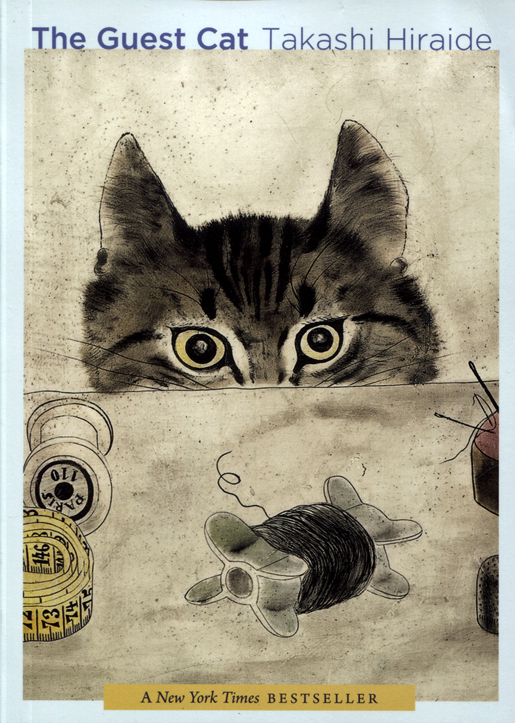
The Guest Cat

The Guest Cat

Title: The Gust Cat
Japanese Title: 猫の客 (Neko no kyaku)
Author: Hirade Takashi (平出 隆)
Translator: Eric Selland
Publication Year: 2014 (America); 2001 (Japan)
Publisher: New Directions
Pages: 140

The Guest Cat is set in 1988 in a residential neighborhood not too far away from Shinjuku Station, where the young narrator lives with his wife in a rented house located on the property of an old estate. The narrator’s house faces a narrow side street that he calls “Lightning Alley” because of its sharp, zig-zagging turns. A young housewife and her son live in a house next door that shares the shade of an ancient zelkova tree with the narrator’s house. A cat wanders into the housewife’s garden, and her son becomes enamored with the creature. Despite the protests of the woman living in the main house of the larger estate, who claims that the neighborhood cats ruin her garden and track dirt inside her house, the boy is allowed to keep the small white-mottled cat, which is promptly given the name Chibi, meaning “little one.”

The novel moves elliptically through several stories, gradually passing from point to point by way of meandering descriptions of the outside alley, the estate garden, and the narrator’s house in relation to the space and weather outside. The narrator has just worked up the courage to quit his job as a literary editor in order to pursue his own writing projects, but he only has enough money to help his wife maintain the household for about a year and a half. The narrator’s close friend dies from cancer, and the narrator worries about his own health as the Shōwa emperor grows ever weaker on his deathbed. The woman who owns the estate lives alone save for her aging husband, and she’s not too young herself; it’s uncertain what will happen to the property when she passes away, as land prices have risen exorbitantly in the bubble economy. Most importantly, Chibi develops new mannerisms and behaviors as she becomes more familiar with the narrator and his wife, who in turn grow and change through their interactions with her. The chapters are short (between three to six pages), each focusing less on any sort of ongoing plot and more on brief and vibrant observations on how the world appears differently when it’s centered around a cat instead of around other human beings.

The style of the novel is naturalistic in its minute attention to the detail of mundane life and reminds me of nothing so much as the short fiction of Shiga Naoya or the realistic fiction of Akutagawa Ryūnosuke (of the kind collected in Mandarins), in which the discomfort caused by writer-narrator’s cold is made palpable by a catalog of what can only be noticed when one is confined to bed but cannot sleep, such as how a lizard crawls into a sliver of shade on the bedroom windowsill to escape the sun, or how Chibi admires herself in the mirror before leaping from the mirror stand onto the top shelf of the closet. As one imperial era transitions into another, the narrator and his wife experience major changes in their life, including a particularly traumatic event involving Chibi whose full impact does not become clear until the very last page of the story. Throughout everything, Hiraide focuses on brief moments and small sensory details such as the pleasant chilliness of a breeze or the pattern of light and shadow cast by the sun shining through tree leaves. While it is possible to glean several layers of meaning from each episode (one scene involving a praying mantis eating a locust particularly rewards analysis), it’s also well within the reader’s right to simply allow herself to be carried by the relaxed current of vivid impressions.

I’ve recently started reading about the Deep Ecology movement, which is above all concerned with animal rights, as well as how respect for these rights can shape the nature of the relationship between human and non-human animals. I’ve become a fan of Marc Bekoff’s blog Animal Emotions, which comments on current events and summarizes scientific research in order to build a case for a more inclusive and compassionate understanding of animal psychology. It’s been interesting to read Bekoff’s work alongside The Guest Cat, in which different characters betray vastly different attitudes towards animals through their interactions with Chibi. I was especially intrigued by the shifting tides of the narrator’s wife, who claims not to be a cat person:

As she finished the poor sparrow’s burial my wife repeated her earlier declaration – “I won’t hold Chibi,” she said. “It’s more gratifying to let animals do whatever they like.”

As April came around, gossamer-winged butterflies covered the garden, dancing just above its surface and coloring it a blue-gray. It seemed impossible for anyone walking in the garden to avoid stepping on them.

What’s interesting about animals, my wife explained, is that even though a cat may be a cat, in the end, each individual has its own character.

“For me, Chibi is a friend with whom I share an understanding, and who just happens to have taken on the form of a cat.”

Even though the narrator’s wife is attached to Chibi, she respects the cat’s autonomy and individual character, thus abstaining from direct interaction. The narrator, on the other hand, becomes fiercely jealous of the cat’s affections at a certain point, and it becomes increasingly apparent that Chibi’s primary caretaker, the housewife next door, also possesses strong emotions concerning the cat.

Although other readers may interpret this autobiographical novel differently, to me, the primary dramatic effect of The Guest Cat is not so much a result of its human characters and the socioeconomic environment they occupy, but rather a process arising from the ideas and emotions animals inspire in humans as they become attached to individual creatures and are refracted into the wider world.

The Guest Cat is equally capable of acting either as a quick pleasure read for cat lovers or as a starting point for applied literary ecocriticism. Either way, it’s a neat little book!

Revenge

Revenge

Title: Revenge: Eleven Dark Tales
Japanese Title: 寡黙な死骸 みだらな弔い
(Kamoku na shigai, midara no tomurai)
Author: Ogawa Yōko (小川 洋子)
Translator: Stephen Snyder
Publication Year: 2013 (America); 1998 (Japan)
Publisher: Picador
Pages: 162

Ogawa Yōko is a writer of the fantastic who spins softly glittering tales of quiet desperation. In Japan, she’s known for her magical realism, which is so subtle as to be almost Todorovian in the uncertainty it generates. Nevertheless, her first novel to appear in English translation, The Housekeeper and the Professor, is about kind-hearted people behaving nobly in the face of senescence and overcoming emotional adversity by opening their hearts to one another. It’s a good book even despite its clinging miasma of Hallmark-style sentimentality, but the way the novel was marketed made it feel as if its publisher were trying to pass Ogawa off as the next Yoshimoto Banana, which she most decidedly is not. Messages of hope and moral fortitude are few and far between in Ogawa’s work, and her next novel to appear in translation, Hotel Iris, is about ephebophilia and sadomasochism in a decaying seaside town. The novel is quite short and, given its subject matter, an odd choice for translation, but perhaps its publishers saw a faint connection to Yoshimoto’s Goodbye Tsugumi, which explores similar themes (albeit in an infinitely more upbeat and chipper manner).

I am therefore interested in the way in which Ogawa’s newest work to appear in translation, Revenge, is pitched to potential readers. Short blurbs from Junot Díaz and Hilary Mantel appear on the back cover, but the writer who bears the honor of having his praise appear right in the middle of the front cover is Joe Hill. Joe Hill is the author of several novels, comic books, and Kindle singles, and he’s known as a writer of grisly and violent mystery fiction. Hill’s debut work, 20th Century Ghosts, is a collection of stories that contain more subtle disquiet than they do splattered blood. My favorite is “Voluntary Committal,” in which a seriously disturbed man builds an elaborate crawl-through maze of cardboard boxes in his basement, which eventually becomes a portal to another dimension. 20th Century Ghosts has won all sorts of awards, from the Bram Stoker Award to the British Fantasy Award, but Hill is still considered a horror writer; and, by association, Ogawa is positioned as a horror writer as well. As if Hill’s name alone were not enough to convey the message, the cover of the North American edition of Revenge is designed to resemble dead skin stitched with rotting thread.

Despite the implications of its cover, Revenge is less about hideous creepy crawlies lurking at the foot of cellar stairs than it is about the small disturbances in daily routine that hint at the madness waiting patiently on the edges of human civilization. For example, the first story in collection, “Afternoon at the Bakery,” opens with a scene of a peaceful town on a Sunday afternoon:

Families and tourists strolled through the square, enjoying the weekend. Squeaky sounds could be heard from a man off the corner, who was twisting balloon animals. A circle of children watched him, enthralled. Nearby, a woman sat on a bench knitting. Somewhere a horn sounded. A flock of pigeons burst into the air, and startled a baby who began to cry. The mother hurried over to gather the child in her arms.

You could gaze at this perfect picture all day – an afternoon bathed in light and comfort – and perhaps never notice a single detail out of place, or missing.

What you might notice, however, is the author’s focus on children and families. The detail out of place in this scene is a solitary mother who enters a quiet bakery to buy strawberry shortcake for her son’s birthday. The catch is that her son is dead and has been for many years. He died when he was six years old, and his mother responded to the tragedy by piecing together a scrapbook of newspaper articles about other children who died in similarly upsetting circumstances, which she describes in loving detail for the benefit of the reader. The physical deterioration of the cakes she continues to buy for her son’s birthday serves as an analogy for her own decaying sanity, something that used to be as fresh and wholesome as a young boy but now resembles nothing so much as rotting flesh:

Long after I had realized my son would not be coming back, I kept the strawberry shortcake we were meant to have eaten together. I passed my days watching it rot. First, the cream turned brown and separated from the fat, straining the cellophane wrapper. Then the strawberries dried out, wrinkling up like the heads of deformed babies. The sponge cake hardened and crumbled, and finally a layer of mold appeared.

“Mold can be quite beautiful,” I told my husband. The spots multiplied, covering the shortcake in delicate splotches of color.

“Get rid of it,” my husband said.

I could tell he was angry. But I did not know why he would speak so harshly about our son’s birthday cake. So I threw it in his face. Mold and crumbs covered his hair and his cheeks, and a terrible smell filled the room. It was like breathing in death.

The above passage is the dramatic high point of the story, which is otherwise sedated and subdued. The horror Ogawa offers her reader is not the terrified panic of a boy clawing vainly for air as he suffocates in the dark or the emotional turmoil of a distraught mother sobbing wildly in her grief, but rather the unsettling certainty that people who are irreparably damaged walk among us within a world that is constantly growing as filthy and old as we will one day become.

The eleven stories in Revenge are very loosely connected, with each almost fitting into the next like a section of a puzzle box that has been warped by humidity. The major theme connecting the stories is ultimate futility of the attempt to outlast the relentless march of time through creative endeavors or the preservation of a material legacy, and the collection is filled with unremarkable deaths, lonely rooms stuffed with junk, and putrefying fruit and vegetables. It’s dark stuff, to be sure, but Ogawa’s language and narrative skill, rendered beautifully in Stephen Synder’s translation, allow the reader to experience the horror of the stories in Revenge as so mundane as to be almost comforting.

NPR listed Snyder’s translation of Revenge as one of the best books released in 2013, and it’s in good company. Despite Picador’s gruesome cover, Ogawa’s stories have much more in common with her listmate Karen Russell’s debut collection St. Lucy’s Home for Girls Raised by Wolves than any of the recent work by Joe Hill or Peter Straub – or any of the recent work of Murakami Haruki, to whom many reviewers feel compelled to compare Ogawa for some inexplicable reason. Ogawa has her own style of haunting and meticulously crafted fiction, and I can only hope that more of her short stories find their way into English translation, the sooner the better.

Ring

Ring

Title: Ring
Japanese Title: リング (Ringu)
Author: Suzuki Kōji (鈴木 光司)
Translators: Robert B. Rohmer and Glynne Walley
Publication Year: 2004 (America); 1991 (Japan)
Publisher: Vertical
Pages: 282

In Nakata Hideo’s 1998 film adaptation of Ring, the point-of-view character for most of the story is female. This is an effective casting choice, as cinematic audiences are primed to experience danger and vulnerability through female protagonists in horror films. Suzuki Kōji’s original novel is less about thrills and chills than it is about hardcore investigative journalism, however, and its hero, Asakawa Kazuyuki, is male. The female lead in the Ring film’s husband, Takayama Ryūji, is Asakawa’s friend in the novel, which sees the two men travel across Japan in an attempt to save Asakawa’s wife and child from a deadly curse apparently connected to a mysterious bootleg videotape.

In the opening pages of the book, two creepy things happen: a teenage girl dies suddenly in her family’s apartment in Yokohama, and a boy on a motorcycle falls down dead on the road in front of a taxi. A month later, the taxi driver reports the latter incident to a random passenger, who happens to be the journalist Asakawa, whose niece happens to be the teenage girl involved in the former incident. Asakawa, upon realizing that these deaths, as well as two others, all happened at the exact same time on the exact same day, tracks down the connection between the teenagers to a cabin in the woods near the seaside resort of Atami, which is a two-hour train ride southwest of Tokyo. It is there that he encounters an unmarked videotape upon which a surreal series of images has been recorded. White letters at the end of the sequence warn that the viewer will die in a week unless a certain “charm” is performed, but the four dead teenagers recorded over the actions needed to perform this charm as a prank.

In order to figure out the charm before his time is up, Asakawa enlists his college professor friend Ryūji to help him figure out as much information concerning the origins of the tape as possible. What follows is a surprisingly unsuspenseful series of adventures in which the two men eat things, drink things, and leisurely chat with all manner of people as they gradually puzzle out the life story of Yamamura Sadako, the beautiful young woman whom they believe to be responsible for the cursed videotape. Although Ring is structured around a quest for Sadako, the novel, unlike the film adaptation, is a man’s world. The primary female characters are offstage and only glimpsed through the recollections of various male characters, who are far more interested in localized histories of science and medicine than they are in the supernatural.

The reviews excerpted on the back of the novel promise that it is “very frightening” and “an engine of disquiet” and “shocking” and “so creepy your hair will literally stand on end;” but, to be honest, I don’t think the book is that scary, and the fright factor is only a marginal portion of what it has to offer a reader. Instead, Ring unfolds as a mystery in which clues must be painstakingly tracked down one at a time as the principal players struggle to draw connections between them. It’s the search for these bits of information, as well as the thrill of hard-won eureka moments, that will keep the reader entertained, and the paranormal elements are for the most part examined in a rational and pseudo-scientific manner. The true horror of Ring does not lie in its ghosts or shocking imagery, but rather in the absolute inability of human beings to comprehend the vast and menacing world that lies outside the realm of our control.

Ring is set in the same decade in which it was written, and the condominium high-rises, mass media publications, and corporate culture of the late 1980s saturate the background of the novel. The primitive fear of disease still haunts the advanced society that provides the backdrop of Ring, however; and, although the science and technology of the age strive to contain natural forces, some things cannot be controlled. The author is able to accentuate this anxiety by continually linking the actions of Sadako’s curse with images of the natural world at its most hostile and overwhelming. For example, one of the greatest of natural forces, the sea, is a constant presence in Ring, and it only appears under the cover of darkness and in contrast to human constructions, a juxtaposition which creates an impression of a dark, brooding malice lurking beyond the boundaries of civilization. The novel opens with an image of the highly developed industrial area which lines the bay fronting the city of Yokohama:

Off to the south the oily surface of the ocean reflected the glittering lights of a factory. A maze of pipes and conduits crawled along the factory walls like blood vessels on muscle tissue. Countless lights played over the front wall of the factory like insects that glow in the dark… The factory cast a wordless shadow on the black sea beyond.

Suzuki equates the factory with humanity as he compares its bulk to a human body, endowing it with “blood vessels” and “muscle tissue.” The multitudinous lights of Yokohama at night also metaphorically dot the surface of the factory, but none of this light has any effect on the “black sea beyond.” Instead, the factory as a symbol of humanity and its ingenuity merely “cast[s] a wordless shadow” over the silent ocean, which almost seems to mock its presence.

Even with our incredible advances in technology, contemporary societies still have trouble coping with the facets of existence that lie beyond the explanations offered by science and ordinary experience. We are all insignificant and ephemeral points of light flickering on and off somewhere in a dark, callous, and unfathomably large universe. While the film and graphic novel adaptations of Ring delight in the uncanny horror of the female demonic, the horror of the original novel is more Lovecraftian. The protagonists of Ring are ultimately punished by the narrative not because they don’t strive tirelessly for information, but rather because they believe the achievement of knowledge has the capacity to help them in any way.

A reader should not come to Ring expecting the same sort of jump-horror at which its cinematic adaptations excel; there are no creepy little girls stuffed in closets or climbing out of television sets. Suzuki’s novel instead rewards intellectual engagement and curiosity, which it subtly mocks and discredits in the most terrifying of ways.

In the Miso Soup

In The Miso Soup

Title: In the Miso Soup
Japanese Title: イン ザ・ミソスープ (In za miso sūpu)
Author: Murakami Ryū (村上 龍)
Translator: Ralph McCarthy
Publication Year: 2003 (America); 1997 (Japan)
Publisher: Penguin
Pages: 217

In the Miso Soup was serialized during 1997 in the Yomiuri Shimbun, the newspaper with the highest circulation in Japan (and perhaps in the world), and it won the 1998 Yomiuri Prize for Literature, an extremely prestigious award given to superlative works of writers who have already established themselves as leaders in their fields. The novel’s North American and Japanese publishers have marketed it as a “psycho thriller,” and its extreme and violent content will more than likely shock anyone who isn’t familiar with Murakami’s oeuvre, especially his other suspense novels from the 1990s, such as Piercing (1994) and Audition (1997).

The twenty-year-old protagonist of the novel, Kenji, is a high school graduate from Shizuoka Prefecture who makes his living by acting as a guide of Shinjuku’s Kabukichō neighborhood, which is internationally famous for its nightlife. Kenji specializes in sex tours for foreigners, who learn about his services through Tokyo Pink Guide, a publication helmed by a man named Yokoyama, who believes it is his calling in life to bring the people of the world together through something all human beings have in common. On the morning of December 29, Kenji is contacted by an American named Frank, who claims to be a distributer of Toyota car parts and meets Kenji while clutching a copy of Pink Guide in his meaty hands.

If you mention In the Miso Soup to anyone who’s read the novel, the conversation will instantly turn to how delightfully creepy Frank is. Frank is a pathological liar, for starters. If one of the bizarre things Frank says is challenged in any way, he becomes suddenly and irrationally furious, his expression transforming into a mask of rage that Kenji soon comes to refer to as “the face.” The skin on Frank’s neck and hands is loose and seems artificial, and a sex worker who services Frank at a peep show says that there is something inexplicably wrong with his penis as well. To make matters even more upsetting, the body of a high school junior named Takahashi Akiko had been found dismembered and distributed across Kabukichō early in the morning of the 27th; and, after Frank goes on a rant about killing homeless people during his first night out with Kenji, the charred corpse of a homeless man is found in Shinjuku Central Park the next morning. By the end of the first of the novel’s three chapters, both Kenji and the reader are supplied with ample evidence to suspect that there is something not quite right with Frank.

Although Kenji is understandably apprehensive about spending more time with Frank, he is even more worried about what Frank might do in retaliation if he were to break their agreement and stand him up. He thus goes out for a second night on the town with Frank, who now makes very little effort to appear normal. After an episode of highly concentrated weirdness at an underground shot bar, Kenji and Frank go to an omiai club, a bar where people hoping to hook up with a stranger can meet. The girls who enter the club are given numbers and chosen by the men, who must pay a cover charge to enter. If a girl is chosen, she will share a table and drinks with the man who selects her. If they hit it off, they can then proceed to a nearby love hotels, and it is understood that money will more than likely change hands after the encounter. It’s not quite prostitution, but the women do have a financial interest in convincing the men to leave the club with them, and they will put everything they have into flirting and appearing attractive. What could be a quirky comedy of errors in another novel becomes an absurdist drama in the bizarro realm of In the Miso Soup, and Frank puts an end to the staged and artificial interactions of the club’s patrons with a lengthy orgy of meticulously narrated ultraviolence. Although Kenji is clearly traumatized by this turn of events, he also takes tentative steps towards an acceptance of what has happened to the other people at the club, who have upset his fundamental faith in humanity with their superficiality:

They were like automatons programmed to portray certain stereotypes, these people. The truth is it bugged the hell out of me just to be around them, and I’d begun to wonder if they weren’t all filled with sawdust and scraps of vinyl, like stuffed animals, rather than flesh and blood. Even when I saw their throats slit and the gore oozing out, it hadn’t seemed real to me. I remembered thinking, as I watched the blood drip down from Lady #5’s throat, that it looked like soy sauce. Imitation human beings, that’s what they were.

Murakami therefore configures Frank’s dispassionate killing spree into a sort of social critique, a theme that comes to fore in the novel’s third chapter. After the bloodbath at the omiai club (which Kenji refers to as “The Great Omiai Pub Massacre,” as if it had happened years ago), Frank shanghaies Kenji into spending the night with him in the abandoned medical facility in which he has ensconced himself. While Kenji shivers in the darkness of the unheated building, Frank regales him with stories from his childhood in America. As might be imagined, Frank’s childhood is dysfunctional and disturbing enough to make Stephen King proud (Frank even grew up in Maine!), as it includes the creepiness of small towns, the killing of small animals, murder, institutionalization, and extreme body horror courtesy of American mental health practices. Frank is obviously a sociopath, and he has already been established as a pathological liar, so it’s not entirely certain that he’s telling the truth, but he does seem to be telling Kenji his life story for a reason. Frank is almost like an overweight Tyler Durden as he explains that society needs terror, discord, and disruption in order to evolve:

“I see myself as being like a virus. Did you know that only a tiny minority of viruses cause illness in humans? No one knows how many viruses there are, but their real role, when you get right down to it, is to aid in mutations, to create diversity among life forms. I’ve read a lot of books on the subject – when you don’t need much sleep you have a lot of time to read – and I can tell you that if it weren’t for viruses, mankind would never have evolved on this planet. Some viruses get right inside the DNA and change your genetic code, did you know that? And no one can say for sure that HIV, for example, won’t one day prove to have been re-writing our genetic code in a way that’s essential to our survival as a race. I’m a man who consciously commits murders and scares the hell out of people and makes them reconsider everything, so I’m definitely malignant, yet I think I play a necessary role in this world.

I won’t spoil what happens to Frank, Kenji, and Kenji’s girlfriend Jun at the end of the novel, as the suspense regarding the fate of the trio lends an air of immediacy to Frank’s metaphysical speculations and the moral decisions Kenji begins to make concerning Frank. Let it suffice to say that the shock horror of the first two-thirds of the novel are compounded by the social horror of its final chapter. In the Miso Soup is a short book and a blisteringly quick read, but it stays with the reader long after it draws to its conclusion on New Year’s Eve, at which point its seemingly nonsensical title takes on chilling connotations. In the Miso Soup is a sublime dose of nihilism and ultraviolence that illuminates the seedy side of Tokyo in its blindingly dark shadow that is sure to please fans of Japanese horror and readers of extreme literature.

Colorless Tsukuru Tazaki and His Years of Pilgrimage

Tsukuru Tazaki

Title: Colorless Tsukuru Tazaki and His Years of Pilgrimage
Japanese Title: 色彩を持たない多崎つくると、彼の巡礼の年
(Shikisai o motanai Tazaki Tsukuru to kare no junrei no toshi)
Author: Murakami Haruki (村上 春樹)
Publisher: Bungei Shunjū
Publication Year: 2013
Pages: 370

From July to January of his second year of college, Tazaki Tsukuru was absorbed by thoughts of death. His four best friends from high school suddenly stopped talking to him, and he had no idea why. Sixteen years later, the 36-year-old Tsukuru is employed a railroad company, where he works on the design and construction of train stations. He’s single, but he has kindled a romance with a businesswoman named Sara, of whom he is quite enamored. Sara reciprocates Tsukuru’s affections, but she senses that something is holding him back from being in a fully committed relationship. She thus gives Tsukuru an ultimatum: Get rid of your emotional baggage, or I will never sleep with you again. Sara’s Lysistrata-like threat compels Tsukuru to embark on a pilgrimage that takes him across and beyond Japan to track down his friends from high school in order to figure out what happened between them and what went wrong.

Tsukuru’s friends are an interesting group, and each of them goes by a color-based nickname. Oumi Yoshio, or Ao (Blue), has an outgoing personality, and he was the captain of his rugby team in high school. As an adult, he works as a salesman at a Lexus dealership. Akamatsu Kei, or Aka (Red), is fiercely intelligent and analytical, and everyone thought he would become a university professor after he graduated from college. Instead he entered the corporate world and quickly dropped out in order to launch a consulting firm that holds management training seminars. Kurono Eri, or Kuro (Black), is quick-witted and clever and was known for her sarcastic sense humor in high school. Kuro became a potter and fell in love with a foreign student who had come to Japan to study pottery, and she now lives with him and their two daughters in Finland. Shire Yuzuki, or Shiro (White), looked like a model and had gorgeous long black hair, but she hated attention and found joy in playing piano. Unfortunately, she failed to become a concert pianist and so ended up as a private piano teacher, but her ultimate fate was even more tragic. The easygoing and unflaggingly polite Tsukuru acted as the “colorless” background against which these four could shine, and he was the invisible glue that held the group together.

The forward momentum of the first 150 pages of the novel is driven by the mystery of why Tsukuru got dumped by his friends. The first member of the former group that Tsukuru tracks down, Ao, reveals the bare facts of the answer, but this answer creates even more questions, since Tsukuru has no memory of what he was accused of doing. Moreover, what Tsukuru was accused of doing is extremely upsetting, not only to him and the other characters in the novel but to the reader as well. The accusation, as well as Tsukuru’s responsibility in the matter and the obligation his friends felt in responding to the situation, are heart-breaking and profound, and the practical and emotional complications are quite distressing. I’m sure that, when the novel is translated into English, Murakami is going to catch a lot of flak for writing such a scenario, but what he describes is extraordinarily relevant to contemporary societal debates, and the sensitivity with which his third-person narrator describes the fallout of what happened from multiple perspectives is one of the novel’s best features.

Another interesting component of the novel is the wealth of detail given to the description of each character and the interior spaces he or she occupies. The personality of each character is conveyed by his or her words, of course; but, since the narrator’s point of view is fairly limited to Tsukuru, the reader only knows what Tsukuru is doing or thinking at any given moment. The reader is thus encouraged to tease out the finer details of character through the narrator’s meticulous descriptions of clothing, hairstyle, accessories, and interior decoration. Tanaka Yasuo was strongly criticized for his endless litanies of product brand names in his novel Nantonaku, Crystal, and I imagine that it’s possible to levy the same sort of complaint against Tsukuru Tazaki, as the writing comes off as more than a bit Nantonaku-ish at times. That being said, Murakami’s method of character analysis through the intense reflection on taste and setting strikes me as less vapid and materialistic than it does as vaguely Homeric. How does the reader know that Achilles is a badass? By reading detailed descriptions of his armor. How does the reader know that Aka is a badass? By reading detailed descriptions of how he has set up his corporate office.

Aside from the brilliance of its characters, the novel also has some genuinely creepy moments to offer the reader. Many of these moments are encapsulated by Tsukuru’s relationship with his college friend Haida (whose name contains the character for “ash,” or “grey”). Haida tells Tsukuru a story about how his father once met a jazz musician named Midorigawa (whose name contains the word “green”) while working at an isolated inn in the mountains, and how Midorigawa possessed a strange ability that he may have passed on to Haida’s father. It’s a weird story, and Haida’s intentions in telling it to Tsukuru are unclear, but shortly thereafter Haida does something bizarre in an uncomfortable scene involving sleep paralysis before disappearing from Tsukuru’s life without a trace. Such scenes and stories-within-stories are not “softly haunting,” or “elegiac,” or anything fancy like that; they are genuinely creepy and upsetting. Furthermore, Haida is not the only source of surreal urban folklore in the novel – the story a subway station employee tells Tsukuru about something he found in one of the station’s bathrooms is particularly delightful.

As is the case with most Murakami novels, the deeper psychological and supernatural elements of the plot are never fully explained, but I found Tsukuru’s journey to be rewarding in and of itself, and I enjoyed reading the novel. Tsukuru Tazaki is evocative of the pains of youth and what it’s like to reconnect with people years after you’ve graduated from high school. In many ways, Murakami’s latest book feels like an answer to Norwegian Wood, the 1987 novel that first boosted the author into international literary stardom. Whereas Norwegian Wood is permeated by a nostalgic longing for the perceived potential for individual dignity made possible by a vanished youth in a vanished era, Tsukuru Tazaki is concerned with a more pragmatic strain of existentialism that seeks to justify the manner in which the passing years inevitably drain color from one’s life. If Tsukuru is indeed on a pilgrimage, it’s less of a pilgrimage to find his friends or to figure out the truth but rather an experiential process of recreating the story of his adolescence as a narrative that can properly function as a suitable prequel to a middle-aged adult life that is less of an anticlimactic ending and more of a canvas that is still waiting to be filled with color.

The Goddess Chronicle

The Goddess Chronicle

Title: The Goddess Chronicle
Japanese Title: 女神記 (Joshinki)
Author: Kirino Natsuo (桐野 夏生)
Translator: Rebecca Copeland
Publication Year: 2013 (America); 2008 (Japan)
Publisher: Canongate
Pages: 309

The protagonist of The Goddess Chronicle, Namima (“Woman-Amid-the-Waves”) lives on a small and richly vegetated island called Umihebi (“the island of sea snakes”). Umihebi is located somewhere in the island chain south of the kingdom of Yamato (i.e., Japan), and it is known throughout the Ryūkyū seas as a place where the gods come and go. The cape at the north end of the island is sacred and marked by a huge black boulder called “The Warning,” beyond which no one but the high priestess of the island may walk. On the eastern side of the island is the Kyoido (“Pure Well”), and on the western side is the Amiido (“Well of Darkness”), and only adult women are allowed to approach them. Between these landmarks grow plantain trees, banyan trees, pandan trees, and all manner of flowers. The water surrounding the island is filled with fish and sea snakes, which the island men take on their boats to trade with the people of other islands.

Namima’s grandmother, Mikura-sama, is Umihebi’s high priestess. She embodies the energies of light and life and protects the island from harm as she prays for prosperity. Because light and dark alternate, Mikura-sama’s daughter is dark, while Mikura-sama’s oldest granddaughter Kamikuu is light, thus entitling her to become the island’s next high priestess. If Kamikuu is light, then her sister Namima is dark; and so, if Kamikuu is to become then next high priestess of light and life, then Namima must become her dark counterpart, an outcast warden of darkness and death. While Kamikuu is fated to live at the top of a hill and be provided with generous quantities of nutrient-rich food as she prays to the gods and generates offspring from the seed of the young men on the island, Namima is fated to live in the shadow of a cliff, eating dregs and shunning the company of all save the corpses of the island’s dead, which she must watch decay in order to ensure that their souls pass on safely. Although Mikura-sama explains this to Kamikuu, the kind-hearted Kamikuu does not have the heart to tell her sister, so the teenaged Namima is outraged when she is hauled kicking and screaning down to a cave by the shore to take the place of Mikura-sama’s dark counterpart, who has vanished. Namima is immediately visited by her lover Mahito, the son of a family ostracized because of its matriarch’s inability to produce a female child, and the two escape the island on a small boat. Namima dies at sea, and that’s when the book really begins.

Namima, who dies with deep regret in her heart, is not allowed to move on to the world beyond death but instead finds herself in the underworld, a dark and formless landscape of unhappy souls presided over by Izanami, who is both a creator goddess and a goddess of death. Having died while giving birth to a fire god, Izanami found herself in the underworld. Her consort, Izanaki, came to retrieve her, but he was so appalled by the pollution and impurity of the underworld that he fled from his former lover and symbolically sealed the entrance to the underworld with a giant boulder. In her rage, Izanami vowed to end the lives of a thousand humans every day. In response, Izanaki vowed to erect a thousand birthing huts so that the human population would never decline.

Izanami, who has spent aeons under the earth, sees a kindred spirit in Namima and therefore draws Namima’s soul to her to act as an attendant and companion. The Goddess Chronicle is an account of how Namima rails against and finally settles into this role as she comes to understand and sympathize with Izanami’s suffering and the burden that the goddess has assumed. Over the course of her story, Namima returns to Umihebi as a tiger wasp and sees the religious and human drama of the island through the eyes of an outsider. Izanaki himself eventually enters the story and makes his own trip to Umihebi, so the reader sees the island from yet another perspective that further emphasizes how terrifying yet compelling its religious landscape and rituals are. The experiences both Namima and Izanaki have on Umihebi cause them to return to Izanami for closure and salvation.

In the end, however, there is no redemption for Izanami herself; there is only eternal hatred. I don’t want to give away certain plot developments; but, in light of these developments, it seems as if there would be so many other paths open to the goddess at the end of the novel. Moreover, although Namima can leave at any time, she decides to stay with Izanami, not as her friend or equal, but rather as the priestess of her pain. The novel ends with these lines, spoken by Namima:

I, who was once a priestess of the darkness, feel that serving here at Izanami’s side I am able to accomplish what I was unable to finish on earth. For, as I said earlier, Izanami is without a doubt a woman among women. The trials that she has borne are the trails all women must face. Revere the goddess! In the darkness of the underground palace, I secretly sing her praises.

I’m not sure if that’s a happy ending or not. So all women are united in a shared oppositional relationship to men? All women are united in their hatred, and in the fact that their destinies are shaped by the carelessness of men? Why do women have to harbor so much hatred? Why can’t men just be normal people instead of the shapers of the destinies of women? Why does there need to be an dualistic and antagonistic relationship between Woman and Man on such a deep mythical level?

In other mythological revisionist novels written from a feminist perspective, such as Margaret Atwood’s Penelopiad and Ursula Leguin’s Lavinia, there are layers of depth and meaning and subtle characterization added to mythological personages who were relatively flat in the original sources. In The Goddess Chronicle, the gods remain flat, and the human characters aren’t granted much depth either. The story told by the novel is fascinating, and the writing and translation are beautiful, but in the end there is almost no resolution or character development. Perhaps the point of the story isn’t to give human characteristics to nonhuman entities, however, but rather to provide the reader with an entryway into the conceptual geography of the existential questions religion and myth seek to address. In this latter purpose, The Goddess Chronicle succeeds spectacularly.

Kirino Natsuo is an extremely dark writer; and, while she never offers any feminist solutions to the problems she raises, she excels in bringing the reader’s attention to the sexism and hypocrisy that exist in mainstream narratives about women. By showing the reader the other side of the story, Kirino deftly illustrates the anger of the otherwise voiceless women who have been left out of most stories, but it is ultimately up to the reader to find hope in the situation and to figure out how to use her or his newfound anger to change the world for the better. In The Goddess Chronicle, Kirino encourages the reader to see one of the keystone tales of Japanese mythology from the perspective of darkness, and the perspective of those not showered with glory, and the perspective of those left behind. Such a perspective can be upsetting and frustrating, but it’s also an invitation to the reader to formulate her or his own interpretations, as well as her or his own ideas concerning the further adventures of these characters and their relevance to the modern world.