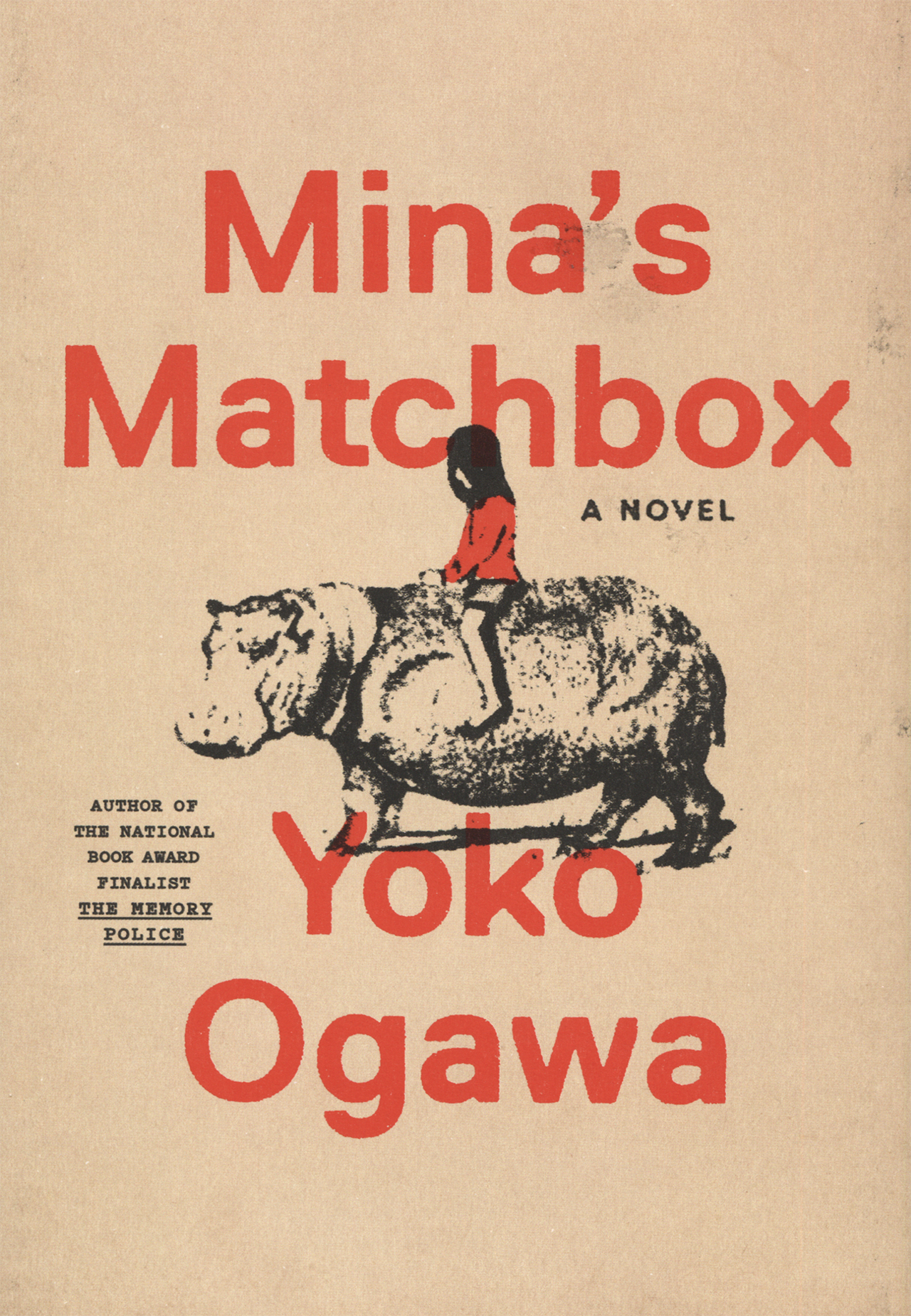
Tomoko is only twelve years old when she loses her father to cancer. To learn to support herself, Tomoko’s mother attends a dressmaking school in Tokyo, where she lives in a student dorm. From 1972 to 1973, Tomoko is sent to live with her aunt in Ashiya, an upscale suburb between Osaka and Kobe. Her uncle is the president of an international soft drink company, and his house is extravagantly large and quite grand. Tomoko’s cousin Mina lives a charmed life marred only by her asthma, which is serious enough to necessitate frequent hospital visits.
Mina’s grandmother Rosa emigrated from Germany in 1916, and the family’s house is filled with beautiful things, from foreign furniture and luxurious cosmetics to exotic Christmas paraphernalia to a room covered in Islamic tiles and used for a holistic health treatment called “light bathing.” Perhaps the most intriguing thing about the house is Mina’s pet, an aging Liberian pygmy hippopotamus named Pochiko who carries Mina to school every morning. The household is managed by Yone-san, an elderly woman who is ostensibly Rosa’s maid but can more properly be called her companion and life partner.
Tomoko’s aunt is attractive, elegant, and kind. Her uncle is handsome, friendly, and good-natured. The family’s groundskeeper and driver, Kobayashi, is a sweet and patient man whom everyone loves. The entire family welcomes Tomoko with style and grace, and she quickly becomes fast friends with Mina. The opening chapters of Mina’s Matchbox unfold almost like a Studio Ghibli movie, and I couldn’t help envisioning the characters in the style of When Marnie Was There.
To add to the magical atmosphere, Mina is thoroughly charming. She reads well above the level of a sixth grader and asks Tomoko to check out books from the local library like Yasunari Kawabata’s House of the Sleeping Beauties and Katherine Mansfield’s The Garden Party. Mina conveys her comments on these books to Tomoko, who shares them with the gentle young librarian she fancies.
Meanwhile, Mina has a crush on a deliveryman for her father’s company who drops by the house every week. During each visit, he gives Mina interesting matchboxes that he picks up on his rounds. Inspired by the graphics printed on the boxes, she writes short stories on paper that she uses to adorn the inside of the small containers she uses to store her collection. These stories are often fables about animals or other small creatures, and Tomoko loves them.
Mina’s Matchbox is a Yoko Ogawa novel, so it goes without saying that all is not well. Quiet tensions flow underneath the family’s beautiful surface, which is marred by the infidelity of Tomoko’s handsome uncle. To give herself a sense of purpose, Tomoko’s aunt combs through magazines searching for typos so that she’ll have an excuse to send letters of complaint. Mina’s older brother writes to the family from Switzerland but never mentions his father. In her devotion to Rosa, Yoneda-san almost never leaves the house and is frightened by everything outside of her immediate sphere of influence.
Nothing bad happens, and this definitely isn’t the sort of novel where the sick child dies. I hope it’s not a spoiler to say that both Mina and Tomoko go on to live happy lives. Aside from subtle but meaningful character development, Mina’s Matchbox doesn’t have much in the way of plot.
Regardless, this isn’t a slow novel. The pacing is excellent, and I finished the book quickly. In fact, I would have liked to spend more time with it. Every sentence is perfect, and each paragraph is a joy. Despite the child protagonists, Mina’s Matchbox has all the nuance of an adult perspective and steadfastly refuses to engage in melodrama. Reading this novel is like sitting outside and enjoying the sunshine on a warm spring day, and it’s a pleasure to follow the gradual progression of the small stories surrounding Mina and Tomoko as recounted in Ogawa’s impeccable prose.
 Contemporary Japanese Literature
I’m hoping to buy this soon (even if it’s a bit pricey as a large-format paperback!). Just bought my own copy of ‘The Memory Police’ and am currently enjoying a leisurely reread, so any more Ogawa in English would be a great thing. Funnily enough, it’s something I’ve been campaigning for for a long time… https://tonysreadinglist.wordpress.com/2021/03/27/the-memory-police-by-yoko-ogawa-btba-post/
it’s a sign from the universe that I should get this book because not only you, but Stefanie also recommended it https://astoneintheriver.net/2024/09/08/coming-up-for-air/