Retrograde

Retrograde collects five short stories and one novella written by a young Osamu Dazai and gorgeously translated by Leo Elizabeth Takada.

The novella, Das Gemeine, follows a 25yo student studying French literature who aspires to become a writer himself. While hovering around an amazake stand in Ueno Park and hoping to catch the attention of the young woman who works there, the narrator meets another student, a violinist who barely attends class at all. The violinist’s friend, himself a painter, warns the narrator not to believe any of the violinist’s tall tales about his supposed talent.

The three young men decide to start a literary journal together (along with their pathetically unattractive acquaintance Osamu Dazai), but petty personality conflicts crash the project before it can get off the ground. Feeling hopelessly at a loss in letters and in love, the narrator meets a sad fate that may not have been entirely an accident.

One of the many myths surrounding Osamu Dazai (the author, not the character) is that he considered himself to be a failure rejected by the mainstream literary establishment. For better or worse, I can relate. I know from personal experience that, as an outsider, you often find yourself placing your work in the hands of upstart editors organizing projects that may, in all likelihood, never see the light of day. More often than not, things fall apart precisely because the creative team had big dreams but no practical skills to realize their ambitions. 

I myself am something of a coward who immediately walks away from that sort of unpleasantness, but my familiarity with creative collaboration mishaps makes me respect the truth of the story Dazai tells in Das Gemeine, which is remarkably well-observed. The characters in this novella are deeply frustrating and more than a little cringe, but they’re 100% real – this is exactly what it’s like to work with creatives in their twenties who build castles in the air but haven’t yet developed the artistic discipline to commit their visions to paper. Bless their hearts.

The five shorter stories in the collection read like something that the narrator of Das Gemeine might actually have written. A 25yo man dies tragically and is mourned by his beautiful wife. A college student sits for the final exam of a French literature class he never attended. A high school student obnoxiously flirts with café waitresses but swiftly loses a fight with a grown man who’s not interested in his sophomoric bullshit. A teenage boy experiences a sexual awakening when the circus comes to town. Each of these stories is only a few pages long, and their unguarded sincerity contributes to their charm.

The closing story, “Blossom-Leaves and the Spirit Whistle,” is about two sisters in love with an idealized version of a man who only exists on paper until the strength of their shared storytelling summons his ghost to appear under their window… perhaps. I appreciate this story’s clever touch of Todorovian fantasy, and I’m always here for unapologetic gothic pathos. This aesthetically luxurious story is classic Dazai, in that it’s exactly the sort of work that’s contributed to his popularity among generations of students. I myself am not immune, of course, and this is by far my favorite piece in the collection.

In their “Translator’s Afterword,” Takada describes Dazai’s writing style as “a casual conversation with someone familiar,” and they explain that they want their translation to feel as if they’re “doing this just for you,” the reader. Takada gets the tone exactly right, rendering Dazai’s straightforward prose into an invitation to sympathize with the writer and his characters even despite their naked sincerity. I’ve never responded to overly “literary” renditions of Dazai’s prose, but I found myself flying through this translation. It’s fantastic.

I also want to highlight the care and attention that One Peace Books has put into the layout and typeset of this book, giving the words on the page exactly the room they need to breathe. Retrograde is a lovely object to hold in your hands, so much so that it might even spark the same youthful enthusiasm for literature that Dazai so aptly captures in his early fiction.

Much love to Leo Elizabeth Takada and One Peace Books for breathing fresh life into these classic stories from the 1930s. Retrograde is an admirable achievement, and I hope it brings the work of a fascinating author to new readers.

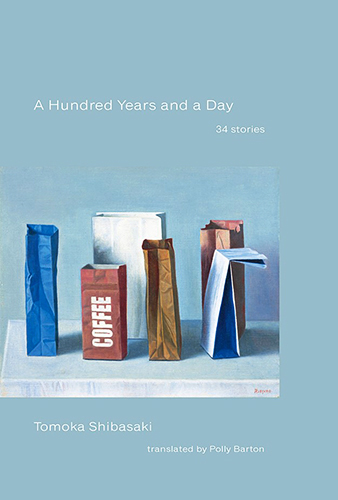
A Hundred Years and a Day

In October 2024, Matt Alt published an article in Aeon titled “The Joy of Clutter.” Instead of decrying the unsightliness of visual complexity, Alt argues that clutter has its own unique beauty, “an ecstatic, emergent complexity, born less from planning than from organic growth, from the inevitable chaos of lives being lived.”

Alt’s essay is illustrated with photos contributed by Lee Chapman, who captures evocative images of the chaotic interiors of tiny family-owned restaurants located in shopping arcades lined with shuttered storefronts. Chapman’s photos coincide with a trend on social media that expresses nostalgia for the Japan of the late twentieth century, with posts often tagged as “Shōwa Retro.”

Tomoka Shibasaki’s A Hundred Years and a Day delights in the aesthetic of gentle decline exemplified by Shōwa Retro, and the 34 stories in the collection express nostalgia for people and places left behind in the past. Shibasaki invites the reader to walk through depopulated residential neighborhoods and stroll along abandoned shopping arcades. Half-empty cityscapes are dotted with buildings filled with clutter. Aging adults sift through the belongings of their deceased parents. Siblings who’ve drifted apart make clumsy attempts to reconnect by alluding to half-forgotten memories. Students study and then discard the small artifacts of the people who came before them.

Even reading through the book’s Table of Contents is like flipping through a card catalog in an old library, with each story’s title being a concise description of its premise. To give an example, the first story is titled:

“One summer during a long rainy spell, student number one from class one and student number one from class two discover mushrooms growing in a flower bed next to a covered walkway at their school; two years after leaving school they bump into each other, but after that, ten years pass, twenty years pass, and they don’t meet again”

“One summer” is a translucently beautiful piece of writing with imagery so clean and clear that I could almost feel the seasonal humidity on my skin. The story conveys the delicate specificity of a single moment captured in time. The moment dissipates and disperses as the world moves on, but the memory lingers.

An intriguing play on this theme is in the nineteenth story…

“I feel like I want to see the places that someone else saw, he said; I like thinking about places I’ve been to once but no longer know how to get to, or places that you can only access at certain times, I feel like there must be some way of visiting the places that exist only in people’s memories”

…which is about a woman who travels to a small seaside town to give a presentation at an academic conference. While walking back from the local shrine, she has a brief conversation with a child who will be the last ever student to graduate from the municipality’s junior high school. Years later, the child (now grown) encounters an artistic diorama that recreates a fictional version of their hometown that appeared in an old novel written by the academic’s deceased mother. While studying the artwork, this person (referred to by the story as “the last child”) is surprised by the liveliness of the reconstructed memory:

The last child crouched down and peered into the alley running between the wooden houses. It looked a lot like the alleyways that they knew from their childhood. They felt as though it was a path they’d been down before. As the last child was still staring down the passage, a cat ran across the alleyway where the stone steps were. The last child gasped in surprise, and stood up. A cicada flew in through the window, attached itself to the wall, and began to screech.

“I feel like I want to see” is a wandering ramble across time and memory, but most of the vignettes in A Hundred Years and a Day are much more focused on the history of a specific place. One of my favorites is the twenty-second story…

“A man opens a café in a shopping arcade, dreaming that it will become like the jazz café he used to frequent as a student; the café stays open for nearly thirty years, then closes down”

…which, despite the title, is about the young woman who takes over the original café by the university. The interior of the café is almost comically outdated, as are the records left behind by the previous owner. The new owner isn’t familiar with the musicians whose posters still hang on the walls. Regardless, the café is still lively, and the new owner finds herself thinking, at the end of the story, that “this is what I wanted to do.”

If I had to guess, I’d say that the reason why this sort of Shōwa Retro story has such a strong appeal is because it rejects the performative glossiness of mass media while embracing the beauty of real, everyday settings. The aesthetic also disrupts the modern myth that progress is not just desirable, but inevitable. Things don’t always get “better,” Shibasaki demonstrates, nor do endings always happen with a bang. 

A cursory reading might suggest that Shibasaki is trafficking in low-effort cultural nostalgia, but I don’t think that’s the case. The imagery presented by each story in A Hundred Years and a Day feels very deliberate, like it’s smashing a smartphone screen with a hammer. This is fiction to be enjoyed slowly, and I appreciate the contemplative space Shibasaki has opened for the reader.

When discussing the texture of Shibasaki’s writing, it’s important to acknowledge the artistry of Polly Barton’s English translation. Japanese literary writing is notorious for its nested sentence structure, which can feel unintentionally Proustian if translated literally. It takes a keen eye and a delicate touch to understand whether Japanese sentences are interminably lengthy because the language is simply written like that; or whether a sentence like one of Shibasaki’s story titles is a deliberate stylistic choice. Barton has done truly amazing work with A Hundred Years and a Day at a sentence-by-sentence level, allowing the reader to enjoy Shibasaki’s distinctive style while still maintaining a casual, conversational tone.

Most of the stories in A Hundred Years and a Day occupy fewer than ten pages, and they read like accounts passed from one person to another by word of mouth. Spending time with this collection feels like calling an elderly relative and listening to them talk about a restaurant closing in your old neighborhood, or about how they saw someone that you once knew as a child in the newspaper. There’s no real beginning or end to the stories, nor is there any discernible sense of structure. Still, the theme of human connection runs through Shibasaki’s work like a gentle current, drawing the reader forward along on the steadily flowing stream of time.

I’d like to extend my gratitude to Stone Bridge Press, which provided an advance review copy of this book. A Hundred Years and a Day will be published on February 25, 2025. You can learn more and read a preview on the book’s webpage (here).

Mimi ni sumu mono

Yoko Ogawa’s 2024 short story collection Mimi ni sumu mono (耳に棲むもの) is about quiet endings and the unremarked deaths of small things. The tone of these five stories ranges from gentle and elegiac to genuinely shocking.

I’d like to begin with the latter, as Kyō wa kotori no hi (今日は小鳥の日) is one of the most subtle yet surprising horror stories I’ve read in some time. The nameless narrator of this story addresses the reader directly as she welcomes us to the annual gathering of the Small Bird Brooch Society. Small bird brooches can be made in a variety of ways, she explains, but she crafts hers using the real beaks and talons of dead birds. There’s something truly sublime about watching their tiny bodies decay, she muses.

The narrator then explains how her predecessor, the first president of the Society, met his untimely end. His death involves the still-living bodies of small birds, but I dearly wish it did not. After recounting one of the more gruesome scenes I’ve encountered in literary fiction, the narrator cheerfully invites the reader to sit down and enjoy the banquet. She then points out a few notable members of the Society, each of whom has their own method of constructing small bird brooches. Perhaps you, dear reader, will feel right at home in their company.

The collection’s final story, Senkōsho to rappa (選鉱場とラッパ), is about a young boy who lives with his mother in the company housing of a rural ore processing plant. His mother works both the day shift and the night shift at the plant’s cafeteria, leaving him to his own devices. During the summer festival at a local shrine, the boy becomes enamored with a toy bugle offered as a prize at a carnival game. Without any money to play, he’s reduced to lurking at the corner of the tent and praying that, if he can’t win the bugle, then no one else does either.

The next day, the boy takes out his frustration on a stray dog begging for scraps near the back entrance of the cafeteria where his mother works. He kicks the poor animal so hard that he ruptures its stomach, and it dies. Later he returns to the festival, where he witnesses the sudden death of the old woman running the carnival game. He steals the bugle in the confusion and returns home only to realize that the toy is nothing more than cheap plastic that has been spraypainted gold. In his shame, the boy buries the bugle in a closet, just as he buried the dog he killed between the roots of an old tree.

Still, as he sits on the apartment balcony while waiting for his mother to come home, the boy fashions constellations from the lights of the processing plant and imagines the songs he would play in their honor if his bugle were real.

Mimi ni sumu mono reminds me of Ogawa’s first work to appear in English translation, The Diving Pool (2008). Although it’s difficult to classify these stories as “horror,” they’re all subtly but effectively unsettling. When we’re exposed to the small cruelties that hide in the hearts of normal people, we begin to see reflections of their inner darkness in the details of the world that surrounds them. Ogawa’s characters are people who have lost their sense of belonging. The world has moved on without them, leaving a quiet air of desperation and neglect in its wake.

Mimi ni sumu mono is twenty-first century gothic fiction at its finest, but it’s not all bleak. Like the boy in Senkōsho to rappa and the president of the Small Bird Brooch Society, Ogawa remains fascinated by the beauty that gleams through the horrors. At 132 pages, Mimi ni sumu mono is relatively slim, but I believe this collection’s brevity is to its credit. The book is like an art gallery that encourages the reader to take their time with each piece, lingering as long as they like without any pressure to rush forward.

Mimi ni sumu mono was written in collaboration with Koji Yamamura, an Academy Award nominated animator. Yamamura created the companion piece My Inner Ear Quartet, which is described as “a literary VR animated film with an interactive storyline” on its page on Steam (here). This interactive animation was showcased at a number of international animation festivals and won several awards in Japan and abroad. As Yamamura’s animation requires a VR headset to view, I can’t offer any comments, but its trailer on YouTube (here) and the expanded excerpt (here) suggest that Yamamura was successful in capturing the eerie tone and uncanny beauty of Ogawa’s stories.

Life Ceremony

Japanese Title: 生命式 (Seimeishiki)
Author: Sayaka Murata (村田 沙耶香)
Translator: Ginny Tapley Takemori
Publication Year: 2019 (Japan); 2022 (United States)
Press: Grove Press
Pages: 244

Life Ceremony collects twelve short narrative thought experiments about the taboos governing social customs. These stories are playful, intriguing, and marvelously well-written, but this book might not be for everyone. In this review I’ll discuss cannibalism in a relatively light tone that approximates the tone of the collection itself, so please take care if you’re squeamish about food or human remains.  

The opening story, “A First-Rate Material,” is an excellent introduction to the themes of the collection. In a world very much like our own, human bodies are not burned after death, but recycled. Human bones become pieces of jewelry, human teeth and nails become the ornaments hanging from chandeliers, and human skin is used to upholster sofas. The young woman who narrates the story is proud of her luxurious human hair sweater, but her fiancé finds clothing and furniture made of human materials to be weird and upsetting. The narrator promises to respect his wishes, but things come to a head (so to speak) when they visit his mother’s house. Before his father passed away, he requested that his skin be made into a veil for his son’s bride to wear during the wedding ceremony.

Even if you’re okay with this thought experiment so far, the story starts to become disturbing when Murata describes, in great detail, what this veil looks like, as well as how the skin of an elderly man’s corpse feels against the narrator’s own living skin. The narrator’s fiancé pretends to be fine with the veil in order to appease his mother, but he’s clearly in shock during the drive home. The reader can’t help but sympathize with both the narrator and her fiancé. Are human bodies not beautiful? Is it not disrespectful to burn our loved ones, or to allow them to rot? In the end, is there any real difference between human skin and animal skin? On the other hand, the idea of wearing human skin is undeniably creepy.

This cognitive dissonance is upsetting, as Murata intends it to be. The gap between subjective perceptions and social expectations forms the core of each of the stories in Life Ceremony. Some of these stories have a gentle and almost fairytale-like quality, but some of them hit hard.

The title story, “Life Ceremony,” provides the purest expression of this cognitive dissonance in its levelheaded consideration of cannibalism. In the near future, the traditional family system is no longer relevant. Few people choose to get married or live together, so the state subsidizes pregnancy and runs community childcare centers for the babies produced by unattached mothers. Many of these babies are conceived at “life ceremonies,” which are funerals in which the bodies of the dead are prepared as a lively and joyous feast that’s open to the community. A life ceremony is considered a success if people pair off during the party in order to conceive children.

The narrator, Maho, isn’t particularly interested in pregnancy or life ceremonies, a view she shares with her male coworker Yamamoto. Maho and Yamamoto are drinking buddies who enjoy a close platonic friendship, and they occasionally discuss how weird it is that both eating human bodies and unromantic insemination used to be considered taboo when they were younger. This story seems like another playful thought experiment until Yamamoto dies in a sudden accident. His family asks Maho to help prepare his body for his life ceremony, at which point the matter of human cannibalism becomes much more concrete and tactile.

Murata has a lot of fun as she parodies the wholesome tone of recipe blogs and lifestyle magazines during a prolonged and detailed description of the preparation of human flesh for culinary consumption. This seems like it would be creepy – and it sort of is – but Murata does an excellent job of normalizing the practice. By the end of the story, many readers will have inadvertently entered a headspace of accepting Maho’s world as completely natural. A series of events that would culminate in a disturbing ending in any other story somehow read as surprisingly sweet and touching.

“Life Ceremony” is a virtuoso performance, and Murata makes it seem effortless. I want to acknowledge the skill of the translator, Ginny Tapley Takemori, in making the text feel so light and natural. Many of the words involving food preparation in English are quite visceral, so it’s a remarkable accomplishment to present the reader with the same clean lightness of the original Japanese text. Despite the occasionally disturbing subject matter, the imagery in the stories of Life Ceremony is never explicitly graphic, and Tapley Takemori’s translation skillfully conveys both the smoothness and the hidden depths of Murata’s prose.

Life Ceremony is a treasure trove of oddities, and each story is strange and fascinating in its own unique way as Murata invites the reader to question the logic of how we interact with the world and understand ourselves as social creatures. Each of the stories is just the right length to be read in one sitting, but the implications of Murata’s provocative thought experiments linger long after the last page.

Dead-End Memories

Japanese Title: デッドエンドの思い出 (Deddo endo no omoide)
Author: Banana Yoshimoto (吉本 ばなな)
Translator: Asa Yoneda
Publication Year: 2003 (Japan); 2022 (United States)
Press: Counterpoint
Pages: 221

Dead-End Memories collects five short stories whose purpose is to comfort and uplift the reader. None of the characters are bad people, and none of them does anything wrong. When people suffer, they do so off-camera, and only then in rose-tinted hindsight. Banana Yoshimoto’s fiction occasionally contains elements of darkness, and this is undeniably the case in Dead-End Memories. Nevertheless, the five stories in this collection are filled with light and sweetness.  

The opening story, “House of Ghosts,” is classic Banana Yoshimoto. A young woman who aims to take over the management of her family’s restaurant falls in love with a young man whose parents are forcing him to inherit a local bakery. The couple bonds over home cooking, but the young man must leave soon to study in France. Also, his apartment is haunted. Thankfully, the ghosts of the former tenants, a long-married couple, aren’t bothering anyone, and they indirectly inspire the young woman to move forward without regrets by reminding her that life is long and full of opportunities. It’s all extremely wholesome.

The second story, “‘Mama!,’” is equally wholesome. The narrator, a junior editor at a large publisher, is poisoned at the company cafeteria by a man who was targeting a former lover. As she recovers, the editor remembers how she was rescued from her abusive mother and raised by her kind and loving grandparents. This early childhood trauma makes it difficult for her to recognize her fatigue, and she returns to work only to break down in tears on the job when she visits a writer’s house to collect his manuscript. The narrator’s boss is very understanding and grants her a month of paid leave. Having realized how precious life is, the narrator uses this holiday to marry her boyfriend and go on a honeymoon in Hawai’i. As in “House of Ghosts,” the most intimate and harrowing moments of the narrator’s suffering are glossed over in order to emphasize the process of healing.

The theme of healing carries through the other three stories in Dead-End Memories. In “Not Warm at All,” the narrator looks back fondly on a childhood friend who was murdered by his mother, while the narrator of “Tomo-Chan’s Happiness” finds herself nurturing a quiet attraction to a co-worker despite being sexually assaulted as a teenager. Meanwhile, the narrator of the title story, “Dead-End Memories,” is attempting to come to terms with a partner who seems to be doing his best to ghost her out of a serious long-term relationship. Perhaps because her situation is relatable to so many people, Yoshimoto is more comfortable allowing this story’s narrator to describe her emotional pain, albeit only with the support of the kind and handsome manager of the bar where she works. The jilted narrator ultimately decides that she has the right to move on and find her own happiness:

Maybe this has been a good thing after all. What I’m going through is only like being perched on a soft cloud and peering through a small gap at other people’s lives. The important thing is to keep your eyes open, because what you choose to pay attention to defines your world.

Despite the title of the collection, the stories in Dead-End Memories are about how painful experiences help us grow and mature as people. This may sound cliché; and, to be fair, it is. That being said, I would argue that Yoshimoto’s ability to address serious trauma with such a delicate touch is precisely why her writing continues to resonate with readers. Spending time with Dead-End Memories is like being assured by a close friend that bad things happen to everyone, but that everything will be okay in the end. Banana Yoshimoto’s stories are gentle and comforting and healing, and sometimes that’s exactly what you need.

The Girl Who Is Getting Married

Title: The Girl Who Is Getting Married
Japanese Title: もうすく結婚する女 (Mō sugu kekkon suru onna)
Author: Aoko Matsuda (松田 青子)
Translator: Angus Turvill
Publication Year: 2010 (Japan); 2017 (United Kingdom)
Publisher: Strangers Press
Pages: 36

Aoko Matsuda’s The Girl Who Is Getting Married, published as a stand-alone chapbook by Strangers Press in the same series as Mikumari, is a lovely puzzle box of a short story. The unnamed narrator is going to visit “the girl who is getting married,” but who is the narrator, and what is her relationship with the girl who is getting married? Instead of revealing its answer, the question twists and turns in on itself as the possible answers fracture and multiply.

According to the “About the Author” section on the inside of the chapbook’s front flap, Aoko Matsuda has “translated into Japanese Karen Russell’s St. Lucy’s Home for Girls Raised by Wolves and Vampires in the Lemon Grove.” There are many similarities in the tongue-in-cheek yet still unsettling weirdness that characterizes the short fiction of both authors, and it’s appropriate that Russell has written a short foreword to The Girl Who Is Getting Married. She aptly summarizes the uncertainty that lingers between the narrator and the girl who is getting married by explaining, “Each new paragraph shifts our understanding of their relationship. At some points they seem to merge into one girl, amoeba-like; at other moments, it’s tough to believe that they have ever shared a word” (9). Are they childhood friends? College roommates? Cousins? Sisters? A mother and her daughter? Casual acquaintances? Complete strangers? The exact same person?

The mystery of the narrator’s identity is ultimately less compelling than the odd rhythm and tempo of her narrative voice, however. As she gradually climbs the stairs to a fifth-floor apartment, she takes the reader along with her, step by step by step, with the expression “the girl who is getting married” repeated like a talismanic refrain. Just as the relationship between the two women shifts and changes, so too does the architecture of the building, which gradually begins to take on its own character. For example…

Special mention must be made of the stone staircase that rises up in the centre. It is a very large staircase, with a smooth, pale sheen. Even if it were the case that some other stone was used, I would like to assert quite definitely that this is marble. Although the staircase is flanked by rooms on both sides, its presence is so powerful that there would seem no exaggeration in suggesting that it is the reason for the building’s existence. Followed up and up by an obedient black hand-rail, the staircase is an unobtrusive white, a little grey in places, brining to mind the bones of a dinosaur. I do not know a great deal about dinosaurs so I cannot identify the exact type, but I am thinking of one with a very long neck. One that looks as though it would eat vegetation rather than meat a comparatively gentle one.

This is a dinosaur that, stretching out its elegant neck, will take me to the room where the girl who is getting married will be. (11-12)

Just as it’s difficult to grasp the identity of the narrator, it’s also impossible to visualize the building whose staircase she climbs, which is described in terms of the sensations it evokes. The girl who is getting married could be anyone, but the ascent to her apartment is like a description of a surrealist painting.

Matsuda plays with words to create and reshape concrete images and abstract illusions; and, in many ways, this short story feels like an extended prose poem. That being said, it doesn’t demand any unnecessary work from the reader, who is invited to explore the evocative emotional chiaroscuro of its dreamspace along with the narrator. The story is carefully translated and delightfully easy to read, and it’s a lot of fun to get lost in its labyrinth.

The Girl Who Is Getting Married can be ordered directly from Strangers Press, which ships internationally.

Heaven’s Wind

Title: Heaven’s Wind: A Dual-Language Anthology of Contemporary Japanese Writing
Editor and Translator: Angus Turvill
Publication Year: 2018
Publisher: The Japan Society
Pages: 200

Heaven’s Wind is a collection of five Japanese short stories published in parallel text, with the original Japanese on the left and the English translation on the right. Each of the stories selected by the editor and translator, Angus Turvill, has won an award in a translation competition, and the authors have all been critically recognized as well. Some of these stories are mimetic fiction, while others fall squarely into the mode of magical realism. The thread that ties these stories together is that each of them presents multiple case studies in the methods and challenges of Japanese-to-English translation.

The stories in Heaven’s Wind are followed by a 23-page essay in which Turvill identifies ten key areas where differences commonly arise between a Japanese text and its English translation. Without resorting to theory or philosophical abstractions, Turvill provides concrete examples from the preceding stories, which are explained in simple and commonsense terms. To given an example, whereas the tense of verbs can shift from sentence to sentence in Japanese, in English it usually makes more sense to pick one tense (often the past tense) and stick with it. Whether you agree or disagree with Turvill’s decisions, it’s easy to understand exactly why he’s made them. If you’re an aspiring translator, you’ll more than likely find this list of strategies to be immediately applicable to your own work. Even if you have no knowledge of Japanese, however, Turvill’s concise guide is a fascinating examination of some the nuts and bolts of how language operates in translation.

The stories themselves are fascinating as well. Kuniko Mukoda’s “The Otter” (1980) is about a man whose playful and charming wife doesn’t quite have his best interests at heart. Natsuko Kuroda’s “Ball” (1963) is about a young girl who steals a handball and, by doing so, opens her heart to the darkness of deceit. Kaori Ekuni’s “Summer Blanket” (2002) is about an heiress who is happy to live alone by the ocean until she is befriended by two beach bum college students. Each story offers an intimate portrait of human psychology that is firmly grounded in the rich details of its setting.

Mitsuyo Kakuta’s “The Child Over There” (2011) is a surreal story of a newlywed mother who recently lost a child to a miscarriage. She has moved to the village of her husband’s family, who tell her stories about a child-eating demon that inhabits a house she’s warned to stay away from. Even though she becomes pregnant again, she continues to visit the grave of the daughter she lost, who still visits her in dreams. One day she happens to overhear a rumor about Kukedo, the place where lost children go. Kukedo turns out to be an actual place, so the woman takes train there on a journey that is both mundane and deeply strange. Although she never fully comes to terms with the relationship between the demon and her miscarriage, the young woman is able to achieve something of a catharsis when she joins her daughter “over there.”

The last story in the collection, Aoko Matsuda’s “Planting” (2012), is an anthem to millennial disillusionment. A young woman who calls herself “Marguerite” is looking for the perfect job, ideally one that doesn’t require her to interact with other human beings. She eventually manages to find a position where boxes containing various materials are delivered to her apartment. She pleats whatever the box contains, repacks it, and then exchanges it for the next box. Some of these boxes contain loose fabric and pre-sewn garments, while others contain more disturbing contents, such as garbage, dead animals, and disembodied clumps of hair. Marguerite feels tired all the time, and she doesn’t understand the purpose of anything she does, but she has resolved to take all the negative feelings in her heart and plant them in the dirt outside, hoping that they will eventually grow into something beautiful.

Heaven’s Wind reminds me of the collections of contemporary Japanese literary fiction that used to be published a decade or two ago. The stories included in these collections were often edgy and avant-garde, and it wasn’t uncommon for their editors to focus on female authors. I’ve missed these short story collections, and Heaven’s Wind is a welcome contribution to the body of Japanese fiction available in English, regardless of whether you happen to be interested in its emphasis on the craft of translation. Because furigana pronunciation glosses are included in the Japanese text, it would be practical and easy to use Heaven’s Wind as a textbook for a translation seminar or as a guide to self-study. You can order a copy on the Japan Society online store or at Waterstones.

A review copy of Heaven’s Wind was kindly provided by The Japan Society.

Record of a Night Too Brief

Title: Record of a Night Too Brief
Japanese Title: 蛇を踏む (Hebi o fumu)
Author: Kawakami Hiromi (川上 弘美)
Translator: Lucy North
Publication Year: 2017 (United Kingdom); 1996 (Japan)
Press: Pushkin Press
Pages: 158

Record of a Night Too Brief collects three short stories that the book’s cover copy describes as “haunting” and “lyrical” in their depiction of young women experiencing “loss, loneliness and extraordinary romance.” This is a lovely sentiment, but it in no way describes the actual stories in question, which are less “haunting” than they are grotesque and less “lyrical” than they are unapologetically strange. Instead of trying to treat them as romance, I believe it’s much more fulfilling to approach their absurdity in the spirit of intellectual play.

The title story, “Record of a Night Too Brief,” is a sequence of nineteen of the unnamed narrator’s dreams. Each of these dreams is two or three pages long, and they are linked only in that every other scenario features a young woman whom the narrator is either pursuing or in the process of merging with. If there is a unifying theme or plot, it is lost on me, but the power of these dreams comes from their vivid imagery. To give an example (from page 11):

Several dozen ticket collectors stood in a row, and once we passed through, showing our tickets, the tall object came into view.

It was a singer, who stood as tall as a three-storey building. From where I was, I had a clear view of the beauty spot under her jaw, and the rise and fall of her breasts.

“The beauty spot is artificial,” the girl informed me, gazing up at the singer, enraptured.

The singer was producing notes at different pitches, as if she were warming up. When she sang high notes, flocks of birds took flight from the branches of the ginko trees. When she sang low notes, the earth heaved, and small furry creatures emerged from underground and crawled about.

…and so on. It’s all very random, but one can’t help but become swept up in the ebb and flow of the constantly shifting parade of surreal images.

The next story, “Missing,” is set in an apartment complex that functions according to its own arbitrary and bizarre set of customs and rituals. One of the rules of this community is that each household can only have five members. If a sixth member is added for any reason, then someone has to disappear. This recently happened to the narrator’s family after her older brother was engaged to be married. Because his fiancée would have become the sixth person, he disappeared, and the narrator’s other older brother stepped in to fill his position. His fiancée, Hiroko, has no idea that this has happened, as the rules are different in her own apartment complex, where certain members of certain families literally shrink. Meanwhile, the narrator continues to hear the voice of the older brother as he (or his spirit) skulks around the apartment. No explanation is given for any of this, as everyone takes these occurrences for granted.

The final story, which provides the title of the original Japanese publication, is “A Snake Stepped On.” This story is about a young woman who one day finds herself living with a snake. This snake takes the form of an older woman who insists that she is the narrator’s mother. As she accustoms herself to life with a snake, the narrator begins to realize that many of the people around her are also living with snakes, including the local Buddhist priest whom she thought of turning to for an exorcism. Following the conventions of magical realism, the tone of this story is mundane, with the possibility of being devoured by a snake – or becoming a snake oneself – treated as merely another everyday occurrence.

Record of a Night Too Brief is a short collection of curiosities that are fascinating in their novelty. The fantastical qualities of each story allow for various interpretations, and they will no doubt intrigue different readers for different reasons. As contemporary fairy tales, the stories in this collection spark and inspire the imagination.

Tokyo Decadence

Tokyo Decadence

Title: Tokyo Decadence: 15 Stories by Ryu Murakami
Author: Murakami Ryū (村上 龍)
Translator: Ralph McCarthy
Publisher: Kurodahan Press
Publication Year: 2016
Pages: 280

Tokyo Decadence contains fifteen stories drawn from five of Murakami Ryū’s collections published between 1986 and 2003. As translator Ralph McCarthy explains in his acknowledgments, he has been translating his favorite Murakami stories since the late 1980s, and now he’s finally able to publish them thanks to the blessing of the author and the encouragement of Edward Lipsett of Kurodahan Press.

The first story in Tokyo Decadence, “Whenever I Sit at a Bar Drinking Like This,” has a passage at the beginning that reads as follows:

It’s probably safe to say that everyone sitting here is looking for some sort of sin tonight. The circumstances are different for each, of course, but everyone has the same general destination in mind. No one gets drunk in order to raise their moral standards.

It’s probably safe to say that no one opens a collection of Murakami Ryū’s short fiction in order to raise their moral standards. If you’re looking for some sort of sin, you’ve found yourself the right book. All of the stories in Tokyo Decadence are surprising and unique, but they all move toward the same general destination – sex and drugs and blood and tears.

This first story takes the form of an elaborate fetch quest across the seedy underbelly of Shinjuku in which the protagonist must exchange promises for favors. His goal is to get one of his former lovers to testify in court that they were sleeping together so that another of his former lovers doesn’t claim common law marriage and sue him for divorce. The point seems to be that people are terrible and selfish creatures, but it’s a lot more fun arriving at this conclusion than you’d expect.

The second story, “I Am a Novelist,” involves another strange situation in which a man posing as a bestselling writer gets a girl at a hostess club pregnant. When her manager insists that he meet the young woman, she quickly admits he’s not the person she slept with, but the writer still takes her out to dinner. She tells the writer that she’s a fan of his work, so he tries to get her to fall in love with him instead of his impersonator. It doesn’t work (obviously), and the novelist ends up finding out that he was just a minor character in someone else’s story.

In other stories, a trucker loses his wife and his job and becomes a host at a gay club, a guy with no self-esteem invades a woman’s home and smashes her television, and a young prostitute buys herself a topaz ring to remind herself of a musician whose world she can never enter. In “Penlight,” a call girl with serious issues talks about her imaginary friend to a guy she meets at a bar, who is interested in her body, but in the way you think (unless you happen to be thinking of horrific murder and cannibalism). A few of these stories are drawn from Murakami’s 1988 collection Topaz, which became the basis for the 1992 film Tokyo Decadence, which was directed by the author and banned in a handful of countries precisely because it’s the sort of movie you’d expect to have been directed by the author.

If you’ve read Murakami’s work before, you know what to expect. Since all of these stories are twenty pages or less, however, there’s no slow buildup to the carnage. That being said, the violence is tempered with irony, black humor, and intriguing characterizations that elevate the stories above simple splatterfests.

In contrast, the three stories drawn from the 1995 collection Ryu’s Cinematheque are vaguely autobiographical.

In “The Last Picture Show,” the 18-year-old narrator is living in Kichijōji and trying to make it big with his blues band. His upstairs neighbor, who is obviously a yakuza, wants to pay him to pick hydrangea leaves in Inokashira Park to dry and then sell as marijuana to American soldiers. In “The Wild Angels,” the 18-year-old narrator has started a relationship with a woman who works as a hostess, which makes him feel like less of a man, so he starts shooting heroin. In “La Dolce Vita,” the college student narrator hooks up with an older woman who lives in Yokosuka and gets her drugs from the American army base, which doesn’t end well.

To me, these coming-of-age stories were nowhere near as interesting or amusing as the murder stories, but they provide an interesting picture of the 1970s that serves as a counterpoint to the stories of the other Murakami; these stories forgo nostalgia in favor of an emphasis on the grittiness and despair and self-indulgent navel gazing of fringe counterculture.

The last third of Tokyo Decadence eases up on the drug use but maintains its focus on sex and emotional violence. Some of the stories reference each, and I got the sense that I was only being glimpses into a larger narrative. I dearly wish we lived in a world in which Ralph McCarthy was able to publish his translations of entire Murakami collections instead of selected stories, but each piece included in Tokyo Decadence shines brightly enough on its own merits that the reader is not disappointed by the relative lack of context.

I thoroughly enjoyed Tokyo Decadence. The collection portrays the Japan of the bubble and postbubble decades as a place where anything in your wildest dreams and darkest nightmares could happen. Murakami’s fiction is a love letter to the infinite possibilities of urban life delivered with style and panache. Just be warned – Tokyo Decadence is not for the faint of heart.

Tokyo Decadence will be released on March 15, 2016. A complete table of contents can be found on its page on the Kurodahan Press website.

Review copy provided by the noble and selfless people at Kurodahan Press.

Death and the Flower

Death and the Flower

Title: Death and the Flower
Japanese Title: 死と生の幻想 (Sei to shi no gensō)
Author: Suzuki Kōji (鈴木 光司)
Translators: Maya Robinson and Camellia Nieh
Publication Year: 2014 (America); 1995 (Japan)
Publisher: Vertical
Pages: 222

Death and the Flower is beautifully printed. Its paper is deliciously creamy, and its gorgeously designed book cover and dust jacket complement each other perfectly. Veritcal’s hardcover edition is one of those books that makes me happy that publishers still put time and effort into putting out physical books that you can hold in your hands and admire on your bookshelf.

But the stories themselves? They’re not really all that great.

In his Afterword, Suzuki writes:

I tried collecting six works with a common theme – a theme represented by the words “diapers and a race replica.” The softness and warmth of diapers, the speed and power of a racer’s motorbike – I wished to express a balance of the maternal and the paternal by placing symbols of femininity and masculinity side by side.

What this essentially means is that each story is about a father who undergoes various hardships for the direct or indirect benefit of his wife and/or daughter(s), who are nothing more than empty symbols vaguely characterized by emotional damage and blind need. In other words, men are capable of embodying “a balance of the maternal and the paternal,” and girls and women exist merely for the sake of helping men undergo character development in order to realize their full potential. These female characters don’t need to have names, or thoughts, or feelings, or any sort of identities save for their relation to the male heroes.

This in and of itself is not necessarily bad. However, if everything in piece of fiction is going to be diegetically subservient to the ego of the protagonist, then I would prefer for the protagonist to be interesting. Unfortunately, none of Suzuki’s characters really grabbed my attention or sympathy. Instead, just as the female characters of this collection are almost platonic embodiments of Object, each male character isn’t a great deal more than a Subject with a few shallow personality traits pathetically attached like a handful of cheap ornaments haphazardly stuck onto an otherwise bare Christmas tree.

The first story in the collection, “Disposable Diapers and a Race Replica,” can serve to illustrate my point.

The narrator, an obvious author stand-in character, quits his job to devote himself to his writing and the care of his infant daughter. To help his wife make ends meet, he moonlights as a private tutor. His current client is a delinquent high school student who has begun to skip out on tutoring sessions after the school system fails to reward him for his increased efforts, so the narrator tracks him down on his motorcycle and is driven off the road and nearly killed by the kid’s friends. The next day, the narrator shows up unexpectedly at the kid’s house and beats the crap out of him in order to figure out where the driver who almost killed him lives. He then proceeds to go to the other kid’s house and, finding him not at home, beats the crap out of the kid’s car. After he’s satisfied himself, the narrator encounters the driver and condescends to not beat the crap out of him because he, the narrator, is actually a good guy deep down inside. The only thing that saved him from dying when his bike crashed was the huge bag of diapers he had tethered to the back of the bike, you see, and this is some kind of message about how he needs to stop jumping headfirst into fights, even though he could totally win them if he did get into them, because of course he could – he’s just that kind of guy.

Since the narrator interacts with the other male characters by yelling and punching, his character development is guided by his interactions with the story’s two female characters, his student’s mother and his wife. The narrator tries to be kind to his student’s mother, even though privately he thinks she’s a weak and ineffectual parent. This must be because, being a woman, she isn’t clever enough to know that you need to threaten to beat the crap out of boys to make them respect you. As a mentor and role model, the narrator is thus defined by what he is not – female, and thus “stupid.” Meanwhile, the narrator’s wife is a delicate flower who must not be upset or disturbed under any circumstances, as she has some sort of nervous disorder. This disorder is typified by the anxiety she demonstrated when he effectively abandoned her during their engagement to go live on a tuna fishing boat for a year. Why was she so upset about this, and why is she concerned about his level of commitment to their relationship? It must be because of her nervous disorder, obviously. Women and their unreasonable hysteria, amirite? Anyway, as a father and caregiver, the narrator is again defined by what he is not – female, and thus “crazy.”

Character development through negative contrast does not make for good storytelling, especially when the primary conflicts of a story hinges on an internal crisis of its protagonist. In Death and the Flower, each such crisis is resolved by a realization of something along the lines of “I am a burly hairy dangerous manly alpha male, but I need to embrace my more ‘feminine’ side so that I can better protect the utterly helpless women in my life.” Maybe this is just me, but I don’t find that sort of resolution too terribly compelling. For a such a revelation to be truly interesting, there need to be more 1980s seinen manga style swords and/or psychic power attacks demonstrating how a small compromise in an otherwise unadulterated beefcake masculine identity can constitute a genuine sacrifice.

What Suzuki excels at in Death and the Flower are his descriptions of urban and natural landscapes. I was particularly impressed by the third story in the collection, “Key West,” in which a father leaves his young daughter in a rental car by the side of a highway in Florida to walk out to a small offshore island connected to the coast by a sandbar. On the island, the father encounters an abandoned settlement overgrown with jungle. Although his parenting skills leave much to be desired, the father’s accounts of the greenery and derelict buildings, the comparisons he makes to his home in Tokyo, and his detailed examination of the complicated feelings the island evokes in him are all magnificent. The simultaneously intense yet hazy quality of the fever dreams he experiences after being bitten by a sea snake is also expertly conveyed by the author. That being said, the father’s grief for his dead wife as expressed by his half-hearted desire to protect his daughter is largely undeveloped and feels out of place within the larger themes of the story, which mainly seem to involve the narrator’s fear of his own encroaching middle age.

To return to the collection’s Afterword, Suzuki writes:

“Only a peaceful and safe world is worth living in” – far too many people seem to think so.

Putting aside the tastelessness of such a statement, I think the author’s writing is indeed at its best when his characters have a worthy antagonist to battle. The major draw of Ring, for instance, is Sadako, the evil girl who spews her curses out into the world from inside a well. The longest story in Death and the Flower, “Beyond the Darkness,” is perhaps the strongest, as its father protagonist character is provided with a creepy stalker to serve as an acceptable outlet for his anger and tendency toward physical violence. As introspection-driven character pieces, however, the rest of the stories in the collection fall flat.

If you’re a Suzuki completionist, Death and the Flower is of interest for its prototypes of the author’s major themes and character archetypes. If you’re looking for good horror fiction or just some good short stories, though, it’s probably best to ignore the pretty cover and take a pass on this collection.