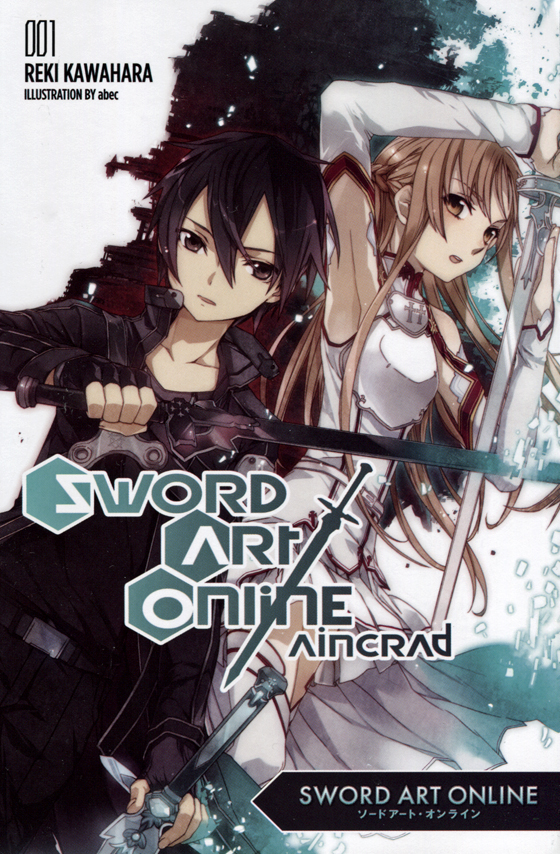
Sword Art Online: Aincrad

Sword Art Online: Aincrad

Title: Sword Art Online: Aincrad
Japanese Title: ソードアート・オンライン: アインクラッド
(Sōdo Āto Onrain: Ainkuraddo)
Author: Kawahara Reki (川原 礫)
Translator: Stephen Paul
Illustrations: abec
Publication Year: 2014 (America); 2009 (Japan)
Publisher: Yen Press
Pages: 248

Before I begin this review, I feel I should admit that I only made it through five episodes of the Sword Art Online animated series. The show involves an inordinate amount of yelling and boob grabbing, and watching it gave me a headache. Despite the fact that I am quickly becoming an old woman who has lost her patience with screaming teenagers and fan service, the show was fairly popular in both Japan, where more than 35,000 DVDs have been sold (in a market in which few titles break the ten thousand mark), and in America, where it was hailed as one of the smartest shows to come out in 2012. The Sword Art Online anime is based on a light novel series, which achieved bestseller status in the year the anime was televised. Sword Art Online: Aincrad is a translation of the first novel in the series, which is currently on its fourteenth volume.

Sword Art Online: Aincrad takes place in the fantasy world of Aincrad, an enormous castle with one hundred floors that serves as the setting of an immersive virtual reality MMORPG game called Sword Art Online (SAO). Released in 2022, SAO is the first game of its kind in that players are able to fully enter the virtual world through special hardware called NerveGear, which intercepts all brain activity and leaves the player’s physical body in a dormant state. As might be imagined, the game completely sells out on the day of its release.

As the new players orient themselves on the first floor of Aincrad, however, they receive a nasty surprise. Kayaba Akihiko, the game’s executive producer and head programmer, appears in the sky above the Town of Beginnings and announces that players will not be able to log out of the game until the final boss monster on the top floor of Aincrad is defeated. If someone from outside the game attempts to remove or unplug a player’s NerveGear helmet, the player will die. Even more troubling, if a player dies in the game, his NerveGear will send an electric shock to his brain that will result in death. It is thus in the best interests of the roughly ten thousand players trapped within Aincrad to master SAO and beat the game as quickly as possible. Unfortunately, it’s not easy to progress through the game, especially since its high stakes discourage risk taking, and the players have already been in Aincrad for two years when the main story begins.

The novel is narrated from the perspective of a teenager named Kirigaya Kazuto, who goes by the name Kirito in SAO. Kirito was one of the game’s one thousand beta players and, although he was only fourteen years old when he first entered Aincrad, he is already a veteran gamer. He is thus quite adept at the game mechanics and has managed to develop an ability called “Extra Skill Dual Blades,” which is unique to him as a player. Although Kirito wants to be able to return to the real world, he declines to work with the player guilds that have sprung up as collaborative efforts to progress through the game, instead fighting and gaining experience on his own. He gradually warms to a slightly older teenager named Yūki Asuna, who serves as a sub-leader of the Knights of the Blood guild and is popularly known as “Asuna the Flash” because of her high speed statistic. The trust and friendship between Kirito and Asuna gradually deepens over the first half of the novel, which is ultimately less sci-fi suspense or action adventure than it is a fantasy-themed love story.

Although there is plenty of action in Sword Art Online: Aincrad, world building is neglected in favor of establishing a romantic relationship between Kirito and Asuna. The reader is told that Algade, the city on the 50th floor of Aincrad, is reminiscent of Akihabara, and that Collinia, the city on the 75th floor, looks like ancient Roman city, but that’s about all there is in the way of description. What, specifically, does it mean that these cities “look like” other places – what are their styles of architecture, how are their streets laid out, do they any public monuments? How big are these cities? How big is each floor of the castle beyond the cities? What sort of trees and other plants grow on each floor? Are there pets or other domesticated animals? What sort of monsters do the players fight? What do the dungeons look like? We know the players can eat in the game, but what do they eat? We know there are healing potions, but what do they taste like? When magical crystals are used as items, what does it feel like? Can the players smell things? Can they feel temperature and humidity? Are certain textures pixelated or repetitive, and if so do the players notice? The reader is provided with few details that might serve to make the world of the novel more (or less) real.

Some visual detail is provided by eight color illustrations at the beginning of the book and ten black-and-white illustrations interspersed unevenly throughout the chapters, but these illustrations have a strong emphasis on character design. The illustrator abec, whose special skill seems to be depicting the springy softness of braless breasts through school uniforms (the link to his blog is not work safe, by the way), seems to be especially enamored of Asuna, who gets a full two illustrations in nothing but her underwear, one of which is overlaid with text in which she asks Kirito/the reader not to look at her. Even without such illustrations, the novel feels more than a bit like an extended romantic fantasy for straight adolescent males. It goes out of its way to objectify Asuna, devoting an undue amount of text on when and how many times and under what circumstances its male protagonist is able to hook up with her. Although Asuna is supposed to be an exceptionally skilled player, her strength and abilities are only shown in relation to male characters, such as when she fights beside or cooks for Kirito. As Asuna is the only female character in the novel, Sword Art Online: Aincrad doesn’t even make it past the first portion of the Bechdel test (there are other female players in the game, but Kirito is not interested in them, stating simply that they’re unattractive and thus unworthy of attention).

Aside from its casual sexism, the narrative emphasis on Kirito’s pursuit of Asuna results in missed opportunities with other male characters as well. For example, the least utilized but perhaps most interesting character in the novel is Heathcliff, the leader of the Knights of the Blood. Why is this older man playing the game (which is something I wanted to know more about even after learning his real-life identity), and why does he act as he does? Where does his strength of character come from, and how does he honestly feel about the deaths of the players under his command? What are his motivations, and what is he escaping from in the world outside the game? Who is caring for his physical body? Unfortunately, all such questions are ignored in favor of Heathcliff acting as a vaguely defined father figure who prevents Kirito’s immediate access to Asuna.

Another potentially interesting male character is Kuradeel, a member of the Knights of the Blood who is eventually revealed to be a former member of a guild called Laughing Coffin, whose members specialize in killing other players. I am always interested in PvP (player versus player) mechanics in MMORPGs, and I’m doubly interested in what rationale might lie behind PvP conflicts in a game that can easily result in real-world death. About two-thirds of the way through the book Kuradeel snaps and allows the reader a fleeting glimpse into the depths exposed by his ebbing sanity, which would be an excellent chance to explore the negative psychological effects that would doubtlessly be engendered by the situation in which the players find themselves. But alas, Kuradeel’s role in the story is merely to act as a barrier to Asuna, and the section in which he traps Kirito and then delivers his limited exposition is only fourteen pages long. The male characters who don’t come between Kirito and Asuna, such as Kirito’s friend Klein and the shopkeeper Agil, have few speaking parts and no backstory at all.

My favorite part of Sword Art Online: Aincrad is a quiet twenty-page segment towards the end of the book that serves as a bridge into the power metal chorus of the finale. After Kirito and Asuna finally get together, they run away from the whole business of dungeons and guild politics to go on a honeymoon of sorts to the 22nd floor of Aincrad, a sparsely populated wilderness distinguished by its lakes. Between bouts of dialog that feels lifted from shōjo manga targeted at the elementary school crowd, the lovers encounter a middle-aged man named Nishida, a technician employed by Tohto Broadband, the network management company responsible for the internet access lines leading to SAO’s servers. While testing the game’s connections on its launch day, Nishida was trapped along with the players, and now he spends his time fishing. By chatting with Nishida, Kirito and Asuna are able to reflect on what their time in SAO has meant to them and why exactly they still want to leave. These conversations are also the only point in the novel at which the reader is able to pick up hints concerning what the lives of players not directly involved in Kirito’s personal drama might be like. This is as close as Sword Art Online: Aincrad gets to addressing what could have been its most interesting theme, namely, whether there is any quantifiable difference between lived experience in the real world and lived experience in a virtual world. As a sixteen-year-old boy and reader stand-in character, however, Kirito is not the least bit concerned with such matters, and the novel quickly makes an awkward leap back into fighting and yelling territory.

Although I can’t make any judgments about the anime, I can say with relative certainty that the first volume of the Sword Art Online novel series is little more than an extended romantic fantasy for straight adolescent males. In other words, if you’re a straight adolescent male and you want the girl of your dreams to fall in madly love with you because of how awesome you are at level grinding, then this book was written for you. Enjoy yourself!

If you are not in the target demographic for the series, however, you might want to give the novel a pass. Although I am given to understand that more female characters are introduced as the series progresses, there is also a fair amount of damseling. In the second volume, for example, Asuna is apparently stripped of her powers, kidnapped by a male villain, and threatened with sexualized violence in order to provide Kirito with renewed narrative impetus. That sort of ridiculous bullshit aside, however, Sword Art Online: Aincrad is a fairly entertaining read that draws the reader in with a well-blended mixture of sci-fi and fantasy elements and a compelling series of crises. Chapters are short, about ten pages on average, and the translation is smooth and meets the high standard of quality one would expect from the team at Yen Press. Whether the admittedly enjoyable “lightness” of this light novel can counterbalance the nagging sexism is up to the individual reader, however.

A good distaff counterpart to the “virtual world romance” scenario presented in Sword Art Online: Aincrad is Vivian Vande Velde’s 2002 Heir Apparent. In this short young adult novel, a teenage girl finds herself trapped in a virtual reality game with strong RPG elements, which she must escape through her own cunning and the help of the handsome teenage game developer. Since the game resets every time its player-character dies, the reader is also able to enjoy a type of The Edge of Tomorrow scenario, only with fewer explosions and sexy pushups and more political maneuvering and backstabbing. Deadly Pink, Velde’s 2012 follow-up to Heir Apparent, focuses on the love between sisters instead of romance and manages to be smart and funny while treading carefully around some surprisingly dark themes. While much of the intended appeal of Sword Art Online: Aincrad may not be of interest outside of the novel’s target demographic, I can wholeheartedly recommend Heir Apparent and Deadly Pink to any reader interested in young adult fiction and themes relating to the pleasures and perils of virtual worlds.

Revenge

Revenge

Title: Revenge: Eleven Dark Tales
Japanese Title: 寡黙な死骸 みだらな弔い
(Kamoku na shigai, midara no tomurai)
Author: Ogawa Yōko (小川 洋子)
Translator: Stephen Snyder
Publication Year: 2013 (America); 1998 (Japan)
Publisher: Picador
Pages: 162

Ogawa Yōko is a writer of the fantastic who spins softly glittering tales of quiet desperation. In Japan, she’s known for her magical realism, which is so subtle as to be almost Todorovian in the uncertainty it generates. Nevertheless, her first novel to appear in English translation, The Housekeeper and the Professor, is about kind-hearted people behaving nobly in the face of senescence and overcoming emotional adversity by opening their hearts to one another. It’s a good book even despite its clinging miasma of Hallmark-style sentimentality, but the way the novel was marketed made it feel as if its publisher were trying to pass Ogawa off as the next Yoshimoto Banana, which she most decidedly is not. Messages of hope and moral fortitude are few and far between in Ogawa’s work, and her next novel to appear in translation, Hotel Iris, is about ephebophilia and sadomasochism in a decaying seaside town. The novel is quite short and, given its subject matter, an odd choice for translation, but perhaps its publishers saw a faint connection to Yoshimoto’s Goodbye Tsugumi, which explores similar themes (albeit in an infinitely more upbeat and chipper manner).

I am therefore interested in the way in which Ogawa’s newest work to appear in translation, Revenge, is pitched to potential readers. Short blurbs from Junot Díaz and Hilary Mantel appear on the back cover, but the writer who bears the honor of having his praise appear right in the middle of the front cover is Joe Hill. Joe Hill is the author of several novels, comic books, and Kindle singles, and he’s known as a writer of grisly and violent mystery fiction. Hill’s debut work, 20th Century Ghosts, is a collection of stories that contain more subtle disquiet than they do splattered blood. My favorite is “Voluntary Committal,” in which a seriously disturbed man builds an elaborate crawl-through maze of cardboard boxes in his basement, which eventually becomes a portal to another dimension. 20th Century Ghosts has won all sorts of awards, from the Bram Stoker Award to the British Fantasy Award, but Hill is still considered a horror writer; and, by association, Ogawa is positioned as a horror writer as well. As if Hill’s name alone were not enough to convey the message, the cover of the North American edition of Revenge is designed to resemble dead skin stitched with rotting thread.

Despite the implications of its cover, Revenge is less about hideous creepy crawlies lurking at the foot of cellar stairs than it is about the small disturbances in daily routine that hint at the madness waiting patiently on the edges of human civilization. For example, the first story in collection, “Afternoon at the Bakery,” opens with a scene of a peaceful town on a Sunday afternoon:

Families and tourists strolled through the square, enjoying the weekend. Squeaky sounds could be heard from a man off the corner, who was twisting balloon animals. A circle of children watched him, enthralled. Nearby, a woman sat on a bench knitting. Somewhere a horn sounded. A flock of pigeons burst into the air, and startled a baby who began to cry. The mother hurried over to gather the child in her arms.

You could gaze at this perfect picture all day – an afternoon bathed in light and comfort – and perhaps never notice a single detail out of place, or missing.

What you might notice, however, is the author’s focus on children and families. The detail out of place in this scene is a solitary mother who enters a quiet bakery to buy strawberry shortcake for her son’s birthday. The catch is that her son is dead and has been for many years. He died when he was six years old, and his mother responded to the tragedy by piecing together a scrapbook of newspaper articles about other children who died in similarly upsetting circumstances, which she describes in loving detail for the benefit of the reader. The physical deterioration of the cakes she continues to buy for her son’s birthday serves as an analogy for her own decaying sanity, something that used to be as fresh and wholesome as a young boy but now resembles nothing so much as rotting flesh:

Long after I had realized my son would not be coming back, I kept the strawberry shortcake we were meant to have eaten together. I passed my days watching it rot. First, the cream turned brown and separated from the fat, straining the cellophane wrapper. Then the strawberries dried out, wrinkling up like the heads of deformed babies. The sponge cake hardened and crumbled, and finally a layer of mold appeared.

“Mold can be quite beautiful,” I told my husband. The spots multiplied, covering the shortcake in delicate splotches of color.

“Get rid of it,” my husband said.

I could tell he was angry. But I did not know why he would speak so harshly about our son’s birthday cake. So I threw it in his face. Mold and crumbs covered his hair and his cheeks, and a terrible smell filled the room. It was like breathing in death.

The above passage is the dramatic high point of the story, which is otherwise sedated and subdued. The horror Ogawa offers her reader is not the terrified panic of a boy clawing vainly for air as he suffocates in the dark or the emotional turmoil of a distraught mother sobbing wildly in her grief, but rather the unsettling certainty that people who are irreparably damaged walk among us within a world that is constantly growing as filthy and old as we will one day become.

The eleven stories in Revenge are very loosely connected, with each almost fitting into the next like a section of a puzzle box that has been warped by humidity. The major theme connecting the stories is ultimate futility of the attempt to outlast the relentless march of time through creative endeavors or the preservation of a material legacy, and the collection is filled with unremarkable deaths, lonely rooms stuffed with junk, and putrefying fruit and vegetables. It’s dark stuff, to be sure, but Ogawa’s language and narrative skill, rendered beautifully in Stephen Synder’s translation, allow the reader to experience the horror of the stories in Revenge as so mundane as to be almost comforting.

NPR listed Snyder’s translation of Revenge as one of the best books released in 2013, and it’s in good company. Despite Picador’s gruesome cover, Ogawa’s stories have much more in common with her listmate Karen Russell’s debut collection St. Lucy’s Home for Girls Raised by Wolves than any of the recent work by Joe Hill or Peter Straub – or any of the recent work of Murakami Haruki, to whom many reviewers feel compelled to compare Ogawa for some inexplicable reason. Ogawa has her own style of haunting and meticulously crafted fiction, and I can only hope that more of her short stories find their way into English translation, the sooner the better.

Ring

Ring

Title: Ring
Japanese Title: リング (Ringu)
Author: Suzuki Kōji (鈴木 光司)
Translators: Robert B. Rohmer and Glynne Walley
Publication Year: 2004 (America); 1991 (Japan)
Publisher: Vertical
Pages: 282

In Nakata Hideo’s 1998 film adaptation of Ring, the point-of-view character for most of the story is female. This is an effective casting choice, as cinematic audiences are primed to experience danger and vulnerability through female protagonists in horror films. Suzuki Kōji’s original novel is less about thrills and chills than it is about hardcore investigative journalism, however, and its hero, Asakawa Kazuyuki, is male. The female lead in the Ring film’s husband, Takayama Ryūji, is Asakawa’s friend in the novel, which sees the two men travel across Japan in an attempt to save Asakawa’s wife and child from a deadly curse apparently connected to a mysterious bootleg videotape.

In the opening pages of the book, two creepy things happen: a teenage girl dies suddenly in her family’s apartment in Yokohama, and a boy on a motorcycle falls down dead on the road in front of a taxi. A month later, the taxi driver reports the latter incident to a random passenger, who happens to be the journalist Asakawa, whose niece happens to be the teenage girl involved in the former incident. Asakawa, upon realizing that these deaths, as well as two others, all happened at the exact same time on the exact same day, tracks down the connection between the teenagers to a cabin in the woods near the seaside resort of Atami, which is a two-hour train ride southwest of Tokyo. It is there that he encounters an unmarked videotape upon which a surreal series of images has been recorded. White letters at the end of the sequence warn that the viewer will die in a week unless a certain “charm” is performed, but the four dead teenagers recorded over the actions needed to perform this charm as a prank.

In order to figure out the charm before his time is up, Asakawa enlists his college professor friend Ryūji to help him figure out as much information concerning the origins of the tape as possible. What follows is a surprisingly unsuspenseful series of adventures in which the two men eat things, drink things, and leisurely chat with all manner of people as they gradually puzzle out the life story of Yamamura Sadako, the beautiful young woman whom they believe to be responsible for the cursed videotape. Although Ring is structured around a quest for Sadako, the novel, unlike the film adaptation, is a man’s world. The primary female characters are offstage and only glimpsed through the recollections of various male characters, who are far more interested in localized histories of science and medicine than they are in the supernatural.

The reviews excerpted on the back of the novel promise that it is “very frightening” and “an engine of disquiet” and “shocking” and “so creepy your hair will literally stand on end;” but, to be honest, I don’t think the book is that scary, and the fright factor is only a marginal portion of what it has to offer a reader. Instead, Ring unfolds as a mystery in which clues must be painstakingly tracked down one at a time as the principal players struggle to draw connections between them. It’s the search for these bits of information, as well as the thrill of hard-won eureka moments, that will keep the reader entertained, and the paranormal elements are for the most part examined in a rational and pseudo-scientific manner. The true horror of Ring does not lie in its ghosts or shocking imagery, but rather in the absolute inability of human beings to comprehend the vast and menacing world that lies outside the realm of our control.

Ring is set in the same decade in which it was written, and the condominium high-rises, mass media publications, and corporate culture of the late 1980s saturate the background of the novel. The primitive fear of disease still haunts the advanced society that provides the backdrop of Ring, however; and, although the science and technology of the age strive to contain natural forces, some things cannot be controlled. The author is able to accentuate this anxiety by continually linking the actions of Sadako’s curse with images of the natural world at its most hostile and overwhelming. For example, one of the greatest of natural forces, the sea, is a constant presence in Ring, and it only appears under the cover of darkness and in contrast to human constructions, a juxtaposition which creates an impression of a dark, brooding malice lurking beyond the boundaries of civilization. The novel opens with an image of the highly developed industrial area which lines the bay fronting the city of Yokohama:

Off to the south the oily surface of the ocean reflected the glittering lights of a factory. A maze of pipes and conduits crawled along the factory walls like blood vessels on muscle tissue. Countless lights played over the front wall of the factory like insects that glow in the dark… The factory cast a wordless shadow on the black sea beyond.

Suzuki equates the factory with humanity as he compares its bulk to a human body, endowing it with “blood vessels” and “muscle tissue.” The multitudinous lights of Yokohama at night also metaphorically dot the surface of the factory, but none of this light has any effect on the “black sea beyond.” Instead, the factory as a symbol of humanity and its ingenuity merely “cast[s] a wordless shadow” over the silent ocean, which almost seems to mock its presence.

Even with our incredible advances in technology, contemporary societies still have trouble coping with the facets of existence that lie beyond the explanations offered by science and ordinary experience. We are all insignificant and ephemeral points of light flickering on and off somewhere in a dark, callous, and unfathomably large universe. While the film and graphic novel adaptations of Ring delight in the uncanny horror of the female demonic, the horror of the original novel is more Lovecraftian. The protagonists of Ring are ultimately punished by the narrative not because they don’t strive tirelessly for information, but rather because they believe the achievement of knowledge has the capacity to help them in any way.

A reader should not come to Ring expecting the same sort of jump-horror at which its cinematic adaptations excel; there are no creepy little girls stuffed in closets or climbing out of television sets. Suzuki’s novel instead rewards intellectual engagement and curiosity, which it subtly mocks and discredits in the most terrifying of ways.

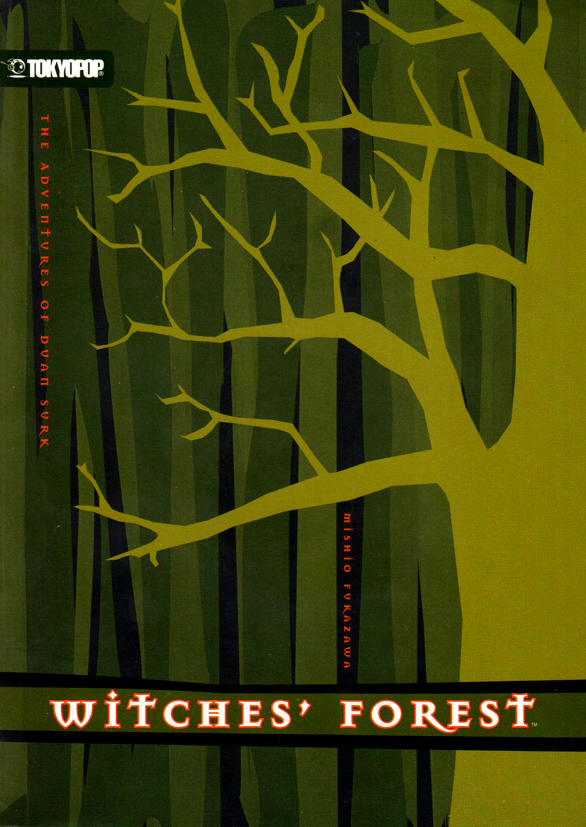
The Adventures of Duan Surk: Witches’ Forest

Witches' Forest

Title: The Adventures of Duan Surk: Witches’ Forest
Japanese Title: デュアン・サーク ― 魔女の森
(Duan Sāku: Majo no mori)
Author: Fukazawa Mishio (深沢 美潮)
Illustrations: Otokita Takao (おときた たかお)
Translator: Catherine Barraclough
Publication Year: 2006 (America); 1996 (Japan)
Publisher: Tokyopop
Pages: 328

This book is kind of stupid. It’s a mess of tropes and clichés liberally borrowed from the early Zelda and Final Fantasy games written in a style aimed at the lowest common denominator. There is no depth to the story, the characters, or the writing. Witches’ Forest is a light novel, and it reads like a light novel: shallow, superficial, and disposable by design.

Nonetheless, I think Witches’ Forest is an interesting and important book, especially in translation. Before I explain why, allow me to give a brief plot summary.

Duan Surk is an orphan in a world plagued not only by vicious man-eating monsters but also by war. He was raised in a small town by his brother Gaeley, a hale young man who took on various odd jobs to order to be able to provide medicine and care for the sickly Duan. The young Duan makes up for his lack of physical strength with an inquisitive mind; and, by the time he is fourteen, Gaeley is confident enough in Duan’s ability to make it in the world that he himself decides to leave the town in order to become a soldier. Gaeley is everything to Duan, so the young Duan decides to become a fighter like his brother. Duan fails the physical portion of the initial test of the Adventurer’s Club guild, but the army will take anyone, so off to the army he goes. After spending a year as a cook’s assistant, Duan returns to camp after spending the day gathering ingredients only to find his entire battalion vanished into thin air, leaving only empty tents and smoldering fires behind. He straps on a sword and rushes into a nearby forest with a vague plan of rescue in mind, but the forest is enchanted, and Duan soon finds himself hungry, lost, and in dire peril.

This is where we find our hero at the beginning of Witches’ Forest, but Duan soon stumbles upon two traveling companions: Olba October, a battle-hardened veteran adventurer in his twenties, and Agnis R. Link, a sixteen-year-old sorcerer with a penchant for fire magic who may or may not be a princess in disguise. Both of these characters are trying to get to the mansion at the heart of the forest, wherein two witches are said to dwell. Olba wants treasure, and Agnis wants revenge. Before they can reach the witches, however, they must brave the dangers of the surrounding forest and the traps set up in and around the house itself.

The adventures of the trio are solidly structured upon a foundation of RPG tropes and gameplay mechanics. Agnis is the perky refugee, Olba is the jaded older guy, and Duan is just about every main player-protagonist to ever appear in a JRPG. The characters randomly encounter monsters drawn directly from D&D dungeon master guides, and they earn experience points when they defeat these monsters. Their Adventurer Cards keep track of their experience points, and, when they earn enough, they gain a level. They are equipped with a full arsenal of Zelda items, from the port-o-lant (which “uses low-cost solid fuel made of Zora oil”) to the coily coily rope (“the definitive version of the hooked rope”), and Agnis in particular has to worry about running out of MP (“magic points,” or magical energy). The trio is accompanied by a flying baby dragon/fire lizard that can talk and use low-level healing spells and is somehow fuzzy despite being reptilian. The only thing the party doesn’t have is a bag of holding, as they’re constantly lugging their adventure gear around with them and getting into petty arguments over who has to carry what.

One of the most engaging parts of Witches’ Forest is Agnis’s backstory, which involves a heartbroken yet politically ambitious stepmother who sinks to Cersei Lannister depths of dastardly scheming. Within this family drama, characters change and grow and are faced with problems that have no obvious solutions. For the most part, though, the novel focuses on the three main characters running around and hitting things with swords and spells. Each of these battles requires some minor element of strategy but is relatively brief. Sentences are short and declarative. Each paragraph contains about three to six sentences. There are no anime-style illustrations, but the text is interspersed with various material drawn from its fantasy world, such as copies of the characters’ Adventurer Cards, advertisements for magical items, and overworld and dungeon maps. At the end of the book is a three-page bestiary of monsters that appear in the story, which is illustrated in a style highly reminiscent of mid-1990s fantasy anime like Record of the Lodoss War or Magic Knight Rayearth.

Witches’ Forest feels extremely dated, which makes sense, as popular culture has moved on in the almost twenty years since the book first came out in 1996. What makes the novel interesting is that it captures the spirit of its age so well. Neon Genesis Evangelion aired during the fall season of 1995 and ended up drastically changing the playing field; but, before that, many popular anime for the young adult demographic were based on light novels such as Slayers and Irresponsible Captain Tylor, which are just as goofy as they are epic. The humor, the fighting, the yelling, the zany adventures, and the group of ridiculously disorganized young people resolving volatile political stalemates entirely by accident are all strongly reminiscent of the anime of the time. It goes without saying that all of this media is closely connected to the themes and stylistic conventions of video games before they made the leap to the 32-bit era. In this way, Witches’ Forest is like a time capsule from a bygone era.

Tokyopop’s release of this book in translation also calls to mind the cultural atmosphere in the United States of a little less than ten years ago. Excitement over Japanese entertainment media such as anime, manga, and video games was almost visibly swelling as new anime conventions popped up every year and bookstores devoted an ever-increasing amount of shelf space to manga. The spark of interest in young adult fiction kindled by the Harry Potter books had leaped into a blazing inferno with the sudden popularity of the Twilight series, and the teenage demographic was on fire in terms of marketing value. Tokyopop was licensing one manga series after another, Viz Media was using its profits as capital to test new markets, and even the mighty Hachette Publishing Group was launching a new imprint devoted to all things manga. Tokyopop had begun to translate light novels, and certain titles, such as Yoshida Sunao’s Trinity Blood series and Ono Fuyumi’s Twelve Kingdoms series, were proving popular with crossover audiences. 2006, the year that Witches’ Forest was published in translation, was the absolute peak of the anime and manga industry in the United States (at least in terms of sales numbers). The market was diversifying and had the support of major retail chains, complaints about internet piracy and entitled fans were few and far between, and it seemed as if anything was possible.

As I wrote at the beginning of this review, Witches’ Forest isn’t written for those seeking a multilayered story, beautiful language, or thematic and allusive depth. Instead, it’s meant to be a quick and enjoyable read, and it serves its purpose admirably. As such, it’s a perfect representative of the literary medium of light novels. The market for light novels in Japan is relatively large, so books like the Duan Surk series, which aren’t particularly brilliant or original, can still thrive and reach a large audience. In the United States, however, the publishing market is tough and the market for young adult novels in translation is infinitely tougher. The crazy manga boom of the last decade was thus necessary for something like Witches’ Forest to appear on bookstore shelves.

Witches’ Forest is therefore an interesting cultural artifact that serves as a window into both the Japan of the 1990s and the United States of the 2000s. Its value as a tangible index of pop lit history aside, the novel is a lot of fun to read, especially for fans of video games and anime. For an older readers, the experience of reading the book may evoke a certain sense of nostalgia, while a younger reader might be able to enjoy the “what was old is new again” thrill of encountering tropes and narrative patterns that now fall slightly outside of the mainstream.

There are four books in the Duan Surk series, and all of them are available in English translation from Tokyopop. Although used copies can be found through various distributors, the best way to get your hands on new copies of all of the books in the series is through the anime retailer The Right Stuf, which is a treasure trove of out-of-print light novels in translation.

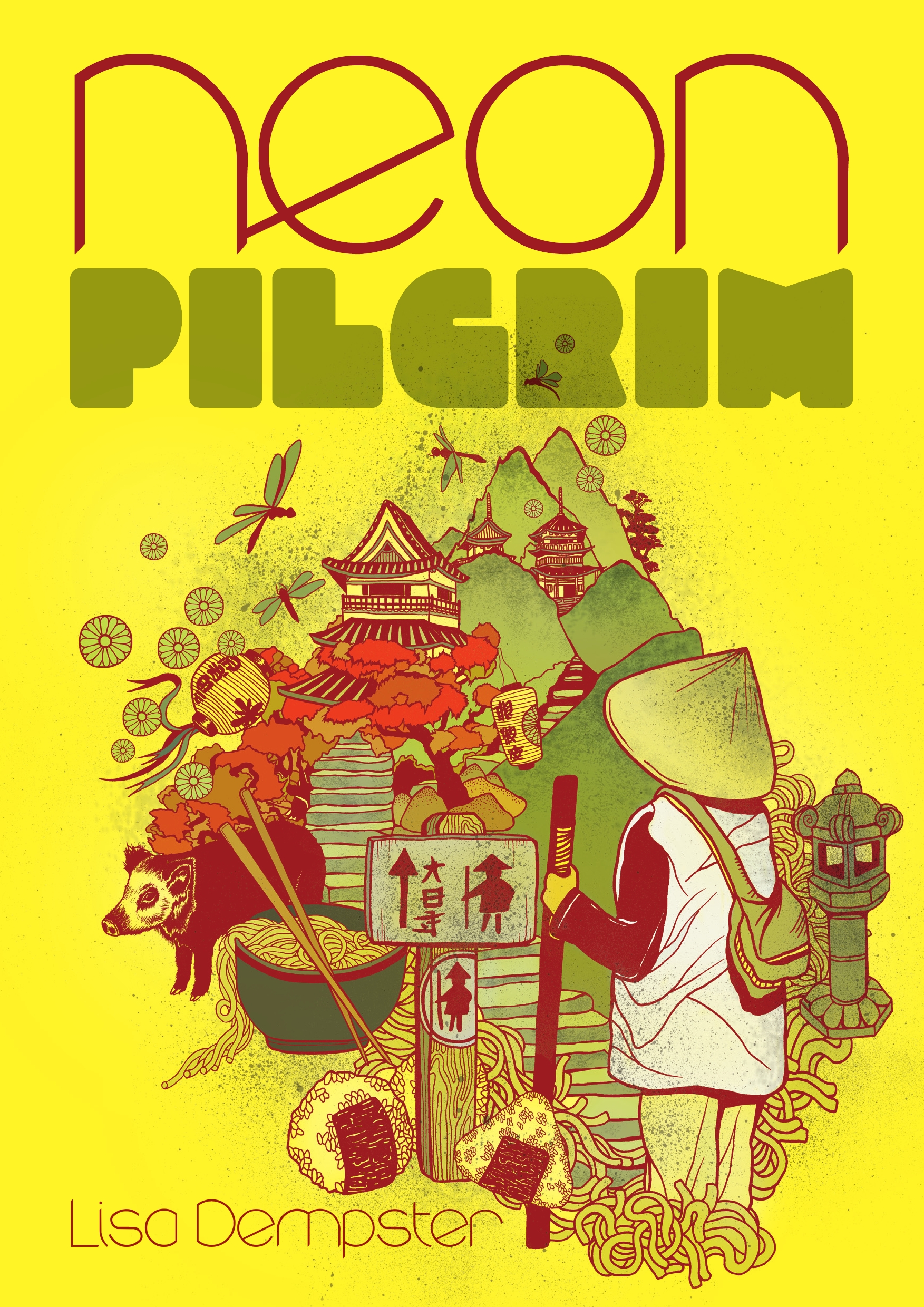
Neon Pilgrim

Neon Pilgrim

Title: Neon Pilgrim
Author: Lisa Dempster
Publication Year: 2009
Publisher: Aduki Independent Press
Pages: 237

According to her own description of herself, Lisa Dempster was an overweight and depressed woman approaching thirty when she decided to walk the Shikoku pilgrimage route between eighty-eighty temples. I am currently an overweight and depressed woman who just turned thirty, and I have dreamed of visiting Shikoku ever since I read Kafka on the Shore as a college senior. Since I moved to the Midwest this past fall, I’ve been mostly confined to my car as the snow piles grow ever higher in the frigid air outside my windows. How lovely it would be, I keep thinking, to be able to walk the Shikoku pilgrimage. Failing that, how lovely it would be to read someone else’s account of traveling, exploring, and walking across a region known for its beautiful mountains and lush tropical beaches.

Neon Pilgrim is just such an account, but what I love about Dempster’s narration of her pilgrimage is that she is completely upfront about how difficult it is to complete the pilgrimage on foot, especially while doing nojuku, or sleeping out in the open. At the beginning of her journey, she is in almost constant pain. It’s summer, and it’s unbearably hot and humid. Her thighs are chafing, there are blisters on her feet, and her skin is breaking out in all sorts of embarrassing places. During the first two weeks of the pilgrimage, the physical strain causes her to throw up at least once a day. People that she meets along the road jovially tease her about how slow she is, and she does indeed move too slowly to have regular walking companions. When all she wants is to sit down in the air conditioning and have something to eat, she has trouble explaining what she means by “vegetarian.”

As Dempster passes through the mountains, she worries about snakes and inoshishi. As she walks along the side of roads and highways, she worries about the lack of shade and places to stop and rest. At one point, she has to deal with a (possibly good intentioned?) stalker who doesn’t understand that she doesn’t want to get in his car or go out to dinner with him. Temple offices keep strict hours, and the rudimentary lodgings they sometimes provide for pilgrims can fill up, so she worries about making good time and not getting lost as well. Although nothing truly frightening or terrible happens to her, Dempster makes it clear that walking all day every day without a guidebook, a smartphone, or any clearly defined itinerary is not as fun and spiritually liberating as one might imagine it to be. After all, sleeping under the stars isn’t as romantic as it’s cracked up to be, as illustrated by Dempster’s attempt to spend the night in a building housing a public restroom:

I turned my attention to the toilet. As promised, it was clean and new, and with lovely stones and polished wood. Two wings of toilets led off from a small undercover vestibule – ladies to the right, men to the left. The vestibule would be the best place to sleep; at least I wouldn’t actually be in the toilet. It was weird but ok. I already felt more secure here than I had back at the road station.

Putting my bag down, I went to use the facilities. Pushing the door to the cubicle open, I screamed. There was an enormous black spider on the wall! If there’s one thing I’m scared of, more than bears and snakes, even more than inoshishi, it’s spiders. Even thinking about them makes me shake. I know it’s wussy but fear is irrational like that.

The door slammed as I jumped back in fright, and the bang of the door sent the spider scurrying over it. I backed up some more. Hang on, that wasn’t the same spider. It was big and black, sure, but it was a decidedly different size. Everything suddenly came into sharp focus – like those stupid Magic Eye pictures – and I realized that the place was riddled with spiders. I counted seven of them. All big. All black. All waiting to suck my brains out of my nose while I slept.

Although Dempster doesn’t marginalize the difficulties of the pilgrimage, she doesn’t whine about them either. For the most part, Neon Pilgrim is an account of interesting experiences and unique interactions with cool people met along the way. When these experiences, interactions, and people are painful, ridiculous, or creepy, Dempster handles them with a light touch so that they become amusing to the reader. What her narration of her difficulties does is to move the story forward and make it compelling to the reader. Will she make it through the whole pilgrimage? Will she give up and go home? Is she going to be okay? How is she going to get out of whatever bizarre situation she’s currently found herself in?

Despite the author’s concerns over her state of mind and the physical hardships she experiences, her account of the Shikoku pilgrimage glitters with tiny gems of natural splendor, as in this description of her ascent to the sixtieth temple in the pilgrimage, Yokomineji:

Everything was green and mossy, glistening with moisture. It was very calm and the dark, cloudy atmosphere made me think again of the pilgrims who had gone before. It had an amazing kind of energy. There were many sets of steps, hewn into the mountain, or constructed from stone now smooth from millions of feet. The path was slippery and precarious and I picked my way up slowly and gingerly, stopping to catch my breath and gaze with amazement at the view around me.

Every now and then a little wooden bridge, strung together with rope, would cross over a mountain stream. They were the slipperiest bits of all, and yet I didn’t care that the weather was bad or the climb was an arduous three kilometers. I had fallen under the spell of the ancient mountain.

Another thing I appreciate about Neon Pilgrim is that it contains a minimum of editorializing about Japanese society. Sometimes tourists from other parts of Japan gawk and make strange comments about the gaijin, but the people who actually live along the pilgrimage route are mostly friendly and treat the author like a normal human being. The students partying on the beach and other pilgrims also treat her normally and offer her whatever food and alcohol they have at their disposal. Since Dempster can speak Japanese, the interactions she describes have nothing to do with “the Japanese character,” or any sort of related silliness, but are instead exchanges between individuals, some of whom are quite eccentric (one of my favorites is the charmingly filthy and half-blind old man who drives the author to the foot of the mountain path described in the previously quoted passage). Occasionally, however, Dempster will wander into an interesting cultural experience, such as when she arrives in Kochi right in the middle of the city’s famous Yosakoi festival:

I had, completely unwittingly, wandered into the Yosakoi matsuri, an annual dance festival that takes place during the height of summer, and a crazy one at that.

Dancers in the festival use a traditional Japanese instrument, the naruko. Known as ‘clackers’ to the rest of the world, the one function of the instrument is to make noise. Wood slaps noisily on wood, and with several thousand dancers clutching a naruko in each hand, the noise is deafening.

The teams, which can be as big as several hundred people, each have their own costumes and moves. Some teams go for traditional kimono and hairdos, others modern and funky. The dance teams weave through the long streets and shopping malls in town, dancing the whole way, each booming their own music, each clacking their naruko. It’s a riot of noise and color.

Like most Japanese festivals, for spectators the usual schedule is about six minutes of watching dancers followed by six hours of drinking. Kochi is known for its love of alcohol, and at festival time it’s fairly safe to say the whole city gets incredibly drunk.

Even if you can’t visit Shikoku in person, it’s an incredible experience to follow Dempster on her pilgrimage while sharing her defeats and triumphs. The chapters of Neon Pilgrim are short, generally around ten pages or so, which makes it easy to put down the book and pick it back up again whenever the spirit moves you. Because there’s no sort of introduction or afterword that provides a broader perspective on the author’s pilgrimage, I have no idea how she took down or edited her notes, but her narrative flows smoothly without any backtracking or inconsistencies. Although the reader can turn the process of reading Neon Pilgrim into a sort of daily practice, I personally found it difficult to stop reading the book – I always wanted to find out what lay around the next corner on the path to the next temple. The author’s good humor is infectious, and she’s a perfect companion for the journey.

Neon Pilgrim is published by Aduki Independent Press in Australia, and it’s almost impossible to get a physical copy of the book (trust me, I tried). A digital copy can be had for five USD from Smashwords, however, so it’s worth checking out. I read the mobi version of the book on my Kindle app, and it was beautifully formatted and functioned flawlessly.

The Night Parade of One Hundred Demons

The Night Parade

Title: The Night Parade of One Hundred Demons
Author: Matthew Meyer
Publication Year: 2012
Publisher: Amazon CreateSpace
Pages: 224

The Night Parade of One Hundred Demons, which began its life as a Kickstarter project, collects roughly four dozen entries on various yōkai, which are accompanied by lavish full-color illustrations. Both the pictures and the text are by Matthew Meyer, an artist heavily influenced by Japanese prints. Meyer has lived in a rural town in Fukui prefecture since 2007, and, as he explains on his Kickstarter page, he has been collecting and translating local folklore for years. There are a number of other books on yōkai available for digital download (such as Matt Alt and Hiroko Yoda’s fantastic Yokai Attack!), but what The Night Parade does especially well is to add regional color and variety to Japanese legends of supernatural creatures that may already be familiar to many Japanophiles.

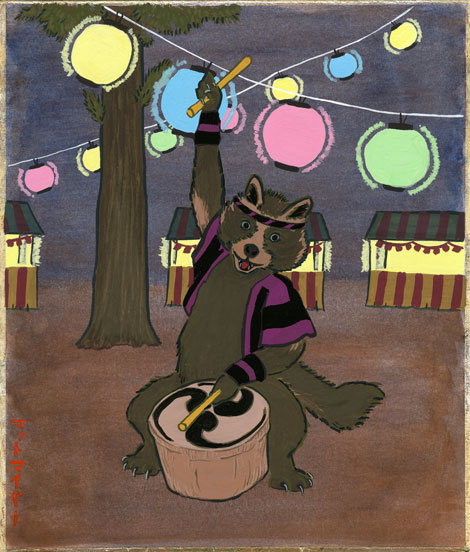
Compiled in such a way as to resemble an illustrated bestiary, The Night Parade is divided into several sections, which include “In the Wilds,” “Out on the Town,” and “In the House.” The book includes entries on yōkai that appear frequently in popular media, such as the kappa, the kirin, the kitsune, the tanuki, and the yuki onna, as well as many lesser-known creatures, such as the bake kujira (an enormous ghostly whale), the jorōgumo (a man-eating spider), and the nuppepō (a flabby, stinky lump of flesh that lives in temple graveyards), and the nopperabō (who looks and acts like an ordinary person but has no face). Each entry contains information on the diet and appearance of these yōkai, their behavior, their interactions with human beings, and the various forms they may take, as well variations on and translations of their names.

Many of the entries are also peppered with interesting information about the historical and cultural contexts of these creatures. For example, the entry on the takanyūnō, or “tall priest,” contains a special section on why suffixes relating to Buddhism and Buddhist priests are so common in the names of yōkai. (Apparently, it’s not so much a connection to religion as it is a certain wariness regarding traveling priests, or at least strangers dressed as traveling priests.) The entry on the kerakera onna, a gigantic “cackling woman” who haunts the alleyways of red light districts and hounds men into their graves with her incessant laughter, alludes to the tendency in Japanese folklore to grant great power to long-lived things, whether they be cats (which become neko mata) or eating utensils (which become tsukumogami), and surmises that prostitutes who managed to live into middle age may well have become yōkai, an interesting conjecture that leaves the mind to wonder about what such a bit of folklore might correspond to in a less numinous context.

Meyer has published his work through Amazon’s CreateSpace program, which offers both print and digital versions of the collection. I can’t offer an opinion of the physical copy of The Night Parade, but the digital edition is beautifully formatted, and its images are of extremely high quality. Although the book is relatively kid-friendly, it includes frank (although far from explicit) references to prostitution and human sexuality. Most of the images are stylized as colorful and cute or understated and eerie, but a few (such as the illustration of the ubume, a spirit of a woman who has died during childbirth) may be too intense for younger readers. My honorary nieces and nephews have been delighted by pictures like the illustration of the onryō, a vengeful ghost who is depicted as a pale shrieking woman bleeding from her eyes, but discretion might be advised for more sensitive children.

Meyer has recently launched a successful Kickstarter project for a second collection, titled The Hour of Meeting Evil Spirits, so expect another excellent illustrated bestiary from him soon!

Matthew Meyer - Tanuki

In the Miso Soup

In The Miso Soup

Title: In the Miso Soup
Japanese Title: イン ザ・ミソスープ (In za miso sūpu)
Author: Murakami Ryū (村上 龍)
Translator: Ralph McCarthy
Publication Year: 2003 (America); 1997 (Japan)
Publisher: Penguin
Pages: 217

In the Miso Soup was serialized during 1997 in the Yomiuri Shimbun, the newspaper with the highest circulation in Japan (and perhaps in the world), and it won the 1998 Yomiuri Prize for Literature, an extremely prestigious award given to superlative works of writers who have already established themselves as leaders in their fields. The novel’s North American and Japanese publishers have marketed it as a “psycho thriller,” and its extreme and violent content will more than likely shock anyone who isn’t familiar with Murakami’s oeuvre, especially his other suspense novels from the 1990s, such as Piercing (1994) and Audition (1997).

The twenty-year-old protagonist of the novel, Kenji, is a high school graduate from Shizuoka Prefecture who makes his living by acting as a guide of Shinjuku’s Kabukichō neighborhood, which is internationally famous for its nightlife. Kenji specializes in sex tours for foreigners, who learn about his services through Tokyo Pink Guide, a publication helmed by a man named Yokoyama, who believes it is his calling in life to bring the people of the world together through something all human beings have in common. On the morning of December 29, Kenji is contacted by an American named Frank, who claims to be a distributer of Toyota car parts and meets Kenji while clutching a copy of Pink Guide in his meaty hands.

If you mention In the Miso Soup to anyone who’s read the novel, the conversation will instantly turn to how delightfully creepy Frank is. Frank is a pathological liar, for starters. If one of the bizarre things Frank says is challenged in any way, he becomes suddenly and irrationally furious, his expression transforming into a mask of rage that Kenji soon comes to refer to as “the face.” The skin on Frank’s neck and hands is loose and seems artificial, and a sex worker who services Frank at a peep show says that there is something inexplicably wrong with his penis as well. To make matters even more upsetting, the body of a high school junior named Takahashi Akiko had been found dismembered and distributed across Kabukichō early in the morning of the 27th; and, after Frank goes on a rant about killing homeless people during his first night out with Kenji, the charred corpse of a homeless man is found in Shinjuku Central Park the next morning. By the end of the first of the novel’s three chapters, both Kenji and the reader are supplied with ample evidence to suspect that there is something not quite right with Frank.

Although Kenji is understandably apprehensive about spending more time with Frank, he is even more worried about what Frank might do in retaliation if he were to break their agreement and stand him up. He thus goes out for a second night on the town with Frank, who now makes very little effort to appear normal. After an episode of highly concentrated weirdness at an underground shot bar, Kenji and Frank go to an omiai club, a bar where people hoping to hook up with a stranger can meet. The girls who enter the club are given numbers and chosen by the men, who must pay a cover charge to enter. If a girl is chosen, she will share a table and drinks with the man who selects her. If they hit it off, they can then proceed to a nearby love hotels, and it is understood that money will more than likely change hands after the encounter. It’s not quite prostitution, but the women do have a financial interest in convincing the men to leave the club with them, and they will put everything they have into flirting and appearing attractive. What could be a quirky comedy of errors in another novel becomes an absurdist drama in the bizarro realm of In the Miso Soup, and Frank puts an end to the staged and artificial interactions of the club’s patrons with a lengthy orgy of meticulously narrated ultraviolence. Although Kenji is clearly traumatized by this turn of events, he also takes tentative steps towards an acceptance of what has happened to the other people at the club, who have upset his fundamental faith in humanity with their superficiality:

They were like automatons programmed to portray certain stereotypes, these people. The truth is it bugged the hell out of me just to be around them, and I’d begun to wonder if they weren’t all filled with sawdust and scraps of vinyl, like stuffed animals, rather than flesh and blood. Even when I saw their throats slit and the gore oozing out, it hadn’t seemed real to me. I remembered thinking, as I watched the blood drip down from Lady #5’s throat, that it looked like soy sauce. Imitation human beings, that’s what they were.

Murakami therefore configures Frank’s dispassionate killing spree into a sort of social critique, a theme that comes to fore in the novel’s third chapter. After the bloodbath at the omiai club (which Kenji refers to as “The Great Omiai Pub Massacre,” as if it had happened years ago), Frank shanghaies Kenji into spending the night with him in the abandoned medical facility in which he has ensconced himself. While Kenji shivers in the darkness of the unheated building, Frank regales him with stories from his childhood in America. As might be imagined, Frank’s childhood is dysfunctional and disturbing enough to make Stephen King proud (Frank even grew up in Maine!), as it includes the creepiness of small towns, the killing of small animals, murder, institutionalization, and extreme body horror courtesy of American mental health practices. Frank is obviously a sociopath, and he has already been established as a pathological liar, so it’s not entirely certain that he’s telling the truth, but he does seem to be telling Kenji his life story for a reason. Frank is almost like an overweight Tyler Durden as he explains that society needs terror, discord, and disruption in order to evolve:

“I see myself as being like a virus. Did you know that only a tiny minority of viruses cause illness in humans? No one knows how many viruses there are, but their real role, when you get right down to it, is to aid in mutations, to create diversity among life forms. I’ve read a lot of books on the subject – when you don’t need much sleep you have a lot of time to read – and I can tell you that if it weren’t for viruses, mankind would never have evolved on this planet. Some viruses get right inside the DNA and change your genetic code, did you know that? And no one can say for sure that HIV, for example, won’t one day prove to have been re-writing our genetic code in a way that’s essential to our survival as a race. I’m a man who consciously commits murders and scares the hell out of people and makes them reconsider everything, so I’m definitely malignant, yet I think I play a necessary role in this world.

I won’t spoil what happens to Frank, Kenji, and Kenji’s girlfriend Jun at the end of the novel, as the suspense regarding the fate of the trio lends an air of immediacy to Frank’s metaphysical speculations and the moral decisions Kenji begins to make concerning Frank. Let it suffice to say that the shock horror of the first two-thirds of the novel are compounded by the social horror of its final chapter. In the Miso Soup is a short book and a blisteringly quick read, but it stays with the reader long after it draws to its conclusion on New Year’s Eve, at which point its seemingly nonsensical title takes on chilling connotations. In the Miso Soup is a sublime dose of nihilism and ultraviolence that illuminates the seedy side of Tokyo in its blindingly dark shadow that is sure to please fans of Japanese horror and readers of extreme literature.

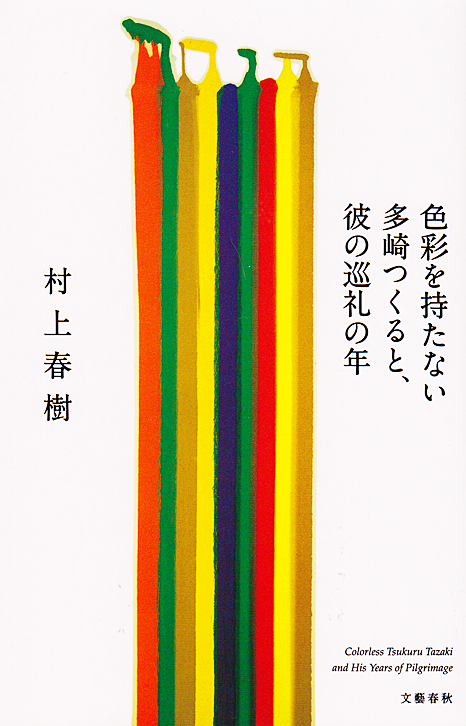
Colorless Tsukuru Tazaki and His Years of Pilgrimage

Tsukuru Tazaki

Title: Colorless Tsukuru Tazaki and His Years of Pilgrimage
Japanese Title: 色彩を持たない多崎つくると、彼の巡礼の年
(Shikisai o motanai Tazaki Tsukuru to kare no junrei no toshi)
Author: Murakami Haruki (村上 春樹)
Publisher: Bungei Shunjū
Publication Year: 2013
Pages: 370

From July to January of his second year of college, Tazaki Tsukuru was absorbed by thoughts of death. His four best friends from high school suddenly stopped talking to him, and he had no idea why. Sixteen years later, the 36-year-old Tsukuru is employed a railroad company, where he works on the design and construction of train stations. He’s single, but he has kindled a romance with a businesswoman named Sara, of whom he is quite enamored. Sara reciprocates Tsukuru’s affections, but she senses that something is holding him back from being in a fully committed relationship. She thus gives Tsukuru an ultimatum: Get rid of your emotional baggage, or I will never sleep with you again. Sara’s Lysistrata-like threat compels Tsukuru to embark on a pilgrimage that takes him across and beyond Japan to track down his friends from high school in order to figure out what happened between them and what went wrong.

Tsukuru’s friends are an interesting group, and each of them goes by a color-based nickname. Oumi Yoshio, or Ao (Blue), has an outgoing personality, and he was the captain of his rugby team in high school. As an adult, he works as a salesman at a Lexus dealership. Akamatsu Kei, or Aka (Red), is fiercely intelligent and analytical, and everyone thought he would become a university professor after he graduated from college. Instead he entered the corporate world and quickly dropped out in order to launch a consulting firm that holds management training seminars. Kurono Eri, or Kuro (Black), is quick-witted and clever and was known for her sarcastic sense humor in high school. Kuro became a potter and fell in love with a foreign student who had come to Japan to study pottery, and she now lives with him and their two daughters in Finland. Shire Yuzuki, or Shiro (White), looked like a model and had gorgeous long black hair, but she hated attention and found joy in playing piano. Unfortunately, she failed to become a concert pianist and so ended up as a private piano teacher, but her ultimate fate was even more tragic. The easygoing and unflaggingly polite Tsukuru acted as the “colorless” background against which these four could shine, and he was the invisible glue that held the group together.

The forward momentum of the first 150 pages of the novel is driven by the mystery of why Tsukuru got dumped by his friends. The first member of the former group that Tsukuru tracks down, Ao, reveals the bare facts of the answer, but this answer creates even more questions, since Tsukuru has no memory of what he was accused of doing. Moreover, what Tsukuru was accused of doing is extremely upsetting, not only to him and the other characters in the novel but to the reader as well. The accusation, as well as Tsukuru’s responsibility in the matter and the obligation his friends felt in responding to the situation, are heart-breaking and profound, and the practical and emotional complications are quite distressing. I’m sure that, when the novel is translated into English, Murakami is going to catch a lot of flak for writing such a scenario, but what he describes is extraordinarily relevant to contemporary societal debates, and the sensitivity with which his third-person narrator describes the fallout of what happened from multiple perspectives is one of the novel’s best features.

Another interesting component of the novel is the wealth of detail given to the description of each character and the interior spaces he or she occupies. The personality of each character is conveyed by his or her words, of course; but, since the narrator’s point of view is fairly limited to Tsukuru, the reader only knows what Tsukuru is doing or thinking at any given moment. The reader is thus encouraged to tease out the finer details of character through the narrator’s meticulous descriptions of clothing, hairstyle, accessories, and interior decoration. Tanaka Yasuo was strongly criticized for his endless litanies of product brand names in his novel Nantonaku, Crystal, and I imagine that it’s possible to levy the same sort of complaint against Tsukuru Tazaki, as the writing comes off as more than a bit Nantonaku-ish at times. That being said, Murakami’s method of character analysis through the intense reflection on taste and setting strikes me as less vapid and materialistic than it does as vaguely Homeric. How does the reader know that Achilles is a badass? By reading detailed descriptions of his armor. How does the reader know that Aka is a badass? By reading detailed descriptions of how he has set up his corporate office.

Aside from the brilliance of its characters, the novel also has some genuinely creepy moments to offer the reader. Many of these moments are encapsulated by Tsukuru’s relationship with his college friend Haida (whose name contains the character for “ash,” or “grey”). Haida tells Tsukuru a story about how his father once met a jazz musician named Midorigawa (whose name contains the word “green”) while working at an isolated inn in the mountains, and how Midorigawa possessed a strange ability that he may have passed on to Haida’s father. It’s a weird story, and Haida’s intentions in telling it to Tsukuru are unclear, but shortly thereafter Haida does something bizarre in an uncomfortable scene involving sleep paralysis before disappearing from Tsukuru’s life without a trace. Such scenes and stories-within-stories are not “softly haunting,” or “elegiac,” or anything fancy like that; they are genuinely creepy and upsetting. Furthermore, Haida is not the only source of surreal urban folklore in the novel – the story a subway station employee tells Tsukuru about something he found in one of the station’s bathrooms is particularly delightful.

As is the case with most Murakami novels, the deeper psychological and supernatural elements of the plot are never fully explained, but I found Tsukuru’s journey to be rewarding in and of itself, and I enjoyed reading the novel. Tsukuru Tazaki is evocative of the pains of youth and what it’s like to reconnect with people years after you’ve graduated from high school. In many ways, Murakami’s latest book feels like an answer to Norwegian Wood, the 1987 novel that first boosted the author into international literary stardom. Whereas Norwegian Wood is permeated by a nostalgic longing for the perceived potential for individual dignity made possible by a vanished youth in a vanished era, Tsukuru Tazaki is concerned with a more pragmatic strain of existentialism that seeks to justify the manner in which the passing years inevitably drain color from one’s life. If Tsukuru is indeed on a pilgrimage, it’s less of a pilgrimage to find his friends or to figure out the truth but rather an experiential process of recreating the story of his adolescence as a narrative that can properly function as a suitable prequel to a middle-aged adult life that is less of an anticlimactic ending and more of a canvas that is still waiting to be filled with color.

The Goddess Chronicle

The Goddess Chronicle

Title: The Goddess Chronicle
Japanese Title: 女神記 (Joshinki)
Author: Kirino Natsuo (桐野 夏生)
Translator: Rebecca Copeland
Publication Year: 2013 (America); 2008 (Japan)
Publisher: Canongate
Pages: 309

The protagonist of The Goddess Chronicle, Namima (“Woman-Amid-the-Waves”) lives on a small and richly vegetated island called Umihebi (“the island of sea snakes”). Umihebi is located somewhere in the island chain south of the kingdom of Yamato (i.e., Japan), and it is known throughout the Ryūkyū seas as a place where the gods come and go. The cape at the north end of the island is sacred and marked by a huge black boulder called “The Warning,” beyond which no one but the high priestess of the island may walk. On the eastern side of the island is the Kyoido (“Pure Well”), and on the western side is the Amiido (“Well of Darkness”), and only adult women are allowed to approach them. Between these landmarks grow plantain trees, banyan trees, pandan trees, and all manner of flowers. The water surrounding the island is filled with fish and sea snakes, which the island men take on their boats to trade with the people of other islands.

Namima’s grandmother, Mikura-sama, is Umihebi’s high priestess. She embodies the energies of light and life and protects the island from harm as she prays for prosperity. Because light and dark alternate, Mikura-sama’s daughter is dark, while Mikura-sama’s oldest granddaughter Kamikuu is light, thus entitling her to become the island’s next high priestess. If Kamikuu is light, then her sister Namima is dark; and so, if Kamikuu is to become then next high priestess of light and life, then Namima must become her dark counterpart, an outcast warden of darkness and death. While Kamikuu is fated to live at the top of a hill and be provided with generous quantities of nutrient-rich food as she prays to the gods and generates offspring from the seed of the young men on the island, Namima is fated to live in the shadow of a cliff, eating dregs and shunning the company of all save the corpses of the island’s dead, which she must watch decay in order to ensure that their souls pass on safely. Although Mikura-sama explains this to Kamikuu, the kind-hearted Kamikuu does not have the heart to tell her sister, so the teenaged Namima is outraged when she is hauled kicking and screaning down to a cave by the shore to take the place of Mikura-sama’s dark counterpart, who has vanished. Namima is immediately visited by her lover Mahito, the son of a family ostracized because of its matriarch’s inability to produce a female child, and the two escape the island on a small boat. Namima dies at sea, and that’s when the book really begins.

Namima, who dies with deep regret in her heart, is not allowed to move on to the world beyond death but instead finds herself in the underworld, a dark and formless landscape of unhappy souls presided over by Izanami, who is both a creator goddess and a goddess of death. Having died while giving birth to a fire god, Izanami found herself in the underworld. Her consort, Izanaki, came to retrieve her, but he was so appalled by the pollution and impurity of the underworld that he fled from his former lover and symbolically sealed the entrance to the underworld with a giant boulder. In her rage, Izanami vowed to end the lives of a thousand humans every day. In response, Izanaki vowed to erect a thousand birthing huts so that the human population would never decline.

Izanami, who has spent aeons under the earth, sees a kindred spirit in Namima and therefore draws Namima’s soul to her to act as an attendant and companion. The Goddess Chronicle is an account of how Namima rails against and finally settles into this role as she comes to understand and sympathize with Izanami’s suffering and the burden that the goddess has assumed. Over the course of her story, Namima returns to Umihebi as a tiger wasp and sees the religious and human drama of the island through the eyes of an outsider. Izanaki himself eventually enters the story and makes his own trip to Umihebi, so the reader sees the island from yet another perspective that further emphasizes how terrifying yet compelling its religious landscape and rituals are. The experiences both Namima and Izanaki have on Umihebi cause them to return to Izanami for closure and salvation.

In the end, however, there is no redemption for Izanami herself; there is only eternal hatred. I don’t want to give away certain plot developments; but, in light of these developments, it seems as if there would be so many other paths open to the goddess at the end of the novel. Moreover, although Namima can leave at any time, she decides to stay with Izanami, not as her friend or equal, but rather as the priestess of her pain. The novel ends with these lines, spoken by Namima:

I, who was once a priestess of the darkness, feel that serving here at Izanami’s side I am able to accomplish what I was unable to finish on earth. For, as I said earlier, Izanami is without a doubt a woman among women. The trials that she has borne are the trails all women must face. Revere the goddess! In the darkness of the underground palace, I secretly sing her praises.

I’m not sure if that’s a happy ending or not. So all women are united in a shared oppositional relationship to men? All women are united in their hatred, and in the fact that their destinies are shaped by the carelessness of men? Why do women have to harbor so much hatred? Why can’t men just be normal people instead of the shapers of the destinies of women? Why does there need to be an dualistic and antagonistic relationship between Woman and Man on such a deep mythical level?

In other mythological revisionist novels written from a feminist perspective, such as Margaret Atwood’s Penelopiad and Ursula Leguin’s Lavinia, there are layers of depth and meaning and subtle characterization added to mythological personages who were relatively flat in the original sources. In The Goddess Chronicle, the gods remain flat, and the human characters aren’t granted much depth either. The story told by the novel is fascinating, and the writing and translation are beautiful, but in the end there is almost no resolution or character development. Perhaps the point of the story isn’t to give human characteristics to nonhuman entities, however, but rather to provide the reader with an entryway into the conceptual geography of the existential questions religion and myth seek to address. In this latter purpose, The Goddess Chronicle succeeds spectacularly.

Kirino Natsuo is an extremely dark writer; and, while she never offers any feminist solutions to the problems she raises, she excels in bringing the reader’s attention to the sexism and hypocrisy that exist in mainstream narratives about women. By showing the reader the other side of the story, Kirino deftly illustrates the anger of the otherwise voiceless women who have been left out of most stories, but it is ultimately up to the reader to find hope in the situation and to figure out how to use her or his newfound anger to change the world for the better. In The Goddess Chronicle, Kirino encourages the reader to see one of the keystone tales of Japanese mythology from the perspective of darkness, and the perspective of those not showered with glory, and the perspective of those left behind. Such a perspective can be upsetting and frustrating, but it’s also an invitation to the reader to formulate her or his own interpretations, as well as her or his own ideas concerning the further adventures of these characters and their relevance to the modern world.

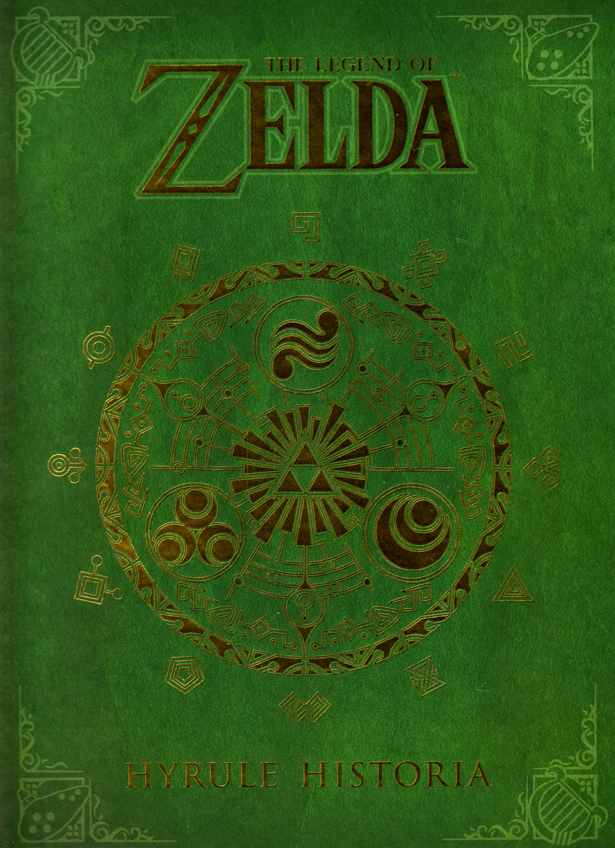
Hyrule Historia

Hyrule Historia

Title: The Legend of Zelda: Hyrule Historia
Japanese Title: ハイラル・ヒストリア: ゼルダの伝説 大全
(Hairaru hisutoria: Zeruda no densetsu taizen)
Japanese Editors: Aonuma Eiji (青沼 英二), Shioya Masahiko (塩谷 雅彦)
English Editors: Mike Richardson, Patrick Thorpe, et al.
Translators: Michael Gombos, et al.
Publication Year: 2013 (America); 2011 (Japan)
Publisher: Dark Horse
Pages: 280

Hyrule Historia is divided into four parts. The first part, titled “The Legend Begins: The World of Skyward Sword,” is a collection of artwork and design sketches from the 2011 Wii game Skyward Sword. The second part, “The History of Hyrule: A Chronology,” runs through the plot of every game in the Legend of Zelda series and demonstrates how they are all connected. The third part, “Creative Footprints: Documenting 25 Years of Artwork,” is a collection of art and design sketches from the entire series with a strong emphasis on Twilight Princess. The fourth part is a 34-page manga (of which ten pages are in gorgeous color) about the mythology of Skyward Sword by Akira Himekawa, a two-person team that has drawn the official manga adaptations of many games in the Legend of Zelda series.

The “History of Hyrule” section, which is about seventy pages long, gives the book its name. When the series timeline from this section was released and translated into English, there was a bit of a kerfluffle in certain circles of video game fandom that had gradually been building their own theories and didn’t appreciate the retroactive continuity implied by the official version. That being said, the timeline laid out by Hyrule Historia makes sense (inasmuch as anything involving time travel makes sense) and should be interesting to a fan of the series. The main bulk of the section, however, consists of condensed versions of the plot of each Legend of Zelda game. These plots are more or less what appears in the game manuals with very little extra or “never before revealed” information thrown in for flavor. Unfortunately, the basic “Link must collect items in order to earn the right to wield a special sword so that he can save Zelda after she is imprisoned by an evil entity” story begins to grow stale as it’s continually repeated across two dozen three-to-four-page increments.

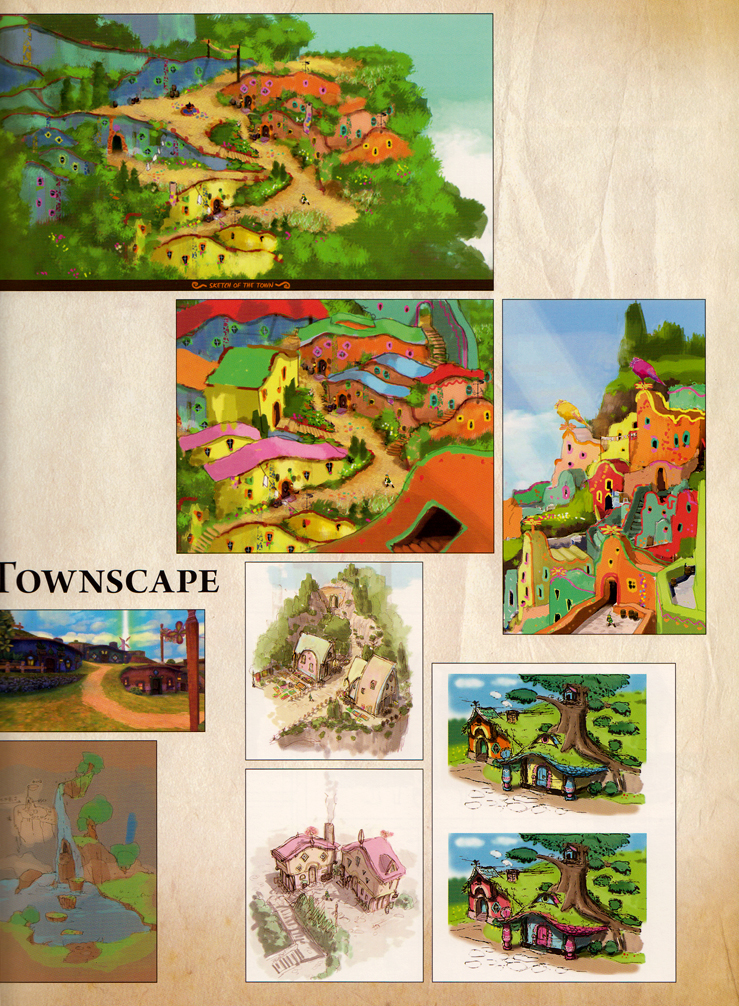
The main draw of Hyrule Historia is its artwork. In the first part of the book, which is filled with artistic development materials for Skyward Sword, the reader can witness the incredible attention to detail and world building that went into the game. These images are accompanied by myriad creator notes, which are often surprisingly humorous. Thankfully, unlike the Japanese original, in which many of these notes were handwritten in tiny characters, the typeface used to convey the creator notes in translation is large enough to read easily.

Hyrule Historia Skyward Sword Townscapes

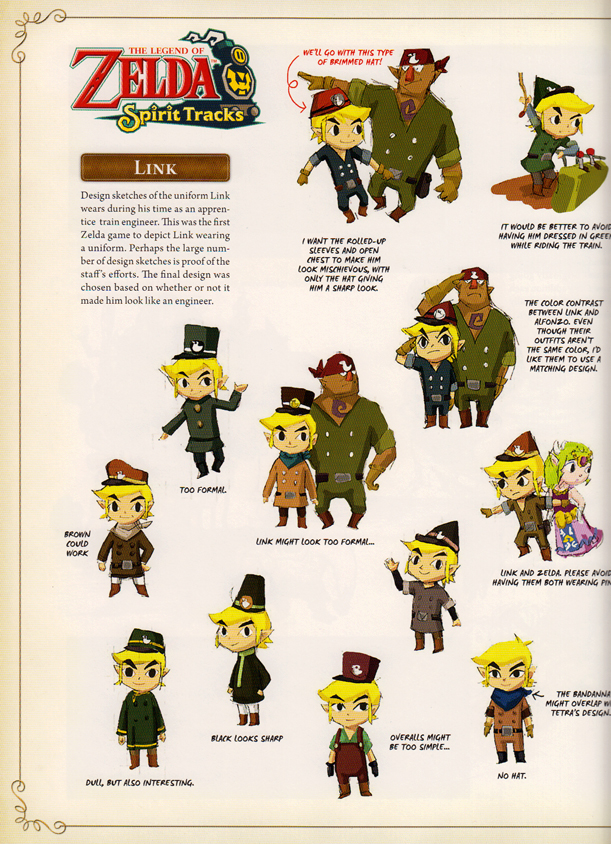
The artwork on display for the other games in the Legend of Zelda series in the “Creative Footprints” section is also quite interesting. There are all sorts of designs for the main characters, secondary characters, enemies, weapons, and items. There are also rough drafts of dungeon maps, enemy treasure drop charts, and other developmental materials, such as different drafts of promotional concept art. Some of this artwork shows exactly how enemy wings, tails, and teeth work, with suggestions for how different designs accommodate different movements. There are fewer written notes in this section than in the first section on Skyward Sword, but there is still enough text to draw the reader into the image details. I particularly enjoyed the architecture and island sketches from The Wind Waker, as well as the full designs of the stained glass patterns that appear in the game’s building interiors. I also enjoyed getting a sense of the evolution of the Link character in each Legend of Zelda game, as different designs show him as younger or older, or more or less serious, or wearing entirely different sets of clothing and equipment.

Hyrule Historia Spirit Tracks Link Designs

You can’t really see this in the scans I made, but the image quality in Hyrule Historia is impeccable; the book is something that you need to hold in your hands in order to fully appreciate. The emphasis of Hyrule Historia is obviously on Skyward Sword, but all of the Legend of Zelda games get multiple pages of attention. A great deal of the book’s text feels like it’s selling the series, especially in the “History of Hyrule” section, and it can sometimes be a chore to read. Still, artists and art appreciators will love the incredible array of sharp and colorful images, and the physical book itself is sturdy enough to handle all manner of wear and tear that may occur over the course of reference use. Dark Horse did an excellent job with this gorgeous book. If you’ve been on the fence about buying a copy, Hyrule Historia is absolutely worth your time and money.