Tokyo Decadence

Tokyo Decadence

Title: Tokyo Decadence: 15 Stories by Ryu Murakami
Author: Murakami Ryū (村上 龍)
Translator: Ralph McCarthy
Publisher: Kurodahan Press
Publication Year: 2016
Pages: 280

Tokyo Decadence contains fifteen stories drawn from five of Murakami Ryū’s collections published between 1986 and 2003. As translator Ralph McCarthy explains in his acknowledgments, he has been translating his favorite Murakami stories since the late 1980s, and now he’s finally able to publish them thanks to the blessing of the author and the encouragement of Edward Lipsett of Kurodahan Press.

The first story in Tokyo Decadence, “Whenever I Sit at a Bar Drinking Like This,” has a passage at the beginning that reads as follows:

It’s probably safe to say that everyone sitting here is looking for some sort of sin tonight. The circumstances are different for each, of course, but everyone has the same general destination in mind. No one gets drunk in order to raise their moral standards.

It’s probably safe to say that no one opens a collection of Murakami Ryū’s short fiction in order to raise their moral standards. If you’re looking for some sort of sin, you’ve found yourself the right book. All of the stories in Tokyo Decadence are surprising and unique, but they all move toward the same general destination – sex and drugs and blood and tears.

This first story takes the form of an elaborate fetch quest across the seedy underbelly of Shinjuku in which the protagonist must exchange promises for favors. His goal is to get one of his former lovers to testify in court that they were sleeping together so that another of his former lovers doesn’t claim common law marriage and sue him for divorce. The point seems to be that people are terrible and selfish creatures, but it’s a lot more fun arriving at this conclusion than you’d expect.

The second story, “I Am a Novelist,” involves another strange situation in which a man posing as a bestselling writer gets a girl at a hostess club pregnant. When her manager insists that he meet the young woman, she quickly admits he’s not the person she slept with, but the writer still takes her out to dinner. She tells the writer that she’s a fan of his work, so he tries to get her to fall in love with him instead of his impersonator. It doesn’t work (obviously), and the novelist ends up finding out that he was just a minor character in someone else’s story.

In other stories, a trucker loses his wife and his job and becomes a host at a gay club, a guy with no self-esteem invades a woman’s home and smashes her television, and a young prostitute buys herself a topaz ring to remind herself of a musician whose world she can never enter. In “Penlight,” a call girl with serious issues talks about her imaginary friend to a guy she meets at a bar, who is interested in her body, but in the way you think (unless you happen to be thinking of horrific murder and cannibalism). A few of these stories are drawn from Murakami’s 1988 collection Topaz, which became the basis for the 1992 film Tokyo Decadence, which was directed by the author and banned in a handful of countries precisely because it’s the sort of movie you’d expect to have been directed by the author.

If you’ve read Murakami’s work before, you know what to expect. Since all of these stories are twenty pages or less, however, there’s no slow buildup to the carnage. That being said, the violence is tempered with irony, black humor, and intriguing characterizations that elevate the stories above simple splatterfests.

In contrast, the three stories drawn from the 1995 collection Ryu’s Cinematheque are vaguely autobiographical.

In “The Last Picture Show,” the 18-year-old narrator is living in Kichijōji and trying to make it big with his blues band. His upstairs neighbor, who is obviously a yakuza, wants to pay him to pick hydrangea leaves in Inokashira Park to dry and then sell as marijuana to American soldiers. In “The Wild Angels,” the 18-year-old narrator has started a relationship with a woman who works as a hostess, which makes him feel like less of a man, so he starts shooting heroin. In “La Dolce Vita,” the college student narrator hooks up with an older woman who lives in Yokosuka and gets her drugs from the American army base, which doesn’t end well.

To me, these coming-of-age stories were nowhere near as interesting or amusing as the murder stories, but they provide an interesting picture of the 1970s that serves as a counterpoint to the stories of the other Murakami; these stories forgo nostalgia in favor of an emphasis on the grittiness and despair and self-indulgent navel gazing of fringe counterculture.

The last third of Tokyo Decadence eases up on the drug use but maintains its focus on sex and emotional violence. Some of the stories reference each, and I got the sense that I was only being glimpses into a larger narrative. I dearly wish we lived in a world in which Ralph McCarthy was able to publish his translations of entire Murakami collections instead of selected stories, but each piece included in Tokyo Decadence shines brightly enough on its own merits that the reader is not disappointed by the relative lack of context.

I thoroughly enjoyed Tokyo Decadence. The collection portrays the Japan of the bubble and postbubble decades as a place where anything in your wildest dreams and darkest nightmares could happen. Murakami’s fiction is a love letter to the infinite possibilities of urban life delivered with style and panache. Just be warned – Tokyo Decadence is not for the faint of heart.

Tokyo Decadence will be released on March 15, 2016. A complete table of contents can be found on its page on the Kurodahan Press website.

Review copy provided by the noble and selfless people at Kurodahan Press.

Asura Girl

Ashura Girl

Title: Asura Girl
Japanese Title: 阿修羅ガール (Ashura Gāru)
Author: Maijō Ōtarō (舞城 王太郎)
Translator: Stephen Snyder
Publication Year: 2014 (America); 2003 (Japan)
Publisher: Haikasoru
Pages: 214

Asura Girl is narrated by Aiko, a seventeen-year-old student who just so happens to be a total badass of the sort we all wish we could have been in high school. She does what she wants, doesn’t apologize for anything, and isn’t interested in your shit. Sure, she’s a little messed up in the head, but what teenager isn’t?

If Aiko’s life were nothing more than maintaining her self-respect while dealing with bullying and subpar sex, she’d be okay, but there’s a serial killer on the loose. When a boy disappears almost immediately after she left him in a love hotel, she takes steps to lure the murderer to her, because she is pissed off and ready to lay down the law. She is inspired by her enviable collection of DVDs of American movies, especially after she picks up on a parallel between the abduction of her single-serving boytoy and the abduction in The Big Lebowski.

That’s right, The Big Lebowski – a perennial favorite of seventeen-year-old girls everywhere.

Asura Girl was written by a thirty-year-old man, and it shows. Aiko is more or less a cross between Uma Thurman, Samuel L. Jackson, and a basement-dwelling neckbeard. It makes very little sense to try to understand her as anything other than a construct. There is no sensitive or nuanced portrayal of girlhood in this novel, but that’s okay. Sometimes you’re just looking for a hardcore metal portrayal of a manic pixie murder girl.

To give you a sense of what this means, this is how Aiko interacts with her crush:

Still, it did sound a little like he was more worried about Maki than me, so as he was taking off his shoes in the doorway I kicked him – my patented Aiko whip kick, a roundhouse to the upper body that I learned from my brother. My bare foot struck his arm – chiban! – and he bent double, letting out a little yelp. Humpf. Drop dead. No, on second thought that might cause trouble. (53)

The boy is okay with it, because of course he is. Aiko is less of a girl power icon than she is a fantasy girlfriend for the author, but her ridiculous character is a perfect for this novel’s ridiculous story.

The family of one of the serial killer’s victims set up a website asking for help, a plea that went nowhere fast but still managed to inspire a great deal of internet discussion and speculation that coalesced into a vigilante group calling itself “Voice of Heaven.” The Voice of Heaven has convinced itself that the serial killer is a middle school boy, and so its members begin to engage in “middling,” or ganging up on middle school kids and beating the shit out of them. A grisly confirmation of a new murder sparks widespread riots, in the midst of which Aiko receives an unlikely visitor.

A hundred pages into the novel, there’s a vertiginous narrative shift as Aiko undergoes a near-death experience, and her already unstable imagination goes completely off the rails.

I don’t want to spoil what happens here, but it is insane.

When Aiko returns from her epic vision quest ninety pages later, she has learned nothing. Regardless, she understands that she’s been given a new lease on life to make a fresh set of terrible decisions, and she fully intends to make those decisions as terrible as possible.

And then there’s this weird bit at the end about making a sacred Buddhist statue of the warrior-god Asura out of human corpses. Should the reader understand these human corpses as literal, or are they the cast-off shells of Aiko’s identity as she constantly reinvents herself yet always stays essentially the same? Why choose when you can have both??

I just, what is this novel, what is it even.

Asura Girl is not for everyone, and I can imagine wide swaths of readers being confused and offended by it. But! If your heart went a little doki-doki when your eyes passed over the words “The Big Lebowski,” and if you always thought Reservoir Dogs could have used more Japanese schoolgirls, then Asura Girl is probably for you.

You know who you are.

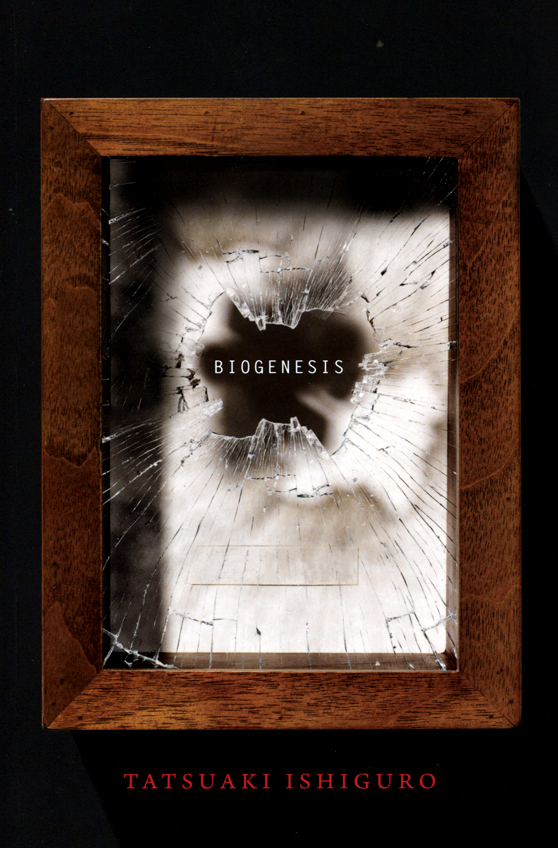
Biogenesis

Biogenesis

Title: Biogenesis
Author: Ishiguro Tatsuaki (石黒 達昌)
Translators: Brian Watson and James Balzer
Publication Year: 2015 (America); 1994, 2000, and 2006 (Japan)
Publisher: Vertical
Pages: 240

Biogenesis collects four stories by Ishiguro Tatsuaki, who is both a practicing medical doctor and an acclaimed writer of horror-themed science fiction.

The book is dominated by the first story, “It is with the Deepest Sincerity that I Offer Prayers…” which takes the form of a scientific report (tables and endnotes and all) on a species of winged mice that have suddenly disappeared from their habitat in Hokkaido. The report focuses on the activities of Dr. Akedera Nobuhiko, an AIDS researcher employed under somewhat shady circumstances to “preserve the cellular and genetic information” of the vanishing species. Akedera was apparently so fascinated by what he found in the process that he insisted on undertaking ecological research as well, recording accounts of sightings and deaths.

Akedera was able to draw a number of unsettling conclusions from this data. First, the winged mice seem to die in waves. Second, there are unusual patterns regarding their movements and seasonal behavior. Third, many of the people who have documented and captured winged mice attest to a strange glow either emanating from their bodies or otherwise present when and where they gather. Finally, live mice are most often found and photographed by or in the prescence of human children.

Akedera is sent back to Tokyo, but he continues to involve himself with research and preservation efforts, which result in the discovery that cultures of winged mice cells exhibit startling tendencies and may even possibly be immortal. What exactly is going on with this species – and what exactly drove Akedera’s intense interest?

The dry tone of the story’s scientific prose forms a gorgeous ironic contrast to the fantastic nature of what it relates, and the reader is encouraged to employ her own analytical acumen to excavate a number of details from between the lines. The typeface used for this story, which lends it the air of an unpublished manuscript, is a nice metadiegetic touch.

The second story in the collection, “Snow Woman,” begins with a clinical description of hypothermia. The narrative quickly moves to a discussion of a medical condition called “idiopathic hypothermia,” in which an individual’s stable body temperature is about 15°F lower than normal, which suggests “the possibility of an extended lifespan due to lower metabolism.” This information serves as an introduction to a scholarly account of the discovery of the condition and the mysterious death of the army doctor who published the first paper about it in the 1920s. This doctor, Koho Yuhki (which is the name he published under in German), had been stationed at a mountain clinic in Hokkaido, where he had been instructed to investigate cures for frostbite.

At a certain point during his studies, Yuhki was presented with a woman who had entered a coma after falling asleep in her woodshed in subzero conditions. Although she regained consciousness, her body temperature never rose above 86°F, and any attempts to return it to normal were met by a dangerous drop in her blood pressure. The scientific community considered Yuhki’s published findings a hoax; but, in 1997, a number of army documents were declassified, revealing that his case study was even stranger than it seemed.

“Snow Woman” is written almost exactly like a scholarly essay, so much so that Ishiguro almost managed to convince me that “idiopathic hypothermia” is real. Seriously, I had to google it.

The science fiction subgenre of providing rational explanations for seemingly supernatural phenomena is not new, but Ishiguro handles the “science” elements more deftly than any other writer I’ve encountered. The metadiegetic elements he incorporates into each story imbue the experience of reading them with an extra touch of thrill and wonder, as if you yourself have stumbled onto a rare and bizarre scientific breakthrough, perhaps by having slipped ever so slightly into a parallel universe in which such things were truly possible.

The third and fourth stories in Biogenesis are equally intriguing, but I’ll leave you the pleasure of discovering them for yourself. Ishiguro’s fiction is as much about the art of science as it is about the pleasures and potential of the unexplainable, and I’m keeping my fingers crossed that more of his work finds its way into English soon.

Last Winter, We Parted

Last Winter We Parted

Title: Last Winter, We Parted
Japanese Title: 去年の冬、きみと別れ (Kyonen no fuyu, kimi to wakare)
Author: Nakamura Fuminori (中村 文則)
Translator: Allison Markin Powell
Publication Year: 2014 (America); 2013 (Japan)
Publisher: Soho Press
Pages: 216

A 35-year-old photographer named Kiharazaka Yūdai is charged with the murder of two young women who acted as his models. Although his work was highly regarded, he had lived mainly off the inheritance from his maternal grandfather, who had distanced himself from his daughter to such an extent that Yūdai and his sister Akari ended up growing up in an orphanage after being abandoned by their parents. He is currently being held in prison in solitary confinement, where he’s waiting to appeal his death sentence.

The narrator, an unnamed writer who is working with his editor to put out a book about Kiharazaka, visits him in prison and then begins exchanging letters. He also meets with Akari and a salaryman named Katani, who had been Kiharazaka’s only friend. Both of them believe he’s innocent, and both want to know why the narrator cares so much about him.

It turns out that both Kiharazaka and the narrator were involved with a group that had formed around a man named Suzuki, a creator of full-size silicon sex dolls. When the narrator approaches Suzuki about Kiharazaka, the craftsman talks at length about his clients and the uncanniness of his art. He also discusses the similarities between his work and Kiharazaka’s photography, bringing up Akutagawa Ryūnosuke’s short story Hell Screen as a means of explaining the relationship between beauty and suffering. Suzuki doesn’t doubt that Kiharazaka murdered his photographic subjects by setting them and his studios on fire, but he suspects that there was something that drove the man’s madness other than the desire to lift himself out of an artistic slump.

There is in fact more going on, but it’s the reader who has to play detective. Interspersed between the short passages charting the narrator’s descent into an unhealthy relationship with the Kiharazaka siblings are various documents presented as numbered “archives.” Some are letters from Kiharazaka to his sister and to the narrator, while others are diary entries and Twitter feeds, and some are more difficult to classify. The relationships between the characters are not what they initially seem, with names being nothing more than empty signifiers of fractured identities, and the reader is forced to fit all of the clues together herself if she wants to understand what really happened between this small group of irreparably damaged people.

Last Winter, We Parted is misogynistic in that female characters seem to only be there to be photographed and/or fucked before being burned alive, but that comes with the territory. Let’s be real here, this is a crime novel written by a man who won the Ōe Prize, what were you expecting.

Standard literary sexism aside, Last Winter, We Parted is a small book of eerie beauty. Despite its gory subject matter, the prose is as light as falling ash. Allison Markin Powell’s translation is, as always, wonderful. This is the first book by Nakamura Fuminori I’ve read, but I’m definitely hooked on his writing.

Yūrei: The Japanese Ghost

Yūrei The Japanese Ghost

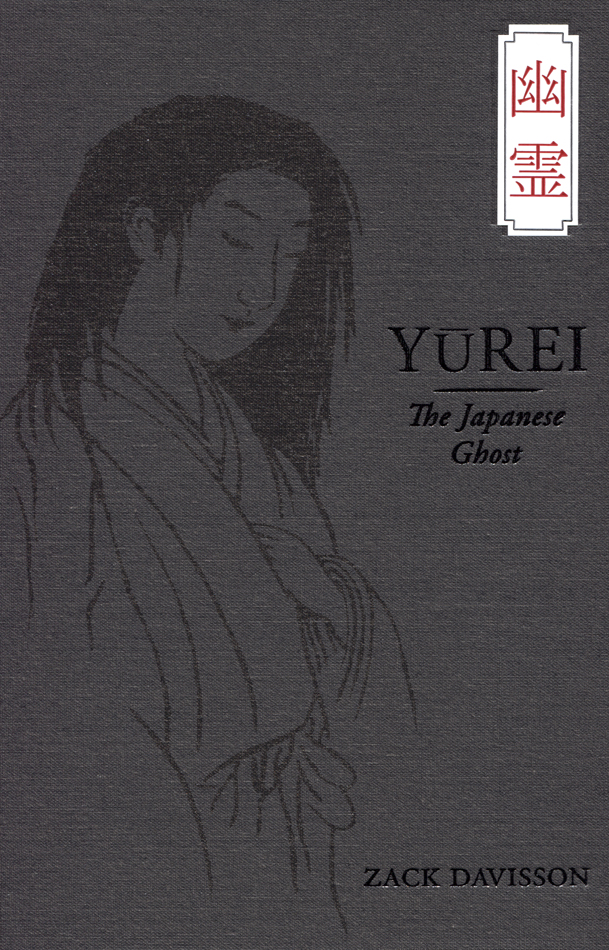
Title: Yūrei: The Japanese Ghost
Author: Zack Davisson
Publication Year: 2015
Publisher: Chin Music Press
Pages: 206

Zack Davisson is a major rising star in the world of manga translation, having worked on high-profile and award-winning titles such as Mizuki Shigeru’s Showa: A History of Japan and Oishii Mamoru and Kon Satoshi’s Seraphim: 266613336 Wings. He is also a consultant for the ongoing comic series Wayward, for which he writes the closing essays. Fans of yōkai and other Japanese cryptids will know him from his blog, Hyakumonogatari Kaidankai, and he also maintains an active Twitter account, which is a great source of news on the American comics scene. Yūrei: The Japanese Ghost is Davisson’s first book, and it’s published by no less than Chin Music Press, which regularly releases Japan-related literary objets d’art such as Kūhaku & Other Accounts from Japan and Otaku Spaces. There’s obviously been a great deal of talent invested in this book, and it shows.

Yūrei are the ghostly cousins of yōkai, and their spectral tendrils stretch deep into Japanese history. Although he occasionally touches on contemporary popular culture, Davisson is mainly concerned with the society and print media of premodern and early modern Japan. Each of the twelve chapters in Yūrei covers one in-depth topic, the discussion of which is usually centered around a specific artistic work.

The first chapter takes as its subject “The Ghost of Oyuki,” the Edo-period painting by Maruyama Ōkyo that appears on Yūrei‘s cover. Davisson investigates the origin of this iconic image, melding history with legend. The second chapter covers kaidanshū, or “collections of weird tales,” while the third delves into the world of kabuki. The fourth and fifth chapters offer maps of the geography of the land of the dead, both imagined and, in the case of certain sacred mountains, real. Chapter 6 conveniently details how not to end up as a ghost, and Chapters 7 and 8 recount the lives and afterlives of people who really could have used this advice. Chapter 9, “The Ghost of Okiku,” is an Edo-period case study in how hauntings occur, and Chapter 10 brings the concept of haunting, or tatari, into the present by way of horror movies and urban legends. The eleventh chapter provides an explanation of the traditions surrounding Obon, the festival of the dead. Finally, the twelfth chapter is an informative analysis of Ueda Akinari’s Tales of Moonlight and Rain, which was published in 1776 but still stands (or hovers creepily) as one of the finest works of dark fantasy in any language.

Although every chapter is a lot of fun, my favorite section of the book is its Introduction, in which Davisson relates a personal anecdote about how he and his wife lived in a haunted apartment in Osaka for seven months. Part of the appeal of reading ghost stories is imagining that you yourself might one day come into contact with the supernatural, so I can’t imagine a better way to begin a book like this. Davisson transitions into a brief overview of what the term “yūrei” signifies, how it differs from the Western concept of “ghost,” and its pervasiveness in contemporary film and literature. If I were a curious horror fan, or perhaps a teacher looking for a concise and engaging essay to assign as reading for a class on Japanese folklore, Yūrei‘s Introduction would suit my needs perfectly.

Unfortunately, the writing in Yūrei is not always uniformly smooth. In certain sections of the book, there are brief moments of jarring dissonance, as when one paragraph states that the constant warfare of the Sengoku period (1467-1603) generated countless ghost stories because of people needed a way to process their fear, while the next paragraph argues that ghost stories proliferated in the Edo period (1603-1868) in a way that they couldn’t before because people were finally free from fear. These paradoxes are relatively minor; and, in Davisson’s defense, such seeming contradictions need not be regarded as such, as multiple interpretations are equally valid. This is a book about ghosts, after all.

Yūrei is an extremely handsome publication. It opens with eight full-color images depicting yūrei as imagined by artists in the Edo period. There are fifteen additional images interspersed throughout the book, each of which is accompanied by a short explanation. There is also a glossary at the end, which helpfully provides the kanji for each term, as well as a useful five-page list of English-language works referenced.

The book’s most interesting index is its collection of 33 yūrei kaidan (“strange tales”), which are organized by theme, such as “Tales of Ghostly Vengeance” and “Tales of Ghostly Love.” As it’s difficult to find stories from medieval and Edo-period kaidan compilations outside of out-of-print academic publications, these translations are an extremely welcome addition to the project.

Review copy provided by Chin Music Press. (Full disclosure: I was so excited about this release that I begged for a review copy, and they sent me one just to get me to go away. It was totally worth it.) You can preview the book on Davisson’s blog.

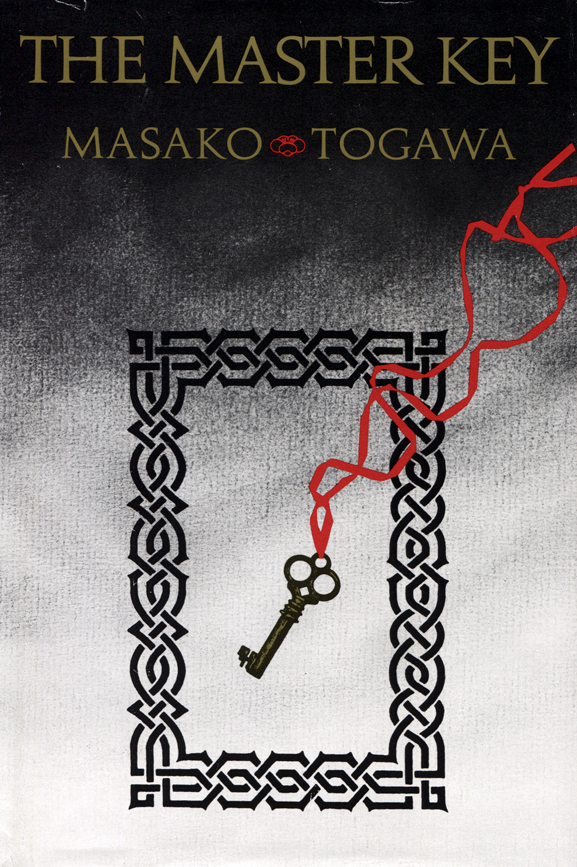
The Master Key

The Master Key

Title: The Master Key
Japanese Title: 大いなる幻影 (Ōinaru gen’ei)
Author: Togawa Masako (戸川 昌子)
Translator: Simon Grove
Publication Year: 1985 (United States); 1962 (Japan)
Publisher: Dodd, Mead & Company
Pages: 198

The Master Key, first published in 1962 and set in the late 1950s, is an interesting window into a period of postwar Japan that we don’t often see represented in Japanese fiction in translation. The story takes place entirely within the closed world of the K Apartments for Ladies, a large, multi-story building located in southeast Ikebukuro and registered as a charitable trust with “rents pegged at wartime levels.”

On its surface, the story is about a 1951 kidnapping of a young boy who is the son of a Japanese woman and an American military officer. Seven years later, when the K Apartments building is lifted and moved to a different location in a grand public works experiment, the body of a child is discovered buried underneath a shared bathing area in the basement. Right around the time the child disappeared, a man dressed as a woman was struck by a van in an intersection near the apartment building, and it’s revealed to the reader early in the novel that this man disguised himself as a woman to help one of the tenants dispose of the body that would later be found in the building’s basement. Who in the apartment buried the body, and what relation does this have to the kidnapping incident?

About twenty pages into The Master Key, however, it becomes clear that the mystery portion of the story is going to take a backseat to an extended exploration of the inner worlds contained within the K Apartments for Ladies and the psychological dysfunctions of its aging tenants.

Ishiyama Noriko, who has been diagnosed with “nervous pains,” has removed herself from the rest of the world and lives in a dark apartment stuffed with other people’s trash, which she occasionally boils and eats to sustain herself. Yatabe Suwa, a former concert violinist who now gives music lessons to children, is haunted by the loss of potential represented by the theft of a violin from her own teacher, even though it’s possible that she herself may have more to do with this incident than she likes to admit. Kimura Yoneko retired from her position as a schoolteacher years ago and spends her days writing letters to her former students, and she is not above checking into the affairs of the other tenants as well. Santo Haru is obsessed with a religious cult, and she is in the palm of its leader, who frequents her apartment to hold prayer meetings centered around the trances of its vestal priestess.

The plot is complicated and circuitous but is centered around the use and whereabouts of the master key of the title, which various tenants use to sneak into one another’s rooms in order to discover the secrets of others while concealing their own. At the end of the novel, it’s revealed that there is a mastermind orchestrating all of their movements, someone who has been spying on everyone for years and has manipulated the women around her for her own amusement. As someone who had essentially done the same thing to these characters through the process of reading this novel, I felt somewhat guilty, but not enough to lessen my enjoyment of how neatly all of the different plot threads are eventually tied together.

I will openly admit that I love stories about women being unpleasant and irrational and absolutely human. All of the female characters in this story are a little pathetic and a little demonic in that they have no power outside the K Apartments but all manner of strange little powers within their closed world. I’m sure this can be read as a metaphor for something, but it need not be, as the haunted and uncanny environment the characters shape through their bizarre actions is absolutely fascinating in and of itself.

For people with more background on Japanese history and urban space, the story’s setting in Ikebukuro is of special interest. In the immediate postwar period, Ikebukuro famously functioned as a heterotopia in which diverse groups of people came together and the norms of mainstream society didn’t necessarily apply. There is all manner of hidden “national polity” history in Ikebukuro, where the family-state of Japan has buried countless failed narratives under highways and skyscrapers. The Master Key thus serves as an excellent example of postwar Tokyo gothic (as similarly exemplified by Kyōgoku Natsuhiko’s The Summer of the Ubume). A reader doesn’t need historical knowledge to appreciate the story, but a bit of research into the setting has the potential to deepen the experience of reading this novel, which has sub-basements under sub-basements under sub-basements.

The Master Key is long out of print but still cheaply available through a number of online used book services. If you have access to your local or university library’s Interlibrary Loan program, it’s well worth requesting this book. It’s a quick read, and it packs a huge impact. To my fellow horror and mystery lovers especially, I highly recommend tracking down a copy of this short, satisfying, and creepy little novel.