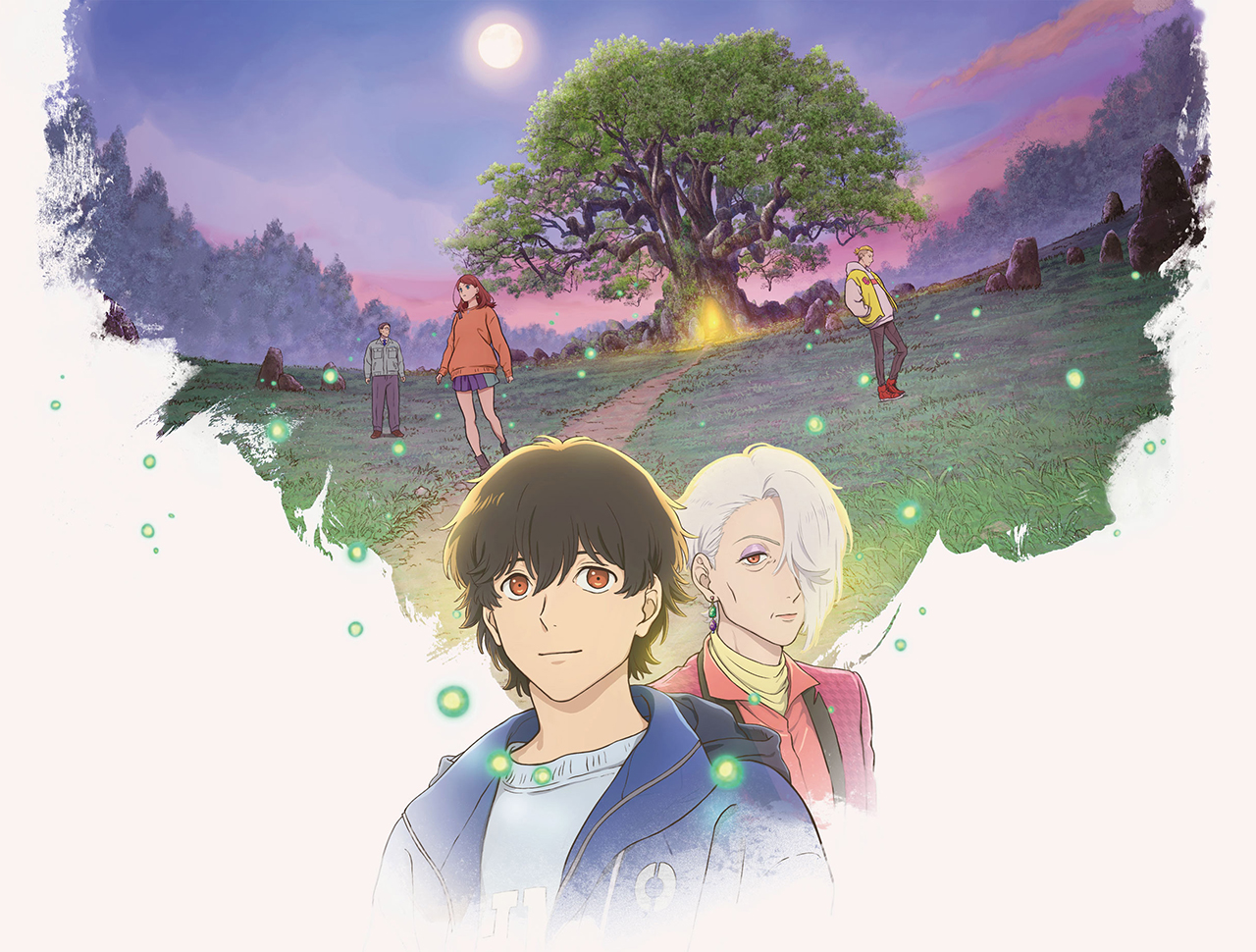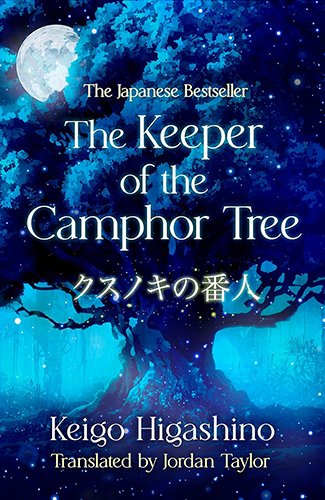
Keigo Higashino’s 2020 novel The Keeper of the Camphor Tree is a supernatural mystery about a young man finding his path in life as he attempts to uncover the secrets of a giant tree with magical properties. Though the author is mostly famous for his gritty crime fiction, this story is a gentle family drama about an older generation passing the torch forward.
Reito Naoi was raised in poverty by his grandmother, and he has nowhere to go and no future to look forward to. He finds himself in police custody after being caught vandalizing a warehouse owned by a former employer only to be rescued by a wealthy aunt he’s never met. Chifune Yanagisawa, the aunt in question, pays his bail and legal fees on the condition that he becomes the caretaker of the Shinto shrine their family has managed for generations.
Reito quickly learns that he has a secret second job at Tsukigo Shrine, which is to schedule and oversee nighttime visits to the giant camphor tree at the edge of the shrine grounds. During certain phases of the moon, parishioners enter the tree to “commune” with it, a ritual that must be conducted alone and in complete privacy. In popular folklore, the tree is said to grant wishes, but the hidden act of communion seems to involve something else entirely. Everyone who participates in this ritual is sworn to secrecy, and Chifune tells Reito that it can’t be explained. If he’s the keeper of the camphor tree for long enough, he’ll understand eventually.
Reito begins receiving visitors who wish to commune with the tree, but the ritual remains a vague mystery that seems to have nothing to do with him. This changes when he’s approached by Yumi Saji, a college student who wants to know what her father has been doing at the shrine at night. She’s worried that her father, who’s always been kind and loving and dependable, is having an affair. He doesn’t seem like the type, but Yumi wants answers. Partially because he has a crush on Yumi, and partially to satisfy his own curiosity, Reito begins to take steps to figure out what’s actually going on with the camphor tree.
As he digitizes and studies more than a century of shrine records, Reito also learns more about his aunt. Chifune never married and instead devoted herself to the Yanagisawa Corporation, a hospitality industry giant with a portfolio of properties ranging from inexpensive urban business hotels to a luxury resort in the hot springs town of Hakone. The hotel in Hakone is Chifune’s pride and joy, but she’s being forced to retire right at the moment when the corporate board wants to take a new direction, and the fate of the luxury hotel is uncertain. Reito has a strong sense of justice, and he wants to support his aunt. What Chifune wants, however, is just as much of a mystery as the camphor tree.
The Keeper of the Camphor Tree is a substantial novel, and a number of stories play out in parallel as Reito settles into his new life as the caretaker of the tree and its adjoining shrine. The most important clue he uncovers is that the tree’s magic – and it does turn out to be actual magic – is somehow connected to family bonds. Because he grew up without ever meeting his own family, Reito only begins to understand this aspect of the tree’s magic by becoming involved in the lives of several parishioners. In the end, it seems, everyone’s family is complicated.
The Keeper of the Camphor Tree is an interesting book to have come out at the end of the 2010s. At this point, I think most reasonable people understand that the bubble economy of the 1980s is never going to return. It’s no longer possible to walk the old roads that once led to success, and people in their early twenties need to find a new path forward. As much as the narrative focus of this novel is on Reito and Yumi, it’s also about the struggles of an earlier generation to adjust to change, and the author incorporates a number of secondary stories about what older people can do to pass on the torch.
I really enjoyed The Keeper of the Camphor Tree when I first read it in Japanese, and I admire Jordan Taylor’s skill at keeping the English translation as colorful, casual, and fast-paced as the original. To me, this story was well worth reading twice, and I hope it’s able to make its way to the North American market. The book was also adapted into an anime movie (here’s the trailer) that was released in theaters in January 2026. Given how atmospheric this story is, I’d love to see a visual depiction of its setting and imagery, and I’m crossing my fingers that the movie will be officially licensed.