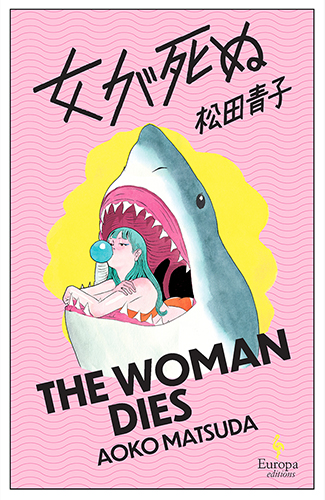
The Woman Dies

The Woman Dies presents 52 pieces of flash fiction by Aoko Matsuda, the author of the short story collection Where the Wild Ladies Are. Each of Matsuda’s small but sparkling stories responds to various aspects of pop culture in clever and surprising ways.

Characteristic of Matsuda’s idiosyncratic approach to the flotsam of contemporary culture is “Hawai’i,” which imagines a heaven for clothes that were thrown away because they did not spark joy. The heaven enjoyed by an unworn sweater sounds like a lovely time of relaxing by the pool while, in the sky, “not far from the rainbow, the pair of skinny jeans owned in similar shades was paragliding together with the dress once worn to a friend’s wedding and never again.”

At the same time, the over-the-top language Matsuda uses to describe this paradise hints at how ridiculous it is to ascribe any sort of teleological meaning to consumerist excess. Still, if this is the world we find ourselves in, why not imagine a heaven where even a discarded sweater is allowed to have a happy ending?

While the topics covered in The Woman Dies are varied, many of the stories playfully confront gender issues in popular media. One of the more intriguing of such stories is “The Android Whose Name Was Boy,” which Matsuda writes “evolved from my thoughts about Neon Genesis Evangelion,” a classic sci-fi anime from 1995 that does indeed inspire thoughts about gender. 

The eponymous android, whose name is in fact “Boy,” begins its life by setting out on an adventure. Over the course of the five-page story, it does its best to disrupt narrative conventions regarding young male characters. Challenging and unending though this task might be, “the android whose name is Boy, developed to heal the wounds of those hurt by boys hurt in the past, is on the move once more.”

While “The Android Whose Name Was Boy” is open to a diversity of interpretations, other stories in the collection are overtly feminist. In “The Purest Woman in the Kingdom,” a prince takes it upon himself to seek out a woman who has never been touched by a man. After a great deal of searching, he finally finds and marries one such woman. On their wedding night, she karate chops him into oblivion. This woman has never been touched by a man; and, thanks to her training and skill in martial arts, she never will be. Absolute queen behavior.

Most of the stories in The Woman Dies are relatively lighthearted, but “The Masculine Touch” (by far my favorite piece in the collection) is out for blood. This story flips the script on gender, casting male writers as delicate greenhouse flowers who need to be supported because sometimes – every so often – their work has cultural and economic value. Matsuda doesn’t pull her punches:

The more radical of the male novelists wrote articles about this turn of events for male magazines, declaring this the beginning of the Male Era. They bolstered their arguments with examples of the other times when the masculine touch had effected changes like this one, thus arguing for men’s continued progress in all areas of society.

“The Masculine Touch” responds to a painfully specific way of talking about female writers and artists in Japan, and I imagine that people in other contexts can relate to frustrations regarding how the publishing industry fetishizes “queer writers,” or “writers of color,” or any number of people whose humanity is compressed into marketing-friendly categories.

Unfortunately, other pieces in the collection lack this specificity. Though we’re all familiar with the trope of fridging female characters, the title story, “The Woman Dies,” is a bit too broad to resonate. Though it’s easy to sympathize with the sentiment underlying “The Woman Dies,” readers may find themselves simply shrugging and moving on. Flash fiction tends to be hit or miss, but this collection offers an array of stories to choose from, and it achieves an admirable balance between heavy hitters and palette cleansers.

The Woman Dies is remarkably cohesive as a collection. There’s a lovely rhythm and flow to the stories, and it’s just as entertaining to read the book in one sitting as it is to dip in and out at your leisure. Matsuda’s writing is sharp and self-aware, and she uses brevity as a weapon to puncture the absurdities of gender, media, and modern life. It’s a pleasure to read her work in Polly Barton’s translation, which is quick and lively and showcases an incredible range of tone and style that’s pure literary pop.

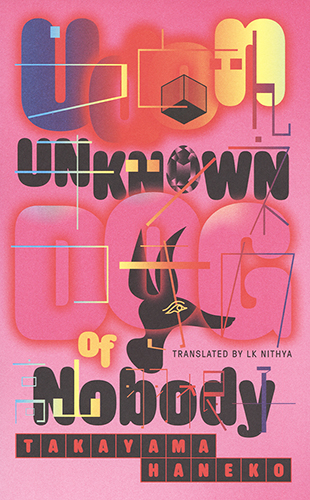
Udon: Unknown Dog of Nobody

Haneko Takayama’s short story Udon: Unknown Dog of Nobody, published by Strangers Press as a stand-alone chapbook in their Kanata series, follows three sisters connected by their love for their family dog, Udon.

On their way home from school, Kazue and Misa find a newborn puppy abandoned in a styrofoam box. Horrified by the sorry state of the creature, they decide to rescue it. The way they see the matter, leaving the animal to die isn’t an option.

Seven days later, the puppy is still alive. Kazue and Misa’s younger sister Yoko goes to the pet store to get dog food, but she doesn’t know how many cans to buy. What if she gets too many, and the dog dies? After she buys just one can, she meets a classmate who assures her that, “When you care for things, they don’t die as easily as you might think.”

The next chapters provide snapshots of the sisters growing into adulthood as they continue to nurture small relationships with people and animals. In the final chapter, Kazue and Yoko take the train to snowy Toyama City to attend their grandmother’s funeral, where they’re immediately surrounded by the warmth of their extended family. Fifteen years after being rescued, Udon is a gross little gremlin, but he’s still alive and happy. 

At the end of the story, Kazue reflects on “the many living things they’d raised, not to eat, not because they were useful. Creatures that weren’t human, weren’t in need of preservation.” She comes to the conclusion that there’s no need for animals to have “value” to be cared for, an observation that would seem trite if not for the dramatic opening of the novella, in which the author presents the newborn Udon as little more than a slimy mass of hideously squally meat.

Haneko Takayama’s fiction has been nominated for a number of prestigious awards, and she won the Akutagawa Award for her 2020 novel The Horses of Shuri, a speculative meditation on the connections between human culture and ecological history that reminded me of Hideo Furukawa’s Belka, Why Don’t You Bark. I’m happy to see Takayama’s fiction in translation, and LK Nithya has done a marvelous job, deftly balancing the casual dialogue of the sisters with the literary touches of the narrative prose. I was also impressed by how smoothly the translator was able to handle the brief touch of science fiction at the end of the story, which was nowhere near as surprising as perhaps it should have been.

Udon: Unknown Dog of Nobody is a slim but striking chapbook that presents an intriguing and artfully translated story about what it means to share our space with animals. If nothing else, after all the cozy books about cats, it’s nice to have a story about a dog for once!

The Melancholy of Haruhi Suzumiya

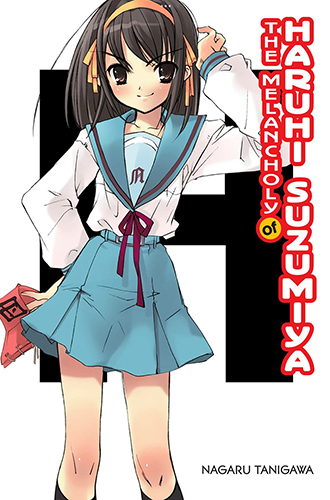
The Melancholy of Haruhi Suzumiya, originally published in 2003, is a sci-fi romantic comedy about a quirky afterschool club. It’s also one of the most influential light novels from the heyday of otaku culture. Although I can’t say that all of its humor has aged well, it’s a quick and fun read, and there’s a good reason why it’s still in print.

Kyon is an average high school boy who’s assigned to the same homeroom as Haruhi Suzumiya, a beautiful girl who has a reputation for being weird. True to everyone’s expectations, she marches into the first day of class and introduces herself with the declaration that she’s not interested in speaking to anyone who isn’t an alien, an esper, or a time traveler. When Kyon tries to strike up a conversation with Haruhi, he gets roped into joining the SOS Brigade, an afterschool club that Haruhi has created to research supernatural phenomena.

The plot twist is that, with the exception of Kyon, every member of the SOS Brigade is indeed an alien, an esper, or a time traveler. They gradually reveal themselves to Kyon, insisting that they’re posing as high school students in order to observe Haruhi, who unknowingly has extraordinary powers capable of restructuring the universe. If Haruhi becomes bored with the current universe, it’s not beyond the realm of possibility that she might inadvertently destroy it. It’s therefore imperative that Haruhi remains entertained and blissfully unaware of her power.

As you might imagine, this scenario has a number of unsettling implications. Is everyone in the story merely a figment of Haruhi’s imagination? Does anyone in the universe she created have free will? If Haruhi created “this” universe, what happened to the universe where aliens, espers, and time travelers don’t exist?

The Melancholy of Haruhi Suzumiya goes right to the edge of these darker implications but ultimately backs off in favor of light comedy and mild teenage romance, a tonal balance that undoubtedly contributed to its popularity.

This light novel was adapted into an anime that aired in the Winter 2006/07 season. I admit that I’ve never watched it from start to finish, but the show was ubiquitous in Japanese pop culture fandom communities for years. The ending theme, “Hare Hare Yukai,” became a meme that spawned countless flash mobs of cosplayers recreating the iconic dance at anime conventions.

Due to its prominent place in mid-2000s otaku culture, I was considering including The Melancholy of Haruhi Suzumiya on the syllabus of a college class about Japanese science fiction and fantasy. I think it would be a good choice, but I’m still undecided. My hesitation is mainly due to the fact that one of the early chapters includes light elements of goofy sexual comedy that made sense in the cultural atmosphere at the time but might read a bit differently today.

To give an example, in order to blackmail the members of the computer club into giving her a PC, Haruhi takes someone’s hand and places it on the breast of one of the female SOS Brigade members before asking Kyon to take a photo. To me, this scene reads as the sort of stupid but harmless fantasy that might appeal to the book’s target readership of teenage boys, but I understand how it might be interpreted as sexual harassment (because, undeniably, it is).

Still, light novels are filled with this sort of thing, and I tend to think that The Melancholy of Haruhi Suzumiya is on the “unproblematic” end of the spectrum. To be fair, it’s not anything worse than what’s in most Haruki Murakami novels.

I don’t read many light novels these days, but I enjoyed The Melancholy of Haruhi Suzumiya. The pace is brisk, the writing is snappy, and the story offers a nice treatment of its speculative worldbuilding without getting too deeply into the weeds of hard science fiction. Looking back on this book from twenty years in the future, I found myself waning a bit nostalgic for an earlier (and, I think, more lighthearted) era of otaku culture. The Melancholy of Haruhi Suzumiya is an interesting cultural artifact, but it’s also a fun story that I’d recommend to anyone who hasn’t yet encountered its particular flavor of high school comedy.

Under the Eye of the Big Bird

Hiromi Kawakami’s Under the Eye of the Big Bird is a book about the quiet end of the world. Despite its postapocalyptic setting, the story is gentle. The author’s background as a biology teacher shines through her writing as she imagines the diverse forms that humans and their societies might take in the far distant future.

Under the Eye of the Big Bird is structured as a collection of fourteen stand-alone stories that gradually form a larger narrative, and the reader is encouraged to put together a history from bits and pieces of individual lives. We never see the full picture, however, and I imagine that assembling a concrete timeline would take careful detective work.

This isn’t a plot-driven story that can have “spoilers,” necessarily, but any description of the book’s premise is going to contain analysis and speculation. Under the Eye of the Big Bird is one of the most intriguing works of speculative fiction that I’ve read in years, and this is partially due to its fragmented structure. You may want to venture into the collection on your own before reading any reviews, this one included.

.

Still with me? Let’s go!

Over the millennia, the number of people on the planet has steadily decreased, and the last remaining humans live in isolated settlements of various sizes. In order to ensure harmony, the settlements are discretely managed by “watchers” who have been cloned and genetically engineered to fulfil their duty. Unlike regular humans, watchers grow up in small communities with “mothers” that are all physical manifestations of the same AI.

Everyone takes this arrangement for granted, but their “normal” is not the same as ours. Whether a story is told from a first-person or third-person point of view, the reader can only see the world from a limited perspective. It can be difficult to understand what’s going on at first, but the opportunity to surf successive waves of strangeness is a major part of this book’s charm.     

My favorite story is “Testimony,” which is delivered as a statement to a watcher by one of the new phenotypes of humans to emerge from centuries of genetic isolation. A small number of people are born with the ability to photosynthesize, and the joy they take from the sunlight and changing seasons affects their behavior in surprising ways. If enlightenment exists, these people have attained it; and honestly, it sounds really nice.             

Not all of the future human phenotypes are so peaceful or self-assured, however, and other stories have a bit more conflict. Still, with one notable exception, there’s no violence in this book. If there are wars and explosions, they happen entirely offscreen. Like the watchers and mothers, it’s the reader’s job simply to observe the biology, ecology, and culture of the future.

On the front cover of the American edition, Kawakami is billed as the author of People from My Neighborhood, a loosely connected series of magical realist flash fiction that’s an excellent comparison for Under the Eye of the Big Bird. To me, Under the Eye of the Big Bird also feels like a natural development of Kawakami’s debut short story, Kamisama, in which the narrator has a lovely afternoon picnic with a literal bear. The bear, being a bear, is clearly nonhuman, but no one seems to be bothered by this. The same casual acceptance of difference pervades Under the Eye of the Big Bird, which invites the reader to imagine the mundane everyday reality of the final days of the human race.

I’ll admit that I felt the chilling touch of existential dread at a few points during the book; but, as in any encounter with real difference, this initial sense of discomfort is important. The gentle strangeness of Under the Eye of the Big Bird encourages the reader to confront their biases, and it also lends weight to the narrative theme of human extinction. Instead of presenting the apocalypse as a standard dystopian superhero story, Kawakami allows the reader to take all the time and space they need to consider whether it would really be so horrible if the people we currently think of as “human” were to slowly disappear from the earth.

Under the Eye of the Big Bird is a book about the end of the world, but it’s also one of the kindest and most hopeful works of speculative fiction I’ve had the pleasure to read. Reading this book for the first time was a unique experience, but the impact of its stories linger even after their novelty fades.

Hoshikuzu Kazoku

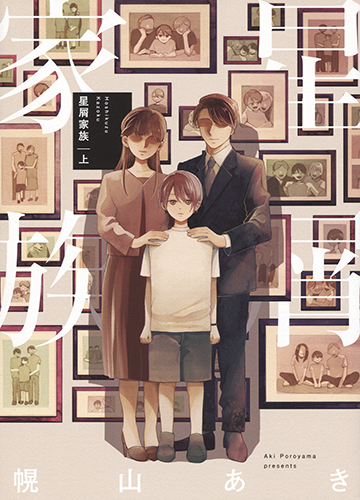
Hoshikuzu Kazoku (星屑家族) is a two-volume graphic novel set in an alternate universe where parents are required to obtain a license to raise children. To qualify for a license, a prospective family is asked to undergo an audition with a homestay student. This auditor, who is often an orphan raised in a government-run facility, evaluates the family’s fitness by deliberately behaving badly and provoking difficult situations. 

An auditor who goes by Hikari is assigned to Daiki and Chisa Hirokawa, a young couple who live on the grounds of a Shinto shrine. During their initial interview, Daiki surprises Hikari by openly requesting that their family be denied a childrearing license. Daiki claims to be happy living with his wife as a couple, and he shares his suspicions that Chisa doesn’t actually want children. With that out of the way, Daiki says, the three of them can enjoy the homestay visit without any pressure or expectations.             

Chisa and Daiki genuinely seem to be happy together, but Hikari soon notices that Chisa is the target of a longstanding prejudice held by people in the neighborhood. Chisa’s mother killed her father when she was a child, and she’s been ostracized ever since. Along with her foster father, who once managed the shrine, Daiki was the only person who was kind to her. Now that she and Daiki have married and set up a household at the shrine, Chisa feels trapped within a community she can’t escape. Why, then, does she want a child so badly? And is it Hikari’s place to get involved?

Hoshikuzu Kazoku is a high-stakes family drama that presents a moral conundrum with no easy solutions. If the government creates regulations to ensure a well-ordered society, what happens to the people whose lives are more complicated than the provisions allowed by the legal code? If there’s room for flexibility in the bureaucratic system that enforces the law, who should have the right to grant exceptions? And more specifically, in a country witnessing its birth rate decline in response to the disintegration of community support structures, what are the limits of government intervention?

Even putting such questions aside, Hoshikuzu Kazoku is compelling by virtue of its problematic yet still sympathetic characters. Hikari, Daiki, and Chisa each bring loads of emotional baggage to the table, but they do their best to communicate to the limited extent of their abilities. Despite their many flaws and the odds against them, I wanted these characters to be happy.

Aki Poroyama’s writing, dialogue, and pacing are all excellent, and the visual language of the manga serves to set the mood and create dramatic impact. I wasn’t familiar with the work of this artist, and I was amazed by the polish of this graphic novel. I’d recommend Hoshikuzu Kazoku to mature readers looking for socially conscious speculative fiction driven by complicated human stories. 

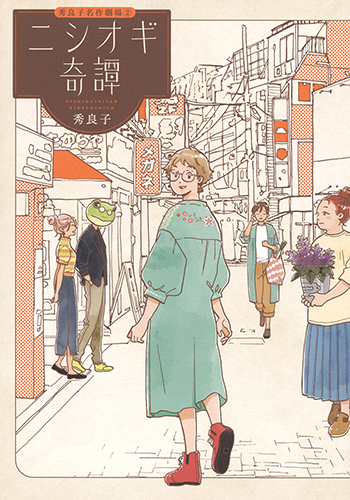
室外機室

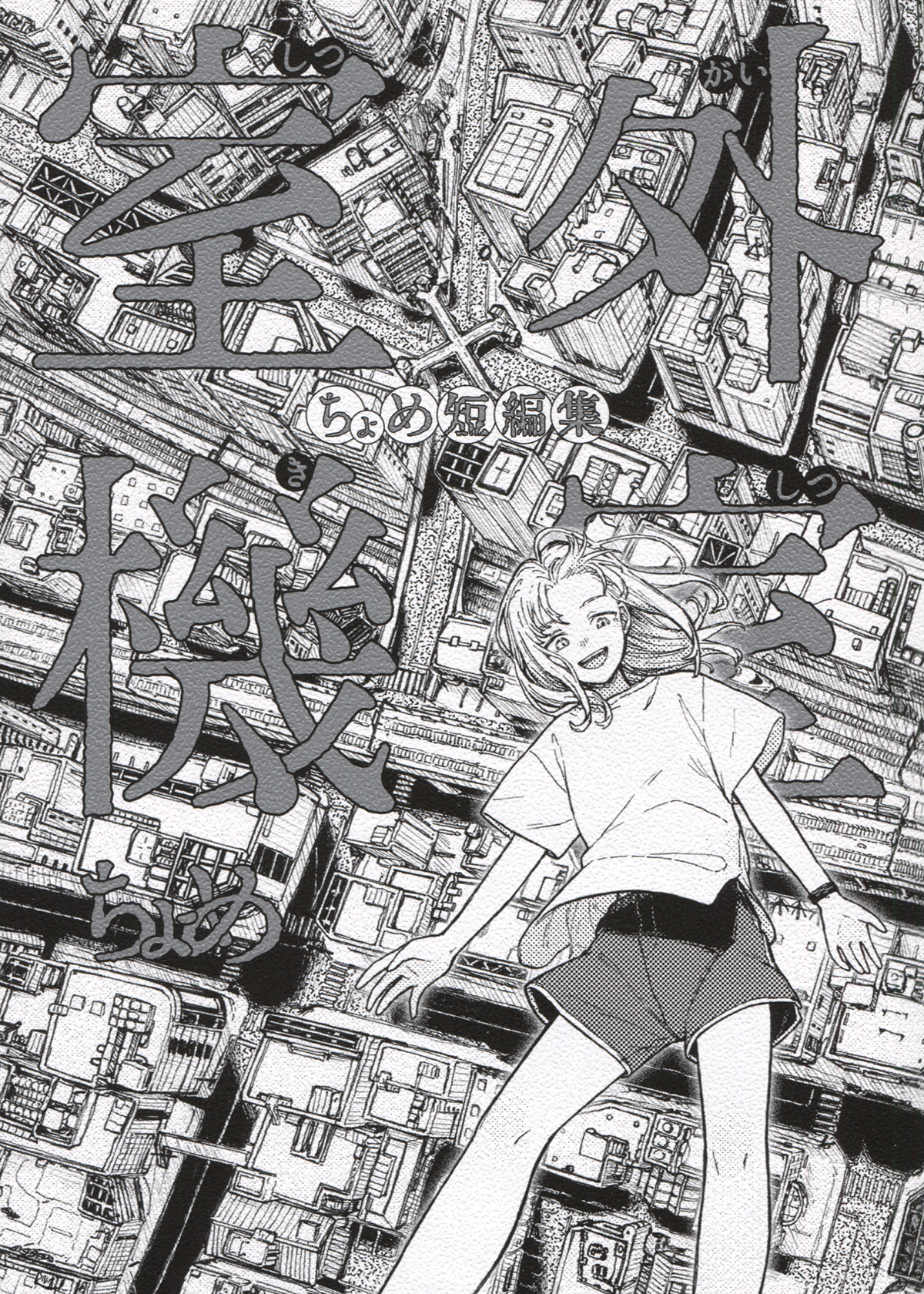
室外機室 collects four gorgeously illustrated magical realist stories drawn by an otherwise unpublished artist who goes by Chome. The stories transport the reader to a reality slightly removed from our own as each of the mundane protagonists catches a small glimpse of a hidden world.

I immediately fell in love with this collection from the opening pages of the first story, Tsugiho, in which a woman attends a large comic convention and finds a self-published minicomic that turns out to be brilliant despite its nondescript cover. The comic doesn’t seem to be documented anywhere online, so the woman starts writing a description. Her project quickly spirals out of control, however, as the pages of the small book seem to change each time she reads it. In the end, the woman’s essay transforms into an original illustrated short story, which she self-publishes and takes to the same comic convention where she found the mysterious comic that inspired her.

Speaking personally, I couldn’t describe the process of creative inspiration more accurately if I tried. What begins as a relatively straightforward act of casual appreciation can easily turn into something that has almost no relation to the original work at all, often to such an extent that the source is entirely forgotten by the end. In addition, it’s not always the case that creative inspiration comes from “the great works” of art and literature, as smaller and more specific stories can create a powerful sense of resonance and creative motivation even despite being unacknowledged by the broader culture. It’s nothing short of amazing that Tsugiho captures this aspect of creativity so perfectly in just twenty pages. 

The two middle stories are thought experiments that are far more beautifully executed than they have any right to be. In 21g no bōken (which illustrates the manga’s front cover), a young woman dies and finds that her ghost is able to go anywhere and do anything. This story is primarily an excuse to illustrate the joy of absolute freedom of movement, but the ending is quite touching. Meanwhile, Konshin takes place almost entirely in a woman’s bedroom as she sits at her desk and listens to a strange radio broadcast from a parallel universe in which history has developed in an entirely different direction. The strength of this story lies in its writing, but the uncanniness of the broadcast is augmented by the visual coziness of the woman’s apartment.

The fourth and final story, Chika tosho tankenshō, is a seventy-page graphic novella that blew me away with its creativity and charm. A young woman doing research at the library drops her eraser, which bounces into the crack of a panel at the bottom of a bookshelf. The woman opens the panel to find a staircase. To the woman’s surprise, there’s an enormous library complex underground, but something about it is decidedly strange. The staff is wearing traditional Japanese clothing, and none of the books have titles. The young woman quickly arrives at the conclusion that this isn’t a place she’s supposed to be, but can she escape without being caught by the librarians? And what are all the mysterious books?     

If I had the power to snap my fingers and make any manga appear in a licensed English translation, Shitsugai Kishitsu would be at the top of the list. This short story collection is a hidden treasure that easily stands its ground with the experimental but gorgeously polished work of emerging creators published by small presses like Silver Sprocket and Peow, and I could see any of these minicomics being released in the line-up of the ShortBox Comics Fair. Whoever the mysterious Chome may be, they’re creating brilliant and accessible comics that deserve an appreciative international audience.

Glitch

Shima Shinya’s four-volume sci-fi manga Glitch opens in a mundane setting in contemporary Japan: a high school student named Minato Lee (who uses they/them pronouns) has moved to a small rural town with their mother and younger sister Akira.

Minato notices that there’s something strange about their new home after a fragmented hole in reality emerges from the ceiling of her classroom. Two of Akira’s friends confirm Minato’s experience, telling them that only some people can see the distortions.

The group consults with the clerk of a neighborhood corner store, a mild-mannered man in flip-flops with a Biblically accurate angel for a face. He tells them that, since the town was constructed on top of open fields thirty years ago, various visitors have been emerging from a mysterious forest. He should know, given that he’s one of them, but the town’s glitches are a mystery to him as well.

Shima is a big fan of Star Wars and a co-author of The High Republic: The Edge of Balance manga series. Glitch captures the fun “weird little creatures in rundown environments” spirit of Star Wars, but the manga also engages with the deeper themes expressed in the movies, especially regarding how the small-scale actions of a diverse coalition are necessary to undermine the mundanity of evil.

Glitch handles its portrayal of diversity in a light-handed and clever way, and the “evil” confronted by the characters isn’t what readers might expect. While its story takes time to develop, the strength of Glitch’s art is immediately apparent, as Shima mixes the dynamic poses and expressions of Disney-style animation with the detailed backgrounds and dramatic panel compositions of indie manga.

The manga’s fourth and final volume was published in July 2023, and I’m overjoyed that Yen Press is releasing the series in English translation.

The Last Children of Tokyo

The Last Children of Tokyo
Japanese Title: 献灯使 (Kentōshi)
Author: Yōko Tawada (多和田葉子)
Translator: Margaret Mitsutani
Publication Year: 2014 (Japan); 2018 (United Kingdom)
Publisher: Portobello Books
Pages: 138

In the future – but not long in the future – Japan has secluded itself from the rest of the world. The environment is saturated with toxic substances, it’s dangerous to go near the sea, and most animals have disappeared from the wild. Humans still live on the Japanese archipelago, but their society has changed. Adults born in our own time live long lives and continue working well past their hundredth birthdays, while children born in the present of the novel have trouble retaining nutrients from food and are often too weak for sustained physical activity. Young and healthy people in their sixties and seventies do everything in their power to immigrate to Okinawa or the north of Japan, where agriculture still thrives, while Tokyo suffers from depopulation.

A novelist named Yoshiro still lives in Tokyo, where he cares for his great-grandson, Mumei. Mumei is fascinated by pictures of animals that have recently gone extinct, while Yoshiro devotes his time to looking back on the gradual shifts and changes in Japanese society. Each of Yoshiro’s memories is a sustained flight of magical realism that often has very little to do with the standard conventions of science fiction or dystopian fantasy. The Last Children of Tokyo is not about social critique through the medium of apocalypse, nor does it have much of a plot. Rather, it’s a reflection of everyday life in contemporary Japan in a mirror that’s mostly accurate but has a few interesting distortions.

Some of these distortions offer a speculative interpretation of how the texture of daily life has changed as a result of Japan’s recent demographic shifts.

The names of some of the older holidays were changed: “Respect for the Aged Day” became “Encouragement for the Aged Day,” while “Children’s Day” was now “Apologize to Children Day”; “Sports Day” was changed to “Body Day” to avoid upsetting children who were not growing up big and strong; so as not to hurt the feelings of young people who wanted to work but simply weren’t strong enough, “Labor Day” became “Being Alive Is Enough Day.” (43-44)

Other distortions magnify current practices out of proportion, making them seem like harbingers of social collapse.

He heard the phrase “Baby Carriage Movement” from Marika for the first time. This was a movement to encourage mothers to push their baby carriages around town every day as long as the sun was shining. Mothers who woke up unbearably miserable every morning, feeling helpless, hungry, about to pee all over themselves with no one to help them, whether because of a moist, clammy dream they’d had the night before, or because being cooped up all day with a squalling infant stimulates memories of the mother’s own infancy, went out to push their baby carriages until they came to a coffee shop with a “baby carriage mark” in the window, where they would find books and magazines to read and other mothers to talk to. (67)

Nevertheless, Tokyo is still a center of population, and Yoshiro can’t bring himself to leave the city as social services crumble, public transportation breaks down, and people resort to eating weeds. Even in decline, it seems, Tokyo is still home to many vibrant communities.

Though Tokyo was now impoverished, new shops still bubbled up from the depths to open up like flowers; just sitting on a park bench, you never got tired of watching the people go by. Walking around the city made the gears in your brain start turning. People had begun to realize that these simple pleasures were the most delicious part of the fruit we call everyday life, which is why even though their houses were small and food was scarce, they still wanted to live in Tokyo. (60-61)

In The Last Children of Tokyo, the city of Tokyo is less of a physical location than it is a collection of people who, as a society, have developed a fascinating set of quirks. The novel has very little plot to speak of and instead allows the reader to take in the sights as its narration slowly meanders between times and places. The last forty or so pages shift to Mumei’s perspective as he becomes involved in a secret plan to leave Japan, but there’s no sense of urgency regarding the matter; and, like the rest of the novel, the ending is meant to be enjoyed for its atmosphere. Tawada’s writing is given form by its abstractions, most of which can be interpreted by the reader in multiple ways and pursued in multiple directions. As a result, The Last Children of Tokyo is neither a particularly hopeful nor a particularly grim novel. It’s an odd book and an entertaining thought experiment, and Tawada playfully invites her readers to join her on a journey through a Tokyo that doesn’t exist – at least, not yet.

10 Billion Days & 100 Billion Nights

10 Billion Days & 100 Billion Nights

Title: 10 Billion Days & 100 Billion Nights
Japanese Title: 百億の昼と千億の夜 (Hyakuoku no hiru to senoku no yoru)
Author: Mitsuse Ryū (光瀬 龍)
Translators: Alexander O. Smith and Elye J. Alexander
Publication Year: 2011 (America); 1967 (Japan)
Publisher: Haikasoru
Pages: 284

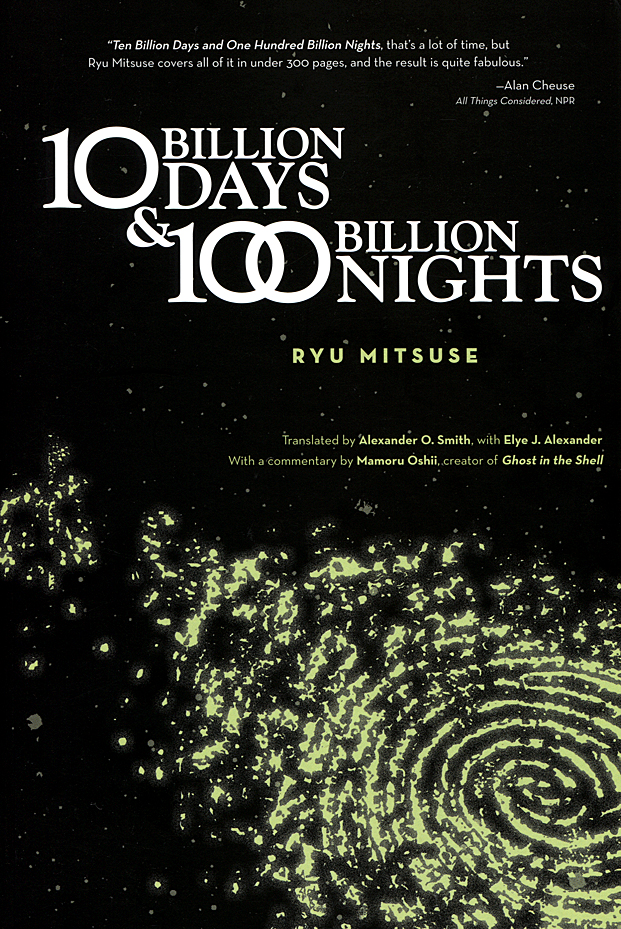
According to a 2006 poll published in Hayakawa SF Magazine, 10 Billion Days & 100 Billion Nights ranked at the top of the list of science fiction novels originally published in Japanese. I can’t say for certain whether 10 Billion Days is the “greatest” Japanese science fiction novel of all time (or what that would even mean), but it certainly is epic. The writing (and translation) are beautiful, and there are some interesting ideas floating around as well.

Also, 10 Billion Days has an entire chapter devoted to a cyborg deathmatch between Buddha and Jesus. It’s awesome.

This review will contain spoilers. The concept of “spoilers” doesn’t really apply to this novel, as its narrative tension is generated more by speculation and atmosphere than it is by plot, but be warned. If you’d like the point of the review here at the beginning, here you go: I love this book and you should totally read it. It’s not perfect, and it will try (and reward!) your patience, but it will stay in your memory for years. The short commentary by Oshii Mamoru (the director of the landmark animated sci-fi film Ghost in the Shell) is of interest as well, especially to fans of Japanese pop culture.

The premise of 10 Billion Days is that all life on earth has been painstakingly curated by an extraterrestrial (and possibly extradimensional) entity that may not be benevolent. Some characters are aiding it, some characters are opposing it, and some characters are merely trying to understand it. What is clear is that our world is very small and unimportant on the sort of cosmic scale suggested by the novel’s title.

After a prologue that sets the tone by emphasizing the eternal passage of time across aeons, the novel opens with a dramatic description of the struggles of the first fish to walk on land. At the end of the chapter, it is revealed that this creature is being monitored and gradually enhanced by highly advanced technology.

The next chapter skips to Plato, who is seeking the mysteries of Atlantis. What he finds is that the gods are real, and frighteningly so. The next chapter focuses on Siddhārtha, and the next on Jesus of Nazareth. Both God and the Buddha realms are real, but these early seekers of truth can only see a fraction of the picture and describe it in terms they can understand.

The first half of the book is dedicated to creating an air of mystery and adventure. For example, when Plato arrives at the village where the last descendants of the people who fled Atlantis live, this is how Mitsuse sets the scene:

Far across the sea of burnt yellow sand, the fading sun had set halfway, sending its rays upward to paint the high clouds blood red. Crimson spread out across the darkening sky even as night seeped from the eastern horizon toward the vault of heaven, reddish-gray melding with crimson blue. The wind was completely still, and the twilight pooled like heavy oil upon the sand. There was not a sound. Plato wondered what the people who lived inside the stone houses of the village must be doing for such silence to reign – not a single spoken word, no faint echo of evening song. All was filled with the barren quiet of the sand sea and the silence that comes with the death of something long forgotten, unchanged for thousands of years. (49)

This passage is interesting not only for its lovely imagery but also because of its treatment of one of the main themes of the novel, which is that all civilizations will eventually fade into shadows of their former selves. This theme is visually translated at key points in the story, in which the spotlessly clean metal of a future space city is just as desolate as an ancient desert.

The second half of the novel tessellates to the year 3905, in which the entire planet has become a wasteland. Just as the cyborg fish of the first chapter cautiously made its way onto land, cyborg Siddhārtha (yes, really!) emerges from the ocean into the ruins of Tokyo, where cyborg Plato (who is now calling himself Orionae) fills him in on the situation. As the two are talking, they are accosted by Jesus, who also turns out to be a cyborg – a dirty cyborg with rotting teeth a gross clothes. So a cyborg zombie, then. And then they fight! I promise this is just as ridiculous as it sounds. There are some great lines during this section, such as…

Siddhārtha gingerly extended his tri-D antenna from the crack in the wall, searching for his foe. (181)

…and…

Glumly, Jesus admitted to himself that his attack had probably failed to destroy his enemy. (194)

Just roll with it, okay?

Siddhārtha and Orionae (in other words, Buddha and Plato) are joined by a non-organic lifeform in the shape of an adolescent girl, who is called “Asura” after the eternally warring god-kings of the Hindu and Buddhist faiths. Asura had earlier revealed herself to Siddhārtha, claiming she is fighting the entity that Jesus understands to be God, and at the end of the novel she takes him and Orionae on a journey through space to meet and hopefully defeat this being. What follows is a series of battles and revelations that progressively mount in scope and impact throughout the last eighty pages of the book. Like the beginning of the universe itself, this novel is a massive explosion.

10 Billion Days is not a perfect book, and at times it moves through complicated and nuanced religious and philosophical topics quickly and with an absolute minimum of narrative grounding. I will also admit that I find the actual story unsatisfying. However, the strength of 10 Billion Days lies in the questions it raises in the mind of the reader. These questions are almost classically existential. In an uncaring and absurd universe, how can an individual find meaning and hope?

The weekly speculative fiction magazine Strange Horizons will be hosting a roundtable discussion of 10 Billion Days in October, and I’m honored to be one of the participants. I have strong feelings and opinions about this novel, and I’m looking forward to learning what the other discussants think. There’s a lot going on in this book; and, if nothing else, it’s a fantastic conversation starter.

Speculative Japan

Title: Speculative Japan: Outstanding Tales of Japanese Science Fiction and Fantasy
Editors: Gene van Troyer and Grania Davis
Publication Year: 2007
Publisher: Kurodahan Press
Pages: 290

As a short story collection, Speculative Japan is a strange book. 200 of its 290 pages are comprised of short stories, and the other 90 pages are mainly short non-fiction essays about the book itself. These essays involve topics such as how the stories appearing in Speculative Japan came to be selected, edited, and translated. 20 of these 90 pages are author and translator biographies, and another 20 pages are filled by a translated essay by Shibano Takumi, the editor of the Japanese sci-fi magazine Uchūjin. For a reader who starts the book at the front cover and progresses in a linear fashion, Speculative Japan gets off to a somewhat rocky start with pages and pages of metatextual material.

Gene Von Troyer’s introduction jumps from topic to topic before finally summarizing Yamano Kōichi’s “three phases of Japanese science fiction” and settling into speculation concerning what makes Japanese science fiction “Japanese”:

We can’t say definitively, but can only point to trends and tendencies. Viewed through one facet of the jewel, we can say, as Tatsumi [Takayuki] does, that “what with the imperative of American democratization and the effect of indigenous adaptability, the postwar Japanese had simultaneously to transform and naturalize themselves as a new tribe of cyborgs” as reflected in the images from manga and anime. Japanese SF leans (or has leaned) more on robots and cyborgs than on stars and planets.

This generalization is certainly interesting, but I wonder if it’s really true. For example, the advertisements in the back of the book for Mayumura Taku’s Administrator (a collection of four short novels about “Terran colonies far from Earth”) and Night Voices, Night Journeys (the first of a series of collections of “Tales in the Cthulu Mythos from Japan”) seem oriented more towards “stars and planets” stories, and I can’t help but think of the “spaceships and galaxies” imagery of popular 1970s series such as Takemiya Keiko’s To Terra and Matsumoto Leiji’s Space Battleship Yamato, but perhaps it might simply be better to read Troyer’s introduction as an initial attempt to sketch a map of a huge and understudied body of literature.

In any case, the stories contained in Speculative Japan have less to do with either cyborgs or space than they do with hypothetical concepts. Toyota Artisune’s “Another Prince of Wales” concerns the question, “What if, in the future, war were a popular sport played on an international stage?” Yamano Kōichi’s “Where do the Birds Fly Now?” is an expansion of the question, “What if birds could fly between dimensions and take people with them?” Very few of these stories have serious, in-depth plots; but, then again, very few of these stories are more than twenty pages long. A reader familiar with the type of tightly plotted sci-fi stories published in Fantasy & Science Fiction Magazine is in for a surprise with Speculative Japan, which – as its title suggests – is more about “speculative fiction” than “science fiction.”

Five of the stories in the collection are recycled from the out-of-print The Best Japanese Science Fiction Stories. Of these five, Tsutsui Yasutaka’s Orwellian fable “Standing Woman” and Yano Tetsu’s “The Legend of the Paper Spaceship,” a lyric tale of a woman deep in the Japanese mountains who may or may not be an alien, are excellent and definitely worthy of republication. Making an appearance from the out-of-print Monkey Brain Sushi anthology is Ōhara Mariko’s “Girl,” a sex-saturated story of love and body modification in a decaying city on the eve of an apocalypse.

Three stories that have appeared for the first time in book form in Speculative Japan that really jumped out at me were Kajio Shinji’s “Reiko’s Universe Box,” Kawakami Hiromi’s “Mogera Wogura,” and Yoshimasu Gōzō’s “Adrenalin.” In “Reiko’s Universe Box,” a young woman copes with her negligent husband and failing marriage by becoming absorbed in a box containing an entire galaxy in miniature form. Like many of the stories in this collection, “Reiko’s Universe Box” is driven by strong elements of allegory, but its concept is delivered with cleverness, darkness, vivid description, and humor. When compared to the other stories in the collection, Kawakami’s “Mogera Wogura,” a description of a day in the life of a mole-like creature who lives among humans in contemporary Japan, is in a class of its own in terms of its gentle magical realism, its playfulness, and its removal from the themes and narrative style of more traditional science fiction and fantasy. “Adrenalin” is not a story but rather an abstract poem filled with evocative imagery conveyed through variations of a handful of short and catchy refrains, such as “To you, children of spirits, I send an immediate telegram / To drink milk / To memorize the names of flowers / Some day, I will return / That day, I will start fire.” I’m usually not a fan of Japanese poetry in translation, but I found myself captured and moved by Marilyn Mei-Ling Chin’s translation of Yoshimasu Gōzō’s verse. Each of these three selections stands on its own not simply as an illustration of a speculative concept but as a piece of writing that is fun to read, thought-provoking, and capable of multiple interpretations.

Of the collection’s fifteen stories, four were written in the sixties, eight were written in the seventies, and another was written in 1981. These thirteen stories, written during the period between 1962 and 1981, are all by men. The two more recent stories (published in 1985 and 2002) were written by female authors, but one can still say that this collection is mostly representative of science fiction written by men in the sixties and seventies. In the author biography section at the end of the book, the editors attempt to canonize many of the male authors (“without a doubt a Grand Master of Japanese science fiction and fantasy,” “one of the three pillars of Japanese SF,” “often referred to as ‘The King of Japanese SF,'” and so on), but I wonder if perhaps there wasn’t a hint of personal politics at play in the selection of authors. This suspicion seems to be corroborated by the collection’s metatextual essays, which detail the personal relationships between the authors and their translators.

Speculative Japan sometimes reads like a sci-fi literary fanzine in which the editors and regular contributors are just as concerned about themselves and their relationships with each other as they are with the fiction itself, and the essays in Speculative Japan demonstrate a certain geeky fixation on metatextual marginalia. If you happen to be outside of the small circle of authors, translators, and editors who all know each other and worked together on this collection, you might find these essays confusing and off-putting. If you’re already used to the style of the front (and back) material included in SF-themed literary magazines and fanzines, though, you’ll more than likely be able to see past (or even appreciate) the many pages of essays included in Speculative Japan.

The actual stories in the collection are interesting and well worth reading, and a few of them are truly excellent. Still, I want more work that doesn’t belong to a set clique of authors, more contemporary work, and more work by women. To be honest, I found Speculative Japan somewhat disappointing as a compilation. That being said, I am intrigued enough by the stories themselves to consider giving Speculative Japan 2 a shot in the near future.