ツミデミック

Michi Ichiho’s Tsumidemic (ツミデミック), which won the prestigious Naoki Prize for popular fiction in 2024, collects six stories about the atmospheric strangeness of the Coronavirus pandemic. While everyone’s attention was focused elsewhere, Ichiho wonders, what sort of intriguingly antisocial behavior might have been enabled by isolation?

The opening story, Chigau hane no tori (違う羽の鳥), has all the grim fascination of a viral urban legend. Yūto moved to Tokyo only to drop out of college, and now he works as a barker for a bar in Shinjuku. Unfortunately, business isn’t going well due to the pandemic. During another eerily quiet night, Yūto sees someone he knew back from middle school in Osaka, Nagisa Inoue. This is a shock, as Nagisa is supposed to have committed suicide by jumping onto the train tracks. As she and Yūto get drinks together, Nagisa explains her devious plot to flee from the grasp of her overbearing mother, which was far from a victimless crime. Yūto is no saint himself, and he inadvertently reveals why he immediately recognized someone he never talked to when they were classmates.

Romansu (ロマンス☆) is about a bored housewife named Yuri who develops a serious online gambling addiction of an unusual nature. Yuri hasn’t been able to find a new job since she left her previous position to give birth to her daughter, and the pandemic isn’t helping. She channels her frustration into a food delivery app called Miideri, which she treats like a gacha game. Will the person who makes her next delivery be one of the handsome men rumored to be employed by the service? While gambling on the slim possibility that a prince will arrive at her door bearing a bag from McDonald’s, Yuri attracts the unwanted attention of an unhinged delivery driver who has read exactly the wrong message into her frequent orders.

Rinkō (憐光) is narrated by the ghost of a high school student named Yui who, strangely enough, can’t recall how she died. Having materialized back into the world fifteen years after her death, Yui finds herself confused and alienated by the loneliness of the Tokyo streets and train stations during the pandemic. She therefore returns home to her mother’s house in the country. Her arrival coincides with a memorial visit from her friend Tsubasa, who is accompanied by their old homeroom teacher, Sugita. As Yui eavesdrops on their conversation, she learns that she died after mysteriously falling into a river during a rainstorm. Sugita knows what Yui was doing and where she was going, and Tsubasa wants him to know that she knows, too.

The collection takes a slightly more positive turn in the fourth story, Tokubetsu enkosha (特別縁故者), in which Kyōichi, the unemployed and impecunious father of a young son, attempts to weasel himself into the good graces of an elderly man whom he suspects is a money hoarder. Kyōichi, an affable himbo who has no business scamming anyone out of money, volunteers for the daily task of picking up a takeout lunch from one of the many bentō stores in the neighborhood. The old man knows exactly why Kyōichi approached him, and he resents him for not pursuing his ambition to enter the food service industry. Harsh words are exchanged; but, when push comes to shove, even a relationship built on ulterior motives is better than living alone as an elderly shut-in during a pandemic.

Shukufuku no uta (祝福の歌) is about a happily married middle-aged man facing a new direction in his life. Despite being a high school student, his daughter is pregnant, and she intends to keep the baby. Meanwhile, the man’s mother seems to be entering the permanent brain fog of senile dementia. His daughter, who has been gossiping with the other mothers in her grandmother’s apartment building, gets the sense that there’s something else going on. With any luck, it’s a problem that can actually be solved.

Sazanami Drive (さざなみドライブ) follows the IRL meetup of five people who connected on Twitter after their lives were disrupted by the pandemic. As they drive out to the country in a minivan, they share their stories of abandonment and alienation. Little do they know that one of their number has a secret agenda. He’ll do whatever it takes to disrupt the group’s grim plan for the trip – and hopefully save their lives in the process.

As indicated by the book’s title, the two themes guiding this collection are “crime” and “the pandemic.” Each of the characters is hiding something, and the reader never knows where anyone’s true intentions lie. Michi Ichiho, who began her writing career as an author of BL romance novels, isn’t unduly focused on creating mimetic fiction, and the scenarios are improbable at best. Still, the twist at the end of each story is a lot of fun, and the fantastical plot elements accurately convey the feeling of just how weird and unreal everything felt during the pandemic.

It appears that the English-language publication rights for this collection are currently up for grabs (more info here). Tsumidemic is a fast-paced and emotionally cathartic book, and it would benefit from a tone-sensitive translation that renders Ichiho’s dialogue-filled writing into snappy, Stephen King style prose. I hope someone picks it up.

Under the Eye of the Big Bird

Hiromi Kawakami’s Under the Eye of the Big Bird is a book about the quiet end of the world. Despite its postapocalyptic setting, the story is gentle. The author’s background as a biology teacher shines through her writing as she imagines the diverse forms that humans and their societies might take in the far distant future.

Under the Eye of the Big Bird is structured as a collection of fourteen stand-alone stories that gradually form a larger narrative, and the reader is encouraged to put together a history from bits and pieces of individual lives. We never see the full picture, however, and I imagine that assembling a concrete timeline would take careful detective work.

This isn’t a plot-driven story that can have “spoilers,” necessarily, but any description of the book’s premise is going to contain analysis and speculation. Under the Eye of the Big Bird is one of the most intriguing works of speculative fiction that I’ve read in years, and this is partially due to its fragmented structure. You may want to venture into the collection on your own before reading any reviews, this one included.

.

Still with me? Let’s go!

Over the millennia, the number of people on the planet has steadily decreased, and the last remaining humans live in isolated settlements of various sizes. In order to ensure harmony, the settlements are discretely managed by “watchers” who have been cloned and genetically engineered to fulfil their duty. Unlike regular humans, watchers grow up in small communities with “mothers” that are all physical manifestations of the same AI.

Everyone takes this arrangement for granted, but their “normal” is not the same as ours. Whether a story is told from a first-person or third-person point of view, the reader can only see the world from a limited perspective. It can be difficult to understand what’s going on at first, but the opportunity to surf successive waves of strangeness is a major part of this book’s charm.     

My favorite story is “Testimony,” which is delivered as a statement to a watcher by one of the new phenotypes of humans to emerge from centuries of genetic isolation. A small number of people are born with the ability to photosynthesize, and the joy they take from the sunlight and changing seasons affects their behavior in surprising ways. If enlightenment exists, these people have attained it; and honestly, it sounds really nice.             

Not all of the future human phenotypes are so peaceful or self-assured, however, and other stories have a bit more conflict. Still, with one notable exception, there’s no violence in this book. If there are wars and explosions, they happen entirely offscreen. Like the watchers and mothers, it’s the reader’s job simply to observe the biology, ecology, and culture of the future.

On the front cover of the American edition, Kawakami is billed as the author of People from My Neighborhood, a loosely connected series of magical realist flash fiction that’s an excellent comparison for Under the Eye of the Big Bird. To me, Under the Eye of the Big Bird also feels like a natural development of Kawakami’s debut short story, Kamisama, in which the narrator has a lovely afternoon picnic with a literal bear. The bear, being a bear, is clearly nonhuman, but no one seems to be bothered by this. The same casual acceptance of difference pervades Under the Eye of the Big Bird, which invites the reader to imagine the mundane everyday reality of the final days of the human race.

I’ll admit that I felt the chilling touch of existential dread at a few points during the book; but, as in any encounter with real difference, this initial sense of discomfort is important. The gentle strangeness of Under the Eye of the Big Bird encourages the reader to confront their biases, and it also lends weight to the narrative theme of human extinction. Instead of presenting the apocalypse as a standard dystopian superhero story, Kawakami allows the reader to take all the time and space they need to consider whether it would really be so horrible if the people we currently think of as “human” were to slowly disappear from the earth.

Under the Eye of the Big Bird is a book about the end of the world, but it’s also one of the kindest and most hopeful works of speculative fiction I’ve had the pleasure to read. Reading this book for the first time was a unique experience, but the impact of its stories linger even after their novelty fades.

とんこつ Q&A

とんこつ Q&A collects four stories by Natsuko Imamura, the author of The Woman in the Purple Skirt. Each of these stories is built on a cute and wholesome premise that develops in a dark and strange direction.

The title story is about a woman with social anxiety who creates a written script to help her navigate her job as a server at a small diner called Tonkotsu. Her efforts are aided by the recently widowed owner and his young son, who teaches the narrator to speak in Osaka dialect like his late mother.

The narrator’s script gradually expands beyond professional dialogue into everyday pleasantries, and she ultimately becomes a ghostwriter for the diner owner’s new wife. This scenario seems like a perfect set-up for a sweet and gentle romantic comedy, but it gradually becomes more disturbing as the narrator cheerfully crafts the diner owner’s new wife into a living doll.  

The three other stories in the collection are about middle school bullies whose punishment is far worse than their crime, an aggressively clueless wife who gets away with murder, and a very sketchy coworker. Imamura’s prose is smooth but cuts like a knife, and the situations she crafts are never what they seem. I wouldn’t say that these stories have twist endings, necessarily, but the way their wholesome coziness slowly sinks into social horror is fascinating to watch.

Bødy

Bødy

Title: Bødy
Japanese Title: 躯 (Karada)
Author: Nonami Asa (乃波アサ)
Translator: Takami Nieda
Publication Year: 2012 (America); 1999 (Japan)
Publisher: Vertical
Pages: 192

If body horror makes you squeamish, you probably shouldn’t read this book.

If body horror fascinates you, you have come to the right place. Surgery, needles, public bathing, erectile dysfunction, heart attacks, concussions – Nonami Asa’s Bødy has it all.

Bødy collects five short stories, which are all about forty pages long. Each of these stories centers around the body-related neurosis of its protagonist. The short stories in Bødy remind me of the short stories of Patricia Highsmith (particularly those in The Animal-Lover’s Book of Beastly Murder and Little Tales of Misogyny) in that they feature tongue-in-cheek accounts of terrible things happening to people who probably deserve them. In “Blood,” a man who gets off on injuring others learns that he can also get off on injuring himself. In “Whorl,” a man planning on dumping his girlfriend is dumped by her after some mishaps involving an experimental treatment for baldness. In “Jaw,” a man consumed by his training to become a boxer is ultimately defeated by his own physical regimen. The opening story, “Navel,” is about a mother and her two daughters who blow through their savings in order to undergo a series of cosmetic surgical procedures. The last laugh, however, is on the husband and father who doesn’t notice that they look any different until it’s too late.

Although the tone of Bødy is far from jovial, it never takes its subject matter too seriously. With an escalating series of bad things happening to weak-willed and pathetic people, the humor in Bødy is as black as it gets. As soon as the reader thinks that things can’t get any worse for the characters, things get worse in the worst possible way. As a result, these stories are horrifying and fascinating at the same time.

Humor usually works best when the butt of the joke is in a position of power or otherwise represents the status quo, and an element of discomfort tends to creep in when the character being ridiculed truly is a victim. For this reason, the story “Buttocks” stands out for me as the most disturbing story in the collection.

Hiroe, the former queen bee teenage protagonist of “Buttocks,” suffers severe culture shock after she leaves her home in the country to attend a high school in Tokyo. She lives in a dorm, where she has trouble physically and mentally adjusting to a communal lifestyle. She didn’t want to leave home in the first place, her friends from middle school won’t talk to her anymore, and she learns that the only reason she’s able to live in Tokyo is because her father made a large donation to her school. When one of the other girls living in the dorm calls her fat, Hiroe develops an eating disorder. The reader, who is given intimate knowledge of Hiroe’s mindset and methods, sympathizes with the bulimic Hiroe’s improved self-image and sense of renewed control over her life. It actually seems as if the story will have a happy ending before Hiroe collapses and is revealed to be terrifyingly unhealthy. As her parents carry her out of the dorm, Hiroe overhears the same girl who had mocked her for having hips like a duck whispering how creepy she is now that she looks like a skeleton.

Hiroe may have bullied another girl in middle school, but she didn’t deserve this, and the punch line of “Buttocks” is chilling. In this story, the narrative pattern that characterizes the stories in Bødy is less tragicomic and more genuinely upsetting. It’s easy to laugh at the chauvinist pigs of the first three stories in the collection, but the teenage protagonists of the last two stories are genuine victims of forces beyond their control who receive no sympathy from other characters and turn to desperate measures in an attempt to exert some small measure control over their lives. The emotional range Nonami achieves within these stories is remarkable, as is the skill with which she treads the line between amusement and discomfort.

Nonami Asa is a fantastic writer, and I’m happy that more of her work is appearing in translation. She’s primarily known for her detective fiction in Japan, and Juliet Winters Carpenter’s translation of The Hunter is an good example of her gritty hardboiled style. Nonami’s other novel in translation, Now You’re One of Us, is creepy gothic horror that features the black humor and body horror of Bødy without the blunt, cringe-inducing needle-in-your-eye imagery. If you can handle literature with genuinely dark themes, it’s hard to go wrong with Nonami Asa, and Bødy is an excellent introduction to the writer’s work.

The Word Book

Title: The Word Book
Japanese Title: 単語集 (Tango-shū)
Author: Kanai Mieko (金井美恵子)
Translator: Paul McCarthy
Publication Year: 1979 (Japan); 2009 (America)
Publisher: Dalkey Archive Press
Pages: 148

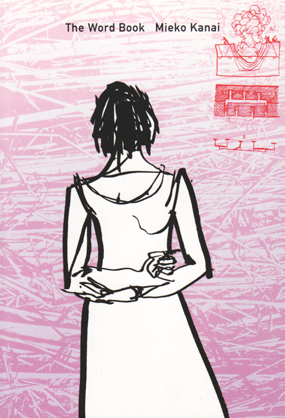
The pink cover of this small paperback might lead one to think that it’s a short collection of chick lit. While it’s true that Kanai Mieko is female, and while it’s true that she has often been classified as a “women writer,” The Word Book is just about as far away from chick lit as you can get. The twelve short stories in this collection are perhaps not so much “stories” as they are prose poems, or perhaps even essays written in the form of short stories. Kanai’s language is gorgeous, and the way she presents her ideas is fascinating. The stories themselves are very loosely structured and don’t follow established narrative patterns.

Kanai’s preoccupation in The Word Book is the writing self, or the self who is speaking, or telling a story. Many of the narrators in this collection are writers, and many of them are trying to explain something that happened in the past. Kanai almost fetishizes her narrators as they write about writing and constantly question their ability to tell a story. Perhaps it happened like this, perhaps it happened differently. Who is writing? Who is telling the story? Is the narrator of the story the same person as the protagonist of the story? Many of these stories have multiple narrators within the span of less than ten pages. A reader is faced with two choices – to either puzzle out who the narrators are and what their relationship to one another might be, or to let the narrative flow wash over him or her and simply accept that the narrator of a story is never a stable or unquestionable entity.

In that each of Kanai’s stories resembles something of an intellectual puzzle, I am reminded of Borges’s Labyrinths. In that Kanai’s stories are filled with a multitude of unreliable narrators who may or may not actually be the same person, I am reminded of Faulkner, especially As I Lay Dying. However, since Kanai is still able to infuse her stories with a sense of place and beauty, I am reminded of Furui Yoshikichi (Ravine and Other Stories, translated by Meredith McKinney), another Japanese writer of mysterious short fiction.

An interesting aspect of Kanai’s prose that I think is undeniably characteristic of her and no one else, however, is her play on gender. Kanai is a woman, but all of her narrators are men. To be more precise, Paul McCarthy has translated all of her narrators as men. I have only read a handful of Kanai’s stories in the original Japanese, but it is my impression that the writer takes full advantage of the ability of the Japanese language to not differentiate gender. Why does Kanai write with exclusively male narrators? Or are her narrators all men? Is she intentionally writing within a masculine narrative realm? If this book did not have a pink front cover and an “about the author” blurb on the back cover, would the reader even know that the author of this collection is a woman? Does it matter?

Meta-textual issues aside, I really enjoyed reading The Word Book because of its narrative sophistication, dreamlike atmosphere, and poetic touch. To illustrate what I like so much about this book, I would like to end with a passage from a story entitled “Fiction:”

But after awhile, I changed my mind: my guest’s words were as vague as they were clear, spoken by one who expresses by looks or by his whole weak body the scintillating talent of a born poet. Realizing this, I trembled with envy. Bitter as it was to admit, I was envious of those empty words, not understood even by the man who uttered them, those empty words that shone with a soft, rose-colored radiance. Words such as these, shining words bathed in a soft, rose-colored radiance, precisely because of their emptiness lusted after a shameless ecstasy of the sort one can only experience in dreams. And I thought, feeling a kind of despair, “Long ago my words, too, trembled violently in this shining, soft, rose-colored radiance.”