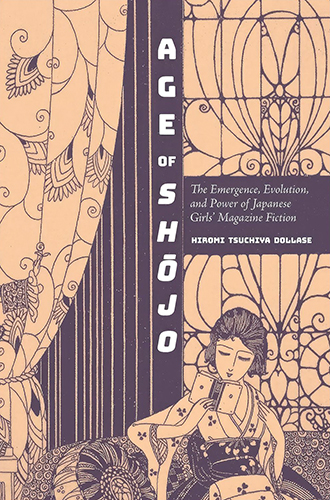
Age of Shōjo

Numerous articles and book chapters have explored the origins of shōjo culture, and Hiromi Tsuchiya Dollase’s Age of Shōjo: The Emergence, Evolution, and Power of Japanese Girl’s Magazine Fiction contributes new insights while weaving these threads together into a tapestry depicting the history of how imagined communities of young women were shaped by the editors and contributors of popular mass-market magazines in Japan.

Age of Shōjo opens with a discussion of Louisa May Alcott’s novel Little Women, which was translated by Kitada Shūho in 1906 as Shōfujin. Through a close reading that compares the translation to the original, Dollase demonstrates how the novel “introduced a Japanese female audience to Western lifestyle and the image of a Western home” while still conforming to native Meiji-era constructions of femininity.

Chapters Two and Three introduce two key figures who helped shepherd amateur women’s fiction into professional venues. The first is Numata Rippō, who edited the seminal magazine Shōjo sekai (Girls’ World), and the second is Yoshiya Nobuko, who is famous for her contributions to this magazine, which were later published as the collection Hana monogatari (Flower Tales).

Chapters Four and Five trace the development of the portrayal of gender and sexuality in Yoshiya’s work in comparison with her contemporaries Morita Tama and Kawabata Yasunari, who also contributed short fiction to popular magazines such as Shōjo no tomo (Girls’ Friend) during the 1930s and early 1940s.

Chapter Six jumps forward to the immediate postwar era, when girls’ magazines such as Himawari (Sunflower) were filled with romanticized images of the United States, and Chapter Seven chronicles how magazine fiction for teenagers took a more mature turn during the 1980s. The stories published in the 1980s were still commissioned, selected, and edited to appeal to a readership of young women, but this fiction now addressed themes relating to women in the workforce, including frustrations concerning the choice between marriage and a career. 

As related by the anecdotes in the book’s Introduction and Afterword, girls’ fiction continues to be widely read and culturally influential in Japan. Dollase handles this material with respect and care by acknowledging its problematic aspects but preferring to contextualize instead of critique. This is especially the case with the heavily censored fiction of the 1940s, as well as the work of writers whose stories were progressive when they were first published but may seem socially conservative now.

In her informative study of these texts, Dollase demonstrates how, “through magazine stories and illustrations, readers came to acknowledge themselves as shōjo, a new cultural identity,” and how the fiction of these authors contains “messages of resistance against disagreeable cultural conditions cloaked in fantasy, sentimentalism, and humor.” Along with Dollase’s deft and accessible analysis, Age of Shōjo’s annotated reproductions of magazine covers and interior illustrations are a gift to readers interested in the literature and visual culture of girlhood in twentieth-century Japan.
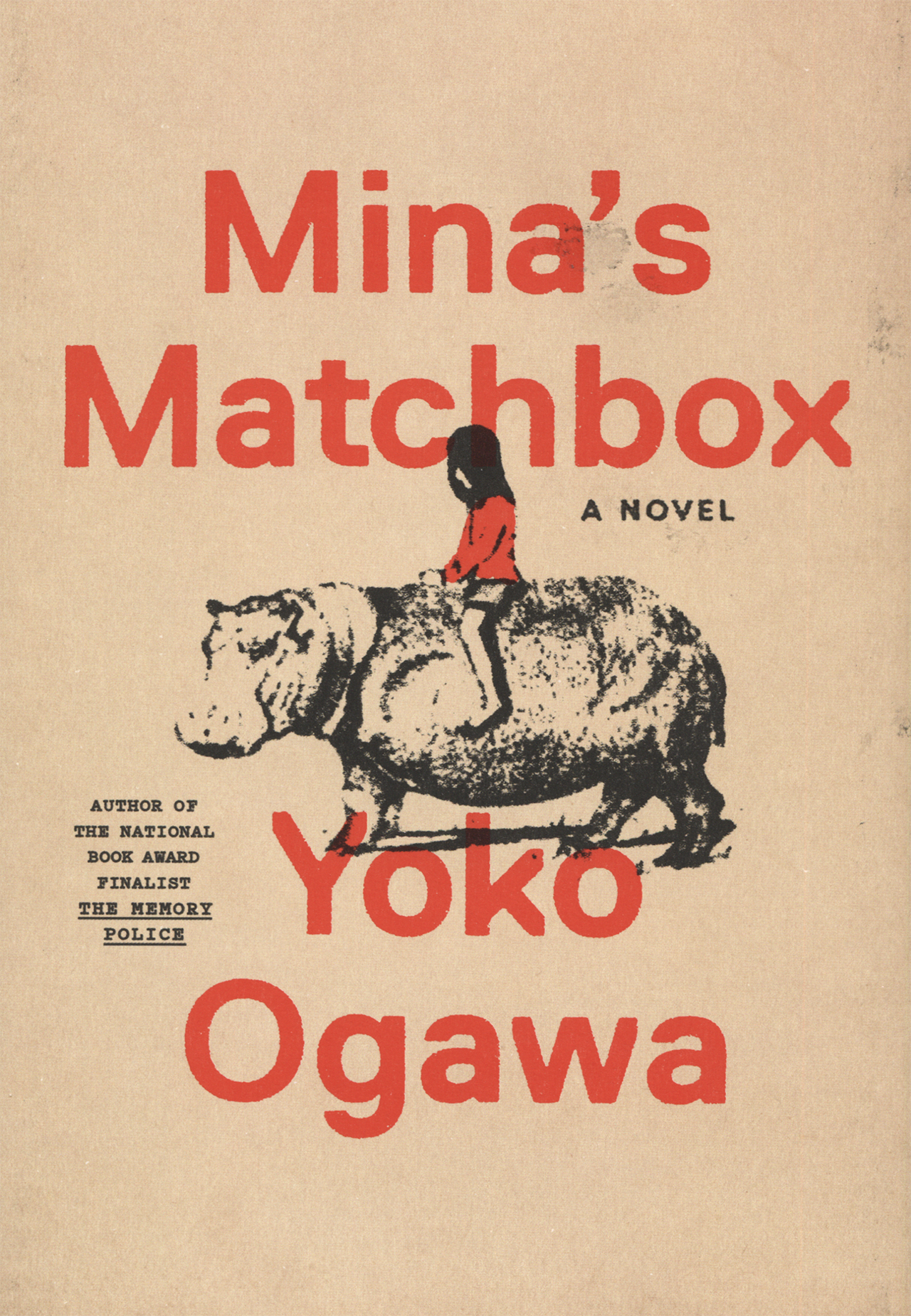
Mina’s Matchbox

Tomoko is only twelve years old when she loses her father to cancer. To learn to support herself, Tomoko’s mother attends a dressmaking school in Tokyo, where she lives in a student dorm. From 1972 to 1973, Tomoko is sent to live with her aunt in Ashiya, an upscale suburb between Osaka and Kobe. Her uncle is the president of an international soft drink company, and his house is extravagantly large and quite grand. Tomoko’s cousin Mina lives a charmed life marred only by her asthma, which is serious enough to necessitate frequent hospital visits.

Mina’s grandmother Rosa emigrated from Germany in 1916, and the family’s house is filled with beautiful things, from foreign furniture and luxurious cosmetics to exotic Christmas paraphernalia to a room covered in Islamic tiles and used for a holistic health treatment called “light bathing.” Perhaps the most intriguing thing about the house is Mina’s pet, an aging Liberian pygmy hippopotamus named Pochiko who carries Mina to school every morning. The household is managed by Yone-san, an elderly woman who is ostensibly Rosa’s maid but can more properly be called her companion and life partner.

Tomoko’s aunt is attractive, elegant, and kind. Her uncle is handsome, friendly, and good-natured. The family’s groundskeeper and driver, Kobayashi, is a sweet and patient man whom everyone loves. The entire family welcomes Tomoko with style and grace, and she quickly becomes fast friends with Mina. The opening chapters of Mina’s Matchbox unfold almost like a Studio Ghibli movie, and I couldn’t help envisioning the characters in the style of When Marnie Was There.

To add to the magical atmosphere, Mina is thoroughly charming. She reads well above the level of a sixth grader and asks Tomoko to check out books from the local library like Yasunari Kawabata’s House of the Sleeping Beauties and Katherine Mansfield’s The Garden Party. Mina conveys her comments on these books to Tomoko, who shares them with the gentle young librarian she fancies.

Meanwhile, Mina has a crush on a deliveryman for her father’s company who drops by the house every week. During each visit, he gives Mina interesting matchboxes that he picks up on his rounds. Inspired by the graphics printed on the boxes, she writes short stories on paper that she uses to adorn the inside of the small containers she uses to store her collection. These stories are often fables about animals or other small creatures, and Tomoko loves them.

Mina’s Matchbox is a Yoko Ogawa novel, so it goes without saying that all is not well. Quiet tensions flow underneath the family’s beautiful surface, which is marred by the infidelity of Tomoko’s handsome uncle. To give herself a sense of purpose, Tomoko’s aunt combs through magazines searching for typos so that she’ll have an excuse to send letters of complaint. Mina’s older brother writes to the family from Switzerland but never mentions his father. In her devotion to Rosa, Yoneda-san almost never leaves the house and is frightened by everything outside of her immediate sphere of influence.

Nothing bad happens, and this definitely isn’t the sort of novel where the sick child dies. I hope it’s not a spoiler to say that both Mina and Tomoko go on to live happy lives. Aside from subtle but meaningful character development, Mina’s Matchbox doesn’t have much in the way of plot.  

Regardless, this isn’t a slow novel. The pacing is excellent, and I finished the book quickly. In fact, I would have liked to spend more time with it. Every sentence is perfect, and each paragraph is a joy. Despite the child protagonists, Mina’s Matchbox has all the nuance of an adult perspective and steadfastly refuses to engage in melodrama. Reading this novel is like sitting outside and enjoying the sunshine on a warm spring day, and it’s a pleasure to follow the gradual progression of the small stories surrounding Mina and Tomoko as recounted in Ogawa’s impeccable prose.

The Nakano Thrift Shop

Title: The Nakano Thrift Shop
Japanese Title: 古道具 中野商店 (Furudōgu Nakano Shoten)
Author: Kawakami Hiromi (川上 弘美)
Translator: Allison Markin Powell
Publication Year: 2017 (United Kingdom); 2005 (Japan)
Publisher: Portobello Books
Pages: 260

Hitomi works at the Nakano Thrift Shop, which is run by a middle-aged man named, unsurprisingly, Mr. Nakano. While she watches the store and works the till, a young man around her age, Takeo, accompanies Mr. Nakano on buying trips. The trio is occasionally visited by Mr. Nakano’s sister Masayo, an artist of independent means. The twelve loosely connected stories in The Nakano Thrift Shop are about the strange and silly things that happen to this odd group of characters, whose small dramas for the most part seem to exist outside of the specifics of time and place.

Hitomi is short-tempered and cagey, Takeo is passive and uncommunicative, and Masayo is chatty and expansive, but it is the stubborn and befuddled Mr. Nakano whose mishaps and shenanigans serve as the focal point or punchline of each story. In the second story, “Paperweight,” Mr. Nakano bribes Hitomi to go visit Masayo and get gossip about her new lover, which sparks a friendship between the two women. In the third story, “Bus,” Mr. Nakano travels to Hokkaido on a buying trip and becomes involved in a one-sided love affair, amusing Hitomi with the messages he sends back to the shop. In other stories, an unusual customer provides a break from the store’s daily routine. For example, in the ninth story, “Bowl,” a young man tries to get rid of a valuable antique bowl, which he believes has been cursed by an ex-girlfriend. The Nakano Thrift Shop is more of a downmarket store, so Masayo forces Mr. Nakano to pass the bowl over to a specialist ceramics dealer with whom he happens to be in the process of breaking off a romantic relationship.

Over the course of the book, Hitomi enters into a romantic relationship of her own with Takeo. This romance never makes much progress, however, as Hitomi demands action and attention while Takeo doesn’t like talking on the phone and is content simply to allow life to happen to him. Like everything in The Nakano Thrift Shop, their relationship is lowkey and laidback, and it ebbs and flows without any sort of drama.

For the reader, the pleasure of these stories lies in peeking into the lives of these characters as they drift through the changing seasons while comfortable in the stability of their friendships. Even though unusual things occasionally happen, no one is ever strongly affected by these events. For instance, in the first story, “Rectangular #2,” an odd man named Takadokoro comes into the store to sell artistic nude photos. Masayo tells Hitomi that the pictures are of Takadoroko’s former student. Takadokoro has the potential to be a truly creepy (or pathetic) character, but the warm narrative tone of The Nakano Thrift Shop treats him as just another person in the neighborhood. He doesn’t bother anyone, and no one is bothered by him. After all, everyone is a little weird once you get to know them.

In the final story, “Punch Ball,” the Nakano shop has closed, and the characters have all gone their separate ways. Hitomi takes various office jobs as a temp worker while she studies for her bookkeeping certification exam. Her current distance from the carefree atmosphere that suffused the earlier stories puts them into perspective, and her former freedom from the pressures of the corporate world now seems much more meaningful. Now that she spends her days sitting at a desk in front of a computer, social interactions are no longer improvised and unique, and friendships are no longer so easily formed. There’s a playful innocence to Hitomi’s time in the Nakano shop that only becomes apparent in retrospect.

The Nakano Thrift Shop is a short and pleasant book that will appeal to anyone who enjoyed The Briefcase (which was published as Strange Weather in Tokyo in the UK). Although it’s a wide leap removed from the darker themes and imagery of some of Kawakami’s other work that has appeared in translation, it’s mercifully free of the sentimentality and melodrama of Yoshimoto Banana novels. As Hitomi seems to be in her mid to late twenties, it’s up for debate whether The Nakano Thrift Shop can be classified as “girls’ literature” (shōjo shōsetsu), but reading these stories conveys a vicarious sense of what it feels like to be a young woman chilling out and having fun in a trendy Tokyo suburb.