Nails and Eyes

Kaori Fujino’s Nails and Eyes collects a novella and two short stories whose crystal-clear prose is darkened by the shadow of creeping psychological horror. The theme of family lies at the heart of these stories, especially as it intersects with the fear that those closest to us may deliberately choose not to see obvious but unpleasant truths.

In the third story, “Minute Fears,” a woman named Mika plans to attend the wedding reception of a college friend. Since she’s started a family, Mika has rarely gone out on her own, and she’s been looking forward to the party. Her son Daiki begs her not to go, as he’s been disturbed by an urban legend surrounding a ghost rumored to haunt the local playground. After a brief struggle with Daiki, who doesn’t want to be left alone, Mika goes to the reception late and leaves early. When she comes home, Daiki confesses his fear of the ghost, and Mika resolves to take him to the playground herself to prove that the urban legend isn’t true.

Whether the ghost exists is left to the reader’s imagination. Instead, the true horror lies in the image of Mika dragging her terrified son into the night. Or perhaps, if your sympathies lie elsewhere, the horror is hidden in the homebound years that Mika has had to endure in order to care for her child while her friends enjoy their lives and careers in the outside world. 

The second story, “What Shoko Forgets,” is equally ambiguous yet just as disturbing. After a mild stroke, Shoko has been living in an elder care facility for almost half a year. Her family visits regularly, and she receives ample attention from the staff. A polite and energetic young man named Kawabata is especially gentle, and he seems to have a special fondness of Shoko.

There’s something strange about Kawabata’s behavior after dark, however; and, for some reason, Shoko finds herself thinking about sex in a way she hasn’t for years. It’s possible that there might be a connection between Kawabata and the man Shoko imagines lying next to her at night, but both her eyesight and her memory have grown hazy. In any case, it’s no use trying to explain her muddled thoughts about the situation to her daughter or granddaughter, who so kindly come to visit a forgetful old woman.

The collection’s centerpiece novella, “Nails and Eyes,” is narrated from the perspective of a young girl who lost her mother to an unexplained incident. Her father brings home his younger lover, and the narrator addresses this woman directly through the story. She recounts the minute details of the woman’s life, from her affair with a bookstore owner to her obsession with the home décor blog once maintained by the narrator’s mother.

The narrator also describes her own behavior as a child who has clearly been traumatized by her mother’s suicide but largely ignored by the adults in her life. The narrator refuses to be anywhere near the balcony where her mother died, and she sits in the corners of the apartment gnawing at her nails, which become serrated and sharp. To her credit, the woman responsible for the child’s care makes a clean break with her lover and begins to take a more active interest in her charge’s welfare. This change of heart comes too late, however, and the story ends with an incredibly upsetting psychological break.

To be clear: if you have phobias related to eyes and/or fingernails, this book might not be for you. 

At 140 pages, Nails and Eyes is easy to breeze through, especially in Kendall Heitzman’s smooth and weightless translation. Still, Fujino’s fiction rewards time and attention, as well as repeated readings. There are layers to her deceptively simple prose, and any one of these stories has the potential to generate multiple lines of speculation. Nails and Eyes is a fascinating and disquieting collection that will be appreciated by readers who enjoy literary short horror fiction like Yoko Ogawa’s Revenge and Mariana Enriquez’s Things We Lost in the Fire.

Last Winter, We Parted

Last Winter We Parted

Title: Last Winter, We Parted
Japanese Title: 去年の冬、きみと別れ (Kyonen no fuyu, kimi to wakare)
Author: Nakamura Fuminori (中村 文則)
Translator: Allison Markin Powell
Publication Year: 2014 (America); 2013 (Japan)
Publisher: Soho Press
Pages: 216

A 35-year-old photographer named Kiharazaka Yūdai is charged with the murder of two young women who acted as his models. Although his work was highly regarded, he had lived mainly off the inheritance from his maternal grandfather, who had distanced himself from his daughter to such an extent that Yūdai and his sister Akari ended up growing up in an orphanage after being abandoned by their parents. He is currently being held in prison in solitary confinement, where he’s waiting to appeal his death sentence.

The narrator, an unnamed writer who is working with his editor to put out a book about Kiharazaka, visits him in prison and then begins exchanging letters. He also meets with Akari and a salaryman named Katani, who had been Kiharazaka’s only friend. Both of them believe he’s innocent, and both want to know why the narrator cares so much about him.

It turns out that both Kiharazaka and the narrator were involved with a group that had formed around a man named Suzuki, a creator of full-size silicon sex dolls. When the narrator approaches Suzuki about Kiharazaka, the craftsman talks at length about his clients and the uncanniness of his art. He also discusses the similarities between his work and Kiharazaka’s photography, bringing up Akutagawa Ryūnosuke’s short story Hell Screen as a means of explaining the relationship between beauty and suffering. Suzuki doesn’t doubt that Kiharazaka murdered his photographic subjects by setting them and his studios on fire, but he suspects that there was something that drove the man’s madness other than the desire to lift himself out of an artistic slump.

There is in fact more going on, but it’s the reader who has to play detective. Interspersed between the short passages charting the narrator’s descent into an unhealthy relationship with the Kiharazaka siblings are various documents presented as numbered “archives.” Some are letters from Kiharazaka to his sister and to the narrator, while others are diary entries and Twitter feeds, and some are more difficult to classify. The relationships between the characters are not what they initially seem, with names being nothing more than empty signifiers of fractured identities, and the reader is forced to fit all of the clues together herself if she wants to understand what really happened between this small group of irreparably damaged people.

Last Winter, We Parted is misogynistic in that female characters seem to only be there to be photographed and/or fucked before being burned alive, but that comes with the territory. Let’s be real here, this is a crime novel written by a man who won the Ōe Prize, what were you expecting.

Standard literary sexism aside, Last Winter, We Parted is a small book of eerie beauty. Despite its gory subject matter, the prose is as light as falling ash. Allison Markin Powell’s translation is, as always, wonderful. This is the first book by Nakamura Fuminori I’ve read, but I’m definitely hooked on his writing.

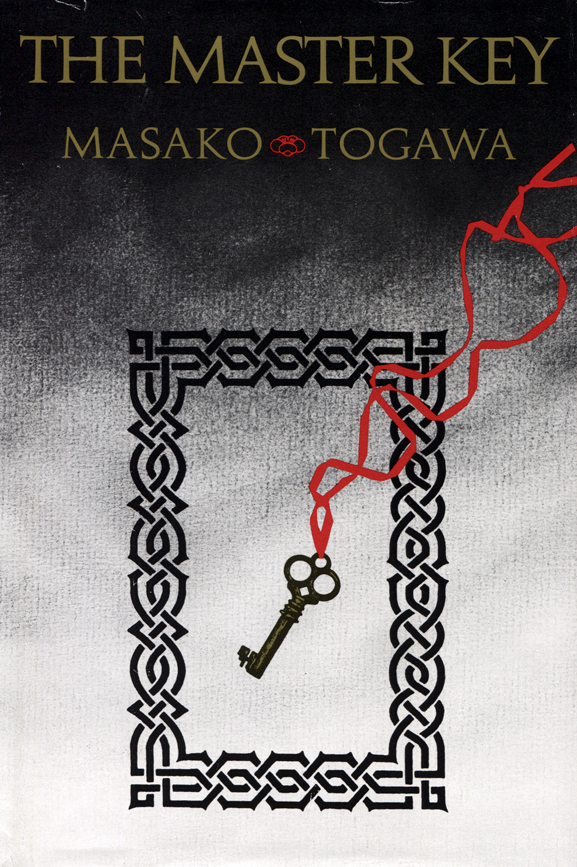
The Master Key

The Master Key

Title: The Master Key
Japanese Title: 大いなる幻影 (Ōinaru gen’ei)
Author: Togawa Masako (戸川 昌子)
Translator: Simon Grove
Publication Year: 1985 (United States); 1962 (Japan)
Publisher: Dodd, Mead & Company
Pages: 198

The Master Key, first published in 1962 and set in the late 1950s, is an interesting window into a period of postwar Japan that we don’t often see represented in Japanese fiction in translation. The story takes place entirely within the closed world of the K Apartments for Ladies, a large, multi-story building located in southeast Ikebukuro and registered as a charitable trust with “rents pegged at wartime levels.”

On its surface, the story is about a 1951 kidnapping of a young boy who is the son of a Japanese woman and an American military officer. Seven years later, when the K Apartments building is lifted and moved to a different location in a grand public works experiment, the body of a child is discovered buried underneath a shared bathing area in the basement. Right around the time the child disappeared, a man dressed as a woman was struck by a van in an intersection near the apartment building, and it’s revealed to the reader early in the novel that this man disguised himself as a woman to help one of the tenants dispose of the body that would later be found in the building’s basement. Who in the apartment buried the body, and what relation does this have to the kidnapping incident?

About twenty pages into The Master Key, however, it becomes clear that the mystery portion of the story is going to take a backseat to an extended exploration of the inner worlds contained within the K Apartments for Ladies and the psychological dysfunctions of its aging tenants.

Ishiyama Noriko, who has been diagnosed with “nervous pains,” has removed herself from the rest of the world and lives in a dark apartment stuffed with other people’s trash, which she occasionally boils and eats to sustain herself. Yatabe Suwa, a former concert violinist who now gives music lessons to children, is haunted by the loss of potential represented by the theft of a violin from her own teacher, even though it’s possible that she herself may have more to do with this incident than she likes to admit. Kimura Yoneko retired from her position as a schoolteacher years ago and spends her days writing letters to her former students, and she is not above checking into the affairs of the other tenants as well. Santo Haru is obsessed with a religious cult, and she is in the palm of its leader, who frequents her apartment to hold prayer meetings centered around the trances of its vestal priestess.

The plot is complicated and circuitous but is centered around the use and whereabouts of the master key of the title, which various tenants use to sneak into one another’s rooms in order to discover the secrets of others while concealing their own. At the end of the novel, it’s revealed that there is a mastermind orchestrating all of their movements, someone who has been spying on everyone for years and has manipulated the women around her for her own amusement. As someone who had essentially done the same thing to these characters through the process of reading this novel, I felt somewhat guilty, but not enough to lessen my enjoyment of how neatly all of the different plot threads are eventually tied together.

I will openly admit that I love stories about women being unpleasant and irrational and absolutely human. All of the female characters in this story are a little pathetic and a little demonic in that they have no power outside the K Apartments but all manner of strange little powers within their closed world. I’m sure this can be read as a metaphor for something, but it need not be, as the haunted and uncanny environment the characters shape through their bizarre actions is absolutely fascinating in and of itself.

For people with more background on Japanese history and urban space, the story’s setting in Ikebukuro is of special interest. In the immediate postwar period, Ikebukuro famously functioned as a heterotopia in which diverse groups of people came together and the norms of mainstream society didn’t necessarily apply. There is all manner of hidden “national polity” history in Ikebukuro, where the family-state of Japan has buried countless failed narratives under highways and skyscrapers. The Master Key thus serves as an excellent example of postwar Tokyo gothic (as similarly exemplified by Kyōgoku Natsuhiko’s The Summer of the Ubume). A reader doesn’t need historical knowledge to appreciate the story, but a bit of research into the setting has the potential to deepen the experience of reading this novel, which has sub-basements under sub-basements under sub-basements.

The Master Key is long out of print but still cheaply available through a number of online used book services. If you have access to your local or university library’s Interlibrary Loan program, it’s well worth requesting this book. It’s a quick read, and it packs a huge impact. To my fellow horror and mystery lovers especially, I highly recommend tracking down a copy of this short, satisfying, and creepy little novel.