Mushishi

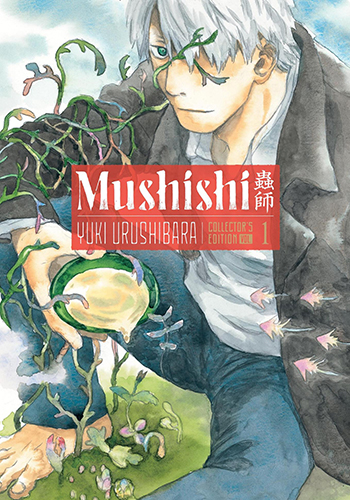
Yuki Urushibara’s ten-volume manga series Mushishi is a gentle but eerie collection of short stories about the uneasy relationship between humans and the natural world. Originally serialized between 1999 and 2008, Mushishi is now available in a series of hardcover Collector’s Editions from Kodansha, which has done a marvelous job with the release.

Mushishi is set in Japan during an unspecified time around the late nineteenth century. Some people wear Western clothing and smoke cigarettes, but traditional ways of life still persist in isolated rural areas, which seem untouched by time.

Ginko is a mushishi (“mushi scholar”) who travels to remote villages to study and document “mushi,” a collective term for a variety of lifeforms that exist partially in our world and partially in the realm of the supernatural. Like germs or bacteria, mushi are tiny and exist unseen by the vast majority of people. Problems arise when mushi form large colonies, especially within human bodies. Even as he studies and admires mushi, Ginko is often compelled to eliminate them in order to restore health to their human hosts.

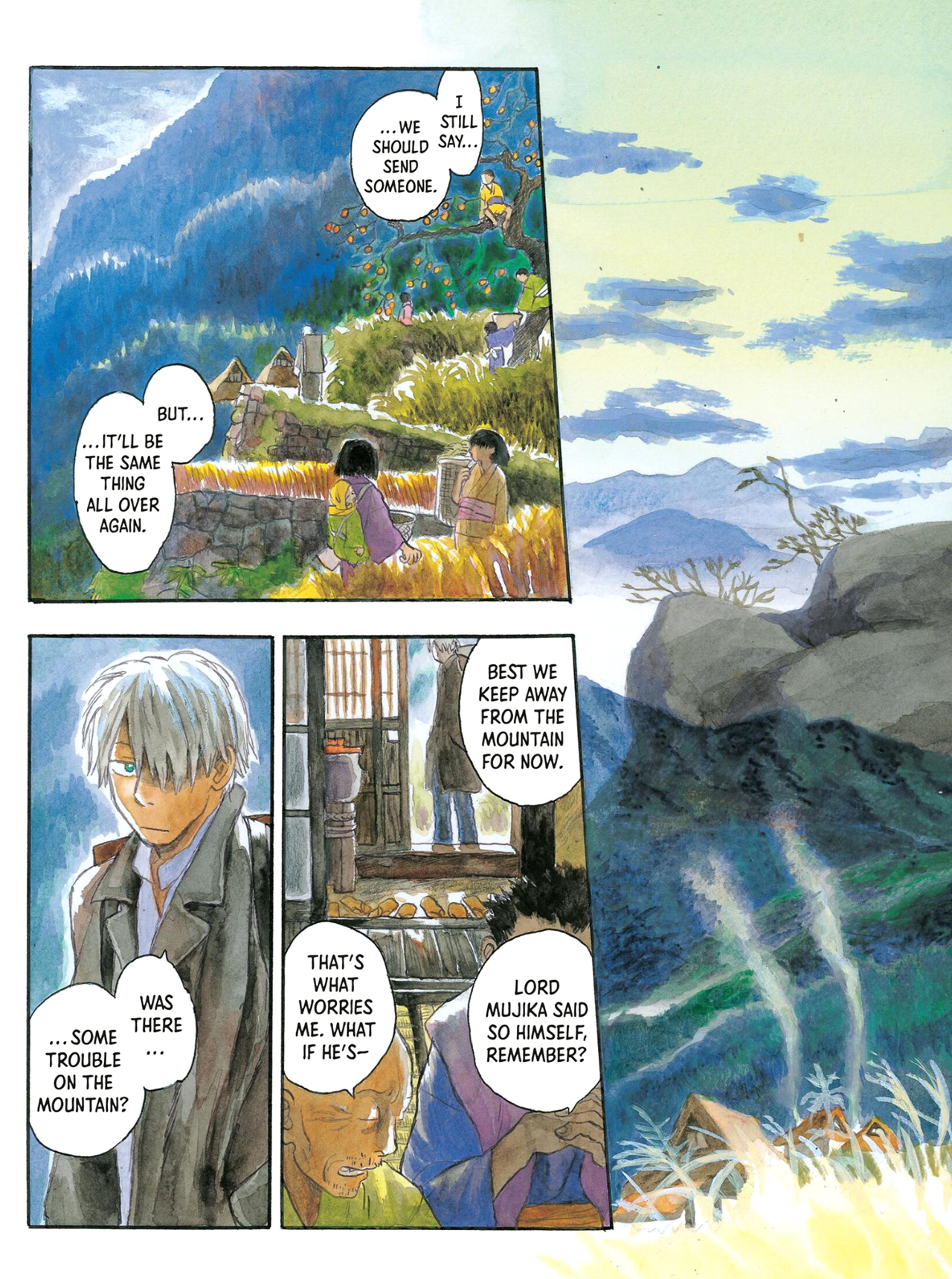
As is the case with non-supernatural illnesses, people severely impacted by mushi often find themselves unable to return to normal life. In the manga’s second story, “The Tender Horns,” people living in a village deep in the mountains find that they go deaf in one ear when the snow falls. Ginko tells the village chief that this is the result of a mushi called “Un,” which lives in human ear canals and eats sound. This is a temporary inconvenience for most people, but one woman was so deeply impacted that she died. Now her son seems to bear the same affliction, which has manifested as a set of small horns on his forehead.

The tone of Mushishi occupies a liminal space somewhere between nostalgia and horror. Many of the stories have happy endings, but they’re nevertheless pervaded with the uneasiness of living at the edge of an unseen world that has little regard for human life. Mushi, which are something in between plants and animals and spirits, act in keeping with their nature, which is simply to grow and replicate. To most mushi, humans are little more than substrate.

Some species of mushi seem to possess something akin to sapience, however, and their relationship with humans is complicated. One of my favorite stories in the opening volume of Mushishi is “The Traveling Swamp,” in which a marshland appears and disappears seemingly at will. When Ginko studies the pattern of the manifestations on a map, he realizes that the colony of mushi is traveling through underground waterways. The young woman who appears and vanishes with the mysterious swamp has become saturated with the mushi, which have welcomed her as a companion on their journey to the sea.

What Ginko sees of mushi growth and behavior is akin to many written records of Japanese folklore, such as The Legends of Tono and Tales of Times Now Past, in which inexplicable things happen to people seemingly at random. In a time before modern science and infrastructure, the natural world was just as dangerous as it was awe-inspiring. As much as people in rural areas were dependent on nature for their livelihood, they were also at its mercy.

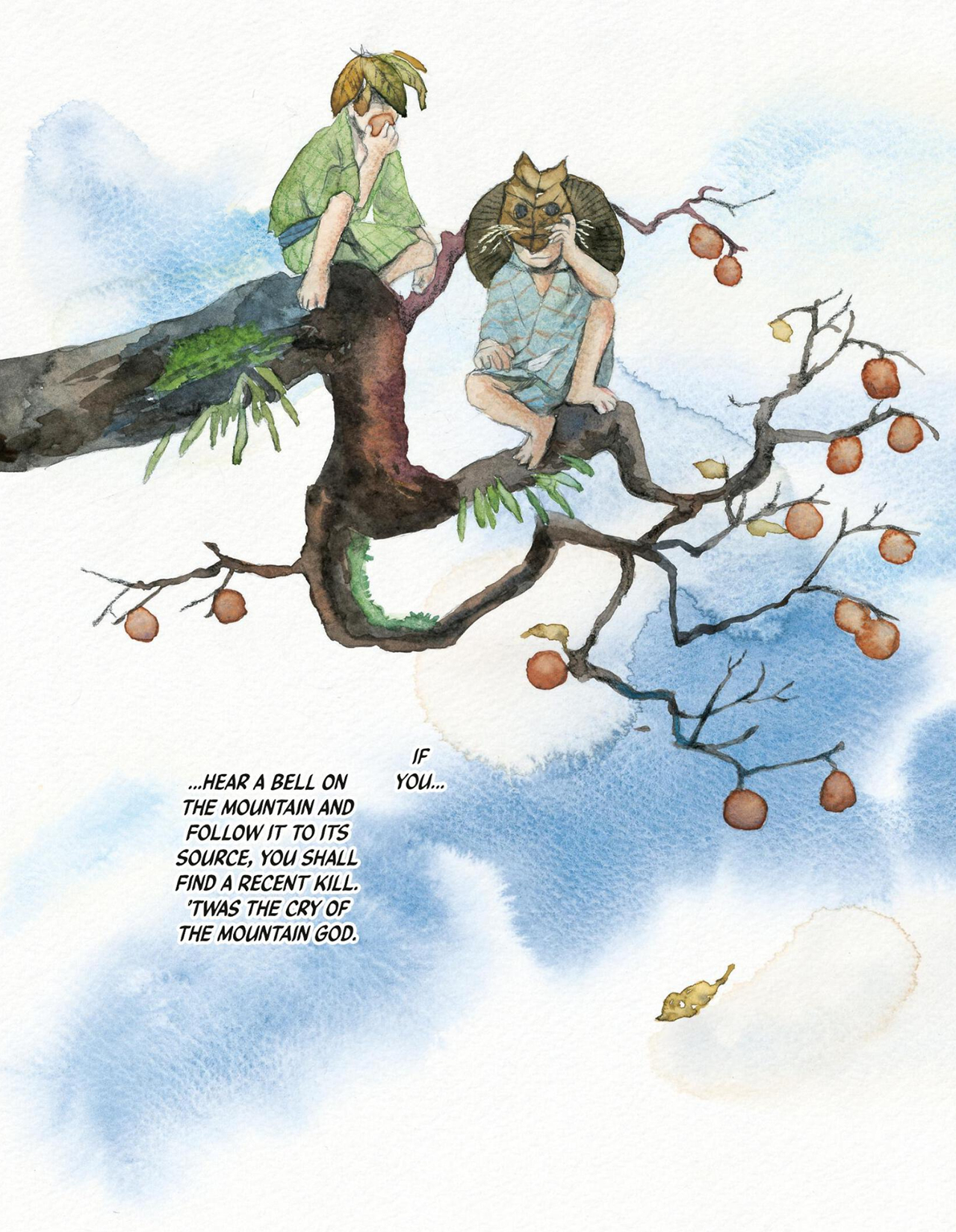
Yuki Urushibara’s artwork delights in wild spaces, from mountain roads to deep forests to ocean vistas to overgrown villages, and her depictions of premodern architecture and clothing are equally impressive. Urushibara is especially skilled with the use of etching and screentone to convey a sense of dim lighting while still using enough contrast to creatively highlight the focal points of each composition. The inkwork is truly impressive, as are the watercolor inserts, and Kodansha’s release of the manga allows Urushibara’s art to shine.

If you’d like to bask in the twilit atmosphere of a deep mountain forest, I might also recommend watching an episode or two of the Mushishi anime (available on Crunchyroll in the U.S.), which is extraordinarily well-produced. The anime is slow and quiet and isn’t for everyone, perhaps, but there’s really nothing else like it.  

NonNonBa

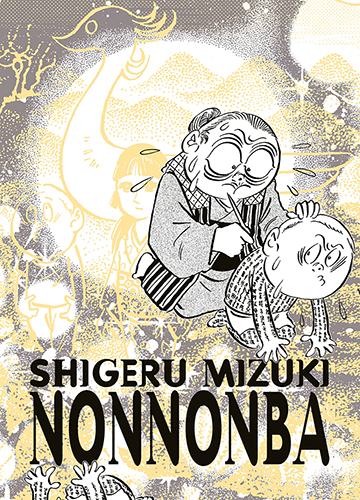
Shigeru Mizuki was one of the twentieth century’s most prolific and influential manga artists. Today he’s known primarily for documenting the culture and folklore of his childhood in rural western Japan. The single-volume graphic novel NonNonBa, originally published in 1992, is perhaps Mizuki’s most accessible work, as well as a fantastic gateway into the study of indigenous Japanese religion and folklore.

NonNonBa tells a coming-of-age story about the artist’s childhood relationship with an elderly family friend, the poor but kind Nonnonba of the title. Nonnonba is a repository of local folklore, and she sincerely believes in yokai, a term that refers to any number of species of Japanese fantastical creatures. The world of NonNonBa is indeed populated with yokai, but the manga is primarily a realistic account of life during the early 1930s.

NonNonBa opens with an introduction to the coastal town of Sakaiminato in the Kansai-region prefecture of Tottori. Despite being a port on the East Sea, the town wasn’t wealthy, and most houses remained unchanged from the nineteenth century. Mizuki’s family was relatively comfortable, and he lived with his mother, his two brothers, and his father, who worked at a bank but had creative ambitions and operated a small cinema on the side. Nonnonba was occasionally employed by the family to help with housework and childcare, as she was by several families in town. 

The artist, who goes by the name of Shige, is a mediocre student but deeply fascinated by the natural world, often bringing home strange objects like animal bones in order to study and draw them. When he’s not at his desk, Shige plays at being a soldier in the “boy army” that roams around the town and beach staging pretend wars with other roving bands of children.  

Shige’s uncomplicated boyhood is disrupted by Chigusa, a cousin from Osaka who is sent to Sakaiminato to recover from tuberculosis. Nonnonba cares for Chigusa while she’s bedridden, and the girl is just as interested in Nonnonba’s yokai stories as Shige is himself. The two become friends, and Shige is heartbroken when his cousin succumbs to her illness. He begins drawing in earnest, no longer as invested in the boy army as he once was.

After losing Chigusa, Nonnonba begins working for a family from the city that has moved into a house rumored to be haunted. She’s charged with the care of Miwa, a young girl who lives in the family’s house and seems to be able to see and hear yokai. Shige believes the girl is a victim of human trafficking, which seems highly likely given the number of other young girls who have passed through the house. Regardless, there’s not much he can do about this as a young boy.

As he develops a close friendship with Miwa, Shige matures, and he understands that growing up isn’t growing away from yokai, but rather realizing that the stories of these creatures are part of a much larger world. Despite their flaws, Shigeru’s mother and father are both portrayed sympathetically, as are his brothers and friends. NonNonBa overflows with sympathy and compassion, gently poking fun at the characters while also encouraging the reader to see them in their best light.  

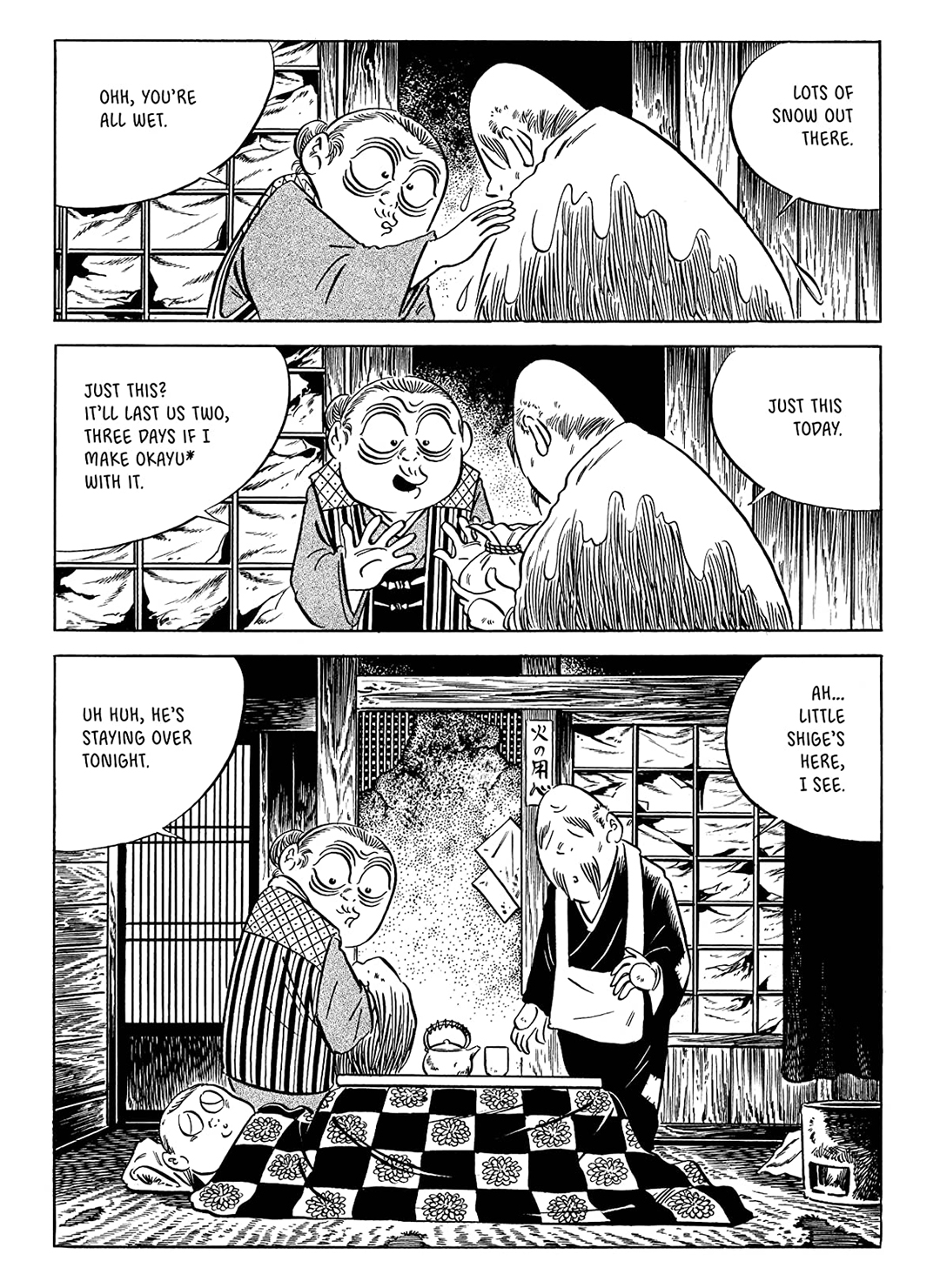
Despite being published more than thirty years ago, NonNonBa doesn’t feel dated. The stylizations of Mizuki’s artwork are timeless, and his character designs are clean and fresh. The high quality of Jocelyne Allen’s translation contributes to the contemplative yet entertaining tone of the story, whose episodes move briskly but never feel cartoonish. 

Through Mizuki’s sensitive storytelling and evocative artwork, NonNonBa celebrates how folklore inspires imagination and facilitates resilience in the face of loss and change. Despite the occasionally heavy subject matter, this graphic novel is accessible to readers of all levels, and I imagine it would be a fantastic text to spark discussion about history, family, and folklore in the classroom.

北国ゆらゆら紀行

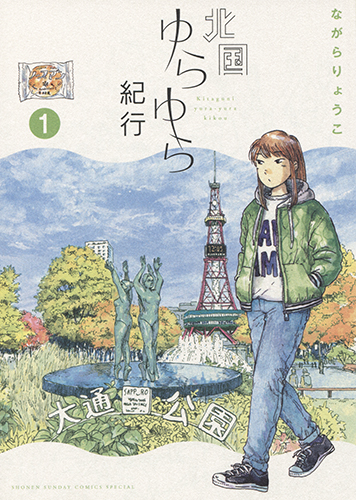
Ryōko Nagara’s Kitaguni yura-yura kikō (北国ゆらゆら紀行) is an episodic travelogue manga that follows a young woman named Tsukiko who left her job to return to her hometown of Sapporo.

Tsukiko is too burnt out to resume full employment, and her savings are running low. Her friend Chitose invites her to move into a Shōwa-era sharehouse co-rented with her flatmate Kensuke and Kensuke’s girlfriend Miwa. Their landlord, a world traveler who no longer lives in Japan, says that Tsukiko can stay if she can manage to clean up all the junk in the spare room.

As Tsukiko recovers from her recent life changes, she and Chitose explore Sapporo at a leisurely pace. Chitose is a writer who aspires to create a magazine celebrating the city’s regional culture. For the time being, she posts articles on her blog and creates zines. Chitose brings Tsukiko along while she scouts for material at small local stores and restaurants. When they’re not out and about, the two women dig through the cardboard boxes left behind by the landlord and uncover all sorts of treasures, from vinyl records to unique Hokkaido woodcrafts. 

In my review (here) of Tomoko Shibasaki’s short story collection A Hundred Years and a Day, I touch on the phenomenon of “analog nostalgia,” the fascination with tangible media and the objects of an earlier era. Shibasaki’s collection dwells in a gentle sense of decay, but Kitaguni yura-yura kikō is marked by its youthful energy. As they stroll through beautiful streets lined with old houses and enjoy lively conversations over local cuisine in charming restaurants, it’s clear that Tsukiko and Chitose are thoroughly enjoying themselves.

Despite the fun she has with Chitose and her friends, Tsukiko suffers from depression and anxiety. The tiny apartment she occupies at the beginning of the manga is filled with trash, and she loses track of time while doomscrolling late at night. When Tsukiko considers the possibility of finding a new job, she imagines herself as a defenseless egg yolk sweating and apologizing while surrounded by menacing shadows.

When she invites her friend to move into her sharehouse, Chitose gives Tsukiko something tangible to hold. The manga’s emphasis on analog media, from Chitose’s printed zines to the old Walkman and cassette tapes that Tsukiko digs out of the landlord’s cardboard boxes, isn’t just simple nostalgia. Rather, it’s a concrete solution to a distressingly amorphous problem.

As the anonymous author of one of my favorite video game blogs writes (here) regarding the appeal of retro media, “We weren’t meant to live in an endless feed.” The rituals required by analog media once “gave life a shape that wasn’t constant images on a screen to choose from,” and these rituals serve as an anchor in the flow. Kitaguni yura-yura kikō doesn’t glorify the past or fetishize commodified nostalgia. Instead, tangible objects serve as a visual shorthand for places and relationships that don’t vanish when you close an app.

I don’t mean to suggest that Kitaguni yura-yura kikō is an introspective character study. More than anything, it’s a sweet and gentle travelogue, and it’s very charming. This manga makes me want to visit Sapporo and take long walks and eat delicious food. Still, I appreciate the subtext of the story, which is about readjusting to life lived at a slower pace while relearning how to have a meaningful connection with the place you live, the people who share the space with you, and your own embodied existence.  

Kanda Gokurachō Shokunin Banashi

The first volume of Akihito Sakaue’s manga Kanda Gokurachō Shokunin Banashi, which won the Tezuka Osamu New Creator Prize in 2024, collects five stand-alone short stories about the everyday lives of artisans during the Edo Period. As might be expected from a manga about craftsmanship, Sakaue devotes meticulous care and attention to creating an accurate visual depiction of the tools and techniques used in these traditional arts. 

Shokunin Banashi opens with a twelve-page account of a day in the life of a carpenter who creates and repairs wooden buckets. Although the work may seem unglamorous, the skill involved is readily apparent. An additional layer of accuracy lies in the fact that this story’s star craftsperson is female, as were many of the artisans who kept Edo period society functioning.

The next two stories feature a blacksmith who specializes in swords and an indigo dyer who dreams of creating her own fabric pattern designs. My favorite of these opening stories is the fourth, which follows a young but talented seamster who sews and binds the edges of tatami mats. Along with the rest of his team, he’s been hired to replace the tatami in a high-end establishment in the Yoshiwara red light district. The courtesans are impressed by the craftsman’s skill with his hands, but he remains focused on his craft and maintains an appropriate professional distance. Once he’s finished the job, however, he allows himself to be a little flattered. This is a cute story that’s also very sympathetic to the craft of the women who work in Yoshiwara.

The three-chapter story in the second half of the volume is a workplace drama about a company of contractors who specialize in laying plaster walls. This is intense physical labor that requires a good eye, a steady hand, and careful group coordination. The leader of the team, Chōshichi, is an undisputed master of her craft, but a new recruit, Jinsaburō, soon learns that there’s trouble among the ranks of her subordinates. A master craftsman himself, Jinsaburō supports Chōshichi during the construction of a townhouse. For the reader, this is a marvelous opportunity to get an inside look at each stage of how these houses were built.

I’d recommend Shokunin Banashi to anyone who enjoyed Fumi Yoshinaga’s Ōoku series, especially for the high quality of its historical representation and the subtlety of its human drama. I might also recommend Shokunin Banashi to any illustrator who’s interested in studying hands depicted in a variety of positions while manipulating all sorts of specific tools. The art in Shokunin Banashi is something special, as is the physical book itself, which was designed to be a beautiful object.

Edited to add: This manga has been licensed by Yen Press as Neighborhood Craftsmen: Stories from Kanda’s Gokura-chou. Excellent!

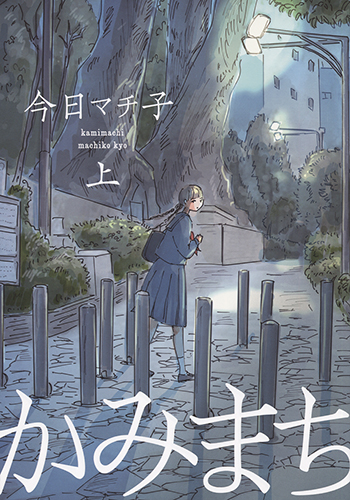
Kamimachi

Machiko Kyō’s Kamimachi (かみまち) was serialized from June 2019 to December 2022 and published as a two-volume graphic novel in August 2023. The story follows four homeless teenage girls who find themselves at a privately run youth shelter called Kami No Ie (“Family of God”) in the Tokyo suburbs.

Although he initially seems kind and welcoming, the middle-aged man who runs this shelter is a sexual predator, and he has assaulted and murdered one of his young charges prior to the beginning of the story. The ghost of this young woman, in the form of a Christian angel, helps the girls find the courage to escape the Kami No Ie shelter.

Each of the four main characters in Kamimachi has become homeless after escaping a toxic home environment.

Uka is the only child of a single mother who projects her loneliness and frustrated ambitions onto her daughter. The story begins as Uka leaves home and seeks shelter by means of a roomshare app. After a number of awkward situations, Uka comes to the attention of a group of men who use the app to recruit sex workers. These men force Uka into a situation in which she’s expected to trade a night at a short-term rental space for sex. She breaks out of the apartment and wanders the streets of Tokyo before finding herself at the Kami No Ie shelter.

Uka’s closest friend at the shelter, Nagisa, has been sexually abused by her stepfather for years. She finally flees from home after her mother witnesses one of these assaults and turns away in disgust.

Arisa was raised as a television idol by a single mother. After her mother’s sudden death in an accident, Arisa is given to the care of a talent manager who steals her inheritance and financial assets, leaving her destitute.

Yō is one of five siblings. She’s so neglected by her family and bullied by her brothers that she finds it preferable to sleep in subway stations. Eventually she stops returning home altogether.  

For each of these young women, Tokyo becomes a wilderness whose anonymous open spaces serve as a refuge from the enclosed interiors where they’re coerced into enduring abuse. Kyō draws indoor scenes using small panels with blank backgrounds, and these scenes often feature close-ups of the characters’ faces in moments of distress. Meanwhile, Kyō depicts outdoor scenes with large panels that frame the characters with trees and buildings. The expansive outdoor settings often serve as the stage for small moments of kindness and emotional clarity.

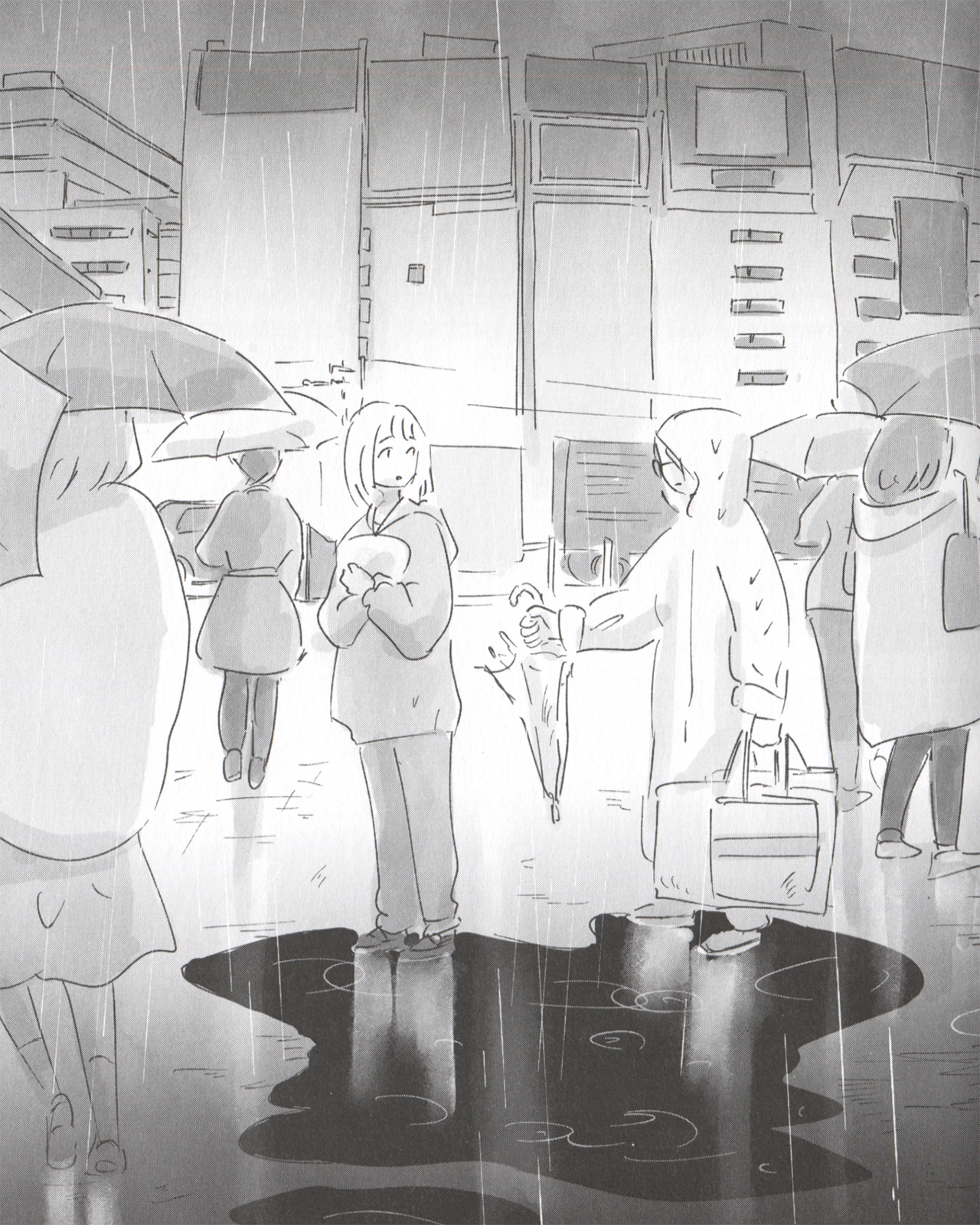
In Chapter Three, for example, Uka flees into the night after an attempted sexual assault at a roomshare apartment. After her escape, she wanders through the rain with nothing but the clothes on her back. Out of context, the rainy cityscape may seem bleak, but the large panels filled are a visual relief after the oppressively small and claustrophobic panels that depict the apartment.

One of the anonymous figures passing in the rain, whom the reader later learns is Yō, stops beside Uka to give her an umbrella. Page 71 opens with a close-up of Yō’s extended hand before spreading into an open panel in which Uka and Yō stand at the center of a composition framed by misty buildings and puddles on the concrete. The two small figures reaching out to one another are enclosed in a soft curtain of rain, and the sense of relief at being a part of a larger world is palpable.  

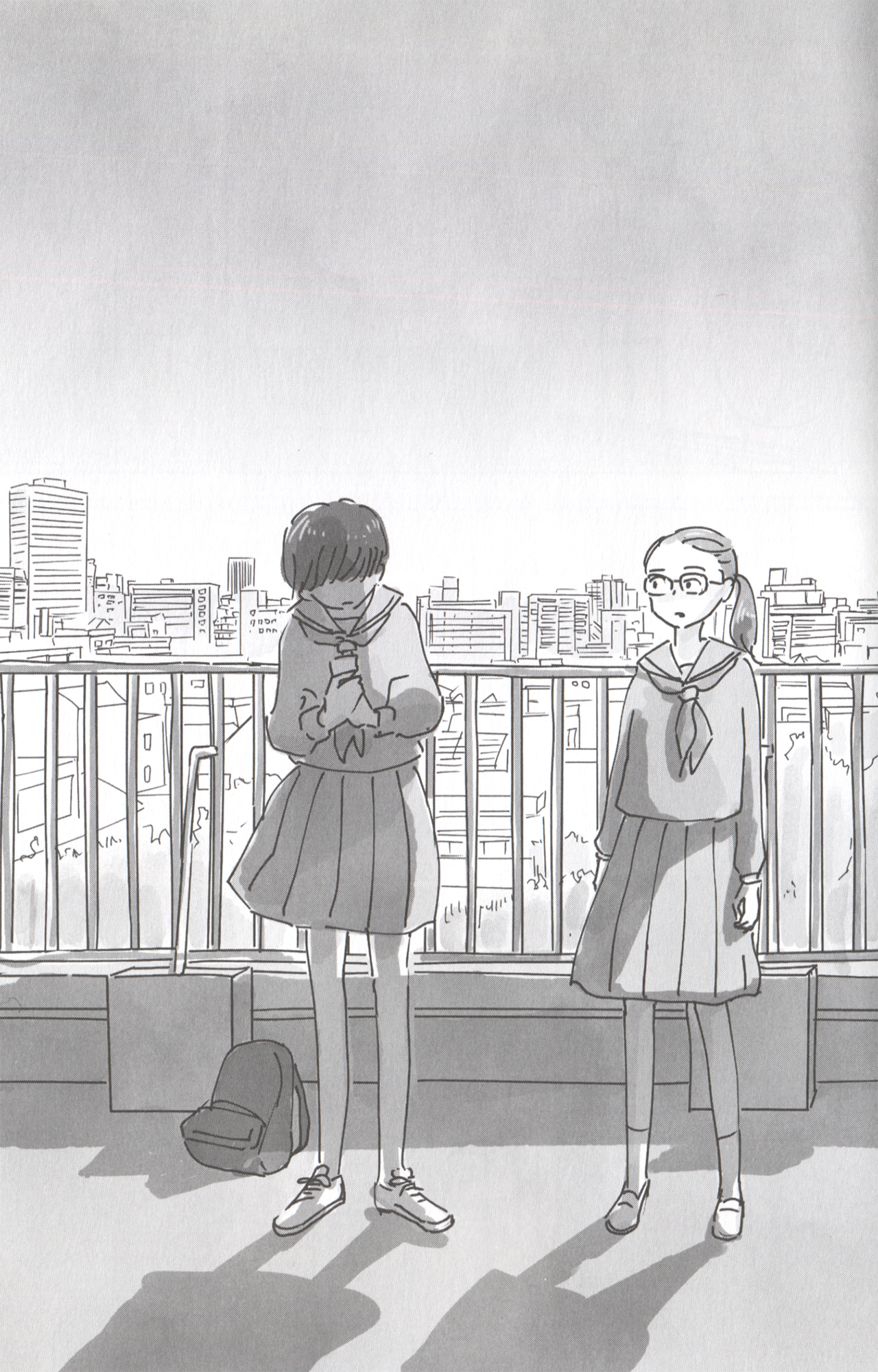
Chapter Seven contains a similar scene in which the open sky and background cityscape suggest freedom from the violence that occurs behind closed doors. Nagisa, who’d encountered Uka in a roomshare arrangement, takes Uka’s discarded uniform and attends school in her place. One of Uka’s former classmates approaches Nagisa, offers to share her lunch, and asks that Nagisa talk with her on the roof. Nagisa initially tries to be normal, showing the girl photos of her mother and stepfather’s new infant daughter.

During this scene, the panels become progressively smaller until Nagisa finally admits the truth about having left her family. The shift to a full-page panel depicting the city’s jumble of buildings spreading under the open sky signals Nagisa’s admission that something has to change. This moment also serves as the catalyst for Uka’s classmate to begin searching for her missing friend, a decision that ultimately results in Uka’s rescue from the Kami No Ie shelter.

The openness of Tokyo cityscapes in these scenes suggests that the sort of hidden abuse endured by these young women needs to be brought into the open and exposed to the light of public scrutiny. Along those lines, I can’t help but feel that Kyō’s depictions of outdoor spaces in Kamimachi also reflect the artist’s emotional response to the Covid pandemic. For people in precarious situations, being physically stuck inside often exacerbated the experience of feeling trapped within oppressive social systems.

As an artist who documented the pandemic years through evocative illustrations posted to Instagram, Kyō’s project is not simply to depict the beauty of architecture and greenery within the city, but also to comment on the importance of open outdoor “third places” for young people suffering from social pressure and economic strain. Kamimachi doesn’t provide easy solutions, but it’s cathartic to see the issue of youth precarity brought out into the open air. 

Machiko Kyō is a prolific and award-winning artist whose illustration collections have been celebrated by The Comics Journal (here). If you’re interested in reading more about the artist’s work, I published a short essay on her 2013 graphic novel Cocoon – whose animated adaptation is scheduled to premiere on NHK in Summer 2025 – on Women Write About Comics (here). Here’s hoping that English-language readers will be able to experience Kyō’s compelling and thought-provoking work in the near future.

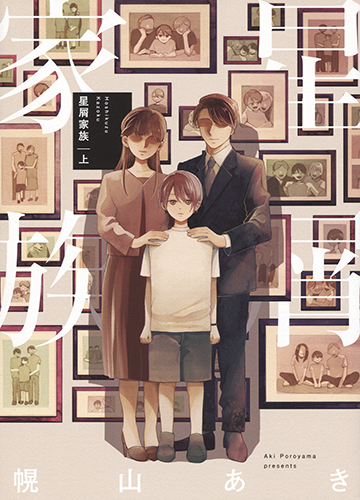
Hoshikuzu Kazoku

Hoshikuzu Kazoku (星屑家族) is a two-volume graphic novel set in an alternate universe where parents are required to obtain a license to raise children. To qualify for a license, a prospective family is asked to undergo an audition with a homestay student. This auditor, who is often an orphan raised in a government-run facility, evaluates the family’s fitness by deliberately behaving badly and provoking difficult situations. 

An auditor who goes by Hikari is assigned to Daiki and Chisa Hirokawa, a young couple who live on the grounds of a Shinto shrine. During their initial interview, Daiki surprises Hikari by openly requesting that their family be denied a childrearing license. Daiki claims to be happy living with his wife as a couple, and he shares his suspicions that Chisa doesn’t actually want children. With that out of the way, Daiki says, the three of them can enjoy the homestay visit without any pressure or expectations.             

Chisa and Daiki genuinely seem to be happy together, but Hikari soon notices that Chisa is the target of a longstanding prejudice held by people in the neighborhood. Chisa’s mother killed her father when she was a child, and she’s been ostracized ever since. Along with her foster father, who once managed the shrine, Daiki was the only person who was kind to her. Now that she and Daiki have married and set up a household at the shrine, Chisa feels trapped within a community she can’t escape. Why, then, does she want a child so badly? And is it Hikari’s place to get involved?

Hoshikuzu Kazoku is a high-stakes family drama that presents a moral conundrum with no easy solutions. If the government creates regulations to ensure a well-ordered society, what happens to the people whose lives are more complicated than the provisions allowed by the legal code? If there’s room for flexibility in the bureaucratic system that enforces the law, who should have the right to grant exceptions? And more specifically, in a country witnessing its birth rate decline in response to the disintegration of community support structures, what are the limits of government intervention?

Even putting such questions aside, Hoshikuzu Kazoku is compelling by virtue of its problematic yet still sympathetic characters. Hikari, Daiki, and Chisa each bring loads of emotional baggage to the table, but they do their best to communicate to the limited extent of their abilities. Despite their many flaws and the odds against them, I wanted these characters to be happy.

Aki Poroyama’s writing, dialogue, and pacing are all excellent, and the visual language of the manga serves to set the mood and create dramatic impact. I wasn’t familiar with the work of this artist, and I was amazed by the polish of this graphic novel. I’d recommend Hoshikuzu Kazoku to mature readers looking for socially conscious speculative fiction driven by complicated human stories. 

Belles Ruelles

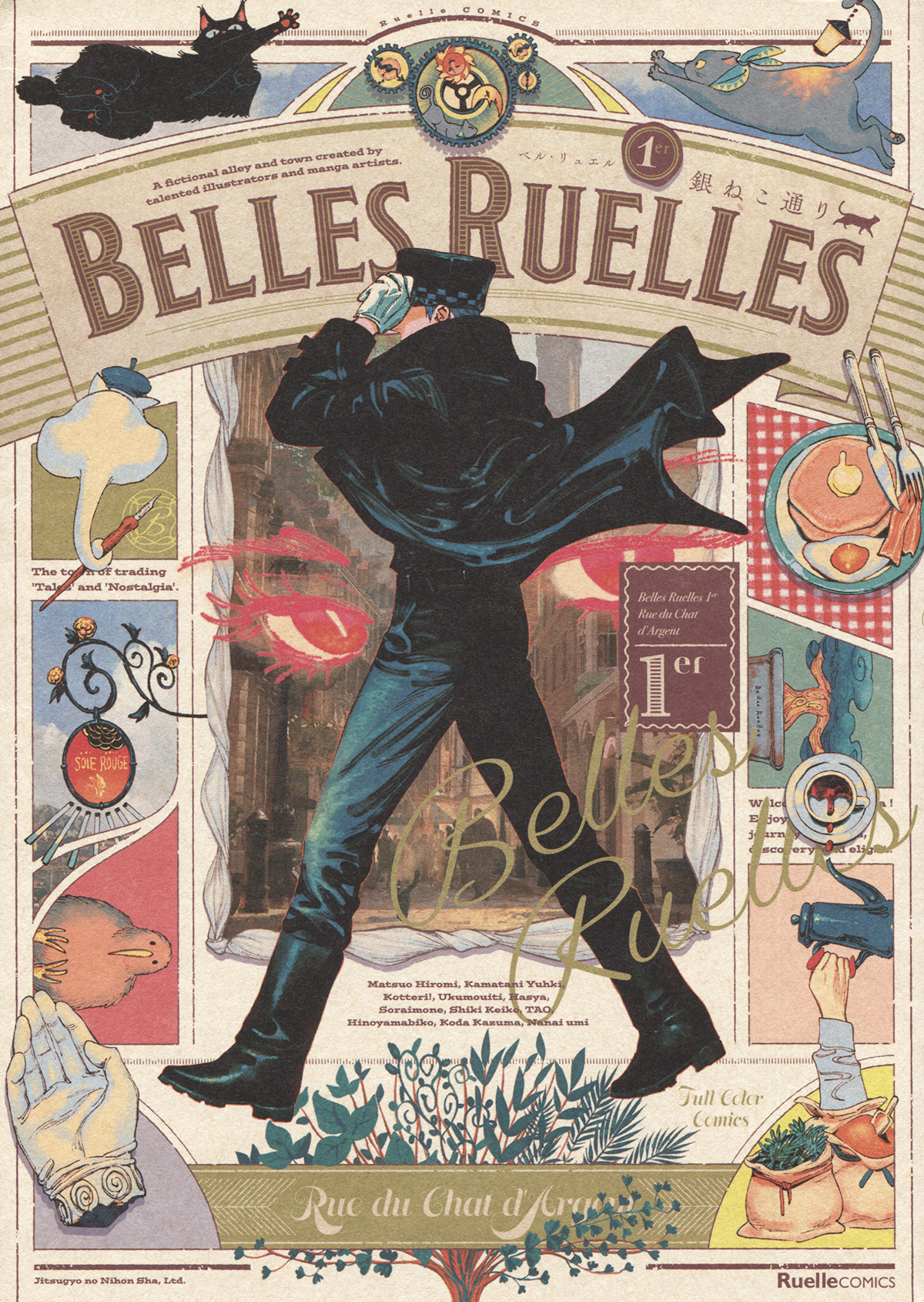
Belles Ruelles is a gorgeous full-color anthology that collects the work of eleven manga artists and illustrators, each of whom has been tasked with telling a story set in the fictional European town of Eufemia.

Eufemia has preserved its medieval cityscape while maintaining a lively community of established shops, young entrepreneurs, and cultures from all over the world. It’s filled with narrow alleys, charming old buildings, ivy-adorned walls, and even a bit of magic.

One of my favorite stories is Keiko Shiki’s “Spice,” in which the young assistant at a store specializing in herbal teas and cooking spices learns just how much love and care the store owner puts into perfecting her craft.

I also love Hiromi Matsuo’s “Soie Rouge,” in which a college student tastes the luxury of trying on a kimono for the first time. Every panel of this manga is an artistic masterpiece, and the writing gently guides the reader through the sartorial experience.

I’m happy to see that this anthology is the first in a series, because I’m very much looking forward to visiting Eufemia again soon. If you’re a fan of the fantasy European setting of Studio Ghibli movies like Kiki’s Delivery Service, I’d encourage you to take a trip yourself.

Writing Pregnancy in Low-Fertility Japan

Title: Writing Pregnancy in Low-Fertility Japan
Author: Amanda C. Seaman
Publisher: University of Hawai‘i Press
Publication Year: 2017
Pages: 230

This guest review is by Tyran Grillo (@tyrangrillo on Twitter).

Amanda C. Seaman’s Writing Pregnancy in Low-Fertility Japan is a masterfully written and timely monograph. It explores the role of pregnancy, if not the pregnancy of roles, concerning women as subjects within, and creators of, Japanese literature in a time of social restlessness around questions of procreation.

In her first chapter, “Write Your Mother,” Seaman seeks to define the practical and symbolic overtures of pregnancy as literary trope. Summarizing not only the large amount of literature on pregnancy and childbirth, but also the media blitz on Japan’s falling birthrate and rising aging population, she rightly asks: Does there continue to be a national obsession with all things baby? None have given this question proper attention, and Seaman’s work provides a compelling response. In addition to a widespread media blackout on this question, even less attention is paid to “cultural, artistic, and intellectual responses to and representations of pregnancy and childbearing in the ‘low fertility’ age” (1). This, Seaman claims, lenses a unique perspective on pregnancy as a metaphorical site for the actual bodies undergoing misunderstood changes.

Seaman is concerned with how women writers are using storytelling as response mechanism, and to make this point focuses on works of Takahashi Takako, Itō Hiromi, Ogawa Yōko, Tadano Miako, and Hasegawa Junko, among others. While politicians and other policy makers have taken it upon themselves to make pregnancy a matter of intense public interest, these writers make it matter of intense private interest, albeit in the decidedly public format of mass-market publishing.

Seaman’s book opens with an erudite summary of the scare regarding declining birth rates from the end of the Pacific War to the present century. Despite surface-level concern and efforts, Japan’s government has done little to promote childbearing in any way amenable to actual women. As the media continues to propagate a sugarcoated version of marriage and childbirth, the realities explored by Seaman’s writers of interest reflect an unabashed landscape of “danger, repression, destruction, or pain” (4). Their focus on bodies as continents shifting to the seismic activity of public opinion ensures that the self becomes not simply a beacon but a lightning rod to political provocation.

Explicit discussion on the printed page of women’s fertile bodies in such intimate terms is a relatively modern concession, and before its advent women’s bodies were relegated to a relatively impressionistic realm of unclean impulses and male-defined mystery. Yosano Akiko, notes Seaman, was instrumental in bringing an embodied approach to pregnancy and childbearing in the early 20th century, as well as for addressing the suffering involved in both. Her call was not taken up by many, although it did spark the “maternal turn” promulgated by such writers as Okamoto Kanoko. After the Pacific War, women’s maternal roles were more intimately associated with carbon-copied nuclear family archetypes. Only in the 1960s and 1970s did a “new wave” of women writers emerge. Among them, Tsushima Yūko reclaimed motherhood, in all its ups and downs, as something distinctly women’s own. Pregnancy manga soon followed in the early 1990s, and Seaman includes analyses of quintessential examples.

The title of Chapter Two – “Hey, You, Get Out of My Womb!” – references pregnancy as both a literal and metaphorical cipher of invasion. In this chapter, Takahashi Takako, Takekawa Sei, and Ogawa Yōko are shown to focus on the alien aspects of pregnancy. Seaman opens with an poem by Yosano Akiko that pays homage to folkloric themes newly applied to pregnancy. This sets a precedent for writers to come by exploring the ambivalences of the womb and using horror as a device of interruption. By capitalizing on the latter tropes, these writers challenge the characterization of pregnancy as uneventful. In Takekawa Sei’s “Tsuki no nai yoru ni” (On a moonless night), we encounter fantasy as manifestation of fear of sexuality in tandem with childhood trauma. And yet, Seaman concludes, “nothing can supersede the maternal instinct, not even the personal wishes or well-being of the maternal subject herself” (26). Takahashi Takako’s “Kodomo-sama” (Holy terror), on the other hand, takes fears of pregnancy into monstrous dimensions, while Ogawa Yōko’s “Ninshin Karenda” (Pregnancy diary) is alienation incarnate. Seaman characterizes the latter story as a modern fairy tale in its evocation of a collective unknown as it spirals into a pseudo-scientific and occult-like framing of family bonds and communication. She further notes an overarching ambiguity at play in all of these stories.

Chapter Three, “And Baby Makes One,” examines pregnancy and its connection to notions of escape and reformation of personal identity. Both Hasegawa Junko’s “Museiran” (The unfertilized egg) and Tsushima Yūko’s Chōji (Child of fortune) deal with women treating pregnancy as an escape and motherhood as a “type of personal salvation” (52). Seaman reveals motherhood as a leitmotif throughout Tsushima’s oeuvre in constant negotiations of opposites – both in the physical and emotional sense. The 36-year-old protagonist is on the cusp of losing her womanhood (at least from society’s point of view), and the narrator recalls the indifference with which she treated her present daughter, finding peace only when her maternity slips away from conscious reiteration. Hasegawa’s “Museiran” goes further in its depiction of a painful hermetism, but both authors make use of dreams and fantasies, using the power of pregnancy to go beyond the playing field of romance in the shadow of failure.

Pregnancy as a way to partnership is the subject of Chapter Four, “Manual Labor,” which discusses millennial writers Kakuta Mitsuyo and Tadano Miako. Seaman sees both as challenging what she calls “canonical pregnancy,” by which is meant the “ideals and practices promoted by pregnancy literature” (81). Such literature “trains” expecting mothers to become realizations of the ideal, as if such extraneous knowledge were only available in magazines, books, and guidelines and not in the hardwired mechanisms of the female anatomy, which are carefully monitored by doctors and, after a child is born, education systems. Everything the mother does during pregnancy is believed to have a direct outcome in the birth and subsequent development of the child, even as little is said in such literature about a mother’s relationships with others in her life.

Kakuta Mitsuyo’s Yoteibi wa Jimi Peiji (My due date is Jimmy Page’s birthday) and Tadano Miako’s Sannen migoromu (The three-year pregnancy) rework the canonical pregnancy as “an emphatically social enterprise” (85). In Kakuta’s novel, a seemingly textbook pregnancy churns the protagonist’s mind into a slow, diaristic unfolding of ennui over, and alienation from, her growing fetus. Paradoxically, the story underscores and unravels restrictive pregnancy norms as she settles into the reality with relative peace and acceptance. Tadano is less introspective and more humor-oriented, choosing instead to follow surreal sequence of events, thereby underscoring folkloric tendencies and problematizing the notion of self-made mothers.

Chapter Five, “Riding the Wave,” moves on to tropes of pregnancy manga, texts that allow Seaman to discover novel ways of depicting the pain of childbirth in their deft mélange of humor and critique. From Itō Hiromi’s illustrated 1984 manual Yoi oppai, warui oppai (Good breasts, bad breasts) to the manga collection of 12 short stories, Go-shussan! (Birth!), published by the editorial collective known as “Cream Puff” (Chou Crème), Seaman notes a metaphorical hyper-realism at work. Using symbolic imagery “in favor of an affective but rather static emphasis on motherhood” (129) in personal narratives that challenge medicalized notions of pregnancy in dealing with a matrix of pain for which they feel ill prepared, while their use of humor, as Seaman observes, “counteracts the impression that the pregnant body is grotesque or abnormal” (143).

These themes are deepened in the sixth and final chapter, “Em-bawdy-ing Pregnancy,” which offers a deep reading of Uchida Shungiku’s eclectic blend of critique and family values-focused conservatism. Her controversial book of autobiographical fiction, Fazaa Fakkaa (Father fucker), examines a life of abuse at the hands of an unnamed stepfather. Seaman looks beyond the obvious sexual perversions of the novel to its catalytic pregnancies. The manga series Watashitachi wa hanshoku shite iru (We are breeding) is an optimistic yet no-less-frank examination of pregnancy. Uchida’s experiential mixture of realism and exaggeration makes manga a suitable vehicle for self-expression, by which she delineates personal experience outside the trigger-happy realm of politics.

In her Afterword, Seaman concludes on an open-ended note: “It remains to be seen whether literature can offer a similarly [i.e., to manga] compelling, challenging, and idiosyncratic account of what it means to become a mother in millennial Japan” (182). The keyword in Seaman’s statement here is “account,” which underscores the importance of personal experience. The implicit question of this study, however rhetorical, inspires us to think beyond the script of pregnancy in search of individual connections and to view said connections not as objects of fetishizing scholarship but as the voices of living human beings.

* * * * *

Tyran Grillo is a Dorothy Borg Postdoctoral Scholar in East Asia and the Americas at Columbia University (link). Tyran received his doctorate in Japanese Literature in 2017 from Cornell University, where his research focused on (mis)representations of animals in Japanese popular culture, as well as intersections of Asian Studies and Posthumanism. He has been a professional translator for over a decade, translating twelve books of Japanese fiction into English to date, including Parasite Eve by Sena Hideaki (Vertical, 2005), Paradise by Suzuki Kōji (Vertical, 2006), and Mr. Turtle by Kitano Yūsaku (Kurodahan Press, 2016). Alongside his academic life, Grillo is an avid arts critic, having written over one million words of impressionistic reviews and essays on music, performance, and film on his website, Between Sound and Space.
Marshmallow Bungaku Girl

Marshmallow Bungaku Girl

Title: Marshmallow Bungaku Girl
Japanese Title: ましまろ文學ガール (Mashimaro bungaku gāru)
Alternate Title: Mädchen Marshmallow Literatur
Artist: Amano Taka (天乃 タカ)
Publisher: enterbrain (エンターブレイン)
Publication Dates: 6/27/2011 – 2/15/2013
Volumes: 2

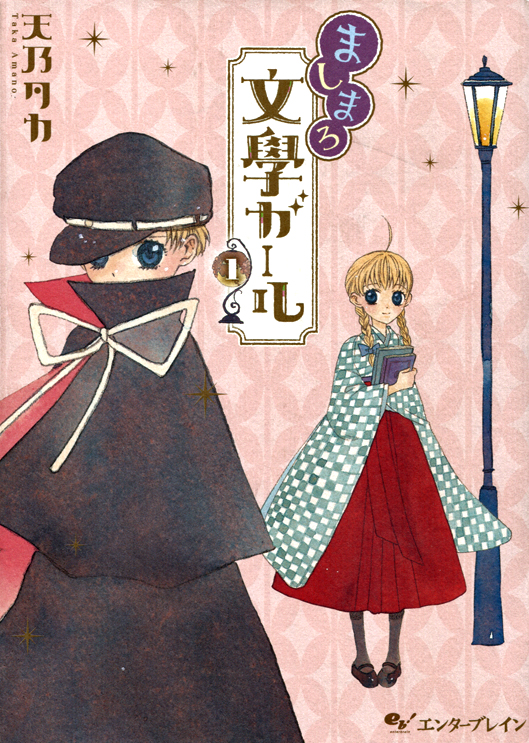
In the late Meiji Period, as Japan undergoes the process of modernization, Hoshino Mone is a student at an all-girls private high school in Tokyo, where she lives with her male guardian, Sei. Although a young woman’s duty is to be beautiful and modest so as to become a suitable bride, Mone has a different dream – she wants to write literature! Literature (the bungaku of the manga’s title) is believed to corrupt women, so Mone cuts off her braids, dons schoolboy clothing, and joins an all-male literature club. Although she must face a bit of drama concerning her choices, the friends Mone makes help her hone her talents and offer her inspiration as they take her on adventures around town. The handsome young literary illustrator Nasuhito knows Mone’s secret but believes in her potential. Nasuhito’s respect for Mone as a fellow artist is not the only source of his warm feelings for her, however.

Although Bungaku Girl was published in the seinen magazine Fellows! – the former name of Kadokawa’s prestige-format monthly serial Harta (ハルタ) – it reads like a shōjo manga from the 1990s, when the influence of series such as Fushigi Yûgi and Cardcaptor Sakura injected elements of gender bending and bishōnen harems into even the most prosaic romance stories. All of the young men in the literature club are impossibly gorgeous, and everyone is decked out in immaculate period dress. There’s a hint of yuri provided by the radiant high school princess Sono, another literature fan who becomes enamored of Mone’s courage and independent spirit, but there are no elements of the male gaze to be found in the manga’s story or art. Instead, there are touches of Mori Kaoru in the close attention paid to historically accurate fabrics, interiors, street scenes, and city vistas.

Bungaku Girl is less about Mone’s cross-dressing and gender identity than it is about her commitment to doing whatever it takes to find a supportive community for what she loves. Many of the story’s most powerful moments occur when the characters are being creative – when Mone is writing, or when Nasuhito is drawing, for instance – and these moments are reinforced by being framed within the sense of belonging to a group of people all working together to share their ideas and produce something tangible. For us nerds who have studied modern Japanese literary history, there are pleasurable echoes of the student groups, coterie magazines, and research trips into pleasure districts associated with real-life literary figures.

This two-volume series is only available in Japanese, but it would be really cool if someone were to license it in North America. The story is simple and charming, the characters are adorable, and the art is clean and attractive. Bungaku Girl offers love, drama, and interesting imagery, not to mention encouragement to leave your comfort zone and live your dreams!

Bungaku Girl Volume 1 Page 23

I… want to join your literature club!

The Princess of Tennis

The Princess of Tennis

Title: The Princess of Tennis
Author: Jamie Lynn Lano
Publication Year: 2014
Publisher: Amazon CreateSpace
Pages: 203

The Princess of Tennis the Jamie Lynn Lano’s non-fiction memoir of the year she spent working as an art assistant for Konomi Takeshi’s mega-popular manga Prince of Tennis, which has been serialized in one form or another since 1999. If you’ve ever wondered about the gritty details of the manga industry in Japan, then this the book for you, as the author’s account of her apprenticeship to a successful manga artist is rich with colorful descriptions enhanced by numerous photographs and illustrations.

The book jumps right into Lano’s position as an art assistant without much preamble: she applies for the position on page 3, gets a callback on page 6, and is being driven to Konomi’s studio on page 9. The reader is able to piece together details about her life outside The Princess of Tennis over the course of the following pages as she plunges headlong into her new job. She has graduated from art school, she has never drawn manga-style illustrations using professional tools (such as screentone and a maru-pen), she teaches English in Japan, and she doesn’t speak much Japanese. She’s also more of a fan of the Prince of Tennis anime than she is of the manga, thus rendering her qualifications as an art assistant for Konomi somewhat dubious. Still, she takes the opportunity when it is offered to her, and she ends up having an amazing experience. As she writes in her prologue, “This book is for anyone who has ever wondered if they should make a choice to take the scary but tempting new opportunity in front of them.”

Lano promptly quits her job teaching English, and from that point forward she gets paid to draw, to play golf with Konomi and the other assistants, to draw, to watch a live performance of the Prince of Tennis musical with Konomi and the other assistants, to draw, to drive around Chiba prefecture with Konomi and the other assistants, to draw, to go out to eat with with Konomi and the other assistants, to draw, to attend the JUMP Festa industry-sponsored fan event with Konomi and the other assistants, to draw, and so on. Along the way, Lano learns professional manga illustration techniques such as how to trace backgrounds and how to draw speed lines. She also enjoys several chances to express her talent and creativity, especially concerning character design, and she ends up influencing critical visual aspects of the manga, such as the logo and patterns that adorn the jerseys worn by the main characters. Along the way, she becomes friends with her fellow assistants, her fellow fans, and even one of the actors starring in the Prince of Tennis musical.

The main tension of Lano’s narrative comes in around halfway through the book, when the sparkles have faded from her vision of Konomi Takeshi and the star-studded universe that revolves around him. Although many of the miscommunications in the first half of the book are related to Lano’s self-proclaimed lack of proficiency with the Japanese language, the miscommunication in the latter half of the story stems mainly from industry-standard assumptions regarding the role of manga art assistants, who are apparently allowed very little freedom and personal space while they’re on the job. Assistants eat, sleep, and bathe in the studio, and they aren’t really allowed to leave the building, even when they have no work to do. This is especially hard on Lano as she struggles with relationship and visa issues. After the initial heady rush of drawing marathons and group outings, the frustration arising from the paradoxical combination of impossible work deadlines and being expected to kill time in the studio despite pressing personal concerns forces Lano to question whether she wants to continue her job as an art assistant to Konomi. Her doubts are complicated by similar disappointments on the part of her coworkers, not to mention Konomi’s own admission that he himself hated being an art assistant. Although the reader knows from the beginning that Lano will resign, I still found the details surrounding the ending of this particular chapter in her life to be unexpected and dramatic.

As someone who reads self-published Kindle singles the way that some people eat potato chips, I have encountered my fair share of author-edited writing so awful that it would make any respectable connoisseur of fan fiction cringe with shame and embarrassment. Despite being self-published through Amazon’s CreateSpace independent publishing platform, The Princess of Tennis is beautifully edited and perfectly formatted, with no typos or grammatical errors to be seen. If you’re intrigued by Lano’s story but worried about the presentation of a self-published memoir, fear not; everything about The Princess of Tennis is polished and professional.

Lano’s style is colloquial without being breezy, and her mixture of exposition, explanation, dialog, and interior monolog is fast paced and reader friendly. It’s true that certain aspects of the text, such as emotional reactions rendered in caps lock sentence fragments, are reminiscent of the style of blogging common to fannish social networking hubs like Livejournal and Dreamwidth, but I found such instances of internet language humorous and charming. If you feel that occasional asides such as OMG HOW EMBARRASSING!! inserted into otherwise cleanly structured prose are a deal breaker, then you’re probably not the target demographic for this book anyway.

For the rest of us, The Princess of Tennis is an entertaining glimpse into the lives of the creators working at the top of the manga industry in Japan, not to mention an artfully presented memoir tackling the theme of dealing with intense emotional conflict while following a long-cherished dream. Even if you don’t know anything about the Prince of Tennis manga, it’s still worth checking out Jamie Lano’s lovingly crafted book.

The Princess of Tennis can be purchased as a print or a digital edition on the American and UK Amazon websites, as well as in a digital edition on the Australian Amazon website. Lano frequently updates her blog Living Tall in Japan with illustrated essays on manga and the manga industry, so check her out there too if you’re interested!