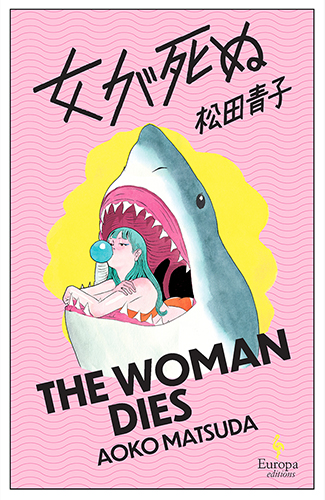
The Woman Dies

The Woman Dies presents 52 pieces of flash fiction by Aoko Matsuda, the author of the short story collection Where the Wild Ladies Are. Each of Matsuda’s small but sparkling stories responds to various aspects of pop culture in clever and surprising ways.

Characteristic of Matsuda’s idiosyncratic approach to the flotsam of contemporary culture is “Hawai’i,” which imagines a heaven for clothes that were thrown away because they did not spark joy. The heaven enjoyed by an unworn sweater sounds like a lovely time of relaxing by the pool while, in the sky, “not far from the rainbow, the pair of skinny jeans owned in similar shades was paragliding together with the dress once worn to a friend’s wedding and never again.”

At the same time, the over-the-top language Matsuda uses to describe this paradise hints at how ridiculous it is to ascribe any sort of teleological meaning to consumerist excess. Still, if this is the world we find ourselves in, why not imagine a heaven where even a discarded sweater is allowed to have a happy ending?

While the topics covered in The Woman Dies are varied, many of the stories playfully confront gender issues in popular media. One of the more intriguing of such stories is “The Android Whose Name Was Boy,” which Matsuda writes “evolved from my thoughts about Neon Genesis Evangelion,” a classic sci-fi anime from 1995 that does indeed inspire thoughts about gender. 

The eponymous android, whose name is in fact “Boy,” begins its life by setting out on an adventure. Over the course of the five-page story, it does its best to disrupt narrative conventions regarding young male characters. Challenging and unending though this task might be, “the android whose name is Boy, developed to heal the wounds of those hurt by boys hurt in the past, is on the move once more.”

While “The Android Whose Name Was Boy” is open to a diversity of interpretations, other stories in the collection are overtly feminist. In “The Purest Woman in the Kingdom,” a prince takes it upon himself to seek out a woman who has never been touched by a man. After a great deal of searching, he finally finds and marries one such woman. On their wedding night, she karate chops him into oblivion. This woman has never been touched by a man; and, thanks to her training and skill in martial arts, she never will be. Absolute queen behavior.

Most of the stories in The Woman Dies are relatively lighthearted, but “The Masculine Touch” (by far my favorite piece in the collection) is out for blood. This story flips the script on gender, casting male writers as delicate greenhouse flowers who need to be supported because sometimes – every so often – their work has cultural and economic value. Matsuda doesn’t pull her punches:

The more radical of the male novelists wrote articles about this turn of events for male magazines, declaring this the beginning of the Male Era. They bolstered their arguments with examples of the other times when the masculine touch had effected changes like this one, thus arguing for men’s continued progress in all areas of society.

“The Masculine Touch” responds to a painfully specific way of talking about female writers and artists in Japan, and I imagine that people in other contexts can relate to frustrations regarding how the publishing industry fetishizes “queer writers,” or “writers of color,” or any number of people whose humanity is compressed into marketing-friendly categories.

Unfortunately, other pieces in the collection lack this specificity. Though we’re all familiar with the trope of fridging female characters, the title story, “The Woman Dies,” is a bit too broad to resonate. Though it’s easy to sympathize with the sentiment underlying “The Woman Dies,” readers may find themselves simply shrugging and moving on. Flash fiction tends to be hit or miss, but this collection offers an array of stories to choose from, and it achieves an admirable balance between heavy hitters and palette cleansers.

The Woman Dies is remarkably cohesive as a collection. There’s a lovely rhythm and flow to the stories, and it’s just as entertaining to read the book in one sitting as it is to dip in and out at your leisure. Matsuda’s writing is sharp and self-aware, and she uses brevity as a weapon to puncture the absurdities of gender, media, and modern life. It’s a pleasure to read her work in Polly Barton’s translation, which is quick and lively and showcases an incredible range of tone and style that’s pure literary pop.
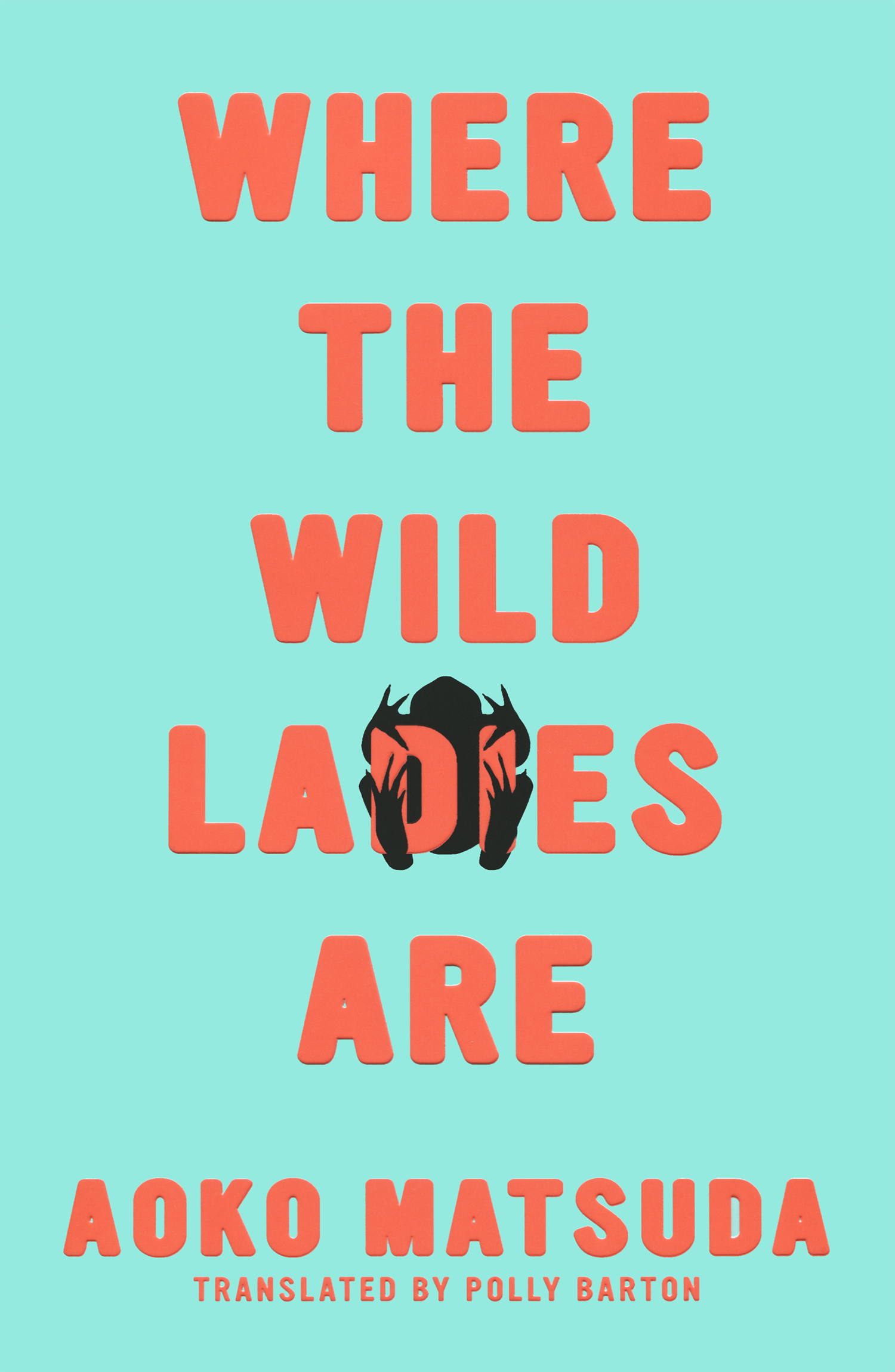
Where the Wild Ladies Are

Author: Aoko Matsuda (松田 青子)
Japanese Title: おばちゃんたちのいるところ (Obachan-tachi no iru tokoro)
Translator: Polly Barton
Publication Year: 2016 (Japan); 2020 (United States)
Publisher: Soft Skull Press
Pages: 271

Where the Wild Ladies Are collects seventeen short stories about the everyday lives of ghosts, demons, and yōkai in contemporary Japan. Although all of these stories are a bit strange, their tone is light and comedic, and all the hauntings are consensual.

My favorite story in the collection is “Quite a Catch,” which is about a young woman named Shigemi who has found herself in a romantic relationship with the ghost of a skeleton she inadvertently pulled out of the Tama River in Tokyo while fishing with a friend. The ghost, Hina-chan, appears outside of Shigemi’s apartment to thank her for dredging her bones from the riverbed. Shigemi is alarmed at first, but before long she and Hina-chan are chatting while watching television, not to mention bathing and sleeping together. Hina-chan’s nightly visits are a best-case scenario for the narrator, who has always wanted companionship without having to live with a spouse or roommate.

As the story notes in the back of the book explain, “Quite a Catch” is based on the comedic folktale Kotsutsuri (Skeleton Fishing) about a man who, after having heard a friend’s story about being thanked by the beautiful ghost of a drowned skeleton, goes to the river in an attempt to snare himself a supernatural girlfriend of his own but ends up fishing up the skeleton of the villain of a famous kabuki play.

Other stories in the collection feature other well-known figures from Japanese drama, lore, and legends narrated from unusual perspectives. “On High,” for example, is about a ghostly princess who haunts the beautiful hilltop Himeji Castle while it’s in the process of undergoing extensive renovations in the name of “historic preservation.” Meanwhile, “Enoki” is narrated by a sacred tree that is both frustrated and amused by the humans who insist on praying to it for various blessings, while “A Fox’s Life” is about a woman who’s been told she resembles a fox so often that she finally decides to go up into the mountains and become one.

“Smartening Up” is the first story in the collection, and it’s an excellent introduction to the author’s playful voice as she expresses the central theme of learning to embrace your weirdness and imperfections. The narrator begins the story obsessed with the darkness of her hair, spending a considerable amount of time and money on hair removal treatments while wishing she were born blond. On returning home after a rigorous session at an aesthetic salon one evening, she finds her aunt waiting for her in her apartment. This is something of a surprise, as her aunt had committed suicide in the wake of a failed love affair. Even more shocking, this aunt tells the narrator that she knows all about how she’s come to hate her appearance after being dumped. There’s nothing wrong with her hair, her aunt insists, especially since the fault lies with the piece of trash who cheated on her. The aunt assures her that her black hair is gorgeous, and that there’s no need for her to feel gross and ugly.

This story is loosely based on the Dōjōji legend, specifically the kabuki play Musume Dōjōji (The Maid of Dōjō Temple). The original story, in which a lustful woman is spurned by a celibate monk and turns into a giant snake to pursue him, is almost laughably misogynistic. The kabuki version, on the other hand, celebrates the woman’s serpentine transformation as an act of beauty and magic, with the dancer twirling in a robe that shines silver with the gorgeous gleam of scales.

The narrator’s aunt reminds her of the time they saw this play together and then admits that she’s still figuring out what her own secret power is. As the narrator considers the matter, she realizes that her own power is indeed in her hair. She begins eating hair-fortifying foods like liver and seaweed, helping her hair to become as monstrous and powerful as the snakes commanded by Medusa. She hides her demonic hair during the day but allows it to come out at night, brushing it to a high sheen and thinking about what sort of special skills she will learn in the future as she grows more comfortable wielding her magical power.

This may sound sentimental and a bit self-helpy, but the tone is actually very tongue-in-cheek and down to earth. The narrative voice, which is expertly captured through Polly Barton’s translation, is highly engaging. Many of the stories in Where the Wild Ladies Are were inspired by rakugo comedic storytelling, which is meant to be a bit salty and ridiculous. A set of brief notes concerning sources and inspirations is provided at the end of the book, but it’s absolutely not necessary to be familiar with the original legends to appreciate and enjoy the stories in the collection.

Although many of the stories in Where the Wild Ladies Are revolve around the theme of supernatural female empowerment, there’s no man-hating here – far from it. There are plenty of interesting male characters, including a time-traveling and dimension-hopping wizard who was inadvertently roped into the job and decided, like any good salaryman, just to stick with it. Although the reader doesn’t figure this out until late in the collection, all of the stories are loosely linked, with the various male and female characters managing to get along with each other in relative harmony.

Between the creative contemporary re-imaginings of folklore, the strong female friendships, the queer monster romance, and the general disdain for boring office jobs and awful bosses, the target audience of Where the Wild Ladies Are is specifically me, and I feel very seen and catered to. Still, Where the Wild Ladies Are should resonate with a broad readership. I suspect that a lot of anime fans and yōkai enthusiasts will be highly entertained by the collection, and the stories will appeal to anyone of any gender who enjoys clever comedy about how wild it is to live in the modern world.

The Girl Who Is Getting Married

Title: The Girl Who Is Getting Married
Japanese Title: もうすく結婚する女 (Mō sugu kekkon suru onna)
Author: Aoko Matsuda (松田 青子)
Translator: Angus Turvill
Publication Year: 2010 (Japan); 2017 (United Kingdom)
Publisher: Strangers Press
Pages: 36

Aoko Matsuda’s The Girl Who Is Getting Married, published as a stand-alone chapbook by Strangers Press in the same series as Mikumari, is a lovely puzzle box of a short story. The unnamed narrator is going to visit “the girl who is getting married,” but who is the narrator, and what is her relationship with the girl who is getting married? Instead of revealing its answer, the question twists and turns in on itself as the possible answers fracture and multiply.

According to the “About the Author” section on the inside of the chapbook’s front flap, Aoko Matsuda has “translated into Japanese Karen Russell’s St. Lucy’s Home for Girls Raised by Wolves and Vampires in the Lemon Grove.” There are many similarities in the tongue-in-cheek yet still unsettling weirdness that characterizes the short fiction of both authors, and it’s appropriate that Russell has written a short foreword to The Girl Who Is Getting Married. She aptly summarizes the uncertainty that lingers between the narrator and the girl who is getting married by explaining, “Each new paragraph shifts our understanding of their relationship. At some points they seem to merge into one girl, amoeba-like; at other moments, it’s tough to believe that they have ever shared a word” (9). Are they childhood friends? College roommates? Cousins? Sisters? A mother and her daughter? Casual acquaintances? Complete strangers? The exact same person?

The mystery of the narrator’s identity is ultimately less compelling than the odd rhythm and tempo of her narrative voice, however. As she gradually climbs the stairs to a fifth-floor apartment, she takes the reader along with her, step by step by step, with the expression “the girl who is getting married” repeated like a talismanic refrain. Just as the relationship between the two women shifts and changes, so too does the architecture of the building, which gradually begins to take on its own character. For example…

Special mention must be made of the stone staircase that rises up in the centre. It is a very large staircase, with a smooth, pale sheen. Even if it were the case that some other stone was used, I would like to assert quite definitely that this is marble. Although the staircase is flanked by rooms on both sides, its presence is so powerful that there would seem no exaggeration in suggesting that it is the reason for the building’s existence. Followed up and up by an obedient black hand-rail, the staircase is an unobtrusive white, a little grey in places, brining to mind the bones of a dinosaur. I do not know a great deal about dinosaurs so I cannot identify the exact type, but I am thinking of one with a very long neck. One that looks as though it would eat vegetation rather than meat a comparatively gentle one.

This is a dinosaur that, stretching out its elegant neck, will take me to the room where the girl who is getting married will be. (11-12)

Just as it’s difficult to grasp the identity of the narrator, it’s also impossible to visualize the building whose staircase she climbs, which is described in terms of the sensations it evokes. The girl who is getting married could be anyone, but the ascent to her apartment is like a description of a surrealist painting.

Matsuda plays with words to create and reshape concrete images and abstract illusions; and, in many ways, this short story feels like an extended prose poem. That being said, it doesn’t demand any unnecessary work from the reader, who is invited to explore the evocative emotional chiaroscuro of its dreamspace along with the narrator. The story is carefully translated and delightfully easy to read, and it’s a lot of fun to get lost in its labyrinth.

The Girl Who Is Getting Married can be ordered directly from Strangers Press, which ships internationally.

Heaven’s Wind

Title: Heaven’s Wind: A Dual-Language Anthology of Contemporary Japanese Writing
Editor and Translator: Angus Turvill
Publication Year: 2018
Publisher: The Japan Society
Pages: 200

Heaven’s Wind is a collection of five Japanese short stories published in parallel text, with the original Japanese on the left and the English translation on the right. Each of the stories selected by the editor and translator, Angus Turvill, has won an award in a translation competition, and the authors have all been critically recognized as well. Some of these stories are mimetic fiction, while others fall squarely into the mode of magical realism. The thread that ties these stories together is that each of them presents multiple case studies in the methods and challenges of Japanese-to-English translation.

The stories in Heaven’s Wind are followed by a 23-page essay in which Turvill identifies ten key areas where differences commonly arise between a Japanese text and its English translation. Without resorting to theory or philosophical abstractions, Turvill provides concrete examples from the preceding stories, which are explained in simple and commonsense terms. To given an example, whereas the tense of verbs can shift from sentence to sentence in Japanese, in English it usually makes more sense to pick one tense (often the past tense) and stick with it. Whether you agree or disagree with Turvill’s decisions, it’s easy to understand exactly why he’s made them. If you’re an aspiring translator, you’ll more than likely find this list of strategies to be immediately applicable to your own work. Even if you have no knowledge of Japanese, however, Turvill’s concise guide is a fascinating examination of some the nuts and bolts of how language operates in translation.

The stories themselves are fascinating as well. Kuniko Mukoda’s “The Otter” (1980) is about a man whose playful and charming wife doesn’t quite have his best interests at heart. Natsuko Kuroda’s “Ball” (1963) is about a young girl who steals a handball and, by doing so, opens her heart to the darkness of deceit. Kaori Ekuni’s “Summer Blanket” (2002) is about an heiress who is happy to live alone by the ocean until she is befriended by two beach bum college students. Each story offers an intimate portrait of human psychology that is firmly grounded in the rich details of its setting.

Mitsuyo Kakuta’s “The Child Over There” (2011) is a surreal story of a newlywed mother who recently lost a child to a miscarriage. She has moved to the village of her husband’s family, who tell her stories about a child-eating demon that inhabits a house she’s warned to stay away from. Even though she becomes pregnant again, she continues to visit the grave of the daughter she lost, who still visits her in dreams. One day she happens to overhear a rumor about Kukedo, the place where lost children go. Kukedo turns out to be an actual place, so the woman takes train there on a journey that is both mundane and deeply strange. Although she never fully comes to terms with the relationship between the demon and her miscarriage, the young woman is able to achieve something of a catharsis when she joins her daughter “over there.”

The last story in the collection, Aoko Matsuda’s “Planting” (2012), is an anthem to millennial disillusionment. A young woman who calls herself “Marguerite” is looking for the perfect job, ideally one that doesn’t require her to interact with other human beings. She eventually manages to find a position where boxes containing various materials are delivered to her apartment. She pleats whatever the box contains, repacks it, and then exchanges it for the next box. Some of these boxes contain loose fabric and pre-sewn garments, while others contain more disturbing contents, such as garbage, dead animals, and disembodied clumps of hair. Marguerite feels tired all the time, and she doesn’t understand the purpose of anything she does, but she has resolved to take all the negative feelings in her heart and plant them in the dirt outside, hoping that they will eventually grow into something beautiful.

Heaven’s Wind reminds me of the collections of contemporary Japanese literary fiction that used to be published a decade or two ago. The stories included in these collections were often edgy and avant-garde, and it wasn’t uncommon for their editors to focus on female authors. I’ve missed these short story collections, and Heaven’s Wind is a welcome contribution to the body of Japanese fiction available in English, regardless of whether you happen to be interested in its emphasis on the craft of translation. Because furigana pronunciation glosses are included in the Japanese text, it would be practical and easy to use Heaven’s Wind as a textbook for a translation seminar or as a guide to self-study. You can order a copy on the Japan Society online store or at Waterstones.

A review copy of Heaven’s Wind was kindly provided by The Japan Society.