Being Dead Otherwise

Being Dead Otherwise is an anthropological account of the shifting cultures of death and dying in contemporary Japan. Despite its seemingly grim topic, this is one of the most hopeful academic books I’ve read in recent years.

Anne Allison is primarily concerned with Japan’s aging population, who have begun to form communities surrounding their preparations for burial. Due to urbanization and an increase in nuclear family households, it’s no longer feasible to rely on one’s children or relatives for end-of-life arrangements. Still, older generations have been finding practical solutions.

I especially enjoyed the chapter about the social meetings of the future occupants of urban columbaria (repositories for burial urns), who call themselves “grave friends” and get together to make scrapbooks and other creative projects that will commemorate their lives for their children and grandchildren.

Allison argues that this type of self-care is often necessary to work around Japan’s outdated burial laws, in which only the formally registered Head of Household (who is almost always male) is allowed to make arrangements with a Buddhist temple. Thankfully, many temples are starting to ignore this law in order to serve the needs of older women who survive their husbands. 

Without a doubt, many problems still exist in an increasingly fragmented society, but Allison is optimistic and respectful as she interviews death workers ranging from priests to city officials to entrepreneurs. Being Dead Otherwise is an academic book that achieves the highest standards of scholarship, but it’s also a fascinating read that’s easily accessible to a wide audience.

A word of warning, however: Being Dead Otherwise contains photos of human remains that may be disturbing to those who aren’t used to such things. Sensitive readers may want to skip Chapter 6 entirely.

Flowers of Grass

Takehiro Fukunaga’s 1954 novel Flowers of Grass is considered to be a classic of postwar Japanese fiction, and it’s the sort of book that I imagine many people envision when they think of “literature.” The main narrator is Shiomi, an intelligent but sad young man who’s deeply concerned with spiritual and philosophical matters. As the novel opens, Shiomi has opted to undergo a risky operation at a tuberculosis care facility. Knowing that he won’t survive, he leaves a handwritten account of his life before the war, when he loved and lost both a male classmate and that classmate’s sister.

If one reads Flowers of Grass “straight,” Shiomi is a passionate but pure-hearted young man who has a tendency to fall in love with the idealistic versions of people he creates in his head instead of the actual people themselves. If you’re me, however, it feels much more natural to read Shiomi as a closeted gay man who has an intense sexual crush on a fellow member of his high school archery club but feels obligated to transfer his affection to the boy’s sister once he enters college. Despite being a devout Christian, the sister loves the apostatic Shiomi and twice attempts to initiate a sexual relationship, but Shiomi finds himself unable to reciprocate her physical attraction.

Perhaps this is just my own personal bias, but I also picked up an element of homosexual attraction between Shiomi and the narrator of the novel’s frame story, a fellow patient at the tuberculosis sanitarium. In my reading of Flowers of Grass, the burgeoning romantic relationship between Shiomi and the frame narrator goes a long way toward answering the novel’s opening question: Why does Shiomi decide to undergo a dangerous operation that’s almost certain to be fatal? Essentially, Shiomi has decided to commit suicide, and the point of the testament he leaves behind is to explain why. The answer is complicated, but I get the feeling that Shiomi’s inability to come to terms with his queer sexuality is not inconsequential.  

Putting the matter of sexuality aside, the bulk of Flowers of Grass is set during the late 1930s and early 1940s, and the story is of historical interest for its clear and unapologetic stance against the aggression of the Japanese imperial state. Shiomi is eventually drafted, and I think the author intends him to serve as a representative symbol of a typical Japanese soldier in that he really, really wasn’t cut out for the army. No sane military organization would want someone like Shiomi to be a soldier, but the Japanese Imperial Army was not sane.

The two love stories at the core of Flowers of Grass are intriguing, as is the mystery posed in its opening section. Unfortunately, the beginning of the novel is somewhat dull and meandering, and it takes an inordinately long time for the story to find its feet. In particular, your mileage may vary regarding how many dozens of pages of teenagers discussing philosophy you’re willing to wade through. Flowers of Grass requires patience, but it rewards thought and reflection.

As an aside, this novel was translated by Royall Tyler, who is famous for his translation of The Tale of Genji. I was curious about what Royall Tyler is up to these days, and I was amazed and delighted to find that he’s retired from academia to manage a llama farm. I highly recommend checking out his website (here), which is the most charming and wholesome thing I’ve encountered on the internet in a long time.

Cannibals

Shinya Tanaka’s prizewinning novella Cannibals is a harrowing story of how poverty enables a cycle of abuse and assault. The writing and translation are beautiful, but the book is often difficult to read.

In the brutally hot summer of 1988, a 17-year-old boy named Toma is forced to confront the blood he’s inherited from his father, who beats his stepmother and sleeps with various women in their working-class neighborhood along the banks of a polluted river.

To his disgust, Toma realizes that he, too, receives gratification from physical violence, and he struggles to process what this means. Meanwhile, tensions at home threaten to reach a breaking point when Toma’s stepmother confides that she intends to leave his father.

The neighborhood river is never far from the story, and Tanaka’s virtuoso description of its eventual flood is incredible; the violence of the rushing waters is a necessary cleansing and catharsis.

The damage caused by the flood also serves to deny any complacency with violence that the reader may have developed through identification with the narrator. Still, I can’t help but feel that perhaps the author may have taken this violence too far for my own taste, especially as a reader who tends to be critical of how visceral depictions of assault often obfuscate thematic resonance through shock.

Cannibals is a prime example of what feminist scholar Chizuko Ueno has termed “men’s literature” (as opposed to the more commonly used expression “women’s literature”), which delves into specifically gendered issues that may not by sympathetic to a wider audience. The problem I once had with books like Cannibals is that there were so many of them in translation, especially in relation to the exclusion of similarly disturbing stories written by women. Now that there’s a greater diversity of Japanese fiction in English translation, it’s easier to read something like Cannibals on its own terms instead of seeing the explicit misogyny of the characters as a reflection of the implicit sexism of the publishing industry.

In the end, I think Cannibals might be better suited to a college-level literature class than pleasure reading, at least for most people. Without the context of the masculinity narrative of the 1980s that Tanaka is pushing back against in a frankly heroic style, there’s a danger of Cannibals coming off as almost voyeuristic of working-class poverty and sexual violence. Regardless, I appreciate this novella, and I’m grateful it’s been skillfully translated and lovingly published in a beautiful paperback edition with a striking cover design.

Tokyo Express

Seichō Matsumoto’s Tokyo Express is a slim mystery novel from 1958 whose crime is largely dependent on train schedules. Although two apparent victims of suicide appear to have traveled together to a lonely seaside town, were they in fact being pursued…?

The officer assigned to the case, a young detective named Mihara, suspects the involvement of the president of an industrial manufacturer with close ties to the government. Mihara assumes that his prime suspect, an affable middle-aged gentleman named Yasuda, was attempting to cover up an illegal collusion.

As Mihara pursues various train schedules across the Japanese archipelago, he learns that Yasuda’s elaborate system of alibis checks out. But, if Yasuda didn’t murder the two victims, who could have been helping him?

For me, there were far too many timetables in Tokyo Express, and I found myself skimming to avoid getting bogged down in the numbers. No one in the story has much of a personality, and Mihara is mostly a cipher for the reader. Despite the plot’s emphasis on travel, the locations that Mihara visits don’t really have a sense of place or setting.

I’m given to understand that there are many mystery fans who appreciate this style of writing, namely, just the facts with little by way of atmospheric description. If you’re looking for a puzzle box in book form, Tokyo Express has a lot of fun moving parts to play with. If you read mysteries more for the story, however, it might be better to take a pass on this particular ride.

The God of Nishi-Yuigahama Station

Takeshi Murase’s linked short story collection The God of Nishi-Yuigahama Station is about four people who lost members of their family in a tragic train derailment. For a year after the accident, the ghost train still makes its fatal run at midnight, giving those who grieve its passengers an opportunity to speak to the loved ones they lost.

The God of Nishi-Yuigahama Station is meant to make the reader cry, and it does so primarily through its improbably melodramatic situations. This short book is relatively light reading, and the level of catharsis it allows you to experience will depend on your tolerance for sentimentality.

Still, as far as this type of fiction goes, I enjoyed The God of Nishi-Yuigahama Station much more than similar titles (such as Toshikazu Kawaguchi’s Before the Coffee Gets Cold). Murase’s stories are grounded in the social realities of contemporary Japan, and the characters are messy and complicated enough to be interesting.

My favorite story is “To My Father, I Say,” which is about a young man named Sakamoto who leaves his rural hometown to work at a large finance corporation after graduating from a prestigious university in Tokyo. Sakamoto is forced to attend mandatory drinking sessions after work, and he’s bullied by his supervisor. He’s tired all the time, and his relationship with his girlfriend has gone stale. Meanwhile, he’s ignoring the calls from his father, who comes from a humble background.

Sakamoto finally snaps and quits his job, but he can’t bring himself to tell his family as his living conditions grow more precarious. Thankfully, he gets a second chance to talk to his father on the ghost train, which is the exact opportunity he needs to reevaluate his life and goals.     

Like a lot of contemporary Japanese popular fiction aimed at young adults in their twenties, The God of Nishi-Yuigahama Station is brutally honest about the emotional damage caused by bullying, which can extend far beyond grade school. Like other authors, Murase doesn’t shy away from stating that the main problem lies with the people who tolerate this behavior, while the solution is for one brave person to step up and offer support to the target.

This is an important and wholesome message, of course, but it’s a little depressing to me that this support can only exist in the form of a magical ghost train. Then again, the purpose of The God of Nishi-Yuigahama Station is not to offer deep insights and critique, but rather to make the reader cry and feel gratitude for their own family and friends. And who knows? This might just be the support you need.

Rental Person Who Does Nothing

Shōji Morimoto’s Rental Person Who Does Nothing is probably the most chill autobio essay collection I’ve read, and it’s also one of the more interesting. Morimoto, who makes himself available to strangers through Twitter, offers encouragement and support simply by being present.

Don Knotting’s translation does an excellent job of conveying Morimoto’s distinctly casual voice as he explains the situations in which someone might need an impersonal companion – when filing divorce papers, for instance, or when arriving to the airport after a visit with aging relatives. Morimoto doesn’t pass judgment, nor does he offer any sort of advice or therapy. Rather, he serves as a companion for tasks that are difficult to accomplish alone.

Generally speaking, Morimoto is asked to accompany people on relatively mundane tasks. A common request (that I found extremely relatable) comes from people who need someone to sit next to them while they write a difficult email. Although some requests are awkward, most are surprisingly wholesome. My favorite anecdote is about the person who asked Morimoto to express happiness and excitement when he greeted their dog in a public park.

To me, the most interesting thing about Rental Person Who Does Nothing is not the type of requests people send, but rather Morimoto himself. Like Marie Kondo (whom I wrote about here), Morimoto has a very distinct personality that comes with a story.

Morimoto was bullied at work by his supervisor, who told him that it didn’t matter whether or not he was there at all. Morimoto’s aggressively chill affect comes off as a weapon of resistance against the assumption that someone’s worth is dependent on how productive they can be for an impersonal institution. It fits the theme that there are no life lessons in these essays, just people being people.

To me, this memoir serves as a record of how social media has enabled a new type of ephemeral interpersonal relationship that can be psychologically healthy in its own way. Rental Person Who Does Nothing also inspires introspection regarding how a companion might help you on your own journey, as well as speculation about what sort of request you might make to Morimoto yourself.

おやすみ、東京

Atsuhiro Yoshida’s 2018 linked short story collection おやすみ、東京 chronicles the adventures of a cast of slightly odd characters with subtle connections to one another. Each of the stories begins at precisely 1:00am. Far from being scary or dangerous, the nighttime urban space of Tokyo is gentle and welcoming.

Four women run a small restaurant that’s only open in the early hours of the morning. A taxi driver listens patiently to his passengers so that he can take them exactly where they need to go. Other characters have highly specialized professions, from someone who runs a highly curated antique store to someone who disposes of old telephones.

I’m in love with Yoshida’s writing style, which is playfully idiosyncratic but still clear and light and easy to read. Despite the gentleness of the stories, there’s never any sentimentality, just slightly damaged people doing their best to make it through their lives. おやすみ、東京 tends more toward realism than some of Yoshida’s other work, but small bits of strangeness still shine through the cracks of the mundane. 

An English translation of this book, Goodnight Tokyo, is scheduled to be released on July 9, and I’m looking forward to Yoshida’s English-language debut!

からだの美

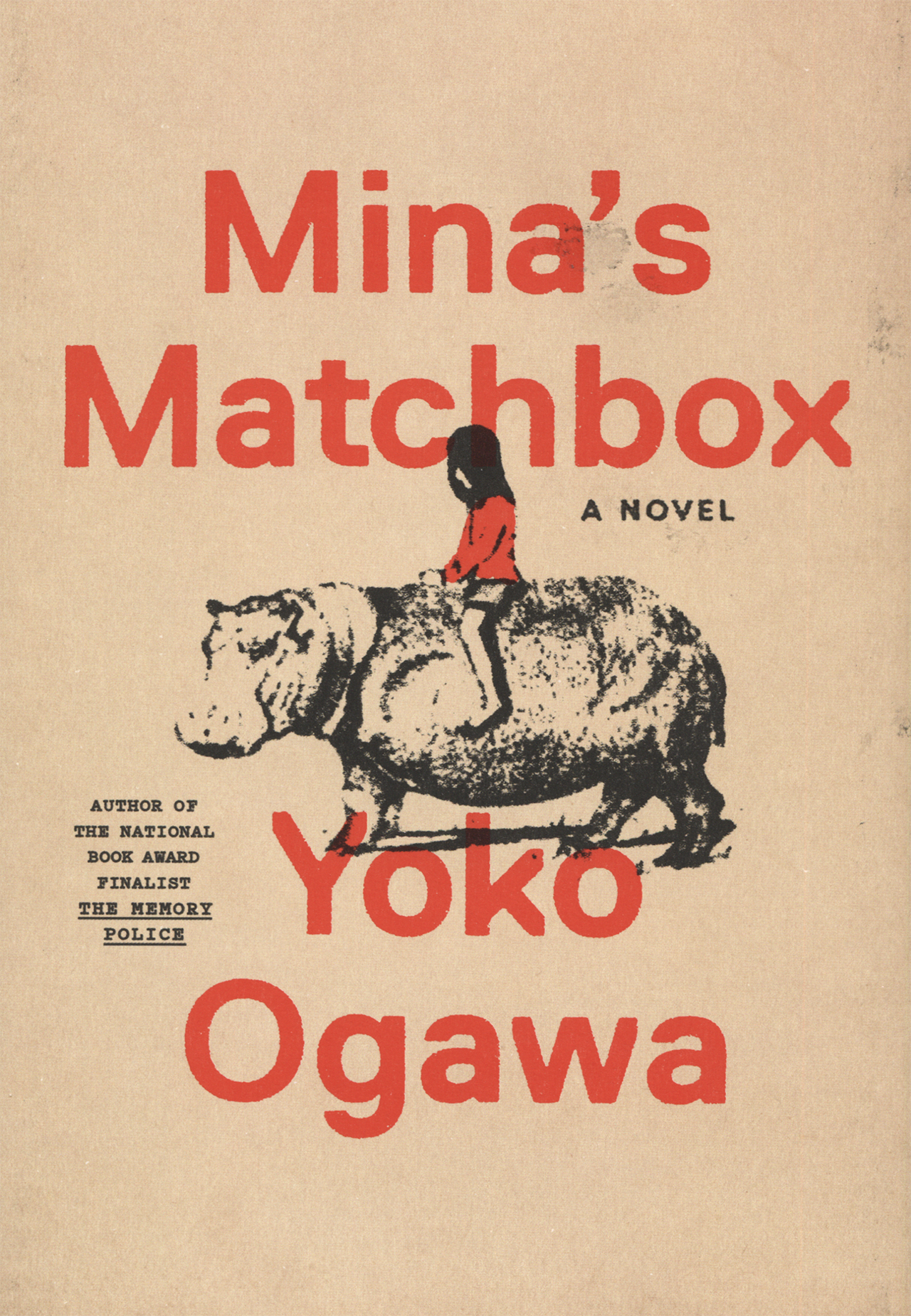
Yōko Ogawa’s 2023 collection からだの美 brings together sixteen short essays on the theme of bodies and physicality. The three primary topics are sports, performing arts, and animals.

The essays about sports were mostly lost on me, but I loved Ogawa’s discussions of animals, especially naked mole rats. As Ogawa reflects on their odd appearance and rigorously structured society, she writes that the world is an infinitely strange place, and that she couldn’t invent creatures like this from imagination even if she wanted to.

My favorite essay is レース編みをする人の指先, which is a meditation on how our lives and bodies are shaped by creative practice. Even though crafts such as embroidery and sewing lace seem to have no practical purpose in modern society, we continue to make things by hand just for the joy of it.

The Japanese literary tradition of essay writing is a bit different than what many of us have come to expect from English-language essays. To make a generalization, Japanese literary essays tend not to include anything overly personal about the author or lay bare any sort of trauma. It’s not a given that an essay will address political topics or attempt to persuade or educate the reader. Rather, reading a Japanese essay is often like engaging in a gentle conversation. I find this lo-fi style of writing to be quite relaxing to read, but your mileage may vary on whether the essays in からだの美 come off as pleasantly chill or somewhat flat and underwhelming.

To me, からだの美 is an interesting companion to Ogawa’s 2022 short story collection 掌に眠る舞台, which also explores the relationship between art and the body. Ogawa’s fiction follows strange people who inhabit a twilight world that feels slightly removed from our own, so I found it amusing to read her perfectly normal nonfiction essays about the brighter side of topics she’s explored in her recent stories.

掌に眠る舞台

Yōko Ogawa’s 2022 collection 掌に眠る舞台 contains eight stories connected by the broad theme of “stages.” Some stories are about the world of performing arts, while others take an abstract approach. Ogawa isn’t concerned with glamour, but rather the strangeness of the stage after the spotlights go out.

One of my favorite stories is ユニコーンを握らせる, which is about an actress whose sole performance was cancelled. She lives alone in her old age, comforting herself by repeating lines from a play that never made it past rehearsals. As always, Ogawa’s gentle portrayal of loneliness is exquisitely observed. With each tiny detail of the woman’s apartment, Ogawa paints a portrait of someone who can’t escape her fantasies of a past that never existed.

I also enjoyed いけにえを運ぶ犬, in which a young boy repeatedly stages a performance of enjoying a specific book at a traveling bookseller’s cart for the sole benefit of the bookseller’s dog, who watches the children to prevent theft. This is a story about poverty and negligence and the fear of being forgotten, but Ogawa nevertheless captures the magic of what it’s like to fantasize about books as a kid. 

For me, the standout story was ダブルフォルトの予言, which is about a woman who lives in an empty storage room on an upper floor of the Imperial Theater in Tokyo. This woman’s job is to absorb all the bad luck of the performers on stage, sort of like an inverse Phantom of the Opera. Instead of an extravagant man who lives in the sewers and aggressively causes trouble, she’s a plain and boring woman who lives the attic and passively prevents accidents. At least, that’s what she says of herself, but what’s she really doing in the theater attic? And why is the narrator visiting her so often?

Something I’ve always loved about Ogawa’s writing is the lucid clarity of her language, but the style of 掌に眠る舞台 is much richer and denser than that of the author’s earlier work. Instead of being like icebergs, these stories are more like mazes. You have to take your time getting to the center, which is fine by me. It’s always a pleasure to spend time wandering through Ogawa’s signature uncanny spaces.

Tower Dungeon

Tsutomu Nihei’s newest manga series, Tower Dungeon, is a grim and grisly dark fantasy about a small team of knights attempting to rescue a princess from an evil wizard at the top of the mysterious Dragon Tower.

This purposefully bog-standard fantasy premise is a bait-and-switch for the actual story, which is as brutal and fiercely imaginative as any of Nihei’s sci-fi dystopias. Instead of being set in the claustrophobic cable-choked interior of a spaceship, the visual space of Tower Dungeon is filled with vaulted ceilings and crumbling stone walls, but Nihei still dazzles the reader with labyrinthine passageways and an awe-inspiring sense of scale. 

Nihei’s signature body horror is on full display in Tower Dungeon, which is populated by the shambling undead, grotesque human graftings, uncanny automatons, and abject abominations. Even when they’re not monstrous, I love the designs of Nihei’s heavily armored knights.

There’s a bit of fanservice, sort of? But not really, and I’m not complaining. If I had to guess, I’d say that Nihei has a crush on Malenia, the deadly woman warrior from Elden Ring, but don’t we all.

The pacing of Tower Dungeon is excellent, and the action sequences are balanced by downtime and light banter that doesn’t try too hard to be funny. The characters offer very little exposition, but the background setting is intriguing. Given my experience with Nihei’s previous manga series, I’m not expecting the story to coalesce into any sort of cohesive plot, but I’m happy to join this strange journey wherever it leads.

I think, honestly, that Tower Dungeon is the Dark Souls manga I always wanted. I hope it gets an English translation soon!