Mushishi

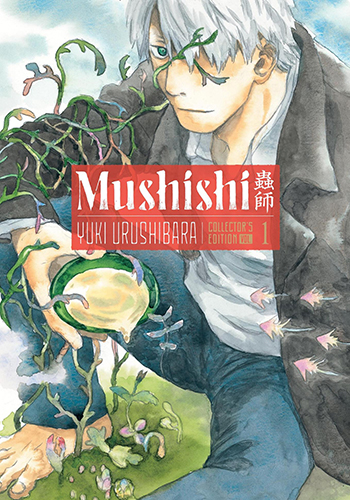
Yuki Urushibara’s ten-volume manga series Mushishi is a gentle but eerie collection of short stories about the uneasy relationship between humans and the natural world. Originally serialized between 1999 and 2008, Mushishi is now available in a series of hardcover Collector’s Editions from Kodansha, which has done a marvelous job with the release.

Mushishi is set in Japan during an unspecified time around the late nineteenth century. Some people wear Western clothing and smoke cigarettes, but traditional ways of life still persist in isolated rural areas, which seem untouched by time.

Ginko is a mushishi (“mushi scholar”) who travels to remote villages to study and document “mushi,” a collective term for a variety of lifeforms that exist partially in our world and partially in the realm of the supernatural. Like germs or bacteria, mushi are tiny and exist unseen by the vast majority of people. Problems arise when mushi form large colonies, especially within human bodies. Even as he studies and admires mushi, Ginko is often compelled to eliminate them in order to restore health to their human hosts.

As is the case with non-supernatural illnesses, people severely impacted by mushi often find themselves unable to return to normal life. In the manga’s second story, “The Tender Horns,” people living in a village deep in the mountains find that they go deaf in one ear when the snow falls. Ginko tells the village chief that this is the result of a mushi called “Un,” which lives in human ear canals and eats sound. This is a temporary inconvenience for most people, but one woman was so deeply impacted that she died. Now her son seems to bear the same affliction, which has manifested as a set of small horns on his forehead.

The tone of Mushishi occupies a liminal space somewhere between nostalgia and horror. Many of the stories have happy endings, but they’re nevertheless pervaded with the uneasiness of living at the edge of an unseen world that has little regard for human life. Mushi, which are something in between plants and animals and spirits, act in keeping with their nature, which is simply to grow and replicate. To most mushi, humans are little more than substrate.

Some species of mushi seem to possess something akin to sapience, however, and their relationship with humans is complicated. One of my favorite stories in the opening volume of Mushishi is “The Traveling Swamp,” in which a marshland appears and disappears seemingly at will. When Ginko studies the pattern of the manifestations on a map, he realizes that the colony of mushi is traveling through underground waterways. The young woman who appears and vanishes with the mysterious swamp has become saturated with the mushi, which have welcomed her as a companion on their journey to the sea.

What Ginko sees of mushi growth and behavior is akin to many written records of Japanese folklore, such as The Legends of Tono and Tales of Times Now Past, in which inexplicable things happen to people seemingly at random. In a time before modern science and infrastructure, the natural world was just as dangerous as it was awe-inspiring. As much as people in rural areas were dependent on nature for their livelihood, they were also at its mercy.

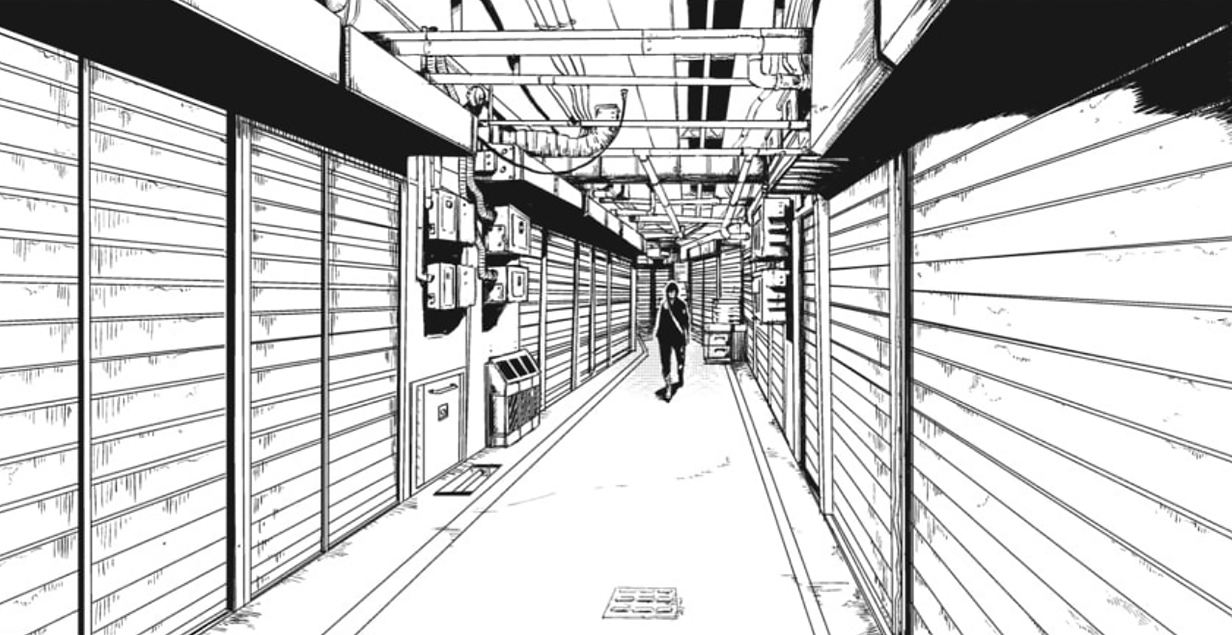
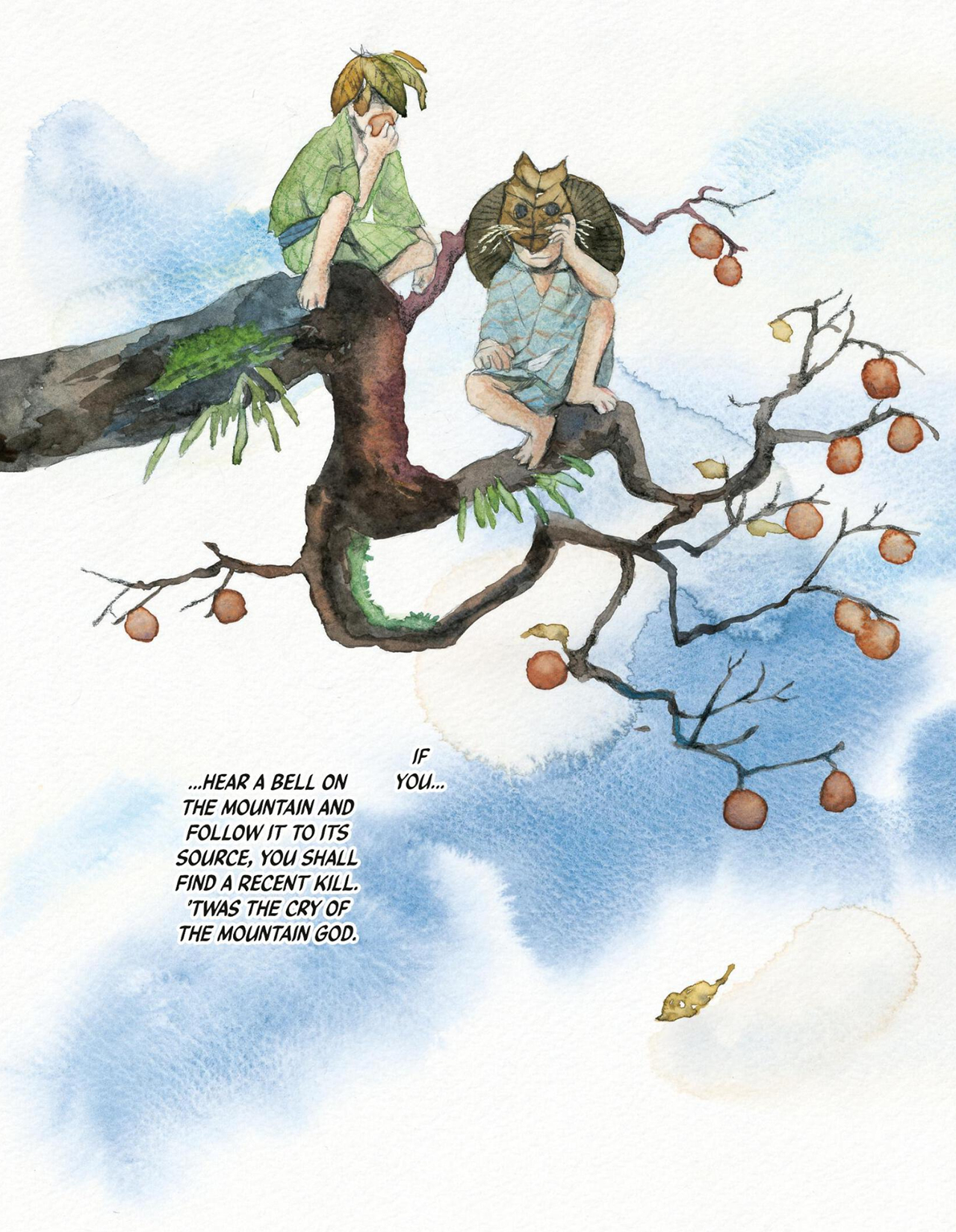
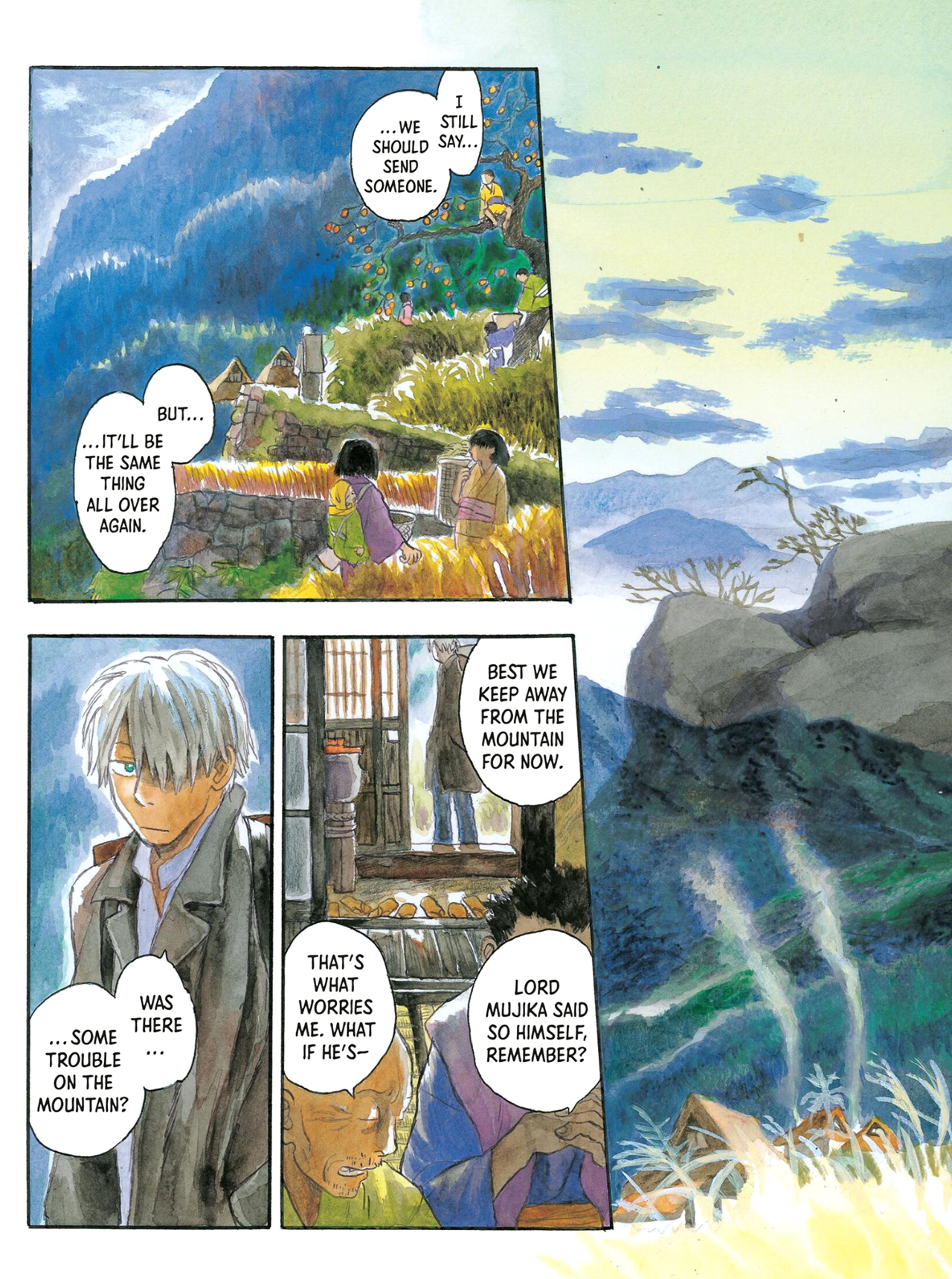
Yuki Urushibara’s artwork delights in wild spaces, from mountain roads to deep forests to ocean vistas to overgrown villages, and her depictions of premodern architecture and clothing are equally impressive. Urushibara is especially skilled with the use of etching and screentone to convey a sense of dim lighting while still using enough contrast to creatively highlight the focal points of each composition. The inkwork is truly impressive, as are the watercolor inserts, and Kodansha’s release of the manga allows Urushibara’s art to shine.

If you’d like to bask in the twilit atmosphere of a deep mountain forest, I might also recommend watching an episode or two of the Mushishi anime (available on Crunchyroll in the U.S.), which is extraordinarily well-produced. The anime is slow and quiet and isn’t for everyone, perhaps, but there’s really nothing else like it.  

The Woman Dies

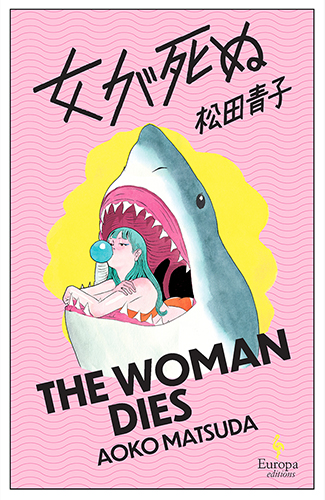
The Woman Dies presents 52 pieces of flash fiction by Aoko Matsuda, the author of the short story collection Where the Wild Ladies Are. Each of Matsuda’s small but sparkling stories responds to various aspects of pop culture in clever and surprising ways.

Characteristic of Matsuda’s idiosyncratic approach to the flotsam of contemporary culture is “Hawai’i,” which imagines a heaven for clothes that were thrown away because they did not spark joy. The heaven enjoyed by an unworn sweater sounds like a lovely time of relaxing by the pool while, in the sky, “not far from the rainbow, the pair of skinny jeans owned in similar shades was paragliding together with the dress once worn to a friend’s wedding and never again.”

At the same time, the over-the-top language Matsuda uses to describe this paradise hints at how ridiculous it is to ascribe any sort of teleological meaning to consumerist excess. Still, if this is the world we find ourselves in, why not imagine a heaven where even a discarded sweater is allowed to have a happy ending?

While the topics covered in The Woman Dies are varied, many of the stories playfully confront gender issues in popular media. One of the more intriguing of such stories is “The Android Whose Name Was Boy,” which Matsuda writes “evolved from my thoughts about Neon Genesis Evangelion,” a classic sci-fi anime from 1995 that does indeed inspire thoughts about gender. 

The eponymous android, whose name is in fact “Boy,” begins its life by setting out on an adventure. Over the course of the five-page story, it does its best to disrupt narrative conventions regarding young male characters. Challenging and unending though this task might be, “the android whose name is Boy, developed to heal the wounds of those hurt by boys hurt in the past, is on the move once more.”

While “The Android Whose Name Was Boy” is open to a diversity of interpretations, other stories in the collection are overtly feminist. In “The Purest Woman in the Kingdom,” a prince takes it upon himself to seek out a woman who has never been touched by a man. After a great deal of searching, he finally finds and marries one such woman. On their wedding night, she karate chops him into oblivion. This woman has never been touched by a man; and, thanks to her training and skill in martial arts, she never will be. Absolute queen behavior.

Most of the stories in The Woman Dies are relatively lighthearted, but “The Masculine Touch” (by far my favorite piece in the collection) is out for blood. This story flips the script on gender, casting male writers as delicate greenhouse flowers who need to be supported because sometimes – every so often – their work has cultural and economic value. Matsuda doesn’t pull her punches:

The more radical of the male novelists wrote articles about this turn of events for male magazines, declaring this the beginning of the Male Era. They bolstered their arguments with examples of the other times when the masculine touch had effected changes like this one, thus arguing for men’s continued progress in all areas of society.

“The Masculine Touch” responds to a painfully specific way of talking about female writers and artists in Japan, and I imagine that people in other contexts can relate to frustrations regarding how the publishing industry fetishizes “queer writers,” or “writers of color,” or any number of people whose humanity is compressed into marketing-friendly categories.

Unfortunately, other pieces in the collection lack this specificity. Though we’re all familiar with the trope of fridging female characters, the title story, “The Woman Dies,” is a bit too broad to resonate. Though it’s easy to sympathize with the sentiment underlying “The Woman Dies,” readers may find themselves simply shrugging and moving on. Flash fiction tends to be hit or miss, but this collection offers an array of stories to choose from, and it achieves an admirable balance between heavy hitters and palette cleansers.

The Woman Dies is remarkably cohesive as a collection. There’s a lovely rhythm and flow to the stories, and it’s just as entertaining to read the book in one sitting as it is to dip in and out at your leisure. Matsuda’s writing is sharp and self-aware, and she uses brevity as a weapon to puncture the absurdities of gender, media, and modern life. It’s a pleasure to read her work in Polly Barton’s translation, which is quick and lively and showcases an incredible range of tone and style that’s pure literary pop.

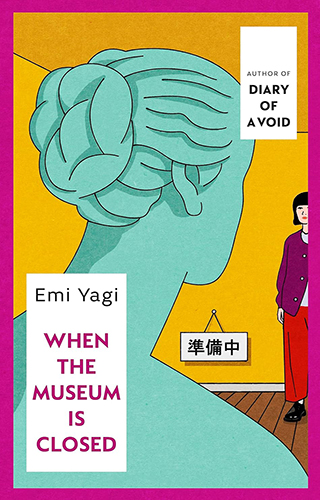
When the Museum Is Closed

Emi Yagi’s 2023 novel When the Museum Is Closed is a refreshing work of magical realism about a shy young woman who falls in love with a statue of Venus. The twist is that the statue loves her back, and – even more miraculous! – their love story has a happy ending.

Rika is a recent college graduate who works in the freezer department of a warehouse for processed food. She sees this as the perfect job for three reasons. First, she never has to talk to anyone. Second, she can take pre-prepared food home from her job, so she rarely has to cook. And third, an invisible yellow raincoat suddenly appeared over her clothing in elementary school, and she’s found it almost impossible to remove in public. The heavy vinyl fabric keeps her body temperature high, but that’s not a problem in an industrial freezer.

The only variation in Rika’s days comes from her part-time job. Once a week, Rika takes the bus to a local museum to have an hour of conversation with a statue of Venus. Venus only speaks Latin, but Rika enjoys a freedom with the dead language that she’s never found in Japanese. Though Rika is shy at first, she and Venus become friends, and they eventually fall in love.

Unfortunately, there’s a bit of a situation with a man named Hashibami, the museum curator in charge of the statue. He wants Venus all to himself, and he never wants her to change – he doesn’t want her to learn modern languages, and he certainly doesn’t want her to learn about the world outside the museum.

Venus therefore makes a deal with Hashibami. If he can get Rika to fall in love with him, she’ll allow him to fire Rika from the conversation job. Regardless, Rika isn’t interested in men, nor does she allow Venus to push her away. What Rika wants is something else entirely, and her relationship with Venus has given her the courage to chase their mutual joy.

The fantastic elements of When the Museum Is Closed are presented as entirely mundane, and it’s easy to take them at face value. At the same time, the love story between Rika and Venus resonates at an allegorical level with the experience of having a queer crush on someone who’s friendly and flirtatious yet seemingly unattainable. It’s the crush you have on an older coworker, or the crush you have on an internet friend, or the crush you have on the gayest girl you’ve ever met who is, inexplicably, married to a man. It doesn’t really matter that Venus is a statue, as anyone who’s experienced queer longing can relate to Rika’s situation. At the same time, Emi Yagi’s Venus is animated by her own distinct personality and undeniably lovely.

I’m sure that When the Museum Is Closed could also be read as an allegory for how women tend to be treated in male-dominated artistic and curatorial spaces, but the story is far more concerned with Rika’s subjective experience of her own individual life. I especially enjoyed the subplot involving Rika’s friendship with her landlord, a quirky but kind elderly woman who needs home care assistance, and I appreciated the understanding Rika develops with the neglected young boy who lives next door. Though Rika’s invisible yellow raincoat is unique to her, she’s far from the only person carrying unseen baggage, and it’s not necessarily the case that this is a problem that needs to be fixed.

When the Museum Is Closed is a short but expertly paced novel that moves quickly yet still allows the reader enough time to appreciate each scene. Its premise is intriguing and well-executed, and Yuki Tejima’s delightful translation captures the author’s tone perfectly, both in Rika’s deadpan observations and Venus’s mature flirtations. Readers who enjoyed Emi Yagi’s novel Diary of a Void will be pleasantly surprised by When the Museum Is Closed, which features the same sharpness and clarity of writing augmented by lovely moments of sweetness.

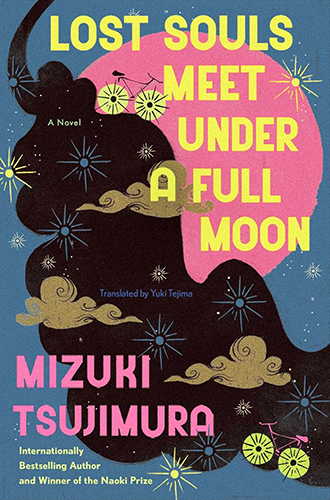
Lost Souls Meet Under a Full Moon

Lost Souls Meet Under a Full Moon brings together five interconnected short stories about people seeking to contact the dead. Though this book falls firmly into the category of “relaxing” fiction, it’s more plot-driven than most, and it distinguishes itself through its worldbuilding, especially its willingness to test the parameters of its magic system.

The central character of the novel is a handsome and stylishly dressed teenage “go-between” named Ayumi who can facilitate meetings between the living and the dead. The catch is that a person can only have one of these meetings in their lifetime, and each dead person is only allowed to return once. 

This is why the choice of the focal character of the first chapter, “The Rule of the Idol,” is so unusual. Manami asks the go-between to connect her with, of all people, a performer named Saori who made her living as a tv personality appearing on various talk shows and quiz games. When Manami was at the lowest point in her life, alone in Tokyo and bullied by her coworkers, she had a random encounter with Saori, who encouraged her to get back on her feet. Manami wants to use Saori’s death as an opportunity to thank her personally, which she never would have been able to do while Saori was still alive.

The third chapter, “The Rule of the Best Friend,” is far less wholesome. A first-year high school student named Arashi wants to be cast into leading roles in the plays performed by her school’s drama club, and she’s not shy about making her intentions known. Her biggest supporter is her best friend Misono, who joins the drama club in solidarity. Misono’s introverted grace has an alluring appeal that Arashi overlooks in her brash ambition, and she ends up losing a starring role to her best friend.

Arashi takes this poorly and stops talking to Misono. She assumes this will be a punishment, but she quickly realizes that her friendship was holding Misono back from achieving her own dreams. When Misono dies in a cycling accident, Arashi desperately wants to apologize, but she hasn’t yet developed the maturity to say what really needs to be said. I have to admit that I was surprised by the final meeting between the two friends, which is steeped in a complexity otherwise absent in these stories, and “The Rule of the Best Friend” ended up being my favorite part of the book.

In the final chapter, “The Rule of the Go-Between,” we see the characters from the previous stories from Ayumi’s perspective as he goes on his own journey during the process of inheriting the role of go-between from his elderly grandmother. Ayumi’s parents died under mysterious circumstances when he was a child, and his grandmother has carried a sense of guilt for years. Unlike his unfortunate classmate Arashi, however, Ayumi is able to break the barrier of silence and offer comfort and closure to his grandmother while they’re both still alive.

Despite a few brief moments of darkness, Lost Souls Meet Under a Full Moon presents little emotional challenge to the reader. There are very few subversive or self-reflective elements in these stories, and the characters occasionally behave like two-dimensional constructs who act solely in service to the plot. This isn’t a bad thing, of course. Lost Souls moves quickly and follows its internal logic so impeccably that the reader’s suspension of disbelief is never broken. As a result, each of the chapters is great fun to read.

Mizuki Tsujimura has taken the five-chapter cozy fiction formula and polished it to a high sheen. As far as the genre goes, Lost Souls Meet Under a Full Moon is as good as it gets, largely thanks to the author’s willingness to explore the more nuanced implications of the stories’ premise. Yuki Tejima’s translation is lovely and uses a light touch to bring the energy of Tsujimura’s prose to English-language readers. I’d recommend Lost Souls Meet Under a Full Moon to anyone looking for a good comfort read, not to mention a welcome reminder of the importance of saying what needs to be said while you’re still alive.

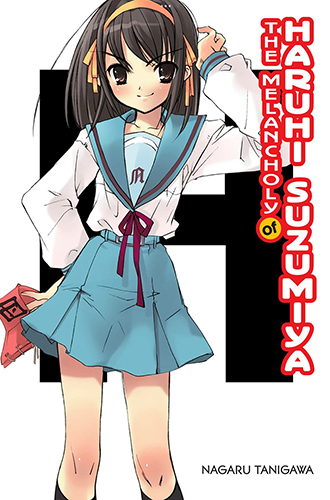
The Melancholy of Haruhi Suzumiya

The Melancholy of Haruhi Suzumiya, originally published in 2003, is a sci-fi romantic comedy about a quirky afterschool club. It’s also one of the most influential light novels from the heyday of otaku culture. Although I can’t say that all of its humor has aged well, it’s a quick and fun read, and there’s a good reason why it’s still in print.

Kyon is an average high school boy who’s assigned to the same homeroom as Haruhi Suzumiya, a beautiful girl who has a reputation for being weird. True to everyone’s expectations, she marches into the first day of class and introduces herself with the declaration that she’s not interested in speaking to anyone who isn’t an alien, an esper, or a time traveler. When Kyon tries to strike up a conversation with Haruhi, he gets roped into joining the SOS Brigade, an afterschool club that Haruhi has created to research supernatural phenomena.

The plot twist is that, with the exception of Kyon, every member of the SOS Brigade is indeed an alien, an esper, or a time traveler. They gradually reveal themselves to Kyon, insisting that they’re posing as high school students in order to observe Haruhi, who unknowingly has extraordinary powers capable of restructuring the universe. If Haruhi becomes bored with the current universe, it’s not beyond the realm of possibility that she might inadvertently destroy it. It’s therefore imperative that Haruhi remains entertained and blissfully unaware of her power.

As you might imagine, this scenario has a number of unsettling implications. Is everyone in the story merely a figment of Haruhi’s imagination? Does anyone in the universe she created have free will? If Haruhi created “this” universe, what happened to the universe where aliens, espers, and time travelers don’t exist?

The Melancholy of Haruhi Suzumiya goes right to the edge of these darker implications but ultimately backs off in favor of light comedy and mild teenage romance, a tonal balance that undoubtedly contributed to its popularity.

This light novel was adapted into an anime that aired in the Winter 2006/07 season. I admit that I’ve never watched it from start to finish, but the show was ubiquitous in Japanese pop culture fandom communities for years. The ending theme, “Hare Hare Yukai,” became a meme that spawned countless flash mobs of cosplayers recreating the iconic dance at anime conventions.

Due to its prominent place in mid-2000s otaku culture, I was considering including The Melancholy of Haruhi Suzumiya on the syllabus of a college class about Japanese science fiction and fantasy. I think it would be a good choice, but I’m still undecided. My hesitation is mainly due to the fact that one of the early chapters includes light elements of goofy sexual comedy that made sense in the cultural atmosphere at the time but might read a bit differently today.

To give an example, in order to blackmail the members of the computer club into giving her a PC, Haruhi takes someone’s hand and places it on the breast of one of the female SOS Brigade members before asking Kyon to take a photo. To me, this scene reads as the sort of stupid but harmless fantasy that might appeal to the book’s target readership of teenage boys, but I understand how it might be interpreted as sexual harassment (because, undeniably, it is).

Still, light novels are filled with this sort of thing, and I tend to think that The Melancholy of Haruhi Suzumiya is on the “unproblematic” end of the spectrum. To be fair, it’s not anything worse than what’s in most Haruki Murakami novels.

I don’t read many light novels these days, but I enjoyed The Melancholy of Haruhi Suzumiya. The pace is brisk, the writing is snappy, and the story offers a nice treatment of its speculative worldbuilding without getting too deeply into the weeds of hard science fiction. Looking back on this book from twenty years in the future, I found myself waning a bit nostalgic for an earlier (and, I think, more lighthearted) era of otaku culture. The Melancholy of Haruhi Suzumiya is an interesting cultural artifact, but it’s also a fun story that I’d recommend to anyone who hasn’t yet encountered its particular flavor of high school comedy.

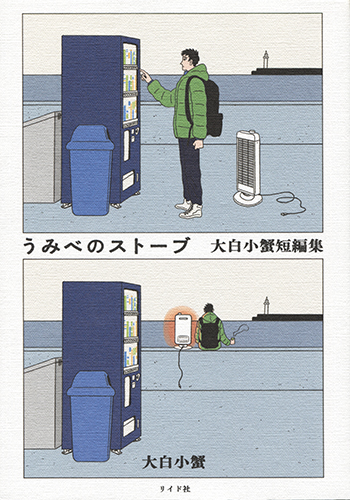
うみべのストーブ

Umibe no Stove (うみべのストーブ), originally published in 2022, is a collection of seven short manga stories by Kogani Ōshiro. In a surprising but well-deserved turn of fate, the collection was listed as the #1 women’s title in the 2024 edition of the Kono Manga ga Sugoi! (“This Manga Is Awesome”) series of mass-market reference books. Ōshiro’s magical realist stories are difficult to categorize, but what they share is a gentle and bittersweet appreciation for the small challenges and victories of growing older and moving on. 

The title story is about a man named Sumio whose girlfriend breaks up with him on her birthday. Left alone in the apartment they once shared, Sumio huddles next to the space heater and cries. The space heater takes pity on him and reveals that it can talk. It suggests that they go to the beach together, a trip Sumio never made with his girlfriend. Sumio agrees and spends the night sitting on a concrete embankment overlooking the ocean as he talks with the space heater and finally accepts the fact that his girlfriend isn’t coming back. Even though it’s unplugged, the space heater keeps him warm by sharing its memories of happier times.

The second story, 雪子の夏 (Yukiko no natsu), is about a trucker who encounters a Yuki Onna while stuck in traffic on a snowy night. The childlike yōkai doesn’t particularly want to kill the trucker; and, after they talk for a bit, she reveals that it’s her dream to see summer fireworks. The trucker invites the Yuki Onna to share her apartment until summer, at which point she can use her refrigerated cargo space to take her guest to see a summer festival. While watching the fireworks explode in the night sky, the Yuki Onna is so overjoyed that snow begins to fall.

My favorite of the stories, 海の底から (Umi no soko kara), is about a young woman named Fukatani who always dreamed of being a professional novelist. Her two friends from college both managed to become published authors after they graduated, but Fukatani lost her motivation to write after starting an office job. During a late-night drinking session, Fukatani’s friends ask her if she’d really be happy never writing another story, but she doesn’t know what to say. She used to love writing, but she just hasn’t felt any inspiration recently.

Later, Fukatani’s boyfriend comforts her, saying that there’s no rush for her to begin writing again. After college, he explains, she found herself standing at the base of a pyramid on the bottom of the sea. She’s been working to climb each step – finding a job, paying off student loans, and so on – but when she gets to the top and rises above the surface of her ocean of worries, she’ll be able to feel the wind of creativity again. This sounds like a silly analogy, but the way Ōshiro illustrates the process of coming up for air is remarkably cool and refreshing.

Something I love about Umibe no Stove is the non-commercial quality of Ōshiro’s visual style. Admittedly, the art of some of the stories feels a bit amateurish, but I find this charming. Even when Ōshiro’s drawings are unpolished, her sense of sequential art is unflaggingly excellent. Her use of panels in Umi no soko kara, for instance, creates a lovely sense of space during the protagonist’s conversation with her boyfriend. Even if Ōshiro’s drawings aren’t always technically precise, her manga still has incredible emotional impact.

I want to recommend this book to manga fans interested in a more indie style of Japanese comics, perhaps along the lines of the graphic novels published by Western presses like Fantagraphics and Drawn & Quarterly. Umibe no Stove may seem unassuming on the surface, but this manga is something special.

As an aside: if you’re looking for something similar that’s been translated into English, I’d like to recommend Natsujikei Miyazaki’s short story collection And the Strange and Funky Happenings of One Day. It’s weird, it’s fun, and the indie manga publisher Glacier Bay Books has done an amazing job with the translation and editing.

Under the Eye of the Big Bird

Hiromi Kawakami’s Under the Eye of the Big Bird is a book about the quiet end of the world. Despite its postapocalyptic setting, the story is gentle. The author’s background as a biology teacher shines through her writing as she imagines the diverse forms that humans and their societies might take in the far distant future.

Under the Eye of the Big Bird is structured as a collection of fourteen stand-alone stories that gradually form a larger narrative, and the reader is encouraged to put together a history from bits and pieces of individual lives. We never see the full picture, however, and I imagine that assembling a concrete timeline would take careful detective work.

This isn’t a plot-driven story that can have “spoilers,” necessarily, but any description of the book’s premise is going to contain analysis and speculation. Under the Eye of the Big Bird is one of the most intriguing works of speculative fiction that I’ve read in years, and this is partially due to its fragmented structure. You may want to venture into the collection on your own before reading any reviews, this one included.

.

Still with me? Let’s go!

Over the millennia, the number of people on the planet has steadily decreased, and the last remaining humans live in isolated settlements of various sizes. In order to ensure harmony, the settlements are discretely managed by “watchers” who have been cloned and genetically engineered to fulfil their duty. Unlike regular humans, watchers grow up in small communities with “mothers” that are all physical manifestations of the same AI.

Everyone takes this arrangement for granted, but their “normal” is not the same as ours. Whether a story is told from a first-person or third-person point of view, the reader can only see the world from a limited perspective. It can be difficult to understand what’s going on at first, but the opportunity to surf successive waves of strangeness is a major part of this book’s charm.     

My favorite story is “Testimony,” which is delivered as a statement to a watcher by one of the new phenotypes of humans to emerge from centuries of genetic isolation. A small number of people are born with the ability to photosynthesize, and the joy they take from the sunlight and changing seasons affects their behavior in surprising ways. If enlightenment exists, these people have attained it; and honestly, it sounds really nice.             

Not all of the future human phenotypes are so peaceful or self-assured, however, and other stories have a bit more conflict. Still, with one notable exception, there’s no violence in this book. If there are wars and explosions, they happen entirely offscreen. Like the watchers and mothers, it’s the reader’s job simply to observe the biology, ecology, and culture of the future.

On the front cover of the American edition, Kawakami is billed as the author of People from My Neighborhood, a loosely connected series of magical realist flash fiction that’s an excellent comparison for Under the Eye of the Big Bird. To me, Under the Eye of the Big Bird also feels like a natural development of Kawakami’s debut short story, Kamisama, in which the narrator has a lovely afternoon picnic with a literal bear. The bear, being a bear, is clearly nonhuman, but no one seems to be bothered by this. The same casual acceptance of difference pervades Under the Eye of the Big Bird, which invites the reader to imagine the mundane everyday reality of the final days of the human race.

I’ll admit that I felt the chilling touch of existential dread at a few points during the book; but, as in any encounter with real difference, this initial sense of discomfort is important. The gentle strangeness of Under the Eye of the Big Bird encourages the reader to confront their biases, and it also lends weight to the narrative theme of human extinction. Instead of presenting the apocalypse as a standard dystopian superhero story, Kawakami allows the reader to take all the time and space they need to consider whether it would really be so horrible if the people we currently think of as “human” were to slowly disappear from the earth.

Under the Eye of the Big Bird is a book about the end of the world, but it’s also one of the kindest and most hopeful works of speculative fiction I’ve had the pleasure to read. Reading this book for the first time was a unique experience, but the impact of its stories linger even after their novelty fades.

Hoshikuzu Kazoku

Hoshikuzu Kazoku (星屑家族) is a two-volume graphic novel set in an alternate universe where parents are required to obtain a license to raise children. To qualify for a license, a prospective family is asked to undergo an audition with a homestay student. This auditor, who is often an orphan raised in a government-run facility, evaluates the family’s fitness by deliberately behaving badly and provoking difficult situations. 

An auditor who goes by Hikari is assigned to Daiki and Chisa Hirokawa, a young couple who live on the grounds of a Shinto shrine. During their initial interview, Daiki surprises Hikari by openly requesting that their family be denied a childrearing license. Daiki claims to be happy living with his wife as a couple, and he shares his suspicions that Chisa doesn’t actually want children. With that out of the way, Daiki says, the three of them can enjoy the homestay visit without any pressure or expectations.             

Chisa and Daiki genuinely seem to be happy together, but Hikari soon notices that Chisa is the target of a longstanding prejudice held by people in the neighborhood. Chisa’s mother killed her father when she was a child, and she’s been ostracized ever since. Along with her foster father, who once managed the shrine, Daiki was the only person who was kind to her. Now that she and Daiki have married and set up a household at the shrine, Chisa feels trapped within a community she can’t escape. Why, then, does she want a child so badly? And is it Hikari’s place to get involved?

Hoshikuzu Kazoku is a high-stakes family drama that presents a moral conundrum with no easy solutions. If the government creates regulations to ensure a well-ordered society, what happens to the people whose lives are more complicated than the provisions allowed by the legal code? If there’s room for flexibility in the bureaucratic system that enforces the law, who should have the right to grant exceptions? And more specifically, in a country witnessing its birth rate decline in response to the disintegration of community support structures, what are the limits of government intervention?

Even putting such questions aside, Hoshikuzu Kazoku is compelling by virtue of its problematic yet still sympathetic characters. Hikari, Daiki, and Chisa each bring loads of emotional baggage to the table, but they do their best to communicate to the limited extent of their abilities. Despite their many flaws and the odds against them, I wanted these characters to be happy.

Aki Poroyama’s writing, dialogue, and pacing are all excellent, and the visual language of the manga serves to set the mood and create dramatic impact. I wasn’t familiar with the work of this artist, and I was amazed by the polish of this graphic novel. I’d recommend Hoshikuzu Kazoku to mature readers looking for socially conscious speculative fiction driven by complicated human stories.