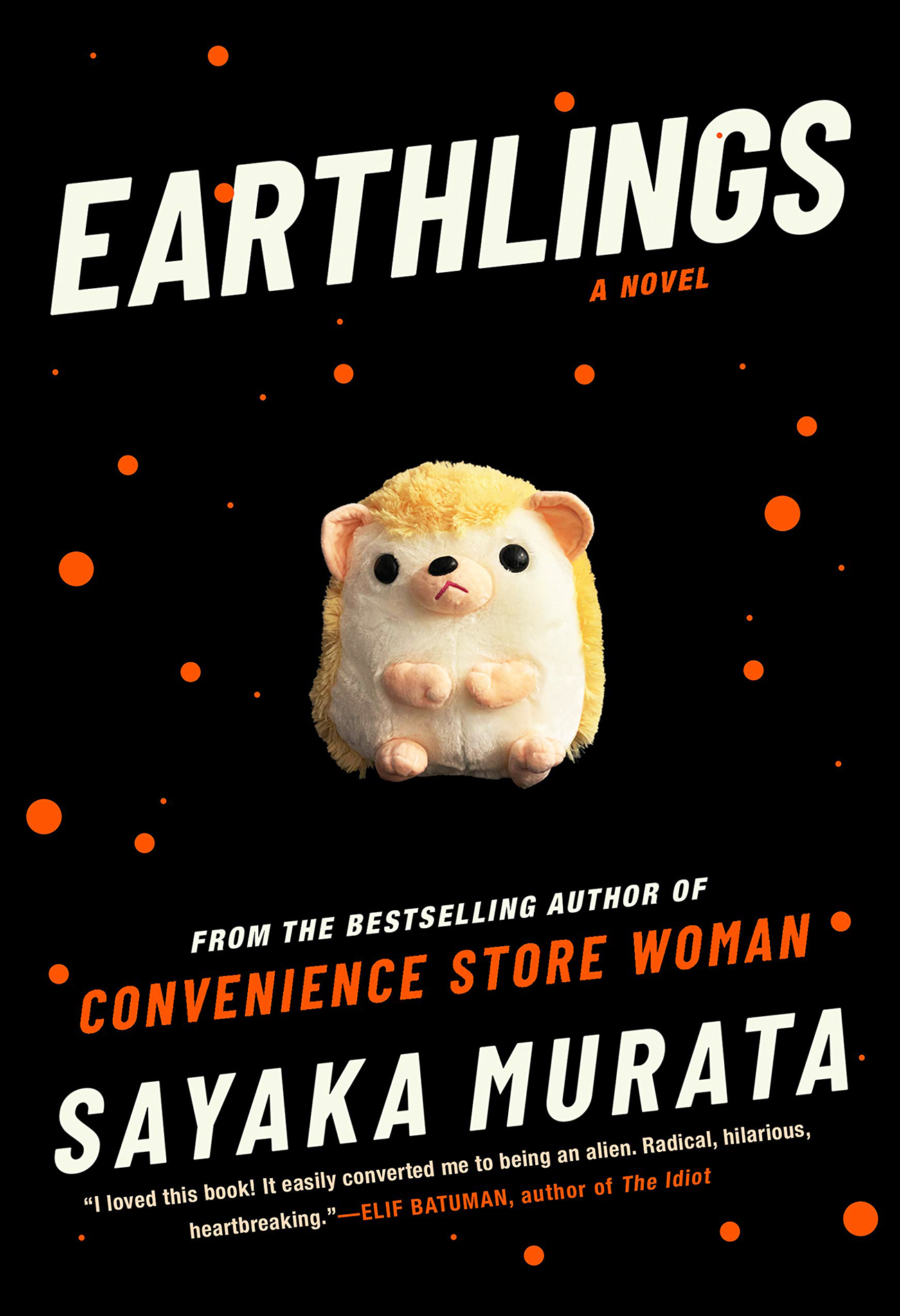
Lonely Castle in the Mirror

Japanese Title: かがみの孤城 (Kagami no kojō)
Author: Mizuki Tsujimura (辻村 深月)
Translator: Philip Gabriel
Publication Year: 2017 (Japan); 2021 (United Kingdom)
Press: Doubleday
Pages: 355

Thirteen-year-old Kokoro has stopped going to school after being bullied by her classmates and ignored by her homeroom teacher. Kokoro’s sympathetic mother has enrolled her in an alternative school, but Kokoro can’t bring herself to attend, as much as she might want to. Made physically ill by her anxiety, all Kokoro can do is stay at home while watching daytime television and waiting for time to pass. Just as she’s on the verge of spiraling into depression, the mirror in her bedroom begins glowing, and she is pulled through its shining surface into a mysterious castle.

Kokoro is one of seven middle-schoolers greeted by a girl wearing a fancy dress and a wolf mask who calls herself “the Wolf Queen.” The Wolf Queen tells the children that they have one year to locate a hidden key that will unlock a secret room. If one of them manages to make it inside the room, they will be rewarded by having a wish granted. The caveat is that, once the wish is granted, the castle will disappear. In the meantime, they can use the castle however they like during school hours.

It doesn’t take Kokoro and the other children long to figure out that none of them are going to school, at least not during the day. Instead of competing to see who can find the key and the room, then, they’re content to use the castle as a place to hang out while playing video games and chatting. They eventually grow close enough to make plans to get together as a group outside the castle; but, despite their firm promises to each other, no one appears at the designated meeting spot.

This intensifies the question that no one has wanted to bring up – what in the world is going on? And, perhaps more importantly, will they ever be able to see each again once their year in the castle has ended?  

Lonely Castle in the Mirror is a novel about friendship, specifically friendship between outcasts. In many ways, the group of children who gather in the castle is reminiscent of the Loser’s Club from the Stephen King novel IT (albeit with a much lighter tone). Each of the kids is living through the unpleasant fallout of a traumatic experience, but they gradually open up to each other and work through their issues together. Nothing about this character development is saccharine or sentimental, and misunderstandings and gaps in communication occasionally arise. There’s a fair amount of teenage awkwardness and egocentrism, but none of the characters is overtly unsympathetic.

Kokoro is struggling with having been targeted a group of mean girls, and the novel’s depiction of bullying felt especially real to me. The treatment Kokoro received at the hands of her classmates is genuinely disturbing, but even worse is the attitude of the teachers at her school, who apparently expect her to apologize to the people who went out of their way to antagonize her. Lonely Castle in the Mirror is YA fiction, to be sure – there is no strong language, substance abuse, or mention of sex or sexuality. Still, parts of the story are painfully honest, and the novel’s sensitive but realistic treatment of cruelty and anxiety doesn’t pull any punches.

Despite its fantastical elements, Lonely Castle in the Mirror is more of a mystery than a fantasy, although it admittedly takes its time warming up. Kokoro and her friends are in the process of recovering from trauma, and they’re understandably reluctant to discuss serious matters. Most of them avoid doing anything that would disturb the comfortable haven they’ve been miraculously granted. The novel ambles through what seem to be a few false starts, with one problem emerging only to be quietly resolved. Patient readers who accept the story on its own terms will be rewarded, however, as the plot gradually gains depth and momentum. It’s easy to fly through the pages of the lengthy final chapter, and the conclusion is extremely satisfying.  

As its cover copy proclaims, Lonely Castle in the Mirror is a bestselling novel in Japan, and there’s no reason why this story won’t resonate with readers outside of Japan. Philip Gabriel’s translation is impeccable, preserving a sense of timelessness while handling the teenage characters’ dialog with grace and good sense. It’s easy to compare Lonely Castle in the Mirror to Eto Mori’s recently translated YA novel Colorful, or perhaps even the early Harry Potter novels, but it has its own unique charm and magic. Teenagers in the same age range will find Kokoro and her friends to be sympathetic and relatable, while the story is compelling enough to wrap adult readers in its mysteries.

The Woman in the Purple Skirt

Japanese Title: むらさきのスカートの女 (Murasaki no sukāto no onna)
Author: Natsuko Imamura (今村 夏子)
Translator: Lucy North
Publication Year: 2019 (Japan); 2021 (United States)
Publisher: Penguin Books
Pages: 216

The Woman in the Purple Skirt begins as a charming set of observations about a woman who lives in a quiet neighborhood. It soon becomes clear, however, that there is something creepy about the narrator, who calls herself The Woman in the Yellow Cardigan.

The specificity of the narration raises many questions. Why is the narrator so obsessed with the Woman in the Purple Skirt? How is she able to observe her so closely? Is she stalking this woman? Or is she perhaps talking about herself in third person? Is she making up a fantasy version of herself, or is she projecting her personality onto a real woman? If so, why? Who is the Woman in the Purple Skirt? Who is the Woman in the Yellow Cardigan?

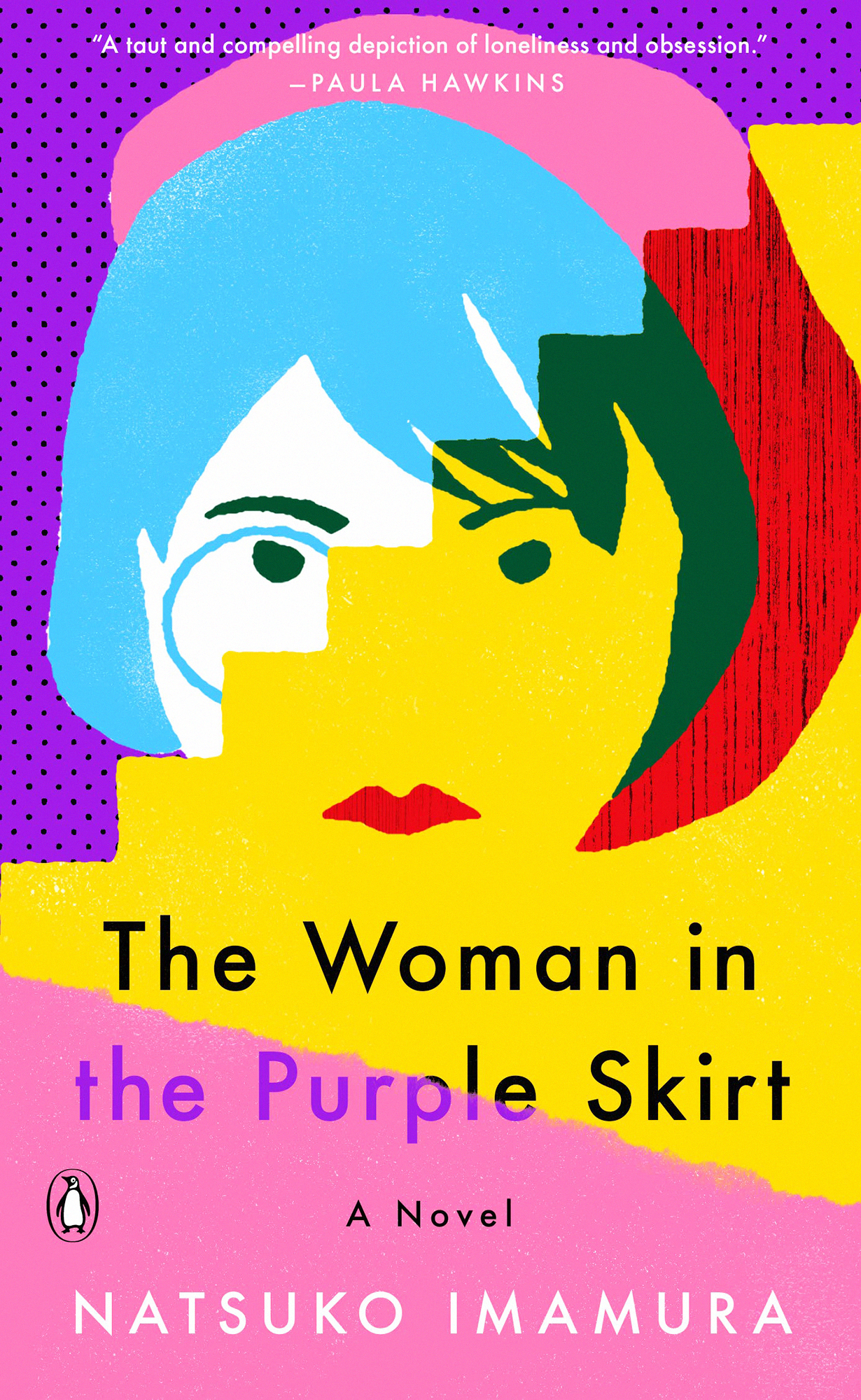
The Woman in the Purple Skirt isn’t suspense, necessarily, and it’s certainly not the “thriller” that the publisher seems to be trying to market it as, but the experience of reading this story is unsettling. The novella won the prestigious Akutagawa Prize, which is awarded to work from emerging writers that pushes boundaries and has a certain air of being “literary.” Despite the stylish chick lit cover of the American edition, the plot of The Woman in the Purple Skirt is almost depressingly mundane.

After a series of temp jobs that she quits after only a few days, the Woman in the Purple Skirt finds employment as member of the cleaning staff at an upscale hotel. She seems to be having an affair with one of her supervisors, and rumors spread that her salary is disproportionately high. At the same time, certain imbalances in inventory cause her coworkers to suspect that she is stealing. As the atmosphere at work becomes more hostile, the woman’s relationship with her supervisor also deteriorates. Meanwhile, the narrator, who is also a supervisor on the hotel’s cleaning staff, continues to glide through the life of the Woman in the Purple Skirt like a shadow.

This story is banal, but the subtle uncanniness of the narration forces the reader to view these normal events in normal lives with a sense of unease. The prose is sparse, the language is simplistic, and the affect is almost completely flat. Lucy North’s translation is reminiscent of Raymond Carver, especially in terms of dialog. Like Carver’s short fiction, the themes that emerge from beneath the placid surface of the narration are distressing: economic precarity, alienation, and the dangers of aging without a social network or financial safety net.

Despite its engagement with contemporary social issues, there’s nothing about The Woman in the Purple Skirt that requires specialist cultural knowledge, as the experience of struggling with loneliness while making minimum wage is equally shitty everywhere. I’d recommend this novella to anyone who enjoyed (or was at least moved by) Convenience Store Woman, as well as anyone concerned with urban anomie who entertains doubts about the ethics of low-wage work.

Because of the intriguing questions it raises and the unfortunate relatability of the discussion it’s likely to inspire, I would also recommend The Woman in the Purple Skirt as a text in a class on contemporary Japanese fiction. In addition, I think the novella might work well as a text for upper-level Japanese language classes, as its polished yet accessible prose evades the deliberate opacity of most Akutagawa Prize-winning work. Imamura has a field day with the narrative ambiguities made possible by the Japanese language, so it might be interesting to read the original side-by-side with North’s translation, which makes a number of tough decisions that nevertheless read as smooth and effortless.

Acclaimed author Natsuko Imamura’s first work to appear in English translation is short enough to be read in the span of an hour, but it’s worth spending time with. It’s difficult to say that a book as genuinely creepy as The Woman in the Purple Skirt is an enjoyable read, but the novella is a darkly shining jewel of literary fiction that invites and rewards analysis and introspection.

Colorful

Japanese Title: カラフル (Karafuru)
Author: Eto Mori (森絵都)
Translator: Jocelyne Allen
Publication Year: 1998 (Japan); 2021 (United States)
Publisher: Counterpoint
Pages: 224

A fourteen-year-old boy named Makoto Kobayashi has committed suicide, so a nameless and formless soul is granted a second chance at life by doing a “homestay” in his body. While inhabiting Makoto’s body, the soul must also occupy his life while guided by an angel named Prapura.

As if being in middle school weren’t difficult enough, the soul soon realizes that Makoto’s life is a mess. His family initially appears to be warm and loving, but it soon becomes apparent that nothing is as simple as it seems. To begin with, Makoto’s phone is completely free of contacts, which Prapura gleefully explains is because Makoto doesn’t have friends. The only girl who’s ever been nice to him visits love hotels with an older man, which Makoto knows because he saw her – at the same time he saw his mother leaving with her dance instructor.   

Although the soul now occupying Makoto’s body is given a year to figure out its past crime, there’s very little sense of narrative urgency involved in solving this mystery. Instead, the forward momentum of the story comes from “Makoto” gradually realizing that life isn’t so black and white, and that every person has different colors. As he explains it…

The idea of the Kobayashi family I’d had in my head gradually began to change color. It wasn’t some simple change, like things that I thought were black were actually white. It was more like when I looked closely, things I thought were a single, uniform color were really made up of a bunch of different colors. That’s maybe the best way to describe it. (149)

Although Colorful is YA fiction, some of the “colors” of its characters may require an unusual degree of empathy for many American readers, but I would argue that it’s precisely this exercise of empathy that makes the experience of reading the novel so powerful and moving.

To give an example, Hiroka, the fourteen-year-old girl who is “dating” an adult man for money, is represented as being in control of her body and decisions. When Makoto attempts to rescue her from the doorway of a love hotel, she initially goes along with him, but it doesn’t take long for her to make it clear that she doesn’t appreciate his heroic gesture. She actually enjoys having sex with a considerate and experienced older partner, she says, and she appreciates the money he gives her. When Makoto asks if she can’t just wait until she’s older, Hiroka doesn’t hesitate to explain her reasoning, telling him that she wants to be able to buy nice things while she’s still the appropriate age to appreciate them. She wants to enjoy her body, and she wants to enjoy her life, and she doesn’t want to date Makoto, whom she considers to be a friend.

Later in the story, Hiroka admits to occasionally feeling depressed, confessing to Makoto that she’ll want to have sex on six days of the week but then want to join a convent on the seventh. By this point, Makoto has matured enough to accept Hiroka’s decisions. He assures her that it’s normal to feel confused sometimes, and that there’s nothing wrong with her. This conversation does not lead to romance, but rather to Makoto’s self-awareness that he has grown enough as a person to accept Hiroka on her own terms.

This is what is expected of the reader as well – a willingness to accept the characters not as stereotypes or idealizations, but as they actually exist. Colorful does not place any value judgments on Hiroka’s personality, desires, or decisions. She does not decide to stop having sex with her older partner, nor does she realize that the things she spends the money on are childish and shallow. She is not diagnosed with any sort of mental illness or personality disorder, and she does not decide to “get help.”

It’s extraordinarily refreshing to see teenage female sexuality discussed with honesty and sensitivity without being punished. Hiroka is not a slut or a victim, but rather a normal young woman who enjoys having sex with people who enjoy having sex with her. She’s not 100% emotionally mature, and she doesn’t entirely understand who she wants to be or what she’s doing with her life, but that’s okay. The point of Colorful is that human beings are complicated.

Makoto’s father is another example of a relatable character whose story requires empathy to appreciate. When Makoto tells him that, as an aspiring artist, he prefers to draw landscapes because he dislikes people, his father confesses that he dislikes people too. Although he’s a talented designer, he was bullied at the company where he works. He thought he was highly positioned and highly respected enough to be able to speak up about the CEO’s mismanagement of the company, which was causing real and serious harm. This backfired, and he was ostracized for two years by his former friends and colleagues even though they knew he was right. He explains to Makoto that, although he was promoted when the CEO was eventually forced to step down after a public scandal, he will never get back those two years of his life, nor will he be able to return to his former easy friendships with his colleagues.   

This is a difficult lesson – that “doing the right thing” is not always going to be appreciated. Many times, in fact, speaking out against something that is clearly wrong will turn you into a social pariah. Even worse, this damage can linger for years, perhaps even for the rest of your life. Doing the right thing can ruin your career, and you might become so focused on damage control that you don’t notice that you’re sacrificing your relationships with the people who are close to you.

In so many stories, young people who do the right thing despite the hardships involved are rewarded for their uncompromising bravery. Meanwhile, the “absent father” figure has to make difficult and complicated decisions and ends up being positioned as the villain. As with Hiroka, being able to hear Makoto’s father’s side of the story is refreshing, not to mention validating to me as an adult reader.

The beauty of Colorful rises from the novel’s ability to take simple stereotypes and explode them into rich and detailed character portraits as Makoto comes to understand and empathize with people who aren’t perfect but are doing their best to live their lives with dignity. Along with Hiroka, Makoto is able to forge friendships with two other classmates; and, along with his father, he’s also able to better understand his mother and brother. The fantasy bits about souls and angels and resurrection are little more than props for an extremely character-driven story that doesn’t feel like a fantasy at all.

Colorful doesn’t go out of its way to be gritty or nasty or unpleasant. It’s honest and sincere, and it handles serious topics with gentle nuance and an occasional touch of humor. As the author describes her intentions in the Afterword,  

I chose to write about a serious subject with a comical touch. I chose to depict it lightly. I wanted kids who liked reading and those who didn’t have fun with it to start. I wanted them to laugh and roll their eyes and relate to everything the characters did. I wanted them to enter the world of the book and be free of their everyday lives. And then, when they closed the book at the end, I wanted the weight on their hearts to be just a little lighter. (210)

I believe that Mori succeeded marvelously, and I could not write a better summary of her novel.

I should also mention that Colorful received a high-profile anime adaptation in 2010 that was later released in North America in 2013 by Sentai Filmworks. The movie makes a number of interesting choices regarding plot and characterization that help keep the story moving forward at a brisk pace. It also includes a charming interlude into Japanese train fandom as a means of showing Makoto’s growing friendship with one of his classmates. Although it might be difficult to find a copy of the officially licensed DVD version, it’s definitely worth the effort to seek out a way to watch the movie. Colorful is on par with slice-of-life Studio Ghibli movies like Whisper of the Heart and From Up on Poppy Hill, and its art, animation, and voice actor performances are all lovely.

Jocelyne Allen’s translation of the original novel is equally fun and lively, with an especially good ear for the dialog of the teenage characters. Over the years, many of my international students have told me that Colorful meant a lot to them as they were growing up, and that it sparked their interest in Japanese fiction. I’m delighted that Colorful is finally available in translation, and it’s my hope that this heartfelt coming-of-age story inspires readers with a sense of joy and appreciation for the rich and vibrant colors of the world.

I want to extend my gratitude to Counterpoint Press for sending me an advance review copy. Colorful will be released in paperback on July 20, 2021. You can learn more about the book on their website (here), and you can find a set of pre-order links on the book’s page at Penguin Random House (here).

The Cat in the Coffin

Japanese Title: 柩の中の猫 (Hitsugi no naka no neko)
Author: Mariko Koike (小池 真理子)
Translator: Deborah Boliver Boehm
Publication Year: 1990 (Japan); 2009 (United States)
Publisher: Vertical
Pages: 190

According to the back cover copy, The Cat in the Coffin is “a gem of a modern update on the governess genre immortalized by Jane Eyre and ‘The Turn of the Screw’ [and a] hypnotic thriller that lures the reader into the darkness of the human heart,” which is as good of a description as any. The Cat in the Coffin is a story about family, desire, love, malice, and a cat at the center of a chilling murder.

Masayo, an aspiring artist from Hokkaido who has just turned twenty, moves to Tokyo to be a live-in housekeeper and caretaker for Momoko, the eight-year-old daughter of a semi-famous artist and college professor named Goro Kawakubo. The year is 1955, and Goro has embraced a modern American lifestyle of cocktails and garden parties after the tragic death of his wife. Masayo cares little for fashion or the glamor of high society, but she is enchanted by Momoko, who speaks to no one except her white cat Lala. Masayo bonds with Momoko through their shared love of Lala, and they become fast friends.

Everything goes well until a startlingly beautiful woman named Chinatsu shows up at one of Goro’s parties. Chinatsu worked as a translator and lived with her husband in America before becoming a widow and returning to Japan. Despite her air of cosmopolitan sophistication, Chinatsu is thoughtful and kind. Goro is clearly in love with her, but both Masayo and Momoko are ambivalent. After all, if Goro marries Chinatsu, there will be no need for Masayo to remain in the house as Momoko’s caretaker.

All of the characters in The Cat in the Coffin are good people, but they’re imperfect in small but significant ways. Goro takes his relationship with Chinatsu slowly so that his daughter will be comfortable with the woman who will replace her mother, but he is perhaps a little too willing to leave his daughter entirely to Masayo’s care. Momoko understandably misses her mother and craves her father’s affection, but her grief has caused her to become isolated and antisocial. Masayo tries her hardest to do what’s best for Momoko, but her crush on Goro causes her to give Chinatsu a cold shoulder.

The comparisons to Jane Eyre and “The Turn of the Screw” are apt, as Masayo’s idealized longing for Goro and Momoko’s aggressive strangeness create a difficult situation for Chinatsu, whose only flaw is that she isn’t able to conceal her dislike of Lala. Chinatsu gradually succumbs to a delusion that everything will work out if she no longer has to compete for Momoko’s affection with a cat, and she ends up taking drastic action in secret. Masayo witnesses her terrible act, which creates a terrible psychological burden she is unable to bear. The suspense of The Cat in the Coffin thus lies in witnessing a modestly happy household’s slow dissolution in a boiling pot of misdirected passion and ice-cold rage.

The Cat in the Coffin can also be read as a sustained exploration of Masayo’s fear of growing up as she longs for independence but still clings to childhood, sinking herself into a codependent relationship with Momoko and Lala instead of building a working friendship with Chinatsu, who represents her anxiety of adult sexuality. Meanwhile, although Chinatsu is only a secondary character from Masayo’s perspective, her life history is fascinating, and its eventual revelation is quite dramatic. Chinatsu’s story is reminiscent of The Great Gatsby in her ambition and failed pursuit of the American dream, and it’s precisely because of her progressive American approach to Momoko that their relationship is so disastrous.  

The Cat in the Coffin begins at a somewhat leisurely pace, but the suspense is slowly amplified throughout the novel, which is neatly structured and short enough to be read in one or two sittings. The ending is highly satisfying, as is the frame narrative, in which Masayo, now a famous artist, relates the story of Momoko, Chinatsu, and Lala to her own housekeeper. The well-edited and well-executed translation keeps the action moving at a brisk pace, making The Cat in the Coffin an enjoyable book to binge. This psychological thriller is lean and sharp and almost painfully insightful, and I especially recommend it to fans of Japanese cat novels who are interested in something domestic that still has its claws.   

Overlord: The Undead King

Overlord, Volume 1: The Undead King
Japanese Title: オーバーロード 1 不死者の王 (Ōbārōdo 1: Fushisha no ō)
Author: Kugane Maruyama (丸山くがね)
Translator: Emily Balistrieri
Illustrator: so-bin (@soubin)
Publication Year: 2012 (Japan); 2016 (United States)
Publisher: Yen Press
Pages: 246

Overlord is about a normal man from near-future Japan who becomes trapped in an MMORPG. It’s a typical isekai story, but there’s a twist. Instead of valiant hero who must learn to fight monsters, the protagonist is the monster, and his goal is nothing less than to take over the world.

The premise of Overlord is fairly standard. An MMORPG called Yggdrasil that was developed to take advantage of an immersive “neuro-nano interface” is scheduled to go offline after a successful twelve-year run, but a max-level player and guild master who calls himself Momonga (after a supremely adorable species of flying squirrel) decides to stay logged in until the last second. Momonga is not forced out of the system but remains inside the virtual world, and he quickly realizes that he’s unable to leave. He has no friends or family outside of Yggdrasil, so this is not as distressing for him as it could be. Nevertheless, he decides to “take over the world” in an attempt to find other players who may have become similarly trapped inside the game.

I’m not sure I can recommend Overlord to someone looking for a more literary type of fantasy. To begin with, there’s a fair amount of geeky talk concerning game mechanics like quickcasting and debuffer immunities, especially early in the novel. Overlord assumes that its reader is already familiar with MMORPG culture and the conventions of the isekai genre. If none of this is new to you, however, the way the novel fast travels through issues that aren’t pertinent to the immediate plot (such as “where am I” and “how did I get here”) is a welcome change of pace.

This novel is an unabashed power fantasy. Not only is Momonga inhumanly strong on his own terms, he now possesses all of the magical treasures left behind by his guildmates. On top of that, all of the powerful level bosses in the dungeon formerly occupied by his guild are tripping over themselves to swear allegiance to him. Momonga can heal the sick, raise the dead, summon dragons, and make all of his subordinates (male and female) swoon at his very presence.

There’s a bit of boob grabbing and panty wetting, but it’s very silly and feels perfunctory, almost as if it’s something that the author felt he needed to check off a list. For the most part, Momonga is a decent person who’s not particularly interested in romancing the (dubiously?) sentient NPCs who were originally created by his friends. He’s a “demon king” in title and appearance only – although he doesn’t hesitate to kill an entire battalion of mercenary soldiers who attack a civilian village later in the novel.

The real power fantasy explored by Overlord has very little to do with swords and sorcery, however. Rather, the novel is essentially a story about what it means to be a good boss. All of the fantasy-themed gaming business aside, what Momonga needs to figure out is how to become an effective leader who is able to work efficiently while maintaining the respect of his subordinates. The decisions he makes concerning matters such as when to intimidate people and when to let things slide are interesting, and they form the core of the story, whose conflicts have fairly low stakes – at least in the opening volume.

The Overlord light novel franchise has sold millions of copies in Japan. It was also adapted into an anime series in 2015, with its third season airing in 2018. The illustrator, @soubin, has a massive following on social media, not in the least because of his stylish fan art for anime like Neon Genesis Evangelion and Attack on Titan. The first volume of Overlord was originally serialized online, and it reads a bit like fanfiction with the serial numbers filed off. If you enjoy this type of writing, Kugane Maruyama’s novel is a decadent treat.

I should add that I’m extremely impressed by the quality of the hardcover edition of this book. Yen Press always does a fantastic job with its physical publications, but Overlord is something special. There’s a beautiful pull-out map at the beginning, character profiles at the end, and a full-color illustration on the cover page of every chapter. I have to admit that I’m not sure why Overlord has been singled out for this sort of “collector’s edition” treatment – aside from its massive popularity, of course – but I’m not complaining. Yen Press has currently published twelve volumes in the series, and each is as devilishly handsome as the last.

(Image from the Yen Press official Twitter account)

The Aosawa Murders

The Aosawa Murders
Japanese Title: EUGENIA (ユージニア)
Author: Riku Onda (恩田 陸)
Translator: Alison Watts
Publication Year: 2005 (Japan); 2020 (United Kingdom)
Publisher: Bitter Lemon Press
Pages: 315

In 1973, in a small seaside town on the west coast of Japan, the prominent Aosawa family and their guests were poisoned with cyanide during a birthday party, an incident resulting in the death of seventeen people. Makiko Saiga, who was a child at the time, later interviewed people connected to the family for her senior thesis, which ended up becoming a true-crime bestseller titled The Forgotten Festival. Makiko never published another book and refused to give interviews, and the sole survivor of the Aosawa family, a young woman named Hisako, married and moved to the United States. When the man who delivered the poisoned alcohol to the party committed suicide, the police closed the case.

Thirty years after the incident, however, it becomes apparent that there may be more to the story. There are fourteen chapters in The Aosawa Murders, each narrated from the perspective of someone once connected to the Aosawa family or the publication of The Forgotten Festival. Makiko Saiga is polite yet evasive. Her research assistant knows that there are small departures from reality in her account but doesn’t know what to make of them. The detective who investigated the case is convinced that Hisako Aosawa is responsible for the murders but can’t quite prove it. Someone who knew the supposed culprit believes the young man was manipulated by a mysterious woman. A handful of other people, such as Makiko’s brother and the daughter of the Aosawa family’s housekeeper, offer additional intriguing anecdotes.

The Aosawa Murders is a slow burn. For the first two-thirds of the novel, the reader has no choice but to take each separate account as it comes while trying to pick out the connecting threads, which initially seem to be few and far between. The Aosawa Murders respects the intelligence of its reader by presenting information impartially and without cliffhangers, false leads, or red herrings. The circumstances surrounding the mystery are compelling enough to warrant sustained attention, but the carefully measured narrative pace allows the reader to take time with each account without being driven to rush forward.

When things begin to come together in the last hundred pages, the true brilliance of the story becomes apparent. The final two chapters focus on Hisako Aosawa (now Hisako Schmidt) and Makiko Saiga, and I couldn’t help but fall in love with both of them. After hearing so much about them from secondhand accounts, the down-to-earth reality of their actual personalities is refreshing. Regardless of what each of them may or may not have done, the author reminds us that both of these women are far more than archetypes in someone else’s story.

Although an astute reader will have formed several theories about what happened, the novel never presents a simple and neatly packaged explanation. The ending is fragmented and recounted in a jarring manner that serves as one of the strongest clues concerning the identity of the narrator who has presumably assembled the accounts that appear in the story. I can imagine that some people may find this sort of open-ended conclusion anticlimactic, but it was extremely satisfying to me.

I have to admit that I enjoy formulaic murder mysteries in which everything is neatly arranged and fits together perfectly at the end. The Aosawa Murders is not that type of story, however – not by a long shot. Instead, the novel is a sprawling puzzle that rewards the reader’s active attention and engagement. This is not a book that can be read in an afternoon. Thankfully, the strength of the writing and the quality of the translation encourage sustained reflection and speculation. I had an enormous amount of fun with The Aosawa Murders, and I would happily recommend it to anyone looking for an uncommon mystery written by a mature and confident storyteller.

To anyone concerned about such things, there is no overt violence, sexism, or misogyny in The Aosawa Murders. In addition, aside from a minor subplot involving a Buddhist priest, the story doesn’t contain any particularly “Japanese” elements, and it’s not necessary to be familiar with Japanese society or police procedure in order to fully appreciate the characters and plot. In fact, I think The Aosawa Murders would make an excellent addition to a reading list of contemporary international mystery fiction.

A review copy of this book was kindly provided by Bitter Lemon Press. The quality of the publication is excellent, and I’m thrilled and delighted that Riku Onda’s work has made such a stunning debut in English translation.

The Little House

The Little House
Japanese Title: 小さいおうち (Chiisai ouchi)
Author: Kyoko Nakajima (中島 京子)
Translator: Ginny Tapley Takemori
Publication Year: 2010 (Japan); 2019 (United Kingdom)
Publisher: Darf Publishers
Pages: 268

The Little House is a novel that seems prosaic at first but becomes more interesting as mundane events and observations gradually take on a greater sense of weight and meaning. The majority of the story is presented in the form of a diary kept by its narrator, Taki. Taki is writing in the present day, but the events she describes occurred in the 1930s and early 1940s. The Little House is about wartime Japan, but it’s written from the perspective of someone far more invested in keeping a small household running than she is in supporting or celebrating the nation. The war eventually catches up to her, but her story is about resilience, not suffering or victimhood.

At the risk of reducing the novel to its subtext, The Little House is also a queer love story. Taki is employed as a maid in a house in the suburbs of Tokyo, and she enjoys a close friendship with the lady of the house, Tokiko. Tokiko’s son Kyoichi is from a previous marriage, and her current husband is an executive at a toy manufacturing company. He’s a handsome man, but he seems to have no interest in “that sort of relationship” with a woman, which is perhaps why he considers himself lucky to have married someone who already has a child. Kyoichi is bedridden with polio, so Taki has been employed to help Tokiko out around the house. Despite the difference in their ages and social status, they get along marvelously well.

It was clear to me that Taki is in love with Tokiko. I suppose it’s possible that her affection could be read as platonic, but Taki describes Tokiko’s physical appearance with quite a bit more than platonic interest. Taki also delights in her detailed memories of physical contact with Tokiko. These passages may fly under the radar of anyone who’s not attuned to them, but it’s difficult to say that the nature of Taki’s relationship with Tokiko is completely subtextual, especially given that Taki dwells on the fact that one of Tokiko’s closest female friends also had an intense crush on her while they were in school together. To drive the point home, this friend makes direct references to the fiction of Nobuko Yoshiya, who is famous for her stories about young women in intimate relationships.

To Taki’s chagrin, Tokiko is in love with a young artist named Itakura. Under the pretext of arranging a marriage for him, Tokiko meets with Itakura several times, and a romance develops between them. As Japan digs itself deeper into the Pacific War, however, Itakura is drafted. Tokiko is devastated, but Taki prevents her from meeting Itakura a final time before his deployment by means of a small but life-changing act of “housekeeping” that has been foreshadowed from the beginning of the novel.

By March 1944, the Hirai family can no longer afford to employ Taki. She is sent back to her family’s home in rural Ibaraki prefecture, where she becomes a cook and caretaker for a group of children who have been evacuated from Tokyo. This is far less heartwarming than it sounds, and both Taki and the children are utterly miserable.

When the war is over, Taki visits Tokyo again only to find that the Hirai household has been destroyed during the American firebombings. Although she promises to write more about what happened afterward, Taki’s narrative comes to an abrupt end at this point. The reader learns that she stopped keeping her diary because of her declining health, but I suspect that she lost interest in telling a story in which Tokiko could no longer be a central character.

The coda to Taki’s account is provided by her great grand-nephew Takeshi, whom she has mentioned several times, always claiming that he doesn’t believe her story. Takeshi inherits Taki’s diaries after her death, and he ties up several loose ends in the final chapter as he reflects on the nature of the relationships between the various people in Taki’s life. Is it possible, he wonders, that Taki was in love with Tokiko? Takeshi leaves the answer to this question up to the reader’s interpretation, but his careful reevaluation of Taki’s actions in light of this possibility speaks for itself.

Not much happens in The Little House, but the reader is swept along into the family drama of the Itakura household by Taki’s lively and engaging narrative voice. Although Taki’s observations seem trivial at first, the close attention of a patient reader will be rewarded as the details of her story come together to create a portrait of a charming group of people and the historical conflicts that interrupted their lives and relationships. Nakajima handles the legacy of the Pacific War with grace and sensitivity, and The Little House provides a welcome and insightful perspective on the early Shōwa period that is often lost in narratives about wartime Japan.

The Memory Police

The Memory Police
Japanese Title: 密やかな結晶 (Hisoyaka na kesshō)
Author: Yoko Ogawa (小川 洋子)
Translator: Stephen Snyder
Publication Year: 1994 (Japan); 2019 (United States)
Publisher: Pantheon Books
Pages: 274

The Memory Police is set on an island isolated from the rest of the world. The island is large enough to support a hospital, a university, and even a publishing company, but its community is small enough for people to be able to gather together for significant events. Like her parents before her, the narrator has lived on this island her entire life, and she takes its idiosyncrasies for granted.

The narrator’s island is cozy, with lovely bakeries and gardens. No one seems worried about money, and the narrator is able to live in a comfortable house despite the fact that the only work she does is to write novels that, by her own admission, no one reads. The narrator focuses her attention on the small details of everyday life, and it’s only gradually that the peacefulness and nostalgia of the narrative begin to unravel.

Every so often an object will “disappear.” Almost overnight, whatever has disappeared will vanish not just from the world, but from everyone’s memory as well. It’s not entirely clear how or why this works, but no one questions it. In some instances, such as perfume and photographs, the objects that disappear must be discarded, usually by means of being ritually thrown into a river or incinerated. In other cases, such as when the concept of “fruit” disappears, all the fruit on the island literally falls from the trees to the ground. Once something disappears, all perception of it disappears as well, and people aren’t able to recognize something that’s disappeared even if they’re looking at it. Even idiomatic expressions change, as with “to hit two creatures with one stone” after birds disappear. The world of the narrator is limited, but her attention to detail is precise, so even small disappearances take on an emotional weight for the reader.

Some people don’t lose their memories, however, and this is where the eponymous memory police come in. This is also where the novel becomes dystopian, with midnight arrests, people suddenly going missing, families fleeing, and all records of these incidents buried deep within an impenetrable bureaucracy. The narrator’s mother, who worked as a sculptor and kept a variety of disappeared objects hidden in a cabinet, was an early casualty of the memory police, leaving the narrator an orphan.

The narrator gradually realizes that her editor is also immune to disappearances, and she resolves to keep him safe by concealing him in a sealed room in the basement of her house while his pregnant wife flees to a rural area north of town, ostensibly for the sake for her health. As her editor continues to read and comment on the narrator’s manuscript in secret, an intimacy develops between them, which is reflected in the strange and surreal excerpts from her novel interspersed throughout the main story.

As the novel progresses, the rate of disappearances increases, an alarming trend that is exacerbated by environmental disaster. At the end of the story, the concept of “disappearances” is followed to its logical conclusion in an undeniably disturbing yet surprisingly soft and gentle manner.

The Memory Police is dystopian horror fiction reminiscent of The Handmaid’s Tale, but it’s also a meditation on the ghosts that quietly follow us without ever attracting our notice. There may be no memory police in the real world, but we still forget things all the time, and we forget them so thoroughly that we don’t even realize we’ve forgotten them. The narrator is just as susceptible to these small disappearances as everyone else, but what sets her apart is that she understands the value of remembering and the importance of preservation. By maintaining a diversity of small narratives, the larger narrative represented by the memory police – namely, that which is not productive must be aggressively forgotten – can be resisted. The novel works on multiple levels as historical and political allegory, but it’s also universal and deeply personal.

The Memory Police was originally published in 1994, but it feels contemporary, fresh, and relevant. There are no specific cultural markers in the text, and most character names are abbreviated as single letters, a device that confers an air of timelessness to the story. This novel is therefore accessible to a broad general audience with no knowledge of Japan, and the translation is gorgeous. The Memory Police is brilliant and extraordinary, and it refuses to be forgotten.

Killing Commendatore

Killing Commendatore
Japanese Title: 騎士団長殺し (Kishidanchō Goroshi)
Author: Haruki Murakami (村上春樹)
Translators: Philip Gabriel and Ted Goossen
Publication Year: 2017 (Japan); 2018 (United States)
Publisher: Knopf
Pages: 704

If you read Haruki Murakami’s 2010 novel 1Q84 and thought, “Wow! I could use more dream rape and magical wormhole pregnancy in my life,” then Killing Commendatore is bespoke tailored to your interests. If you’re put off by that sort of thing, you may be put off by more of the same in this novel, not to mention its multiple detailed descriptions of the bodies of 12-year-old girls from the perspective of an adult man. If you fall into either of these groups, you know who you are, and you probably already know how you feel about Killing Commendatore. If you’re still undecided about whether to jump into a 700-page slipstream adventure, however, this review is for you.

I’ve read some intensely negative reviews of Killing Commendatore, but I don’t think the novel is all that bad. The weird and creepy sexual bits are indeed weird and creepy, but they’re not that frequent, that important, or even that noticeable within the context of the larger story, which is about finding oneself and creating connections with other people through the struggle of artistic expression.

The nameless narrator is a 36-year-old painter who has separated from his wife, Yuzu. His friend from art school, Masahiko, offers to rent him a small villa in the hills of Kanagawa Prefecture that belonged to his father, a famous Japanese-style painter named Tomohiko Amada. The narrator, who has left his apartment in Tokyo and now needs somewhere to live, takes Masahiko up on his offer. He also accepts a part-time teaching position at a local art center that Masahiko sets up for him.

The narrator specialized in abstract art in school, but he currently makes his living by painting the sorts of formal portraits that might hang in a company president’s office. He’s quite good at it, and his commission fees have risen as he’s established a reputation for himself as a talented and reliable artist. When Yuzu tells him that she wants a divorce, he informs his agent that he will no longer accept portrait commissions, and he emphasizes this point by throwing away his cellphone. Unfortunately, once he is alone and untroubled in Tomohiko Amada’s isolated mountainside villa, he finds that he can no longer paint anything.

The narrator therefore spends his time doing what Murakami narrators tend to do, reading and cooking and listening to music, until one day he hears a sound in the attic. The commotion was caused by a harmless owl, but the incident leads the narrator to discover a painting that Tomohiko Amada hid without showing anyone, Killing Commendatore. The painting transposes a scene from Mozart’s opera Don Giovanni into the Asuka Period (552-645), and it fascinates the narrator, who takes it downstairs and puts it in his studio.

Before too much time passes, the narrator’s agent contacts him with a strange commission request. A man named Wataru Menshiki, who lives in a mansion across the valley from the narrator’s villa, wants his portrait painted, and he’s willing to pay a large sun of money for the privilege. The narrator is initially hesitant, but he agrees because he enjoys Menshiki’s company. Menshiki retired from the tech industry after a lengthy court case, and he now lives a life of leisure and good taste, which the narrator appreciates. Although Menshiki isn’t a bad person, he does have an ulterior motive in pursuing a friendship with the narrator, and their relationship gradually grows more intense as Menshiki attempts to draw the narrator into a convoluted plot.

As an aside, I think it’s worth saying that many of the overtly sexual elements of Killing Commendatore are nothing more than window dressing. The narrator has a series of brief affairs while he’s separated from his wife, and he also has several conversations with a preteen art student who demands that he provide her with a frank evaluation of her physical appearance. All of this makes sense in context, and none of it ever really goes anywhere. In comparison, Menshiki’s long and drawn-out seduction of the narrator becomes genuinely erotic as the narrator’s attention is drawn to Menshiki’s eyes and hair and hands and smell. Both men are presumably straight, but the one truly dynamic relationship of the novel springs from the attraction between Menshiki and the narrator, not any of the heterosexual encounters either man has experienced, which are recounted with a surprising lack of affect.

After the narrator spends more time with Menshiki and the Killing Commendatore painting, he begins to hear a bell ringing in the woods behind his house at night. He goes to investigate only to find that the sound is emanating from under a pile of rocks in the woods. He tells Menshiki about the strange occurrence, and Menshiki hires a landscaper to bring in a bulldozer to remove the rocks, thereby uncovering a mysterious hole. There’s nothing in the hole aside from an old Buddhist ritual implement; but, later that evening, a two-foot-tall vision of the Commendatore from Tomohiko Amada’s painting shows up in the narrator’s studio speaking in riddles and claiming to be a metaphor. The narrator takes this in stride, as it doesn’t affect him much at all during the first half the novel, which focuses on the development of his relationship with Menshiki.

In the second half, the narrator’s preteen art student disappears into thin air. He feels a sense of responsibility toward her, so he resolves to track her down. He intuits that the girl’s disappearance is somehow connected to Menshiki, who is somehow connected to the Commendatore, who is somehow connected to Tomohiko Amada, who is somehow connected to the hole on his property. The exact nature of these connections is never made explicitly clear, but the narrator does end up going on an adventure to rescue the girl while learning more about the old painter and his enigmatic neighbor in the process.

I’ve read a few reviews that claim that the second half of Killing Commendatore is not as strong as the first, which is fair. Personally, however, I appreciate that Murakami leaves so much up to the reader’s interpretation, which may or may not be affected by a familiarity with the divided worlds and split personalities of the author’s other novels. Any homage to The Great Gatsby that may have been intended in the close friendship between the “everyman” narrator and the rich and ambitious yet slightly sinister Menshiki falls apart when both men start to spend more time in holes, which the reader can never quite tell are literal or metaphorical. As Menshiki says in reference to the pit in the narrator’s yard,

“Sometimes in life we can’t grasp the boundary between reality and unreality. That boundary always seems to be shifting. As if the border between countries shifts from one day to the next depending on their mood. We need to pay close attention to that movement, otherwise we won’t know which side we’re on.”

Killing Commendatore reminds me of Stephen King’s Lisey’s Story, which is also about the deep strangeness of imagination. The truth both writers attempt to express is that the chaos of artistic creation can be extraordinarily violent and disturbing, and that the process can sometimes result in a powerful sense of disconnect from consensus reality. Nevertheless, it’s still necessary to brave this unpleasantness in order to achieve personal growth. As Menshiki puts it,

“There’s a point in everybody’s life where they need a major transformation. And when that time comes you have to grab it by the tail. Grab it hard, and never let go. There are some people who are able to, and others who can’t. Tomohiko Amada was one who could.”

The major question of the novel is whether the narrator can become one of these people as well. Will he insist on clinging to the dreams of his youth while going nowhere? Will he embark on a series of random, halfhearted projects that he doesn’t really believe in? Will he keep painting portraits without changing his style? Will he, like Tomohiko Amada, create a masterpiece that’s too personal to show to anyone? Or will he be able to descend deeper into the well of his mind so that he can find a better way to communicate with people through his art? And, if he tries, what will happen to him if he fails? Just how large is his risk of becoming like Menshiki, whose shadow is so dark that the reader is never allowed to look at it directly?

I feel that Killing Commendatore can be read at two levels. The first is a slipstream adventure saga complemented by a handsome, seductive, and sympathetic villain. The second is a psychological profile of the creative process, which is frustrating and demanding and never straightforward. The first level is reminiscent of early Neil Gaiman without the more overt elements of urban fantasy, but I found that the second level to be more interesting and compelling. Killing Commendatore isn’t 700 pages of pretentious navel gazing, however; there are plenty of ghosts and wayward girls and hauntings and mysteries and even a religious cult out in the woods, and and both halves of the novel are nothing if not compulsively readable.

Sweet Bean Paste

Sweet Bean Paste
Japanese Title: あん (An)
Author: Durian Sukegawa (ドリアン助川)
Translators: Alison Watts
Publication Year: 2013 (Japan); 2017 (United States)
Publisher: Oneworld Publications
Pages: 216

Sweet Bean Paste is a novel about the trauma of discrimination and the stress of living in an unjust society, but the experience of reading it will help you remember the pleasure of being able to readjust your perspective, even if doing so is initially awkward and unpleasant.

Sentaro Tsujii is a young(ish) man who runs a stall called Doraharu that sells dorayaki, pancakes filled with sweet paste made from adzuki beans. Although Doraharu is owned by his former boss’s widow, Sentaro works by himself all day every single day of the year. When he finally decides to put up a “Help Wanted”sign, a 76-year-old woman named Tokue Yoshii shows up and offers to work for only 200 yen an hour. Sentaro declines, thinking that he doesn’t want to be bothered by an old woman hanging around, but he quickly changes his mind when he tries her homemade red bean paste, which is unlike anything he’s ever tasted.

Doraharu is located in an open-air shopping arcade called Cherry Blossom Street, which is slowly losing foot traffic as customers gravitate to suburban shopping centers. Nevertheless, thanks to the deliciousness of the bean paste Sentaro makes with Tokue, the stall experiences a brief period of prosperity. It’s especially popular with students on their way home, and Tokue chats with them as she helps Sentaro. She becomes particularly friendly with an otherwise standoffish middle-school student named Wakana. Once Tokue finally draws Wakana out of her shell, the girl asks her about her hands, something Sentaro has wondered about as well.

Tokue reveals that she once had Hansen’s disease, and Sentaro realizes that she must live in Tenshoen, a sanitarium just outside of town. Until 1996, Hansen’s patients were secluded from the rest of society by law despite the fact that the illness has been cured and is no longer transmissible. When Wakana’s mother finds out who Tokue is and where she lives, however, she spreads the information within the community. The flow of business at Doraharu dries up, and Tokue voluntarily quits her job.

Sentaro had served a prison sentence after being arrested for possession of recreational marijuana as a college student; and, as someone who was prevented from realizing the ambitions he held as a young man, he sympathizes with Tokue’s plight as a target of irrational discrimination. Wakana, a social outcast herself, regrets the part she’s played in how events unfolded, and she agrees to accompany Sentaro on a trip to visit Tokue at Tenshoen, where they learn things about their community that they never suspected.

The savory center of Sweet Bean Paste is the slow development of the relationship between Sentaro, Tokue, and Wakana, but the novel is ultimately about learning to find beauty and meaning in an unfair world despite knowing that some injustices may never be corrected. This theme occasionally results in a cloying level of sentimentality, but its emotional straightforwardness is balanced by the narrative itself, which offers no easy answers or conclusions.

Something I appreciate about Tokue is that, even though she’s a generally positive and upbeat person who doesn’t see herself as a victim, she expresses sorrow and resentment at forces beyond her control, and the reader is occasionally made to feel uncomfortable in her presence. Meanwhile, Sentaro has a history of alcoholism and depression, and Sweet Bean Paste portrays the lived experience of these conditions with the respect and sensitivity they deserve. Although the novel doesn’t normalize illness, it humanizes it.

Sweet Bean Paste is not moralistic or didactic, however, and its major accomplishment is doing what all good fiction does, which is to allow the reader to experience the world from another point of view. Sukegawa excels at narrating from different positions while subtly shifting the reader’s viewpoint away from the emphasis on able-bodied “health” conveyed by so many aspects of mainstream culture and society. Readers looking for a happy ending may be disappointed, but the novel’s wholesomeness lies in its positive outlook on life. This is a small story about ordinary people, but it’s filled with hope and sweetness.