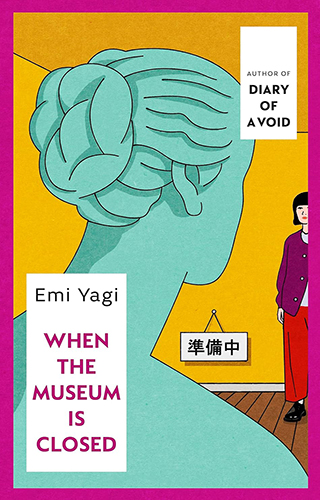
When the Museum Is Closed

Emi Yagi’s 2023 novel When the Museum Is Closed is a refreshing work of magical realism about a shy young woman who falls in love with a statue of Venus. The twist is that the statue loves her back, and – even more miraculous! – their love story has a happy ending.

Rika is a recent college graduate who works in the freezer department of a warehouse for processed food. She sees this as the perfect job for three reasons. First, she never has to talk to anyone. Second, she can take pre-prepared food home from her job, so she rarely has to cook. And third, an invisible yellow raincoat suddenly appeared over her clothing in elementary school, and she’s found it almost impossible to remove in public. The heavy vinyl fabric keeps her body temperature high, but that’s not a problem in an industrial freezer.

The only variation in Rika’s days comes from her part-time job. Once a week, Rika takes the bus to a local museum to have an hour of conversation with a statue of Venus. Venus only speaks Latin, but Rika enjoys a freedom with the dead language that she’s never found in Japanese. Though Rika is shy at first, she and Venus become friends, and they eventually fall in love.

Unfortunately, there’s a bit of a situation with a man named Hashibami, the museum curator in charge of the statue. He wants Venus all to himself, and he never wants her to change – he doesn’t want her to learn modern languages, and he certainly doesn’t want her to learn about the world outside the museum.

Venus therefore makes a deal with Hashibami. If he can get Rika to fall in love with him, she’ll allow him to fire Rika from the conversation job. Regardless, Rika isn’t interested in men, nor does she allow Venus to push her away. What Rika wants is something else entirely, and her relationship with Venus has given her the courage to chase their mutual joy.

The fantastic elements of When the Museum Is Closed are presented as entirely mundane, and it’s easy to take them at face value. At the same time, the love story between Rika and Venus resonates at an allegorical level with the experience of having a queer crush on someone who’s friendly and flirtatious yet seemingly unattainable. It’s the crush you have on an older coworker, or the crush you have on an internet friend, or the crush you have on the gayest girl you’ve ever met who is, inexplicably, married to a man. It doesn’t really matter that Venus is a statue, as anyone who’s experienced queer longing can relate to Rika’s situation. At the same time, Emi Yagi’s Venus is animated by her own distinct personality and undeniably lovely.

I’m sure that When the Museum Is Closed could also be read as an allegory for how women tend to be treated in male-dominated artistic and curatorial spaces, but the story is far more concerned with Rika’s subjective experience of her own individual life. I especially enjoyed the subplot involving Rika’s friendship with her landlord, a quirky but kind elderly woman who needs home care assistance, and I appreciated the understanding Rika develops with the neglected young boy who lives next door. Though Rika’s invisible yellow raincoat is unique to her, she’s far from the only person carrying unseen baggage, and it’s not necessarily the case that this is a problem that needs to be fixed.

When the Museum Is Closed is a short but expertly paced novel that moves quickly yet still allows the reader enough time to appreciate each scene. Its premise is intriguing and well-executed, and Yuki Tejima’s delightful translation captures the author’s tone perfectly, both in Rika’s deadpan observations and Venus’s mature flirtations. Readers who enjoyed Emi Yagi’s novel Diary of a Void will be pleasantly surprised by When the Museum Is Closed, which features the same sharpness and clarity of writing augmented by lovely moments of sweetness.

Lost Souls Meet Under a Full Moon

Lost Souls Meet Under a Full Moon brings together five interconnected short stories about people seeking to contact the dead. Though this book falls firmly into the category of “relaxing” fiction, it’s more plot-driven than most, and it distinguishes itself through its worldbuilding, especially its willingness to test the parameters of its magic system.

The central character of the novel is a handsome and stylishly dressed teenage “go-between” named Ayumi who can facilitate meetings between the living and the dead. The catch is that a person can only have one of these meetings in their lifetime, and each dead person is only allowed to return once. 

This is why the choice of the focal character of the first chapter, “The Rule of the Idol,” is so unusual. Manami asks the go-between to connect her with, of all people, a performer named Saori who made her living as a tv personality appearing on various talk shows and quiz games. When Manami was at the lowest point in her life, alone in Tokyo and bullied by her coworkers, she had a random encounter with Saori, who encouraged her to get back on her feet. Manami wants to use Saori’s death as an opportunity to thank her personally, which she never would have been able to do while Saori was still alive.

The third chapter, “The Rule of the Best Friend,” is far less wholesome. A first-year high school student named Arashi wants to be cast into leading roles in the plays performed by her school’s drama club, and she’s not shy about making her intentions known. Her biggest supporter is her best friend Misono, who joins the drama club in solidarity. Misono’s introverted grace has an alluring appeal that Arashi overlooks in her brash ambition, and she ends up losing a starring role to her best friend.

Arashi takes this poorly and stops talking to Misono. She assumes this will be a punishment, but she quickly realizes that her friendship was holding Misono back from achieving her own dreams. When Misono dies in a cycling accident, Arashi desperately wants to apologize, but she hasn’t yet developed the maturity to say what really needs to be said. I have to admit that I was surprised by the final meeting between the two friends, which is steeped in a complexity otherwise absent in these stories, and “The Rule of the Best Friend” ended up being my favorite part of the book.

In the final chapter, “The Rule of the Go-Between,” we see the characters from the previous stories from Ayumi’s perspective as he goes on his own journey during the process of inheriting the role of go-between from his elderly grandmother. Ayumi’s parents died under mysterious circumstances when he was a child, and his grandmother has carried a sense of guilt for years. Unlike his unfortunate classmate Arashi, however, Ayumi is able to break the barrier of silence and offer comfort and closure to his grandmother while they’re both still alive.

Despite a few brief moments of darkness, Lost Souls Meet Under a Full Moon presents little emotional challenge to the reader. There are very few subversive or self-reflective elements in these stories, and the characters occasionally behave like two-dimensional constructs who act solely in service to the plot. This isn’t a bad thing, of course. Lost Souls moves quickly and follows its internal logic so impeccably that the reader’s suspension of disbelief is never broken. As a result, each of the chapters is great fun to read.

Mizuki Tsujimura has taken the five-chapter cozy fiction formula and polished it to a high sheen. As far as the genre goes, Lost Souls Meet Under a Full Moon is as good as it gets, largely thanks to the author’s willingness to explore the more nuanced implications of the stories’ premise. Yuki Tejima’s translation is lovely and uses a light touch to bring the energy of Tsujimura’s prose to English-language readers. I’d recommend Lost Souls Meet Under a Full Moon to anyone looking for a good comfort read, not to mention a welcome reminder of the importance of saying what needs to be said while you’re still alive.

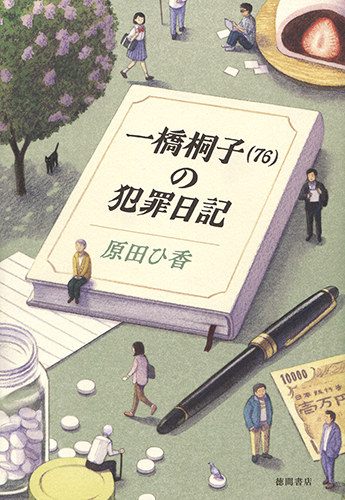
一橋桐子の犯罪日記

Hika Harada’s 2020 novel Hitotsubashi Kiriko (76) no hanzai nikki, which I’ll refer to as “Kiriko’s Crime Diary,” is the story of the eponymous Kiriko Hitotsubashi, who has found herself alone and in trouble at age 76. After her closest friend dies and her life savings are stolen, Kiriko decides that her best option is to spend her remaining years in prison. The only problem is that, before she goes to prison, Kiriko first needs to commit a crime.

Kiriko has been single all her life, but she jumps at the chance to share a house with her best friend Tomo, whose husband has died of a heart attack. Unfortunately, after two years of friendly companionship, Tomo dies of cancer, and Kiriko’s signature seal, bank passbook, and account holdings are stolen by a young man who asks to enter her house to pay respects to Tomo’s memorial. To add insult to injury, Tomo’s two sons treat Kiriko like garbage as they remove the furniture and cookware she shared with Tomo from her house.

Kiriko is left destitute, and she’s forced to use the last bit of money she has left to rent a subsidized apartment in a privately owned building for the elderly. She can barely afford groceries, and her new neighbors are difficult and unpleasant. Despite her age, Kiriko is as healthy as a horse, and she doesn’t seem to be in any danger of dying soon. She decides that being in prison would be preferable to becoming homeless, so she resolves to live a life of crime.

For the most part, Kiriko’s Crime Diary is a comedy that follows a sweet-natured and sensible woman as she does her best to get arrested. Kiriko has standards, and she doesn’t want to commit any sort of crime that might cause actual harm. She tries shoplifting from a chain grocery store, counterfeiting money with a convenience store photocopier, and scouting targets for a dubiously legal moneylender – all to no avail.

Over the course of her attempts to solicit advice regarding how to commit a crime, Kiriko ends up befriending all sorts of people, from the owner of the office building where she works as a janitor to a high school girl who volunteers to be kidnapped to punish her negligent parents. Between one thing and another, Kiriko ends up attracting the attention of a semi-retired yakuza boss, who uses intermediaries to contact Kiriko before finally meeting her in person.

One of the major subplots of the novel involves a man around Kiriko’s age who becomes entrapped in an elaborate “marriage scam” by a younger woman who drains his finances and then disappears. The man is crushed by disappointment, and the members of the poetry club Kiriko once attended with her friend Tomo have to band together to figure out how to help him. Along with Kiriko’s own troubles, this episode highlights the lack of a social safety net for many elderly people in Japan.

The theme of elder precarity becomes especially critical with the approach of Kiriko’s 77th birthday, which marks the start of her formal age of retirement. The janitorial company that employs Kiriko forces her to quit, depriving her of her only means of supporting herself. If Kiriko has no job and no one to serve as a guarantor for her rental contract, what is she supposed to do, exactly? Is her only recourse to start working with the yakuza?

Thankfully, Kiriko’s Crime Diary has a happy ending. All of Kiriko’s friends show up during a climactic scene to offer support and advocacy, and Tomo’s daughters-in-law apologize for the way she was treated by her late friend’s sons. All the loose ends are neatly tied, and Kiriko might even get to have a lovely winter romance with the handsome yakuza boss. I usually shy away from this sort of sentimentality, but why shouldn’t Kiriko have the best of all possible endings?

When I was working on one of my dissertation chapters about Natsuo Kirino’s gritty crime novel Grotesque, one of my readers asked me why Kirino’s characters all have to be so miserable. That was a fair question, and my answer was something along the lines that Kirino’s novels express the reality of the despair faced by many older adult women who find themselves completely devalued by society.

While I still believe that the tonal bleakness of Kirino’s style of critique is necessary and important, I also think that the happy ending of Kiriko’s Crime Diary is a welcome counterpoint. What Harada archives through this gentle comedy is to model one possible solution to elder precarity. Namely, if the neoliberal Japanese state is so utterly useless in providing social welfare, people must aggressively resist twentieth-century social conventions to form communities for mutual aid.

This support benefits not just elderly people, but also multigenerational networks. As much as Kiriko gains from her friendships with the owner of the building she cleans and the teenage girl she “kidnaps,” these characters also benefit from having Kiriko in their lives. It would be a shame, Harada suggests, not to have at least one friend like Kiriko.

Relearning how to make friends while relying on the kindness of strangers isn’t going to be a feasible solution for everyone, of course, but it’s a damn sight better than going to prison. And, if someone like Kiriko is considering prison, what are we even doing as a society? Even with a marvelously happy ending, Kiriko’s Crime Diary offers a social and political critique that’s difficult for even the most conservative reader not to agree with.

Hika Harada has enjoyed a productive career, and she’s won numerous awards for her fiction and screenplays. It’s no surprise that Kiriko’s Crime Diary was a bestseller that has found a place on all sorts of recommendation lists. This story will definitely appeal to readers outside of Japan, and it’s perfect for the same readership that enjoyed Killers of a Certain Age (which is fantastic, by the way).

Harada’s novel Dinner at the Night Library is going to be released in English translation in September 2025, and I’m looking forward to reading it. Kiriko’s Crime Diary is a genuinely fun and charming story, and I’d love to see it appear in translation too.

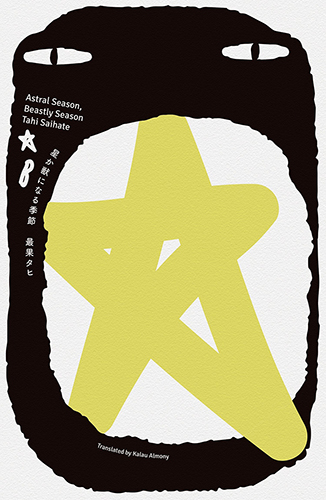
Astral Season, Beastly Season

Tahi Saihate’s Astral Season, Beastly Season (translated by Kalau Almony) is a novella about toxic high school friendships and girl group fandom gone horribly wrong.

In the first half of the book, a junior in high school named Yamashiro writes a letter to an unpopular “underground idol” named Mami Aino. Mami, who is still in high school herself, was arrested on the charge of murdering her ex-boyfriend. Another boy in Yamashiro’s class, Morishita, takes the news poorly and decides to commit a series of copycat murders so that he can confess to the crime Mami committed and take the fall in her place.

Unlike Yamashiro, Morishita is attractive, popular, and a model student. Why he’s a fan of a fledgling girl group with such a small following is unclear, and it seems like an incredible coincidence that both Yamashiro and Morishita would be attracted to the same super-indie performer. Although Yamashiro doesn’t seem to be aware of this, I strongly suspect that Morishita is much more attracted to Yamashiro than he is to Mami.

Regardless of motive, Morishita’s intention to commit murders is sincere, and he wastes no time getting started on his grim task.

The second half of the book takes place several years later, when Morishita’s childhood friend Aoyama meets up with Watase, a high school classmate of one of Morishita’s victims. Watase accuses Aoyama of portraying the murderer as “an all-around good guy” in an interview he gave to a tabloid magazine, and she wants him to apologize. Before the two of them get a chance to have a proper conversation, Aoyama is contacted by the brother of another of Morishita’s victims. This young man also wants closure, but what was going on in Morishita’s head will forever remain a mystery.

I have to admit that Astral Season, Beastly Season left me cold. More than anything, this is a book about the friendship dynamics of a small group of high school students. The novella doesn’t dwell on the psychology of the criminals, nor does it offer much description of what underground idol culture is or what it’s like to participate in this sort of fandom.

Instead, the reader is inundated with inane details about who is friends with whom, and who does and doesn’t walk home together, and who ignores other people on the train, and who went to a café together, and who is and isn’t talking to whom, and who said something mean after class, who doesn’t want to be in a group together on a school trip.

Amidst the swirl of teen friendship drama, the actual murders seem like little more than an afterthought. Were it not for the second half of the book, one might even argue that Yamashiro and Morishita are just pretending to plan and commit crimes. In fact, I tend to think that the story might actually be more interesting if this were the case. None of the characters has anything particularly insightful to say after the time skip, and the reader never learns anything about what Mami or Morishita might have been thinking or feeling. It’s all a bit disappointing.

There are two points of comparison that might bring the novella’s story into sharper contrast. The first is Yukio Mishima’s classic novel The Temple of the Golden Pavilion, a psychological drama about the (heavily fictionalized) young man who set fire to the eponymous landmark in 1950. It’s a gorgeous piece of writing, and Mishima is fascinated by the mind of a teenage loner who commits a serious crime, especially with respect to how this crime results from an intense homoerotic friendship. Another interesting companion novel is Rin Usami’s Idol, Burning (which I reviewed here), which I feel offers a much more sensitive and astute portrayal of the role that pop music fandom can play in the life of an emotionally precarious teenager.

I get the feeling that Astral Season, Beastly Season might have benefitted from a translator’s afterword explaining who the writer is and what the context for her work might have been. It might be a worthwhile project to discuss this novella in a college class or an academic paper, especially given Tahi Saihate’s status as an internet-famous visual artist who uses text to create eye-catching public art installations, but I’m not sure it stands on its own as a work of fiction. 

If nothing else, the novella is painfully honest about how high school friendship drama can feel life-shattering and world-changing to the people involved. Still, whether this sort of story is worth spending time with really depends on the interests and taste of the reader. It wasn’t for me, but perhaps a younger reader might feel a stronger sense of immediacy and connection to a beautiful high school boy who commits terrible crimes.

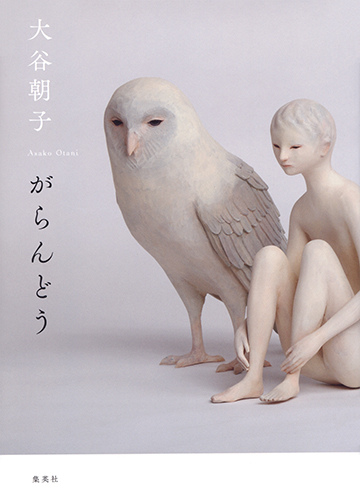
がらんどう

Asako Ōtani’s novella Garandō (がらんどう), which won the 46th Subaru Literary Prize in 2023, follows two 40yo women as they settle into a cozy life as adult flatmates.

Hirai recently moved in with her friend Suganuma, who suggested that they live together so they can afford a nicer apartment. The two women met as adults through their shared fandom of the boy band KI Dash, and they managed to remain friends during the pandemic despite drifting away from their other friends and family members.   

Hirai works in an office, while Suganuma is a self-employed artist who uses a 3D printer to create custom memorial figurines of her clients’ deceased pets. The two women share chores and meals, sometimes cooking for each other and sometimes going out to eat. Although they’re not romantically involved, they often fall asleep together in the living room while watching KI Dash performances on DVDs that they play on an old PlayStation 2.

When Suganuma’s star idol suddenly marries an adult video actress, Hirai takes her flatmate to the beach for a breakup vacation. Afterward, Suganuma begins dating a married man she met at the hotel bar. Hirai is jealous but understands that this is simply the way of the world.

In resignation, Hirai signs up for a dating app, but this goes poorly. Her lack of success is partially because she’s aggressively targeted by someone involved in a multi-level marketing scam, but it’s mostly because Hirai is about as asexual and aromantic as someone can be. She has a vague aspiration of having a child one day, but is that really what she wants?

For Hirai’s birthday, Suganuma ends her relationship with the sleazy married man and uses her 3D printer to manufacture a baby as a gift for her flatmate. The story closes in much the same place it began, with the two women happy and secure in one another’s company. The title of the novella, Garandō, means “empty,” and it most directly refers to the hollow centers of Suganuma’s 3D-printed figurines. This title might at first be taken to refer to the relationship between Hirai and Suganuma as well, but their friendship is anything but hollow.

Because really, what’s to stop two adult women from spending their lives happily together as flatmates? Why do two people need to be married or related in order for it to be “normal” for them to live together? Is your life really “empty” if you don’t get married and have children?

More than anything, Garandō reminds me of Banana Yoshimoto’s bestselling 1988 novel Kitchen, which presents alternate models of modern families while comforting the reader that, even if you’re not “normal,” life is still well worth living. Granted, Hirai and Suganuma are older than the characters in Kitchen, and they’re not living in the lap of Japan’s bubble-era luxury. In addition, Ōtani’s writing style is relatively sardonic and dry, especially when compared to the bubblegum pop of Kitchen. Still, Garandō is a positive story about two weirdos who manage to find happiness. Even if their lives don’t follow the standard model, they’re doing okay.

At a slim 112 pages, Garandō is a quick read. Ōtani has a wonderful sense of pacing, juxtaposing scenes of comfort inside the home with scenes of (highly relatable) social awkwardness in the outside world. I really enjoyed this book, which pulls off something I appreciate – the normalization of “difference” without resorting to sentimentality or melodrama.

What Ōtani demonstrates in this meticulously crafted novella is that people like Hirai and Suganuma are less uncommon than you might think, and that’s cool. And honestly, given that a house and a nuclear family have become distant dreams for many of us, why not join them? 

Strange Houses

Strange Houses is a four-part horror mystery novel about houses with strange and uncanny floor plans.

Each of the four chapters takes the form of a series of conversations between the narrator, their architect friend, and various people who have been involved with the houses. The first three chapters explore three different houses with extra rooms and inexplicable gaps in the walls. These explorations are liberally illustrated with diagrams in which certain sections of the floor plan are highlighted and annotated to clarify the text.

Each of these stories is like a locked room mystery. Over the course of the chapter, the narrator’s architect friend performs a close reading of a floor plan while gradually building a theory concerning what sort of upsetting behavior that type of strange space might enable.

In the final chapter, it’s revealed that these houses are connected to an old and wealthy family with a terrible secret. I have to admit that I found this situation highly improbable, so much so that it comes off as almost cartoonish. The author is great at architectural walkthroughs but skimps on the character development, which contributes to the conclusion of the book feeling somewhat hollow. Still, there’s a lot of fuel for the reader’s imagination, and fans of gothic horror will have a lot to play with here.

I flew through Strange Houses and loved every page. The speculative conversations between characters are easy to follow; and, thanks to the diagrams, the spaces are easy to visualize. I enjoyed the slow build of the overarching mystery, and the revelations about the bizarre family at the center of the strangeness were beyond anything I expected.

It’s worth noting that the first story in Strange Houses was originally written as a script for a twenty-minute video on YouTube, which you can find with English subtitles (here). There’s also a manga adaptation, which has been scanlated and is available to read (here). And finally, I’d like to share a more substantial review of the original Japanese book that was posted on one of my favorite blogs (here).

I tend to think that Uketsu’s earlier novel Strange Pictures (which I reviewed here) is somewhat more successful as a work of fiction with three-dimensional characters whose bad behavior stems from understandable motives. In comparison, Strange Houses feels more like a puzzle box than a novel. Strange Houses is less a character-driven story than it is an imaginative architectural mystery, but its eerie atmosphere and clever narrative structure make it a fascinating read for fans of speculative horror and uncanny design.

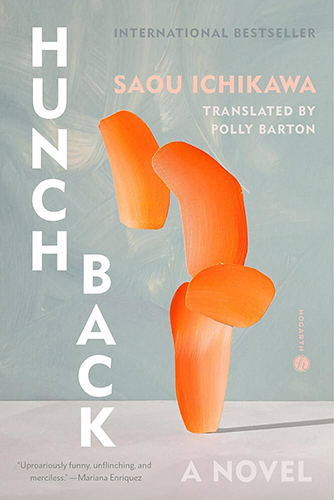
Hunchback

Saou Ichikawa’s 2023 novella Hunchback is a striking work of fiction and a major contribution to the literature of disability. Ichikawa’s brutally honest depiction of her disabled protagonist’s physicality is magnetically compelling and thrusts the reader into a world where the conveniences of the able-bodied cannot be taken for granted.  

Shaka is a resident of Group Home Ingleside, a private care facility established by her wealthy parents. Shaka owns the facility, and she collects income from several rental properties in the investment portfolio she’s inherited. In addition, she’s sitting on a trust fund so large that it has to be distributed across several banks.

Despite her wealth, Shaka’s disability confines her to a small studio apartment. While working on a PhD in Disability Studies, Shaka amuses herself by vent-posting on Twitter in between sessions of writing hardcore pornography. She donates her income to the food banks that serve unhoused people, sometimes directly and sometimes in the form of bulk orders of seasoning. Even homeless people deserve food that tastes good, she reasons.

Even as she emphasizes with the disadvantaged, Shaka describes the reality of her own physicality in painstaking detail. Because of muscular atrophy, she’s unable to breathe on her own. Due to social distancing during Covid, leaving the care facility is out of the question. Her PhD coursework is entirely online, and she digitizes academic texts with the aid of a book scanner, as it’s impossible for her to hold heavy books for long periods of time.

And why shouldn’t we have digital copies of books, Shaka demands. When the literati bemoan the digitalization of the written word, who does that benefit, exactly? Shaka’s litany of complaints against the ableism of academia is one of the many currents of anger that drive Hunchback forward. Shaka’s anger breaches the surface at regular intervals, forcing the reader to think critically about the entrenched ableism of the world many of us take for granted.

Despite being engaged in a life of the mind, Shaka has one dream – to become pregnant and then get an abortion. While she’s not particularly interested in the fantasy sex she narrates in her shallow and disposable smut stories, there’s something about the particular physicality and “human-ness” of pregnancy that she finds intriguing.

A golden opportunity falls into Shaka’s hands when a young male caretaker named Tanaka reveals that he’s been stalking her on Twitter and secretly reading her erotic fiction. Unfortunately, Tanaka is the worst sort of incel. Not only can he not get a girlfriend, he only became a caretaker because he couldn’t cut it in the corporate world. In his eyes, he’s just as failed by society as Shaka – who, he snaps, enjoys wealth most people could never dream of.

Out of mutual hatred, Shaka and Tanaka orchestrate a tryst. As you might imagine, it doesn’t end well. Suffice it to say that, if you’re looking for an uplifting message, you won’t find it here.

The end of Hunchback mirrors its beginning, with a prolonged description of a sexual encounter. The book’s closing scene is ostensibly narrated by Tanaka’s sister, who takes on a sense of personal responsibility for her brother’s crime of murdering a disabled woman in a care facility by literally choking her to death with his cum. 

I can’t help but suspect that this is once again Shaka writing erotica, albeit with a slightly more literary bent. The scenario is still improbable, but now she’s writing more for herself, fleshing out the characters (so to speak) by imbuing them with personalities and backstories.

Her encounter with Tanaka may have been an abject failure, but Shaka still desires “human” experiences and contact with the broader world. After all, writing – even writing erotica – is about so much more than coming up with a story and posting it online. Shaka never becomes a softer or kinder person, nor would I want her to. What she gains is motivation to be more present in the outside world as she sharpens her insight and hones her craft. 

Ichikawa writes based on her own experience as a disabled person, and Shaka’s voice is focused, specific, and driven. Shaka’s narration pulls the reader through the story with sharp observations and darkly comedic drama, and the steady forward momentum is just as entertaining as it is compelling. In many ways, Hunchback reminds me of Convenience Store Woman, and I’d recommend this book to readers who are receptive to unexpected charm and aren’t afraid to have their comfortable perceptions of reality challenged.

May You Have Delicious Meals

Junko Takase’s 2022 novella May You Have Delicious Meals is a small human drama about workplace bullying. It’s also a critique of Japanese corporate culture that simultaneously pokes holes in the iyashikei “comfort” reading meant to help people deal with stress. Contrary to what bestselling Japanese novels about cats and coffee shops would have you believe, it turns out that lovingly prepared homemade food cannot, in fact, fix a toxic workplace environment.

Ashikawa is a sweet young woman who transferred to a branch office in Saitama, a suburb of Tokyo, after facing harassment at her previous post. Due to her lingering trauma, Ashikawa has requested a reasonable accommodation – that she not be expected to work overtime. To make up for the inconvenience to her coworkers, she regularly brings homemade desserts to share with the office.

Ashikawa is not the hero of this story. In fact, her perspective is entirely absent.

The majority of the novella is narrated from the point of view of Nitani, Ashikawa’s secret boyfriend. Nitani has allowed Ashikawa to latch onto him, but he has no respect for her at all. He hates sweet food, and he thinks Ashikawa’s baking hobby is annoying. The only reason he tolerates her is because she seems like the sort of attractive and agreeable woman that a man in his position should be dating.

Nitani is friendly with an older female colleague named Oshio. Oshio resents Ashikawa, whom she feels gets special treatment. Why should Ashikawa have a lighter workload and be spared stressful job responsibilities just because she bakes cookies?

During a late-night drinking session, Nitani and Oshio decide to bully Ashikawa, resolving to throw away her desserts uneaten in trash cans that everyone can see. Oshio gives up on this bullying fairly early on, but she still ends up taking the blame when other people at the office surreptitiously start to join in. No one ever suspects Nitani, least of all Ashikawa herself.

I get the feeling that Penguin might be attempting to market May You Have Delicious Meals as a social comedy, but this is misleading. All of the characters are unpleasant, and the situation is deeply awkward. Takase’s story contains sharp social critique, but it’s not funny. Perhaps this novella might be described as cringe comedy, except without the comedy; it’s just cringe.

Nitani is a piece of work, and I hate him. He’s super gross. If you’ve ever worked in an office, you’ve probably encountered this exact type of guy – someone who hates women but still expects them to sleep with him. Takase’s portrayal of this species of greasy slimebag is immaculate.  

Oshio is much more relatable. Even though she’s not the primary viewpoint character, I still feel that this is her story. Oshio is critical of Japanese workplace culture, but she grits her teeth and deals with the unpleasantness of overtime, useless paperwork, angry phone calls, and branch office transfers. If she weren’t doing the work, she reasons, it would be unfair to the person forced to pick up her slack. Still, her coworkers aren’t her family, and she resents Ashikawa for cluelessly attempting to blur the necessary line between personal and professional.   

In the end, Oshio has the right of it. No matter how friendly a workplace pretends to be, the pretense of comradery isn’t going to stop the bullying and scapegoating that arise from stress and overwork. The ice-cold “fuck all y’all” speech Oshio gives at the end of the book isn’t quite theatrical enough to be cathartic, but still. Good for her.

Meanwhile, Ashikawa’s “happy ending” is chilling. I’m sure that circumstances seem rosy from her perspective. The person whom she assumes is the office bully has been vanquished, and her romantic relationship with her coworker is openly acknowledged by everyone in the office. Since the reader has seen these developments through Nitani’s hateful eyes, however, we’re painfully aware that Ashikawa is delusional about how the people around her actually feel.

May You Have Delicious Meals is the polar opposite of feel-good books about food and friendship. Reading Junko Takase’s prickly little workplace drama makes you feel awful, and that’s the point. It’s bleak, it’s disheartening, and it’s a brilliant piece of writing. I have nothing but appreciation for May You Have Delicious Meals, which is a much-needed antidote to the mindlessness and absurdity of the current trend of cutesy Japanese comfort novels.

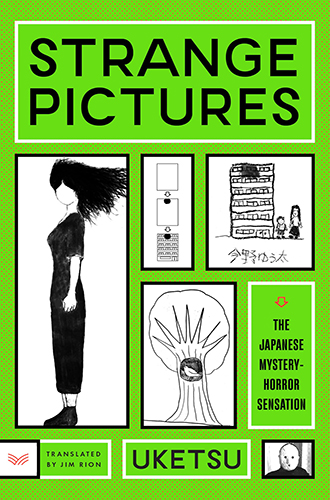
Strange Pictures

Strange Pictures is a compulsively readable horror mystery novel first published in 2022 by Uketsu, a mysterious masked YouTuber. This book is addictive, so much so that I accidentally spent an entire afternoon and evening reading it. So be warned – Strange Pictures is indeed strange, and it will hold you hostage.

In the five-page prelude that introduces the book’s premise, a psychology professor shows her class a photo of a picture drawn by a girl who killed her mother. The drawing is a childish self-portrait that shows the girl standing between her house and a tree. Although the picture seems completely normal at first, the professor zooms in on four small details that illuminate the girl’s inner state of mind. She makes the argument that, despite the abuse the girl suffered, she’s essentially a good person who never meant to hurt anyone. In retrospect, you can’t help but wonder how you didn’t notice these details of the drawing yourself.

This trick is an incredible sleight of hand. The same can be said of the following two chapters, both of which can be read as stand-alone short stories.

In the first chapter, “The Old Woman’s Prayer,” two college students in a small Paranormal Club discuss a curious blog they’ve found online. The blog is filled with cheerful observations of its writer’s everyday life. After a three-year hiatus, however, the blog closes with a mysterious post stating, “I can never forgive you.”

How did such a happy-go-lucky blog author arrive at such a mysterious statement? The five illustrations drawn by the author’s wife might just hold the key to the mystery. By themselves, they’re nothing special, but if you put them together in the right way…

The second chapter, “The Smudged Room,” features one of my favorite tropes, a creepy drawing made by a small child.

Five-year-old Yuta’s father recently passed away, and his preschool teacher is worried about the drawing he created for Mother’s Day. The picture shows a dark cloud hovering over the apartment building where Yuta lives with his mother, who is doing her best to care for Yuta with no family support. The matter comes to a crisis when Yuta suddenly disappears, and his teacher suspects that his mother may be keeping an unpleasant secret. What was Yuta trying to draw, exactly?

These two seemingly unrelated mysteries begin to coalesce in the third chapter, “The Art Teacher’s Final Drawing,” in which two sidelined newspaper employees become obsessed with the murder of a high school art teacher. The police dismissed the case due to a lack of evidence, but there is (of course) a drawing found in the teacher’s possession that was never fully analyzed. The younger reporter starts interviewing people who knew the teacher, thereby putting himself in grave danger.

Somewhere around the middle of this chapter, the story begins to strain credibility, but at this point I was fully invested and happy to be along for the ride. Uketsu has a gift for enabling the reader to suspend disbelief, and the Sherlock moment in the fourth and final chapter is incredible.

Strange Pictures is a bestselling cult hit in Japan and across Asia. I first heard about this book through word of mouth and read it in Japanese when it was first published. I was impressed by the clarity of Uketsu’s writing, which is simple and informative without being childish or condescending. Jim Rion has done an amazing job translating Uketsu’s distinctive style, with short declarative sentences pushing the reader forward at a brisk pace.

A large part of the mystery depends on the information that the narrative withholds from the reader, some of which is highly dependent on how Japanese works as a language. I’m impressed by how Rion manages to employ English to the same effect without the slightest trace of awkwardness. Reading Rion’s translation, I felt like I was encountering Uketsu’s story for the first time.

As long as you don’t mind losing a few hours to the addictive quality of the writing, I’d recommend Strange Pictures to anyone who enjoys puzzle box mysteries, creepy urban legends, and satisfying Sherlock Holmes style walkthroughs. I can’t overstate how much fun I had with this book, and I’m very much looking forward to Jim Rion’s upcoming translation of Uketsu’s debut novel, Strange Houses.

First Love

Rio Shimamoto’s 2018 novel First Love is a psychological mystery about a beautiful college student who has been arrested for the murder of her adoptive father. Although it tackles serious themes, this story is compulsively readable. All of the characters bring emotional baggage to the table, and Shimamoto teases out the reader’s sympathy as each of their histories is revealed.

Yuki Makabe is a clinical psychologist who specializes in parenting and childcare. She’s ambitious, and she’s on the verge of making a career transition to media appearances and popular audience articles. When Yuki’s brother-in-law, Kasho, is assigned to the high-profile case of Kanna Hijiriyama, a college student accused of killing her father, he asks Yuki to help him interview the young woman in order to ascertain her motive. Yuki’s prospective editor at a major publisher, a friendly young man named Tsuji, asks her to write about the case, so she agrees.

Yuki is happily married to an internationally famous photographer who supports her career by shouldering the majority of the responsibilities involved in the care of their son. Despite her loving relationship with her husband, Yuki has a troubled past with Kasho that neither of them is willing to discuss. While she and Tsuji work together on Kanna’s case, Yuki must navigate her strained relationship with Kasho, who is very charming but a bit of an asshole.

Kanna presents Yuki with another set of challenges. To begin with, Kanna can’t explain why she wanted to hurt her father, or even whether she intended to hurt him in the first place. But, if she never meant to attack him, what was she doing with a knife? To make matters more complicated, one of Kanna’s college boyfriends gives an interview to a tabloid magazine and says that Kanna went crazy after they broke up. Even Kanna’s own mother claims the young woman is crazy.

Yuki is convinced that Kanna is far from “crazy,” but the truth of the matter is elusive. Kanna is traumatized by the death of her father, and Yuki quickly realizes that the young woman’s trauma is much more extensive.

Based on the title of the novel and the relationship between Kanna and the person she may or may not have killed, a reader might suspect that there is underage incest involved. I hope I can be forgiven for spoiling the story by saying that, thankfully, this is not the case. Regardless, Kanna didn’t have a happy home life as a child. 

I’m afraid that some readers may find Kanna frustrating, but her portrayal feels extremely realistic to me. I definitely knew people like this in high school and college. Generally speaking, these girls (and occasionally boys) were intelligent and competent, but they had a habit of saying whatever they needed to say to diffuse an awkward situation. 

This behavior wasn’t “lying” or “being dishonest” so much as it was a manifestation of fawning, an alternative to the “fight or flight” response that’s common in young people who live in hostile home situations. Instead of fighting their parents or running away from home, “well-behaved” children and teenagers will contort their speech, emotions, and understanding of reality to ease tension. Issues often arise when this behavior carries over to romantic and professional relationships that would benefit from honesty.

Although this element of the story isn’t presented as a mystery to be solved, Yuki is confronted with the issue of whether Kanna truly consented to sex with two of the key romantic partners in her life. I can completely understand how the men involved might have understood Kanna’s words and behavior as expressing consent, but I also understand how Kanna could later admit that sex isn’t what she wanted, and that she was just going along with what was expected. As the author demonstrates, Kanna’s inability to understand her own boundaries is directly related to the emotional abuse she endured as a child.

Shimamoto doesn’t lean into an overtly feminist message, but there are multiple points in the story when Yuki comes into contact with the sort of ambient misogyny that might compel a vulnerable young person like Kanna to second-guess her own emotions and sense of self-worth. At the beginning of the novel, for example, Yuki reflects on a conversation between a male television producer and his younger female colleague that she overheard as she entered the studio.

As I was getting my makeup done, I examined my own features: not bad, but not particularly beautiful either. A face with no distinctive features. The only thing that stood out was my collarbone, protruding above my shirt.

I’d met that male producer several times previously, but he’d never once made eye contact with me. There were men like that everywhere in the television industry – men who wouldn’t engage in conversation with women they’d give less than an eight out of ten on looks. Men who thought nobody would notice this behavior. Or maybe they just thought it didn’t matter. These were men who had never suffered a single setback in their lives.

This is the sort of observation that, while eminently relatable to many people, would have Yuki called crazy if she spoke it out loud. It’s not “misogyny” or “sexism” if the male producer isn’t doing anything wrong, right? It’s not like he actually said anything offensive to Yuki, or to his younger colleague. This man’s behavior is rancid, but no one will ever call him out on it. Yuki has a supportive family and professional colleagues who aren’t human garbage, so she can cope. But what about Kanna, who hasn’t yet found a support network to replace her abusive family?

What Shimamoto criticizes in First Love are the gendered aspects of a social system that allows toxic men to flourish. First Love doesn’t offer easy solutions, but Shimamoto demonstrates that we can all be allies in pushing back.

Yuki’s husband is a prince from start to finish, and her editor Tsugi is able to see what happened to Kanna with clear eyes while re-evaluating his own perspective and never apologizing for the bad behavior of other men. Kanna’s defense lawyer Kasho has issues of his own due to childhood abuse at the hands of his mother, but he’s an adult who is capable of realizing his limitations – which is why he arranges for a series of meetings between Yuki and Kanna in the first place.

Without spoiling too much of the plot, First Love connects the stories of a number of characters who begin to question their past behavior in light of Kanna’s upcoming trial, and Shimamoto helps the reader to sympathize with these characters even when they behave badly. The point is not that men are evil or that women are innocent victims. Rather, it’s important to extend empathy instead of overlooking questionable behavior.

Putting the social relevance of the novel’s themes aside, First Love is a fun book to read. I got sucked into the story immediately. Like Yuki, I was instantly intrigued by the mystery presented by the death of Kanna’s father. Kasho’s defense argument during Kanna’s trial felt like a major revelation unfolding before my eyes, and I admire how carefully Shimamoto laid each brick in the wall. Louise Heal Kawai’s translation is featherlight and flawless and sets the tone perfectly.

I’d recommend First Love not just to fans of mystery and suspense, but to any reader interested in a compelling character drama that offers a number of different perspectives on family, mental health, and the darker aspects of everyday interactions that often go overlooked.