Retrograde

Retrograde collects five short stories and one novella written by a young Osamu Dazai and gorgeously translated by Leo Elizabeth Takada.

The novella, Das Gemeine, follows a 25yo student studying French literature who aspires to become a writer himself. While hovering around an amazake stand in Ueno Park and hoping to catch the attention of the young woman who works there, the narrator meets another student, a violinist who barely attends class at all. The violinist’s friend, himself a painter, warns the narrator not to believe any of the violinist’s tall tales about his supposed talent.

The three young men decide to start a literary journal together (along with their pathetically unattractive acquaintance Osamu Dazai), but petty personality conflicts crash the project before it can get off the ground. Feeling hopelessly at a loss in letters and in love, the narrator meets a sad fate that may not have been entirely an accident.

One of the many myths surrounding Osamu Dazai (the author, not the character) is that he considered himself to be a failure rejected by the mainstream literary establishment. For better or worse, I can relate. I know from personal experience that, as an outsider, you often find yourself placing your work in the hands of upstart editors organizing projects that may, in all likelihood, never see the light of day. More often than not, things fall apart precisely because the creative team had big dreams but no practical skills to realize their ambitions. 

I myself am something of a coward who immediately walks away from that sort of unpleasantness, but my familiarity with creative collaboration mishaps makes me respect the truth of the story Dazai tells in Das Gemeine, which is remarkably well-observed. The characters in this novella are deeply frustrating and more than a little cringe, but they’re 100% real – this is exactly what it’s like to work with creatives in their twenties who build castles in the air but haven’t yet developed the artistic discipline to commit their visions to paper. Bless their hearts.

The five shorter stories in the collection read like something that the narrator of Das Gemeine might actually have written. A 25yo man dies tragically and is mourned by his beautiful wife. A college student sits for the final exam of a French literature class he never attended. A high school student obnoxiously flirts with café waitresses but swiftly loses a fight with a grown man who’s not interested in his sophomoric bullshit. A teenage boy experiences a sexual awakening when the circus comes to town. Each of these stories is only a few pages long, and their unguarded sincerity contributes to their charm.

The closing story, “Blossom-Leaves and the Spirit Whistle,” is about two sisters in love with an idealized version of a man who only exists on paper until the strength of their shared storytelling summons his ghost to appear under their window… perhaps. I appreciate this story’s clever touch of Todorovian fantasy, and I’m always here for unapologetic gothic pathos. This aesthetically luxurious story is classic Dazai, in that it’s exactly the sort of work that’s contributed to his popularity among generations of students. I myself am not immune, of course, and this is by far my favorite piece in the collection.

In their “Translator’s Afterword,” Takada describes Dazai’s writing style as “a casual conversation with someone familiar,” and they explain that they want their translation to feel as if they’re “doing this just for you,” the reader. Takada gets the tone exactly right, rendering Dazai’s straightforward prose into an invitation to sympathize with the writer and his characters even despite their naked sincerity. I’ve never responded to overly “literary” renditions of Dazai’s prose, but I found myself flying through this translation. It’s fantastic.

I also want to highlight the care and attention that One Peace Books has put into the layout and typeset of this book, giving the words on the page exactly the room they need to breathe. Retrograde is a lovely object to hold in your hands, so much so that it might even spark the same youthful enthusiasm for literature that Dazai so aptly captures in his early fiction.

Much love to Leo Elizabeth Takada and One Peace Books for breathing fresh life into these classic stories from the 1930s. Retrograde is an admirable achievement, and I hope it brings the work of a fascinating author to new readers.

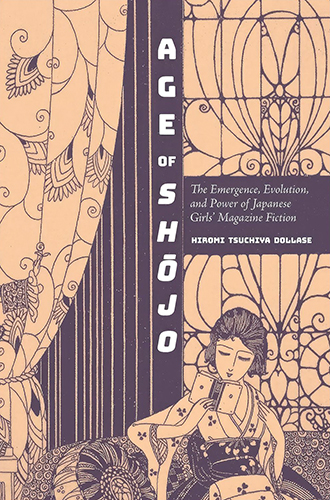
Age of Shōjo

Numerous articles and book chapters have explored the origins of shōjo culture, and Hiromi Tsuchiya Dollase’s Age of Shōjo: The Emergence, Evolution, and Power of Japanese Girl’s Magazine Fiction contributes new insights while weaving these threads together into a tapestry depicting the history of how imagined communities of young women were shaped by the editors and contributors of popular mass-market magazines in Japan.

Age of Shōjo opens with a discussion of Louisa May Alcott’s novel Little Women, which was translated by Kitada Shūho in 1906 as Shōfujin. Through a close reading that compares the translation to the original, Dollase demonstrates how the novel “introduced a Japanese female audience to Western lifestyle and the image of a Western home” while still conforming to native Meiji-era constructions of femininity.

Chapters Two and Three introduce two key figures who helped shepherd amateur women’s fiction into professional venues. The first is Numata Rippō, who edited the seminal magazine Shōjo sekai (Girls’ World), and the second is Yoshiya Nobuko, who is famous for her contributions to this magazine, which were later published as the collection Hana monogatari (Flower Tales).

Chapters Four and Five trace the development of the portrayal of gender and sexuality in Yoshiya’s work in comparison with her contemporaries Morita Tama and Kawabata Yasunari, who also contributed short fiction to popular magazines such as Shōjo no tomo (Girls’ Friend) during the 1930s and early 1940s.

Chapter Six jumps forward to the immediate postwar era, when girls’ magazines such as Himawari (Sunflower) were filled with romanticized images of the United States, and Chapter Seven chronicles how magazine fiction for teenagers took a more mature turn during the 1980s. The stories published in the 1980s were still commissioned, selected, and edited to appeal to a readership of young women, but this fiction now addressed themes relating to women in the workforce, including frustrations concerning the choice between marriage and a career. 

As related by the anecdotes in the book’s Introduction and Afterword, girls’ fiction continues to be widely read and culturally influential in Japan. Dollase handles this material with respect and care by acknowledging its problematic aspects but preferring to contextualize instead of critique. This is especially the case with the heavily censored fiction of the 1940s, as well as the work of writers whose stories were progressive when they were first published but may seem socially conservative now.

In her informative study of these texts, Dollase demonstrates how, “through magazine stories and illustrations, readers came to acknowledge themselves as shōjo, a new cultural identity,” and how the fiction of these authors contains “messages of resistance against disagreeable cultural conditions cloaked in fantasy, sentimentalism, and humor.” Along with Dollase’s deft and accessible analysis, Age of Shōjo’s annotated reproductions of magazine covers and interior illustrations are a gift to readers interested in the literature and visual culture of girlhood in twentieth-century Japan.

Flowers of Grass

Takehiro Fukunaga’s 1954 novel Flowers of Grass is considered to be a classic of postwar Japanese fiction, and it’s the sort of book that I imagine many people envision when they think of “literature.” The main narrator is Shiomi, an intelligent but sad young man who’s deeply concerned with spiritual and philosophical matters. As the novel opens, Shiomi has opted to undergo a risky operation at a tuberculosis care facility. Knowing that he won’t survive, he leaves a handwritten account of his life before the war, when he loved and lost both a male classmate and that classmate’s sister.

If one reads Flowers of Grass “straight,” Shiomi is a passionate but pure-hearted young man who has a tendency to fall in love with the idealistic versions of people he creates in his head instead of the actual people themselves. If you’re me, however, it feels much more natural to read Shiomi as a closeted gay man who has an intense sexual crush on a fellow member of his high school archery club but feels obligated to transfer his affection to the boy’s sister once he enters college. Despite being a devout Christian, the sister loves the apostatic Shiomi and twice attempts to initiate a sexual relationship, but Shiomi finds himself unable to reciprocate her physical attraction.

Perhaps this is just my own personal bias, but I also picked up an element of homosexual attraction between Shiomi and the narrator of the novel’s frame story, a fellow patient at the tuberculosis sanitarium. In my reading of Flowers of Grass, the burgeoning romantic relationship between Shiomi and the frame narrator goes a long way toward answering the novel’s opening question: Why does Shiomi decide to undergo a dangerous operation that’s almost certain to be fatal? Essentially, Shiomi has decided to commit suicide, and the point of the testament he leaves behind is to explain why. The answer is complicated, but I get the feeling that Shiomi’s inability to come to terms with his queer sexuality is not inconsequential.  

Putting the matter of sexuality aside, the bulk of Flowers of Grass is set during the late 1930s and early 1940s, and the story is of historical interest for its clear and unapologetic stance against the aggression of the Japanese imperial state. Shiomi is eventually drafted, and I think the author intends him to serve as a representative symbol of a typical Japanese soldier in that he really, really wasn’t cut out for the army. No sane military organization would want someone like Shiomi to be a soldier, but the Japanese Imperial Army was not sane.

The two love stories at the core of Flowers of Grass are intriguing, as is the mystery posed in its opening section. Unfortunately, the beginning of the novel is somewhat dull and meandering, and it takes an inordinately long time for the story to find its feet. In particular, your mileage may vary regarding how many dozens of pages of teenagers discussing philosophy you’re willing to wade through. Flowers of Grass requires patience, but it rewards thought and reflection.

As an aside, this novel was translated by Royall Tyler, who is famous for his translation of The Tale of Genji. I was curious about what Royall Tyler is up to these days, and I was amazed and delighted to find that he’s retired from academia to manage a llama farm. I highly recommend checking out his website (here), which is the most charming and wholesome thing I’ve encountered on the internet in a long time.

Tokyo Express

Seichō Matsumoto’s Tokyo Express is a slim mystery novel from 1958 whose crime is largely dependent on train schedules. Although two apparent victims of suicide appear to have traveled together to a lonely seaside town, were they in fact being pursued…?

The officer assigned to the case, a young detective named Mihara, suspects the involvement of the president of an industrial manufacturer with close ties to the government. Mihara assumes that his prime suspect, an affable middle-aged gentleman named Yasuda, was attempting to cover up an illegal collusion.

As Mihara pursues various train schedules across the Japanese archipelago, he learns that Yasuda’s elaborate system of alibis checks out. But, if Yasuda didn’t murder the two victims, who could have been helping him?

For me, there were far too many timetables in Tokyo Express, and I found myself skimming to avoid getting bogged down in the numbers. No one in the story has much of a personality, and Mihara is mostly a cipher for the reader. Despite the plot’s emphasis on travel, the locations that Mihara visits don’t really have a sense of place or setting.

I’m given to understand that there are many mystery fans who appreciate this style of writing, namely, just the facts with little by way of atmospheric description. If you’re looking for a puzzle box in book form, Tokyo Express has a lot of fun moving parts to play with. If you read mysteries more for the story, however, it might be better to take a pass on this particular ride.

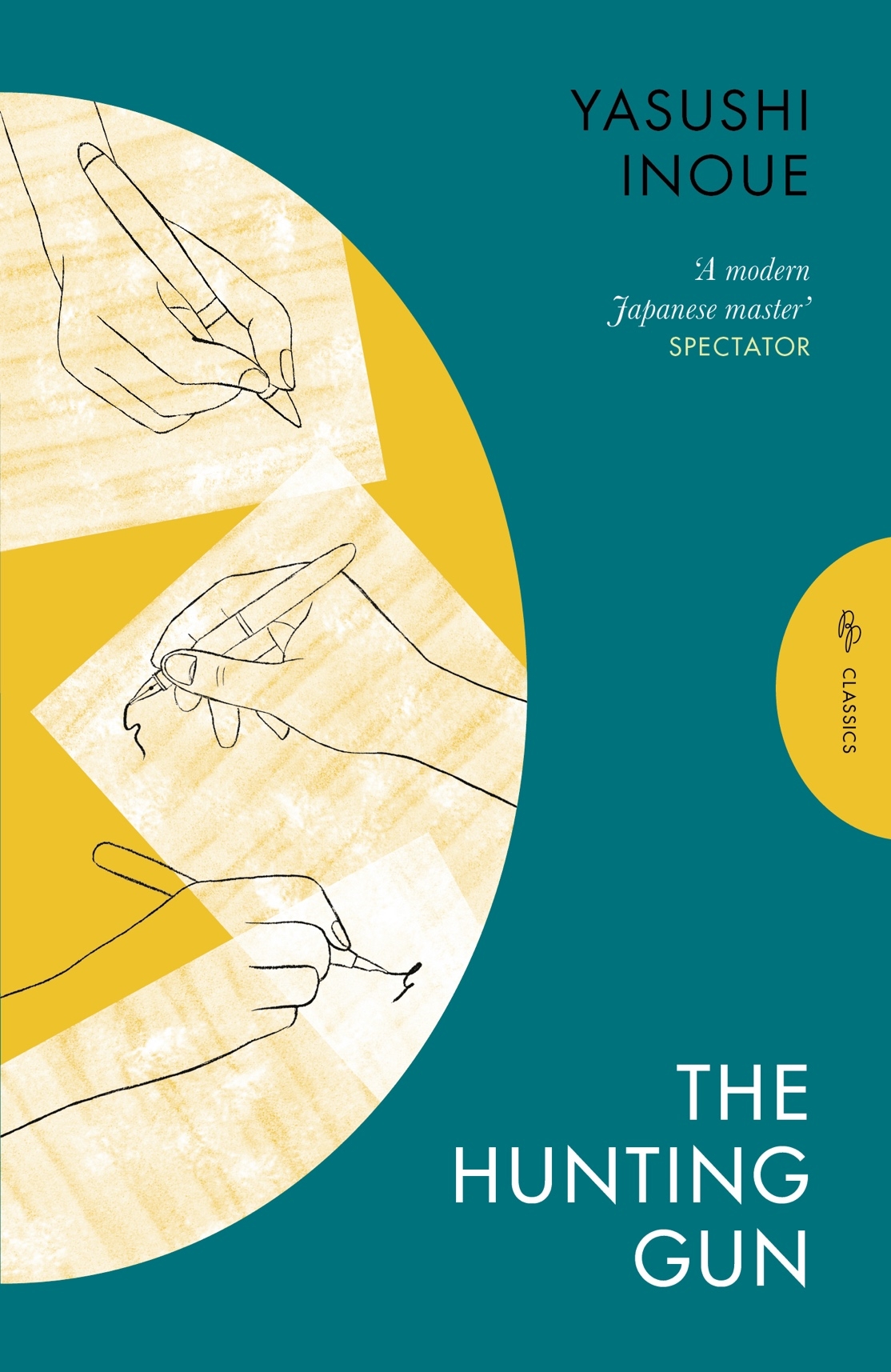
The Hunting Gun

Yasushi Inoue’s epistolary novella The Hunting Gun tells the story of a man’s extramarital affair through three letters: one from his daughter, one from his wife, and one from the woman he loved. The man himself is largely unimportant and provides little more than the frame story. Instead, the three female characters take center stage as they describe the complexities and compromises of their lives and emotions.

My favorite character is the man’s wife, a cultured intellectual who always knew her husband was having an affair. One of the primary reasons she stayed in the marriage was her affection for his mistress, who happens to be her beautiful and elegant older cousin Saiko. Once Saiko passes away after a long illness, the wife unapologetically ditches the husband to pursue her art (and, presumably, her younger lovers) in a villa in the mountains. Good for her.

The Hunting Gun was originally published in 1949, but it reads like the literature of the Victorian era. The eloquence of the three women’s letters is striking, as are the emotional contortions employed by the characters to avoid upsetting the status quo. The choices the three women make are almost comically irrational and counterproductive, but I couldn’t help sympathizing with them.

Michael Emmerich’s 2014 translation has an expansive sense of flow that stands in pleasing contrast to the style of earlier translations. Emmerich’s translation reminds me of nothing so much as the fluent but subtle monologues of Jane Austen (albeit with more than a hint of Brontë melodrama). There are other ways to read this classic of Japanese literature, but I’m grateful for the updated translation provided by Pushkin Press’s handsome stand-alone edition.

Strange Tale of Panorama Island

Strange Tale of Panorama Island
Japanese Title: パノラマ島奇談 (Panorama-tō kitan)
Author: Edogawa Ranpo (江戸川 乱歩)
Translator: Elaine Kazu Gerbert
Publication Year: 1927 (Japan); 2013 (United States)
Publisher: University of Hawai’i Press
Pages: 113

Strange Tale of Panorama Island is a short novel about murder, misdirected passion, and artistic delusion that climaxes with an explosive conclusion.

The story’s antihero, Hirosuke Hitomi, is a writer who is neither living his dream nor making a living. His life is horribly bleak until he receives news that a college friend named Genzaburō Komoda has passed away from a rare illness. Although Hirosuke was never close to Genzaburō, he knows that he was the sole heir of a wealthy family. He also knows that he resembled the recently deceased young man to such a strong degree that he could have been his doppelganger.

Hirosuke sees his chance, and he takes it. He fakes his death by leaping from a ship, an act interpreted as a suicide by the newspapers that report the event. He then disinters Genzaburō’s body, destroys it, and crawls to the Komoda family estate, claiming to have experienced a miraculous recovery. As Genzaburō, he blames his disorientation and seeming loss of memory on the trauma, knowing that the family’s doctors will be too embarrassed by their “mistake” to interrogate him.

Hirosuke is not content to live an easy life of luxury in the company of Genzaburō’s beautiful widow Chiyoko, however. Instead, he uses the vast wealth of the Komoda family to buy an island and fill it with aesthetic marvels, creating a sensualist utopia outfitted with near-future technology. The wonderland he names Panorama Island is both a museum of the fantastic and an amusement park for adults.

The short translator’s introduction explains the cultural context of the novel, specifically the public interest in panoramas during the 1920s in Japan, but none of this information is necessary to appreciate the marvelous imagery Edogawa dreams up to dazzle the reader as Hirosuke leads Genzaburō’s widow across the island. If Chiyoko knows Hirosuke’s secret, which she almost certainly does, what will become of her? Like Chiyoko, the reader can only be amazed by the island while disturbed by the troubled genius that created it.

Edogawa is interested, like his namesake Edgar Allan Poe, in the precise mechanics of how Hirosuke’s series of crimes might be possible. The novel contains a touch of the pulpy adventure story, as well as an earnest foray into the realm of medical science. Thankfully, the narrative never becomes mired in superfluous details, with most of the science remaining staunchly fiction. Hirosuke’s degeneration as a human being receives much more attention, as does his erotic and grotesque fascination with the confused and powerless widow of his former friend.

Although it’s published by a university press, Strange Tale of Panorama Island is a pleasure to read. The introduction and endnote sections are short, discrete, and quite interesting. If you’ve read and enjoyed any of the books in the Penguin Horror Classics series, including the handsome reprints of the work of Edgar Allan Poe and H.P. Lovecraft, you’ll more than likely have a lot of fun with Strange Tale of Panorama Island. The novel was originally written for a broad but intelligent audience, and it’s aged extremely well, partially thanks to the excellent translation.

I also want to recommend the manga adaptation drawn by Suehiro Maruo and published in English translation by Last Gasp Press. Maruo, a gekiga artist who has adapted numerous other works of dark mystery fiction, delights in the lurid imagery of the story, which he depicts with his signature detailed linework and bold panel compositions. Readers should be cautioned that, although this is a “classic” that’s taught in university classes, it is most definitely not safe for work.

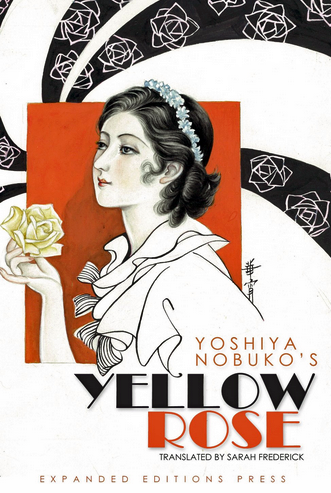
Yellow Rose

Yellow Rose

Title: Yellow Rose
Japanese Title: 黄薔薇 (Kibara)
Author: Yoshiya Nobuko (吉屋 信子)
Translator: Sarah Frederick
Publication Year: 2015 (America); 1923 (Japan)
Publisher: Expanded Editions

I’m absolutely thrilled to write that one of Yoshiya Nobuko’s stories has finally appeared in a readily available English translation. “Yellow Rose” is drawn from Yoshiya’s acclaimed collection Hana monogatari (Flower Stories), which first appeared in print in the 1920s and has been a major guiding influence in shōjo manga, literature, and aesthetics. Thankfully, Yoshiya’s fiction is not just important from the perspective of literary history but also a true delight to read.

The short story “Yellow Rose” is about Katsuragi Misao, a twenty-two-year-old college graduate who accepts a teaching post at an all-girls prefectural academy “a thousand miles distant from Tokyo” to avoid getting married. On the train departing from Tokyo she meets Urakami Reiko, who happens to be a student entering her final year at Katsuragi’s school. Reiko is running late; and, clutching a bouquet of yellow roses, she dashes across the platform to catch the train, just barely making it:

Perhaps because she had been running so fast her little chest beat wildly, sending the profusion of flowers in that single hand all a-tremble, and this quivering of the yellow rose bouquet moved in unison with the fluttering of the girl’s sleeves – it was a beautiful scene–

Reiko gets a grain of soot in one of her eyes, thus giving Miss Katsuragi a chance to be alone and in intimate contact with her as she administers aid:

The end of her ponytail stretched down below the pillow, and a wisp of stray hair lay on her white forehead; her cool eyes were both gently closed and just her lips moved with her breath like a flower – in the stillness of a moon perhaps her closed eyes were seeing a dream……ah, how lovely!

The two continue their association throughout the summer, and their romance blooms in a series of short vignettes, of which the following is representative:

Thus carries the sound of the bell down to the water at Kiyomigata shore. It must be from the Seikenji Temple bell tower in Okitsu –

The bell sound crosses the twilight waters……

Motionless on the beach shadows……two of them

Two shadows paused silently as if to let the sounds of the bell gently embrace them –

Twilight, the moon thinly visible at the yonder edge of the sky – as they neared the shore only the very faint tips of the breaking waves sported a faint whiteness, like frayed silk tassels.

Miss Katsuragi and Reiko make plans for the girl to attend Katsuragi’s alma mater in Tokyo before embarking on a journey to the United States together, but Reiko’s mother expects her to enter an arranged marriage immediately after her graduation in April. At the end of the story, as Katsuragi boards a ship to Boston alone, she abandons herself to her grief.

As with many of the stories contained within Yoshiya’s Hana monogatari, “Yellow Roses” ends in tears. The story’s focus is not on plot, however, but rather the beauty of the two young women and the depth of their feelings for one another. Entire paragraphs are spent on detailed descriptions of mournful eyes and chiseled cheekbones, and the poetry of Sappho is quoted at length. As in the above passages, Yoshiya’s writing is characterized by fragments and ellipses, which heighten the emotional impact of certain scenes while leaving the reader free to fill in the suggestive gaps in the text with her imagination.

“Yellow Roses” can be a quick and feather-light read, but the reader is rewarded for returning to the story a second time, as many of its passages can be appreciated as jewels in a beautiful setting – or roses in a stunning bouquet.

Although the story alone would be well worth the price of admission, this publication is graced by the addition of an extended translator’s introduction, a fascinating note on the cover illustration, an extensive selection of illuminating endnotes, and a meticulously curated list of selected English-language readings that functions as an invaluable resource to anyone interested in the history and inner workings of shōjo culture in Japan from the nineteenth century onward.

Translator Sarah Frederick’s introduction, which is roughly as long as the translated story itself, functions as something of an abbreviated textbook, touching on not merely the author and the story but also many aspects of the society and publishing culture that form its context. Frederick’s writing is not mired in the academic garble of postmodern theory but is immediately accessible to a casual reader as it paints a picture of a time and place in broad yet deliberate strokes. What I especially appreciate about this short essay is that it directly confronts the issue of female queer sexuality in Japan:

While it is not difficult to frame these desires via the flexible contemporary category of “queer,” it may be surprising to some readers that to invoke the word “lesbian” for Katsuragi and Urakami’s relationship, Flower Stories, or Yoshiya’s work and life more generally, has sometimes been controversial. I think this is a wonderful question to raise and discuss in a classroom or elsewhere using the story itself, and no translator’s introduction can “answer” it. […] While the term “lesbian” or loan word “rezubian” were not used in these stories or by Yoshiya herself in her lifetime, they are used literally here in reference to Sappho from Lesbos. More broadly, the claim that “lesbian” does not apply in the Japanese context or the prewar Japanese context (both arguments are sometimes made) leans far too much toward cultural essentialism and the false sense that Japan was cut off from the rest of the world, including its varied discourses on sexuality. The impression given by “Yellow Rose” and its milieu is rather the opposite: a highly cosmopolitan girls’ culture, aware of Sappho as a figure available to express the desire of one girl for another. It is engaged in active exploration of the rich but incomplete solutions posed by the possibilities of western philosophy, emotional poetry, and travel to America as sources for different ways of thinking about the realities and aesthetics of women’s lifestyles, desires, and conceptions of love.

The words in bold are my own emphasis, because I’ve been waiting for someone to state that very point as clearly and succinctly as Frederick for years now. Yes Virginia, there are queer women in Japan! The next time anyone asks me whether we can really call portrayals of homosexuality in Japan “gay,” as if the Japanese archipelago were home to a bizarre alien society completely removed from the cultural currents flowing across the rest of the world, I am going to quote this passage word for word.

The main appeal of “Yellow Rose” and its introduction really isn’t in any sort of political statement, however. Instead, the reader is invited to enter a sparkling, rose-colored world of radiant young women, their pure yet dangerous emotions, and the tragic pressures of a bygone era that prevent them from expressing their truest selves. As Frederick explains in her introduction, there is no better place to go looking for the roots of shōjo manga and literature. The translation itself expertly captures the language and cadences of the girls’ literature of writers such as Frances Hodsgon and Louisa May Alcott (whose work Yoshiya was almost certainly familiar with), so even the English feels pleasantly nostalgic. I therefore recommend “Yellow Rose” not only to serious academic types and hardcore shōjo fans but to even the casually curious. Within the short span of a train or subway ride, you can be transported into a glittering space removed – but never too removed – from the grittiness of the mundane. It’s quite an experience!

Yellow Rose is currently available exclusively as a digital text, and it can be purchased on Amazon’s Kindle store. It will also soon be available directly from the website of its publisher, Expanded Editions, a shiny new operation with two translations of vintage Japanese science fiction ready to download. Even if you’re not interested in Yellow Rose, be sure to check out Expanded Editions, which has done a fantastic job with its digital texts.

The manageable length and impeccable scholarship of Yellow Rose recommend it for classroom use. For educators hoping to incorporate the text into a printed or PDF course pack, Expanded Editions offers educational sales and will work directly with campus bookstores to make the material available to students. More information can be found on the relevant section of the publisher’s webpage.

Review copy provided by Expanded Editions.

Rivalry

Title: Rivalry: A Geisha’s Tale
Japanese: 腕くらべ (Ude kurabe)
Author: Nagai Kafū (永井 荷風)
Translator: Stephen Snyder
Publication Year: 2007 (America); 1917 (Japan)
Publisher: Columbia University Press
Pages: 165

Nagai Kafū is a fascinating person and an incredible writer, but, without access to the resources of a university library, it’s almost impossible to find his work in translation. Thankfully, Columbia University Press has recently released a paperback edition of Stephen Synder’s excellent translation of one of the writer’s most popular novels. Rivalry is full of rich detail and beautifully drawn characters, as well as compelling melodrama that draws the characters and setting together into a highly entertaining story.

The narrative perspective of Rivalry is split between multiple characters, but the protagonist of the story is Komayo, an aging geisha (she’s 25 years old) who married and left Tokyo to live with her husband’s family in the country. When her husband dies three years into the marriage, Komayo finds herself increasingly alienated by his family and thus returns to Tokyo, where she resumes her life as a geisha. Komayo is beautiful and highly talented in a number of traditional arts, and her goal is to secure a patron, or danna, who will buy out her contract with the house that currently employs her and help support her as she begins a career as an artist and proprietor of her own establishment in the “flower and willow world” of professional entertainers.

At the beginning of the novel, the top candidate for Komayo’s danna is a wealthy “man of affairs” named Yoshioka, who had known Komayo in his student days. Yoshioka wants to rise in the world, and he sees his patronage of the highly desirable Komayo as a means to do so. Komayo enters into a financial and sexual relationship with Yoshioka but also falls in love with Segawa, a Kabuki actor specializing in female roles. When Yoshioka learns of this relationship, his pride is so affronted that he begins to scheme at how to get back at Komayo. Meanwhile, how long can Komayo’s relationship with a fellow performer actually last?

Oh, the drama!

Rivalry is like Gossip Girl with geisha, and it is immensely entertaining to watch these beautiful people fall in and out of love and squabble with each other. The trappings of the world they occupy are just as glamorous as they are, and the reader is often given the opportunity to pass judgment on characters based on their outfits. For example, this is Komayo at the beginning of the novel:

Her hair was done in a low shimada style with an openwork, silver-covered comb and a jade hairpin. She had changed into a kimono of light crepe with a fine stripe. The effect was quite refined, but perhaps fearing that it would seem too old for her, she had added a half collar with elaborate embroidery. Her obi was made of crepe in the old-fashioned Kaga style, lined with black satin, and it was held together with a sash of light blue crepe dyed in a bold pattern. The cord word over the obi was a deep celadon green decorated in front with a large pearl. (10-11)

Obviously, such an elegant and tasteful woman should hold our sympathies. Here is Segawa at the end of the novel:

He sat casually with his legs folded to one side, as a woman would, showing a bit of the material of his underkimono, a yellow brown fabric dyed with a pattern of wheels rolling through waves that could only be a specific order from the Erien. His obi, narrow in the old style and tightly bound, was made of satin decorated with a single stripe and marked at one end with the name of the maker embroidered in red. It was most likely the work of the Hiranoya in Hama-chō. On most men, this costume would have been terribly gaudy, but for an onnagata it seemed positively inspired. (136)

What a rake! But what woman wouldn’t fall for such a handsome devil?

Komayo and her relationship with Segawa take center stage, but other characters flit in and out of the story. One of my favorite of these characters is Kikuchiyo, a geisha who is more Western than Japanese. Her sensuality isn’t expressed by her art but directly connected to her concupiscent physicality. Interestingly enough, Kikuchiyo’s ambition is to become a stage actress in the new Western-style theater productions. Also amusing are Kurayama Nansō and Yamai Kaname. Both are writers; but, while Nansō writes Edo-style novels and lives in a beautiful old Japanese house with a traditional garden, Yamai writes modern confessional novels and lives like a vagrant. The two men are friends, and their commentary and ramblings through the glitzy Asakusa neighborhood help to create critical distance from the main story while establishing the world of professional entertainers in a wider context.

It’s difficult to separate any story of geisha from discussions of sexual slavery and sexual politics. I won’t give my own opinions here, but Rivalry itself has more than enough to say concerning the paid relations between women and men, which it views from both a male and a female perspective.

For a man, the patronage of a geisha is apparently about ownership and practicality. This is how Yoshioka sees Komayo in a particularly intimate moment:

He wanted to see every detail of her expression, every inch of her body as she writhed with pleasure. He wanted to see her beg him to stop. Among all his experiences, this was the richest; among all the postures and poses he had seen in erotic prints, these were the most exotic – and he wanted to study them with his eyes wide open. (22)

This is how Yoshioka justifies his dalliance with geisha in his student days:

Rather than suppress his sexual desire only to risk shaming himself by falling under the spell of a maid or some other amateur, it was far safer to spend the money to buy a woman properly when needed. To pay for a woman and have her without undue worry to relieve his sexual tension and then pass his examinations with high marks – this was combing duty with pleasure and, he though, killing two birds with one stone. For a young man of the modern age, in whom there was no trace of the Confucian values that had shaped earlier generations, the only thing that mattered was success, reaching his goal, and he’d had neither the inclination nor the leisure to question the means that got him there. (36)

For the geisha herself, relationships with men are mostly based on practicality and careful planning, and geisha understand what they must tolerate in order to become financially self-sufficient. Here, Komayo and Hanasuke (another geisha in Komayo’s house) discuss whether Komayo should take on another steady client:

Hanasuke’s attitude was that men were fine when things were going well, but once they had a change of heart, they could be terribly cruel. This sentiment fitted nicely with Komayo’s long-standing theory that men were fickle by nature, and from that time the two women began to compare notes more frequently. Ultimately, they decided that the best plan was to put away as much as they possibly could while they still had earning power and thereby accumulate the resources that would allow them to live comfortably, perhaps running a small business of some sort, and have nothing further to do with men. (52)

Having taken on this client, a physically imposing man from Yokohama who made his fortune in the import business, Komayo must then deal with him:

The sea monster was silent, his eyes, dim with saké, passing back and forth between the enticing scene of the bed and the melancholy figure of the woman seated with her back to the lamp. Like a gourmet before an array of delicacies, he seemed unsure where to begin; but he was in no hurry, choosing instead to study the prospects carefully, determined, when the time came, to lick the carcass down to the marrow, according to some private design of his own. For her part, Komayo recoiled from those piercing eyes, and yet she knew there was no use objecting at this point. As long as she was in no real danger, no matter what happened she would quickly close her eyes and try to bring things to a conclusion as quickly as possible. (60)

Although the novel gradually shifts to the perspective of its male characters as its female characters become more embittered against each other, the author never lets his readers forget that the women who operate within the confines of the glamorous world of geisha are real human beings who are just as rational and aware of their social and economic circumstances as the men who enter into relationships with them. There is also much more variety in the female characters of Rivalry than in the novel’s male characters, and Kafū uses the attitudes and behavior of these women to subtly illustrate generation gaps and shifts cultural ideology between various understandings of “traditional” and “modern.”

Rivalry is an accessible novel that rewards multiple readings. It’s exciting and scandalous and sexy enough to read for pleasure, but it’s also intricate and detailed enough to be used in a classroom. The themes of the novel are timeless and universal, but Kafū is also able to open a window onto a different time and place with his incredible prose.

Stephen Synder’s translation of Kafū’s novel is excellent. As the above passages detailing the clothing of Komayo and Segawa demonstrate, Synder is superbly skilled at rendering even the most Japanese of descriptions and settings into natural and readable English. The one word left in italics is danna, but the translator’s six-page introduction at the beginning of the novel explains the meaning and context of this term as it relates to the pleasure districts of Tokyo during the Taishō era. Synder’s translation is an enormous improvement over the translation by Kurt Meissner and Ralph Friedrich published by Tuttle, which is currently available on the Kindle store. Even though Columbia University Press’s physical publication of Snyder’s translation is gorgeous, I wish they would release a digital edition as well.

Review copy provided by Columbia University Press

The Columbia Anthology of Modern Japanese Literature, Abridged Edition

Title: The Columbia Anthology of Modern Japanese Literature, Abridged Edition
Editors: J. Thomas Rimer and Van C. Gessel
Poetry Editors: Amy Vladeck Heinrich, Leith Morton, and Hiroaki Sato
Publication Year: 2011
Publisher: Columbia University Press
Pages: 960

The Columbia Anthology of Modern Japanese is the most comprehensive anthology of Japanese literature since the mid-nineteenth century; but, with two enormous (and expensive) volumes, it’s a bit daunting for all but the most stalwart of readers. I was therefore excited to learn that an abridged softcover version of the text has been released. At almost a thousand pages, the anthology still isn’t for the casually interested. As it provides a much wider selection of writers and genres than every other anthology of modern and contemporary Japanese literature on the market, however, The Columbia Anthology is an invaluable resource not only for students of Japanese literature but also for anyone interested in Japan in any capacity.

The anthology is divided into six sections spanning from the beginning of the Meiji period in 1868 to the end of the twentieth century. The two sections devoted to the Meiji era include work by naturalists and playwrights such as Mori Ōgai, Shimazaki Tōson, Kunikada Doppo, and Nagai Kafū, as well as essays by Natsume Sōseki, including “The Civilization of Modern-Day Japan.” The anthology then proceeds into the interwar period, which includes the work of authors such as Akutagawa Ryūnosuke, Edogawa Rampo, Kawabata Yasunari, and Tanizaki Junichirō. The section titled “The War Years” is mercifully short but includes stories by Dazai Osamu, Ishikawa Tatsuzō, and Ōoka Shōhei.

The “Early Postwar Years: 1945-1970” section is the longest in the anthology and reads like a hit parade of famous postwar writers such as Abe Kōbō, Enchi Fumiko, and Mishima Yukio. Many well-known postwar joryū bungaku (“women’s literature”) writers, such as Hayashi Fumiko and Kōno Taeko, are represented as well. The last section collects contemporary literature from the seventies, eighties, and nineties by both internationally famous authors such as Murakami Haruki and Ogawa Yōko and writers who are prolific and well known in Japan, such as Hoshi Shinichi and Furui Yoshikichi.

What is wonderful about this anthology is that, unlike other anthologies of modern and contemporary Japanese literature, it includes lengthy selections of Japanese poetry, both in “traditional” forms (such tanka and haiku) and in more modern forms (such as free verse). Although I am not a connoisseur of poetry in translation and thus can’t vouch for the quality of The Columbia Anthology‘s selections, I am thankful that so many works of modern and contemporary Japanese poetry have been brought together in a single volume. The majority of the original publications in which these translations appeared have long since gone out of print, so The Columbia Anthology is perhaps the best way to familiarize oneself with a rich yet underappreciated body of literature. The anthology also includes dramatic scripts by playwrights and screenwriters such as Inoue Hasashi and Kara Jūrō, texts which are also difficult to find elsewhere.

My enthusiasm for The Columbia Anthology is genuine, but some of the editors’ comments in the Preface shed light on some of the more conservative politics of literary anthologization. For example, to justify the entry of their project into a field in which many anthologies already exist, Rimer and Gessel state:

One difference between this volume and some of the earlier collections is related to the evolving view of both Japanese and foreign scholars as to what constitutes “literature.” Many of the earlier collections sought, consciously or unconsciously, to privilege the long and elegant aesthetic traditions of Japan as they were transformed and manifested anew in modern works. […] But many other kinds of writing, ranging from detective stories to personal accounts – always valued by Japanese readers but neglected by translators in the early postwar decades – can now be sampled here.

Expanding the scope of what is considered literature through diversity in anthologization is always good, of course, but two paragraphs earlier, the editors also made this strange comment:

Whatever the level of young people’s interest in manga (comics) and video games may be, literature, as opposed to simple entertainment, often remains the best way to grapple with the problems, and ironies, of the present generation of Japan.

On reading this sentence, I somehow managed to raise an eyebrow and roll my eyes at the same time. The context of this statement was a defense of the strength of contemporary literature in the face of a weighty literary tradition, but I wonder why the editors needed to make the distinction between “literature” and “entertainment” at all. Some types of print culture (such as dramatic scripts) are literature, but others (such as the text portions of visual novels) are not? Edogawa Rampo’s grotesque short stories are literature, but Otsuichi’s horror fiction is not? Haiku are literature, but tweets are not? And – most importantly – manga is not literature? Seriously?

Despite the editors’ stated desire to expand the scope of what is considered literature, their literary politics are, as I stated earlier, quite conservative. Popular fiction by writers like Murakami Haruki and Yoshimoto Banana is included in the anthology, but the work of such writers has been so resolutely canonized by scholarly articles and inclusion in course syllabi that its anthologization comes as no surprise. It’s good to have “outsider” writers like Tawada Yōko and Shima Tsuyoshi included in the anthology, but all of the volume’s stories more or less fit neatly into the category of “literary fiction.” You will not find the cerebral science fiction of Kurahashi Yumiko, or the historical revisionings of Miyabe Miyuki, or the fantastical explorations of Asian-esque mythology of Uehashi Nahoko, or the socially conscious mystery stories of Kirino Natsuo in The Columbia Anthology. You also won’t find any prewar popular fiction, such as the short stories of Yoshiya Nobuko.

This leads me to another criticism I have concerning the anthology, which is that it is remarkably dude-centric. Until the last two sections of the text (“Early Postwar Literature” and “Toward a Contemporary Literature”), there are no female writers represented (save for Yosano Akiko, who has a few poems about flowers and vaginas); not even one of Higuchi Ichiyō’s short stories is included. In the anthology’s defense, many of the women writing before and during the Pacific War, such as Enchi Fumiko and Hirabayashi Taiko, are included in the “Early Postwar” section. Unfortunately, this means that their more overtly political work has been passed over for stories that focus more on “traditional” women’s issues like female sexuality and the family. Furthermore, even though I applaud the editors for including literary essays in their anthology, it frustrates me that not a single one these essays was written by a woman, despite the fact that many female authors – including those represented in this anthology – are extraordinarily well known for their essays. What the editors has done is the equivalent of collecting the most influential essays on literature in North America and leaving out something as important and groundbreaking as Margaret Atwood’s On Being A Woman Writer.

In the end, though, I stand by my assessment of the abridged edition of The Columbia Anthology of Modern Japanese Literature as an essential resource to students of Japan. The volume contains many excellent stories, poems, essays, and dramatic scripts that are difficult to find elsewhere, and the editors keep their introductions of writers and literary epochs brief and to the point. As long as this text is supplemented to bridge over its gaps and omissions, I can imagine it becoming the backbone of a respectable introductory course on modern and contemporary Japanese literature, as well as a source of out-of-print translations of the work of less widely taught authors.

Review copy provided by Columbia University Press.

Schoolgirl

Title: Schoolgirl
Japanese Title: 女生徒 (Joseito)
Author: Dazai Osamu (太宰 治)
Translator: Allison Markin Powell
Year Published: 2011 (America); 1939 (Japan)
Publisher: One Peace Books
Pages: 94

At the beginning of an essay on Yoshimoto Banana, Ann Sherif quotes the Japanese psychiatrist Machizawa Shizuo as saying that he despairs of the darkness in Japanese literature, as people come into his office clutching books by Dazai Osamu and saying, “This is exactly how I feel. I’m sorry that I was born.”

Dazai’s work is pretty dark. However, for all the young men who have lived “lives full of shame” (a sentiment expressed in the opening line of No Longer Human, generally considered to be Dazai’s defining work) there are apparently hordes of schoolgirls who visit the author’s grave on the anniversary of his death to offer flowers and prayers. I never really understood why this would be so (most of Dazai’s narrators are abusive pigs); but, having read Schoolgirl, I think I’m starting to get it.

Schoolgirl is an uninterrupted stream-of-consciousness monologue by a bourgeois high school student who has lost her father and lives alone with her mother. The girl rambles from topic to topic, stating strong feelings in one paragraph (I hate my mom!) and then contradicting them in the next (I actually love my mom!). She talks about her best friend (whom she hates – or not), the other women she sees on the bus (whom she hates – or not), the people who come over for dinner (whom she hates – or not), and the prospect of getting married (which she hates – or not). She also meanders through mundane topics such as her dogs, movies she likes, her teacher, and the garden around her house. More than anything else, though, she subject she repeatedly returns to is that of her feelings regarding herself. The narrator of Schoolgirl describes herself with the self-loathing characteristic of all Dazai narrators:

In my heart, I worry about Mother and want to be a good daughter, but my words and actions are nothing more than that of a spoiled child. And lately, there hadn’t been a single redeeming quality about this childlike me. Only impurity and shamefulness. I go about saying how pained and tormented, how lonely and sad I feel, but what do I really mean by that? If I were to speak the truth, I would die.

Her descriptions of herself tend to be a bit dramatic, but I guess she is a teenage girl. In fact, Dazai uses the narrator’s identity as a teenage girl in order to make general third-person and first-person-plural statements about young people. Sometimes these statements are a bit strange for the narrator herself to make (such as when she says, “What a girl likes and what she hates seems rather arbitrary to me”). Generally, though, Dazai uses the relatively marginal social position of the teenage girl to make rebellious manifestos of the My Generation variety. Where the narrator’s “girliness” really takes off, however, is in her flights of fancy. For example:

Mother used this parasol long ago, when she first got married. I felt quite proud for finding this interesting umbrella. When I carried this one, it made me feel like strolling through the streets of Paris. I thought that a dreamy antique parasol like this would go into style when this war ends. It would look great with a bonnet-style hat. Wearing a long pink-hemmed kimono with a wide open collar, with black lace gloves and a beautiful violet tucked into that large, wide-brimmed hat. And when everything was lush and green I’d go to lunch in a Parisian restaurant. Resting my cheek lightly in my hand, I’d wistfully gaze at the passerby outside and then, someone would gently tap me on the shoulder. Suddenly there would be music, the rose waltz. Oh, how amusing. In reality, it was just an odd, tattered umbrella with a spindly handle.

Another flight of fancy I enjoyed was the narrator’s description of her “Rococo cooking,” which is enjoyable and meaningful for her but apparently not fully appreciated by all of the ugly, stupid, and boring adults in her life. As insecure as the narrator is in her identity and her relationship to other people, however, she can always find refuge in her fantasies of luxury and glamour of an ahistorical European origin. “I’m Cinderella without her prince,” the narrator says at the end of the novella. “Do you know where to find me in Tokyo?”

Despite her petulant grumpiness, the narrator of Schoolgirl reminds me less of the tortured youths of novels like No Longer Human and The Setting Sun and more of the narrative voice of the Gothic Lolita poster child Ryūgasaki Momoko from Takemoto Nobara’s 2002 novel Kamikaze Girls. In fact, reading Schoolgirl felt a bit like reading one of the longer essays (perhaps by someone like Miyavi) from the Gothic & Lolita Bible. In Schoolgirl, as in Lolita fashion cultures, a certain world weariness and disgust towards adult society is mixed with a self-consciously artificial desire to maintain one’s innocence and emotional purity through a beautiful and delicate fantasy enacted through clothing, cooking, visual imagery, and music.

Of course, the Gothic Lolita mindset inspired in part by the narrative style of Schoolgirl is only one facet of the novella, which glitters like a diamond from any way you choose look at it. Schoolgirl might be used to demonstrate how premodern poetic nature imagery made its way its modern literature, or how the early Shōwa period was not all about fascism and conquest, or how “modern girls” viewed the West as a site of cultural maturity and longing, or how the complexities of the mother-daughter relationship shape the development of teenage girls – or even how male authors use transgender narration to escape the confines of literary conventions. Despite its relative brevity, Schoolgirl is fascinating and can be approached from a variety of angles by a wide range of readers. I can’t think of a single person to whom I wouldn’t recommend this novella.

Schoolgirl is published by One Peace Books, a small indie press that readers of contemporary Japanese literature in translation should keep an eye on. One Peace has published translations of two amazing manga, Tenken and Breathe Deeply, that should already be on the radar of serious and mature manga fans. They’ve also published two illustrated children’s books and a handful of inspirational books, such as Treedom and Shift. If the high publishing quality of Schoolgirl (and the small number of their other titles I have in my possession) is any indication, One Peace Books puts a great deal of attention and care into their non-conventional yet highly interesting catalog. Go check them out!

Review copy of Schoolgirl provided by One Peace Books.