川のほとりに立つ者は

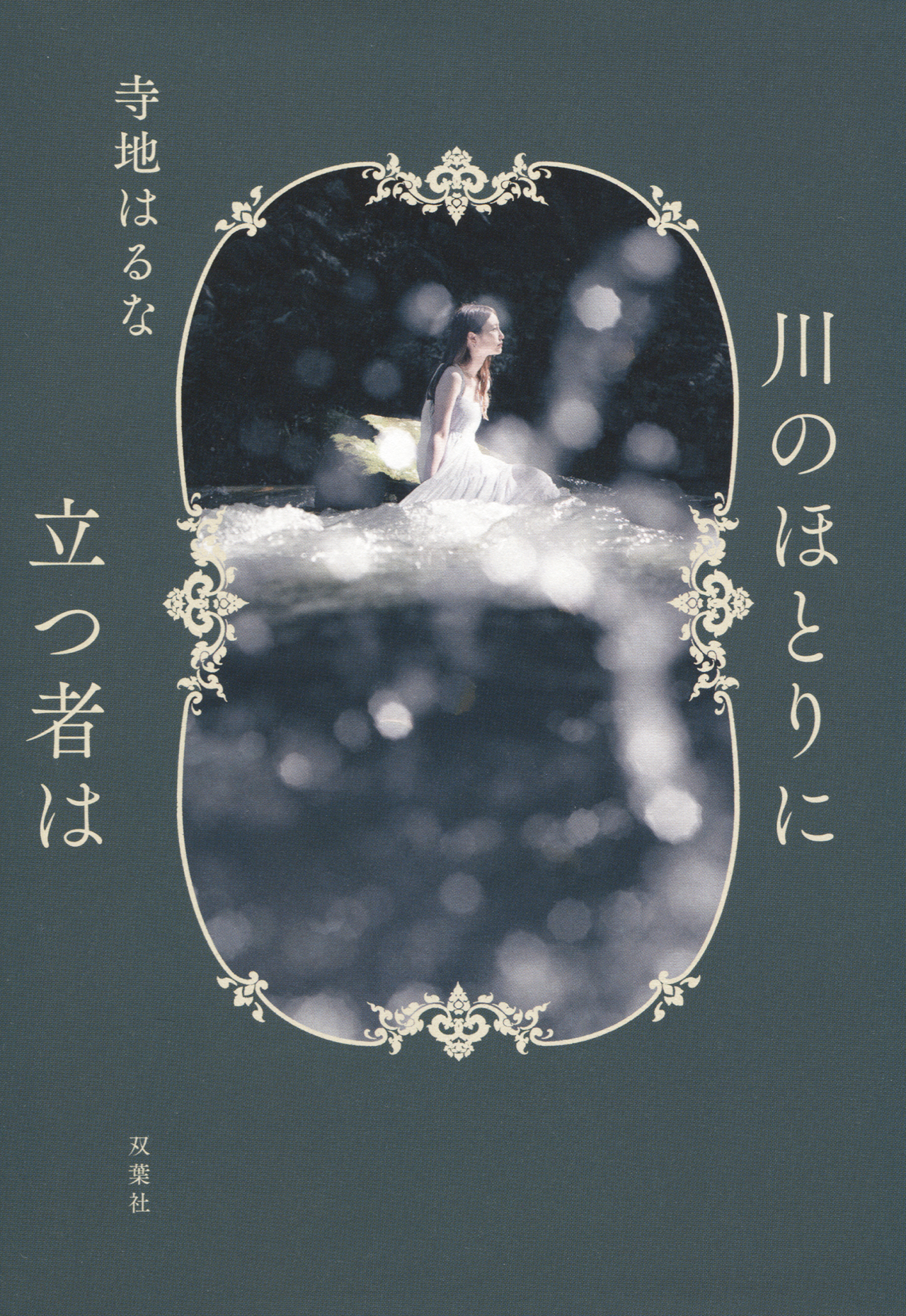
A young woman named Kiyose was recently promoted to the position of manager at an independent café. She devotes her love and attention to the business, but all is not well. One of her employees is a constant source of frustration, and she hasn’t spoken to her long-term boyfriend Matsuki since they had an argument about how Kiyose should handle the situation.

One day, Kiyose randomly gets a call from the hospital informing her that Matsuki is in a coma. The nurse in charge of his care informs her that she’s the closest thing he has to a next of kin, so she dutifully goes to confirm his identity. During her visit, Kiyose learns that Matsuki suffered a head injury sustained under mysterious circumstances, and his only other visitors are two unrelated people she’s never met.

川のほとりに立つ者は initially seems as though it’s going to be a mystery about crime, but it’s actually a character drama about living with invisible disabilities, specifically ADHD and dyslexia. As Kiyose begins digging into Matsuki’s life, she learns that, despite being alienated from his uptight family of professional calligraphers, Matsuki was teaching an adult with dyslexia how to write so that he could pass letters to a woman trapped in an abusive housing situating.

The novel’s title is taken from the proverb 川のほとりに立つ者は水底に沈む石の数を知り得ない, “Those who stand on the river’s shore can never know the number of stones under the water.” After learning about the discrimination faced by Matsuki’s friend, however, Kiyose begins to understand how unfair it is to tell someone with a disability that they’re just being lazy and irresponsible. She realizes that she was being cruel to her employee, who had come out to her as having ADHD, and she resolves to make her café a more accessible and welcoming space while being kinder to the people in her life.

Although her work hasn’t yet been translated into English, Haruna Terachi is a prolific writer who has won a number of literary prizes since her debut in 2014. This is my first encounter with Terachi’s writing, and I enjoyed this short novel, especially the chapters that were narrated from Matsuki’s perspective. I also found it satisfying to watch the mysteries presented at the beginning of the story slowly unravel. That being said, I was unsatisfied with the novel’s conclusion that the solution to systemic discrimination falls on individuals, who simply need to “walk at the same pace” as people with disabilities.

Still, it’s always good to see sympathetic stories about disability – especially invisible disability – and I appreciate Terachi’s pushback against the toxic misconception that disabled people simply aren’t trying hard enough. Along with people interested in the experience of living with disability in contemporary Japan, I’d recommend this book to anyone looking for a fast-paced and wholesome character drama driven by hidden secrets brought to light. 

ハンチバック

Saō Ichikawa’s ハンチバック (Hunchback), which won the prestigious Akutagawa Prize for emerging writers, is about a woman with a congenital spinal condition who lives in a group home and posts her secret desires and frustrations on Twitter. It’s an amazing story and a brilliant piece of writing.

The protagonist, Shaka Izawa, has been provided for by her wealthy parents. Although she doesn’t need the money, Shaka works as a freelance writer, mainly penning reviews for stores and restaurants she’ll never be able to visit in person. She also writes explicit erotica, a selection of which opens the novella.

Hunchback is written in a playful and accessible style, but it asks serious questions about disability. Why shouldn’t Shaka create erotica? Why shouldn’t she experience desire? Why shouldn’t she have sex? These questions become less abstract when one of Shaka’s caretakers discovers her secret writing account, and she presents him with a proposition – she’ll pay him to have sex with her.

I was so intrigued by Shaka’s story that I read Hunchback (which is ninety pages long) in one sitting. Ichikawa’s description of the daily life of someone with severe mobility impairments is honest yet compassionate, and her anger at Japanese society’s ingrained ableism is powerful and resonant.

おやすみ、東京

Atsuhiro Yoshida’s 2018 linked short story collection おやすみ、東京 chronicles the adventures of a cast of slightly odd characters with subtle connections to one another. Each of the stories begins at precisely 1:00am. Far from being scary or dangerous, the nighttime urban space of Tokyo is gentle and welcoming.

Four women run a small restaurant that’s only open in the early hours of the morning. A taxi driver listens patiently to his passengers so that he can take them exactly where they need to go. Other characters have highly specialized professions, from someone who runs a highly curated antique store to someone who disposes of old telephones.

I’m in love with Yoshida’s writing style, which is playfully idiosyncratic but still clear and light and easy to read. Despite the gentleness of the stories, there’s never any sentimentality, just slightly damaged people doing their best to make it through their lives. おやすみ、東京 tends more toward realism than some of Yoshida’s other work, but small bits of strangeness still shine through the cracks of the mundane. 

An English translation of this book, Goodnight Tokyo, is scheduled to be released on July 9, and I’m looking forward to Yoshida’s English-language debut!

からだの美

Yōko Ogawa’s 2023 collection からだの美 brings together sixteen short essays on the theme of bodies and physicality. The three primary topics are sports, performing arts, and animals.

The essays about sports were mostly lost on me, but I loved Ogawa’s discussions of animals, especially naked mole rats. As Ogawa reflects on their odd appearance and rigorously structured society, she writes that the world is an infinitely strange place, and that she couldn’t invent creatures like this from imagination even if she wanted to.

My favorite essay is レース編みをする人の指先, which is a meditation on how our lives and bodies are shaped by creative practice. Even though crafts such as embroidery and sewing lace seem to have no practical purpose in modern society, we continue to make things by hand just for the joy of it.

The Japanese literary tradition of essay writing is a bit different than what many of us have come to expect from English-language essays. To make a generalization, Japanese literary essays tend not to include anything overly personal about the author or lay bare any sort of trauma. It’s not a given that an essay will address political topics or attempt to persuade or educate the reader. Rather, reading a Japanese essay is often like engaging in a gentle conversation. I find this lo-fi style of writing to be quite relaxing to read, but your mileage may vary on whether the essays in からだの美 come off as pleasantly chill or somewhat flat and underwhelming.

To me, からだの美 is an interesting companion to Ogawa’s 2022 short story collection 掌に眠る舞台, which also explores the relationship between art and the body. Ogawa’s fiction follows strange people who inhabit a twilight world that feels slightly removed from our own, so I found it amusing to read her perfectly normal nonfiction essays about the brighter side of topics she’s explored in her recent stories.

掌に眠る舞台

Yōko Ogawa’s 2022 collection 掌に眠る舞台 contains eight stories connected by the broad theme of “stages.” Some stories are about the world of performing arts, while others take an abstract approach. Ogawa isn’t concerned with glamour, but rather the strangeness of the stage after the spotlights go out.

One of my favorite stories is ユニコーンを握らせる, which is about an actress whose sole performance was cancelled. She lives alone in her old age, comforting herself by repeating lines from a play that never made it past rehearsals. As always, Ogawa’s gentle portrayal of loneliness is exquisitely observed. With each tiny detail of the woman’s apartment, Ogawa paints a portrait of someone who can’t escape her fantasies of a past that never existed.

I also enjoyed いけにえを運ぶ犬, in which a young boy repeatedly stages a performance of enjoying a specific book at a traveling bookseller’s cart for the sole benefit of the bookseller’s dog, who watches the children to prevent theft. This is a story about poverty and negligence and the fear of being forgotten, but Ogawa nevertheless captures the magic of what it’s like to fantasize about books as a kid. 

For me, the standout story was ダブルフォルトの予言, which is about a woman who lives in an empty storage room on an upper floor of the Imperial Theater in Tokyo. This woman’s job is to absorb all the bad luck of the performers on stage, sort of like an inverse Phantom of the Opera. Instead of an extravagant man who lives in the sewers and aggressively causes trouble, she’s a plain and boring woman who lives the attic and passively prevents accidents. At least, that’s what she says of herself, but what’s she really doing in the theater attic? And why is the narrator visiting her so often?

Something I’ve always loved about Ogawa’s writing is the lucid clarity of her language, but the style of 掌に眠る舞台 is much richer and denser than that of the author’s earlier work. Instead of being like icebergs, these stories are more like mazes. You have to take your time getting to the center, which is fine by me. It’s always a pleasure to spend time wandering through Ogawa’s signature uncanny spaces.

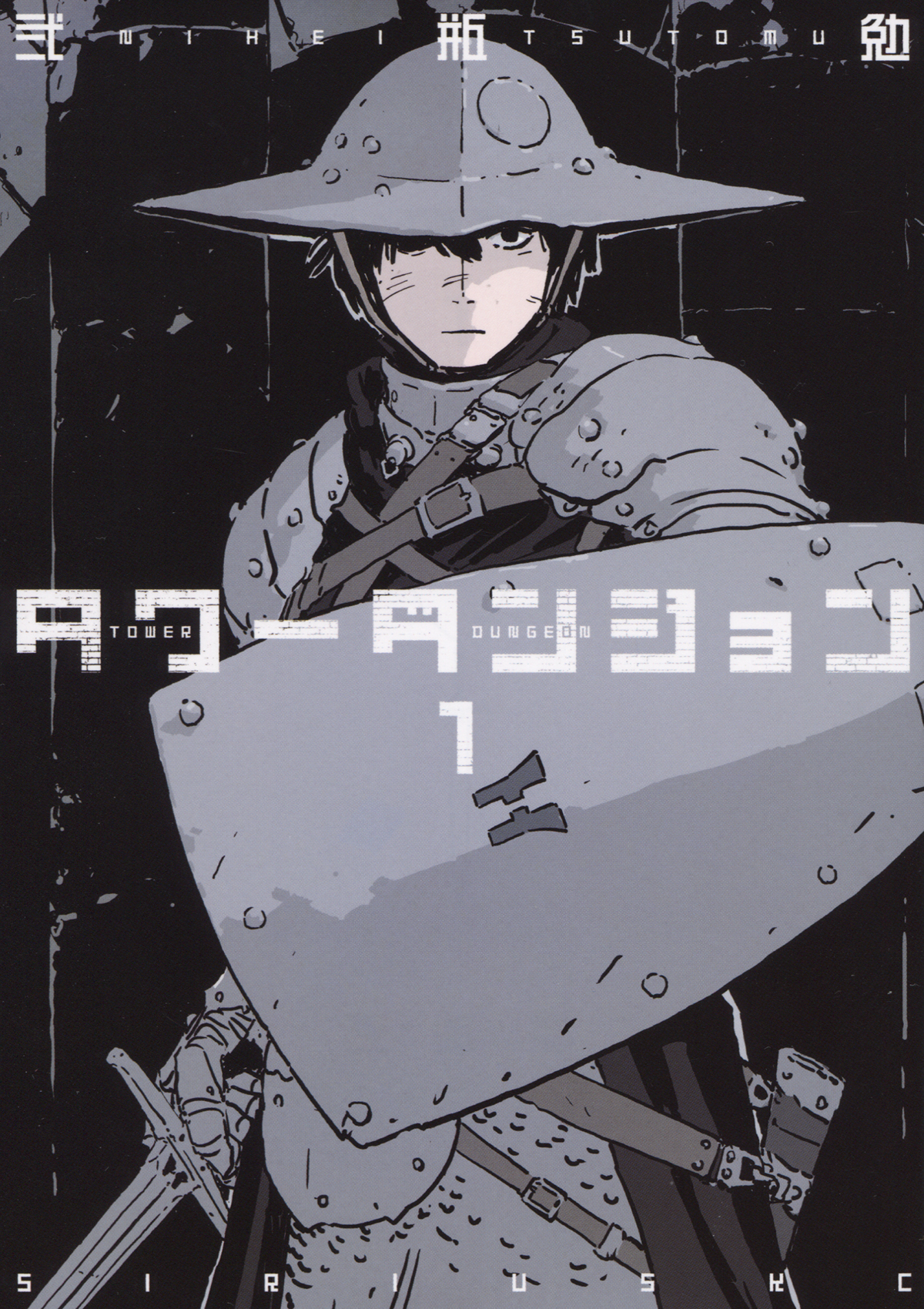
Tower Dungeon

Tsutomu Nihei’s newest manga series, Tower Dungeon, is a grim and grisly dark fantasy about a small team of knights attempting to rescue a princess from an evil wizard at the top of the mysterious Dragon Tower.

This purposefully bog-standard fantasy premise is a bait-and-switch for the actual story, which is as brutal and fiercely imaginative as any of Nihei’s sci-fi dystopias. Instead of being set in the claustrophobic cable-choked interior of a spaceship, the visual space of Tower Dungeon is filled with vaulted ceilings and crumbling stone walls, but Nihei still dazzles the reader with labyrinthine passageways and an awe-inspiring sense of scale. 

Nihei’s signature body horror is on full display in Tower Dungeon, which is populated by the shambling undead, grotesque human graftings, uncanny automatons, and abject abominations. Even when they’re not monstrous, I love the designs of Nihei’s heavily armored knights.

There’s a bit of fanservice, sort of? But not really, and I’m not complaining. If I had to guess, I’d say that Nihei has a crush on Malenia, the deadly woman warrior from Elden Ring, but don’t we all.

The pacing of Tower Dungeon is excellent, and the action sequences are balanced by downtime and light banter that doesn’t try too hard to be funny. The characters offer very little exposition, but the background setting is intriguing. Given my experience with Nihei’s previous manga series, I’m not expecting the story to coalesce into any sort of cohesive plot, but I’m happy to join this strange journey wherever it leads.

I think, honestly, that Tower Dungeon is the Dark Souls manga I always wanted. I hope it gets an English translation soon!

The God of Bears

The God of Bears
Japanese Title: 神様 (Kamisama)
Author: Hiromi Kawakami (川上弘美)
Publisher: Chūōkōronsha (中央公論社)
Publication Year: 1998
Pages: 205

At the age of 36, Hiromi Kawakami submitted a story titled “The God of Bears” (Kamisama) to the Pascal Short Story Literary Newcomers Prize competition sponsored by Asahi Net, one of Japan’s largest internet service providers. “The God of Bears” was the winning entry, and it was first published online in 1994. “The God of Bears” was later published in print in 1998 in a collection of the same name, which won the prestigious Murasaki Shikibu Literary Prize of that year and the Bunkamura Deux Magots Literary Prize in the following year.

The God of Bears contains nine short stories set in contemporary Japan and connected by an unnamed narrator who encounters a variety of curious people and creatures during her daily life. In the title story, the narrator is invited out on a picnic by a bear who has just moved into their apartment complex. The narrator’s interactions with the bear over the course of a lazy afternoon illustrate both how familiar and how alien he seems as he attempts to adjust to life in human society. Other stories involve similarly supernatural yet mundane creatures, as well as normal people who find themselves in extraordinary situations.

In the second story, “Summer Break,” the narrator spends a few weeks working at a pear orchard, where she adopts a trio of small tree spirits. Like the other stories in The God of Bears, “Summer Break” operates according to the logic of magical realism, which is perhaps why the owner of the orchard tells the narrator not to worry about the small, talking creatures that run through the trees and devour fallen fruit. One of these creatures is introverted and oddly neurotic, and its anxiety over its short lifespan resonates with the worries of the narrator, who feels as if the world is slipping away from her. Both the pear spirit and the narrator grapple with depression, but the conclusion of “Summer Break” embraces healing and self-acceptance.

The stories collected in The God of Bears are suffused with symbolism and subtext, and their themes emphasize appreciation for the natural world and a nuanced understanding of difference. The narrator is an engaging presence whose mood hovers between gentle amusement and dry cynicism, and she leads the reader along a trail of strange experiences while sharing her unique perspective on the fantastic events that befall her.

The God of Bears has the potential to speak to a broad audience of both casual and serious readers. Readers of contemporary Japanese writers such as Haruki Murakami and Yoko Ogawa will be drawn in by the quiet elements of the fantastic and the distinctive but non-intrusive narrative voice. The folkloric nature of many of the stories, combined with the tongue-in-cheek attitude of the narrator, will also appeal to fans of anime and manga. Kawakami’s work is rich in visual imagery that lends itself to the development of a rich world for readers to explore, and the stories in this collection are filled with joy and wonder at the delightful weirdness of everyday life.

Aside from the title story, which can be found in the 2012 anthology March Was Made of Yarn, The God of Bears has not yet appeared in English translation.


Syndrome

Title: Syndrome
Japanese Title: シンドローム (Shindorōmu)
Author: Satō Tetsuya (佐藤 哲也)
Illustrator: Nishimura Tsuchika (西村ツチカ)
Publication Year: 2015
Publisher: Fukuinkan Shoten
Pages: 315

This guest review is written by Max Rivera (@makkusutl on Twitter).

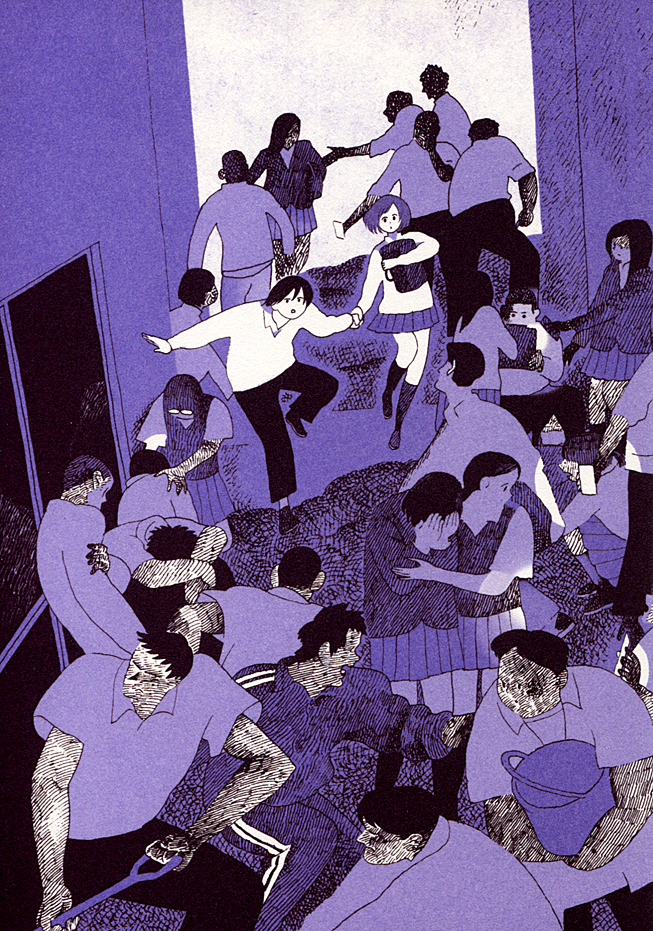
Thanks to a recommendation from a writer whose work I follow closely, I had the pleasure of reading this tiny monster of a book, whose story is comprised of elements widely regarded as “classic” or even “cliche” in Western science fiction films: a meteorite that crashes down onto a small town, a group of kids whose unquenchable curiosity leads them to a mysterious discovery, bicycle rides at night, and meta-references to prominent sci-fi cinematic works such as Close Encounters of the Third Kind, E.T., and Super 8.

Syndrome‘s synopsis is as simple as it gets: a meteorite crashes down on an unnamed city, causing a lot of turmoil. As days pass, the city becomes ensnared in a spiral of surrealism, mystery, and suspicion. The unnamed protagonist is an average yet gloomy high school student who hates the fact that this happened, as his fragile peace of mind is disturbed by the clash of what is normal and what is not. At first glance, it would seem Syndrome is a rehash of a number of works its readers have seen or read in the past, but there are two unmistakable elements that place this book a cut above the rest: its technically accomplished prose and its depiction of the perspective of its protagonist.

Syndrome‘s story is divided into seven chapters that represent seven days. On Day One, when the meteorite lands, things are relatively calm, but the reader can already perceive a faint sense of eeriness stirring, as can the protagonist. The gradual transition from normal to bizarre is highlighted by the detached sentence structure used by the author. Descriptions of landscapes, occasional thoughts, and conversations often lack any human trait; they are intriguing but feel almost numb. The prose bears almost no emotion whatsoever, which lends it an addictive and breakneck pace.

As the protagonist and his ostensible friends Hiroiwa and Kuraishi investigate the crash site and attempt to unveil what’s going on, the characters become more self-aware of their situation. Kuraishi is particularly knowledgeable and also happens to be a die-hard cinephile. He doesn’t directly break the fourth wall, but he acknowledges that the meteorite scenario is a classic trope of Western science fiction movies. For example, Kuraishi mentions The Blob (1958) and its 1988 remake, discussing how it became Steve McQueen’s feature film debut. Later on, Kuraishi compares what’s happening in the town to H.G. Wells’s 1953 film The War of the Worlds and Steven Spielberg’s 2005 adaptation. It’s amusing to the reader to watch Kuraishi ramble on about all this while the protagonist and Hiroiwa have no idea what he’s talking about, especially since he is stereotypically nerdy, which is perhaps a meta reference in itself. The author, a veteran at the renowned Hayakawa SF imprint, thus gives the reader a taste of his extensive cinematic knowledge.

All of these loose strands contextualize each other as days grow darker and reality begins to mirror fantasy. By then, the reader has already begun to tell that the protagonist’s state of mind is unique, to say the least. He becomes ever more suspicious of his surroundings, his so-called friends, and even his family. For him, anyone and anything outside what he considers “his mental zone,” namely, people who are outspoken and act based on their instincts, are “dangerous” people to be wary of. There’s a strong contrast between the protagonist’s standard narrative style and the narration that occurs when he gets lost in his obsessive thoughts, which are represented by longer sentences and textual stacks of repeated concepts. This type of prose achieves a dreamlike effect, and the two narrative styles intertwine in ways that portray a fascinating human dichotomy. As there is little recognizable emotion in the writing, which is close to a stream of consciousness, the impassive first-person perspective generates an illusion that the reader is being sucked into the black hole of the protagonist’s mind.

The ending of the novel is fitting, given how the story works: we don’t know what comes next, nor do we have a feeling that everything is over. In truth, Syndrome doesn’t have a beginning or an end, per se. Instead, it’s an epistolary account of a mentally-troubled teenager who watches everything around him fall apart.

Syndrome is a wormhole into the unknown. Once you start reading it, the book won’t let you go.

* * * * *

Max Rivera is a freelance writer from Mexico City. He is currently majoring in Translation & Interpretation and Literature. As a former resident of Japan and aficionado of Japanese fiction, the Japanese publishing world, and pop culture, he often publishes reviews and cutting-edge articles on these subjects through several outlets, such as his personal blog on Tumblr and the popular Japanese media blog Tanoshimi. He loves cold weather, books, and cats way too much.

Are You An Echo? The Lost Poetry of Misuzu Kaneko

are-you-an-echo-book-cover

Title: Are You An Echo? The Lost Poetry of Misuzu Kaneko
Poems: Kaneko Misuzu (金子 みすゞ)
Illustrations: Hajiri Toshikado (羽尻 利門)
Text and Translation: David Jacobson, Sally Ito, and Michiko Tsuboi
Publication Year: 2016
Publisher: Chin Music Press
Pages: 64

This guest review is written by Holly Thompson (@hatbooks on Twitter).

Are You An Echo? The Lost Poetry of Misuzu Kaneko, published by Seattle-based Chin Music Press, is an unusual picture book — bold and broad in concept and scope. This is a multifaceted book, containing a history of the rediscovery of the writings of Japanese poet Misuzu Kaneko (1903-1930), a biography of Kaneko’s short life, current context for her work, and a selection of 25 of her poems.

With a foreword by Setsuo Yazaki, the Japanese children’s author and poet whose curiosity led to the rediscovery of her writings in 1982 and subsequent publication of all 512 of her poems in six volumes plus his own complete biography of Misuzu Kaneko, the reader is offered context: “Misuzu Kaneko’s poems are part of every child’s curriculum at Japanese elementary schools.” Of the intense fondness readers feel for Kaneko’s poems, Yazaki points out that her words “possess a deep kindness toward all things whether they are alive or inanimate.”

The story opens with a question — “Who was Misuzu Kaneko?” — then chronicles Yazaki’s quest to learn more about this insightful poet. From Yazaki’s encounter of Kaneko’s poem “Big Catch” about a huge sardine catch, which led to his desire to learn more about the poet and his ultimate discovery of her pocket diaries full of her poems, the narrative shifts to Kaneko’s life story and her childhood in the town of Senzaki (now part of Nagato City) in Yamaguchi Prefecture near the western tip of Honshu where her family ran a bookstore. Raised among books, Kaneko began writing poems, and at the age of twenty, after several of her poems were published in Japanese magazines, she became a well-known children’s poet. Kaneko’s poems appear interspersed with the book’s narrative — poems that focus on ordinary local topics, imbued with a sense of awe and curiosity. The poems “Benten Island,” “Wonder,” “Beautiful Town,” “Fish,” “Snow Pile,” and “Flower Shop Man” provide a solid introduction to the deceptively simple poetics of Misuzu Kaneko.

Kaneko’s life unfortunately took a tragically dark turn after her marriage to a man who was, as explained in the story, “a bad, unfaithful husband.” She gave birth to their child who she adored, but she “caught a disease from her husband that caused her great pain.” What’s more, he forbade her to write. Kaneko divorced him, but he demanded custody of their daughter. The book does not shy away from the truth that Kaneko, in her illness and despair, made the decision to end her life after writing a letter to her husband imploring that he leave their child in the care of her mother.

This is admittedly dark material, but picture books are not only intended for the youngest readers. Are You An Echo? is a picture book for all ages and is especially well suited to the middle grades. Kaneko’s poems resonate in part because she wrote while suffering and longing. Her poems, so simple at first glance, reach straight to the heart, lift the spirit and stay with you. To write a story about Misuzu Kaneko without broaching her death by suicide would have constituted a huge omission.

Thus, after a spread illustrated in gray tones that includes Kaneko’s poem “Cocoon and Grave” containing a metaphor of a butterfly as an angel, a subsequent warm double-page spread offers hope, depicting Kaneko’s mother and her daughter by the sea remembering Kaneko’s “kind and gentle soul.” The narrative then shifts once again, this time to more recent history — the devastating earthquake and tsunami of March 11, 2011, in northern Japan. Kaneko’s poem “Are You An Echo?” was featured in a public service announcement televised after the disaster, and survivors in Tohoku, and people all around Japan struggling to cope after such profound and enormous loss, found comfort and hope in her words.

Following the story is “A Selection of Misuzu’s Poems,” with fifteen illustrated double-spread pages of Kaneko’s poems, impressively presented side by side in both the original Japanese and in English translation. Counting the poems that appear in English within the narrative, as well as the fifteen selected poems presented bilingually, Are You An Echo? offers 25 of Kaneko’s tender poems that reveal her extraordinary heart and boundless empathy. The titles of poems like “Stars and Dandilions,” “Telephone Pole,” “White Hat,” “Waves,” and “Dirt” reveal Kaneko’s unique ability to imbue ordinary items with sensibility and love.

What a feat to contain all of this material — history, biography, poetry collection — in a single picture book, including an informative author’s note by David Jacobson and a Translators’ Note by co-translators Sally Ito and Michiko Tsuboi. Expansive watercolor illustrations by Tokushima-based Toshikado Hajiri capture early 1900s provincial Japan and provide sweetly detailed and poignant accompaniment to the story and various poems.

Are You An Echo? The Lost Poetry of Misuzu Kaneko is a beautifully packaged, substantial picture book to treasure — a book to give poetry lovers of all ages, in all corners of the world.

Visit the Chin Music Press website for the book, Misuzu Kaneko, for information, backstory and further resources.

Review copy provided by Chin Music Press.

* * * * *

Holly Thompson (www.hatbooks.com) is a longtime resident of Japan and author of the novel Ash and three verse novels for young people: Falling into the Dragon’s Mouth, The Language Inside, and Orchards, winner of the Asian/Pacific American Award for Literature. She compiled and edited Tomo: Friendship Through Fiction — An Anthology of Japan Teen Stories, and she teaches writing in Japan, the U.S. and places in between.

are-you-an-echo-page-14

Manga through the Eyes of an Architect

Manga through the Eyes of an Architect

Title: Manga through the Eyes of an Architect: The Economics of Yotsuba&!, Jojo’s Bizarre Adventure, Evangelion, and Persona 4
Japanese Title: 建築家が見たマンガの世界:よつばと!、ジョジョの奇妙な冒険、ヱヴァンゲリヲン新劇場版、ペルソナ4の経済編 (Kenchikuka ga mita manga no sekai: Yotsubato, Jojo no kimyō na bōken, Evangerion shingekijōban, Perusona 4 no keizaihen)
Author: Sakurada Ikka (櫻田 一家)
Publisher: Gloria Earth Technology
Publication Year: 2015
Pages: 199

In his preface, architect Sakurada Ikka explains that the idea for this book came about through a conversation with a group of friends at a bar. A young editor, referring to the adage that “a good novel will make its protagonist’s economic circumstances clear,” wondered if the same could be said for manga. Sakurada, knowing full well that someone’s home reflects their socioeconomic status, posited that any story with solid worldbuilding would give the reader a clear picture of the living space of its characters. Once he set about investigating this issue, however, he realized that there were a great many gaps lurking in the shadows of even the most solidly constructed manga (and anime, and video games). Manga through the Eyes of an Architect thus functions as a set of close readings that attempt to fill in these gaps.

Sakurada opens his book with a precise examination of Yotsuba&! in an attempt to hammer out the details of its setting. For instance, when does it begin? (Probably July 18.) Where in Japan is Ajisai City, the fictional town where Yotsuba and her adoptive father Koiwai Yōsuke live? (Probably in Chiba Prefecture in the general vicinity of Narita airport.) What direction does Yotsuba’s house face? (Probably south.)

Sakurada uses evidence not only from passages in the manga but also from his own real-world research and observation. For example, in trying to figure out where Koiwai’s parents live, Sakurada argues that, since Koiwai borrowed a light cargo truck (a 2001 Mazda 660KU series, to be exact) from his friend Jumbo to move from his parents’ house to Ajisai City at the beginning of the first volume of the manga, he probably wasn’t traveling for more than a few hours. The “New Pione” label on a package Koiwai’s mom sends him (in Chapter 27 of Volume 5) would seem to indicate Okayama Prefecture, but that’s too far away, so it’s probably coming from nearby Yamanashi Prefecture, a somewhat lesser-known source of the brand’s grapes.

When I wrote “a precise examination” earlier, that’s the level of precision I mean. Sakurada does walkthroughs of his reasoning like Sherlock Holmes, and it’s fascinating to read through his evidence and conjectures.

The next section of the book investigates the floorplan of Kishibe Rohan’s house from Part 4 (the “Diamond Is Unbreakable” arc) of Jojo’s Bizarre Adventure. Despite Araki Hirohiko’s comment that his manga isn’t popular in America because Americans have no sense of style, all of the homes of the major characters exhibit classically American architecture. Sakurada teases out the layout of Rohan’s house room by room while discussing the history of the architecture and the furniture. As an American, I enjoyed seeing things I take for granted, such as Queen Anne houses and Mansard roofs, being treated as fascinating – and expensive! – foreign oddities. Sakurada tries to puzzle out how successful Rohan is as a manga artist by referring to the information presented in the manga Bakuman (about two manga industry hopefuls). For example, how many manga would Rohan need to sell in order to afford his Porsche 928 GTS? How do Rohan’s sales compare to the sales of Jojo’s Bizarre Adventure? Was this sort of wealth achievable for a manga artist in the late 1990s?

Sakurada continues with an analysis of the Rebuild of Evangelion movies (released in 2007, 2009, and 2012). In order to figure out how much Ikari Shinji’s guardian Katsuragi Misato is paying for her apartment, he argues that we must first understand how the catastrophic “Second Impact” event affected the earth. Since the viewer is told this disaster melted the polar ice caps, Sakurada employs math and maps to demonstrate what parts of Japan would have been submerged. He also speculates on how various Japanese industries would suffer from the resulting climate change, as well as how this would affect local economies and regional infrastructures within Japan.

Sakurada’s main concern in this section, however, is Misato’s annual salary. Her apartment accommodates herself, her pet penguin, two teenagers who get their own bedrooms (Shinji and Asuka), plus tons of extra space for her garbage, including a nice kitchen and living room. Given the state of Japan’s postapocalyptic economy, Misato must be doing well for herself in order to afford such a large place. (I guess NERV has to pay people the big bucks to put up with Shinji’s asshole father.) In addition, Sakurada gives a detailed analysis of each character’s room, providing an interesting set of insights. For instance, Shinji’s haplessness is emphasized by the fact that the room he’s given in Misato’s huge apartment is tiny and has no windows. Sakurada concludes with an estimate of Shinji’s dad’s salary, arguing that the women in Shinji’s life should really consider being nicer to him.

The final section of the book, which is by far its shortest, is about “The Mysteries of the Dōjima House.” The Dōjima house is the residence of the protagonist of the 2008 PlayStation 2 game Persona 4. Although a wealth of material related to the game and its 2011-2012 animated adaptation (not to mention several spin-off titles) has been released, Sakurada has been able to find numerous inconsistencies in the official floorplans of the quaint Shōwa-era structure that serves as the player’s (or viewer’s) home base. Where is the staircase, exactly? What’s filling all the space that’s unaccounted for on the second floor? Where’s the bathroom?

Although it helps to be familiar with the source texts under discussion, this is not necessary in order for the reader to enjoy his speculation and analysis. No prior knowledge of architecture is required, and Sakurada’s clear explanations and frequent illustrations render his arguments accessible to even a casual reader.

Granted, both the information presented and Sakurada’s readings are highly specific. In fandom terms, what Sakurada is performing would be referred to as “textual meta,” meaning that his analysis is so minute and self-referential that it might not make sense to people outside the fandom. As I wrote above, I don’t think this is true – I know very little about Jojo’s Bizarre Adventure but still enjoyed reading Sakurada’s essays on its architecture and economics.

Still, it brings up an interesting point concerning how manga and other pop culture texts should be discussed in an academic context. Is it absolutely necessary to reference larger social, historical, and intellectual currents, or are we allowed to dig our heels into the text itself in order to make it more meaningful? In my opinion, Manga through the Eyes of an Architect is close reading done right, and I can only hope that more formal English-language discussions of manga in this mode of inquiry appear as the related fields of Comics Studies and Anime and Manga Studies continue establish themselves.