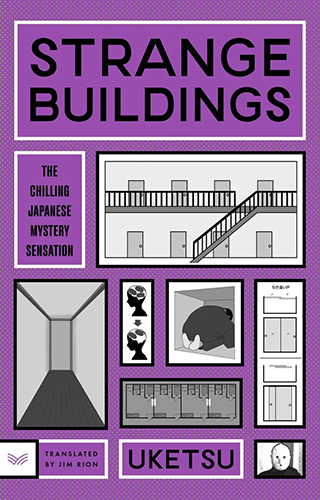
Strange Buildings, the 2023 follow-up to Uketsu’s smash hit Strange Houses, collects eleven illustrated stories about horror-themed architectural riddles followed by a lengthy exposition that reveals how these mysterious places are connected.
One of my favorite stories is “The Mousetrap House,” in which the wealthy heir to a large construction firm builds a luxurious mansion in order to kill a disabled elderly woman. If he puts a steep stairway next to the bathroom, he reasons, the woman will eventually lose her footing and tumble down the stairs.
When this eventuality fails to come to pass, he bullies his daughter into creating exactly the right set of conditions to make it happen. This horrible story is recounted decades later by the girl’s childhood friend, who was there on the night the old woman finally fell to her death.
I also enjoyed “The Watermill in the Woods,” which is presented as an old travelogue that recounts a curious building in the woods that’s nowhere near water. Its mechanical wheel instead powers the movement of an interior wall, but why would anyone need that?
This question is answered in the story “The House Where It Happened,” in which the frame narrator (who is styled as Uketsu himself) visits the old watermill in its current form as a remodeled modern house. When the village residents illuminate the shadows of the area’s history, the sinister purpose of the watermill becomes clear.
As in Uketsu’s other books, the overarching conspiracy is extremely silly. I don’t consider this a flaw, as there’s a certain sense of satisfaction in how delightfully outlandish the scenario is.
It should probably be said, however, that Uketsu is playing with acute cases of human misery as if they were Lego blocks. If one were to stage a gendered critique of this book, for instance, the ground is fertile. Still, I think it’s probably fair not to expect nuanced character portrayals from the weird architecture guy.
I enjoyed Strange Buildings, and I flew through this book as quickly as I could turn the pages. Jim Rion’s translation is compulsively readable, and I appreciate how Rion’s minor reconfigurations smooth over the “info dump” awkwardness of the original Japanese.
If you’ve never read Uketsu, Strange Buildings is a great introduction to the writer. If you’re already a fan, this is four hundred pages of the same, and it’s fantastic. Uketsu has found his niche, and it gives me joy to know that he’s out in the world being strange and living his best life.
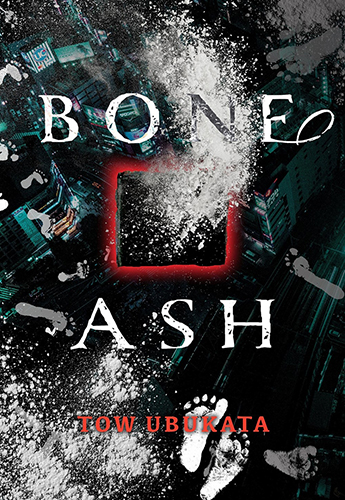
Tow Ubukata’s 2022 horror novel Bone Ash is a story about cursed architecture. The twist is that the architecture in question is the skyscraper outside Shibuya Station that was under construction during the mid-2010s. Deep under the construction site is a hole, and inside that hole is… Just some random guy? What’s he doing there? And what happens if he leaves?
Bone Ash’s everyman protagonist is a white-collar office worker named Mitsuhiro Matsunaga. Mitsuhiro is employed by the PR department of the development firm overseeing the aforementioned construction project contiguous to Shibuya Station, and his job is to ensure that all news is good news so that none of the project shareholders get cold feet. When a pseudonymous Twitter account starts posting creepy photos of the site with sinister captions about contractor injuries, the task of managing the situation falls to Mitsuhiro.
The first order of business is to track down the location of each photo to ensure that there aren’t any code violations. So far, so good. During his investigation, however, Mitsuhiro finds an odd door that isn’t in the floorplans, and behind the door is an impossibly deep staircase that eventually empties into a cavernous concrete space with a bare minimum of lighting. There’s a small Shintō shrine off to one corner, as well as a discarded piece of heavy machinery painted entirely white. And also a pit with a man chained to the bottom.
The man seems somewhat confused, but he insists that he’s happy to stay where he is. Somewhat against the man’s wishes, Mitsuhiro hauls down a ladder, hoists him out of the pit, and hauls him up the infinite staircase. Before he has a chance to recover from this exertion, a fire breaks out on site, and the man disappears.
When he files a report the next day, Mitsuhiro is informed that he entered a “ritual hall,” a space constructed to preserve a shrine (or other place of religious significance) on the land occupied by a large building. The man in the pit was a “mi-keshi,” something like a sin eater who would symbolically absorb the spiritual pollution caused by the displacement of deities. As long as a purification ritual is conducted properly by the appropriate religious authorities overseeing the ritual hall, everything should be fine. Unfortunately, Mitsuhiro has disrupted the ritual, and now there’s going to be hell to pay.
The scenario introduced by Bone Ash is incredible. The overview I’ve provided in four paragraphs is expanded in amazing detail over the span of about 170 pages, and these details are fascinating. Ubukata walks the reader through the deliciously liminal space of the ongoing construction site like a pro, all the while explaining the bureaucracy surrounding large-scale building construction in Tokyo in a way that genuinely caught and held my attention.
By the time the focus of the exposition shifts to the religious history surrounding the ritual hall in the earth under the building, I was hooked. The existence of creepy underground shrines sealing ancient calamities is a fun urban legend, and Ubukata’s skill as a writer is to ground this sort of fantasy in enough historical precedence to make it seem entirely plausible. I know this concept is silly, but as I read Bone Ash I was like Agent Mulder in The X-Files – I want to believe.
Bone Ash unfortunately falls apart once its focus shifts to Mitsuhiro’s attempts to deal with the curse he’s incurred, which influences his behavior in disturbing ways. Though he’s a convenient viewpoint character during the opening exposition, Mitsuhiro doesn’t have much of a personality, thus making his situation somewhat difficult to sympathize with.
I suppose the reader is supposed to identify with Mitsuhiro’s “everyman” qualities, but many of the author’s assumptions in this regard were lost on me. I don’t think it’s normal to feel compelled to work 15 hours a day, for example, nor have I ever been tempted to kill people for the chance to drive the company car.
Because I never really got a sense of who Mitsuhiro is supposed to be as a person, his cycle of making bad decisions for inexplicable reasons felt somewhat boring and repetitive. I get the sense that one solid conversation about what was going on could have gotten Mitsuhiro sorted out, but none of the other characters in the novel behave much more rationally than he does. In addition, though Mitsuhiro’s pregnant wife and young daughter become unwitting victims of his curse, they’re never allowed interiority and only exist to create complications.
I think what Bone Ash really wants to be about is the plight of unhoused people in Tokyo. Large-scale construction on top of open-air parks and other public gathering places often displaces communities of the unhoused, who are additionally exploited as day laborers with no recourse to legal reparations should something happen to them. Whether or not literal curses exist, Ubukata asks the reader to seriously consider the cumulative effect of this human misery, which is not only ignored but actively encouraged by Japanese politicians. Though this theme of housing precarity and labor exploitation is never fully developed, its introduction in the first half of the novel is handled with a remarkable degree of sensitivity.
In the end, it might seem odd to recommend Bone Ash only for the first 170 pages, but they’re really good pages! Despite my criticism of its narrative structure, I’d recommend this novel to anyone interested in the strange complications of urban architecture and the darker corners of Japanese religion and folklore – as well as to anyone interested in exploring uncanny spaces.
I’d like to extend my appreciation to Bone Ash’s translator, Kevin Gifford, whose smooth and confident style grabbed my attention from the first few pages of the novel. In addition, Wendy Chan at Yen Press has done a fantastic job with the book design, which is very cool and clever. I hope the care and attention given to this release helps Bone Ash find an enthusiastic audience of readers interested in the sort of well-researched urban legends and creepypasta stories that are perennially popular on YouTube and Reddit.
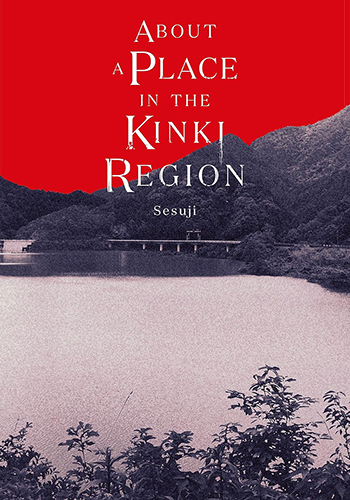
About a Place in the Kinki Region, originally published in 2023, is a horror novel assembled from roughly two dozen short stories presented in various formats, from magazine articles to interviews to YouTube video transcripts to reproductions of forum posts. These materials have been collected by the pseudonymous author, Sesuji, with minimal editorial comment, supposedly in an effort to locate someone who has mysteriously disappeared.
I should probably note here at the beginning that the actual author, an online horror writer who has published under the name Sesuji, is male. The diegetic character Sesuji is female, and it’s the character I’ll be referring to in this review.
Sesuji, a freelance writer living in Tokyo, has been contacted by her friend Ozawa, a junior editor at a publisher that produces a magazine devoted to the paranormal. Though the magazine has stopped putting out regular issues, it occasionally releases special issues, and Ozawa has been tasked with publishing one of these special issues on a very low budget. After combing through the magazine’s archives, he decides to create a collection of older articles that all pertain to a certain place in the Kinki region, the geographic area surrounding Osaka and extending south into the heavily forested Kii Peninsula.
This “certain place” is the location of numerous spooky legends and strange sightings, most of which can be categorized according to several distinct themes. There’s a ghost called Mashiro-san that calls out to children from the mountain forest, as well as a creepy playground game of the same name. There are abandoned buildings tagged with unsettling sticker graffiti, an alarming number of suicides, and perhaps even a creepy New Age cult as well.
Various sources suggest that the more supernatural incidents might be the work of a god whose shrine has fallen into disrepair due to rural depopulation, but it gradually becomes apparent that something much weirder is going on. In order to get to the bottom of the mystery, Ozawa visited the place himself to investigate, but now he’s gone missing. Sesuji therefore asks the reader: Is it possible that you could examine the material he collected and help her find him?
About a Place in the Kinki Region begins as a relatively straightforward collection of articles but eventually starts to experiment with its format in interesting ways. A standout piece is a short story called “Waiting.” This story is first presented as it was published in a magazine and then followed by its original rough draft, which contains a number of odd details that aren’t strictly relevant to the plot but may present clues regrading Ozawa’s disappearance.
Partially due to the author’s experiments with format, and partially due to the sheer variation of situations and narrators, nothing about this book feels repetitive. The careful sense of pacing creates a subtle sense of structure and generates narrative tension, gradually revealing the stakes of the story while pulling the reader into the mystery at hand.
I’m a big fan of “archival horror” narrative podcasts like Archive 81 and The Magnus Archives. I love how these stories simulate the experience of research while conveying the joy of discovering an intriguing rabbit hole. About a Place in the Kinki Region is a fantastic expression of this genre, inspiring the reader to dig ever deeper for a long-buried truth hidden within layers of secrets.
In addition, I enjoyed being an armchair tourist in this “certain place,” which is gifted with natural beauty and an intriguing local culture. If any vengeful revenants or neglected god-demons are searching for someone to spirit away to a mountain forest on the Kii Peninsula, I volunteer myself. I hear the evening twilight is especially magical… and even the ghosts have good internet access, apparently.
The translator, Michael Blaskowsky, has done an excellent job creating a distinct set of narrative voices across a range of tones and styles, from campy to lyrical to journalistic to point-blank horror. The book’s designer and editor at Yen Press, Andy Swist and Emma McClain, have done a marvelous job as well, engineering an unobtrusive flow of stories while occasionally adding small creative touches. I apologize for spoiling the surprise, but the book includes a secret set of illustrations in a semi-hidden section in the back, and it’s extremely cursed.
It’s also worth mentioning that About a Place in the Kinki Region was adapted into a movie released in August 2025 (here’s a mirror of the region-locked trailer on Reddit), but I haven’t yet seen any information about a global release outside of the film festival circuit, unfortunately.
In the years following the pandemic, I’ve encountered a number of “textual found footage” horror novels by Japanese authors capitalizing on the recent boom in YouTube creepypasta videos. Many of these books are very silly, but About a Place in the Kinki Region is surprisingly well-structured and entertaining. I’m happy this book been published in translation, and I hope my fellow archive horror fans enjoy its collection of unsettling little treasures as much as I do.
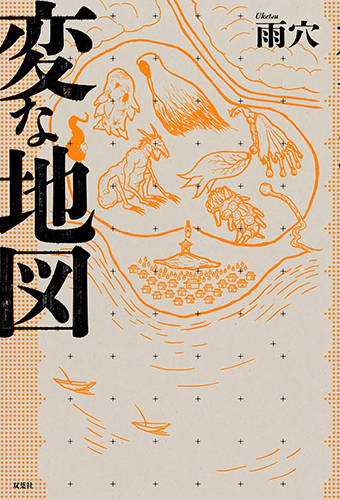
Strange Map (変な地図), published in October 2025, is the fourth book written by Uketsu, the bestselling author of Strange Pictures and Strange Houses. Unlike Uketsu’s previous books, which are collections of seemingly unrelated stories eventually connected by an overarching narrative, Strange Map is a proper novel that follows the actions of a single protagonist, Uketsu’s architect friend Kurihara from Strange Houses. Despite its more conventional narrative format, Strange Map is still filled with Uketsu’s characteristic illustrations and diagrams, which aid the reader in visualizing the uncanny spaces of its horror-themed mystery through a remarkable set of twists and turns.
Strange Map opens with the written confession of an elderly woman named Kimiko Okigami. In her youth, she writes, she took the lives of countless people. Before she dies, she wants to tell the story of the village where she was born and its neighboring mountain, which was supposedly inhabited by demons.
The next section raises the stakes even higher. In the present day of July 2015, Kōsuke Ōsato wakes up after a night of drinking to find himself lying in a train tunnel. He recognizes the tunnel immediately, as he’s the president of the railway company that constructed it. The tunnel has emergency exits, of course, but there’s just one problem – he’s right in the middle between two of them, and the first train of the morning should be coming any second now.
After thoroughly grabbing the reader’s attention, Strange Map shifts to the perspective of its main narrator, a 22yo college student in Tokyo named Fuminobu, who usually goes by his family name of Kurihara. Kurihara is an architecture major who’s currently on the job market, but he hasn’t had any luck so far. This is likely because, as he readily admits, he’s terrible at interviews. When asked why he’s interested in architecture, for instance, he can’t quite bring himself to admit that he wants to follow in the footsteps of his mother, who once played games with him involving engineering problems but died when he was still a child.
After yet another unsuccessful round of interviews, Kurihara’s sister asks him to come home and visit his father, who needs to talk with him. This conversation ends up being about the house left behind by Kurihara’s grandmother – the woman who wrote the letter that opens the novel. Before his father sells the house, Kurihara asks to see it for himself, and he discovers a notebook containing a set of burned photos alongside the “strange map” of the title, which depicts a seaside village below a mountain filled with monsters.
Like his late mother, Kurihara can’t sleep easy until he’s solved the problem in front of him. His father gives him permission to investigate, but only on the condition that he solves the family mystery in time to return home and do practice interviews with his sister before his next real interview, which is only a week away.
Interspersed between chapters, his grandmother’s letter continues. She writes of her hometown of Kasōko, an isolated village surrounded by the sea on one side and forest on all others. While the men caught and sold fish, the women handled the business of maintaining the village itself. Among other things, this maintenance involved carving stone statues to ward off the demons of Mojōyama, the mountain looming over the village.
Kurihara, who doesn’t know any of this history, nevertheless manages to ascertain the location of the village. He travels to the rural seaside only to find that the village was completely abandoned decades ago. To complicate matters, he finds himself smack in the middle of a scandal surrounding the succession of Kōsuke Ōsato, the president of the local railway company who was mysteriously run down by one of his own trains.
Was the death of the railway president truly an accident, or was it murder? What happened to Kasōko village? Who exactly did Kurihara’s grandmother kill – and what are the demons on the mountain?
To help the reader visualize the specifics of the story, Uketsu has provided all manner of simple diagrams illustrating how the space of the narrative is laid out. These visual inserts were necessary in Strange Pictures and Strange Houses; meanwhile, in Strange Map, they’re largely superfluous. The reader probably doesn’t need a visualization of the concept that “there are five equidistant emergency exits in the train tunnel,” for example. Uketsu has also provided slightly silly diagrams of various social relationships, such as an illustration of the railway company president wearing a suit and sitting at a desk while his second-in-command wears a construction helmet and manages a job site.
Still, I’m not complaining. Regardless of whether they’re necessary, I love all of these illustrations. I find their lo-fi clunkiness charming, and the space they create on the page helps to set the pace of the story. It would be all too easy to fly through this book, but the illustrations helped me slow down and focus on details. In addition, I found that the “unnecessary” illustrations help to reveal the inner workings of the narrator’s mind.
To me, Kurihara reads as being on the autism spectrum, an aspect of the character that contributes to the distinctive narrative style of the story. The closest comparison I can make is to Sayaka Murata’s Convenience Store Woman, but there are echoes of Mark Haddon’s The Curious Incident of the Dog in the Night-Time as well. Although he doesn’t identify as autistic, Kurihara understands that he needs to work on his people skills, and the secondary B-plot of the novel involves his carefully considered approach to teaching himself to behave “normally” instead of immediately saying something that’s true but will hurt other people’s feelings.
I’m used to Uketsu’s characters behaving like chess pieces on a game board, so this added depth of character came as a pleasant surprise. Also, while I usually read mystery novels for the pleasure of watching fictional characters die in ridiculous ways, I found myself feeling invested in Kurihara’s safety, as well as his emotional wellbeing. This attachment to the character adds yet another layer of tension to the story as Kurihara becomes personally involved with the family that runs a local inn.
Strange Map is a super fun and fantastically clever mystery novel, and its elements of gothic horror are as darkly brilliant as anything written by Edgar Allan Poe or Arthur Conan Doyle. Jim Rion has done a marvelous job with the translations of Strange Pictures and Strange Houses, and I’m looking forward to what he does with Strange Map. For the time being, the sequel to Strange Houses, which is titled Strange Buildings in English, is scheduled to be published in March 2026, so that’s something to look forward to as well.
It’s a great time to be a fan of Japanese mystery novels, and I’m interested to see how Uketsu’s work in translation might influence other authors. Do I want to see Uketsu copycats? Sure! Absolutely. But do I also want to see a generation of writers raised on YouTube creepypasta take inspiration from Uketsu and translate that sort of multimedia textual fragmentation into a new style of fiction? Hell yes. Let’s go.
In the woods, there is a castle. The castle was once the residence of the landowning family that ruled the area. During the war, it was the headquarters of a resistance movement. Now it sits empty and abandoned. The castle is so deep in the woods that most people couldn’t find it if they tried. No one tries, however, as the woods are filled with child-snatching imps. Strange noises come from the woods, and occasionally strange people as well.
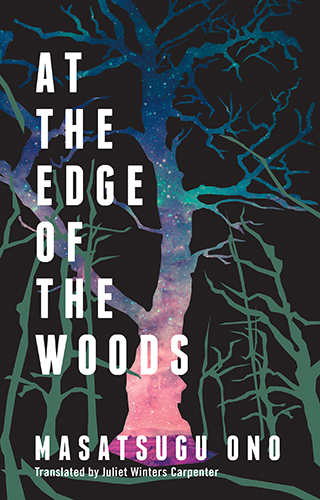
Masatsugu Ono’s At the Edge of the Woods is a novel about dread and anxiety. There’s no plot, nor is there any sort of story. Instead, Ono presents four episodes in the life of a father left alone with his young son while his wife is away. There’s no chronological order to the four chapters, which all occur at roughly the same time, and there’s no meaningful change in the personalities of the characters. Rather, the story development involves the slow intensification of an atmosphere of foreboding.
The nameless father who serves as the narrator is Japanese, as is his wife, who is pregnant with their second child. The wife has flown back to Japan to visit her parents, leaving her husband and son in an unspecified European country that reads as Germany-coded. The family has taken up residence at the eponymous edge of a vast forest in a rural area dotted with small towns.
The country is now at peace, but its neighbors are not so lucky. Long lines of refugees stream across the borders, seemingly unhindered by local authorities. It’s entirely possible that some of these refugees have camped out in the woods next to the narrator’s house, but it’s difficult to say for sure. It’s equally difficult to specify the origin of the odd sounds constantly emerging in the forest.
Characters drift in and out of the narrative, leaving behind very little of themselves save for strong emotional impressions. The disabled daughter of a bakery owner has good intentions but struggles to make herself understood. The postal worker who delivers the mail relates grotesque stories to the father, who suspects the man might be reading and discarding his wife’s letters. A neighboring farmer has always been kind to the narrator’s family, but his son reports that he once saw the man tie a dog in a burlap sack and beat the poor creature to death.
Perhaps the most striking of these characters is an elderly woman that the narrator’s son invites into the house. She appears seemingly from nowhere, and she vanishes just as mysteriously. While she’s in the house, though, she becomes a living symbol of the narrator’s anxieties regarding his ill-fitting role as the solitary caretaker of a young child in a foreign land:
Overcome, the old woman buried her face in her hands. She trembled violently, and a sob escaped her. I looked up. The kitchen windows were all closed. And yet in the air there hovered the sour smell of decayed leaves from deep in the woods, leaves that would never dry out. Steam rose from the old woman. The steam was not from her tea. A puddle spread at her feet. (20)
In his “Introduction” to The Oxford Book of Gothic Tales, Chris Baldick neatly summarizes the genre as an expression of the fear that the horrors of prior eras will not remain comfortably in the past. At the Edge of the Woods presents the readers with a range of Gothic tropes to heighten the sense of uneasy suspicion that, even in the most progressive of European countries, there is no escape from misery and cruelty. While the back-cover copy of At the Edge of the Woods calls the novel “an allegory for climate catastrophe,” this feels like a bit of an interpretive reach. Instead, Ono seems to be suggesting more broadly that, even in our bright society sustained by futuristic technologies, we’re never that far away from the edge of a large and unknowable forest.
At the Edge of the Woods can be difficult to read, and it’s probably not for everyone. Speaking personally, though, I love this book, and I’ve read it on the winter solstice every year since it was published in 2022. Ono’s writing is gorgeously atmospheric, and the legendary Juliet Winters Carpenter has done a dazzling job with the translation. If you appreciate the sort of quiet, eerie, and darkly suggestive Japanese Gothic writing typified by Yoko Ogawa’s short story collections Revenge and The Diving Pool, I’d recommend At the Edge of the Woods as the next step on a shadowed path into the liminal spaces in the penumbra of modern civilization.
The Shadow Over Innsmouth is a gothic horror story in four acts. A college student on a self-guided architectural tour of New England takes an inexpensive bus that stops over in the isolated port town of Innsmouth. The student explores the town, and an elderly resident tells him about a wealthy sea captain who made an unholy bargain with ocean-dwelling fishpeople generations ago. The student is forced to stay in the town overnight, and the town’s hidden half-human residents chase him from his hotel. After successfully escaping Innsmouth, the student begins to question his own family lineage.
The writing in Lovecraft’s original 1931 novella can be difficult to parse, and the xenophobia of the narrative isn’t attractive to contemporary eyes. Regardless, this is an extremely influential story in the field of speculative fiction, with adaptations ranging from Alan Moore’s strikingly upsetting graphic novella Neonomicon to the ruined Fishing Hamlet of Bloodborne, not to mention countless stage plays, radio dramas, television episodes, indie films, video games, tabletop games, and even delightfully bizarre Christmas songs. Many of these adaptations, though excellent, assume a familiarity with the original that may not exist in an audience that isn’t already embedded in the speculative fiction fandoms of the twentieth century.
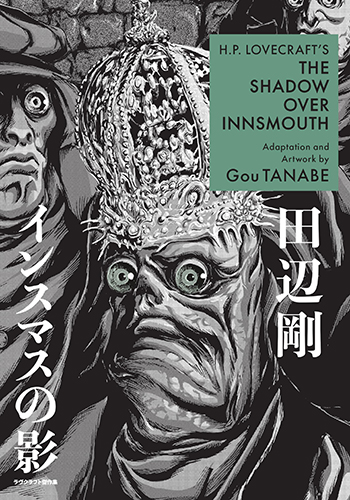
If you’re curious about Lovecraft’s work but put off by his prose, Dark Horse’s release of Gou Tanabe’s manga adaptation is an artistic marvel presented with an excellent translation in a handsomely published single volume.
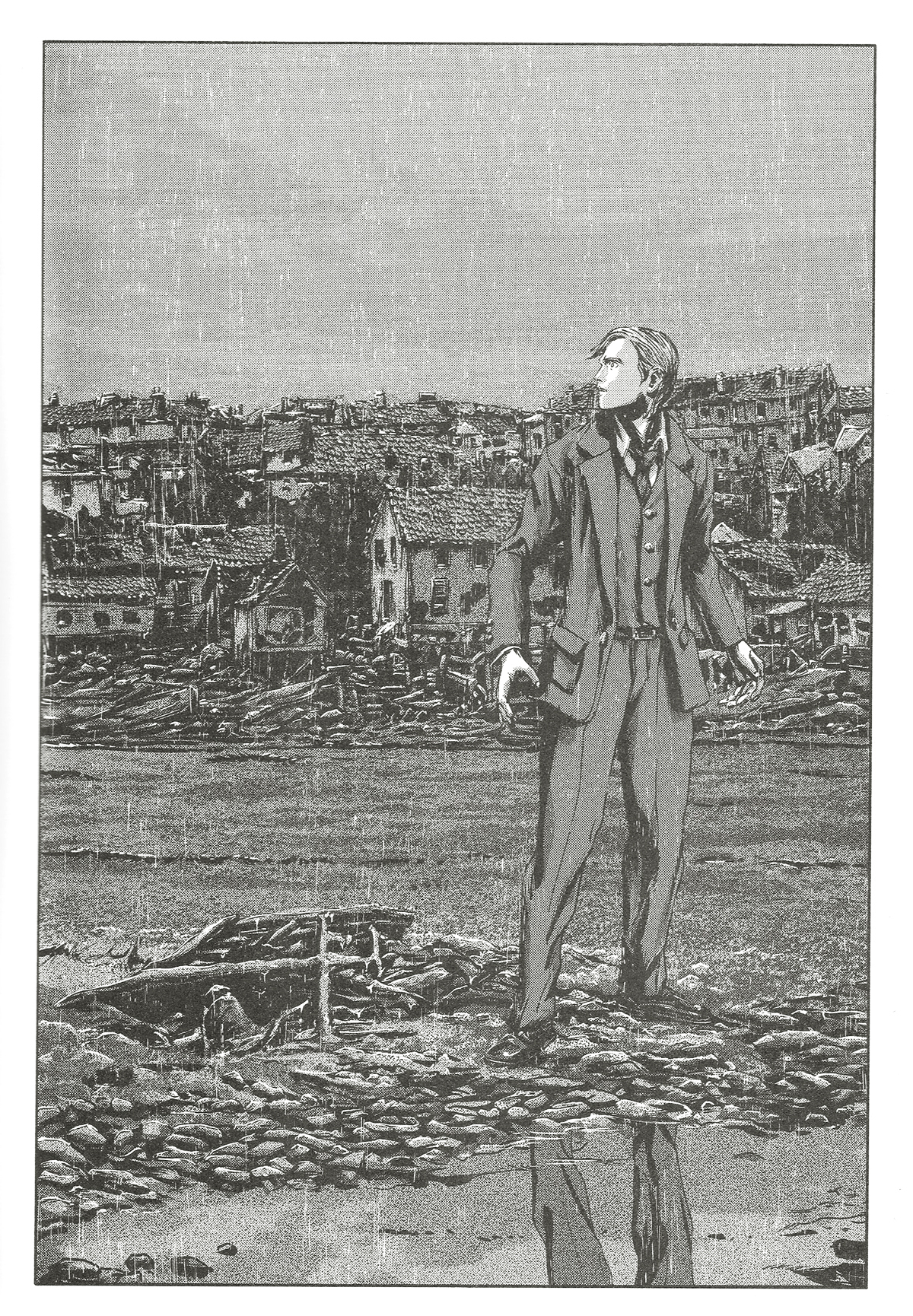
Tanabe’s adaptation of The Shadow Over Innsmouth brings the story to life with the distinctive visual language of horror manga while maintaining as much accuracy to the original as possible. Just like the story’s protagonist, Tanabe is fascinated by the architecture of the rotting Massachusetts town. The immaculately detailed cityscapes that sprawl across the pages encourage immersion into the horror of social and moral decay. Moreover, whereas Lovecraft only hints at what lies underwater, Tanabe is gleefully explicit in his depictions of throngs of fishpeople so horrific they’d make even Guillermo del Toro uncomfortable.
Tanabe’s The Shadow Over Innsmouth succeeds not only as a faithful retelling but also as a standalone work of gothic horror. By pairing Lovecraft’s oppressive atmosphere with his own meticulous draftsmanship, Tanabe bridges the gap between early twentieth-century weird fiction and contemporary horror manga. The manga adaptation of The Shadow Over Innsmouth preserves the unsettling allure of the original while offering both longtime fans and newcomers an invitation to experience Innsmouth’s decayed splendor in disturbingly compelling detail.
Strange Houses is a four-part horror mystery novel about houses with strange and uncanny floor plans.
Each of the four chapters takes the form of a series of conversations between the narrator, their architect friend, and various people who have been involved with the houses. The first three chapters explore three different houses with extra rooms and inexplicable gaps in the walls. These explorations are liberally illustrated with diagrams in which certain sections of the floor plan are highlighted and annotated to clarify the text.
Each of these stories is like a locked room mystery. Over the course of the chapter, the narrator’s architect friend performs a close reading of a floor plan while gradually building a theory concerning what sort of upsetting behavior that type of strange space might enable.
In the final chapter, it’s revealed that these houses are connected to an old and wealthy family with a terrible secret. I have to admit that I found this situation highly improbable, so much so that it comes off as almost cartoonish. The author is great at architectural walkthroughs but skimps on the character development, which contributes to the conclusion of the book feeling somewhat hollow. Still, there’s a lot of fuel for the reader’s imagination, and fans of gothic horror will have a lot to play with here.
I flew through Strange Houses and loved every page. The speculative conversations between characters are easy to follow; and, thanks to the diagrams, the spaces are easy to visualize. I enjoyed the slow build of the overarching mystery, and the revelations about the bizarre family at the center of the strangeness were beyond anything I expected.
It’s worth noting that the first story in Strange Houses was originally written as a script for a twenty-minute video on YouTube, which you can find with English subtitles (here). There’s also a manga adaptation, which has been scanlated and is available to read (here). And finally, I’d like to share a more substantial review of the original Japanese book that was posted on one of my favorite blogs (here).
I tend to think that Uketsu’s earlier novel Strange Pictures (which I reviewed here) is somewhat more successful as a work of fiction with three-dimensional characters whose bad behavior stems from understandable motives. In comparison, Strange Houses feels more like a puzzle box than a novel. Strange Houses is less a character-driven story than it is an imaginative architectural mystery, but its eerie atmosphere and clever narrative structure make it a fascinating read for fans of speculative horror and uncanny design.
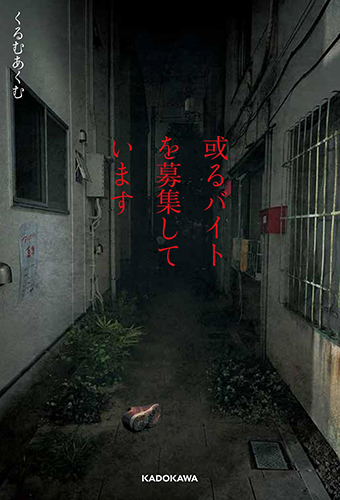
Aru baito o boshū shite imasu (或るバイトを募集しています) is a collection of eight short horror stories conveyed in the form of documentary-style found footage. Each story is prefaced by a listing for a part-time job that seems a little strange, or perhaps too good to be true.
The most representative of these jobs is a request to make an offering of flowers at a certain empty lot between midnight and 1:00am every night. An aspiring comedian who needs the money and keeps late hours takes the job and carries it out faithfully. He never sees anything strange, but something about the job still feels off.
When he does research about the location, he can’t find anything out of the ordinary. Another entertainment industry professional explains that the job is probably a strategy to lower the land value. The comedian’s employer wants to buy the land and assumes they’ll be able to get it at a steep discount if it becomes known in the neighborhood as a “stigmatized property” (as explained by Business Insider here).
The comedian does his best not to think about it too hard. When he finally gets a gig and fails to make his nightly offering, he leaves the studio only to find that an unknown number has called several times. When he checks his voicemail, a mysterious woman speaks to him through static, saying, “The flowers from yesterday have withered. Why didn’t you come tonight? Can I still stay here? Can I still stay here? Can I still stay here?”
Slightly outdated media and technology are a recurring theme in the collection, and this isn’t the only story about creepy messages left on an answering machine. Other stories revolve around physical media like VHS tapes, DVDs, and handwritten letters. When it comes to creepy found objects, I get the sense that there’s a certain air of uncleanliness that clings to the physical media of a prior century.
Along with the spookiness of the stories, I enjoyed the rationalizations for why each strange job might exist. If I had to guess, I’d say that this collection is partially inspired by the recent discourse surrounding yami baito, or “shady part-time jobs” (which the BBC did a podcast about here). In real life, yami baito involves organized crime organizations using aboveground job postings on social media to recruit young people for illegal activities such as cash withdrawal fraud and stripping copper wiring from abandoned houses. Still, it’s not too difficult to imagine an entirely different shadow world seeking to prey on the living with the offer of easy money.
More than social commentary, however, Aru baito dwells in the realm of internet creepypasta. The collection’s author, Kurumu Akumu, has spent the past several years sharing short and spooky stories on various platforms, including YouTube (here), Note (here), and Twitter (here). Aru baito reflects the found footage nature of creepypasta by presenting its stories in a variety of formats, such as interviews, screenshots of text conversations, blog comments, and so on. The unusual formatting is a lot of fun, making the book feel like a file folder of cursed printouts.
Kurumu Akumu’s work reminds me of the mockumentary-style horror of Uketsu’s Strange Pictures, but Aru baito has no connecting narrative, nor does it make any attempt at portraying psychological realism. Instead, the reader feels as if they’re encountering real urban legends in the wild, and the lack of context heightens the eerie feeling of looking at something that shouldn’t be seen. Aru baito is an unsettling collection that blends the horror of cursed analog media with the eerie plausibility of urban legends, leaving readers with the lingering sense that some part-time jobs are better left unfilled.
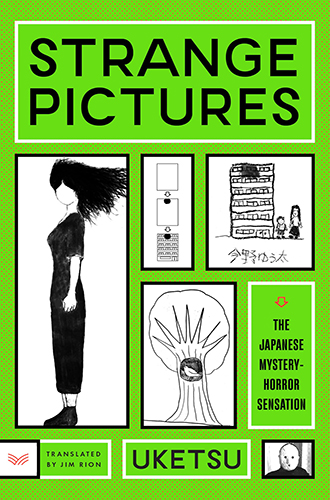
Strange Pictures is a compulsively readable horror mystery novel first published in 2022 by Uketsu, a mysterious masked YouTuber. This book is addictive, so much so that I accidentally spent an entire afternoon and evening reading it. So be warned – Strange Pictures is indeed strange, and it will hold you hostage.
In the five-page prelude that introduces the book’s premise, a psychology professor shows her class a photo of a picture drawn by a girl who killed her mother. The drawing is a childish self-portrait that shows the girl standing between her house and a tree. Although the picture seems completely normal at first, the professor zooms in on four small details that illuminate the girl’s inner state of mind. She makes the argument that, despite the abuse the girl suffered, she’s essentially a good person who never meant to hurt anyone. In retrospect, you can’t help but wonder how you didn’t notice these details of the drawing yourself.
This trick is an incredible sleight of hand. The same can be said of the following two chapters, both of which can be read as stand-alone short stories.
In the first chapter, “The Old Woman’s Prayer,” two college students in a small Paranormal Club discuss a curious blog they’ve found online. The blog is filled with cheerful observations of its writer’s everyday life. After a three-year hiatus, however, the blog closes with a mysterious post stating, “I can never forgive you.”
How did such a happy-go-lucky blog author arrive at such a mysterious statement? The five illustrations drawn by the author’s wife might just hold the key to the mystery. By themselves, they’re nothing special, but if you put them together in the right way…
The second chapter, “The Smudged Room,” features one of my favorite tropes, a creepy drawing made by a small child.
Five-year-old Yuta’s father recently passed away, and his preschool teacher is worried about the drawing he created for Mother’s Day. The picture shows a dark cloud hovering over the apartment building where Yuta lives with his mother, who is doing her best to care for Yuta with no family support. The matter comes to a crisis when Yuta suddenly disappears, and his teacher suspects that his mother may be keeping an unpleasant secret. What was Yuta trying to draw, exactly?
These two seemingly unrelated mysteries begin to coalesce in the third chapter, “The Art Teacher’s Final Drawing,” in which two sidelined newspaper employees become obsessed with the murder of a high school art teacher. The police dismissed the case due to a lack of evidence, but there is (of course) a drawing found in the teacher’s possession that was never fully analyzed. The younger reporter starts interviewing people who knew the teacher, thereby putting himself in grave danger.
Somewhere around the middle of this chapter, the story begins to strain credibility, but at this point I was fully invested and happy to be along for the ride. Uketsu has a gift for enabling the reader to suspend disbelief, and the Sherlock moment in the fourth and final chapter is incredible.
Strange Pictures is a bestselling cult hit in Japan and across Asia. I first heard about this book through word of mouth and read it in Japanese when it was first published. I was impressed by the clarity of Uketsu’s writing, which is simple and informative without being childish or condescending. Jim Rion has done an amazing job translating Uketsu’s distinctive style, with short declarative sentences pushing the reader forward at a brisk pace.
A large part of the mystery depends on the information that the narrative withholds from the reader, some of which is highly dependent on how Japanese works as a language. I’m impressed by how Rion manages to employ English to the same effect without the slightest trace of awkwardness. Reading Rion’s translation, I felt like I was encountering Uketsu’s story for the first time.
As long as you don’t mind losing a few hours to the addictive quality of the writing, I’d recommend Strange Pictures to anyone who enjoys puzzle box mysteries, creepy urban legends, and satisfying Sherlock Holmes style walkthroughs. I can’t overstate how much fun I had with this book, and I’m very much looking forward to Jim Rion’s upcoming translation of Uketsu’s debut novel, Strange Houses.
Kaori Fujino’s Nails and Eyes collects a novella and two short stories whose crystal-clear prose is darkened by the shadow of creeping psychological horror. The theme of family lies at the heart of these stories, especially as it intersects with the fear that those closest to us may deliberately choose not to see obvious but unpleasant truths.
In the third story, “Minute Fears,” a woman named Mika plans to attend the wedding reception of a college friend. Since she’s started a family, Mika has rarely gone out on her own, and she’s been looking forward to the party. Her son Daiki begs her not to go, as he’s been disturbed by an urban legend surrounding a ghost rumored to haunt the local playground. After a brief struggle with Daiki, who doesn’t want to be left alone, Mika goes to the reception late and leaves early. When she comes home, Daiki confesses his fear of the ghost, and Mika resolves to take him to the playground herself to prove that the urban legend isn’t true.
Whether the ghost exists is left to the reader’s imagination. Instead, the true horror lies in the image of Mika dragging her terrified son into the night. Or perhaps, if your sympathies lie elsewhere, the horror is hidden in the homebound years that Mika has had to endure in order to care for her child while her friends enjoy their lives and careers in the outside world.
The second story, “What Shoko Forgets,” is equally ambiguous yet just as disturbing. After a mild stroke, Shoko has been living in an elder care facility for almost half a year. Her family visits regularly, and she receives ample attention from the staff. A polite and energetic young man named Kawabata is especially gentle, and he seems to have a special fondness of Shoko.
There’s something strange about Kawabata’s behavior after dark, however; and, for some reason, Shoko finds herself thinking about sex in a way she hasn’t for years. It’s possible that there might be a connection between Kawabata and the man Shoko imagines lying next to her at night, but both her eyesight and her memory have grown hazy. In any case, it’s no use trying to explain her muddled thoughts about the situation to her daughter or granddaughter, who so kindly come to visit a forgetful old woman.
The collection’s centerpiece novella, “Nails and Eyes,” is narrated from the perspective of a young girl who lost her mother to an unexplained incident. Her father brings home his younger lover, and the narrator addresses this woman directly through the story. She recounts the minute details of the woman’s life, from her affair with a bookstore owner to her obsession with the home décor blog once maintained by the narrator’s mother.
The narrator also describes her own behavior as a child who has clearly been traumatized by her mother’s suicide but largely ignored by the adults in her life. The narrator refuses to be anywhere near the balcony where her mother died, and she sits in the corners of the apartment gnawing at her nails, which become serrated and sharp. To her credit, the woman responsible for the child’s care makes a clean break with her lover and begins to take a more active interest in her charge’s welfare. This change of heart comes too late, however, and the story ends with an incredibly upsetting psychological break.
To be clear: if you have phobias related to eyes and/or fingernails, this book might not be for you.
At 140 pages, Nails and Eyes is easy to breeze through, especially in Kendall Heitzman’s smooth and weightless translation. Still, Fujino’s fiction rewards time and attention, as well as repeated readings. There are layers to her deceptively simple prose, and any one of these stories has the potential to generate multiple lines of speculation. Nails and Eyes is a fascinating and disquieting collection that will be appreciated by readers who enjoy literary short horror fiction like Yoko Ogawa’s Revenge and Mariana Enriquez’s Things We Lost in the Fire.



 Contemporary Japanese Literature