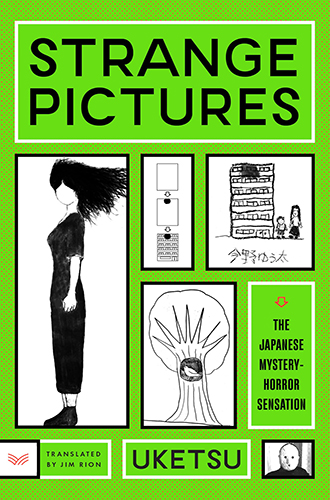
Strange Pictures is a compulsively readable horror mystery novel first published in 2022 by Uketsu, a mysterious masked YouTuber. This book is addictive, so much so that I accidentally spent an entire afternoon and evening reading it. So be warned – Strange Pictures is indeed strange, and it will hold you hostage.
In the five-page prelude that introduces the book’s premise, a psychology professor shows her class a photo of a picture drawn by a girl who killed her mother. The drawing is a childish self-portrait that shows the girl standing between her house and a tree. Although the picture seems completely normal at first, the professor zooms in on four small details that illuminate the girl’s inner state of mind. She makes the argument that, despite the abuse the girl suffered, she’s essentially a good person who never meant to hurt anyone. In retrospect, you can’t help but wonder how you didn’t notice these details of the drawing yourself.
This trick is an incredible sleight of hand. The same can be said of the following two chapters, both of which can be read as stand-alone short stories.
In the first chapter, “The Old Woman’s Prayer,” two college students in a small Paranormal Club discuss a curious blog they’ve found online. The blog is filled with cheerful observations of its writer’s everyday life. After a three-year hiatus, however, the blog closes with a mysterious post stating, “I can never forgive you.”
How did such a happy-go-lucky blog author arrive at such a mysterious statement? The five illustrations drawn by the author’s wife might just hold the key to the mystery. By themselves, they’re nothing special, but if you put them together in the right way…
The second chapter, “The Smudged Room,” features one of my favorite tropes, a creepy drawing made by a small child.
Five-year-old Yuta’s father recently passed away, and his preschool teacher is worried about the drawing he created for Mother’s Day. The picture shows a dark cloud hovering over the apartment building where Yuta lives with his mother, who is doing her best to care for Yuta with no family support. The matter comes to a crisis when Yuta suddenly disappears, and his teacher suspects that his mother may be keeping an unpleasant secret. What was Yuta trying to draw, exactly?
These two seemingly unrelated mysteries begin to coalesce in the third chapter, “The Art Teacher’s Final Drawing,” in which two sidelined newspaper employees become obsessed with the murder of a high school art teacher. The police dismissed the case due to a lack of evidence, but there is (of course) a drawing found in the teacher’s possession that was never fully analyzed. The younger reporter starts interviewing people who knew the teacher, thereby putting himself in grave danger.
Somewhere around the middle of this chapter, the story begins to strain credibility, but at this point I was fully invested and happy to be along for the ride. Uketsu has a gift for enabling the reader to suspend disbelief, and the Sherlock moment in the fourth and final chapter is incredible.
Strange Pictures is a bestselling cult hit in Japan and across Asia. I first heard about this book through word of mouth and read it in Japanese when it was first published. I was impressed by the clarity of Uketsu’s writing, which is simple and informative without being childish or condescending. Jim Rion has done an amazing job translating Uketsu’s distinctive style, with short declarative sentences pushing the reader forward at a brisk pace.
A large part of the mystery depends on the information that the narrative withholds from the reader, some of which is highly dependent on how Japanese works as a language. I’m impressed by how Rion manages to employ English to the same effect without the slightest trace of awkwardness. Reading Rion’s translation, I felt like I was encountering Uketsu’s story for the first time.
As long as you don’t mind losing a few hours to the addictive quality of the writing, I’d recommend Strange Pictures to anyone who enjoys puzzle box mysteries, creepy urban legends, and satisfying Sherlock Holmes style walkthroughs. I can’t overstate how much fun I had with this book, and I’m very much looking forward to Jim Rion’s upcoming translation of Uketsu’s debut novel, Strange Houses.
Kaori Fujino’s Nails and Eyes collects a novella and two short stories whose crystal-clear prose is darkened by the shadow of creeping psychological horror. The theme of family lies at the heart of these stories, especially as it intersects with the fear that those closest to us may deliberately choose not to see obvious but unpleasant truths.
In the third story, “Minute Fears,” a woman named Mika plans to attend the wedding reception of a college friend. Since she’s started a family, Mika has rarely gone out on her own, and she’s been looking forward to the party. Her son Daiki begs her not to go, as he’s been disturbed by an urban legend surrounding a ghost rumored to haunt the local playground. After a brief struggle with Daiki, who doesn’t want to be left alone, Mika goes to the reception late and leaves early. When she comes home, Daiki confesses his fear of the ghost, and Mika resolves to take him to the playground herself to prove that the urban legend isn’t true.
Whether the ghost exists is left to the reader’s imagination. Instead, the true horror lies in the image of Mika dragging her terrified son into the night. Or perhaps, if your sympathies lie elsewhere, the horror is hidden in the homebound years that Mika has had to endure in order to care for her child while her friends enjoy their lives and careers in the outside world.
The second story, “What Shoko Forgets,” is equally ambiguous yet just as disturbing. After a mild stroke, Shoko has been living in an elder care facility for almost half a year. Her family visits regularly, and she receives ample attention from the staff. A polite and energetic young man named Kawabata is especially gentle, and he seems to have a special fondness of Shoko.
There’s something strange about Kawabata’s behavior after dark, however; and, for some reason, Shoko finds herself thinking about sex in a way she hasn’t for years. It’s possible that there might be a connection between Kawabata and the man Shoko imagines lying next to her at night, but both her eyesight and her memory have grown hazy. In any case, it’s no use trying to explain her muddled thoughts about the situation to her daughter or granddaughter, who so kindly come to visit a forgetful old woman.
The collection’s centerpiece novella, “Nails and Eyes,” is narrated from the perspective of a young girl who lost her mother to an unexplained incident. Her father brings home his younger lover, and the narrator addresses this woman directly through the story. She recounts the minute details of the woman’s life, from her affair with a bookstore owner to her obsession with the home décor blog once maintained by the narrator’s mother.
The narrator also describes her own behavior as a child who has clearly been traumatized by her mother’s suicide but largely ignored by the adults in her life. The narrator refuses to be anywhere near the balcony where her mother died, and she sits in the corners of the apartment gnawing at her nails, which become serrated and sharp. To her credit, the woman responsible for the child’s care makes a clean break with her lover and begins to take a more active interest in her charge’s welfare. This change of heart comes too late, however, and the story ends with an incredibly upsetting psychological break.
To be clear: if you have phobias related to eyes and/or fingernails, this book might not be for you.
At 140 pages, Nails and Eyes is easy to breeze through, especially in Kendall Heitzman’s smooth and weightless translation. Still, Fujino’s fiction rewards time and attention, as well as repeated readings. There are layers to her deceptively simple prose, and any one of these stories has the potential to generate multiple lines of speculation. Nails and Eyes is a fascinating and disquieting collection that will be appreciated by readers who enjoy literary short horror fiction like Yoko Ogawa’s Revenge and Mariana Enriquez’s Things We Lost in the Fire.
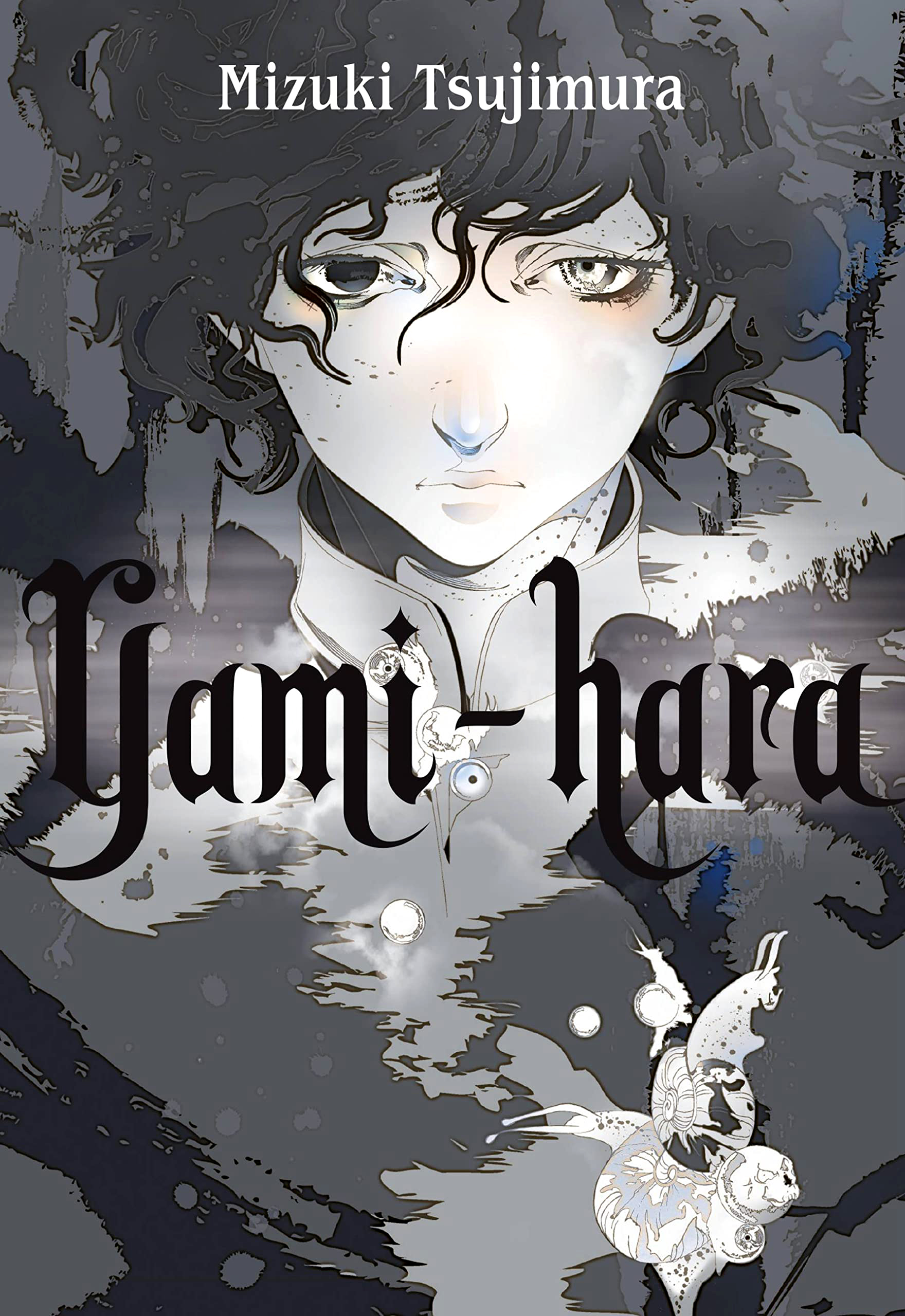
Mizuki Tsujimura’s Yami-hara is a collection of four disturbing stories about toxic social dynamics connected by a fifth chapter about the sinister force at the center of each of the conflicts. Although Yami-hara eventually reveals itself as supernatural horror, it’s entirely possible to read this linked story collection as a viciously cutting work of social satire.
The “yami-hara” of the title means “shadow harassment,” a term that indicates ostensibly benevolent behavior employed in such a way as to target a victim with gaslighting, self-doubt, and eventual social ostracization. Because there’s nothing technically “wrong” with the bullying, it’s not only tolerated but also actively facilitated by the broader community.
The first story, “New Student,” is about a toxic romantic relationship between two high schoolers. Straight-A student and class representative Mio is thrilled when her crush offers to walk her home from school, but his “protection” quickly escalates to constant texts and accusations that she isn’t taking their relationship seriously. Mio has trouble talking about her discomfort with her friends, because isn’t this just what boyfriends do? Isn’t this what she wanted? And what reason does someone who presents herself as “perfect” have to complain? Shouldn’t she be happy?
The fourth story, “Group Leader,” is an even better example of shadow harassment. In a class of elementary school students, there’s an obnoxious rich kid named Toranosuke who constantly causes trouble and gets away with it. A seemingly friendly but very intense boy named Niko transfers into the class but has little patience for the rich kid’s nonsense. Niko therefore volunteers to spend time with Toranosuke after school to help him study.
Toranosuke soon becomes the target of the “help” of the entire class, clearly against his will. No one does anything to prevent this, because none of the students are technically doing anything wrong. Isn’t it good to help someone study? Especially since Toranosuke was having trouble to begin with? And wouldn’t it be wrong, actually, to tell his classmates to leave him alone? Isn’t this for Toranosuke’s own good?
The third story is about “secret” workplace harassment that everyone sees, while the second story is about the lowkey passive-aggressive harassment between the women who live in the same posh apartment complex. This latter story, “Neighbor,” is particularly disturbing in its exploration of the many ways adult women can be evil to one another.
Speaking personally, I don’t think the final chapter that ties everything together is necessary. While it’s amusing to think that this sort of bad behavior is caused by literal monsters, nothing that any of the characters do is all that out of the ordinary.
Regarding the chapter about workplace harassment, I’ve unfortunately seen variations of this exact situation any number of times with my own eyes. It would be lovely if a troubled but handsome teenage exorcist could show up and fix everything, but real life is never so simple. After all, it’s notoriously difficult to confront abusers who are clever enough to keep their harassment in the shadows, especially when the larger community tacitly supports them.
Yami-hara is by the same author who wrote Lonely Castle in the Mirror, a YA novel that explores the concept of bullying from the genre angle of escapist fantasy. Unlike Lonely Castle in the Mirror, however, Yami-hara is quite bleak in its outlook. If I hadn’t already been familiar with the author’s work, I’m not sure it would have occurred to me that these two books were written by the same person.
Despite the anime-style illustration on the book’s cover and the “handsome teenage exorcist” plotline that emerges at the end of the story, I wouldn’t classify Yami-hara as YA fiction. This is a very smart and very sharp horror novel that requires the reader to think critically about all of the characters while rarely providing a sympathetic viewpoint.
Although the story contains no explicit violence or assault, I can’t deny that parts of Yami-hara are deeply uncomfortable. At the same time, it feels refreshingly cathartic to see a taboo subject like shadow harassment discussed openly and with such a high degree of sensitivity. If nothing else, I was morbidly fascinated by the panoply of bad behavior on display in this book, and I’d recommend Yami-hara to any fan of social horror looking for a strange and unique story that’s specific enough to be intriguing but relatable enough to be introspective – often painfully so.
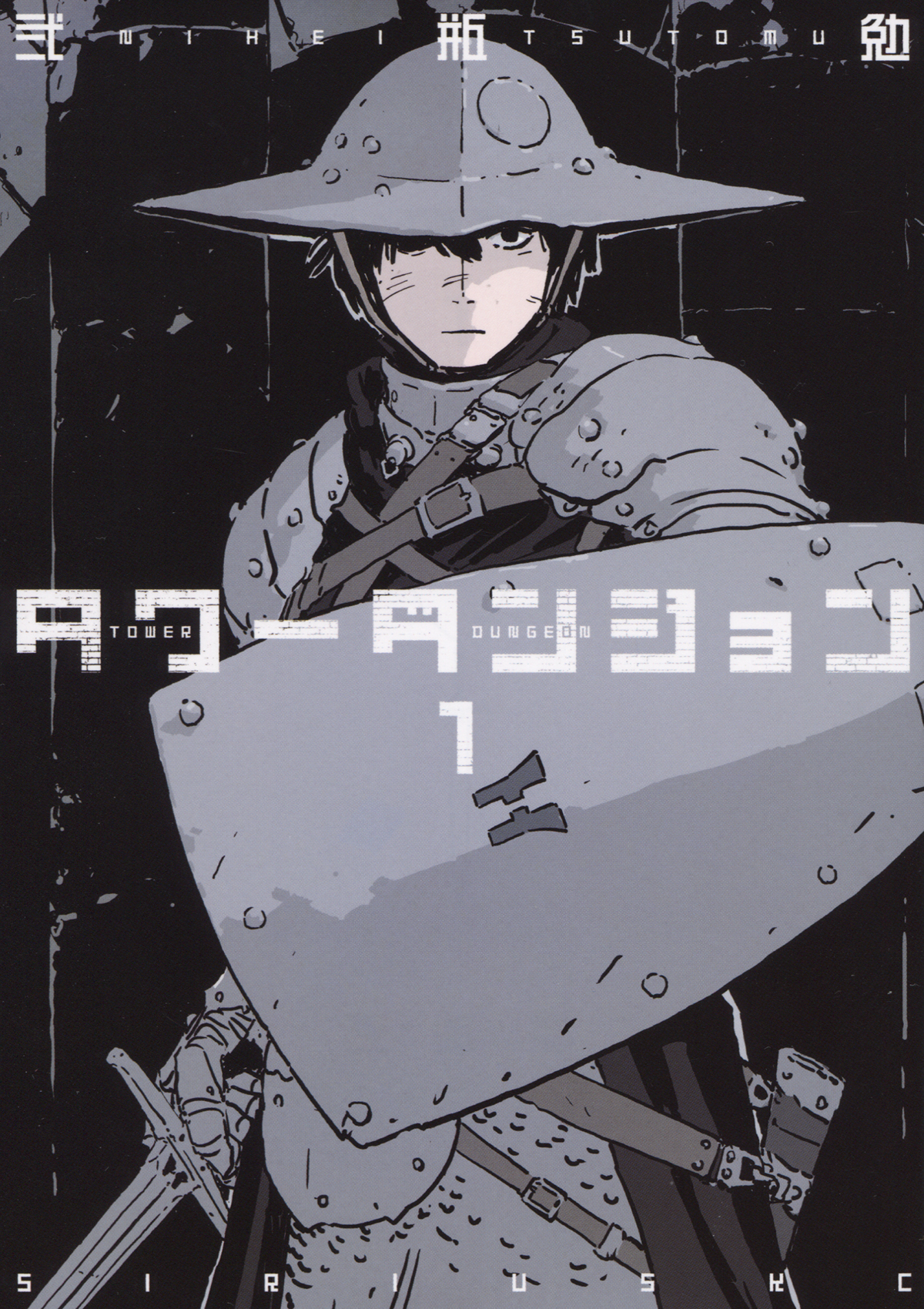
Tsutomu Nihei’s newest manga series, Tower Dungeon, is a grim and grisly dark fantasy about a small team of knights attempting to rescue a princess from an evil wizard at the top of the mysterious Dragon Tower.
This purposefully bog-standard fantasy premise is a bait-and-switch for the actual story, which is as brutal and fiercely imaginative as any of Nihei’s sci-fi dystopias. Instead of being set in the claustrophobic cable-choked interior of a spaceship, the visual space of Tower Dungeon is filled with vaulted ceilings and crumbling stone walls, but Nihei still dazzles the reader with labyrinthine passageways and an awe-inspiring sense of scale.
Nihei’s signature body horror is on full display in Tower Dungeon, which is populated by the shambling undead, grotesque human graftings, uncanny automatons, and abject abominations. Even when they’re not monstrous, I love the designs of Nihei’s heavily armored knights.
There’s a bit of fanservice, sort of? But not really, and I’m not complaining. If I had to guess, I’d say that Nihei has a crush on Malenia, the deadly woman warrior from Elden Ring, but don’t we all.
The pacing of Tower Dungeon is excellent, and the action sequences are balanced by downtime and light banter that doesn’t try too hard to be funny. The characters offer very little exposition, but the background setting is intriguing. Given my experience with Nihei’s previous manga series, I’m not expecting the story to coalesce into any sort of cohesive plot, but I’m happy to join this strange journey wherever it leads.
I think, honestly, that Tower Dungeon is the Dark Souls manga I always wanted. I hope it gets an English translation soon!
The Memory Police by Yoko Ogawa Normal people quietly go about their lives on a sleepy island where memories collectively vanish a bit at a time. But what happens to the people who can’t forget?
Masks by Fumiko Enchi Two cultured and handsome men compete for the affections of a beautiful young widow while her devious mother-in-law manipulates their relationships from the shadows.
The Woman in the Purple Skirt by Natsuko Imamura The Woman in the Yellow Cardigan is intrigued by the Woman in the Purple Skirt – so intrigued that she follows her every move and investigates every detail of her private life.
All She Was Worth by Miyuki Miyabe Pursued by debt collectors, loan sharks, and yakuza henchmen, a woman vanishes, leaving behind a trail of false identities and broken lives.
The Eighth Day by Mitsuyo Kakuta A desperate woman, spurned by her married lover, kidnaps his child and goes on the run. Now an adult, the kidnapped child has no memory of this and must piece together what happened from interviews and newspaper clippings.
Penance by Kanae Minato A young girl is assaulted and killed in a small rural town, and the murderer is never caught. Years later, a series of letters from the girl’s mother forces her former friends to reflect on what they knew and what they could never tell anyone.
The Graveyard Apartment by Mariko Koike A family moves into an inexpensive apartment next to a graveyard, but their hopes for a new life are shattered as strange and inexplicable things begin to happen in their building.
There’s No Such Thing As An Easy Job by Kikuko Tsumura A woman suffering from burnout leaves her white-collar position and goes to a temp agency, requesting that she be placed in an “easy” job. There’s no such thing as an easy job, however, and it stands to reason that companies who are desperate for temp workers have shady ulterior motives.
Convenience Store Woman by Sayaka Murata An unmarried woman finds joy and meaning in the comfortable routine of working at a convenience store. When pressured by her family and friends to quit her job and find a partner, how far will she go to prove that she’s “normal”?
Real World by Natsuo Kirino A teenage boy from an affluent Tokyo suburb kills his mother in a fit of explosive rage. The friends of the girl next door decide to help him escape and gradually succumb to the darkness at the core of their seemingly perfect lives at a prestigious private high school.
. . . . . . . . . . . . . . .
The illustration above is by James of ShelfWornDrawn, whose work can be found on Instagram (here) and on Tumblr (here). You can commission a portrait of your own library via his Etsy page (here).
Content Warning: This review contains a frank discussion of child abuse and incest.
If you’ve made it past the content warning, you should also be aware that Earthlings contains extended and explicit descriptions of parental child abuse, incestuous child sexuality, adolescent sexual abuse, severe dissociation, suicidal ideation, mental illness, murder, starvation, and cannibalism. This material is central to the story, which has a truly disturbing ending.
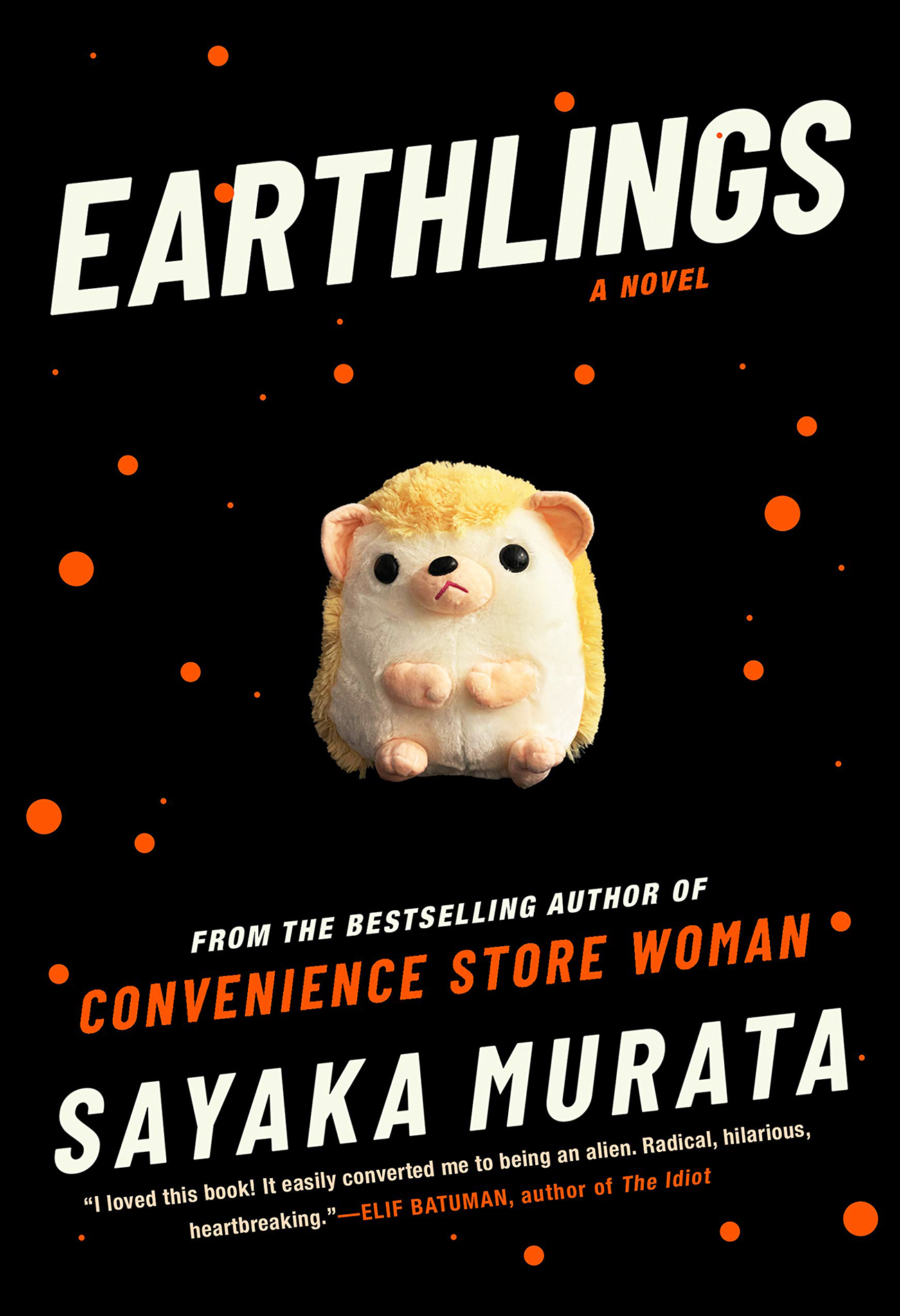
While I would happily recommend Sayaka Murata’s novel Convenience Store Woman to anyone, Earthlings is definitely not for everyone. Elif Batuman calls this novel “hilarious” in the blurb on the front cover of the American edition, and I’m not sure where that’s coming from. Earthlings is deeply sad and upsetting. It’s not the least bit funny, joyous, offbeat, or quirky. The author’s tone may be deceptively light, but the themes of her story are as dark as they come.
Earthlings is a novel about the deteriorating mental state and unfortunate life decisions of a relatively normal girl named Natsuki who is made to feel that she isn’t human because of the sustained abuse she receives at the hands of her parents and teachers. The point of the story isn’t to argue that we need to free ourselves from the normative expectations of an oppressive society. Rather, Earthlings demonstrates just how deeply painful and unhealthy social alienation can be to the people who are arbitrarily designated as outcasts and scapegoats.
The novel begins with the eleven-year-old Natsuki’s confession that she is a special child who was chosen by an alien named Piyyut, who came from Planet Popinpobopia to help her fight evil witches as a magical girl. Although Piyyut looks like a stuffed animal to ordinary people, he’s actually an emissary sent by the Magic Police. This is a secret to everyone except Natsuki’s cousin Yuu, who tells Natsuki that he understands Piyyut’s situation because he’s an alien too.
From the very first page, it’s clear that Natsuki has created a fantasy version of herself in order to escape the neglect of her parents. Neither of Natsuki’s parents attempt to hide their preference for her older sister Kise, who has a codependent Münchhausen-by-proxy relationship with their mother. While Kise can do no wrong and requires special care and attention, Natsuki becomes the scapegoat of her mother, who constantly criticizes her appearance and personality. Instead of defending Natsuki, everyone in her family defers to her mother – everyone except her kind and friendly cousin Yuu, whom Natsuki decides is her boyfriend and future marriage partner.
Because of the strength of her magical girl fantasy, Natsuki is able to survive the abuse she suffers at home. Unfortunately, precisely because this abuse makes her vulnerable, she becomes the sexual target of a young and popular teacher at her after-school tutoring program. The author gets the abusive teacher’s mentality exactly right. He starts with small acts that have plausible deniability, such as using “posture correction” as an excuse to grope Natsuki. When he escalates his behavior in an attempt to test the boundaries of what he can get away with, he does so in a way that Natsuki will be ashamed to talk about, such as fishing her used sanitary napkin out of the trash after she uses the bathroom.
Natsuki knows there’s something wrong with the teacher’s behavior and tells her mother, but her mother takes the teacher’s side and scolds Natsuki for overreacting. She then punishes Natsuki for “making up stories” by forcing her to spend more time with the teacher. Natsuki ends up going to the teacher’s house for a private lesson, which leads to exactly the scenario you’re afraid it will. The sexual assault scene is long, explicit, and extremely difficult to read. Once again, the author depicts the mentality of child abuse with perfect accuracy, in that the teacher forces Natsuki into a situation in which she feels compelled to “consent” to her assault, thus making it seem like her own fault.
Severely traumatized and knowing from experience that no one will believe she’s been raped, the now twelve-year-old Natsuki resolves to commit suicide in the mountain forest surrounding her grandparents’ house during the annual family get-together for the summer Obon festival. Before she dies, Natsuki wants to experience genuine physical affection, so she convinces her cousin Yuu to go out in the woods with her to have penetrative sex, after which she swallows an entire bottle of her aunt’s sleeping pills.
As Elif Batuman says in the blurb on the front cover of Earthlings, the abuse, rape, and attempted suicide of a twelve-year-old girl is “hilarious.”
Except it’s not. Natsuki’s fantasy of being a magical girl is a psychological coping mechanism, and her lack of affect is the result of severe trauma. Not only are the events Murata describes terrible to read, it’s also terrible to hear them recounted in the voice of a twelve-year-old narrator who doesn’t yet possess the emotional maturity to process what’s happening to her. This narrative style isn’t “quirky.” It’s horrifying.
After Earthlings firmly establishes itself as a horror story told by an unreliable narrator, it jumps forward in time to 34-year-old Natsuki, who is currently in her third year of marriage to a man named Tomoya. After her suicide attempt, Natsuki was essentially treated as a prisoner by her family for two decades, and marriage seemed to be the only way for her to escape. Natsuki met Tomoya on a website for people in situations similar to her own, namely, people who need to get married in order to appease their families. The site caters mostly to the LGBTQ+ community; and, while Tomoya’s sexuality is never specified, he seems to be aro-ace, meaning that he does not experience romantic attraction and is disgusted by physical sexual contact.
Tomoya and Natsuki are essentially roommates who sleep in separate bedrooms while sharing an apartment. This arrangement works well for both of them, at least until their families begin to exert pressure about having children. The stress of this pressure weakens the deep fault lines of their respective childhood traumas, and they decide to escape society by fleeing to Natsuki’s grandparents’ house in the mountains. The house is currently occupied by Yuu, who has been acting as a caretaker for the property after having been laid off from a prestigious office job in Tokyo. As you can imagine, what happens to these three characters in an isolated cabin in the woods isn’t great, and the novel’s ending is shocking.
Earthlings is about three broken people whose connection to reality gradually deteriorates as they feed one another’s delusions while in total social isolation. The plot summary I’ve provided is the background necessary for the reader to understand the core of this story, as well as its tone.
In Convenience Store Woman, Sayaka Murata argues for the quiet dignity of menial service jobs and the validity of neurodivergent perspectives. The narrator of Convenience Store Woman enjoys her job as a clerk at a convenience store because she finds the routine comforting and appreciates being able to interact with other people according to a preset script. Toward the end of the novel, she finds herself in a difficult situation because she succumbs to her family’s pressure to find a partner and chooses the first person to make himself available despite his unsuitability. Many readers of this internationally bestselling novel identified with the narrator’s perspective and sympathized with the author’s description of the small pleasures of part-time service industry jobs that are often looked down on by older generations.
Earthlings explores similar material and themes but takes a radically different approach. In this novel, Murata emphasizes her narrator’s social alienation to an extreme degree. The narrator’s unwilling separation from “Earthlings” is not a good thing, nor is it depicted as being relatable. Instead, Murata uses these characters to ask serious questions about what it means for neurodiversity and queerness to be forcibly removed from mainstream society. For instance, why are child molesters protected by their communities while the children they abuse are treated as unbalanced and unclean? Why is traveling overseas to undergo expensive and invasive surgery in order to have children seen as normal, while choosing to remain childless is viewed as antisocial and neurotic?
If you can handle the dark tone and gruesome subject matter of Earthlings, it’s an extremely compelling story. At the risk of calling child abuse “hilarious,” I have to admit that I was entertained, especially once Natsuki starts living in her grandparents’ abandoned house in the woods. For what it’s worth, the ultimate fate of the pedo teacher and the garbage parents who enabled him is unpleasant yet satisfying.
As a fan of social horror, I love Earthlings, but I would caution potential readers to take the content warnings seriously. Sayaka Murata is a brilliant writer who tells strange and complicated stories, and I look forward to seeing more of her sizeable body of work in translation. I just hope that, in the future, she’s treated like the complex and nuanced literary figure she is instead of marketed as an easily digestible product of pop culture.
Author: Yumiko Kurahashi (倉橋由美子) Translator: Atsuko Sakaki Publisher: M. E. Sharpe Publication Year: 1997 Pages: 159
Yumiko Kurahashi was a member of the generation of female writers whose work began appearing in the early 1960s. She continued writing into the 1990s, by which time she had produced a number of collections of short stories. Kurahashi is notable for her absurdist imagination, as well as the cleverness with which she blends multiple literary traditions from Noh drama to Greek tragedy.
The Woman with the Flying Head was published in 1997 by the academic press M. E. Sharpe (which has since been incorporated into Routledge) and collects eleven stories that were originally published between 1963 and 1989. Some of these stories are playful, and some are creepy, but all are fiercely intellectual reflections on both carnal and creative desires.
There’s a fair amount of taboo sexuality in these stories, including incest and bestiality, not to mention sexual entrapment and murder. It’s important for the reader to understand that these stories are explorations of concepts and ideas, not mimetic representations of three-dimensional characters. In the opening story, “The Extraterrestrial,” why do a brother and sister have sex with the alien that hatched out of the egg that mysteriously appeared in their bedroom one morning? It doesn’t matter; what matters is the experimental space generated by the scenario.
You can have a lot of fun with Kurahashi’s stories once you accept the author’s writing on its own terms. If you’re the sort of person who enjoys close reading and analysis, there’s a lot to read and analyze. It’s also entirely possible to enjoy the stories as sex comedies and interpersonal dramas constructed on a scaffolding of absurdist thought experiments. Kurahashi has won numerous literary awards for her work, and this collection is prefaced with a serious and thoughtful introduction by the translator, but “supernatural sci-fi erotic dark comedy” is probably the most accurate label to apply to the author’s distinctive genre of fiction.
The intellectualism attributed to Kurahashi partially stems from her references to a wide range of world mythologies. Although her narrators tend to be terrible and problematic men, the real stars of the show are the demonic women who torment them. Far from being symbols of female resistance or empowerment, the majority of Kurahashi’s female characters are demons in the traditional sense. They are to be feared and abhorred instead of admired, and they tend to reflect the anxieties of a patriarchal society even as they playfully mock fears regarding female sexuality.
The demon in the 1985 story “The Witch Mask” takes the form of a Noh mask that has been passed down as an heirloom in the narrator’s family. This style of mask, the horned hannya, is used to represent women who have turned into demons after succumbing to powerful emotions. The narrator’s mask is particularly frightening because its hunger literally consumes its victims with desire.
The male narrator of the story is fully aware of the danger of the mask, but the cursed object still captivates him. He places the mask on the face of each of his lovers and watches their bodies writhe as it consumes them. He refers to his obsession with the beautiful mask as “an irresistible desire” before finally applying it to the face of his fiancée, whom he loves dearly. He attempts to justify this murderous act by confessing that he “was haunted by an idea – the call of the demon… the desire to put the witch mask on a beautiful face.”
“House of the Black Cat” is also about a hungry demon. This demon alternates in shape between a regular-sized housecat and a human-sized catwoman. The cat in its humanoid form is strangely alluring to the story’s human protagonist, Keiko, as she watches it go about its day in a video made by her husband’s friend Kamiya. The video becomes pornographic as the cat “devours” her human partner, who bears a strong resemblance to Kamiya himself. It seems that Kamiya disappeared shortly after lending Keiko’s husband the video. Although Keiko is never able to conclusively determine his fate, she suspects that the cat killed him so that she could feed him to her children, four black kittens. “House of the Black Cat” is about forbidden sexuality; but, as is the case with many of Kurahashi’s stories, it’s also about the creative drives that inspire artists to test the boundaries of consensus reality.
The stories collected in The Woman with the Flying Head are strange, fantastic, and thought-provoking. Kurahashi’s writing is filled with vivid imagery and suggestive symbolism that blend together to create fantasies that are both horrible and darkly fascinating. A decent comparison might be Patricia Highsmith’s Little Tales of Misogyny, or perhaps even Jorge Luis Borges’s Labyrinths, but Kurahashi’s voice is absolutely unique. I always find myself returning to The Woman with the Flying Head every October for Halloween, but these creepy little stories are perfect for whenever you want to take a step back from the grind of mundane reality to channel some playfully demonic energy.
Strange Tale of Panorama Island
Japanese Title: パノラマ島奇談 (Panorama-tō kitan)
Author: Edogawa Ranpo (江戸川 乱歩)
Translator: Elaine Kazu Gerbert
Publication Year: 1927 (Japan); 2013 (United States)
Publisher: University of Hawai’i Press
Pages: 113
Strange Tale of Panorama Island is a short novel about murder, misdirected passion, and artistic delusion that climaxes with an explosive conclusion.
The story’s antihero, Hirosuke Hitomi, is a writer who is neither living his dream nor making a living. His life is horribly bleak until he receives news that a college friend named Genzaburō Komoda has passed away from a rare illness. Although Hirosuke was never close to Genzaburō, he knows that he was the sole heir of a wealthy family. He also knows that he resembled the recently deceased young man to such a strong degree that he could have been his doppelganger.
Hirosuke sees his chance, and he takes it. He fakes his death by leaping from a ship, an act interpreted as a suicide by the newspapers that report the event. He then disinters Genzaburō’s body, destroys it, and crawls to the Komoda family estate, claiming to have experienced a miraculous recovery. As Genzaburō, he blames his disorientation and seeming loss of memory on the trauma, knowing that the family’s doctors will be too embarrassed by their “mistake” to interrogate him.
Hirosuke is not content to live an easy life of luxury in the company of Genzaburō’s beautiful widow Chiyoko, however. Instead, he uses the vast wealth of the Komoda family to buy an island and fill it with aesthetic marvels, creating a sensualist utopia outfitted with near-future technology. The wonderland he names Panorama Island is both a museum of the fantastic and an amusement park for adults.
The short translator’s introduction explains the cultural context of the novel, specifically the public interest in panoramas during the 1920s in Japan, but none of this information is necessary to appreciate the marvelous imagery Edogawa dreams up to dazzle the reader as Hirosuke leads Genzaburō’s widow across the island. If Chiyoko knows Hirosuke’s secret, which she almost certainly does, what will become of her? Like Chiyoko, the reader can only be amazed by the island while disturbed by the troubled genius that created it.
Edogawa is interested, like his namesake Edgar Allan Poe, in the precise mechanics of how Hirosuke’s series of crimes might be possible. The novel contains a touch of the pulpy adventure story, as well as an earnest foray into the realm of medical science. Thankfully, the narrative never becomes mired in superfluous details, with most of the science remaining staunchly fiction. Hirosuke’s degeneration as a human being receives much more attention, as does his erotic and grotesque fascination with the confused and powerless widow of his former friend.
Although it’s published by a university press, Strange Tale of Panorama Island is a pleasure to read. The introduction and endnote sections are short, discrete, and quite interesting. If you’ve read and enjoyed any of the books in the Penguin Horror Classics series, including the handsome reprints of the work of Edgar Allan Poe and H.P. Lovecraft, you’ll more than likely have a lot of fun with Strange Tale of Panorama Island. The novel was originally written for a broad but intelligent audience, and it’s aged extremely well, partially thanks to the excellent translation.
I also want to recommend the manga adaptation drawn by Suehiro Maruo and published in English translation by Last Gasp Press. Maruo, a gekiga artist who has adapted numerous other works of dark mystery fiction, delights in the lurid imagery of the story, which he depicts with his signature detailed linework and bold panel compositions. Readers should be cautioned that, although this is a “classic” that’s taught in university classes, it is most definitely not safe for work.
The Lonesome Bodybuilder
Japanese Titles: 嵐のピクニック (Arashi no pikunikku) and 異類婚姻譚 (Irui kon’in tan)
Author: Yukiko Motoya (本谷 有希子)
Translator: Asa Yoneda
Publication Years: 2015 & 2016 (Japan); 2018 (United States)
Publisher: Soft Skull Press
Pages: 209
The Lonesome Bodybuilder collects eleven stories originally published in two books by the celebrated author Yukiko Motoya, whose writing has been winning prestigious awards in Japan for more than fifteen years. I’m a fan of Motoya’s work, and I was looking forward to the day when it would appear in translation. I couldn’t have asked for a better rendition into English than Asa Yoneda’s lively and engaging translation, and The Lonesome Bodybuilder is a wonderful introduction to the work of a fascinating writer.
The title story, “The Lonesome Bodybuilder,” is an eighteen-page journey. The protagonist feels as if her husband is ignoring her, so she takes up bodybuilding. She ends up becoming serious about it, but her husband fails to notice the dramatic changes of her body. After a traumatic incident in which she’s too afraid to use her physical strength to stop a dog from attacking another dog outside the home goods store where she works, she begins to embrace the idea that her training has no practical purpose other than to make her feel good about the way she looks. This sense of agency leads her to confront her husband, who finally makes an effort to be a better partner. At the end of the story, the narrator has started to build her self-confidence as well as her muscles, and she’s even beginning to consider adopting a dog of her own.
While the narrator of “The Lonesome Bodybuilder” learns to strengthen her connections with the people around her, “The Dogs” is a surreal celebration of self-imposed isolation. The narrator lives in a cabin in the woods that she’s borrowing from a friend while she does a vague sort of work that involves tweezers and a magnifying glass. She lives with dozens of bright white dogs that emerged from the forest and now share her space and sleep with her at night. When she goes to a nearby village for groceries, she learns that people have been going missing, and she fantasizes about what it would be like if everyone were to disappear. Her wish comes true as winter sets in and snow begins to fall, leaving her alone with dozens of mysterious dogs. The narrator treats all of this as if it were perfectly natural, and it’s clear that she couldn’t be happier.
The longest story in the collection, “An Exotic Marriage,” appears to be a straightforward account of a mundane marriage, but it gradually devolves into troubled confession regarding a genuinely bizarre situation. Several people close to the narrator have remarked that she has begun to physically resemble her husband, an observation that she finds disturbing. Although he’d already been married once, her husband seemed like an ordinary person until they moved in together, at which point he stopped making any attempt to hide his idiosyncrasies. He watches variety shows on television for hours on end before eventually transferring the target of his obsessive attention to a mobile game that the narrator tries and fails to understand. His unapologetic monomania leads him to quit his job; and, as he spends more time at home and becomes even more eccentric, his appearance begins to shift. The narrator is understandably concerned about what it might mean that she’s come to look like him, but she’s at a loss for how to keep her sense of self intact. At the end of the story, she realizes that her husband’s transformation is more dramatic than she suspected – and that he may not be human at all.
The stories in The Lonesome Bodybuilder toe an odd and uncanny line between slipstream horror and emotional comfort food. Although some of the situations the protagonists find themselves in are strange and uncomfortable, Motoya’s writing doesn’t convey any particular sense of dread. The lighter stories play games with popular culture, humorously exploring questions such as “What would it be like to be a generic minor character in a video game?” and “What if your anime girlfriend were real?” As a collection, The Lonesome Bodybuilder carries on a conversation about the tenuous relationships people forge with difference, and most of the narrative tension comes from the ways in which this difference manifests in various identities, ontologies, and communication styles that may not always be compatible or even fully comprehensible.
Each of the eleven stories in The Lonesome Bodybuilder is interesting and unexpected, and Asa Yoneda’s skillful translation of Motoya’s sparkling prose is a joy to read.
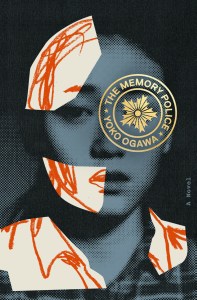
The Memory Police
Japanese Title: 密やかな結晶 (Hisoyaka na kesshō)
Author: Yoko Ogawa (小川 洋子)
Translator: Stephen Snyder
Publication Year: 1994 (Japan); 2019 (United States)
Publisher: Pantheon Books
Pages: 274
The Memory Police is set on an island isolated from the rest of the world. The island is large enough to support a hospital, a university, and even a publishing company, but its community is small enough for people to be able to gather together for significant events. Like her parents before her, the narrator has lived on this island her entire life, and she takes its idiosyncrasies for granted.
The narrator’s island is cozy, with lovely bakeries and gardens. No one seems worried about money, and the narrator is able to live in a comfortable house despite the fact that the only work she does is to write novels that, by her own admission, no one reads. The narrator focuses her attention on the small details of everyday life, and it’s only gradually that the peacefulness and nostalgia of the narrative begin to unravel.
Every so often an object will “disappear.” Almost overnight, whatever has disappeared will vanish not just from the world, but from everyone’s memory as well. It’s not entirely clear how or why this works, but no one questions it. In some instances, such as perfume and photographs, the objects that disappear must be discarded, usually by means of being ritually thrown into a river or incinerated. In other cases, such as when the concept of “fruit” disappears, all the fruit on the island literally falls from the trees to the ground. Once something disappears, all perception of it disappears as well, and people aren’t able to recognize something that’s disappeared even if they’re looking at it. Even idiomatic expressions change, as with “to hit two creatures with one stone” after birds disappear. The world of the narrator is limited, but her attention to detail is precise, so even small disappearances take on an emotional weight for the reader.
Some people don’t lose their memories, however, and this is where the eponymous memory police come in. This is also where the novel becomes dystopian, with midnight arrests, people suddenly going missing, families fleeing, and all records of these incidents buried deep within an impenetrable bureaucracy. The narrator’s mother, who worked as a sculptor and kept a variety of disappeared objects hidden in a cabinet, was an early casualty of the memory police, leaving the narrator an orphan.
The narrator gradually realizes that her editor is also immune to disappearances, and she resolves to keep him safe by concealing him in a sealed room in the basement of her house while his pregnant wife flees to a rural area north of town, ostensibly for the sake for her health. As her editor continues to read and comment on the narrator’s manuscript in secret, an intimacy develops between them, which is reflected in the strange and surreal excerpts from her novel interspersed throughout the main story.
As the novel progresses, the rate of disappearances increases, an alarming trend that is exacerbated by environmental disaster. At the end of the story, the concept of “disappearances” is followed to its logical conclusion in an undeniably disturbing yet surprisingly soft and gentle manner.
The Memory Police is dystopian horror fiction reminiscent of The Handmaid’s Tale, but it’s also a meditation on the ghosts that quietly follow us without ever attracting our notice. There may be no memory police in the real world, but we still forget things all the time, and we forget them so thoroughly that we don’t even realize we’ve forgotten them. The narrator is just as susceptible to these small disappearances as everyone else, but what sets her apart is that she understands the value of remembering and the importance of preservation. By maintaining a diversity of small narratives, the larger narrative represented by the memory police – namely, that which is not productive must be aggressively forgotten – can be resisted. The novel works on multiple levels as historical and political allegory, but it’s also universal and deeply personal.
The Memory Police was originally published in 1994, but it feels contemporary, fresh, and relevant. There are no specific cultural markers in the text, and most character names are abbreviated as single letters, a device that confers an air of timelessness to the story. This novel is therefore accessible to a broad general audience with no knowledge of Japan, and the translation is gorgeous. The Memory Police is brilliant and extraordinary, and it refuses to be forgotten.