The Adventures of Duan Surk: Witches’ Forest

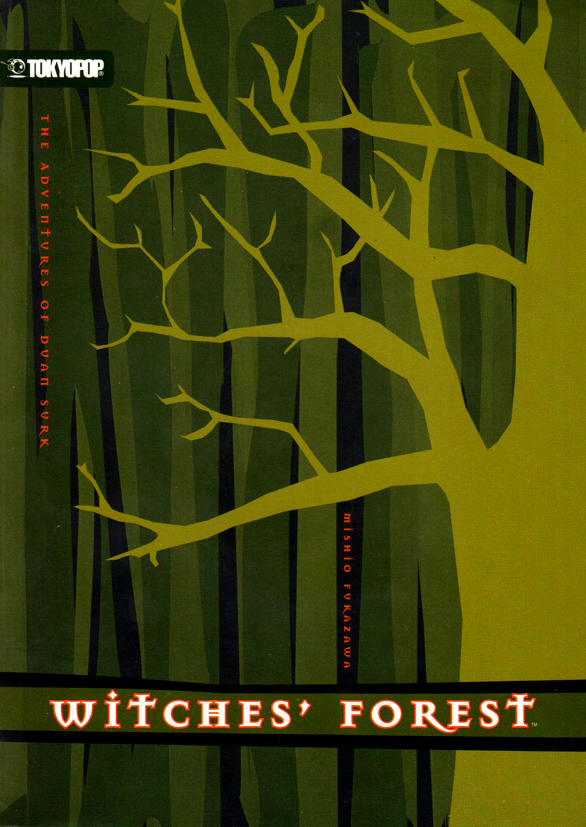
Witches' Forest

Title: The Adventures of Duan Surk: Witches’ Forest
Japanese Title: デュアン・サーク ― 魔女の森
(Duan Sāku: Majo no mori)
Author: Fukazawa Mishio (深沢 美潮)
Illustrations: Otokita Takao (おときた たかお)
Translator: Catherine Barraclough
Publication Year: 2006 (America); 1996 (Japan)
Publisher: Tokyopop
Pages: 328

This book is kind of stupid. It’s a mess of tropes and clichés liberally borrowed from the early Zelda and Final Fantasy games written in a style aimed at the lowest common denominator. There is no depth to the story, the characters, or the writing. Witches’ Forest is a light novel, and it reads like a light novel: shallow, superficial, and disposable by design.

Nonetheless, I think Witches’ Forest is an interesting and important book, especially in translation. Before I explain why, allow me to give a brief plot summary.

Duan Surk is an orphan in a world plagued not only by vicious man-eating monsters but also by war. He was raised in a small town by his brother Gaeley, a hale young man who took on various odd jobs to order to be able to provide medicine and care for the sickly Duan. The young Duan makes up for his lack of physical strength with an inquisitive mind; and, by the time he is fourteen, Gaeley is confident enough in Duan’s ability to make it in the world that he himself decides to leave the town in order to become a soldier. Gaeley is everything to Duan, so the young Duan decides to become a fighter like his brother. Duan fails the physical portion of the initial test of the Adventurer’s Club guild, but the army will take anyone, so off to the army he goes. After spending a year as a cook’s assistant, Duan returns to camp after spending the day gathering ingredients only to find his entire battalion vanished into thin air, leaving only empty tents and smoldering fires behind. He straps on a sword and rushes into a nearby forest with a vague plan of rescue in mind, but the forest is enchanted, and Duan soon finds himself hungry, lost, and in dire peril.

This is where we find our hero at the beginning of Witches’ Forest, but Duan soon stumbles upon two traveling companions: Olba October, a battle-hardened veteran adventurer in his twenties, and Agnis R. Link, a sixteen-year-old sorcerer with a penchant for fire magic who may or may not be a princess in disguise. Both of these characters are trying to get to the mansion at the heart of the forest, wherein two witches are said to dwell. Olba wants treasure, and Agnis wants revenge. Before they can reach the witches, however, they must brave the dangers of the surrounding forest and the traps set up in and around the house itself.

The adventures of the trio are solidly structured upon a foundation of RPG tropes and gameplay mechanics. Agnis is the perky refugee, Olba is the jaded older guy, and Duan is just about every main player-protagonist to ever appear in a JRPG. The characters randomly encounter monsters drawn directly from D&D dungeon master guides, and they earn experience points when they defeat these monsters. Their Adventurer Cards keep track of their experience points, and, when they earn enough, they gain a level. They are equipped with a full arsenal of Zelda items, from the port-o-lant (which “uses low-cost solid fuel made of Zora oil”) to the coily coily rope (“the definitive version of the hooked rope”), and Agnis in particular has to worry about running out of MP (“magic points,” or magical energy). The trio is accompanied by a flying baby dragon/fire lizard that can talk and use low-level healing spells and is somehow fuzzy despite being reptilian. The only thing the party doesn’t have is a bag of holding, as they’re constantly lugging their adventure gear around with them and getting into petty arguments over who has to carry what.

One of the most engaging parts of Witches’ Forest is Agnis’s backstory, which involves a heartbroken yet politically ambitious stepmother who sinks to Cersei Lannister depths of dastardly scheming. Within this family drama, characters change and grow and are faced with problems that have no obvious solutions. For the most part, though, the novel focuses on the three main characters running around and hitting things with swords and spells. Each of these battles requires some minor element of strategy but is relatively brief. Sentences are short and declarative. Each paragraph contains about three to six sentences. There are no anime-style illustrations, but the text is interspersed with various material drawn from its fantasy world, such as copies of the characters’ Adventurer Cards, advertisements for magical items, and overworld and dungeon maps. At the end of the book is a three-page bestiary of monsters that appear in the story, which is illustrated in a style highly reminiscent of mid-1990s fantasy anime like Record of the Lodoss War or Magic Knight Rayearth.

Witches’ Forest feels extremely dated, which makes sense, as popular culture has moved on in the almost twenty years since the book first came out in 1996. What makes the novel interesting is that it captures the spirit of its age so well. Neon Genesis Evangelion aired during the fall season of 1995 and ended up drastically changing the playing field; but, before that, many popular anime for the young adult demographic were based on light novels such as Slayers and Irresponsible Captain Tylor, which are just as goofy as they are epic. The humor, the fighting, the yelling, the zany adventures, and the group of ridiculously disorganized young people resolving volatile political stalemates entirely by accident are all strongly reminiscent of the anime of the time. It goes without saying that all of this media is closely connected to the themes and stylistic conventions of video games before they made the leap to the 32-bit era. In this way, Witches’ Forest is like a time capsule from a bygone era.

Tokyopop’s release of this book in translation also calls to mind the cultural atmosphere in the United States of a little less than ten years ago. Excitement over Japanese entertainment media such as anime, manga, and video games was almost visibly swelling as new anime conventions popped up every year and bookstores devoted an ever-increasing amount of shelf space to manga. The spark of interest in young adult fiction kindled by the Harry Potter books had leaped into a blazing inferno with the sudden popularity of the Twilight series, and the teenage demographic was on fire in terms of marketing value. Tokyopop was licensing one manga series after another, Viz Media was using its profits as capital to test new markets, and even the mighty Hachette Publishing Group was launching a new imprint devoted to all things manga. Tokyopop had begun to translate light novels, and certain titles, such as Yoshida Sunao’s Trinity Blood series and Ono Fuyumi’s Twelve Kingdoms series, were proving popular with crossover audiences. 2006, the year that Witches’ Forest was published in translation, was the absolute peak of the anime and manga industry in the United States (at least in terms of sales numbers). The market was diversifying and had the support of major retail chains, complaints about internet piracy and entitled fans were few and far between, and it seemed as if anything was possible.

As I wrote at the beginning of this review, Witches’ Forest isn’t written for those seeking a multilayered story, beautiful language, or thematic and allusive depth. Instead, it’s meant to be a quick and enjoyable read, and it serves its purpose admirably. As such, it’s a perfect representative of the literary medium of light novels. The market for light novels in Japan is relatively large, so books like the Duan Surk series, which aren’t particularly brilliant or original, can still thrive and reach a large audience. In the United States, however, the publishing market is tough and the market for young adult novels in translation is infinitely tougher. The crazy manga boom of the last decade was thus necessary for something like Witches’ Forest to appear on bookstore shelves.

Witches’ Forest is therefore an interesting cultural artifact that serves as a window into both the Japan of the 1990s and the United States of the 2000s. Its value as a tangible index of pop lit history aside, the novel is a lot of fun to read, especially for fans of video games and anime. For an older readers, the experience of reading the book may evoke a certain sense of nostalgia, while a younger reader might be able to enjoy the “what was old is new again” thrill of encountering tropes and narrative patterns that now fall slightly outside of the mainstream.

There are four books in the Duan Surk series, and all of them are available in English translation from Tokyopop. Although used copies can be found through various distributors, the best way to get your hands on new copies of all of the books in the series is through the anime retailer The Right Stuf, which is a treasure trove of out-of-print light novels in translation.

Another, Volume 1

Another

Title: Another, Volume 1
Japanese Title: Another (Anazā) 上
Author: Ayatsuji Yukito (綾辻 行人)
Translator: Karen McGillicuddy
Year Published: 2013 (America); 2009 (Japan)
Publisher: Yen Press
Pages: 254

If you’ve watched the Another anime and are looking for a quick answer regarding whether or not you should read the novel the anime is based on: Yes, you should read it. It’s a fun book and a quick read. It’s just as creepy as the anime, but it’s creepy in different ways. The basic plot is the same, but enough of the details are different to maintain a feeling of suspense.

Before I begin, I should say that this review only covers the first volume of a two-volume novel. According to Amazon, the second volume won’t be released until July 23, 2013. Since Another is a highly compelling mystery novel, and since the first volume doesn’t offer closure but instead only deepens the mystery, I might caution anyone who hasn’t already seen the Another anime series (which is available on Hulu) against reading the first half before the second half is available.

Another begins in April of 1998 in a small mountain town called Yomiyama. The narrator is Sakakibara Kōichi, who suffers from a lung disease called “primary spontaneous pneumothorax.” Since his father is spending a year abroad in India, Kōichi has moved from Tokyo to Yomiyama to live with the parents of his deceased mother. Before he can start ninth grade with his new class (the Japanese school year begins in April) at the North Yomi Middle School, however, Kōichi suffers a relapse of his disease and is hospitalized. While in the hospital, he is visited by two students from his class who badger him with a series of unpleasantly persistent questions about his background in relation to Yomiyama. Even more curious is his encounter with a strangely taciturn girl wearing a North Yomi uniform in the hospital’s elevator. This girl, Misaki Mei, is wearing a conspicuous eye patch and headed down to a part of the hospital basement that should be empty.

As soon as Kōichi is released from the hospital, his mother’s younger sister Reiko, who lives with Kōichi’s grandparents, sits him down and tells him the “North Yomi fundamentals,” the third of which is “you must at all costs obey whatever the class decides.” Kōichi, who had been bullied at his old school because of his family name, is uncomfortable with this rule; and, when he finally begins school, he is unpleasantly surprised when he realizes that everyone in his class is bullying Mei. No one acknowledges her presence in the classroom, and no one will discuss her with Kōichi. Kōichi gets hints that what is going on is more than mere bullying, however; the class’s treatment of Mei is somehow tied to a curse laid on the third class of the third year students at North Yomi.

Another is half horror and half mystery. The horror comes from the existence of ineffable supernatural phenomena, the grisly deaths of Kōichi’s classmates, and the looming inevitability of the class’s fate. The “you must at all costs obey whatever the class decides” dictum is majorly creepy as well. These horror elements lend a major sense of urgency to the mysteries Kōichi must puzzle out: Why is everyone ignoring Misaki Mei? What is the curse afflicting Class 3-3? How did the curse come about, and how does it work?

The answers to these questions are eventually revealed at the end of the volume. To be honest, the specifics of the curse don’t actually make a great deal of practical sense, but that’s okay – the setup and nature of the curse are clever and interesting. Since this is only the first half of the story, it goes without saying that not everything is revealed. In fact, the end of the first volume sets up an even more interesting mystery. The curse is apparently linked to one specific person in each class in which the curse is active, the so-called “casualty” (死者), but who could this be? The first volume doesn’t give the reader the necessary clues to figure this out, but it does hint at a particularly nasty moral dilemma that the reader can look forward to exploring in the second half of the story.

Another isn’t the most beautifully written book in the world. When compared to the anime, with its moody musical score, atmospheric lighting, and lush background images, the novel doesn’t seem to take full advantage of the potential creepiness of its setting in an isolated mountain town before the advent of widespread cell phone and internet use. What the novel does do is to deliver an additively readable young adult horror story that can also be read as a power fantasy of working through some of the more unpleasant aspects of ninth grade. A new kid transfers into a new class at a new school, and things are weird and awkward not because fifteen-year-olds are weird and awkward but because there’s a curse. The class seems to be bullying a shy girl who doesn’t fit in not because fifteen-year-olds can be terrible people but because there’s a curse. The homeroom teacher is sketchy and the librarian is spooky not because some adults have trouble dealing with fifteen-year-olds but because there’s a curse.

Class 3-3 is in its own little universe created by both unknowable supernatural forces and unstated institutional regulations, and everything the students in the class do is truly a matter of life and death. Under the veneer of normalcy created by daily routine, nothing is normal at all, and the sickly transfer student and uncanny quiet girl might just end up being the heroes who save everyone. It’s a fairly heady fantasy for anyone who’s ever that things at their middle/high school weren’t quite right. Even without the analogy to the implicit strangeness of ninth grade, the momentum of the race to get to the bottom of what’s going on at North Yomi Middle School is enough to keep anyone reading until the end.

Even though I know what happens, I’m still eagerly awaiting the second volume.

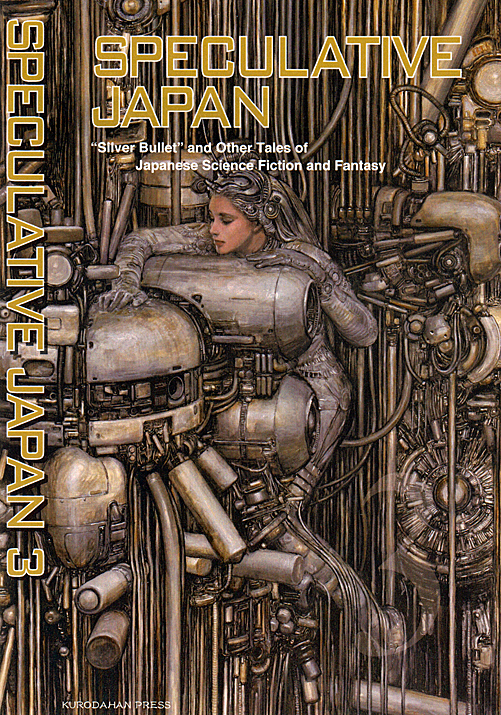
Speculative Japan 3

Title: Speculative Japan 3: “Silver Bullet” and Other Tales of Japanese Science Fiction and Fantasy
Editor: Edward Lipsett
Publication Year: 2012
Publisher: Kurodahan Press
Pages: 270

In my review of Speculative Japan 2, I said that I loved the anthology and couldn’t wait until the next installment was released. Speculative Japan 3 is finally here, and it’s everything I hoped it would be: a diverse collection of intelligent and beautifully translated short stories.

Speculative Japan 3 opens with several shorter pieces. These shorter pieces, which range in length from five to twenty pages, run the gamut from hard science fiction to magical realism to fantasy with a sci-fi twist to elegiac horror. Fujita Masaji’s “Angel French” is about the romance between two deep space robotic probes who began life as two college students hanging out in Mister Donut. “To the Blue Star,” written by Ogawa Issui (whose novels The Lord of the Sands of Time and The Next Continent are published in translation by Haikasoru), is another story about a self-aware technological entity. This entity, whose name is X, is a collective intelligence made up of a fleet of robotic star cruisers that represent the last remnants of human civilization. X tells its own story as it travels through the universe, watches civilizations rise and fall, fuses with other advanced life forms, and finally meets God. Matsuzaki Yuri’s “The Finish Line” is a thought experiment in the form of a short story and features a quiet but chilling scenario of the end of all life on earth. Kamon Nanami’s “A Piece of Butterfly’s Wing,” which is probably my favorite story in the collection, is a beautifully creepy ghost story in the literary tradition of writers like Kurahashi Yumiko and Kanai Mieko. Like the work of these masters of the poetics of horror, Kamon’s story is filled with beautiful, atmospheric imagery and resonant symbolism. It also features a delightfully disturbing twist at the end.

The longer stories of Speculative Japan 3 shine just as brightly as the shorter pieces. Even though none of these stories are more than thirty-five pages in length, they’re long enough to allow nuanced character development as they explore their premises in greater depth. Suga Hiroe’s “Five Sisters” is about a woman named Sonogawa Hanako who meets four clones of herself that have all been raised in different households. Each of these women has a different personality, and it’s fascinating to see how each has lived her life with the knowledge that she is a clone created to be harvested for organs. Ueda Sayuki’s “Fin and Claw” is a window into a future where humans have been genetically modified to be more adaptable to an environment covered in seawater. “Fin and Claw” is sort of like Jurassic Park with enormous sea creatures, and the moral of the story is the same. The last three pages of Ueda’s nightmarish vision are particularly terrifying in their visual imagery.

The title story, Yamada Masaki’s “Silver Bullet,” is a Japanese Cthulhu mythos story (more of which are collected in Kurodahan’s Night Voices, Night Journeys). In my experience, there are two main types of Cthulhu mythos stories: pseudo-Victorian and classy, and unabashedly pulpy. “Silver Bullet” belongs to the latter category. Its protagonist is sufficiently hard boiled, and the story contains more cheap sexuality than you can shake a flagella at. Still, all of the story’s thematic elements mesh together nicely, the ending is well earned, and the method used to summon Cthulhu is awesome (as is the instrument used to stop the summoner).

If there’s one story in the collection that feels out of place, it’s “Green Tea Ice Cream,” which is written by Mark Schultz. Perhaps it feels out of place because it’s merely good instead of excellent, but perhaps this is also because it bears the traces of awkwardness that often afflict stories written about Japan in English (a few of which have been recently collected in The Future Is Japanese). It’s difficult to pinpoint what the exact causes or sources of this awkwardness are, but it probably has to do with the writer feeling the need to explain certain “Japanese” things to the reader, as well as with the unstable balance between Japan as a real place and Japan as a fictional creation in these stories. “Green Tea Ice Cream” also revolves around a science fiction trope that I personally find silly and boring, namely, the unnecessary sexualization of a young woman who embodies fears concerning the changing relationship between human beings and technology. If the non-consensual impregnation and subsequent abduction of mindless machine girls is your cup of tea, though, knock yourself out. There are also some uncomfortably sexual father-daughter issues on display, if you’re into that sort of thing. That being said, the unsavory nature of the scenario and the characters of this story gives it greater depth and impact as a speculative commentary on contemporary bioethics.

To counter the sour taste of “Green Tea Ice Cream,” Mori Natsuko’s “It’s All Thanks to Saijō Hideaki” is made of pure sugar. To give a summary would be spoiling the fun, so let it suffice to say that this is one of those stories that you can’t believe you’re reading while you’re reading it and then can’t believe you’ve read once you’re finished. The experience of reading this story filled me with joy. If you’re a fan of yuri or bara stories (or brilliant parodies of such stories), then this is the story of the elegant, fabulous apocalypse you’ve been waiting for.

As in Speculative Japan 2, the translation is smooth and even throughout, with each story retaining the individual characteristics and quirks of its author. It’s a pleasure to read the stories in this anthology not just for the freshness and wonder of their ideas but also for the high quality of their writing and translation. As both an anthology of contemporary science fiction and an anthology of contemporary Japanese literature, Speculative Japan 3 succeeds brilliantly in collecting not the newest or the most popular, but rather the most interesting and the best written. Speculative Japan 3 is an excellent collection of short stories, and I highly recommend it to anyone looking for intelligent and exciting new fiction, speculative or otherwise.

Review copy provided by Kurodahan Press

Kieli: The Dead Sleep in the Wilderness

Title: Kieli: The Dead Sleep in the Wilderness
Japanese Title: キーリ ― 死者たちは荒野に眠る
(Kiiri: Shishatachi wa kōya ni nemuru)
Author: Kabei Yukako (壁井 ゆかこ)
Illustrator: Taue Shunsuke (田上 俊介)
Translator: Alethea Nibley and Athena Nibley
Publication Year: 2009 (America); 2003 (Japan)
Publisher: Yen Press
Pages: 228

Kieli is one of those hauntingly pretty girls whose special blood and pure heart allow her to see things unnoticed by others. Harvey is one of those chiseled copper-haired boys who is seventeen and has been seventeen for a long time. When their paths cross seemingly at random, Harvey finds himself charmed by Kieli, and Kieli finds herself dazzled by Harvey… Stop me if you’ve heard this story before.

What’s special about this novel isn’t its love story, however, but rather its setting. In her “Afterword,” the author says, “Wasted planets, steampunk, old-fashioned radios, rusty machines, old oil. It would make me as happy as I could be if all of you who like dilapidated things and react to that kind of vocabulary like this book.” I hope the author is indeed as happy as she can be, since her book is perfect for anyone who enjoys the atmosphere conjured by such words. Kieli is set on a dying planet where society still functions to a certain degree as life crumbles to dust in stages. This decay pervades every corner of the novel:

The next morning, when Kieli opened her eyes she was lying on a sofa with broken springs in the waiting room, wrapped in her coat and a dusty old blanket.

The clinic had completely fallen to ruin. Yellow sand and dust had settled below the crisp, clear, cold morning air, and the once clean, white paint on the walls had faded to yellow and peeled off in places, showing the concrete wall underneath.

Kieli spent a while walking through the deserted house, looking for Harvey, the floor creaking with every step she made. When she went up to the second floor, the plants that decorated the balcony had withered to nothing, and only the cracked pots remained under the nebulous morning light.

Everything in Kieli’s world is slowly falling apart. Isolated cities are separated by vast stretches of desert, small villages that serve as way stations along the side of railway lines are slowly shrinking in population, and the wasteland outside habited areas is still littered with the detritus for a war over natural resources that petered out a hundred years ago. Kieli is strangely suited to life in this world, as she possess the unusual ability to see and interact with the ghosts of the dead, who are seemingly more numerous than actual living people. Through the mischief of her dead roommate, Kieli encounters Harvey, who used to be a soldier in the war. Harvey is a creation known an as Undying, a class of artificial beings powered by mechanical cores of pure energy. Aside from his bad attitude, Harvey seems mostly harmless until he unwittingly drags Kieli into a conspiracy concerning the Church that governs Kieli’s world. The two are accompanied by the ghost of an older man known as the Corporal, who resides in the shell of an old radio and provides both insight and comic relief. In an environment where everything is dead or dying, Kieli and Harvey shine brightly as they find adventure and new life in each other’s company.

Since Kieli is a light novel, it receives the full graphic treatment, with eight full-color anime-style illustrations at the front of the book and a number of black-and-white illustrations scattered throughout the book’s chapters. The tropes of the novel are not specific to Japanese popular media, and they should appeal to a wider audience for young adult fiction. Kieli is an orphan who lives in a boarding school, where she is misunderstood and unappreciated by her peers. Harvey is an angsty, brooding badass who has a soft side that he keeps hidden in order to survive in a harsh world. The spirit of the Corporal residing in Harvey’s radio is a grumpy old man who cheerfully dispenses humorous complaints. The Church is mysterious and sinister, and its agents are genuinely frightening.

A shortcoming of many light novels published in translation is that their language is more manga-like than literature-like, by which I mean that its primary purpose is to shoot the reader forward as quickly as possible through a series of increasingly improbable events. Kieli occasionally suffers from this style of narration, but it usually allows the reader time to linger over events and absorb the story’s atmosphere. The translation of Kabei’s prose is lucid and engaging, inviting the reader to enter Kieli’s world without fussing over translation notes and awkwardly translated dialog. Occasionally a character will bow to another character, but the novel otherwise has very little “cultural odor.” Because of the quality of the translation, I found myself reading not just for the story but also for the pleasure of reading such straightforward and well edited language. I also feel the same way about the translation of the Spice and Wolf light novels, and I can’t help but offer my most profound thanks to the editorial staff at Yen Press for doing such an excellent job with their releases.

Kieli ends with a bit of a cliffhanger, but its sequels have already been published by Yen Press, which seems to be keeping up a steady release schedule. I don’t know why I waited so long to start reading this series, because it’s really quite good. I can’t wait to read the next volume!

Speculative Japan 2

Title: Speculative Japan 2
Editor: Edward Lipsett
Publication Year: 2011
Publisher: Kurodahan Press
Pages: 269

Speculative Japanese 2 (subtitled “‘The Man Who Watched the Sea’ and Other Tales of Science Fiction and Fantasy”) is a collection of thirteen stories ranging in length from four to forty-eight pages. Half of the stories are from the late seventies and eighties, and the other half are from the past decade, with the most recent being published in 2007. These stories, which were selected for translation based on a Japanese SF magazine reader survey and the editor’s own taste, range from fantasy to magical realism to hardcore science fiction. In fact, the stories are so varied in genre that “speculative fiction” does indeed seem to the only label capable of describing them.

Speculative Japan 2 is an excellent anthology without even a single dull story. The premise or idea behind each story in the book is uniquely fantastic. In Enjoe Toh’s “Freud,” a family gathers at the house of the narrator’s recently deceased grandmother only to find twenty clones of Sigmund Freud hidden under the tatami mats and beneath the floorboards. In Issui Ogawa’s “Old Vohl’s Planet,” the inorganic life forms inhabiting a planet with an extremely volatile atmosphere are threatened with annihilation and must rely on the vast reserves of their hereditary memory to send a distress signal to the stars. Kajio Shinji’s “Emanon: A Reminiscence” tells of a man’s brief encounters with separate incarnations of a woman who is able to remember all of her former lives. Kobayashi Yasumi’s “The Man Who Watched the Sea” describes a world in which time flows differently at different altitudes from the perspective of two time-crossed lovers. Nakai Norio’s “Mountaintop Symphony” chronicles the tribulations and victories of an orchestra tasked with the performance of a piece of music that spans dozens of years and requires instruments that haven’t been invented yet.

The longest story in the collection, Tani Kōshū’s “Q-Cruiser Basilisk,” is told from the perspective of a petty officer on a spacecraft with a five-man crew. In the dead of space, the narrator’s ship encounters a much larger craft that seems to be a remnant of a war that ended two hundred years ago. The vessel is, as the narrator puts it, a “ghost ship,” and, despite his trepidation, the narrator finds himself recalling classic adventure tales by the likes of C.S. Forester and Robert Louis Stevenson. Despite the narrative static generated by detailed descriptions of naval battle maneuvers executed in space, the story is genuinely creepy as the narrator and his fellow crew members board the empty ship. As the narrator reads the captain’s log, the reader is drawn into an even stranger tale of uncertain fates and eerie distortions in space. Along with its echoes of the adventure tales alluded to by the narrator, “Q-Cruiser Basilisk” resonates with the plots and themes of postwar American space fiction, as well as with classic existential speculative fiction such as Nelson S. Bond’s “And Lo! The Bird.” The story is satisfyingly old school but fresh enough to feel like a plot from a contemporary animated short film.

My two favorite stories in the collection were more fantasy flavored. In Ōhara Mariko’s “The Whale that Sang on the Milky Way Network,” a young man on a backwater agricultural planet waits eagerly for a circus that visits a certain seaside town once every four years. When the circus finally comes again, the young man befriends one of its performers, a whale who can supposedly fly through space. He confesses his love for a local politician’s pop star daughter to his new friend, and he and the whale hatch a plan to leave the planet and become famous together, which succeeds spectacularly. Takagi Nobuko’s “Melk’s Golden Acres” at first seems like a normal work of realist fiction, as it opens with a Japanese traveler’s impressions of the Austrian countryside and the abbey above the town of Melk. The narrator recounts the history and treasures of the abbey, especially those of its library. After touring the library himself, the narrator is addressed by an old man who had been gazing at one of the room’s stained glass windows. The old man claims that his wife is in the window, and the narrator, intrigued, follows him to a nearby restaurant where he learns more about the old man’s life. The story then takes a slow turn towards the surreal before closing in an entirely unexpected fashion. Whereas I enjoyed “The Whale that Sang on the Milky Way Network” because of its whimsy and sense of adventure, I loved “Melk’s Golden Acres” for its grounded yet beautifully descriptive language and the way it toes the line between realism and fantasy, leaving a multitude of possibilities open to the reader.

Each of the stories in Speculative Japan 2 is worth reading, and each writer represented in the collection has a unique and engaging style of storytelling. The quality of the translation is uniformly excellent, and the goofiness and genre allusions and creative language of each respective writer comes through in sharp focus. The efforts of the editor have ensured that the overall readability of the translations maintains a high standard, so even the more interesting linguistic experiments of the original authors are conveyed in solid English that is fully aware of the idioms of Anglophone speculative fiction. As a result, a reader of Speculative Japan 2 can effortlessly jump from one world into another, and the experience is thoroughly enjoyable.

Speculative Japan 3 is slated for publication at the end of the year, and I’m already looking forward to it!

Review copy provided by Kurodahan Press.

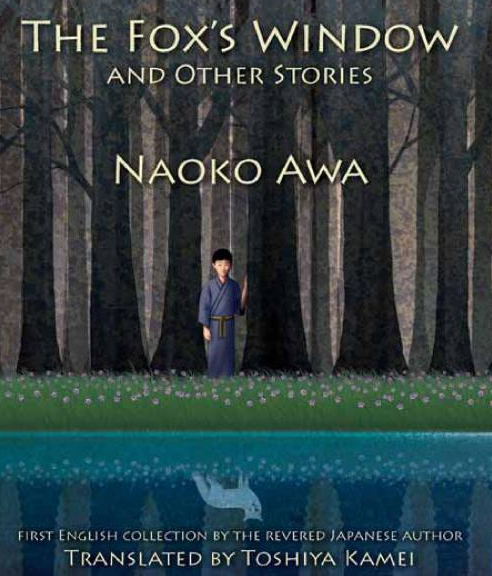
The Fox’s Window

Title: The Fox’s Window: And Other Stories
Japanese Title: きつねの窓 (Kitsune no mado)
Author: Awa Naoko (安房 直子)
Translator: Toshiya Kamei
Publication Year: 2010
Publisher: University of New Orleans Press
Pages: 232

I found out about this book due to the happy accident of stumbling upon the website of the SCBWI (Society of Children’s Book Writers and Illustrators) Tokyo Translation Group. It’s a fantastic site that has taught me a great deal about Japanese children’s literature, and I’m grateful that it’s so well organized and contains so many interesting and well written essays.

Before I discovered the website, however, I had never heard of “the revered Japanese author” Awa Naoko. Thankfully, her translator’s short introduction does a fine job of sketching out her background for the reader:

Naoko Awa (1943-1993) was an award-winning writer of modern fairy tales. She was born in Tokyo, and while growing up, lived in different parts of Japan. As a child, Awa read fairy tales by the Brothers Grimm, Hans Christian Andersen, and Wilhelm Hauff, as well as The Arabian Nights, which later influenced her writings. She earned a bachelor’s degree in Japanese literature from Japan Women’s University, where she studied under Shizuka Yamamuro (1906-2000), who translated Nordic children’s literature into Japanese. While still in college, Awa made her literary debut in the magazine Mejiro jidō bungaku (Mejiro Children’s Literature).

The themes of Awa’s work collected in The Fox’s Window are nature, transformation, and bittersweet pain of fondly remembered past. Like Western fairy tales, Awa’s stories are filled with animals who possess anthropomorphic attributes, such as the ability to talk. Like Classical mythology, Awa’s stories operate on at the edges of a constantly shifting boundary between plant, animal, and human; flowers can easily turn into girls, and rabbits and can easily turn into boys. In the worlds Awa creates in her writing, charming and innocuous trickster spirits abound and good deeds are always rewarded. This childhood realm is seldom presented without nostalgia, and characters often remember the past as being more vibrant than the present.

The story collection opens with “The Sky-colored Chair.” In this story, a blind girl’s father wants to paint a rocking chair he’s built for her the color of the sky so that she will be able to see the sky by sitting in the chair. On a windy hilltop, the father meets a young boy who helps him create the color of the sky for his daughter. The chair is such a success that the father begins to seek out other colors, such as those of the sea and the sunset. The boy, in an effort to help the father achieve these colors, disappears and then reappears as a young man who asks that the girl’s father take him on as an apprentice chair maker. The blind girl is never really able to see any other colors, but her story still ends happily:

After a short while, the blind girl married the young man. She became a happy wife who knew the true color of the sky better than anyone else. Even after her hair turned white, she enjoyed watching the sky in her rocking chair.

In the collection’s title story, “The Fox’s Window,” an archetypal hunter enters an archetypal forest in order to hunt an archetypal fox. After chasing and losing the fox, the hunter emerges into a clearing, in the middle of which is a house he has never seen before. Out of the house emerges the fox, now in the form of a boy, who offers to paint the hunter’s hands blue in an act of magic that will allow the hunter to see into the past. The story has no plot, per se, but the visions that the hunter sees in the window that he forms with his fox-painted hands are lovely:

In my mother’s vegetable garden, a patch of shiso plants was getting soaked by the drizzle. I wondered if she would come out into the yard to pick the leaves. A soft light seeped from the house. From time to time I heard children’s laughter mixed with the music from the radio. The voices belonged to me and my sister, who was now dead. I gave a deep sigh and dropped my hands. The house I grew up in burned down, and that yard doesn’t exist anymore.

Although many of the stories in the collection are harmlessly beautiful, a few, such as “Forest of Voices,” contain touches of genuine fairy-tale horror:

The Forest of Voices returned to silence and waited for its next prey. It was a terrifying place. Countless animals had lost their way in the forest. Like someone scared of his own reflection in the mirror, every animal going astray among the trees was surprised by its own echo and ran in circles until it collapsed and died. Sometimes humans wandered into the forest – hunters pursuing their game and woodcutters following the wrong path in the fog. They all ended up nourishing the oaks.

Such stories always end well, though. The pure of heart always prevail and no one is ever really punished. The only characters who die or get hurt are animals, and even then it’s usually just an instance of the “dead mother” trope.

Unfortunately, this lack of darkness made the stories seem shallow to me. With no true shadows or bursts of light, the separate stories began to blur together into a sepia-toned slurry of adorable children, talking animals, and nature imagery. These stories are completely harmless and thus, in my opinion, mostly forgettable.

Perhaps The Fox’s Window would appeal to parents of young children for whom the stories of Beatrix Potter and Jill Barklem are deemed too scary. The stories might also appeal to the children themselves, as younger readers have an astonishing ability to make up details to fill in the gaps of minimalist narratives. Since the visual imagery of Awa Naoko’s writing is so strong, her stories might also appeal to artists and illustrators looking for inspiration. In fact, I felt that each of the individual pieces in The Fox’s Window was highly impressionistic, like a pencil sketch of a scene onto which a single layer of watercolors has been quickly applied. Although this type of writing doesn’t hold a great deal of appeal for someone like me, who finds beauty and meaning in words and narratives, I imagine that Awa’s short fairy tales could be much more interesting to someone better able to think in pictures and images.

I’d like to thank University of New Orleans Press for making The Fox’s Window available on the Kindle Store. I’ve been noticing a baffling dearth of children’s literature in digital format, and I think it’s wonderful that this collection is helping to remedy the situation.

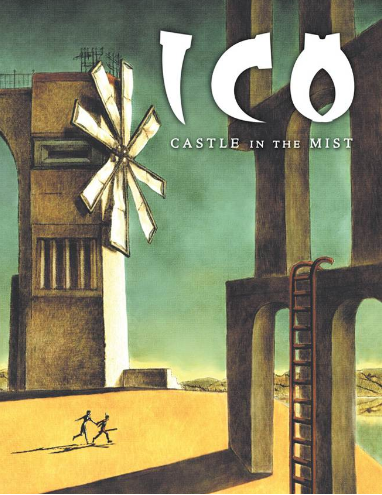
Ico: Castle in the Mist

Title: Ico: Castle in the Mist
Japanese Title: イコ:霧の城 (Iko: Kiri no shiro)
Author: Miyabe Miyuki (宮部 みゆき)
Translator: Alexander O. Smith
Publication Year: 2011 (America); 2004 (Japan)
Publisher: Haikasoru
Pages: 400

When people complain about sexism in video games, they’re not complaining just to start a fight or to prove that they’re on the right side of the social justice movement. The sexism in many games is not only unnecessary but also detracts from the player’s enjoyment of the game. For example, when I played the original Tomb Raider game for the Playstation, I remember being frustrated at Lara’s inability to navigate certain terrain and thinking this wouldn’t be a problem if she were wearing pants. A better example might be Metroid: Other M, in which your female player-character (a veteran soldier who has already saved the world multiple times) can’t use even the most insignificant of her abilities until given permission to do so by her male commanding officer in a gameplay paradigm that has to be one of the most frustrating I have ever encountered. This sort of sexism is dangerous precisely because it is so frustrating. Instead of hating the (male) developers who imposed such ridiculous limitations on the female protagonist, the player’s frustration at these limitations instead causes him to hate the female protagonist herself.

It is for this reason that I despise Ico: Castle in the Mist, a short puzzle platformer released for the Playstation 2 in 2004 that was received with almost universal acclaim. In this game, you are Ico, a boy with mysterious horns who is mysteriously dumped in a mysterious castle in which he mysteriously encounters a mysterious young woman named Yorda. As Ico, your job is to find your way out of the castle while simultaneously rescuing Yorda. Considering that Yorda (a) has lived in the castle for a very long time and (b) is magic, this shouldn’t be too difficult of a feat. Unfortunately, Yorda also (c) either can’t or won’t communicate with Ico and (d) is almost entirely passive. Ico quite literally must lug Yorda around like an inarticulate sack of meat, and the main challenge of the game is not for Ico to navigate his way through the castle but rather for Ico to bully and cajole Yorda over and around obstacles while she remains both vulnerable and inscrutable. If the player, as Ico, wanders off on his own for a moment, Yorda is besieged by shadow monsters that she will not attempt to ward off or escape in any way. Ico is a truly beautiful game that creates a hauntingly atmospheric experience through its graphics, music, and gameplay, but it is difficult to make it through the game’s roughly eight hour playtime without hurling obscenities at Yorda for being so useless. Sexism is thus built into the gameplay mechanics, and I remember thinking that Ico would have been a lot more fun if Yorda had actually done something instead of passively allowing herself to be rescued by a younger male hero.

When I heard that the novelization of Ico would be released in North America, I was really excited. I thought that Miyabe Miyuki, who writes about awesome female detectives and manages to create a strong yet believable female protagonist in The Book of Heroes, would be able to do something interesting with Yorda, or at least to make her more of a subject than an object. Thankfully, she succeeds – at least to an extent.

Like the game on which it’s based, Miyabe’s novelization is the story of Ico, a thirteen-year-old boy with horns who is exiled from his village and dumped at the Castle in the Mist by a group of soldiers. In the otherwise empty castle Ico finds Yorda, who is suspended in a hanging cage covered by thorns. Ico wakes Yorda and then extracts her from her cage, resolving to rescue her from her imprisonment in the castle. Yorda doesn’t speak Ico’s language and in any case doesn’t seem particularly interested in communicating with him, but her touch can open certain magical doors through which Ico needs to pass. Furthermore, Ico’s body is filled with light and energy whenever he holds Yorda’s hand, so he quickly develops an attachment to her.

As Ico and Yorda progress through the castle, Ico begins to see Yorda’s memories of her life before the castle was reduced to its current state. Through these memories, it becomes clear that Yorda’s mother, the queen of the castle, is the “daughter” of the Dark God. In ages past, Yorda’s mother used her power to keep outsiders away from her kingdom, mainly by turning them into stone. She also kept her own people within her country’s borders by means of an enchantment that kept their hearts and minds peaceful. Convinced that other nations coveted the beauty, wealth, and material prosperity of her kingdom, Yorda’s mother would hold a tournament every three years to bring the world’s mightiest warriors into her castle to compete for glory. The winner of these tournaments would teach the latest military technology to her soldiers – and then secretly be turned to stone. The tournament of Yorda’s sixteenth year brought a horned warrior, a servant of the Light God, to the tournament, and his interactions with Yorda led the kingdom to its current state of timeless abandonment. Ico’s job is thus to unravel the mysteries of the past in order to ascertain how to defeat the queen once and for all, after which he will presumably be able to escape with Yorda in tow.

Miyabe’s novel is divided into four parts. The first part details Ico’s life before he was taken to the castle and thereby provides information concerning the greater world in which the story takes place. The second part describes Ico’s adventures in the castle before Yorda begins communicating with him through her memories. The third part tells the history of the castle from Yorda’s perspective, and the fourth part follows Ico through his final confrontation with the evil queen. As Miyabe jokes in her introduction, her novelization isn’t meant to be a walkthrough for the game, and the first and third sections are almost entirely her own invention. Miyabe adds layers of depth to game’s characters and creates a handful of her own characters, who manage to be interesting and engaging despite only being onstage for small portions of the novel. Miyabe also renders the ending of the story slightly less ambiguous.

This is all well and good, but how does a puzzle platforming game translate into prose? Mainly, I suppose, in the way one might expect, though descriptive passages:

The thought put Ico at ease. Maybe if we can get down to those doors, we can get outside. The only problem was, there didn’t seem to be any way to get from the top of the bridge on the second floor down to the floor of the great hall. What stairs he could see went up to the ceiling, not down to the floor below, forming a sort of catwalk that seemed without purpose.

Besides such descriptions of setting, there is also a great deal of running, jumping, climbing, flailing at shadow monsters with a stick, and holding Yorda’s hand.

If the reader can successfully visualize what Miyabe is describing, then her descriptive passages, which form the bulk of the two sections from Ico’s perspective, create a sense of adventure and awe. If the reader is too engrossed in figuring out the mysteries of the castle to slow down and mentally picture the landscape Miyabe is describing, then these passages can come off as clunky and annoying. My sympathies tend to lie with the latter reader, especially if that reader has never played the game; trying to describe the visual aesthetics of the Castle in the Mist is like trying to describe an Escher painting. The game Ico is all about the atmosphere created by its visual and auditory elements, and a purely textual medium will never be able to capture that atmosphere, no matter how hard it tries.

What text can do, and what text can do well, is characterization, and it seems to me that the lion’s share of the game’s atmosphere is conveyed in the novel by Ico’s perceptions of and interactions with Yorda. Just as the castle is architecturally majestic and full of mysteries, Yorda is physically beautiful and conceals secrets upon secrets beneath her silent exterior. For example:

Ico glanced at her. She did not look sad or even frightened. Nor did she smile or seem engaged with the world around her at all. Though she was right next to him, and he could look directly into her face, he felt like she was standing on the other side of a veil.

Here’s another example:

The girl turned to him and to his surprise, she smiled faintly. She’s beautiful. He thought her smile looked like a flower in full bloom, swaying gently in a forest breeze, sending its petals out to drift on the wind. He could almost smell the flower’s perfume on her breath.

Here’s yet another example:

Filled with hope, Ico looked into Yorda’s eyes. He felt like he was looking into an hourglass, trying to pick through the grains of truth buried there long ago. He hadn’t found anything yet, but the warmth of Yorda’s hands in his told him that he was getting close.

Yorda is thus delicate and mysterious, and her main function as a character is to reflect the emotions Ico projects onto her. Because this novel is a work of young adult fiction, Ico is exceptionally pure of heart, and – perhaps as a result – Yorda is as well. What Ico is about, at its core, is the bravery of two children challenging the old, the impure, and the monstrous. For me, the main problem with Ico and Yorda is that, although purity of heart is inspiring, it is also somewhat boring. The evil queen is far more interesting. At a certain point I stopped caring about Ico and his youthful hope and good intentions and started waiting for the next appearance of the queen, who is the only halfway intelligent and rational character in the entire novel.

For example, unlike Ico’s caretakers, who tell him nothing, the queen respects her daughter enough to explain to her what she is doing and her motivation for doing it. The queen’s explanations are always pragmatic and hint at a lifetime of experience. The following passage, for example, is how the queen justifies to Yorda why the two of them never leave the castle:

“Beauty is a high and noble thing. Thus are men enchanted by it and seek it out. But those who desire you also desire our lands. I must keep you hidden so that you do not entice or enchant them – because, my dearest, while your beauty holds the power to command the actions of a few men, it does not bestow the ability to govern.

“It is the same for me. The land I govern is the most wealthy and beautiful of all the lands that divide this vast continent. They crave it, as they crave me. From their slavering jaws and their multifarious schemes have I escaped many times. All to protect myself and my beautiful domain, blessed by the Creator. You, who were born into the world as the lone daughter of the queen, have noble blood and noble beauty, thus must you bear my burdens.”

Judging from what happens in the rest of the novel (which I will not spoil), and judging from the way that Ico, his horned ancestor, and everyone in between has treated Yorda and her mother, the queen is not incorrect. Unfortunately, because the queen is a sexually mature and politically powerful older woman, she is EVIL and therefore cannot be reasoned with or redeemed but must be DEFEATED. The final battle between the queen and Ico is somewhat disappointing, as the queen is made to lay aside her primary weapons – her intelligence and wit – in order to fight boss-battle style with attacks that are easily deflected in a room filled with obstacles that deflect them.

The moral of the story seems to be that inarticulate yet delicately beautiful and innocent younger women are good (for men) and that brilliant and powerful mature women are EVIL (to men).

At least, that is the moral of the second and fourth sections of the novel, which are told from Ico’s perspective and closely follow the plot of the video game. The first and third sections are much more interesting and open-ended. The first section is, in my option, a superlatively excellent example of fantasy world building that establishes setting, mythology, history, and worldview through its characters instead of in spite of them. The third section, which is told from Yorda’s perspective, is an almost archetypal story of innocence awakening to experience as Yorda begins to question and investigate the world around while realizing the consequences of her own actions on the lives of others. By the end of the third section, Yorda has become a powerful queen in her own right…

…before we switch back to Ico’s perspective, in which Yorda is a helpless and naive young girl once more. Although this is jarring, it is also necessary. The game Ico is so deeply sexist that, in order for Miyabe to subvert this misogyny, she would have to abandon her goal of novelization. If Yorda were an active agent and not a passive victim, the events leading up to the final battle and the battle itself would not be possible. Good must triumph over evil in a decisive showdown; and, as everyone who has ever played a video game knows, such a task is the man’s job. This is why I complain about I sexism. Not only is it frustrating and unnecessary; it also tends to diminish from the overall quality of the work in which it appears.

Despite all this, Ico is a fun read. Miyabe is a good writer, and Smith has produced an excellent translation (as always). The plot and character conventions are fairly characteristic of mainstream young adult fiction, and I can imagine that younger readers would really enjoy this book, which is exactly the right length and complexity for the 7-12 demographic. It goes without saying that fans of the game will love the novelization, which does its very best to convey everything that was fun and intriguing about the original work. Fans of video games in general might also enjoy the book, which is an interesting experiment in adaptation. As for adult readers who are looking for archetypes represented in a deep and multilayered fantasy, however, I think there are much better books to spend an afternoon reading.

Gate 7

Title: Gate 7
Artist: CLAMP
Publication Year: 2011
Publisher: Shūeisha
Pages: 180 (per volume)

There is a haiku by Bashō that goes something like “even in Kyoto, I miss Kyoto” (Kyō nite mo kyō natsukashi ya hototogisu). I love Kyoto, and I think I know what Bashō was talking about. Kyoto is a special place. The food is delicious, the city is filled with countless shrines and temples, all sorts of interesting historical stories happened in Kyoto, the tea and vegetables grown just outside of Kyoto are amazing, there’s a vibrant nightlife catering to the students who come to the city’s numerous universities, tons of artists and craftsmen make their homes in Kyoto, and the local sake is out of this world.

Almost every grade-school student in Japan gets dragged on a class trip to Kyoto at least once, and even adults make pilgrimages to Kyoto to see the sights (especially during the spring and fall, when the cherry blossoms and maple leaves are at their best). Since Kyoto is only about two hours away from Tokyo by bullet train, the city also has a reputation as a good place to go for romantic getaways and weekend partying. Kyoto is totally awesome, and almost everyone in Japan has been there at least once, so it’s always been surprising to me that there aren’t more manga set there. CLAMP’s new fantasy series Gate 7, however, is like a love song to the ancient capital.

Gate 7’s teenage protagonist, Takamoto Chikahito, is just as much in love with Kyoto as I am, but he has somehow managed to make it almost all the way up to high school without having ever been there. He saves up enough money to make a solo visit to see the sites; but, on his very first trip to a famous Kyoto shrine called Kitano Tenmangū, he is suddenly transported onto a magical battlefield. Chikahito witnesses a beautiful young warrior with an enormous sword defeat a strange creature before passing out. He wakes in a house near the shrine, where he is attended by the child, named Hana, and her two older companions, Sakura and Tachibana. Sakura, a kind-hearted and cheerful young man involved in the world of geisha and maiko, and Tachibana, a serious and sullen college student, discuss how strange it is that Chikahito was able to enter the magical realm. Tachibana then attempts to erase Chikahito’s memory but fails. In the final coup of strangeness, the androgynous Hana kisses Chikahito and tells him that s/he’ll be waiting.

At the beginning of the second chapter (actually the first chapter, as the previous chapter is considered a “prelude”), Chikahito has somehow been transferred to a high school in Kyoto. As soon as he gets off the train that has brought him to the city, he sets off for a famous soba restaurant, where by chance he encounters Hana, who is as happy to see him as s/he is to eat bowl after bowl of noodles. Chikahito is soon dragged into another magical fight with Hana, in which it is revealed that all creatures are affiliated with either light (陽) or darkness (陰). Sakura is affiliated with darkness, Tachibana is affiliated with light, and Hana, for some mysterious reason, can fight using the power of either. By the end of the day, Chikahito finds himself invited to live with the trio in a traditional Kyoto townhouse in the Ura-Shichiken district (the hidden side of the Kami-Shichiken neighborhood around Kitano Tenmangū), an invitation which he ends up accepting, to his own consternation. It turns out that, during their first meeting, Hana had cast a spell on Chikahito that would cause him to return to the Ura-Shichiken.

The second and third chapters of the volume develop this fantasy version of Kyoto a bit further. The reader learns, for example, that major historical figures have been reincarnated in our own time, and that these personages are battling over both the position of head of their respective families and the possession of the legendary familiar spirits called “oni” that are connected to these positions. Chikahito also learns that Hana unique in not being affiliated with light or darkness, and that he is special in the same way. Furthermore, he can see oni, which normal humans cannot. In other words, there’s a lot going on behind the scenes in Kyoto that most people don’t know about, and Chikahito has somehow found himself right in the middle of a conflict spanning hundreds of years and multiple dimensions.

Gate Seven moves quickly through both plot points and battle scenes, but I found it to be a perfect balance between an action-oriented title like Tsubasa: Reservoir Chronicle and an exposition-oriented title like xxxHolic. Backgrounds, dialog bubbles, and movement between panels are all handled effectively and artistically. The character designs are appealing and seem to be drawn from a wide range of CLAMP styles, such as those on display in series like Legal Drug and Kobato. Veteran readers of CLAMP’s work should find themselves right at home:

Chikahito is appealing as a hapless yet loveable protagonist, much like Hideki from Chobits. Also reminiscent of Chobits is the character Hana, who occupies a strange liminal position between ontological dualities. Is Hana a boy or a girl? Is s/he a child or an adult? Is s/he a person or a pet? Is s/he innocent and weak or completely in command of the situation? Is s/he even remotely human?

There is a lot of magic and mystery contained between the pages of Gate 7, as well as some interesting historical revisionism. The series plays with questions such as: What if Buddhist magic (妙法), as well as the principles underlying Taoist divination and geomancy, were real? What if the Shinto gods were real? What if the major figures of Japanese history were somehow more than human?

The city of Kyoto, with its temples and shrines and traditional houses and narrow alleys and delicious soba restaurants, provides a pitch-perfect backdrop to the story. At the end of the volume is a section called “Wandering Around Kyoto” (ぶらり京めぐり), which provides addresses, websites, and other information about the real locations visited by the characters. Dark Horse has the North American rights to the manga, and I hope they’ll include lots of Kyoto trivia (as well as historical and cultural information) in their own translation notes when they release the first volume this October. Gate 7 is shaping up to be a good story, and it’s interesting just as much for its setting and its take on history as it is for its fights and its handsome male characters.

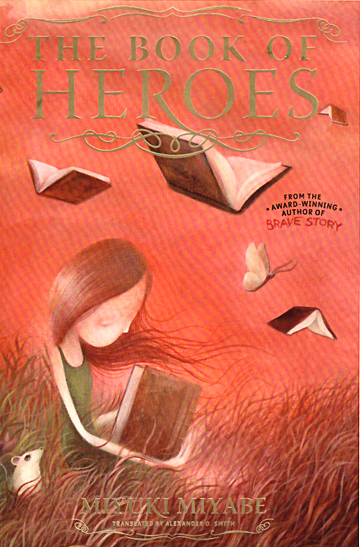
The Book of Heroes

Title: The Book of Heroes
Japanese Title: 英雄の書 (Eiyū no sho)
Author: Miyabe Miyuki (宮部 みゆき)
Translator: Alexander O. Smith
Publication Year: 2010 (America); 2009 (Japan)
Publisher: Haikasoru
Pages: 352

Before the earthquake hit Japan, I was drafting a review of Miyabe Miyuki’s Brave Story. I was going to say something along the lines of that, while many male-centered epic novels (like Wizard’s First Rule) are sex fantasies supported by the bare-bones scaffolding of fantasy tropes, Brave Story is not like that at all. I was also going to say something to the effect that Miyabe does realism much better than she does fantasy, at least in Brave Story, where the “Frodo in the Shire” (or “Wataru in a suburb of Tokyo”) segment is much more interesting than the actual adventures in the fantasy world of Vision. And then I was going to conclude that the book did not need to be eight hundred pages long, and that Miyabe could have used some serious editing, since the reader does not need to know what every character is thinking at any given time.

But then I thought, why write a review of a promising book that turned out to be dishearteningly mediocre? Life is short, and there is more to the world than picking apart the idiosyncrasies of genre fiction. One of the great things about fantasy literature is that, when done correctly, it can inspire courage, and hope, and bravery. And since everyone following the events in Japan could probably use a “brave story” right now (I know I could), I am instead going to review Miyabe’s much shorter (and, in my opinion, much better) fantasy novel The Book of Heroes.

The Book of Heroes is about Yuriko, whose older brother Hiroki snapped under pressure, knifed a classmate, and then disappeared. In the fallout of the incident, Yuriko’s family has been suffering from media overexposure, while Yuriko herself has had to drop out of middle school because of bullying. In the midst of this chaos, there has been no sign of Hiroki. Worried about her older brother, Yuriko ventures into Hiroki’s room and is approached by a talking book named Aju, who drops a few cryptic hints concerning Hiroki’s whereabouts. These hints lead her to her reclusive uncle’s cabin in the mountains, which is filled with rare books, many of whom can also talk.

These books tell Yuriko that her brother has become a Summoner, a being who can channel the evil King in Yellow, who sows discord wherever he goes. The King in Yellow is not an easy threat to quell, as he is one half of the Hero, the archetype who inspires brave and great deeds. To prevent her brother, who believes himself to be the Hero, from summoning the King in Yellow, Yuriko must become an allcaste, an adventurer with the ability to travel between worlds. Yuriko learns that all worlds (including her own), are created from fictions, and so she must travel through and into books in order to chase down Hiroki.

Yuriko’s journey begins in the third chapter (about eighty pages into novel), when she is transported to The Nameless Land, a kind of land beyond time where monk-like “nameless devouts” spin the wheels that cycle stories throughout the many worlds. This might sound as if The Book of Heroes is wading waist-deep through a meta-textual philosophical sludge, but the novel’s self-reflexive fantasy is actually quite fascinating. Miyabe’s descriptions of both modern Tokyo, The Nameless Land, and the fantasy book world that Yuriko enters are beautiful and striking. There is a sense of wonder in the storytelling, but also an appropriate sense of urgency. The odds that Yuriko faces are overwhelming, but she is accompanied by the book Aju, who temporarily takes the form of a mouse, a older male guardian and guide called Ash, and a nameless devout whom Yuriko names Sky. Each of these three supporting characters has his own story to tell, and each of them is as interesting and important as Yuriko, who really comes into her own as a protagonist over the course of the book.

As she grows stronger, Yuriko learns that her power does not come without a price, and the answers to her many questions are difficult and painful. The novel’s ending is bittersweet yet satisfying, and the endgame revelations are heartbreaking yet thought-provoking. Thankfully, the story is compelling enough to keep the reader feverishly flipping pages all the way through. Honestly, if you are in need of a break from current events that you can come back from refreshed and re-energized, The Book of Heroes is an excellent story to immerse yourself in. It’s got the same sort of quiet yet driving mystery and the same sort of exploration of fantasy with real-world implications as the anime series Haibane Renmei or Lev Grossman’s novel The Magicians. I cannot give it higher praise than that, although I should mention that Haikasoru has done a beautiful job publishing the book, and Alexander O. Smith’s translation is beyond excellent (as it was in Brave Story).

If you’re reading this alongside articles of the death and destruction in Japan and find my review of a fantasy novel trifling and tasteless, then I will hang my head, apologize, and humbly suggest Murakami Haruki’s short story “The Seventh Man,” which is published in the Blind Willow, Sleeping Woman collection but immediately available in several “unofficial” translations through a quick search on Google. “The Seventh Man” is about a memory of a tsunami, and its primary themes are terror, helplessness, and guilt – which I suppose is the other side of the “brave story” of disaster survival offered by The Book of Heroes.

Regarding the situation in Japan, I think Matt Alt makes an excellent point when he says, Don’t Panic. The best coverage of the quake and its aftermath from a personal level that I have read thus far has been on the blog Adventures in Gradland (which is a fantastic read even when its author isn’t being the most sane and level-headed person to post about what must be a terrifying series of experiences). This post over at The Lobster Dance contains a list of links for more reliable news sources, as well as information on charities (the word on the street is that Second Harvest seems to be doing the right work, right now). The art historian over at A Man with Tea has taken this opportunity to reflect on what might be lost in Japan, as well as why we need to keep calm and carry on. Finally, Daniella Orihuela-Gruber has issued an appeal for donations over at All About Manga, which is accompanied by a plan to make a difference. As for me, all I can do is cheer my friends and the people of Japan on from a distance. You guys are amazing, and you can survive anything!

xxxHOLiC

Title: xxxHOLiC (ホリック)
Artist: CLAMP (クランプ)
Publication Year: 2003 (Volume 1) – 2009 (Volume 16)
Publisher: 講談社 (Kōdansha)
Pages: 180 (per volume)

As embarrassing as this is to admit, I have been reading manga for a very long time. I started reading manga as a freshman in high school in 1998, back when Japanese comics were published in America as forty-page, A5-sized, left-to-right-reading comic books. A lot of things have changed in both American manga publishing and in my own personal tastes in manga since then, but two things have stayed the same. The works of CLAMP have always been popular, and I have always loved them.

CLAMP is a creative team made up of four women: Ōkawa Nanase, Igarashi Satsuki, Nekoi Tsubaki, and Mokona. They have published popular shōjo stories (meant for girls) like Magic Knight Rayearth and popular shōnen stories (meant for boys) like Chobits, but they have always managed to effectively erase the line dividing the two different demographics. A good example of this might be their popular manga Angelic Layer, which was serialized in the manga magazine Weekely Shōnen Jump (home of such boys’ fare as Dragon Ball, Naruto, One Piece, and Bleach) but which features a young female protagonist who trains and fights her battles with small dolls dressed in ornate and fantastic costumes.

CLAMP therefore has a huge fan base spanning both genders, and what’s not to love about them? They have written stories falling into every conceivable genre, from fantasy to romance to science fiction to mystery to historical fiction to reworkings of classical mythology. Their artwork is not only beautiful and varied but also constantly evolving. They are masters of the art of storytelling, always paying careful attention to plot and pacing and always managing to keep their stories moving forward and full of fresh twists and surprises. They care about their characters and rarely write good guys who are entirely good or bad guys who are entirely bad. Their manga almost never end in simple, easy ways.

I admit that I have met more than a few people who do not care for CLAMP and their particular flavor of manga. I adore the group, however, and their popularity has grown to such an extent that a beautifully illustrated retrospective of their work, All About CLAMP, was published late last year in Japan. A similar book, CLAMP in America (authored by the perennially awesome Shaenon Garitty), is scheduled to be published stateside in May of this year. CLAMP currently has several ongoing manga series, and several of their manga series have recently been adapted into anime. I feel like right now is a good time to be a CLAMP fan, so I would like to introduce my favorite manga written by these supremely talented ladies.

xxxHOLiC (pronounced “holic”) is a story about an irritable yet essentially kind-hearted high school student, Watanuki, whose eyes have the unusual condition of being able to see ghosts. These ghosts cause all manner of trouble for Watanuki, who just wants to live a normal life. When he accidentally stumbles into a magical store run by a wish-granting witch named Yūko, he asks her to cure him. She tells him that she will, eventually, but he first must pay a price equivalent in value to the granting of his wish – he must work part-time in her store every day after school. While doing various odd jobs for Yūko, Watanuki meets all sorts of strange people who want their wishes to be granted, as well as all manner of strange creatures that seem to be friends with Yūko. At school, Watanuki is enthralled by the lovely Himawari-chan and engages in a one-sided rivalry with a boy named Dōmeki, who has the magical power to drive away the ghosts that cause so much trouble for Watanuki (which annoys Watanuki to no end).

This description of the manga sounds like a chiché-filled cross between between the “wish granting with a cost” sub-genre of horror (exemplified by works like the Pet Shop of Horrors manga and the Hell Girl anime) and the “I see dead people” sub-genre of almost everything (ranging from YuYu Hakusho to Ghost Hunt) – but it’s not. I promise. Since the plot of xxxHOLiC is tied to that of its über-popular shōnen sister manga, Tsubasa: Reservoir Chronicles, it might also be dismissed as a cheap marketing gimmick – but it’s not. I promise.

The series starts off slowly, drawing the reader into its mysterious world and establishing the personalities of its quirky cast of characters. As the story progresses, however, the reader is led to question certain things that have been taken for granted. In the end, nothing is as it seems. In terms of its narrative structure, xxxHOLiC vaguely resembles something like The X-Files. There are “monster of the week” episodes, but the series as a whole is tied together both by a larger story arc and by a unity of theme running through each individual episode. Unlike The X-Files, however, the shorter story arcs of xxxHOLiC are not easily resolved and are interwoven with each other and the larger story arc, which progress slowly at its own pace. The overall tone of the manga is that of horror and mystery, but there is quite a bit of humor, romance, friendship, and playfulness thrown in as well.

I imagine that I could keep praising the various aspects of this manga (such as the brilliantly rendered character of the witch Yūko, the gradual and multi-layered world building, and the gorgeous artwork, which resembles inter-war era lithographs and goes a long way towards establishing the eerie, dream-like atmosphere of the work) for many more paragraphs. Let it suffice to say, though, that xxxHOLiC is an amazing manga series. I think it is capable of standing its ground against any film or novel. To any manga fan who has been hesitant to read this series because it seems so gimmicky and stereotypical, I encourage you to give it a chance. To any fan of horror, mystery, fantasy, or the gothic who is hesitant to read a manga, I encourage you to give it a chance. In my opinion, xxxHOLiC is one of the most interesting works being published right now in any medium.

I have been reading this manga in Japanese in the beautiful volumes published by Kōdansha. An English translation of the series (which I haven’t read yet, unfortunately) is currently being published in America by Del Rey. I would like to close with a two-page spread depicting the hyakki yagyō (“night parade of one hundred demons”) that will hopefully illustrate the distinctive art style that CLAMP has created for this manga.