Feminism and Final Fantasy (Part One)

For most of my life, I never gave any serious thought to the Final Fantasy series, despite the literally hundreds of hours I’ve spent playing it. I always had two fundamental assumptions regarding the series’s female characters. First of all, they can fight just as well as the male characters. Second, while they are very, very pretty, so too are the male characters. Like it says on the box, this is fantasy. In other words, my allergy to misogyny never flared up while I was playing the games.

I have since reconsidered these two assumptions. Before I begin this essay in earnest, however, I would like to state that I do not consider the Final Fantasy series to be misogynistic. Still, there are nuances in the portrayal of the primary female characters of the series that I would like to address.

I’d like to start off by defining my terms. Feminism, pure and simple, is the idea that men and women should be given equal opportunity. Although there are some basic biological differences between men and women that transcend time and culture, feminists believe that neither men, nor women, nor anyone in between should be judged or discriminated against simply by virtue of their sex or gender.

The antitheses of feminism are misogyny and sexism. Misogyny is an attitude of hatred towards women. It’s expressed through statements such as “Women are weaker than men” or “women can’t do [x, y, or z] as well as men.” It can also be expressed by identifying negative qualities with femininity, such as referring to a coward as a pussy. Misogyny is a type of sexism, which is an overgeneralization of character traits based on sex or gender. Sexism is like racism or ethnocentrism; it’s like saying “Jewish people are good with money” or “French people wear fashionable clothing.” Common sexist misconceptions include the ideas that women are more spiritual than men, that women are more artistic than men, that women are more in touch with their emotions than men, and that women have stronger social networks than men.

While on the surface it may seem like none of these statements is negative, such overgeneralizations in fact trap women within narrowly-defined social expectations. For example, a female elementary school student with a talent for math might not be encouraged and rewarded in the same way that a male student would be, since obviously girls are not good with numbers. Let’s say this little girls fights social pressure and the indifference of her teachers and grows up to become a promising investment banker. It’s really too bad that she won’t receive the same starting salary as her male colleagues, since everyone knows that she’ll just get pregnant, get married, and quit the firm. When facing social pressure and statistics like this, it can be difficult for girls and women to achieve personal goals that fall outside gender-related stereotypes.

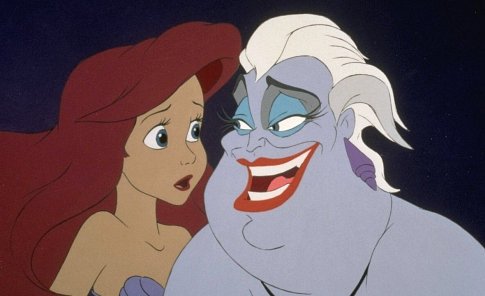
One of the main tenets of feminism is that both boys and girls are constantly subjected to sexist social messages. If, for example, there were just one instance of a naïve young girl who makes stupid decisions for love being valorized while an experienced, unmarried older woman with political ambitions is demonized, then we could leave it at that – it’s just one instance, and relatively harmless. Feminist thought holds that there is an interconnected, unending web of such messages, however.
Both boys and girls are constantly bombarded with sexist social messages, and it’s difficult to escape their influence, even with proper parenting and media awareness. Over the past several decades, there has been a great deal of debate concerning what should be done about this. I personally believe that most people are smart enough to see through and see past sexism, but it’s still good for women to have strong female role models who aren’t villainized.

This brings us to Final Fantasy. Does the series promote sexist views of women? Does it provide strong female role models for the players who invest so much time and emotional energy into the series? To address these questions, I am going to look at three characters: Rydia from Final Fantasy IV, Aeris from Final Fantasy VII, and Fran from Final Fantasy XII. I will use these characters as examples in order to argue for a shift in the series from a male-centered viewpoint to a more gender-neutral narrative focus.
Before analyzing these three specific characters, though, I think it might be worthwhile to introduce the video games themselves. Final Fantasy is a series of fantasy role-playing games published by Square-Enix, which was formerly known as Square. Square was founded as a developer of computer game software by Miyamoto Masafumi in 1983 and, within five years, had fallen on tough times. In 1987, the company’s director of planning and development, Sakaguchi Hironobu, came up with the concept of a simplification of computer-based role-playing games meant to capitalize on the success of Enix’s Dragon Quest, which had been released the previous year. Because the success or failure of Sakaguchi’s proposed game would make or break the company, the seven-man production team decided to call the project “Final Fantasy,” as it would be Square’s last game if it didn’t sell. The game did sell, however, and it has since expanded into a record-breakingly profitable franchise that has spawned countless spin-off games as well as numerous anime, manga, and feature films.

Besides Sakaguchi, several other key players in the early success of this franchise are Amano Yoshitaka, who was responsible for the games’ concept art, Uematsu Nobuo, who wrote the musical scores for the games, and Itō Hiroyuki, who designed the games’ distinctive battle systems. Since Final Fantasy VII, the series’s debut on the 32-bit Playstation console, Kitase Yoshinori has taken over directorship of the games, and Nomura Tetsuya, who had previously adapted Amano’s artwork into pixel-based sprites, took over art direction and character design. The staff for each successive game in the series has gotten larger as each game has become more sophisticated in terms of technology and gameplay, so it’s impossible to attribute the success any of the games to the genius of one or two people. I mention these names of directors, programmers, artists, and composers in order to emphasize the careful planning and artistic contributions that go into every game in the series.

I also mention these names to point out that the main contributors to the series are male. Moreover, the primary audience of the games has historically been male. I should also point out that, with the exception of Final Fantasy X-2 and Final Fantasy XIII (and perhaps Final Fantasy VI, which is a bit of an anomaly in several ways), the player-character and primary hero of each of these games has been male. In other words, we’re talking about a group of men telling stories about men for an audience of men. Although by now it has become an untrue and clichéd stereotype that only men play video games, in the early days of the series, the stereotype was very close to the truth. Perhaps it’s therefore understandable that the games have been fairly phallocentric, a word that I use to refer to the dominance of a heterosexual, male-centered economy of desire. If the phrase “heterosexual, male-centered economy of desire” makes your head spin, I will confess that it makes my head spin a little too. In essence, though, it means that men are sexual subjects, and women are sexual objects. The boy gets the girl, not the other way around.

What I am going to argue is that the Final Fantasy games have become progressively less phallocentric with each successive installment in the series. This is a happy story, both for feminism as a whole and for fans of Final Fantasy, who come to the series looking for fully developed characters and intriguing stories, not just two-dimensional paper cut-outs going through the motions of a fantasy-themed farce. Before we can get to the more gender-equal present, however, we need to take off our nostalgia glasses and take a serious look at the dark days of the beginning of the series.

Part Two
Part Three
Part Four
Part Five

Dōjinshi (Part Three)

By adding scenarios, suggesting alternate endings, offering different interpretations of characters, and by allowing the reader to view the original work in a different narrative tone or context, dōjinshi challenge the authority of the original works (原作) on which they are based as monolithic entities reflecting the specific and singular vision of an auteur. Instead, they raise the possibility of a plurality of receptions and interpretations, perhaps as many as there are viewers. In other words, the intentions of the director – not to mention those of the producer, the screenwriter, and all the other artists involved in the production of a film – effectively disappear as soon as a work enters the eyes and hands of an audience. In fact, I believe a film (or any text) is interesting to an audience precisely because it is capable of multiple meanings and interpretations.

Fan works like dōjinshi can be used to explore these multiple meanings, building and adding on to the original work, if not openly defying it. Moreover, in breaking down and rebuilding the original text, dōjinshi also raise the possibility of disassembling other conventions, such as those of genre and sexuality. I personally believe that artists use dōjinshi to fill in the gaps created by the original text in a way that will make the text satisfying to them as intelligent adults seeking a more nuanced story and more complicated, three-dimensional characters. In this way, the bathhouse of Spirited Away becomes a brothel, and the relationship between Howl and Sophie comes to have a sexual component. The characters of a children’s movie like Ponyo on a Cliff by the Sea, which are necessarily seen from a child’s perspective, take on adult attributes, like worries relating to parenting. Therefore, I believe that dōjinshi both show appreciation for a film (or television series or novel or video game) and challenge it, augmenting and replacing the elements given by the auteur (or artist or author) with personal and individual interpretations and desires.

This short series of essays has probably raised more questions than it has answered. I would therefore like to give the titles of several books and articles that expand on the topic of dōjinshi and explore it in greater depth. Sharon Kinsella’s Adult Manga: Culture and Power in Contemporary Japanese Society gives an overview of the dōjinshi market and how it functions. Henry Jenkins’s seminal study Textual Poachers: Television Fans and Participatory Culture offers many interesting insights on the value and implications of fan culture in general. Matthew Thorn has a thought-provoking article entitled “Girls and Women Getting Out of Hand: The Pleasure and Politics of Japan’s Amateur Comics Community” in an anthology dealing with Japanese fans of all persuasions called Fanning the Flames: Fans and Consumer Culture in Contemporary Japan. For a more casual reader, Frederik Schodt’s classic Dreamland Japan: Writings on Modern Manga remains invaluable. Perhaps the best reference, however, is the Wikipedia article on dōjinshi, which provides an excellent summary of the major issues related to the art form, lists numerous dōjinshi artists and circles (like CLAMP) who have gone on to become successful professionals, and links to many other online sources, including a lengthy essay on copyright issues.

Finally, for those of you who are interested in getting your hands on actual, authentic dōjinshi, I suggest spending some time browsing on eBay (your search term is “doujinshi”). In fact, I heartily recommend it. Many dōjinshi are beautifully published, beautifully illustrated, and beautifully written; and, in my opinion, their status as one-of-a-kind art objects only adds to their value.

Part One
Part Two

Dōjinshi (Part Two)

I would like to begin by examining two dōjinshi based on Studio Ghibli’s film Spirited Away. The first work, Yuya sōshi (油屋草子), focuses on the romantic relationship between Haku and Chihiro in three short stories. In the first story, Chihiro goes outside on a snowy night to deliver blankets to her parents in the pig barn. She passes out from the effects of the cold wind and is rescued by Haku. The events of the second and third stories take place after the end of the film. In the second story, an older Chihiro follows her baby brother through a familiar tunnel and returns to a world she had forgotten. She and her brother are rescued by Haku, who tells Chihiro that she must not look at him lest she remain in his world forever. After making sure that her brother is able to return home safely, Chihiro turns to look at Haku, thus sealing her fate. The third story, an alternate possibility, involves Haku making a decision of his own to journey to the human world to visit Chihiro. Throughout this dōjinshi, the characters are drawn in the Studio Ghibli house style, and a great deal of care is given to maintaining the tone and worldview of the original film.

In Senya ichiya (千夜一夜), a darker interpretation of Spirited Away is presented to the reader. The artist of this dōjinshi associates Yubaba’s bath house with traditional Japanese hot spring inns, which generally employed or were associated with female entertainers who would attend guests privately after dark. In this dōjinshi, Yubaba arranges for the young serving maid Rin to attend to the private needs of one of the bath house customers, a strange, hoary creature with many tentacles. At the last moment, Haku appears and offers himself in Rin’s place, ordering her to flee as he submits to the god. This dōjinshi thus explores the relationship of the characters before the arrival of Chihiro, as well as the more disturbing implications of a bath house for the gods staffed by people who are effectively slaves to its owner. Although the art of this dōjinshi is clearly influenced by the Studio Ghibli style, it takes on more lush and erotic tones, as is appropriate to its subject matter.

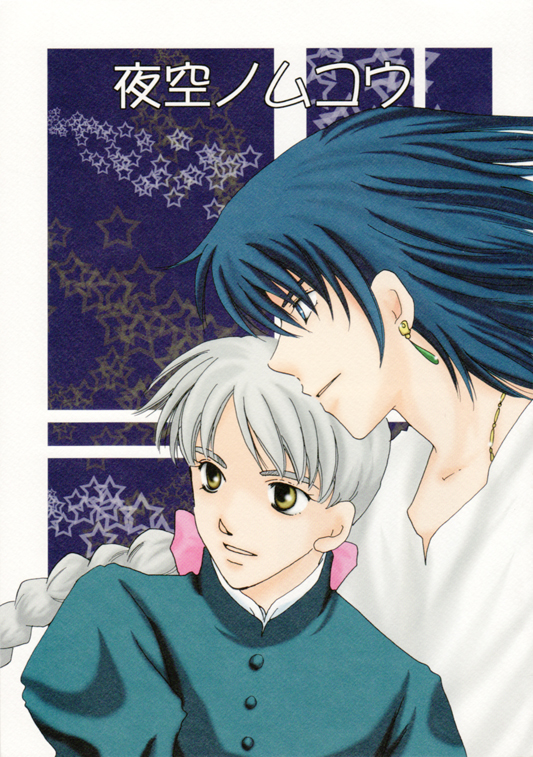
Many of the dōjinshi based on Howl’s Moving Castle deal with the continuation and outcome of the romantic relationship that develops between Howl and Sophie during the course of the film. These dōjinshi contain many confessions of love and many first kisses. Other dōjinshi emphasize the sexual tension between the two characters, which is notably absent in the film. Since Sophie is a shy girl who turns into an old woman whenever she becomes overly embarrassed or loses her self confidence, dōjinshi artists have speculated that Howl might have some trouble getting her into bed for the first time. These artists turn to scenarios suggestive of rape, which capitalize on the characterization and appeal of Howl as someone who loses control of himself in moments of intense emotion and stress. Other artists merrily suggest that Sophie hides all manner of illicit desires under her seemingly retiring exterior.

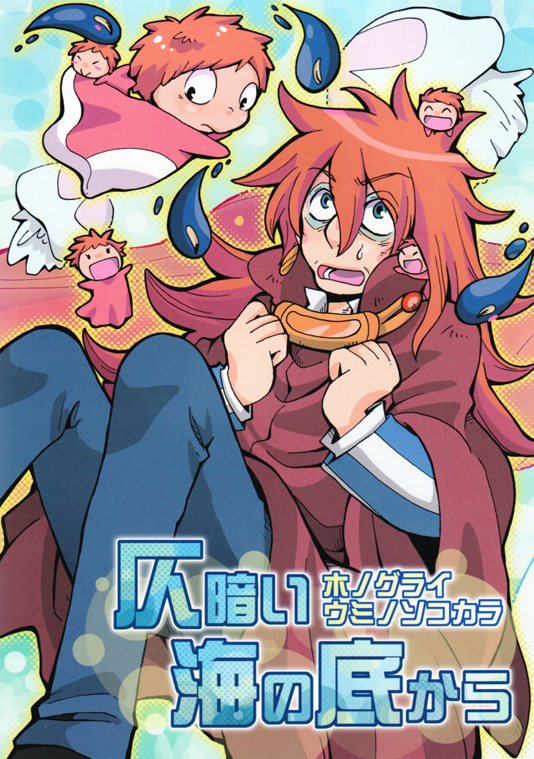
Finally, a piece titled Honogurai umi no soko kara (仄暗い海の底から), which is based on Ponyo on a Cliff by the Sea, is an example of what is called a “gag” (ギャグ) dōjinshi, which eschews any sort of sustained narrative in order to make jokes about and poke fun at the original work. This particular dōjinshi is centered around the comic figure of Fujimoto, the scatterbrained wizard who is Ponyo’s “father.” It is drawn in a style that references the Studio Ghibli house style but exaggerates the comedic aspects of the characters and their interactions with one another. These interactions mainly involve the attempts of the awkward and socially inept Fujimoto to act as some sort of father figure to the now human Ponyo, who continues to be as willful and energetic as always. Other jokes lightly suggest sexual undertones completely absent from the original film. One short story interprets the intense private conversation shared between Sōsuke’s mom Lisa and the sea goddess as being about the deliciousness of ham. Fujimoto, seeing the hungry look in the ladies’ eyes, misinterprets their conversation in a humorous way.

Part One
Part Three

Dōjinshi (Part One)

In a short series of essays, I would like to discuss Japanese dōjinshi (hereafter unitalicized) based on the work of Japanese director Miyazaki Hayao. I would also like to examine the relationship between fan works and the concept of auteurship. First I will give a brief explanation of what dōjinshi are and the place they occupy in Japanese subculture. Second, I will provide examples of several dōjinshi based on Spirited Away (千と千尋の神隠し), Howl’s Moving Castle (ハウルの動く城), and Ponyo on a Cliff by the Sea (崖の上のポニョ). Finally, I will explore the hermeneutical relationship between these dōjinshi and the original texts on which they are based, as well as the relationship between auteurs and fan creators.

Dōjinshi (同人誌), a word that might be glossed as “fan works,” or “fan manga,” are self-published, small-scale publications written by fans and for fans of a particular work (be it a movie, a book, a television series, or a video game) or of a particular romantic pairing possible within that work. For example, there are many dōjinshi based on J.K. Rowling’s young adult fantasy series Harry Potter, and many of these Harry Potter dōjinshi focus on a specific romantic couple, such as that formed by Harry’s two friends Ron and Hermione. As in the realm of American fan fiction, many dōjinshi explore the possibility of an alternate outcome of the events in the story of the original work. This leads, for example, to dōjinshi dealing with the formation of a romantic relationship between Harry and Hermione, or perhaps between Harry and his male rival Draco. Unlike American fan fiction, however, the vast majority of Japanese dōjinshi employ both the form and the conventions of manga. In the rare case that fan fiction is published as a dōjinshi, it is often accompanied by illustrations that are either drawn by the writer or by an artist commissioned by the writer.

Since the production of manga is a labor-intensive process, most dōjinshi artists operate within what are called “circles” (サークル), or groups. Although there are a number of “individual (個人) circles” consisting of only one person, most circles are made up of two or more people. The division of labor takes different forms within different circles. In some cases, the work of two or more artists operating separately from each other will appear in the same publication, while in some cases, secondary artists will help the primary artist with things like background detail and the application of screen tone. In many other cases, different teams of artists will publish different dōjinshi under the same circle name. In any case, a dōjinshi is just as likely to be attributed to a circle as it is to be attributed to a specific artist. On the back cover of this dōjinshi, we can see both the circle name and the names of the two artists who contributed to this particular work.

One of the main reasons why artists who create dōjinshi continue to operate within the circle system despite the prevalence of labor-saving digital artistic tools like Photoshop and individual-centered communication networks like deviantART is the continuing popularity of conventions like Comiket (コミケット), short for “comic market,” a three day event held biannually at Tokyo Big Sight. The first Comiket was held in 1975; and, since then, attendance at each event has risen from several thousand to several hundred thousand. Comiket is primarily an event for the purchase and selling of dōjinshi. Since there is a limited amount of space for dealers, many fledgling artists participate in events like Comiket as members of a circle, which gives them a greater chance of acquiring a dealer’s table. Although Comiket is the largest convention of its kind, numerous dōjinshi conventions occur throughout the year all over Japan. A notable example is the Comic City convention in Osaka.

Aside from these conventions, dōjinshi may be acquired year-round at chain stores specializing in used manga (such as Mandarake) and dōjinshi specialty stores, which tend to be located in major urban shopping districts, like Ikebukuro and Akihabara in Tokyo and Den Den Town in Osaka.

Dōjinshi specialty stores like K-Books tend to fall into two divisions, which reflect the preferences of the two main demographic groups of dōjinshi consumers. These two divisions are “meant for boys” (男性向け) and “meant for girls” (女性向け). Dōjinshi meant for boys are typically heavily pornographic in nature, and dōjinshi meant for girls generally focus on homosexual romantic relationships between male characters. This genre of dōjinshi (and, increasingly, mass market manga) is known as “B.L.,” which is an acronym for “boys’ love.” The line dividing “meant for boys” and “meant for girls” is not sharply drawn, however, are there does exist a large category of general audience dōjinshi that does not expressly cater to the conventions of either category.

Part Two
Part Three