Manazuru

Title: Manazuru
Japanese Title: 真鶴 (まなづる)
Author: Kawakami Hiromi (川上弘美)
Translator: Michael Emmerich
Publication Year: 2010 (America); 2006 (Japan)
Publisher: Counterpoint
Pages: 218

To return to the issue of sexism in literature (hopefully for the last time before laying it temporarily to rest), I think that, even as a book written by a man should not be automatically dismissed as sexist, so should a book written by a woman not be lauded simply because it was written by a woman. Take Manazuru, for instance. I love Kawakami Hiromi. For example, I think her 1998 collection of short stories, Kami-sama, was an imminently enjoyable exercise in magical realism, successful not only in its popular appeal but also in its critical reception. Her 1996 debut novel, Hebi o fumu, easily deserved all of the attention (like the Akutagawa Prize) that it won. Manazuru, on the other hand, is just plain boring.

The premise of the novel seems promising. Its protagonist is a writer named Kei, who lives in Tokyo with her mother and teenaged daughter. Her husband vanished twelve years ago, and now Kei finds herself inexplicably drawn to the seaside town of Manazuru. She is lead not only by her intuition but also by the ghost of a woman who occasionally appears and has conversations with her, albeit in a mostly antagonistic and cryptic way. Even though Kei is having an affair with a married man, she is still haunted by the memory of her husband, and she believes the key to his disappearance lies somewhere in Manazuru. Meanwhile, her daughter starts spending more and more time outside of the house, finally running away to meet someone whose identity she will not reveal. From this description, it would seem that several mysteries are afoot, each as compelling as the next.

Unfortunately, Manazuru is not the least bit interested in resolving any of these mysteries. What happened to Kei’s husband? We never find out. Who is the ghost that follows Kei around? We never find out. Who did the daughter run away with? We never find out. Answers are suggested in Kei’s garbled stream of consciousness narration, but then they are just as quickly dismissed. Did Kei kill her husband? Is the ghost that follows her around her husband’s dead lover? Did Kei’s daughter meet the ghost of her father? Maybe… But probably not.

In Manazuru’s defense, its plot is not its raison d’être. Its focus instead lies in the depiction of the mind of its protagonist in all of its complexity and confusion. Kei does not seem to know what she wants but is still searching for something, all the while immaculately and poetically detailing her experiences of drifting through life. Her thoughts give weight and meaning to the mundane, and she turns activities like riding the train into an art. Most of the novel is concerned with the details of her everyday life, like putting away her family’s winter clothes with her mother:

Handling so many different fabrics, heavy clothes, light clothes, makes my palms feel silky. I rise quietly, take the folded material from here to there. Bend down, lay it in a box. Fabric brushing against fabric, making the merest sound. Two women, one getting on in years, one starting to get on in years, pacing among the fabrics. With the tips of my fingers, I tear off the paper tag the cleaners stapled to the label last year. Replace the paper that lines the drawer, fold the old paper, throw it out. Straighten the new paper in the drawer, pile in the different materials, layer upon layer.

The same attention to style and detail is carried over into more dramatic moments, such as when Kei wanders around Manazuru, lead by a ghost in the middle of a storm. Such a narrative style drains such scenes of any sense of urgency, however, especially since Kei never seems to accomplish anything. The back of the book describes the novel as “a meditation on memory – a profound, precisely delineated exploration of the relationships between lovers and family members.” Indeed, if you’re into contemplative prose about the love and family lives of women, I suppose it doesn’t get much better than Manazuru.

Even if the front of the book didn’t declare it a “Recipient of the 2010 Japan-U.S. Friendship Commission Prize for the Translation of Japanese Literature,” I think I still might have gotten the feeling that this book was published because of its close proximity to the stereotype of Japanese women’s writing: meandering novellas about the feelings of women who pay more attention than is absolutely necessary to flowers, plants, and the changing seasons. Kawakami has written work that is playful, creative, and fiercely intelligent. I wonder, then, why such a very very serious and very very emotional and very very “literary” (in a very, very outdated sense of the word) book of hers is the first to appear in English translation. Michael Emmerich is a brilliant translator, as always; but, after his 2009 translation of Matsuura Rieko’s wonderfully subversive The Apprenticeship of Big Toe P, I feel that his talent has been somewhat wasted with a boring and rather vacuous book like Manazuru.

To return to the issue of fiction and gender, I was thinking about creating a new category for my reviews: “Women Writers.” However, reading Manazuru has convinced me that a writer should not be judged according to his or her gender; and, furthermore, that the reification of the gender of an author is not something I particularly wish to engage in and perpetuate. For the time being, then, I am going to hold off on the creation of this category and allow female writers to stand on equal ground with their male counterparts without being branded as “Women Writers” and having to bear all the cultural baggage that comes with the label.

Hard-Boiled Wonderland and the End of the World

Title: Hard-Boiled Wonderland and the End of the World
Japanese Title: 世界の終りとハードボイルド・ワンダーランド
Author: Murakami Haruki (村上春樹)
Translator: Alfred Birnbaum
Publication Year: 1993 (America); 1985 (Japan)
Publisher: Vintage
Pages: 400

Upon re-reading my reviews of Lala Pipo and Audition, I realized that sexism in narratives penned by male authors has been one of my major preoccupations during the past few months. I suppose I have been reacting, in part, to a school of thought that seems to hold that anything written by a man is inherently sexist, whereas anything written by a woman must be feminist. This way of thinking is flawed for several reasons (one of the most obvious being that if gender is performative, then the act of writing gender is exponentially so), and I object to it because it unthinking dismisses the work of several of my favorite authors as unworthy of attention. Are powerful female characters in books like Gerald’s Game, Rose Madder, and Dolores Claiborne to be automatically labeled as sexist creations simply because Stephen King is male?

Another writer that I feel often comes under unfair criticism is Murakami Haruki, who is ridiculed by one faction of thinkers (like Miyoshi Masao and Ōe Kenzaburō) for being too accessible and not literary enough while at the same time attacked by another faction (of mainly French and American scholars) for being a stereotypical representative of the male-dominated literary establishment. In either case, I am confounded by the intensely negative evaluation of his work as politically disengaged, sexist, or, most damningly, just not very well-written or enjoyable in general.

Hard-Boiled Wonderland and the End of the World is one of my favorite novels, ever, not simply because it’s very, very fun to read, but also because it’s intensely engaged with several social and philosophical issues that have become increasingly relevant since it was first published in 1985. What is an individual’s relation to a global government and economy that he cannot even begin to understand or affect in any way? What is a individual’s relation to the endless cycle of consumption imposed by these superstructures? What is an individual’s relation to a reality that is increasingly virtual; and, within that reality, what sort of responsibility does he owe to society? What sort of responsibility does he owe to himself? Surrounding these issues is an extended meditation on the nature and power of fantasy, both in its utopian and dystopian dimensions, that is woven into the very structure of the text.

The narrative of Hard-Boiled Wonderland and the End of the World is divided into two parts, the Hard-Boiled Wonderland and the End of the World, with each providing the setting for every other chapter. The Hard-Boiled Wonderland is very much like present-day Tokyo, although it has been enhanced by futuristic technology and conspiracies surrounding the development and use of that technology. The protagonist of this part of the story is not a traditional hard-boiled detective but rather a skilled and deadpan Calcutec who encodes information using a special ability artificially implanted into his brain. His life runs smoothly and predictably until he is given a job that plunges him into a secret conflict between the government and an organization of information pirates called the Factory. On the other hand, the End of the World is a quiet, pastoral fantasyscape centered around a small town and surrounded by an enormous, insurmountable wall. The protagonist of this half of the story has recently come to the area and settles in as the new Dreamreader in the town library while exploring the surrounding countryside.

Both the Hard-Boiled Wonderland and the End of the World are equally engaging as the reader becomes immersed in them and as curiosity builds concerning to how each world operates. Mysteries abound in either world, and the key to solving them lies at their intersection, which the reader suspects early on but whose full implications don’t become clear until much later in the story. Both protagonists are in mortal peril, from which they can escape only by solving the riddle of the two worlds. The hero of the Hard-Boiled Wonderland does this by dashing through sewers and abandoned subway lines, and the hero of the End of the World does this by strolling through the hills and woods, but both quests become increasingly urgent as their stakes become increasingly clear. One thing I appreciate about Murakami’s narrative style, however, is that his action is never non-stop. He gives his characters plenty of downtime to go about their daily lives, enjoy the worlds they live in, and interact with other characters on a casual basis. Hard-Boiled Wonderland and the End of the World in particular is a perfect blend of modern realist novel and postmodern fantasy; and, even though it occasionally acknowledges genre conventions, it is never formulaic.

Another thing I appreciate about Murakami is his writing. He has an incredible ability to make mundane things interesting. For example, the protagonist of the Hard-Boiled Wonderland is in an elevator:

Every last thing about this elevator was worlds apart from the cheap die-cut job in my apartment building, scarcely one notch up the evolutionary scale from a well bucket. You’d never believe the two pieces of machinery had the same name and the same purpose. The two were pushing the outer limits conceivable as elevators.

He also makes mysterious and fantastical things mysterious and fantastical. For example, the protagonist of the End of the World introduces the existence of a herd of imaginary animals:

With the approach of autumn, a layer of long golden fur grows over their bodies. Golden in the purest sense of the word, with not the least interruption of another hue. Theirs is a gold that comes into this world as gold and exists in this world as gold. Poised between all heaven and earth, they stand steeped in gold.

Certainly, his stories are told from a male point of view…

Around young, beautiful, fat women, I am generally thrown into confusion. I don’t know why. Maybe it’s because an image of their dietary habits naturally congeals in my mind. When I see a goodly sized woman, I have visions of her mopping up that last drop of cream sauce with bread, wolfing down that final sprig of watercress garnish from her plate. And once that happens, it’s like acid corroding metal: scenes of her eating spread through my head and I lose control.

…but both of the protagonists of this novel are male, so that’s only natural. Whether a male writer having his male characters speak from a male point of view is inherently sexist is open to debate, but I don’t think that’s particularly the case in this novel.

The idea that feminist writing is writing that resists the patriarchy and champions the cause of the weak, regardless of the anatomy of the body that performs that resistance, is a well-established argument that has its roots in the work of French feminists like Julia Kristeva and its branches in the tracts written by contemporary Japanese feminists like Ueno Chizuko. My own personal stance on the matter is that, in this light, Murakami can definitely be seen as a writer with a “feminist” agenda, as both protagonists of Hard-Boiled Wonderland are marginal and relatively powerless figures struggling against a much larger organization that directly references certain overtly patriarchal power structures in contemporary Japan. The ending of the novel severely complicates this resistance, but figuring out what the ending means in terms of politics and philosophy, as well what it personally means to you, gives it a great deal of impact.

To say that Hard-Boiled Wonderland is beautifully written and compelling from its very first pages to its very last is an understatement. It is simply a great novel, easily on par with masterpieces like Neil Gaiman’s Neverwhere and China Miéville’s Perdido Street Station. I should also mention that Alfred Birnbaum has turned the book into one of the finest translations that I have ever had the pleasure to read. He captures the tone of Murakami’s style perfectly and renders it into English that is never bland and literal but always colorful and exciting. His translations of specific fantasy words, like “semiotics” (for kigōshi) and INKlings (for kurayami) are brilliantly creative.

In conclusion, I suppose that haters are going to hate and that critics are going to judge, but I personally agree with the overwhelmingly popular opinion that Murakami is one of the most interesting and important living international writers – and he’s also one of the most enjoyable to read. If you’ve never read him before and aren’t quite ready to commit to a six hundred page monster like The Wind-Up Bird Chronicles or Kafka on the Shore, I think Hard-Boiled Wonderland is the perfect place to start.

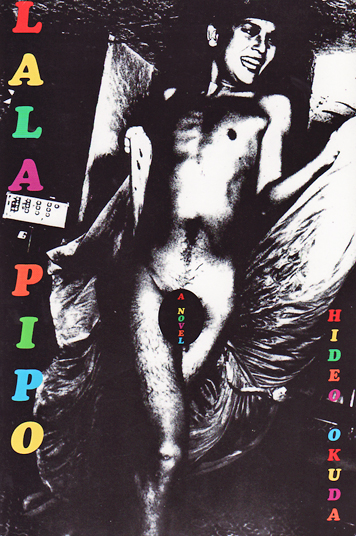
Lala Pipo

Title: Lala Pipo
Japanese Title: ララピポ
Author: Okuda Hideo (奥田英郎)
Translator: Marc Adler
Publication Year: 2008 (America); 2005 (Japan)
Publisher: Vertical
Pages: 284

Lala Pipo is absolutely and utterly tasteless. If banality could have a nadir, Lala Pipo would be hovering somewhere just above it. Never have I read such a book that delights so much in its own complete lack of decency.

This is a good thing, obviously.

This collection of six stories starts off with the tale of a social dropout who stands on a chair to listen through the ceiling to his upstairs neighbor having sex. His biggest problem, namely, how to clean up the come that invariably winds up on his bedroom floor, is soon eclipsed by his overwhelming desire for bugging equipment from Akihabara. Everything goes downhill from there into even greater depths of depravity. I have no idea how the author manages it. I bow in awe before his mastery of the literary art form.

All levity aside, though, Lala Pipo is actually quite brilliant. As the back cover of the book tells us, its six stories are loosely connected. What it does not tell us is how. Sure, they’re all set in the same location – in the swollen and festering underbelly of Shibuya. Sure, they all end in the same way – with abrupt and heartbreaking and hilarious tragedy. And sure, they all share the same theme – laziness and poor judgment leading to bad things happening to not-so-good people. But the main connection between the stories is that an extremely minor character of one story always becomes the protagonist of the next. Although this may sound like a cheesy gimmick, it’s remarkably well played. In fact, it’s so well played that I hesitate to spoil it by describing the stories in any detail.

I must make an exception for the third story, “Light My Fire,” which stars an aging housewife whose boredom has lead her to a career in milf-themed pornography. This woman lives in a house of amazing filth and decrepitude, which she deals with by dusting cockroaches under the bedding and spraying cleaning solution up the stairs towards the second floor. Since she has grown tired of picking up after her husband, she has him sleep on the kitchen floor, where he can easily pick up after himself – or not. When she’s not forcing herself on her agent in a love hotel or idly masturbating on the sofa in front of the television, she amuses herself by reading her neighbor’s mail, which she surreptitiously opens using the steam from a tea kettle. Her neighbor starts to receive anonymous hate mail from someone who is annoyed by her dog, so she decides to play a prank on her neighbor by signing the name of her best friend to the letters. As the letters become progressively more deranged, however, even our resourceful heroine begins to harbor worries. Underneath the sordidness of stringy mucus and crusty vibrators runs a strong narrative propelled forward by several mysteries. Who is sending the letters? How long will the housewife be able to continue her career in pornography? Why is her house so filthy? What has she got up there on the second floor? Like all of the stories in this collection, “Light My Fire” is skillfully set up to draw the reader into the narrative despite the disgusting characters who people it.

Some people might dismiss Okuda’s work, filled as it is with engorged members and spoiled schoolgirls, as being blatantly misogynistic. To those people I give a gold star and a pat on the back, because yes, Okuda is openly misogynistic. He is also openly misanthropic in general, but that’s no reason to not read and enjoy Lala Pipo. Even now, almost two decades after the economic bubble burst, an outdated public discourse regarding home, family, and work is still going strong. People like sociologist Mary Brinton are still analyzing how ideas like “women need to be housewives and mothers” and “men need to find full-time employment at a company” are created and perpetuated through the education system and in the labor market. Buzzwords like “equality” and “flexibility” often emerge in organizational mission statements, but the underlying structures have yet to undergo the necessary evolution. Lala Pipo takes all of that cultural garbage and swiftly trashes it. The men in these stories are not productive and industrious. The women in these stories are not nurturing and self-sacrificing. Authority lies in the hands of the people who absolutely should not wield it, and society as a whole is portrayed as rotting solipsistically away. Okuda Hideo is a popular writer, and he’s a fun writer, but he’s dealing with some pretty heavy stuff here. If nothing else, Lala Pipo is a welcome break from the home drama and flower imagery of more “literary” Japanese writers.

To those of you who read In the Pool (translated by Giles Murray and released by Stone Bridge Press in 2006) and weren’t impressed – I wasn’t impressed either, but Lala Pipo is much, much better. To those of you who read In the Pool and thought it was awesome, Lala Pipo is more of the same but much, much better. Just so you know.

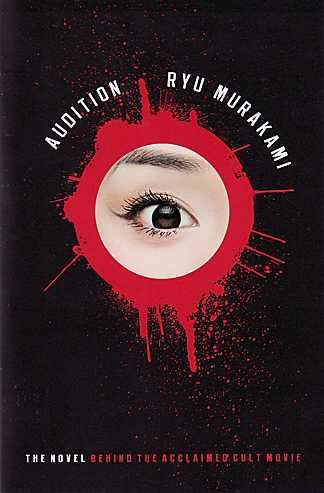
Audition

Title: Audition
Japanese Title: オーディション (Ōdishon)
Author: Murakami Ryū (村上龍)
Translator: Ralph McCarthy
Publication Year: 2010 (America); 1997 (Japan)
Publisher: Norton
Pages: 191

The first order of business in any review of Audition should be to spoil the plot. (If you don’t want to know what happens, don’t read this review. Don’t look at the front cover of the book, either.) My justification for giving everything away is that the ending of this book lends such a delicious flavor to the rest of the story that trying to keep it a secret is pointless, and probably fairly cruel as well.

With that in mind, the premise of Audition is as follows: a middle-aged producer named Aoyama is looking to re-marry after his son mentions that Aoyama’s wife, Ryoko, died seven years ago and that it’s time for him to move on. Since Ryoko was such a wonderful woman, and since Aoyama is more or less satisfied with his current life, however, his standards in women are high. Aoyama’s friend and fellow producer Yoshikawa suggests that Aoyama interview prospective brides as part of a film audition tailored to his specifications. Aoyama reluctantly agrees and ends up meeting Yamasaki Asami, a beautiful 24-year-old woman who seems perfect in every way. Yoshikawa is suspicious of Asami, but Aoyama has fallen head-over-heels in love with her and will have no one else. It turns out that Yoshikawa has every reason to be suspicious, since Asami has a bad habit of drugging and torturing her boyfriends who cannot love only her. Does this include the sincere and good-intentioned Aoyama? You bet it does. The final thirty pages of Audition are a torture-fest graphic enough to test even the most strong-stomached of readers, even as they delightfully revel in the violence and subtle sexuality of the scene.

I generally find comparisons between books and movies to be boring and pointless, but director Miike Takashi’s 1999 adaptation of Audition is such a cult classic that I feel it should be mentioned. Is the novel different from the movie? Of course it is. It goes without saying that certain plot elements are different, but perhaps the most interesting difference is that, while the film focuses on the back story of Asami, the novel pays much more attention to Aoyama. Thus, the horrifically grotesque images associated with Asami’s apartment are missing from the novel. Instead, the reader is party to Aoyama’s absolute fixation with Asami in a brilliant parody of the genre of romance. For example, Murakami describes Aoyama seeing Asami in person for the first time as an amazing, magical moment:

Silhouetted against the off-white walls, she walked to the chair, bowed with modest grace, and sat down. That was all, but Aoyama had a very distinct sensation that something extraordinary was happening all around him. It was like being the millionth visitor to an amusement park, suddenly bathed in spotlights and a rain of balloons and surrounded by microphones and flashing cameras. As if luck, normally dispersed in billions of tiny, free-floating, gemlike particles, had suddenly coalesced in a single beatific vision – a vision that changed everything, forever.

Oh, Aoyama, if only you knew! The dramatic irony of passages like this is superb, and there are a lot of them to enjoy, each one more imaginatively written than the next. Also, since the written word does not have quite the visual power of the silver screen, Asami’s sexuality and sex appeal are presented differently as well, again from the perspective of Aoyama. We never get to see her in knee-high boots and a black rubber apron, but her “hard, tender nipples” and “lust-crazed pussy” are mentioned more than a few times as the book approaches its climax, so to speak. In the end, though, the novel is infinitely less gut-wrenchingly visceral than the film. I think both the film and the novel are brilliant texts, but the novel is much more accessible to a broader audience.

(By the way, I am not kidding about how hideously upsetting the film is. If you have not seen Audition, don’t see Audition. I’m serious. It’s traumatizing. Read the book instead.)

Before I end this review, I’d like to briefly address the issue of the book’s sexism. Although the story may seem to reference the female revenge scenario, the fact that Asami is certifiably insane, as well as her presentation as utterly inhuman and her complete lack of interiority, cancel out any sort of argument for female agency or empowerment. The real case against patriarchal privilege is made through Aoyama. Although Aoyama seems like a decent guy in many ways, the underlying current of his thinking is undeniably sexist. Precisely because Aoyama comes off as such a nice guy, the critique of his sexism and the broad societal sexism that informs it is much more effective. In the book’s closing lines, Asami calls Aoyama a liar, and she is right, even if her words are unintelligible save when voiced by Aoyama’s son. Make no mistake, Audition is written from a completely male perspective, but the light it sheds on how sexism is tied to contemporary Japanese masculinity is interesting and invaluable.

The Summer of the Ubume

Title: The Summer of the Ubume
Japanese Title: 姑獲鳥の夏 (Ubume no natsu)
Author: Kyōgoku Natsuhiko (京極夏彦)
Translator: Alexander O. Smith and Elye J. Alexander
Publication Year: 1994 (Japan); 2009 (America)
Publisher: Vertical
Pages: 320

Reading The Summer of the Ubume was like being in a trance. Honestly, it feels weird to not be reading the book right now, but I imagine that I’m going to be reading it again soon. I haven’t been this engrossed in a book since I read Harry Potter and the Deathly Hallows

Which is not to say that Summer of the Ubume is in any way like the Harry Potter series, aside from its sheer literary addiction quotient. On the surface, the book presents a simple “sealed room” murder mystery. Underneath, however, is mystery upon mystery upon mystery. Running through these mysteries is a current of Japanese folklore, especially folklore concerning spirit possession. The “ubume” of the title is the ghost of a woman who died in childbirth and carries out her grudge against still-living mothers by stealing their infant children. This trope is connected to the household of a family that is just about as gothic as they come, with frail maidens and hereditary curses and hidden murders set on the stage of an almost abandoned hospital, which was designed by an insane architect and almost destroyed during the wartime firebombing of Tokyo.

The Summer of the Ubume is set in 1952 in the Nakano area, which used to be a residential district on the northwest periphery of Tokyo, a stone’s throw away from the prisons, insane asylums, and black markets of Ikebukuro. Its narrator is a man in his early thirties named Sekiguchi, a freelance writer who specializes in essays on supernatural incidents. Sekiguchi is friends with the brilliant yet antisocial proprietor of the Kyōgokudō used bookstore (which is the name his friends use to refer to him). Sekiguchi is the Watson to Kyōgokudō’s Holmes, and a great deal of the book is devoted to their conversations concerning metaphysical matters, which end up having a great deal to do with the mystery at hand.

In the course of his work (which borders on yellow journalism), Sekiguchi has stumbled upon a rumor of a woman who, having been mysteriously deserted by her husband, has been pregnant for eighteen months. After asking several magazine editors about the source of the rumor, Sekiguchi becomes more intrigued. Due to a strange series of coincidences, the writer has the opportunity to meet the woman’s family, which is deeply dysfunctional in every possible way. As Sekiguchi learns more about these people, it turns out that his ties to them are deeper than he initially suspected.

The first chapter of the novel is a forty-page discussion of the supernatural between Kyōgokudō and Sekiguchi. Each page is dense with ideas and metaphysical language (not to mention text – the book’s margins are practically nonexistent), and neither Sekiguchi nor Kyōgokudō is presented in a particularly sympathetic light – Sekiguchi comes off as rather dense while Kyōgokudō is supremely abrasive. If the reader can weather this initial chapter, however, he or she will be rewarded with a deliciously convoluted mystery populated by a genuinely fascinating cast of characters. The action of the story reaches its climax 230 pages into the novel, which leaves 90 pages for the explanation of the mystery. Although this may seem like poor pacing, the explication is well-plotted, engrossing, and bizarre, reaching its own climax at the end of the novel.

The Summer of Ubume is Kyōgoku’s debut novel, and at times it does feel unpolished. The momentum of the story more than makes up for any flaws in the narrative’s structure, however. The occasional clichés implicit in the mystery (such as the uncertainty that is inevitably created when there are two almost identical sisters in a fictional family) are balanced by the writer’s unique take on the gothic genre. The novel’s setting in 1950’s Tokyo is fully taken advantage of by Kyōgoku, who skillfully renders the city as a sinister gothic landscape.

Although, as I mentioned, there is a greater emphasis on talking heads in this novel than is strictly necessary, the characters and setting are superbly handled, and the mystery is just about as addictive as they come. I can only hope that more of Kyōgoku’s work is translated into English as soon as possible.

The Devil’s Whisper

Title: The Devil’s Whisper
Japanese Title: 魔術はささやく (Majutsu wa sasayaku)
Author: Miyabe Miyuki (宮部みゆき)
Translator: Deborah Stuhr Iwabuchi
Publication Year: 1989 (Japan); 2007 (America)
Publisher: Kodansha International
Pages: 254

Some people say that Miyabe Miyuki is the Stephen King of Japan. I’m not sure exactly what that means, but I think it has something to do with the fact that she has published a hell of a lot of books (as well as scripts for radio dramas, manga, and video games). Her work is superlatively popular, and a great deal of it is dark or fantastic. She is perhaps best known in America for her murder mystery novels, which more often than not feature a killer who uses a magical or semi-magical power as his or her modus operandi.

The killer in The Devil’s Whisper is a hypnotist, as the book’s title implies. (I think I may have just given away what one of the blurbs on the back cover calls “a brilliant plot twist,” but I found it fairly obvious from the beginning of the novel.) He has hypnotized a young woman to run out in front of a taxi, thus making her death seem like a suicide. So far, so good. The driver of the taxi, however, is charged with vehicular manslaughter and imprisoned. His sixteen-year-old nephew, Mamoru, senses something fishy about the police reports and decides to investigate the matter himself. Mamoru is basically a decent kid, but he’s got some skeletons in his closet that come out to haunt him as the story progresses. The novel therefore presents two mysteries to the reader: what grudge does the hypnotist killer have against the women he murders, and why did Mamoru’s father abandon him and his mother when he was a young child? The way that these two plotlines come together at the end of the book is quite interesting and enjoyable.

Although The Devil’s Whisper does not suffer from an abundance of characterization, almost everyone comes off as sympathetic. Mamoru does indeed bear traces of several Stephen King characters like Danny from The Shining and Jack from The Talisman, who are bright and earnest boys placed in difficult situations. The killer comes off as a kind of Hannibal Lecter figure, as logical and urbane as he is insane. The real villains of the novel actually seem to be the young women who are being killed, although the reader is forced to wonder whether they really deserved to die.

In my eyes, the major weakness of Miyabe’s style is that she tells her reader what every character is thinking. This doesn’t necessarily have to be a flaw, but Miyabe will occasionally write entire sequences of paragraphs explaining the obvious. One of the first pieces of advice given to aspiring writers is to show, not tell. A relative clause depicting a character picking at her fingernail can say much more about her state of mind than an entire paragraph attempting to chart what is going on inside of her head. Since The Devil’s Whisper is only about 250 pages long, this type of inner explication is by necessity kept to a minimum, and a great deal of it is expressed in dialog, which partially reduces the level of tedium and keeps the action moving. Miyabe’s characters are interesting; but, unfortunately, none of them are so interesting that I want to know every thought that passes through their minds.

Overall, Miyabe’s mystery novels range from excellent (All She Was Worth) to decent (Shadow Family) to so horrible that they make me want to claw my eyes out (Crossfire). The Devil’s Whisper falls somewhere in the middle, and I would recommend it over many of Miyabe’s other titles available in translation.

Hotel Iris

Title: Hotel Iris
Japanese Title: ホテルアイリス
Author: Ogawa Yōko (小川洋子)
Translator: Stephen Snyder
Publication Year: 2010 (America); 1996 (Japan)
Publisher: Picador
Pages: 164

Hotel Iris is the third work by Ogawa Yōko to appear in print in America, following The Housekeeper and the Professor and The Diving Pool. Having read several of her works now, I think I am starting to get a feel for her style of writing, which is beautifully conveyed by translator Stephen Snyder. Ogawa takes the everyday and imbues it with a sense of strangeness. Nothing overtly fantastic happens in her stories, but everything is always a little unsettling. Something is always a little bit off. There is always a sinister current running underneath the mundane. In Ogawa’s novels, the petty cruelty of human beings is on full display, but it is up to the reader to uncover the mystery of a deeper cruelty. The questions that aren’t answered are more upsetting than the questions that are.

In Hotel Iris, a seventeen-year-old young woman named Mari has been forced to drop out of high school by her mother, who needs her to work at the family’s seaside hotel. Since Mari’s father has died, Mari’s mother has taken on a kleptomaniac housekeeper, who not-so-secretly steals from Mari. When, one night, a prostitute flees from one of the rooms in the hotel, Mari finds herself attracted to the older man from whom the woman flees. This older man, who lives by himself on an offshore island, is a translator of Russian. He falls in love with Mari, who craves the sexual masochism he displays when the two are alone. The specter of the man’s dead wife, whom he is rumored to have killed, haunts their relationship, which is further strained when the translator’s tongueless, college-age nephew stays over for a few days.

These relationships develop over the course of this short novel, which is narrated by Mari, who hints at her desires, frustrations, and rich inner world through anecdotes and observations instead of through direct statements. The novel unflinching depicts all manner of sexual acts, but its eroticism and sensory imagery are focused not on the meeting of bodies but rather on the depictions of small, everyday things, like a stain on a scarf, the music of an amateur, or the dripping of pizza grease. The narrative tension created by the almost constant yet varied reiteration of certain themes, like the fear of something hidden being uncovered or the uncertainty of how far violence can go, prevents the reader from ever settling into complacency concerning Mari’s life and her relationships.

In the end, I think, this is a novel about growing up, and all the psychological baggage that goes along with the process. Ogawa warps many psychological tropes (like the Oedipus complex) through her protagonist, however, and Mari’s loss of innocence is neither celebratory nor unproblematic. In many ways, Hotel Iris is something of an antidote to feel-good chick lit novels like Yoshimoto Banana’s Goodbye Tsugumi. It’s dark and it’s disturbing. Its themes and imagery are understated; and, although it has quite a great deal of forward momentum, it is never driven by its plot, much of which is left vague. In my opinion, this is a perfectly constructed and beautifully written novel. Please buy this. Please read it. Please tell all your friends about it. Ogawa has numerous novels translated into various European languages, and we really need more of her work translated into English.

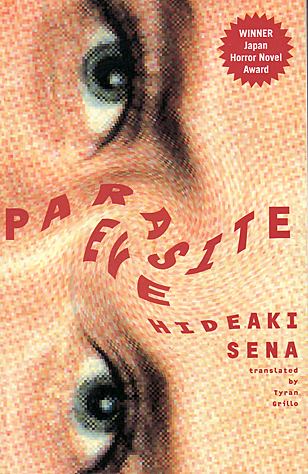
Parasite Eve

Title: Parasite Eve
Japanese Title: パラサイト・イヴ (Parasaito Ivu)
Author: Sena Hideaki (瀬名秀明)
Translator: Tyran Grillo
Publication Year: 1995 (Japan); 2005 (America)
Publisher: Vertical
Pages: 314

Sometimes I know that I should not write a particular review. Sometimes I have nothing nice to say. Sometimes, however, it’s way too much fun to resist writing about a hilariously bad book. This has happened before with Outlet and xxxHOLiC: ANOTHERHOLiC, and now it’s happening again with Sena Hideaki’s horror novel Parasite Eve, which is so bad that it’s almost good.

If nothing else, the premise of Parasite Eve is certainly original. A woman named Kiyomi has a problem with her mitochondria, which have collectively mutated into an intelligent being. These mitochondria gradually take over Kiyomi’s body, killing her and forcing her husband Toshiaki, a pharmaceutical researcher, to cultivate her liver cells. Since Kiyomi was an organ donor, one of her livers has found its way into a fourteen-year-old girl named Mariko, who begins to suffer from nightmares. As Toshiaki’s cell culture, which he has named “Eve 1,” grows, it (she) gains the ability to move around and make herself look like Toshiaki’s dead wife. Since Eve 1 cannot live for long on her own, she wants to create a half-human, half-mitochondria offspring, a project for which she needs Toshiaki’s sperm and Mariko’s womb. Although Eve 1 has a time limit for how long she can survive outside of a cell incubator, she can reshape herself at will and shoot fire. It goes without saying that Toshiaki must find a way stop her.

The narrative shifts between Toshiaki, Toshiaki’s research assistant, Mariko’s father, Mariko’s doctor, and Kiyomi. Eve 1 occasionally gets a few italicized paragraphs, too. Each of these characters is interesting in his or her own right; but, even though none of them are wooden or stereotypical, their characterization felt a bit half-hearted to me. The real focus of the first two-thirds of the book seems to be less on the characters and more on the surgery and scientific experiments they are involved in. Toshiaki’s research and Mariko’s organ transplant are described in loving detail, with all sorts of technical terms accompanied by explanations for the general reader. Even with all the non-fiction exegesis of science and medicine, the narrative progresses normally (if a bit slowly) for 175 pages. Even though there was a bit of Eve 1 shooting orgasms at people (I am not making this up) previously, this is the point at which things get ridiculous.

The next paragraph is filled with spoilers and sex. Consider yourself warned.

In the last third of the book, Eve 1 steps into the spotlight. I was especially struck by how Sena chose to portray her as intensely sexual. When Eve 1 first gains the ability to manipulate her shape while still in the cell culture incubator, she immediately gives herself a vagina and a finger and puts the two together. She then mouth-rapes Toshiaki’s student in order to gain control of her body for a few days before breaking free, at which point she turns herself into a giant vagina and rapes Toshiaki so as to procure his sperm. I kept thinking to myself, I bet Eve 1 is going to grow a penis and rape the fourteen-year-old next. So, when Eve 1 grew a penis and raped Mariko (after a short jaunt through the sewer), I actually laughed so hard that I cried a little bit. At the very end of the book, it turns out that Eve 1’s offspring cannot live (something about the male mitochondria in her body fighting the female mitochondria; don’t ask me). Instead of using her mitochondrial superpowers to generate a small-scale nuclear reaction and blow everything sky high (as I would have done in her situation), Eve 1’s daughter decides to fuse into the body of her father Toshiaki, and all of their cells have sex before they both die. Brilliant.

Body horror seems to be one of the major selling points of Parasite Eve, but body horror needs to be subtle in order to be truly effective. I believe that the body horror in this novel is unsubtle to an extreme, however, and the book has very few genuinely creepy moments. Also, by the end of the story, I really wanted Eve 1 to succeed in her mission of evolving an all-female race of mitochondria mutants, so I was a bit (okay, extremely) disappointed when both her and her daughter were defeated by the patriarchal power structures that pervade the narrative. Also, the idea that a female character needs to be either an innocent victim, a primordial mother, or a hyper-sexualized aggressor is getting a little stale. Seriously, is the dawn of a female race of X-Men with tentacles really too much to ask for?

To summarize, Parasite Eve is somewhat slow and boring for 175 pages, becomes progressively more gross and strange for the next 100 pages, and then ends in a 15 page orgy of fire and violence and slime. In other words, the pacing is a bit uneven, as is the distribution of action and explanation. Overall, reading Parasite Eve felt uncannily like reading a Michael Crichton novel, including the way that the science became increasingly more outlandish as the story progressed. If you’re a fan of Michael Crichton novels (or Dean Koontz novels), then you’ll probably be able to gloss over the flaws in the writing and enjoy Parasite Eve. Sena is working with very interesting material, after all, and his style is neither dry nor unliterary. The translation flows smoothly, and everything from dialog to the description of surgery has been rendered into natural, idiomatic English. If nothing else, it is worth reading through the first two thirds of the book in order to get to the ending. Especially if you’re into the sort of thing that happens during the ending – and, admit it, who isn’t?

The Word Book

Title: The Word Book
Japanese Title: 単語集 (Tango-shū)
Author: Kanai Mieko (金井美恵子)
Translator: Paul McCarthy
Publication Year: 1979 (Japan); 2009 (America)
Publisher: Dalkey Archive Press
Pages: 148

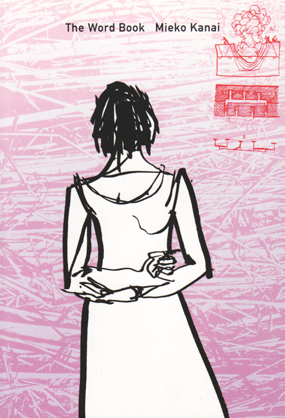
The pink cover of this small paperback might lead one to think that it’s a short collection of chick lit. While it’s true that Kanai Mieko is female, and while it’s true that she has often been classified as a “women writer,” The Word Book is just about as far away from chick lit as you can get. The twelve short stories in this collection are perhaps not so much “stories” as they are prose poems, or perhaps even essays written in the form of short stories. Kanai’s language is gorgeous, and the way she presents her ideas is fascinating. The stories themselves are very loosely structured and don’t follow established narrative patterns.

Kanai’s preoccupation in The Word Book is the writing self, or the self who is speaking, or telling a story. Many of the narrators in this collection are writers, and many of them are trying to explain something that happened in the past. Kanai almost fetishizes her narrators as they write about writing and constantly question their ability to tell a story. Perhaps it happened like this, perhaps it happened differently. Who is writing? Who is telling the story? Is the narrator of the story the same person as the protagonist of the story? Many of these stories have multiple narrators within the span of less than ten pages. A reader is faced with two choices – to either puzzle out who the narrators are and what their relationship to one another might be, or to let the narrative flow wash over him or her and simply accept that the narrator of a story is never a stable or unquestionable entity.

In that each of Kanai’s stories resembles something of an intellectual puzzle, I am reminded of Borges’s Labyrinths. In that Kanai’s stories are filled with a multitude of unreliable narrators who may or may not actually be the same person, I am reminded of Faulkner, especially As I Lay Dying. However, since Kanai is still able to infuse her stories with a sense of place and beauty, I am reminded of Furui Yoshikichi (Ravine and Other Stories, translated by Meredith McKinney), another Japanese writer of mysterious short fiction.

An interesting aspect of Kanai’s prose that I think is undeniably characteristic of her and no one else, however, is her play on gender. Kanai is a woman, but all of her narrators are men. To be more precise, Paul McCarthy has translated all of her narrators as men. I have only read a handful of Kanai’s stories in the original Japanese, but it is my impression that the writer takes full advantage of the ability of the Japanese language to not differentiate gender. Why does Kanai write with exclusively male narrators? Or are her narrators all men? Is she intentionally writing within a masculine narrative realm? If this book did not have a pink front cover and an “about the author” blurb on the back cover, would the reader even know that the author of this collection is a woman? Does it matter?

Meta-textual issues aside, I really enjoyed reading The Word Book because of its narrative sophistication, dreamlike atmosphere, and poetic touch. To illustrate what I like so much about this book, I would like to end with a passage from a story entitled “Fiction:”

But after awhile, I changed my mind: my guest’s words were as vague as they were clear, spoken by one who expresses by looks or by his whole weak body the scintillating talent of a born poet. Realizing this, I trembled with envy. Bitter as it was to admit, I was envious of those empty words, not understood even by the man who uttered them, those empty words that shone with a soft, rose-colored radiance. Words such as these, shining words bathed in a soft, rose-colored radiance, precisely because of their emptiness lusted after a shameless ecstasy of the sort one can only experience in dreams. And I thought, feeling a kind of despair, “Long ago my words, too, trembled violently in this shining, soft, rose-colored radiance.”

The Budding Tree

Title: The Budding Tree: Six Stories of Love in Edo
Japanese Title: 恋忘れ草 (Koiwasuregusa)
Author: Kitahara Aiko (北原亞以子)
Translator: Ian MacDonald
Publication Year: 1993 (Japan); 2008 (America)
Publisher: Dalkey Archive Press
Pages: 170

This past fall, I took a seminar on ukiyo-e, or Japanese woodblock prints depicting the “floating world” of the Edo period (1600-1868) urban pleasure districts. As we studied the courtesan prints of artists like Kitagawa Utamaro, we kept running up against the same issue: prostitution. Namely, what were the lives of the women painted by Utamaro really like? Were these women as glamorous as they seem in ukiyo-e, or were they sex slaves who lived miserable lives and died at an early age of starvation and disease? Or did they perhaps fall somewhere in between the two extremes, victims of their fates but still holding on to a measure of personal agency and control over their lives? As our class debated this issue, I couldn’t help but think about The Budding Tree.

Kitahara’s short story collection The Budding Tree is not about courtesans, but it is about Edo-period women who have close connections to the floating world. Each of the six stories in this collection has a different female protagonist: a Confucian tutor, a calligrapher who pens text that will be printed as gesaku popular novels, a singer of jōruri popular stage ballads, a hairpin designer who manages her own store, a rising print artist who works with Utagawa Kuniyoshi’s publisher, and the manager of an exclusive restaurant. Although the women don’t know each other directly, their stories are connected in small ways, and a unity of theme ties these stories together into a cohesive whole. Each of these women is struggling to make it in a man’s world, and each therefore leads a somewhat complicated love life.

I’m not an expert on the Edo period, so I’m not sure how realistic Kitahara’s depiction of her setting (Edo at the turn of the nineteenth century) actually is. From what I know of the lives of Hokusai’s daughters (especially Katsushika Ōi), however, her depiction of urban working women at the time isn’t too far off. As historical fiction, the stories in The Budding Tree are interesting and satisfying, especially since the swashbuckling samurai that one usually encounters in Japanese historical fiction are kept offstage. It is my (perhaps futile) hope that Ian MacDonald’s excellent translation will find a wide audience, so that other Japanese female-centric historical fiction, such as the Edo-period female detective stories of Miyabe Miyuki, will find their way into American bookstores.

I therefore recommend The Budding Tree to anyone with an interest in the Edo period, historical fiction, women’s literature, or just plain good romantic stories. The one caveat I might offer concerns the translation’s complete absence of footnotes. There are more than a few non-translated and non-glossed terms (such as jōruri, i.e., the songs of the puppet theater) that appear with frequency throughout the text, as well the names of actual historical figures and geographical landmarks with which a casual reader might not be familiar. Hopefully, however, the stories themselves will whet the reader’s appetite to learn more about the world of early nineteenth century Edo.