Reader of books and player of games. College professor and pokémon trainer. Writes about Japanese fiction, media, gender, and society. In love with monsters and magic.
https://digitalfantasydiary.com/
Atsuhiro Yoshida’s 2018 linked short story collection おやすみ、東京 chronicles the adventures of a cast of slightly odd characters with subtle connections to one another. Each of the stories begins at precisely 1:00am. Far from being scary or dangerous, the nighttime urban space of Tokyo is gentle and welcoming.
Four women run a small restaurant that’s only open in the early hours of the morning. A taxi driver listens patiently to his passengers so that he can take them exactly where they need to go. Other characters have highly specialized professions, from someone who runs a highly curated antique store to someone who disposes of old telephones.
I’m in love with Yoshida’s writing style, which is playfully idiosyncratic but still clear and light and easy to read. Despite the gentleness of the stories, there’s never any sentimentality, just slightly damaged people doing their best to make it through their lives. おやすみ、東京 tends more toward realism than some of Yoshida’s other work, but small bits of strangeness still shine through the cracks of the mundane.
An English translation of this book, Goodnight Tokyo, is scheduled to be released on July 9, and I’m looking forward to Yoshida’s English-language debut!
Yōko Ogawa’s 2023 collection からだの美 brings together sixteen short essays on the theme of bodies and physicality. The three primary topics are sports, performing arts, and animals.
The essays about sports were mostly lost on me, but I loved Ogawa’s discussions of animals, especially naked mole rats. As Ogawa reflects on their odd appearance and rigorously structured society, she writes that the world is an infinitely strange place, and that she couldn’t invent creatures like this from imagination even if she wanted to.
My favorite essay is レース編みをする人の指先, which is a meditation on how our lives and bodies are shaped by creative practice. Even though crafts such as embroidery and sewing lace seem to have no practical purpose in modern society, we continue to make things by hand just for the joy of it.
The Japanese literary tradition of essay writing is a bit different than what many of us have come to expect from English-language essays. To make a generalization, Japanese literary essays tend not to include anything overly personal about the author or lay bare any sort of trauma. It’s not a given that an essay will address political topics or attempt to persuade or educate the reader. Rather, reading a Japanese essay is often like engaging in a gentle conversation. I find this lo-fi style of writing to be quite relaxing to read, but your mileage may vary on whether the essays in からだの美 come off as pleasantly chill or somewhat flat and underwhelming.
To me, からだの美 is an interesting companion to Ogawa’s 2022 short story collection 掌に眠る舞台, which also explores the relationship between art and the body. Ogawa’s fiction follows strange people who inhabit a twilight world that feels slightly removed from our own, so I found it amusing to read her perfectly normal nonfiction essays about the brighter side of topics she’s explored in her recent stories.
Yōko Ogawa’s 2022 collection 掌に眠る舞台 contains eight stories connected by the broad theme of “stages.” Some stories are about the world of performing arts, while others take an abstract approach. Ogawa isn’t concerned with glamour, but rather the strangeness of the stage after the spotlights go out.
One of my favorite stories is ユニコーンを握らせる, which is about an actress whose sole performance was cancelled. She lives alone in her old age, comforting herself by repeating lines from a play that never made it past rehearsals. As always, Ogawa’s gentle portrayal of loneliness is exquisitely observed. With each tiny detail of the woman’s apartment, Ogawa paints a portrait of someone who can’t escape her fantasies of a past that never existed.
I also enjoyed いけにえを運ぶ犬, in which a young boy repeatedly stages a performance of enjoying a specific book at a traveling bookseller’s cart for the sole benefit of the bookseller’s dog, who watches the children to prevent theft. This is a story about poverty and negligence and the fear of being forgotten, but Ogawa nevertheless captures the magic of what it’s like to fantasize about books as a kid.
For me, the standout story was ダブルフォルトの予言, which is about a woman who lives in an empty storage room on an upper floor of the Imperial Theater in Tokyo. This woman’s job is to absorb all the bad luck of the performers on stage, sort of like an inverse Phantom of the Opera. Instead of an extravagant man who lives in the sewers and aggressively causes trouble, she’s a plain and boring woman who lives the attic and passively prevents accidents. At least, that’s what she says of herself, but what’s she really doing in the theater attic? And why is the narrator visiting her so often?
Something I’ve always loved about Ogawa’s writing is the lucid clarity of her language, but the style of 掌に眠る舞台 is much richer and denser than that of the author’s earlier work. Instead of being like icebergs, these stories are more like mazes. You have to take your time getting to the center, which is fine by me. It’s always a pleasure to spend time wandering through Ogawa’s signature uncanny spaces.
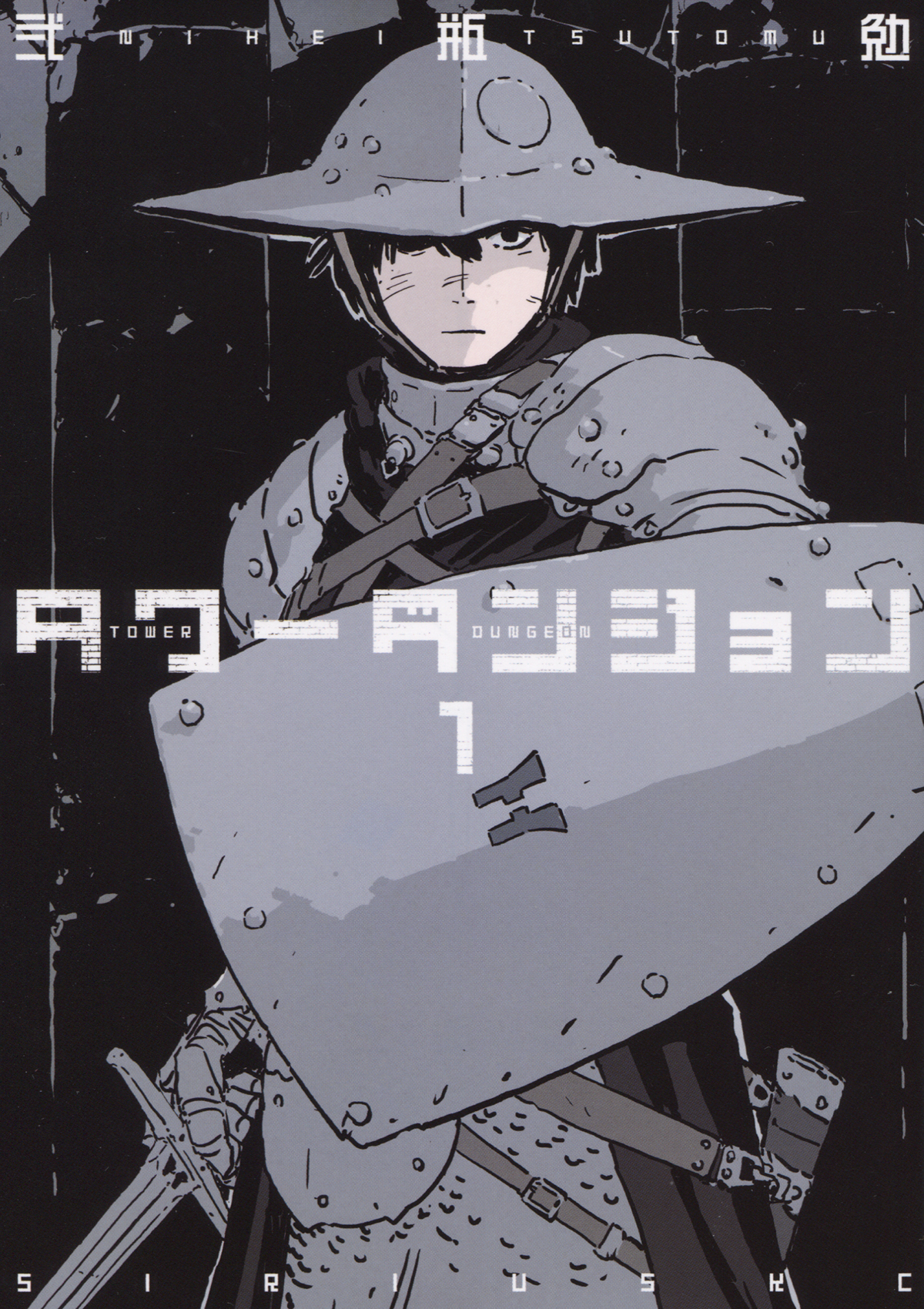
Tsutomu Nihei’s newest manga series, Tower Dungeon, is a grim and grisly dark fantasy about a small team of knights attempting to rescue a princess from an evil wizard at the top of the mysterious Dragon Tower.
This purposefully bog-standard fantasy premise is a bait-and-switch for the actual story, which is as brutal and fiercely imaginative as any of Nihei’s sci-fi dystopias. Instead of being set in the claustrophobic cable-choked interior of a spaceship, the visual space of Tower Dungeon is filled with vaulted ceilings and crumbling stone walls, but Nihei still dazzles the reader with labyrinthine passageways and an awe-inspiring sense of scale.
Nihei’s signature body horror is on full display in Tower Dungeon, which is populated by the shambling undead, grotesque human graftings, uncanny automatons, and abject abominations. Even when they’re not monstrous, I love the designs of Nihei’s heavily armored knights.
There’s a bit of fanservice, sort of? But not really, and I’m not complaining. If I had to guess, I’d say that Nihei has a crush on Malenia, the deadly woman warrior from Elden Ring, but don’t we all.
The pacing of Tower Dungeon is excellent, and the action sequences are balanced by downtime and light banter that doesn’t try too hard to be funny. The characters offer very little exposition, but the background setting is intriguing. Given my experience with Nihei’s previous manga series, I’m not expecting the story to coalesce into any sort of cohesive plot, but I’m happy to join this strange journey wherever it leads.
I think, honestly, that Tower Dungeon is the Dark Souls manga I always wanted. I hope it gets an English translation soon!
Taiyō Matsumoto’s newest series, Tokyo These Days, follows a senior manga editor named Shiozawa who suddenly quits his job at a publishing company. After an initial period of wanting nothing more to do with manga, Shiozawa visits various artists he’s worked with over the past thirty years, hoping to commission “the perfect manga.”
Like Matsumoto’s Eisner-winning graphic novel Cats of the Louvre, Tokyo These Days is a sensitive yet realistic story about artists and the industry professionals who support their work. Although Matsumoto is honest about the pain caused by frustrated ambitions in a market that doesn’t value the wellbeing of artists, small moments of kindness and hope prevent the tone of the story from becoming too bleak.
Given that Tokyo These Days is a book about books, it’s worth mentioning that Viz’s hardcover edition is a beautiful publication with a glossy canvas cover and high-quality paper that allows Matsumoto’s artwork to shine. If you’re familiar with the kinetic urban fantasy Tekkonkinkreet, you’ll know just how much love Matsumoto puts into the details of his environments, and it’s a pleasure to take your time studying each page to appreciate the ink textures and image framing.
I’m looking forward to seeing how the story of Tokyo These Days develops, but the first volume stands on its own as an episodic commentary on the difficult but still worthwhile business of being an artist and storyteller during the slow decline of the traditional publishing industry.
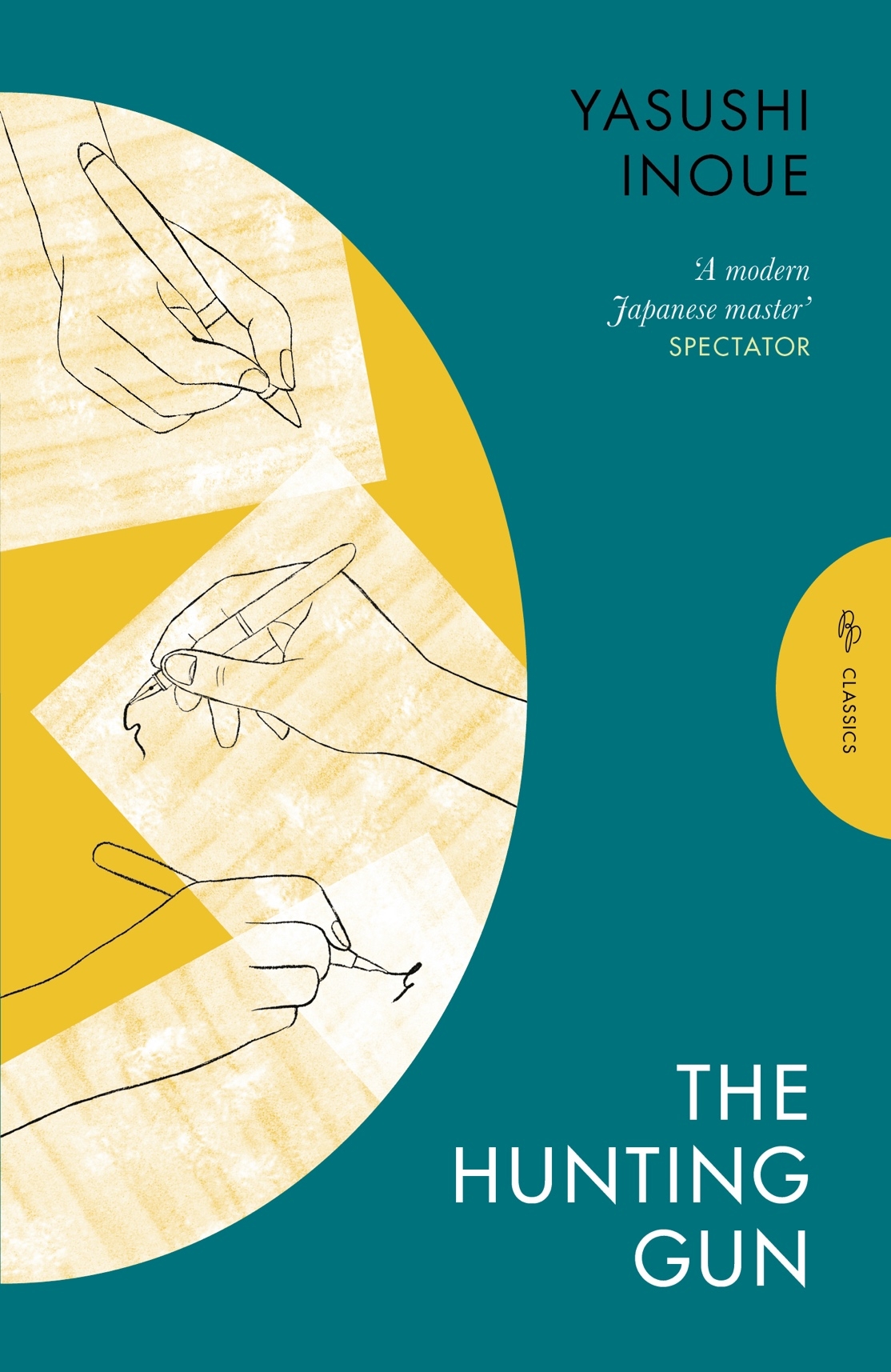
Yasushi Inoue’s epistolary novella The Hunting Gun tells the story of a man’s extramarital affair through three letters: one from his daughter, one from his wife, and one from the woman he loved. The man himself is largely unimportant and provides little more than the frame story. Instead, the three female characters take center stage as they describe the complexities and compromises of their lives and emotions.
My favorite character is the man’s wife, a cultured intellectual who always knew her husband was having an affair. One of the primary reasons she stayed in the marriage was her affection for his mistress, who happens to be her beautiful and elegant older cousin Saiko. Once Saiko passes away after a long illness, the wife unapologetically ditches the husband to pursue her art (and, presumably, her younger lovers) in a villa in the mountains. Good for her.
The Hunting Gun was originally published in 1949, but it reads like the literature of the Victorian era. The eloquence of the three women’s letters is striking, as are the emotional contortions employed by the characters to avoid upsetting the status quo. The choices the three women make are almost comically irrational and counterproductive, but I couldn’t help sympathizing with them.
Michael Emmerich’s 2014 translation has an expansive sense of flow that stands in pleasing contrast to the style of earlier translations. Emmerich’s translation reminds me of nothing so much as the fluent but subtle monologues of Jane Austen (albeit with more than a hint of Brontë melodrama). There are other ways to read this classic of Japanese literature, but I’m grateful for the updated translation provided by Pushkin Press’s handsome stand-alone edition.
Nanae Aoyama’s novella A Perfect Day to Be Alone chronicles a year in the life of a young woman named Chizu who moves in with an elderly relative named Ginko after her mother accepts a teaching position in China.
Aoyama deftly captures the reality of a relationship between a flighty 20-year-old girl and a mature 71-year-old woman. There are no heart-to-heart talks or life lessons, just a lot of sitting around and chatting about nothing in particular.
Chizu breaks up with one boyfriend and starts a casual relationship with another, but this relationship goes nowhere. The same could be said of Chizu’s job at a kiosk at a suburban train station. Aside from a vague desire to save money, Chizu has no goals or ambitions.
Rather, the story is completely interstitial, a chapter between chapters of Chizu’s life. A Perfect Day to Be Alone brought me back into my own 20-year-old headspace with an immediacy that would be difficult to achieve through a story with more of a plot.
Nothing happens in A Perfect Day to Be Alone, but I enjoyed getting to know Chizu and Ginko, whose characters are sketched out and then defined with subtle touches. I appreciate the opportunity to spend time in their company, which is supremely chill and relaxing.
Mieko Kanai’s Mild Vertigo is a slice-of-life novella whose short length belies its Proustian ambitions. The narrator, a housewife living in an apartment in the Tokyo suburbs with her husband and two young sons, engages in extended meditations on her home, family, friends, neighborhood, and place in the world.
I don’t use the word “Proustian” lightly, as Kanai’s prose requires patience and concentration to read and appreciate. The endless sentences gallop and sprawl across pages, sweeping the reader along in a flow of thought and sensation that transcends time and place as the narrator’s focus wanders. This is no breezy stream-of-consciousness nonsense, however, as each sentence is exquisitely crafted and brilliantly translated by Polly Barton.
As with Proust, there’s a certain comfort and emotional satisfaction in the act of paying such close attention to the mundane details of daily life, but Kanai’s narrator has a strong sense of irony. Gendered double standards aren’t a primary concern of this novel by any means, but an underlying frustration still shapes the narrator’s relationships and observations on what it means to be a housewife.
Mild Vertigo (originally published in 2002) doesn’t set out to upset or challenge the reader in the same way as much of Kanai’s earlier writing, but it nevertheless operates with an absolute lack of sentimentality that I find extremely refreshing, especially on the more literary end of the “slice of life” genre. Due to the dense nature of Kanai’s prose, it took me a surprisingly long time to read this short book, but I wouldn’t have it any other way.
Tree Spirits Grass Spirits collects twenty-one autobiographical stories about plants by the celebrated Japanese-American poet Hiromi Ito. As the translator, Jon L Pitt, explains in the book’s preface, these stories were originally serialized from 2012 to 2013 in a highbrow Japanese literary magazine, but Ito’s prose is lively and accessible. Each of the stand-alone stories in Tree Spirits Grass Spirits is gentle and thoughtful, and the collection is a breath of fresh and green summer air.
Ito divides her time between the cities of Encinitas in southern California and Kumamoto on the southern island of Kyushu in Japan. Each region has a unique climate and ecosystem, and Ito is fascinated by the plants that grow in both environments, from yucca and agave to camelia and hydrangeas to grass and mold. Ito’s stories touch on botany and natural history, but their primary focus is on humans, especially the humans in Ito’s own family.
Among my favorite of the stories is “Baobab Dream,” which recounts a challenge that many people have experienced with houseplants. As Ito puts it: “They are at their most beautiful when you first purchase them, and they get progressively shabbier and shabbier, even if you take care of them. And then, at some point, they wither away and die.”
And then, when you go to a garden store to get new plants to replace the old ones, it can be a challenge to identify what you’ve purchased. This is how Ito came into the possession of a mystery tree that she and her daughters resorted to calling “the baobab tree.”
While conducting research on what the tree might actually be, Ito considers the Latin names of various plants and arrives at the conclusion that botanical categorizations of plants often don’t make much practical sense. How are tulips and green onions members of the same botanical family, for instance? This confusion of taxonomy yields to broader meditations on how certain species are categorized as “invasive” as opposed to “naturalized,” and how this reflects Ito’s own experiences as someone who moves between cultures. In the end, however, such abstract concerns are secondary to the beauty of the plants themselves:
In the park next door, the mountain lilacs were at their peak. The peach trees and plum trees and cherry trees were blooming in folks’ yards. The roadsides were bright yellow from the acacias. The bushes of sweet-scented geranium in my own garden, too, had suddenly grown dense and were so thick that they seemed to be sweating, steeped in a green that surrounded one or two pink buds – swelling with each coming day and trying to open up any minute now.
Ito’s vivid descriptions of the physicality of the natural world carry over to her reflections regarding how it feels to be a human moving through the environment. This is one of the many reasons why I love the story “Kudzu-san,” which is about the kudzu growing in the neighborhood around Ito’s house in Kumamoto. As anyone who’s encountered the aggressively leafy vines can attest, kudzu is filled with vitality. If you cut it down, it will grow back twice as quickly, and its fuzzy tendrils are constantly creeping into unexpected places.
Ito remarks that there’s a certain lasciviousness to kudzu, so she searches for references to the plant in literary sources such as the Man’yōshū poetry anthology and the Tale of Genji. Such references are scarce, but Ito is intrigued by a chance mention of the famous Heian-period court magician Abe no Seimei, whose mother was supposedly a fox. In Japanese folklore, foxes are shapeshifters known for their sexual allure, so it seems only fitting that Seimei’s mother is poetically associated with the visual motif of kudzu. Ito’s own encounters with kudzu are likewise filled with startling physicality:
The vines we crushed in the morning lay as they were, and stood back up erect in the evening, swaying their stems and moving in on women – I had seen this, as well. They were more like snakes than plants. Even more than snakes, they resembled those eels that sway in the ocean. There are stories in old books about snakes that enter women’s bedchambers at night, and one about a snake that slid into a woman’s vagina after she had climbed a tree. Couldn’t all those stories be about kudzu?
What I admire about Ito’s stories is that, despite the poetic beauty of her writing, her meditations often progress in strange and unexpected directions without forcing symbolism or allegory onto the natural world. Ito observes her environment closely and looks inward as she describes what she sees, but the mycelial networks between her associations expand unseen below the surface of her writing. Just as autobiography often inspires self-reflection in the reader, Ito’s “phyto-autobiography” inspires an observation of ourselves in a larger context that doesn’t always follow human logic.
Tree Spirits Grass Spirits is a welcome companion to anyone interested in going outside and seeing the world around them from a fresh perspective. Jon Pitt’s translation gracefully conveys Ito’s casual style by allowing space for the rhythm and mouthfeel of each sentence, and it’s not an exaggeration to say that every paragraph is a joy to read. Almost all of the stories are less than ten pages long, and it’s a pleasure to dip into the collection whenever you’re in the mood to open your eyes and shift your viewpoint to a less anthropocentric frame of reference.
Tree Spirits Grass Spirits is published by Nightboat Books, and you can check out the book’s page (here).
Dragon Palace collects eight surreal stories by award-winning and internationally celebrated author Hiromi Kawakami. These stories are contemporary fantasies about shapeshifters, talking animals, and interspecies romance that borrow from traditional folklore even as they express the psychological complexity of modern magical realism. Originally published in 2002, Dragon Palace is now available from Stone Bridge Press with a translation by Ted Goosen, who also translated Kawakami’s People From My Neighborhood.
The first story in Dragon Palace, “Hokusai,” is about the octopus who seduces the fisherman’s wife in the infamous ukiyo-e print. At least, that’s who the bum who persuades the narrator to go out drinking claims to be. The narrator is depressed and hates his life, so he easily falls under the sway of the stranger who tells him fanciful stories of his exploits as an octopus-turned-human as they drink their way across a shabby port town. At several points during the evening, the narrator sees his drinking companion shift and change. By the end of the night, the narrator’s own form isn’t as solid as it once was.
Although “Hokusai” defies allegory, I read it as a story about how sad men become shitty men as they gain confidence through the stories they tell one another about women. Despite his unapologetic misogyny, there’s an appealing earthiness – or saltiness, I should say – to the octopus man that I found oddly compelling. Like the narrator, I wanted to hear more of his stories, and I was happy to go along for the ride.
“Hokusai” holds a special charm for me as a fan of H.P. Lovecraft’s 1931 novella The Shadow over Innsmouth, a classic American horror story about a decaying New England town whose residents have started marrying with fishpeople. Like Lovecraft, Kawakami paints a detailed portrait of a grimy port town that has seen better days. Unlike Lovecraft, she offsets the strangeness of interspecies relations by focusing on the more mundane aspects of what it would be like to have an ocean-dwelling boyfriend who doesn’t pay rent. In fact, even more than The Shadow over Innsmouth, “Hokusai” reminds me of Yoko Tawada’s famous short story “The Bridegroom Was a Dog,” which transposes the persistent “beast husband” trope of East Asian folklore to everyday suburban life.
“Dragon Palace,” the title story of the collection, swims even deeper into fantastic waters. The narrator is a housewife visited by the pint-sized spirit of her great-grandmother, who was supposedly a medium at the center of a sex cult before she abdicated to become a wandering vagrant. “Dragon Palace” is a prose poem on heredity and generational legacies, and about how the seeds of mystery are buried in the heart of even the most prosaic housewife.
“The Kitchen God” is a more grounded exploration of the theme of the strangeness hidden in everyday life. A housewife named Izumi is having an affair with an older man named Sanobe. Along with her recreational shoplifting, Izumi believes this affair distinguishes her from the other housewives in her neighborhood. What she seems to take for granted, however, is that her thriving collection of houseplants has turned the inside of her apartment into a small ecosystem. Among the leaves and vines lives a creature Izumi calls “the kitchen god.” This god may or may not be one of the weasels said to have infested the apartment complex, but it’s clearly no ordinary creature.
Images of strange interior spaces continue in “The Fox’s Den,” which is about a middle-aged housekeeper who begins a quasi-romantic relationship with one of her clients, an elderly booklover who once owned a used bookstore and has since become a book hoarder. To the jaded eyes of the housekeeper, this man’s attachment to old books isn’t as remarkable as his foxlike tendencies.
The housekeeper has been married twice before, once to someone she calls “completely human” and once to another man who had a tendency to behave like a fox. It’s never clear whether the animalistic traits of these characters are literal. Do they shapeshift like the octopus in “Hokusai,” or are these men animals only in the narrator’s imagination? This question is of no concern to Kawakami, who trusts the reader not to get caught up on minor details like “the nature of reality” as she explores the deep and essential weirdness of human beings.
The standout story in the collection is “Mole,” which was previously translated by Michael Emmerich in 2007 and published as “Mogera Wogura” in Kurodahan Press’s Speculative Japan anthology. In the slightly off-kilter world of the story, mole people live in human cities, where they go about their lives just like everyone else. “Mole” is narrated from the perspective of an adult male mole person, who lives with his wife in a hole. Although he’s a normal office worker, what’s unique about the narrator is that he collects humans who have lost the will to live:
The humans are bereft of energy—their faces are lifeless. Yet they are not dead. They live by eating away at their surroundings, at themselves, without ever moving. They remain with us in our hole without ever becoming moles themselves, waiting for the time when, still human, they can return to the world aboveground.
I’ve discussed this story in several of my literature classes, and it’s been my experience that students have a strong positive response. Although “Mole” could easily be read as horror, many students find it comforting to think that someone would pick them up and care for them during the days when they’re too tired to keep going. There’s a certain flavor of darkness to Kawakami’s writing that keeps her work out of the realm of being “wholesome,” but “Mole” comes the closest to a story that might be adapted into a short film by Studio Ghibli.
I have to admit that I’m not a fan of modern retellings of fairy tales. I tend to find them tedious and awkward, especially when they’re pushed into the service of a political agenda. Don’t get me wrong – I’m all for feminism and gay pride and destroying monarchies. Still, what’s always been interesting to me about “traditional” folklore is how incredibly strange it is. Sigmund Freud was wrong about a lot of things, but I think he was onto something when he talked about how it’s the very absurdity of folktales that allows them to resonate with people regardless of time or place.
The stories in Dragon Palace lean into the more surrealistic elements of folklore in a way I find emotionally satisfying. For example, what does a story about bar-hopping with a shape-shifting octopus mean in literary terms? I’m not sure, but I’ve definitely had a few boozy nights like that myself, and “Hokusai” captures the truth of that experience in a way that a more mimetically realistic story couldn’t. Likewise, what does it mean that the narrator of “Dragon Palace” picks up the off-putting spirit of her great-grandmother and hugs her like a baby? I couldn’t say, but I’ve definitely felt that exact sense of unreality while playing with one of my nieces and realizing that she looks just like my grandmother.
What I appreciate most about Kawakami’s stories is that they’re marvelously entertaining to read. Although it can sometimes be difficult to relate to the characters, each new page holds a fresh surprise for the reader. Goosen’s translation perfectly captures the tone of the original Japanese, in which Kawakami writes the most outlandish things in the most casual and colloquial prose. The style conveys the sense that someone is telling you these stories directly, perhaps as you sit in a cozy bar filled with people whose shapes shift just out of the corner of your eye. Dragon Palace is a fascinating collection of oddities in which some stories are humorous and accessible while others are more poetic and surreal. I’d recommend this striking collection to anyone intrigued by the prospect of catching a glimpse of the wonders that lie just under the surface of everyday life.





 Contemporary Japanese Literature