At the Edge of the Woods

In the woods, there is a castle. The castle was once the residence of the landowning family that ruled the area. During the war, it was the headquarters of a resistance movement. Now it sits empty and abandoned. The castle is so deep in the woods that most people couldn’t find it if they tried. No one tries, however, as the woods are filled with child-snatching imps. Strange noises come from the woods, and occasionally strange people as well.

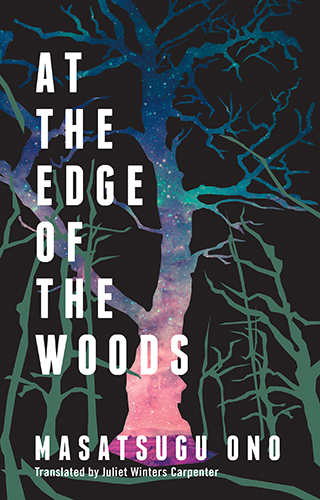
Masatsugu Ono’s At the Edge of the Woods is a novel about dread and anxiety. There’s no plot, nor is there any sort of story. Instead, Ono presents four episodes in the life of a father left alone with his young son while his wife is away. There’s no chronological order to the four chapters, which all occur at roughly the same time, and there’s no meaningful change in the personalities of the characters. Rather, the story development involves the slow intensification of an atmosphere of foreboding.

The nameless father who serves as the narrator is Japanese, as is his wife, who is pregnant with their second child. The wife has flown back to Japan to visit her parents, leaving her husband and son in an unspecified European country that reads as Germany-coded. The family has taken up residence at the eponymous edge of a vast forest in a rural area dotted with small towns.

The country is now at peace, but its neighbors are not so lucky. Long lines of refugees stream across the borders, seemingly unhindered by local authorities. It’s entirely possible that some of these refugees have camped out in the woods next to the narrator’s house, but it’s difficult to say for sure. It’s equally difficult to specify the origin of the odd sounds constantly emerging in the forest.

Characters drift in and out of the narrative, leaving behind very little of themselves save for strong emotional impressions. The disabled daughter of a bakery owner has good intentions but struggles to make herself understood. The postal worker who delivers the mail relates grotesque stories to the father, who suspects the man might be reading and discarding his wife’s letters. A neighboring farmer has always been kind to the narrator’s family, but his son reports that he once saw the man tie a dog in a burlap sack and beat the poor creature to death.

Perhaps the most striking of these characters is an elderly woman that the narrator’s son invites into the house. She appears seemingly from nowhere, and she vanishes just as mysteriously. While she’s in the house, though, she becomes a living symbol of the narrator’s anxieties regarding his ill-fitting role as the solitary caretaker of a young child in a foreign land:

Overcome, the old woman buried her face in her hands. She trembled violently, and a sob escaped her. I looked up. The kitchen windows were all closed. And yet in the air there hovered the sour smell of decayed leaves from deep in the woods, leaves that would never dry out. Steam rose from the old woman. The steam was not from her tea. A puddle spread at her feet. (20)

In his “Introduction” to The Oxford Book of Gothic Tales, Chris Baldick neatly summarizes the genre as an expression of the fear that the horrors of prior eras will not remain comfortably in the past. At the Edge of the Woods presents the readers with a range of Gothic tropes to heighten the sense of uneasy suspicion that, even in the most progressive of European countries, there is no escape from misery and cruelty. While the back-cover copy of At the Edge of the Woods calls the novel “an allegory for climate catastrophe,” this feels like a bit of an interpretive reach. Instead, Ono seems to be suggesting more broadly that, even in our bright society sustained by futuristic technologies, we’re never that far away from the edge of a large and unknowable forest.

At the Edge of the Woods can be difficult to read, and it’s probably not for everyone. Speaking personally, though, I love this book, and I’ve read it on the winter solstice every year since it was published in 2022. Ono’s writing is gorgeously atmospheric, and the legendary Juliet Winters Carpenter has done a dazzling job with the translation. If you appreciate the sort of quiet, eerie, and darkly suggestive Japanese Gothic writing typified by Yoko Ogawa’s short story collections Revenge and The Diving Pool, I’d recommend At the Edge of the Woods as the next step on a shadowed path into the liminal spaces in the penumbra of modern civilization.

Silent Singer

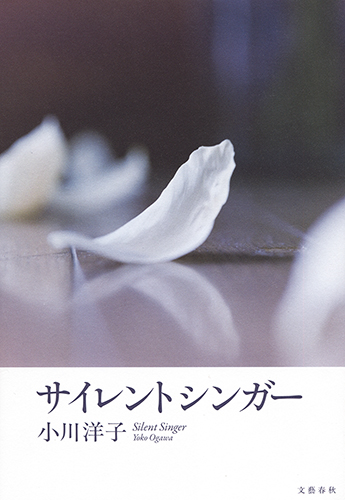
Yōko Ogawa’s 2025 novel Silent Singer (Sairento Shingā) is a bittersweet story about a woman named Ririka who lives alone in a mountain forest near a community of people devoted to silence. Ririka is a professional singer, but she never makes a name for herself, only taking freelance jobs that require a performer with an anonymous voice. Though the singer and the silent community eventually fade into obscurity, Ogawa celebrates the beauty and dignity of their lives, as well as the significance of creativity that never finds an audience.

On an isolated mountain in the countryside, a group of people calling themselves “The Introverts’ Club” have bought a parcel of land and formed a community named Acacia Fields, which is devoted to quiet and simple living. The Acacia Fields community isn’t a religious organization; rather, they’re normal people committed to the philosophy that “silence soothes the soul.” Anyone can join as long as they’re content never to speak in the presence of others.

Ririka lives in an old house next to a forest adjoining Acacia Fields, where her grandmother is employed as the gatekeeper. The gatekeeper’s job is to communicate with people from the outside world while also managing a small store that sells produce, pastries, and other items produced by the community, which raises livestock and maintains extensive gardens.

While her grandmother manages in the gatehouse, Ririka has the run of Acacia Fields. She spends hours with the aging doctor of the community’s small clinic, who isn’t bound by a vow of silence and reads to her while teaching her “finger language,” a simple form of sign language used by the community. Though her mother committed suicide after being abandoned by her father, Ririka enjoys a happy childhood divided between the public school in the town below the mountain, the doting care of her loving grandmother, and the quiet but genuine affection of the people living at Acacia Fields.

Ririka discovers her path in life during a sheep shearing session at Acacia Fields, when she’s asked to sing a simple lullaby to help keep the animals calm. She performs beautifully and enjoys herself immensely. A town official who attended the event is impressed by Ririka’s singing, and he asks her to record a similar song to be played over the municipal loudspeakers every evening at 5pm. Though no one knows the singer is Ririka, the song is so well-received that the tradition continues indefinitely.

Shortly after she graduates from high school, Ririka’s grandmother passes away. Ririka remembers her grandmother by visiting her Puppet Garden, which the old woman created after a child went missing in the mountain forest one summer. To soothe the boy’s spirit, Ririka’s grandmother fashioned five dolls from discarded household objects and placed them at the center of a small grove. For Ririka, the Puppet Garden serves as a place of quiet meditation. 

Ririka takes over her grandmother’s position as the Acacia Fields gatekeeper while supplementing her income through various freelance jobs passed along by her voice instructor. In each case, Ririka is recommended because of her relative anonymity. Ririka sings jingles for television commercials, performs anime theme songs, records vocal tracks for idol groups, and even provides the voice of a talking children’s toy. Though she doesn’t seem to realize it, Ririka is quite successful as a professional singer, but she never leaves her home on the mountain.

As an adult, Ririka strikes up a romance with the security guard at the parking lot where she keeps her car. On their first date, Ririka takes him to the Puppet Garden, whose dolls are in a severe state of decay. Instead of being creeped out, the security guard is charmed. He’s a good match for Ririka, as he has an odd hobby of his own – piecing together carefully curated scrapbooks devoted to the lost works of famous authors.

The only shadow over the relationship is that Ririka finds herself unable to sing for her boyfriend. She can only sing, she explains, if her audience isn’t a living human. Meanwhile, with few young people moving to the mountain, the Acacia Fields community is in danger of being claimed by entropy and senescence.

Silent Singer resonates with echoes of the Studio Ghibli charm of Mina’s Matchbox; but, as is often the case with Yoko Ogawa’s work, a major theme of the novel is the gentle beauty of decay. Ririka’s house is slowly falling apart, as are the dolls in her grandmother’s Puppet Garden. The agricultural holdings of Acacia Fields are gradually diminishing, and the members of the community are growing old. Regardless, the village remains peaceful, as does the surrounding forest, especially in contrast to the absurdities of the freelance work Ririka takes as a singer. 

In many ways, Silent Singer reminds me of Haruki Murakami’s 2023 novel The City and Its Uncertain Walls, especially in its aggressive refusal to engage with contemporary technology. It could be the case that the nostalgic settings of the two novels are simply a product of the preoccupations of two aging writers, but that’s not how these stories feel to me.

At this point in the death spiral of our capitalist hellworld, I’m bone-tired of “progress” that dehumanizes everything it touches. Meanwhile, Murakami’s narrator leaves his corporate job to work in a small-town library in Fukushima prefecture, while Ririka remains loyal to her home in a quiet mountain forest, which provides a refuge from the profit-driven demands of the entertainment industry. And good for them! I am here for characters who do not give a single fuck about social media or self-branding.

While it might be a stretch to call Silent Singer “anticapitalist,” this is a story about the value of creativity at the margins, as well as the beauty of art without an audience. Ogawa’s obsession with the decay that creeps in at the edges of isolated communities and individual lives can sometimes feel uncomfortable, but let it be uncomfortable! There’s nothing cozy about the richness of human experience, and the care and attention Ogawa devotes to the slow endings of her stories is one of the great pleasures of her work. The work of Ogawa’s “silent” creatives may be unremarked, but it’s far from unremarkable.

The Place of Shells

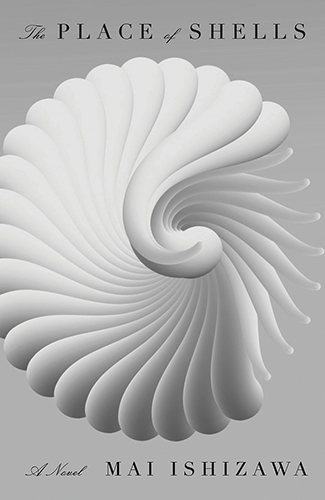
Mai Ishizawa’s short novel The Place of Shells, which was awarded an Akutagawa Prize in 2021, follows a Japanese woman pursuing her PhD research in European art history at a university in the German town of Göttingen. For a year and a half, she’s shared an apartment with a fellow grad student named Agatha, as well as Agatha’s dog Hector.

Around the late-summer Obon festival, when the spirits of the dead visit the world of the living, the narrator talks to her old classmate Sawata, who studied art history with her as an undergrad at a university in Sendai and currently works as a museum curator. Over Skype, Sawata tells her that their friend Nomiya will be visiting Göttingen for a brief period. This is odd, the narrator admits, as Nomiya disappeared during the March 2011 tsunami and has been presumed dead for nine years.

Nomiya’s sudden appearance isn’t the only strange thing happening in Göttingen. One of the town’s landmarks is its Planetenweg, where memorials representing the sun and planets are placed according to scale. Now that Pluto is no longer a planet, however, its memorial has been sighted in odd places, seemingly at random. In addition, Agatha’s dog Hector has been digging up mysterious bits of rubbish in the forest, and each discarded item is connected to the secret memories of the people in the narrator’s circle of friends. To make matters even more bizarre, the narrator painlessly begins to grow a set of human teeth on her back.

The Place of Shells doesn’t really have a plot, and none of these surreal occurrences are mysteries to be solved. Instead, the narrator reflects on the nature of memory as she comes to terms with the March 2011 tsunami and what she lost in the disaster, as best illustrated by this passage toward the end:

What I had been afraid of was the distortions of memory caused by emotions and the passing of time. That was where forgetting began. What my feet had felt as they went tramping around that seaside town, the scenes my eyes had taken in, the smell of the sea that rushed into my nose – these memories didn’t remain with me as raw sensations, but morphed into a distant narrative. That oblivion concealed more than just the dead who hadn’t returned to land.

As the narrator comes to terms with the constructed nature of her memories of trauma, she encounters a number of ghosts that manifest in cozy apartments and relaxed strolls through the beautiful German town. For most of us, the ghosts of the past have little to do with darkness or shadows; rather, they walk casually beside us during the day. While giving the reader a beautiful environment to explore through careful and attentive prose, Ishizawa encourages reflection on grief as refracted through the passage of time.

I’d also like to mention an aspect of this novel that was immensely appealing to me personally. For various reasons, my frame of intellectual reference is skewed away from Europe, and I’ve always wanted someone who doesn’t assume a thorough knowledge of Christianity to teach me about Western art history. The Japanese narrator (and, I suppose, the academic author speaking through her) presents an accessible discussion of her research on German artistic portrayals of Christian saints that I found fascinating. The Place of Shells is a meditation on art as much as it is on memory, and I feel as though I gained a more grounded and relatable perspective on the sort of medieval European art that I always passed by without understanding in museums.

In doing a bit of research of my own, I realized that each of the women in the narrator’s circle of friends has a connection to her saintly namesake that Ishizawa communicates through imagery both mundane and fantastic. Over the course of the story, the narrator makes something of a pilgrimage through overlapping systems of symbols in a way that mirrors her own academic study of religious art. If a reader were to draw a map of these symbols, I imagine that the constellations would be quite dense, but I found it satisfying simply to follow that narrator’s meanderings without imposing a definitive sense of meaning.

Mai Ishizawa reminds me of Yoko Ogawa in her ability to create a subtle sense of atmosphere through mundane descriptions of calm and lovely places that gradually become eerie through an accumulation of otherworldly imagery. I’m also reminded of the quiet and gentle surreality of Haruki Murakami’s 1982 novel A Wild Sheep Chase, especially in terms of the narrator’s time in the woods and proximity to historical palimpsests overlaid onto daily life.

The Place of Shells is a slow novel to be savored. A spiraling shell is an apt analogy for the style of narration, which only gradually approaches its central theme through ever-smaller circles. Ishizawa’s writing, which Polly Barton has translated with pitch-perfect clarity, is gorgeous and well worth taking a page at a time as the reader, like the narrator, softly explores a world made beautiful and strange through art and memory. 

薬指の標本

Yōko Ogawa’s 1994 book Kusuriyubi no Hyōhon (薬指の標本) brings together two novellas that feel spiritually akin to The Memory Police, which was originally published in the same year. Like The Memory Police, the two novellas in Kusuruyubi no Hyōhon are set in a seemingly normal world haunted by a sense that something important has vanished. These stories are about ordinary people who come into contact with pockets of magic whose mundanity belies their deep strangeness.

The narrator of the first story, Kusuriyubi no Hyōhon, has moved to the suburbs after losing a portion of her ring finger in an industrial accident. While walking through the neighborhood, she encounters a handwritten “help wanted” sign taped to the front door of a “specimen museum” (標本室) operating in a building that once served as a dormitory during the postwar period. With no connections and no other job prospects, the young woman interviews for and accepts a position as a receptionist.

It’s not entirely clear what exactly the museum’s “specimens” are, and their method of manufacture is a mystery. Regardless, anyone is welcome to bring an object representing a traumatic experience to the museum, where it will be registered, cataloged, and preserved. Through each object’s transformation into a specimen, the pain of its associated memories disappears.

The narrator becomes the focus of the intense gaze and possessive interest of the artist who creates these specimens. Though she loves him, he forbids her to enter his underground workshop. Given the apparent disappearance of the people who requested that specimens be made from parts of their own bodies, the narrator can’t help but wonder what would happen if she entered the artist’s forbidden underground chamber and asked him to work his magic on what remains of her severed ring finger.

The narrator of the second story, Rokkakkei no Kobeya (六角形の小部屋), is a nurse at a large hospital where she recently ended a serious relationship with one of the doctors. She becomes fascinated by two middle-aged women she encounters in the locker room of a local sports club; and, with little else to occupy herself during the long winter evenings, she trails them to a semi-abandoned danchi housing complex.

One of these women, Midori, operates an odd service in the former apartment manager’s office. The “Katari Kobeya” (語り小部屋) is a small, self-contained room with six soundproof walls. Anyone who enters this room can speak to their heart’s content, thereby relieving themselves of the psychological burden of their secrets.

The narrator has no secrets to speak of, but she becomes friendly with Midori and her handsome son. In order for the magic of the Katari Kobeya to remain effective, however, it can’t remain in one place for long. If the narrator comes too close to this strange liminal space, she runs the risk of another heartbreak.

In her monograph The Pleasures of Metamorphosis, Lucy Fraser describes Ogawa’s stories as having a fairytale-like quality, and this is certainly true of the two novellas in this book. In Rokkakkei no Kobeya, the narrator follows two women through the trees of a snowy park at night and thereby finds herself in a warm and comforting sanctuary that can be found only by those in need. Meanwhile, Kusuriyubi no Hyōhon has echoes of Bluebeard, with an older man forbidding an inexperienced young woman from entering a special room in his gothic mansion.

In addition to the subtle inclusion of fairytale tropes, the ethereal quality of Ogawa’s writing is partially due to what Elena Giannoulis, in her article “The Encoding of Emotions in Ogawa Yōko’s Works,” calls the writer’s “mood tableaux.” Giannoulis argues that Ogawa generally doesn’t reveal much below the surface of her characters’ placid demeanors, nor do her characters go out of their way to offer psychologically perceptive commentary on the world around them. Instead, Ogawa creates a “mood” by describing what the narrator perceives with their senses. By thus crafting a vivid picture of a setting unimpeded by value judgments, Ogawa invites the reader to associate their own feelings with the cinematic tableaux they see in their mind’s eye.

Giannoulis’s argument makes perfect sense to me, especially in relation to Kusuriyubi no Hyōhon. I find the texture of Ogawa’s writing to be similar to the visual style of Hirokazu Kore’eda, who allows the camera to linger on the small details of his characters’ environment while the characters themselves remain silent. These settings tend to be mundane in the extreme, and Kore’eda luxuriates in the interiors of older structures that have become dirty and dilapidated. As in Kore’eda’s films, the combination of nostalgia and neglect lends a subtle touch of pathos to the quiet drama of Ogawa’s stories.

Kusuriyubi no Hyōhon is a meditation not on what has vanished, necessarily, but rather on what remains behind. In these two novellas, Ogawa speaks to the dignity of people, places, and objects that are in danger of being forgotten. No one would notice if anything in Ogawa’s stories disappeared – but she has noticed, and now the reader has noticed, too. Still, though there’s a certain tonal warmth and narrative coziness to Kusuriyubi no Hyōhon, Ogawa never allows the reader to relax. As in any fairytale, there’s always a sense of danger, as well as the intriguing strangeness of half-remembered liminal spaces.

Mimi ni sumu mono

Yoko Ogawa’s 2024 short story collection Mimi ni sumu mono (耳に棲むもの) is about quiet endings and the unremarked deaths of small things. The tone of these five stories ranges from gentle and elegiac to genuinely shocking.

I’d like to begin with the latter, as Kyō wa kotori no hi (今日は小鳥の日) is one of the most subtle yet surprising horror stories I’ve read in some time. The nameless narrator of this story addresses the reader directly as she welcomes us to the annual gathering of the Small Bird Brooch Society. Small bird brooches can be made in a variety of ways, she explains, but she crafts hers using the real beaks and talons of dead birds. There’s something truly sublime about watching their tiny bodies decay, she muses.

The narrator then explains how her predecessor, the first president of the Society, met his untimely end. His death involves the still-living bodies of small birds, but I dearly wish it did not. After recounting one of the more gruesome scenes I’ve encountered in literary fiction, the narrator cheerfully invites the reader to sit down and enjoy the banquet. She then points out a few notable members of the Society, each of whom has their own method of constructing small bird brooches. Perhaps you, dear reader, will feel right at home in their company.

The collection’s final story, Senkōsho to rappa (選鉱場とラッパ), is about a young boy who lives with his mother in the company housing of a rural ore processing plant. His mother works both the day shift and the night shift at the plant’s cafeteria, leaving him to his own devices. During the summer festival at a local shrine, the boy becomes enamored with a toy bugle offered as a prize at a carnival game. Without any money to play, he’s reduced to lurking at the corner of the tent and praying that, if he can’t win the bugle, then no one else does either.

The next day, the boy takes out his frustration on a stray dog begging for scraps near the back entrance of the cafeteria where his mother works. He kicks the poor animal so hard that he ruptures its stomach, and it dies. Later he returns to the festival, where he witnesses the sudden death of the old woman running the carnival game. He steals the bugle in the confusion and returns home only to realize that the toy is nothing more than cheap plastic that has been spraypainted gold. In his shame, the boy buries the bugle in a closet, just as he buried the dog he killed between the roots of an old tree.

Still, as he sits on the apartment balcony while waiting for his mother to come home, the boy fashions constellations from the lights of the processing plant and imagines the songs he would play in their honor if his bugle were real.

Mimi ni sumu mono reminds me of Ogawa’s first work to appear in English translation, The Diving Pool (2008). Although it’s difficult to classify these stories as “horror,” they’re all subtly but effectively unsettling. When we’re exposed to the small cruelties that hide in the hearts of normal people, we begin to see reflections of their inner darkness in the details of the world that surrounds them. Ogawa’s characters are people who have lost their sense of belonging. The world has moved on without them, leaving a quiet air of desperation and neglect in its wake.

Mimi ni sumu mono is twenty-first century gothic fiction at its finest, but it’s not all bleak. Like the boy in Senkōsho to rappa and the president of the Small Bird Brooch Society, Ogawa remains fascinated by the beauty that gleams through the horrors. At 132 pages, Mimi ni sumu mono is relatively slim, but I believe this collection’s brevity is to its credit. The book is like an art gallery that encourages the reader to take their time with each piece, lingering as long as they like without any pressure to rush forward.

Mimi ni sumu mono was written in collaboration with Koji Yamamura, an Academy Award nominated animator. Yamamura created the companion piece My Inner Ear Quartet, which is described as “a literary VR animated film with an interactive storyline” on its page on Steam (here). This interactive animation was showcased at a number of international animation festivals and won several awards in Japan and abroad. As Yamamura’s animation requires a VR headset to view, I can’t offer any comments, but its trailer on YouTube (here) and the expanded excerpt (here) suggest that Yamamura was successful in capturing the eerie tone and uncanny beauty of Ogawa’s stories.

Nails and Eyes

Kaori Fujino’s Nails and Eyes collects a novella and two short stories whose crystal-clear prose is darkened by the shadow of creeping psychological horror. The theme of family lies at the heart of these stories, especially as it intersects with the fear that those closest to us may deliberately choose not to see obvious but unpleasant truths.

In the third story, “Minute Fears,” a woman named Mika plans to attend the wedding reception of a college friend. Since she’s started a family, Mika has rarely gone out on her own, and she’s been looking forward to the party. Her son Daiki begs her not to go, as he’s been disturbed by an urban legend surrounding a ghost rumored to haunt the local playground. After a brief struggle with Daiki, who doesn’t want to be left alone, Mika goes to the reception late and leaves early. When she comes home, Daiki confesses his fear of the ghost, and Mika resolves to take him to the playground herself to prove that the urban legend isn’t true.

Whether the ghost exists is left to the reader’s imagination. Instead, the true horror lies in the image of Mika dragging her terrified son into the night. Or perhaps, if your sympathies lie elsewhere, the horror is hidden in the homebound years that Mika has had to endure in order to care for her child while her friends enjoy their lives and careers in the outside world. 

The second story, “What Shoko Forgets,” is equally ambiguous yet just as disturbing. After a mild stroke, Shoko has been living in an elder care facility for almost half a year. Her family visits regularly, and she receives ample attention from the staff. A polite and energetic young man named Kawabata is especially gentle, and he seems to have a special fondness of Shoko.

There’s something strange about Kawabata’s behavior after dark, however; and, for some reason, Shoko finds herself thinking about sex in a way she hasn’t for years. It’s possible that there might be a connection between Kawabata and the man Shoko imagines lying next to her at night, but both her eyesight and her memory have grown hazy. In any case, it’s no use trying to explain her muddled thoughts about the situation to her daughter or granddaughter, who so kindly come to visit a forgetful old woman.

The collection’s centerpiece novella, “Nails and Eyes,” is narrated from the perspective of a young girl who lost her mother to an unexplained incident. Her father brings home his younger lover, and the narrator addresses this woman directly through the story. She recounts the minute details of the woman’s life, from her affair with a bookstore owner to her obsession with the home décor blog once maintained by the narrator’s mother.

The narrator also describes her own behavior as a child who has clearly been traumatized by her mother’s suicide but largely ignored by the adults in her life. The narrator refuses to be anywhere near the balcony where her mother died, and she sits in the corners of the apartment gnawing at her nails, which become serrated and sharp. To her credit, the woman responsible for the child’s care makes a clean break with her lover and begins to take a more active interest in her charge’s welfare. This change of heart comes too late, however, and the story ends with an incredibly upsetting psychological break.

To be clear: if you have phobias related to eyes and/or fingernails, this book might not be for you. 

At 140 pages, Nails and Eyes is easy to breeze through, especially in Kendall Heitzman’s smooth and weightless translation. Still, Fujino’s fiction rewards time and attention, as well as repeated readings. There are layers to her deceptively simple prose, and any one of these stories has the potential to generate multiple lines of speculation. Nails and Eyes is a fascinating and disquieting collection that will be appreciated by readers who enjoy literary short horror fiction like Yoko Ogawa’s Revenge and Mariana Enriquez’s Things We Lost in the Fire.

Mina’s Matchbox

Tomoko is only twelve years old when she loses her father to cancer. To learn to support herself, Tomoko’s mother attends a dressmaking school in Tokyo, where she lives in a student dorm. From 1972 to 1973, Tomoko is sent to live with her aunt in Ashiya, an upscale suburb between Osaka and Kobe. Her uncle is the president of an international soft drink company, and his house is extravagantly large and quite grand. Tomoko’s cousin Mina lives a charmed life marred only by her asthma, which is serious enough to necessitate frequent hospital visits.

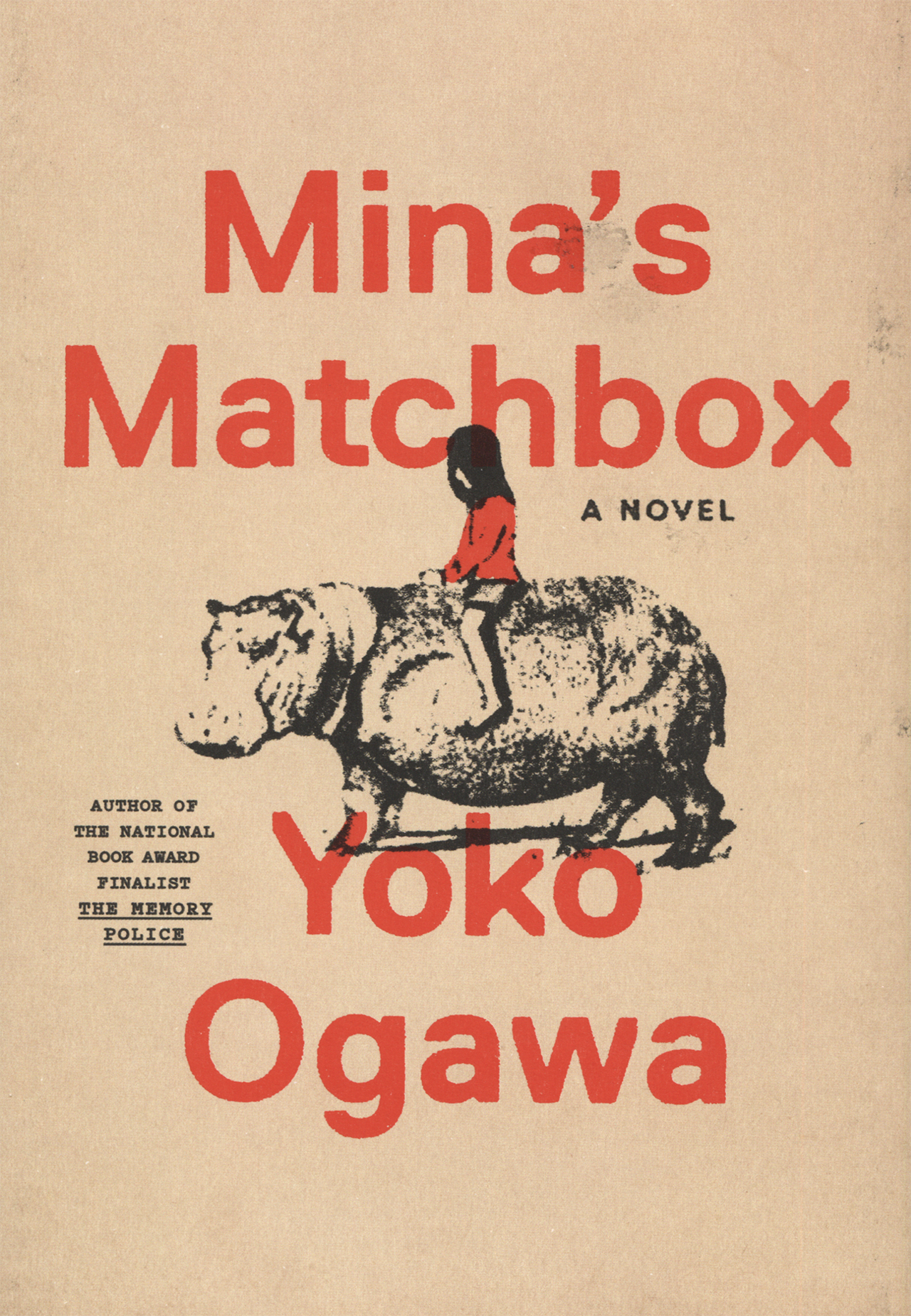
Mina’s grandmother Rosa emigrated from Germany in 1916, and the family’s house is filled with beautiful things, from foreign furniture and luxurious cosmetics to exotic Christmas paraphernalia to a room covered in Islamic tiles and used for a holistic health treatment called “light bathing.” Perhaps the most intriguing thing about the house is Mina’s pet, an aging Liberian pygmy hippopotamus named Pochiko who carries Mina to school every morning. The household is managed by Yone-san, an elderly woman who is ostensibly Rosa’s maid but can more properly be called her companion and life partner.

Tomoko’s aunt is attractive, elegant, and kind. Her uncle is handsome, friendly, and good-natured. The family’s groundskeeper and driver, Kobayashi, is a sweet and patient man whom everyone loves. The entire family welcomes Tomoko with style and grace, and she quickly becomes fast friends with Mina. The opening chapters of Mina’s Matchbox unfold almost like a Studio Ghibli movie, and I couldn’t help envisioning the characters in the style of When Marnie Was There.

To add to the magical atmosphere, Mina is thoroughly charming. She reads well above the level of a sixth grader and asks Tomoko to check out books from the local library like Yasunari Kawabata’s House of the Sleeping Beauties and Katherine Mansfield’s The Garden Party. Mina conveys her comments on these books to Tomoko, who shares them with the gentle young librarian she fancies.

Meanwhile, Mina has a crush on a deliveryman for her father’s company who drops by the house every week. During each visit, he gives Mina interesting matchboxes that he picks up on his rounds. Inspired by the graphics printed on the boxes, she writes short stories on paper that she uses to adorn the inside of the small containers she uses to store her collection. These stories are often fables about animals or other small creatures, and Tomoko loves them.

Mina’s Matchbox is a Yoko Ogawa novel, so it goes without saying that all is not well. Quiet tensions flow underneath the family’s beautiful surface, which is marred by the infidelity of Tomoko’s handsome uncle. To give herself a sense of purpose, Tomoko’s aunt combs through magazines searching for typos so that she’ll have an excuse to send letters of complaint. Mina’s older brother writes to the family from Switzerland but never mentions his father. In her devotion to Rosa, Yoneda-san almost never leaves the house and is frightened by everything outside of her immediate sphere of influence.

Nothing bad happens, and this definitely isn’t the sort of novel where the sick child dies. I hope it’s not a spoiler to say that both Mina and Tomoko go on to live happy lives. Aside from subtle but meaningful character development, Mina’s Matchbox doesn’t have much in the way of plot.  

Regardless, this isn’t a slow novel. The pacing is excellent, and I finished the book quickly. In fact, I would have liked to spend more time with it. Every sentence is perfect, and each paragraph is a joy. Despite the child protagonists, Mina’s Matchbox has all the nuance of an adult perspective and steadfastly refuses to engage in melodrama. Reading this novel is like sitting outside and enjoying the sunshine on a warm spring day, and it’s a pleasure to follow the gradual progression of the small stories surrounding Mina and Tomoko as recounted in Ogawa’s impeccable prose.

からだの美

Yōko Ogawa’s 2023 collection からだの美 brings together sixteen short essays on the theme of bodies and physicality. The three primary topics are sports, performing arts, and animals.

The essays about sports were mostly lost on me, but I loved Ogawa’s discussions of animals, especially naked mole rats. As Ogawa reflects on their odd appearance and rigorously structured society, she writes that the world is an infinitely strange place, and that she couldn’t invent creatures like this from imagination even if she wanted to.

My favorite essay is レース編みをする人の指先, which is a meditation on how our lives and bodies are shaped by creative practice. Even though crafts such as embroidery and sewing lace seem to have no practical purpose in modern society, we continue to make things by hand just for the joy of it.

The Japanese literary tradition of essay writing is a bit different than what many of us have come to expect from English-language essays. To make a generalization, Japanese literary essays tend not to include anything overly personal about the author or lay bare any sort of trauma. It’s not a given that an essay will address political topics or attempt to persuade or educate the reader. Rather, reading a Japanese essay is often like engaging in a gentle conversation. I find this lo-fi style of writing to be quite relaxing to read, but your mileage may vary on whether the essays in からだの美 come off as pleasantly chill or somewhat flat and underwhelming.

To me, からだの美 is an interesting companion to Ogawa’s 2022 short story collection 掌に眠る舞台, which also explores the relationship between art and the body. Ogawa’s fiction follows strange people who inhabit a twilight world that feels slightly removed from our own, so I found it amusing to read her perfectly normal nonfiction essays about the brighter side of topics she’s explored in her recent stories.

掌に眠る舞台

Yōko Ogawa’s 2022 collection 掌に眠る舞台 contains eight stories connected by the broad theme of “stages.” Some stories are about the world of performing arts, while others take an abstract approach. Ogawa isn’t concerned with glamour, but rather the strangeness of the stage after the spotlights go out.

One of my favorite stories is ユニコーンを握らせる, which is about an actress whose sole performance was cancelled. She lives alone in her old age, comforting herself by repeating lines from a play that never made it past rehearsals. As always, Ogawa’s gentle portrayal of loneliness is exquisitely observed. With each tiny detail of the woman’s apartment, Ogawa paints a portrait of someone who can’t escape her fantasies of a past that never existed.

I also enjoyed いけにえを運ぶ犬, in which a young boy repeatedly stages a performance of enjoying a specific book at a traveling bookseller’s cart for the sole benefit of the bookseller’s dog, who watches the children to prevent theft. This is a story about poverty and negligence and the fear of being forgotten, but Ogawa nevertheless captures the magic of what it’s like to fantasize about books as a kid. 

For me, the standout story was ダブルフォルトの予言, which is about a woman who lives in an empty storage room on an upper floor of the Imperial Theater in Tokyo. This woman’s job is to absorb all the bad luck of the performers on stage, sort of like an inverse Phantom of the Opera. Instead of an extravagant man who lives in the sewers and aggressively causes trouble, she’s a plain and boring woman who lives the attic and passively prevents accidents. At least, that’s what she says of herself, but what’s she really doing in the theater attic? And why is the narrator visiting her so often?

Something I’ve always loved about Ogawa’s writing is the lucid clarity of her language, but the style of 掌に眠る舞台 is much richer and denser than that of the author’s earlier work. Instead of being like icebergs, these stories are more like mazes. You have to take your time getting to the center, which is fine by me. It’s always a pleasure to spend time wandering through Ogawa’s signature uncanny spaces.

The Memory Police

The Memory Police
Japanese Title: 密やかな結晶 (Hisoyaka na kesshō)
Author: Yoko Ogawa (小川 洋子)
Translator: Stephen Snyder
Publication Year: 1994 (Japan); 2019 (United States)
Publisher: Pantheon Books
Pages: 274

The Memory Police is set on an island isolated from the rest of the world. The island is large enough to support a hospital, a university, and even a publishing company, but its community is small enough for people to be able to gather together for significant events. Like her parents before her, the narrator has lived on this island her entire life, and she takes its idiosyncrasies for granted.

The narrator’s island is cozy, with lovely bakeries and gardens. No one seems worried about money, and the narrator is able to live in a comfortable house despite the fact that the only work she does is to write novels that, by her own admission, no one reads. The narrator focuses her attention on the small details of everyday life, and it’s only gradually that the peacefulness and nostalgia of the narrative begin to unravel.

Every so often an object will “disappear.” Almost overnight, whatever has disappeared will vanish not just from the world, but from everyone’s memory as well. It’s not entirely clear how or why this works, but no one questions it. In some instances, such as perfume and photographs, the objects that disappear must be discarded, usually by means of being ritually thrown into a river or incinerated. In other cases, such as when the concept of “fruit” disappears, all the fruit on the island literally falls from the trees to the ground. Once something disappears, all perception of it disappears as well, and people aren’t able to recognize something that’s disappeared even if they’re looking at it. Even idiomatic expressions change, as with “to hit two creatures with one stone” after birds disappear. The world of the narrator is limited, but her attention to detail is precise, so even small disappearances take on an emotional weight for the reader.

Some people don’t lose their memories, however, and this is where the eponymous memory police come in. This is also where the novel becomes dystopian, with midnight arrests, people suddenly going missing, families fleeing, and all records of these incidents buried deep within an impenetrable bureaucracy. The narrator’s mother, who worked as a sculptor and kept a variety of disappeared objects hidden in a cabinet, was an early casualty of the memory police, leaving the narrator an orphan.

The narrator gradually realizes that her editor is also immune to disappearances, and she resolves to keep him safe by concealing him in a sealed room in the basement of her house while his pregnant wife flees to a rural area north of town, ostensibly for the sake for her health. As her editor continues to read and comment on the narrator’s manuscript in secret, an intimacy develops between them, which is reflected in the strange and surreal excerpts from her novel interspersed throughout the main story.

As the novel progresses, the rate of disappearances increases, an alarming trend that is exacerbated by environmental disaster. At the end of the story, the concept of “disappearances” is followed to its logical conclusion in an undeniably disturbing yet surprisingly soft and gentle manner.

The Memory Police is dystopian horror fiction reminiscent of The Handmaid’s Tale, but it’s also a meditation on the ghosts that quietly follow us without ever attracting our notice. There may be no memory police in the real world, but we still forget things all the time, and we forget them so thoroughly that we don’t even realize we’ve forgotten them. The narrator is just as susceptible to these small disappearances as everyone else, but what sets her apart is that she understands the value of remembering and the importance of preservation. By maintaining a diversity of small narratives, the larger narrative represented by the memory police – namely, that which is not productive must be aggressively forgotten – can be resisted. The novel works on multiple levels as historical and political allegory, but it’s also universal and deeply personal.

The Memory Police was originally published in 1994, but it feels contemporary, fresh, and relevant. There are no specific cultural markers in the text, and most character names are abbreviated as single letters, a device that confers an air of timelessness to the story. This novel is therefore accessible to a broad general audience with no knowledge of Japan, and the translation is gorgeous. The Memory Police is brilliant and extraordinary, and it refuses to be forgotten.