Lost Souls Meet Under a Full Moon

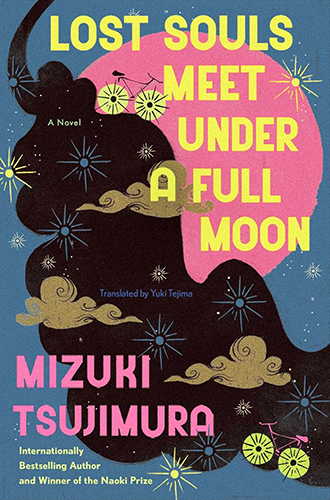
Lost Souls Meet Under a Full Moon brings together five interconnected short stories about people seeking to contact the dead. Though this book falls firmly into the category of “relaxing” fiction, it’s more plot-driven than most, and it distinguishes itself through its worldbuilding, especially its willingness to test the parameters of its magic system.

The central character of the novel is a handsome and stylishly dressed teenage “go-between” named Ayumi who can facilitate meetings between the living and the dead. The catch is that a person can only have one of these meetings in their lifetime, and each dead person is only allowed to return once. 

This is why the choice of the focal character of the first chapter, “The Rule of the Idol,” is so unusual. Manami asks the go-between to connect her with, of all people, a performer named Saori who made her living as a tv personality appearing on various talk shows and quiz games. When Manami was at the lowest point in her life, alone in Tokyo and bullied by her coworkers, she had a random encounter with Saori, who encouraged her to get back on her feet. Manami wants to use Saori’s death as an opportunity to thank her personally, which she never would have been able to do while Saori was still alive.

The third chapter, “The Rule of the Best Friend,” is far less wholesome. A first-year high school student named Arashi wants to be cast into leading roles in the plays performed by her school’s drama club, and she’s not shy about making her intentions known. Her biggest supporter is her best friend Misono, who joins the drama club in solidarity. Misono’s introverted grace has an alluring appeal that Arashi overlooks in her brash ambition, and she ends up losing a starring role to her best friend.

Arashi takes this poorly and stops talking to Misono. She assumes this will be a punishment, but she quickly realizes that her friendship was holding Misono back from achieving her own dreams. When Misono dies in a cycling accident, Arashi desperately wants to apologize, but she hasn’t yet developed the maturity to say what really needs to be said. I have to admit that I was surprised by the final meeting between the two friends, which is steeped in a complexity otherwise absent in these stories, and “The Rule of the Best Friend” ended up being my favorite part of the book.

In the final chapter, “The Rule of the Go-Between,” we see the characters from the previous stories from Ayumi’s perspective as he goes on his own journey during the process of inheriting the role of go-between from his elderly grandmother. Ayumi’s parents died under mysterious circumstances when he was a child, and his grandmother has carried a sense of guilt for years. Unlike his unfortunate classmate Arashi, however, Ayumi is able to break the barrier of silence and offer comfort and closure to his grandmother while they’re both still alive.

Despite a few brief moments of darkness, Lost Souls Meet Under a Full Moon presents little emotional challenge to the reader. There are very few subversive or self-reflective elements in these stories, and the characters occasionally behave like two-dimensional constructs who act solely in service to the plot. This isn’t a bad thing, of course. Lost Souls moves quickly and follows its internal logic so impeccably that the reader’s suspension of disbelief is never broken. As a result, each of the chapters is great fun to read.

Mizuki Tsujimura has taken the five-chapter cozy fiction formula and polished it to a high sheen. As far as the genre goes, Lost Souls Meet Under a Full Moon is as good as it gets, largely thanks to the author’s willingness to explore the more nuanced implications of the stories’ premise. Yuki Tejima’s translation is lovely and uses a light touch to bring the energy of Tsujimura’s prose to English-language readers. I’d recommend Lost Souls Meet Under a Full Moon to anyone looking for a good comfort read, not to mention a welcome reminder of the importance of saying what needs to be said while you’re still alive.

室外機室

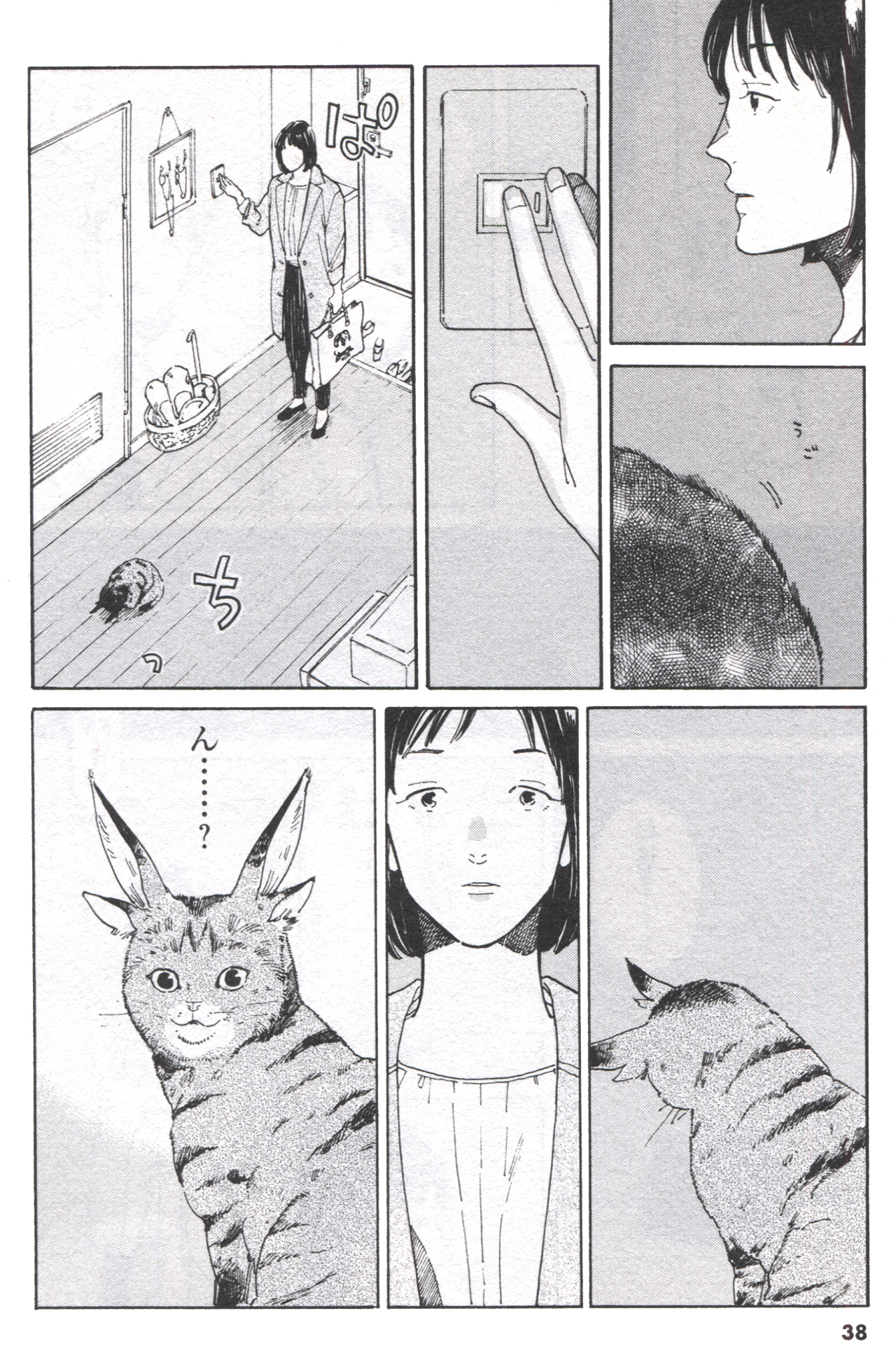
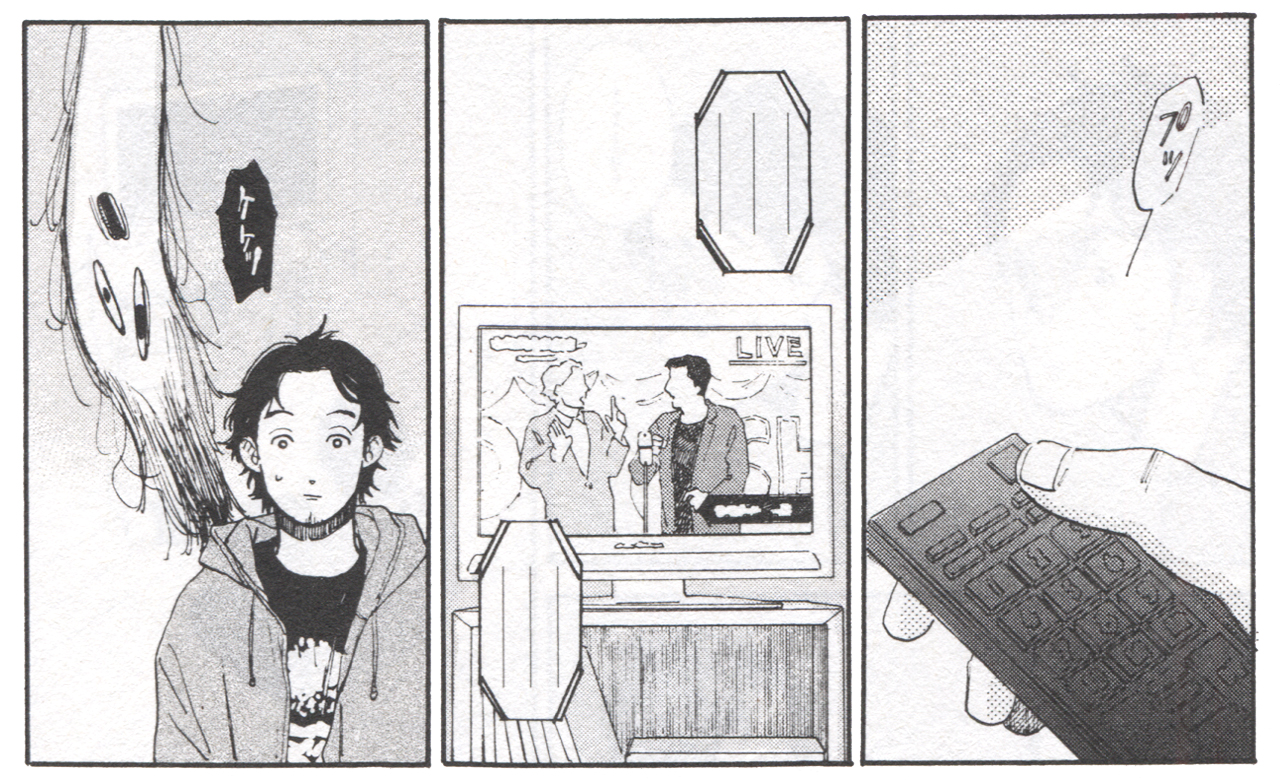
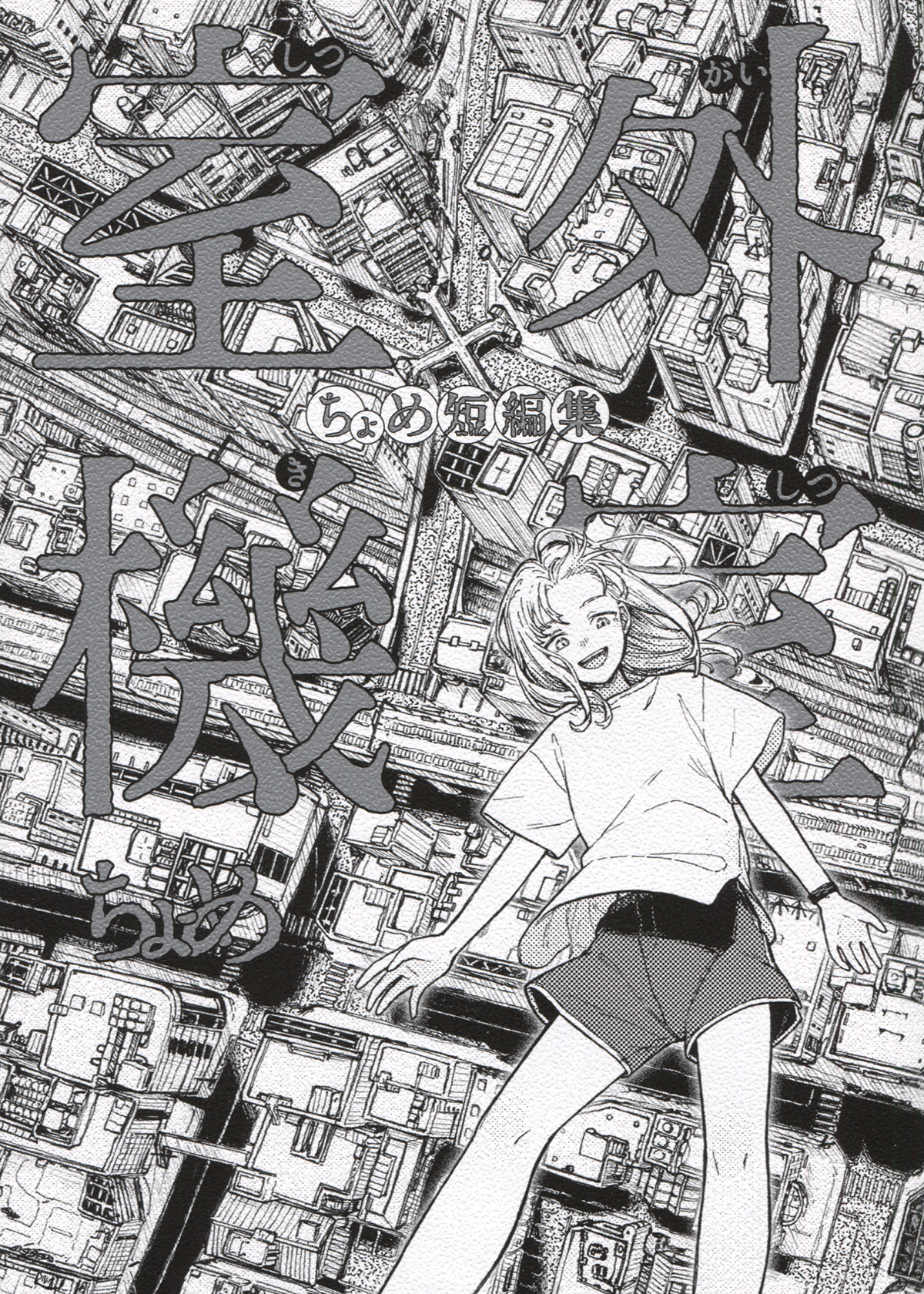
室外機室 collects four gorgeously illustrated magical realist stories drawn by an otherwise unpublished artist who goes by Chome. The stories transport the reader to a reality slightly removed from our own as each of the mundane protagonists catches a small glimpse of a hidden world.

I immediately fell in love with this collection from the opening pages of the first story, Tsugiho, in which a woman attends a large comic convention and finds a self-published minicomic that turns out to be brilliant despite its nondescript cover. The comic doesn’t seem to be documented anywhere online, so the woman starts writing a description. Her project quickly spirals out of control, however, as the pages of the small book seem to change each time she reads it. In the end, the woman’s essay transforms into an original illustrated short story, which she self-publishes and takes to the same comic convention where she found the mysterious comic that inspired her.

Speaking personally, I couldn’t describe the process of creative inspiration more accurately if I tried. What begins as a relatively straightforward act of casual appreciation can easily turn into something that has almost no relation to the original work at all, often to such an extent that the source is entirely forgotten by the end. In addition, it’s not always the case that creative inspiration comes from “the great works” of art and literature, as smaller and more specific stories can create a powerful sense of resonance and creative motivation even despite being unacknowledged by the broader culture. It’s nothing short of amazing that Tsugiho captures this aspect of creativity so perfectly in just twenty pages. 

The two middle stories are thought experiments that are far more beautifully executed than they have any right to be. In 21g no bōken (which illustrates the manga’s front cover), a young woman dies and finds that her ghost is able to go anywhere and do anything. This story is primarily an excuse to illustrate the joy of absolute freedom of movement, but the ending is quite touching. Meanwhile, Konshin takes place almost entirely in a woman’s bedroom as she sits at her desk and listens to a strange radio broadcast from a parallel universe in which history has developed in an entirely different direction. The strength of this story lies in its writing, but the uncanniness of the broadcast is augmented by the visual coziness of the woman’s apartment.

The fourth and final story, Chika tosho tankenshō, is a seventy-page graphic novella that blew me away with its creativity and charm. A young woman doing research at the library drops her eraser, which bounces into the crack of a panel at the bottom of a bookshelf. The woman opens the panel to find a staircase. To the woman’s surprise, there’s an enormous library complex underground, but something about it is decidedly strange. The staff is wearing traditional Japanese clothing, and none of the books have titles. The young woman quickly arrives at the conclusion that this isn’t a place she’s supposed to be, but can she escape without being caught by the librarians? And what are all the mysterious books?     

If I had the power to snap my fingers and make any manga appear in a licensed English translation, Shitsugai Kishitsu would be at the top of the list. This short story collection is a hidden treasure that easily stands its ground with the experimental but gorgeously polished work of emerging creators published by small presses like Silver Sprocket and Peow, and I could see any of these minicomics being released in the line-up of the ShortBox Comics Fair. Whoever the mysterious Chome may be, they’re creating brilliant and accessible comics that deserve an appreciative international audience.

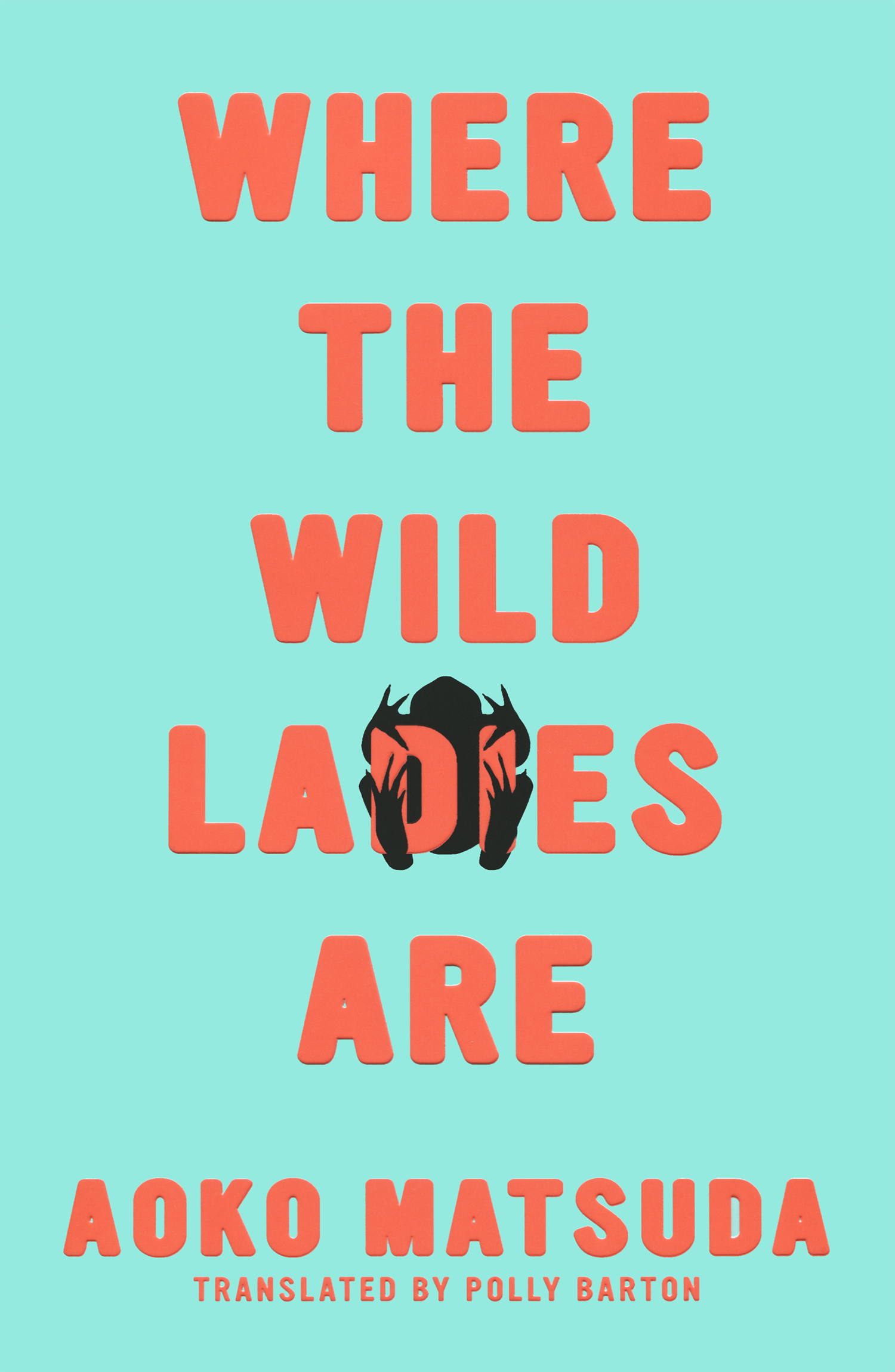
Where the Wild Ladies Are

Author: Aoko Matsuda (松田 青子)
Japanese Title: おばちゃんたちのいるところ (Obachan-tachi no iru tokoro)
Translator: Polly Barton
Publication Year: 2016 (Japan); 2020 (United States)
Publisher: Soft Skull Press
Pages: 271

Where the Wild Ladies Are collects seventeen short stories about the everyday lives of ghosts, demons, and yōkai in contemporary Japan. Although all of these stories are a bit strange, their tone is light and comedic, and all the hauntings are consensual.

My favorite story in the collection is “Quite a Catch,” which is about a young woman named Shigemi who has found herself in a romantic relationship with the ghost of a skeleton she inadvertently pulled out of the Tama River in Tokyo while fishing with a friend. The ghost, Hina-chan, appears outside of Shigemi’s apartment to thank her for dredging her bones from the riverbed. Shigemi is alarmed at first, but before long she and Hina-chan are chatting while watching television, not to mention bathing and sleeping together. Hina-chan’s nightly visits are a best-case scenario for the narrator, who has always wanted companionship without having to live with a spouse or roommate.

As the story notes in the back of the book explain, “Quite a Catch” is based on the comedic folktale Kotsutsuri (Skeleton Fishing) about a man who, after having heard a friend’s story about being thanked by the beautiful ghost of a drowned skeleton, goes to the river in an attempt to snare himself a supernatural girlfriend of his own but ends up fishing up the skeleton of the villain of a famous kabuki play.

Other stories in the collection feature other well-known figures from Japanese drama, lore, and legends narrated from unusual perspectives. “On High,” for example, is about a ghostly princess who haunts the beautiful hilltop Himeji Castle while it’s in the process of undergoing extensive renovations in the name of “historic preservation.” Meanwhile, “Enoki” is narrated by a sacred tree that is both frustrated and amused by the humans who insist on praying to it for various blessings, while “A Fox’s Life” is about a woman who’s been told she resembles a fox so often that she finally decides to go up into the mountains and become one.

“Smartening Up” is the first story in the collection, and it’s an excellent introduction to the author’s playful voice as she expresses the central theme of learning to embrace your weirdness and imperfections. The narrator begins the story obsessed with the darkness of her hair, spending a considerable amount of time and money on hair removal treatments while wishing she were born blond. On returning home after a rigorous session at an aesthetic salon one evening, she finds her aunt waiting for her in her apartment. This is something of a surprise, as her aunt had committed suicide in the wake of a failed love affair. Even more shocking, this aunt tells the narrator that she knows all about how she’s come to hate her appearance after being dumped. There’s nothing wrong with her hair, her aunt insists, especially since the fault lies with the piece of trash who cheated on her. The aunt assures her that her black hair is gorgeous, and that there’s no need for her to feel gross and ugly.

This story is loosely based on the Dōjōji legend, specifically the kabuki play Musume Dōjōji (The Maid of Dōjō Temple). The original story, in which a lustful woman is spurned by a celibate monk and turns into a giant snake to pursue him, is almost laughably misogynistic. The kabuki version, on the other hand, celebrates the woman’s serpentine transformation as an act of beauty and magic, with the dancer twirling in a robe that shines silver with the gorgeous gleam of scales.

The narrator’s aunt reminds her of the time they saw this play together and then admits that she’s still figuring out what her own secret power is. As the narrator considers the matter, she realizes that her own power is indeed in her hair. She begins eating hair-fortifying foods like liver and seaweed, helping her hair to become as monstrous and powerful as the snakes commanded by Medusa. She hides her demonic hair during the day but allows it to come out at night, brushing it to a high sheen and thinking about what sort of special skills she will learn in the future as she grows more comfortable wielding her magical power.

This may sound sentimental and a bit self-helpy, but the tone is actually very tongue-in-cheek and down to earth. The narrative voice, which is expertly captured through Polly Barton’s translation, is highly engaging. Many of the stories in Where the Wild Ladies Are were inspired by rakugo comedic storytelling, which is meant to be a bit salty and ridiculous. A set of brief notes concerning sources and inspirations is provided at the end of the book, but it’s absolutely not necessary to be familiar with the original legends to appreciate and enjoy the stories in the collection.

Although many of the stories in Where the Wild Ladies Are revolve around the theme of supernatural female empowerment, there’s no man-hating here – far from it. There are plenty of interesting male characters, including a time-traveling and dimension-hopping wizard who was inadvertently roped into the job and decided, like any good salaryman, just to stick with it. Although the reader doesn’t figure this out until late in the collection, all of the stories are loosely linked, with the various male and female characters managing to get along with each other in relative harmony.

Between the creative contemporary re-imaginings of folklore, the strong female friendships, the queer monster romance, and the general disdain for boring office jobs and awful bosses, the target audience of Where the Wild Ladies Are is specifically me, and I feel very seen and catered to. Still, Where the Wild Ladies Are should resonate with a broad readership. I suspect that a lot of anime fans and yōkai enthusiasts will be highly entertained by the collection, and the stories will appeal to anyone of any gender who enjoys clever comedy about how wild it is to live in the modern world.

The Ancient Magus’ Bride: The Golden Yarn

The Ancient Magus’ Bride: The Golden Yarn
Japanese Title: 魔法使いの嫁 金糸篇 (Mahōtsukai no yome: Kinshi hen)
Editorial Supervisor: Kore Yamazaki (ヤマザキコレ)
Translator: Andrew Cunningham
Publication Year: 2017 (Japan); 2018 (United States)
Publisher: Seven Seas
Pages: 349

The Golden Yarn collects eight short stories set in the world of The Ancient Magus’ Bride, an urban fantasy manga series that was adapted into a three-part anime OVA in 2016 and a television series that aired in 2017. Even though I’m only a casual fan of the franchise, I still found this collection delightful. Each of the stories stands on its own, and the book is accessible even to people entirely unfamiliar with the manga or its animated adaptations.

The first story, “Frozen Flowers,” is by Kore Yamazaki, the artist who created the Ancient Magus’ Bride manga. Like the other stories in The Golden Yarn, “Frozen Flowers” offers a glimpse into the world of the series without assuming any prior knowledge. In this story, a centaur named Hazel visits his aunt Marie, who was born with two feet instead of four. Marie looks like a normal human, but she has the heart and mind of a centaur, and she wants nothing more than to run under the open sky with the rest of her herd. Because of her appearance, however, she’s ostracized by her fellow centaurs and lives alone in an isolated area in rural England. It’s difficult for Hazel to understand why Marie doesn’t try to pass as human, but he still accepts her and offers her his friendship and kindness.

“Frozen Flowers” introduces the main theme of The Ancient Magus’ Bride, which is the various relationships people negotiate with difference. Some of these relationships are healthy and affirming, as in “Frozen Flowers,” while others are toxic and exploitative.

There’s a strong current of horror running through the stories in The Golden Yarn. It’s most present in Jun’ichi Fujisaku’s “The Man Who Hungered for Trees,” in which the assistant to a genius video game programmer uncovers the sinister roots of his supervisor’s talent. The programmer makes small blood sacrifices to the spirits of marijuana bushes in exchange for energy and inspiration, but the plants are hungry for larger prey. As you might imagine, this doesn’t end well for anyone involved.

All of the stories in The Golden Yarn were contributed by authors associated with various light novel series. I was especially impressed with “The Sun and the Dead Alchemist,” which was written by Kiyomune Miwa, the author of the steampunk zombie-hunting series Kabaneri of the Iron Fortress (which was adapted into an anime in 2016). Miwa haunts similar grounds in this story, which describes the bittersweet romance between a necromancer and a young woman whom she inadvertently destroys with her magic.

An interesting aspect of this collection for me, as an American, was the opportunity to look at Europe and America from an outside perspective. For example, the venerable Yuu Godai, the author of the long-running Guin Saga series of dystopian fantasy novels, contributed a piece called “Jack Flash and the Rainbow Egg,” which is about a fairy who lives in New York but is obsessed with Japanese popular culture and sets up a detective agency to earn human money in order to buy dōjinshi. Godai’s energetic adventure story is a fun take on American culture, but what I found even more intriguing than a New York run by magical secret societies is the fantasy of twenty-first century Great Britain as a mystical land of rolling green fields, garden cottages, and magical creatures. I suppose The Golden Yarn is sort of like Harry Potter without the overt allusions to class conflicts and real-world fascism, but none of the stories shy away from the darker side of human nature.

Seven Seas has also published a companion volume, The Ancient Magus’ Bride: The Silver Yarn. Aside from the second half of “Jack Flash and the Rainbow Egg,” The Silver Yarn can be read independently, and its stories are just as engaging as those in The Golden Yarn. I can happily recommend both of these short story collections to any fan of historical fantasy and contemporary urban fantasy regardless of their level of familiarity with the Ancient Magus’ Bride franchise. Although there’s no explicit mention of sexuality, some of the stories are quite violent and disturbing, and the books are best suited to older teens and adults.

Killing Commendatore

Killing Commendatore
Japanese Title: 騎士団長殺し (Kishidanchō Goroshi)
Author: Haruki Murakami (村上春樹)
Translators: Philip Gabriel and Ted Goossen
Publication Year: 2017 (Japan); 2018 (United States)
Publisher: Knopf
Pages: 704

If you read Haruki Murakami’s 2010 novel 1Q84 and thought, “Wow! I could use more dream rape and magical wormhole pregnancy in my life,” then Killing Commendatore is bespoke tailored to your interests. If you’re put off by that sort of thing, you may be put off by more of the same in this novel, not to mention its multiple detailed descriptions of the bodies of 12-year-old girls from the perspective of an adult man. If you fall into either of these groups, you know who you are, and you probably already know how you feel about Killing Commendatore. If you’re still undecided about whether to jump into a 700-page slipstream adventure, however, this review is for you.

I’ve read some intensely negative reviews of Killing Commendatore, but I don’t think the novel is all that bad. The weird and creepy sexual bits are indeed weird and creepy, but they’re not that frequent, that important, or even that noticeable within the context of the larger story, which is about finding oneself and creating connections with other people through the struggle of artistic expression.

The nameless narrator is a 36-year-old painter who has separated from his wife, Yuzu. His friend from art school, Masahiko, offers to rent him a small villa in the hills of Kanagawa Prefecture that belonged to his father, a famous Japanese-style painter named Tomohiko Amada. The narrator, who has left his apartment in Tokyo and now needs somewhere to live, takes Masahiko up on his offer. He also accepts a part-time teaching position at a local art center that Masahiko sets up for him.

The narrator specialized in abstract art in school, but he currently makes his living by painting the sorts of formal portraits that might hang in a company president’s office. He’s quite good at it, and his commission fees have risen as he’s established a reputation for himself as a talented and reliable artist. When Yuzu tells him that she wants a divorce, he informs his agent that he will no longer accept portrait commissions, and he emphasizes this point by throwing away his cellphone. Unfortunately, once he is alone and untroubled in Tomohiko Amada’s isolated mountainside villa, he finds that he can no longer paint anything.

The narrator therefore spends his time doing what Murakami narrators tend to do, reading and cooking and listening to music, until one day he hears a sound in the attic. The commotion was caused by a harmless owl, but the incident leads the narrator to discover a painting that Tomohiko Amada hid without showing anyone, Killing Commendatore. The painting transposes a scene from Mozart’s opera Don Giovanni into the Asuka Period (552-645), and it fascinates the narrator, who takes it downstairs and puts it in his studio.

Before too much time passes, the narrator’s agent contacts him with a strange commission request. A man named Wataru Menshiki, who lives in a mansion across the valley from the narrator’s villa, wants his portrait painted, and he’s willing to pay a large sun of money for the privilege. The narrator is initially hesitant, but he agrees because he enjoys Menshiki’s company. Menshiki retired from the tech industry after a lengthy court case, and he now lives a life of leisure and good taste, which the narrator appreciates. Although Menshiki isn’t a bad person, he does have an ulterior motive in pursuing a friendship with the narrator, and their relationship gradually grows more intense as Menshiki attempts to draw the narrator into a convoluted plot.

As an aside, I think it’s worth saying that many of the overtly sexual elements of Killing Commendatore are nothing more than window dressing. The narrator has a series of brief affairs while he’s separated from his wife, and he also has several conversations with a preteen art student who demands that he provide her with a frank evaluation of her physical appearance. All of this makes sense in context, and none of it ever really goes anywhere. In comparison, Menshiki’s long and drawn-out seduction of the narrator becomes genuinely erotic as the narrator’s attention is drawn to Menshiki’s eyes and hair and hands and smell. Both men are presumably straight, but the one truly dynamic relationship of the novel springs from the attraction between Menshiki and the narrator, not any of the heterosexual encounters either man has experienced, which are recounted with a surprising lack of affect.

After the narrator spends more time with Menshiki and the Killing Commendatore painting, he begins to hear a bell ringing in the woods behind his house at night. He goes to investigate only to find that the sound is emanating from under a pile of rocks in the woods. He tells Menshiki about the strange occurrence, and Menshiki hires a landscaper to bring in a bulldozer to remove the rocks, thereby uncovering a mysterious hole. There’s nothing in the hole aside from an old Buddhist ritual implement; but, later that evening, a two-foot-tall vision of the Commendatore from Tomohiko Amada’s painting shows up in the narrator’s studio speaking in riddles and claiming to be a metaphor. The narrator takes this in stride, as it doesn’t affect him much at all during the first half the novel, which focuses on the development of his relationship with Menshiki.

In the second half, the narrator’s preteen art student disappears into thin air. He feels a sense of responsibility toward her, so he resolves to track her down. He intuits that the girl’s disappearance is somehow connected to Menshiki, who is somehow connected to the Commendatore, who is somehow connected to Tomohiko Amada, who is somehow connected to the hole on his property. The exact nature of these connections is never made explicitly clear, but the narrator does end up going on an adventure to rescue the girl while learning more about the old painter and his enigmatic neighbor in the process.

I’ve read a few reviews that claim that the second half of Killing Commendatore is not as strong as the first, which is fair. Personally, however, I appreciate that Murakami leaves so much up to the reader’s interpretation, which may or may not be affected by a familiarity with the divided worlds and split personalities of the author’s other novels. Any homage to The Great Gatsby that may have been intended in the close friendship between the “everyman” narrator and the rich and ambitious yet slightly sinister Menshiki falls apart when both men start to spend more time in holes, which the reader can never quite tell are literal or metaphorical. As Menshiki says in reference to the pit in the narrator’s yard,

“Sometimes in life we can’t grasp the boundary between reality and unreality. That boundary always seems to be shifting. As if the border between countries shifts from one day to the next depending on their mood. We need to pay close attention to that movement, otherwise we won’t know which side we’re on.”

Killing Commendatore reminds me of Stephen King’s Lisey’s Story, which is also about the deep strangeness of imagination. The truth both writers attempt to express is that the chaos of artistic creation can be extraordinarily violent and disturbing, and that the process can sometimes result in a powerful sense of disconnect from consensus reality. Nevertheless, it’s still necessary to brave this unpleasantness in order to achieve personal growth. As Menshiki puts it,

“There’s a point in everybody’s life where they need a major transformation. And when that time comes you have to grab it by the tail. Grab it hard, and never let go. There are some people who are able to, and others who can’t. Tomohiko Amada was one who could.”

The major question of the novel is whether the narrator can become one of these people as well. Will he insist on clinging to the dreams of his youth while going nowhere? Will he embark on a series of random, halfhearted projects that he doesn’t really believe in? Will he keep painting portraits without changing his style? Will he, like Tomohiko Amada, create a masterpiece that’s too personal to show to anyone? Or will he be able to descend deeper into the well of his mind so that he can find a better way to communicate with people through his art? And, if he tries, what will happen to him if he fails? Just how large is his risk of becoming like Menshiki, whose shadow is so dark that the reader is never allowed to look at it directly?

I feel that Killing Commendatore can be read at two levels. The first is a slipstream adventure saga complemented by a handsome, seductive, and sympathetic villain. The second is a psychological profile of the creative process, which is frustrating and demanding and never straightforward. The first level is reminiscent of early Neil Gaiman without the more overt elements of urban fantasy, but I found that the second level to be more interesting and compelling. Killing Commendatore isn’t 700 pages of pretentious navel gazing, however; there are plenty of ghosts and wayward girls and hauntings and mysteries and even a religious cult out in the woods, and and both halves of the novel are nothing if not compulsively readable.
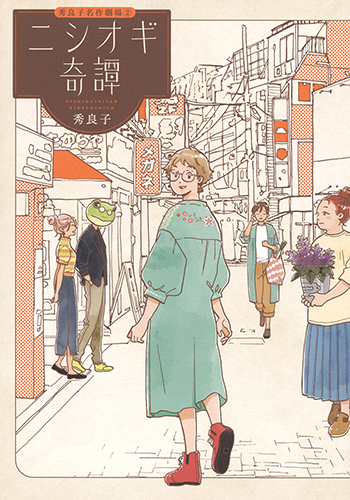
A Small Charred Face

Title: A Small Charred Face
Japanese Title: ほんとうの花を見せにきた (Hontō no hana o mise ni kita)
Author: Kazuki Sakuraba (桜庭 一樹)
Translator: Jocelyn Allen
Publication Year: 2014 (Japan); 2017 (United States)
Publisher: Haikasoru
Pages: 239

A Small Charred Face is a collection of three interconnected stories about vampires and the humans who love them. These vampires sleep during the day, fly by night, feed on human blood, can’t see their reflections, and never age during their 120-year lifespan. They also smell like grass and burst into bloom at the end of their lives, and they are called Bamboo. Their laws forbid them from befriending humans, but sometimes an outsider, alone and destitute on the margins of society, manages to catch the attention and the heart of a Bamboo.

The first and longest story, which frames the other two stories in the book, is “A Small Charred Face.” The story begins with horrific violence, with the narrator, a boy named Kyo, trying to escape a criminal organization that has just raped and killed his mother and sister. A Bamboo appears, hoping to feed on the bodies, but it ends up rescuing Kyo instead. The Bamboo, a young man named Mustah, takes him home to a seaside cottage where he lives with his partner Yoji. Kyo, who has grown up in wealth and privilege, is forced to adapt to life in the impoverished community, and Mushtah and Yoji convince him to disguise himself as a girl so that the people who killed his family won’t find him. Growing up as a girl in a household with two vampire fathers in a neighborhood ravaged by economic inequality, Kyo actually manages to enjoy a relatively normal childhood, but problems arise when a period of adolescent rebellion brings him to the attention of other Bamboo, who will not tolerate their existence becoming known to humans.

The second story (and the title story of the original Japanese publication), “I Came to Show You Real Flowers,” follows Marika, a female Bamboo from “A Small Charred Face,” several decades after her life intersects with Kyo’s story. Marika was transformed into a Bamboo when she was a teenager, so her mind and body remain those of a young woman. Marika adopts a human girl named Momo who has nowhere else to go, and together the two of them enact revenge on the men who prey on the weak and defenseless, which Momo luring them into a secluded spot so that Marika can swoop down, break their necks, and eat them. As Momo grows older, however, she begins to grow weary of being constantly on the run and surrounded by violence.

The third story, “You Will Go to the Land of the Future,” is the origin story of Ruirui, who will go on to lead a group of Bamboo immigrants from China to Japan. This story is narrated from the perspective of Ruirui’s older sister, the fifth child of the Bamboo royal family. This nameless young woman describes how the Bamboo are respected and revered in the small and isolated rural community that surrounds their castle in the mountains, and how the princes and princesses are carefully brought up according to Confucian tradition. All of this changes with the Cultural Revolution, however, which brings outsiders to the village and spreads distrust among the villagers. Anyone who deviates from the narrow ideology of the Communist Party must be struck down for the good of the people, so even the seemingly invincible Bamboo find themselves is terrible danger.

Kazuki Sakuraba began her career by writing light novels; and, although A Small Charred Face contains scenes of graphic violence and sexual assault, it still feels like young adult fiction in many ways. The narrators are children (or have the minds of children), and their worldview is correspondingly myopic. Although the third story occurs during the Cultural Revolution, it’s difficult to ascertain when the first two stories are set. They might be set in the present, or in the near future, or at the end of the twenty-first century. Technology is never mentioned, nor are any events that would have led to the circumstances under which Kyo and Marika lost their families. What is “the Organization” that goes around murdering and raping women and children, and why doesn’t anyone have a cellphone? Is the story set in an alternate universe in which Japan descended into chaos at some point during the twentieth century; and, if so, what happened? Unfortunately, the narrators are not interested in anything other than their own teenage emotional drama, so they don’t even hint at the state of the society outside of their own circle of acquaintances. Meanwhile, they simply take it for granted that the people around them are routinely raped and murdered as a matter of course. The stories also decline to explore the nature and culture of the Bamboo, and there’s only a bare minimum of worldbuilding and trope exploration.

As frustrating as these limitations may be, I think they’re fair. The reader can only speculate about what happened to Japan in this fictional universe, but the Cultural Revolution was very real, and there’s no reason a fourteen-year-old who survived something like that would be able to understand the larger geopolitical currents that resulted in everyone around them being suddenly being dragged out into the street and killed. Perhaps it’s not so farfetched to think that something like this could happen in Japan – or that it could happen anywhere, for that matter.

What A Small Charred Face does – and what it does very well – is to allow the reader to share the experience of living on the absolute margins of society as an outsider. The vampires in these stories are a metaphor for difference, of course, but this metaphor is far from abstract. The Bamboo are openly in same-sex relationships, and they are openly immigrants, openly working awful night-shift jobs, and openly in economically precarious positions. Mustah is Brazilian, Yoji is Chinese, and Ruirui is a political refugee. Although these characters live in hand-to-mouth circumstances, none of them threatens Japanese society. On the contrary, they provide the love, hope, and comfort that Japanese society is not able to offer to its own children. Yes, the Bamboo are literal vampires who feed on the blood of humans, but the majority of them obtain the blood they need by working in healthcare-related industries, especially those that force people to work awful hours and don’t pay well. Given Japan’s aging population and the severity of its healthcare crisis, I don’t think this is a coincidence.

I’m not generally a fan of young adult fiction, especially when it intersects the genre of supernatural romance, and I was not expecting to be as deeply moved by A Small Charred Face as I was. Sakuraba stages a trenchant social critique within the dystopian environment she has created for her vampires, but her characters are beautifully realized and full of heart. Their flaws are relatable, their kindness is believable, and their unhappy endings are a consequence of the profound injustices of our own world. If you believe in the transformative potential of young adult novels like The Hunger Games and Divergent, then I cannot recommend A Small Charred Face highly enough. And if you love monsters and see their difference as a reflection of your own, please rest assured that the gay romance in these stories is treated with sensitivity, as are feminist politics and gender fluidity.