Atsuhiro Yoshida’s 2018 linked short story collection おやすみ、東京 chronicles the adventures of a cast of slightly odd characters with subtle connections to one another. Each of the stories begins at precisely 1:00am. Far from being scary or dangerous, the nighttime urban space of Tokyo is gentle and welcoming.
Four women run a small restaurant that’s only open in the early hours of the morning. A taxi driver listens patiently to his passengers so that he can take them exactly where they need to go. Other characters have highly specialized professions, from someone who runs a highly curated antique store to someone who disposes of old telephones.
I’m in love with Yoshida’s writing style, which is playfully idiosyncratic but still clear and light and easy to read. Despite the gentleness of the stories, there’s never any sentimentality, just slightly damaged people doing their best to make it through their lives. おやすみ、東京 tends more toward realism than some of Yoshida’s other work, but small bits of strangeness still shine through the cracks of the mundane.
An English translation of this book, Goodnight Tokyo, is scheduled to be released on July 9, and I’m looking forward to Yoshida’s English-language debut!
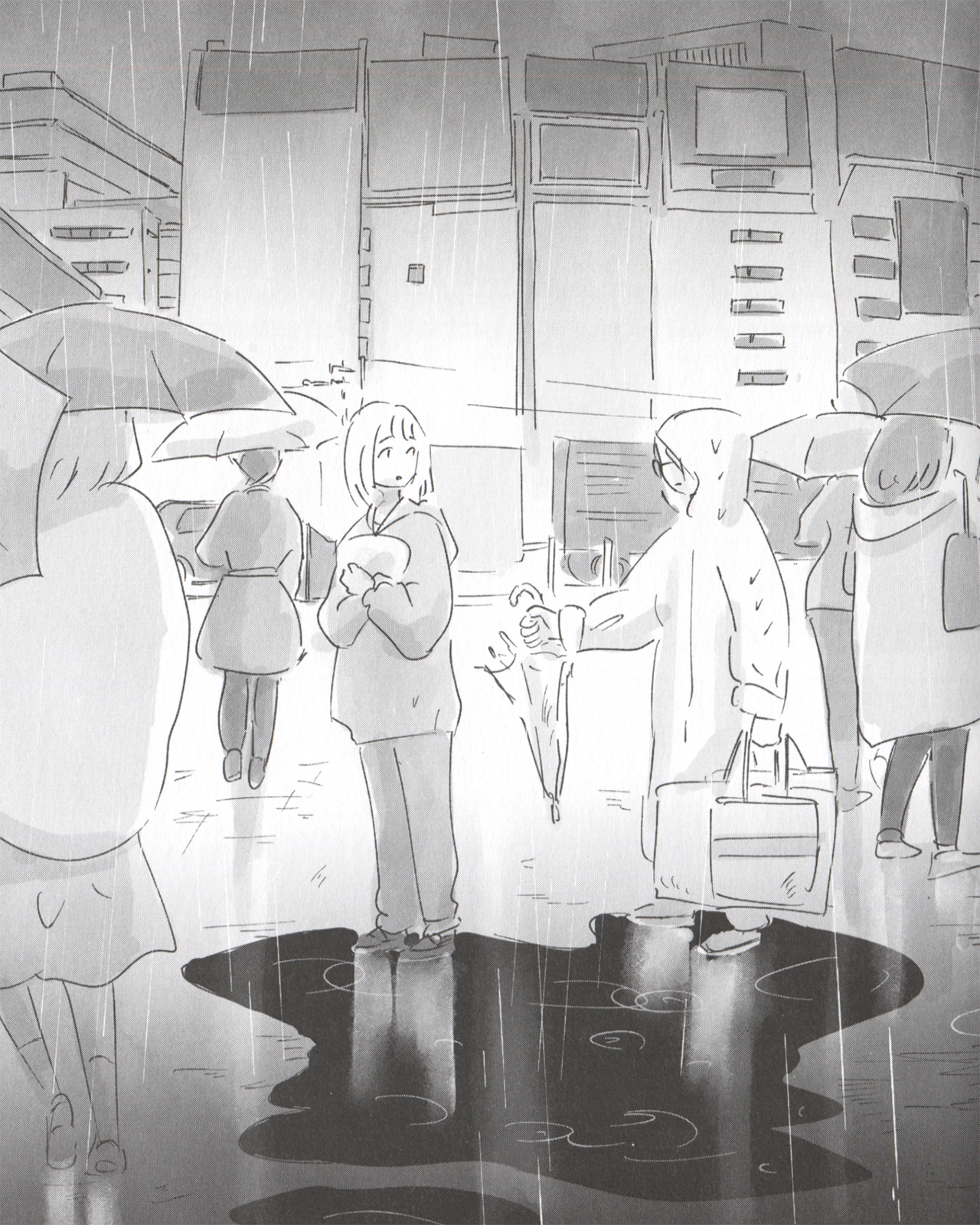
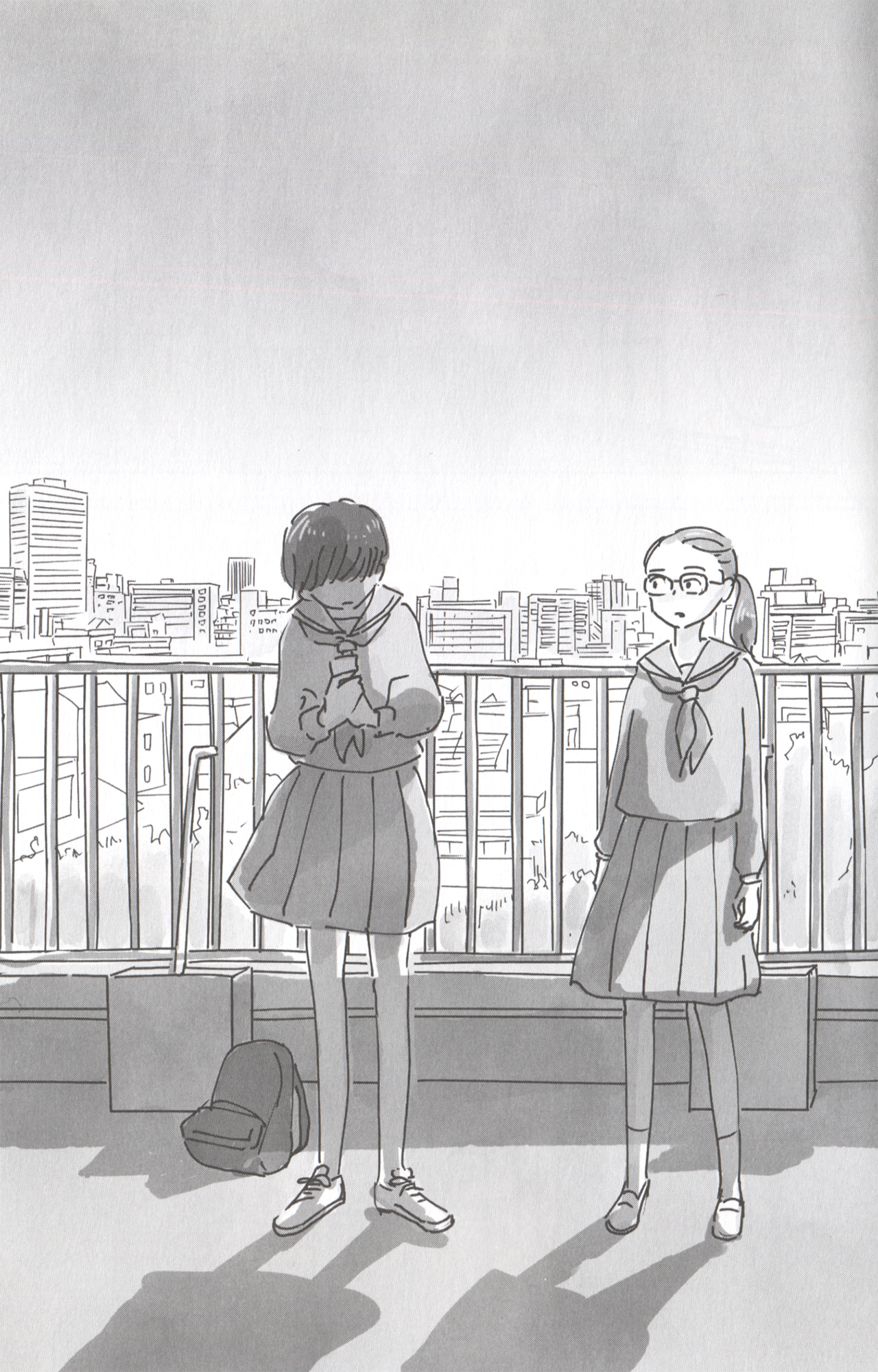
Taiyō Matsumoto’s newest series, Tokyo These Days, follows a senior manga editor named Shiozawa who suddenly quits his job at a publishing company. After an initial period of wanting nothing more to do with manga, Shiozawa visits various artists he’s worked with over the past thirty years, hoping to commission “the perfect manga.”
Like Matsumoto’s Eisner-winning graphic novel Cats of the Louvre, Tokyo These Days is a sensitive yet realistic story about artists and the industry professionals who support their work. Although Matsumoto is honest about the pain caused by frustrated ambitions in a market that doesn’t value the wellbeing of artists, small moments of kindness and hope prevent the tone of the story from becoming too bleak.
Given that Tokyo These Days is a book about books, it’s worth mentioning that Viz’s hardcover edition is a beautiful publication with a glossy canvas cover and high-quality paper that allows Matsumoto’s artwork to shine. If you’re familiar with the kinetic urban fantasy Tekkonkinkreet, you’ll know just how much love Matsumoto puts into the details of his environments, and it’s a pleasure to take your time studying each page to appreciate the ink textures and image framing.
I’m looking forward to seeing how the story of Tokyo These Days develops, but the first volume stands on its own as an episodic commentary on the difficult but still worthwhile business of being an artist and storyteller during the slow decline of the traditional publishing industry.
Nanae Aoyama’s novella A Perfect Day to Be Alone chronicles a year in the life of a young woman named Chizu who moves in with an elderly relative named Ginko after her mother accepts a teaching position in China.
Aoyama deftly captures the reality of a relationship between a flighty 20-year-old girl and a mature 71-year-old woman. There are no heart-to-heart talks or life lessons, just a lot of sitting around and chatting about nothing in particular.
Chizu breaks up with one boyfriend and starts a casual relationship with another, but this relationship goes nowhere. The same could be said of Chizu’s job at a kiosk at a suburban train station. Aside from a vague desire to save money, Chizu has no goals or ambitions.
Rather, the story is completely interstitial, a chapter between chapters of Chizu’s life. A Perfect Day to Be Alone brought me back into my own 20-year-old headspace with an immediacy that would be difficult to achieve through a story with more of a plot.
Nothing happens in A Perfect Day to Be Alone, but I enjoyed getting to know Chizu and Ginko, whose characters are sketched out and then defined with subtle touches. I appreciate the opportunity to spend time in their company, which is supremely chill and relaxing.
Japanese Title: カラフル (Karafuru) Author: Eto Mori (森絵都) Translator: Jocelyne Allen Publication Year: 1998 (Japan); 2021 (United States) Publisher: Counterpoint Pages: 224
A fourteen-year-old boy named Makoto Kobayashi has committed suicide, so a nameless and formless soul is granted a second chance at life by doing a “homestay” in his body. While inhabiting Makoto’s body, the soul must also occupy his life while guided by an angel named Prapura.
As if being in middle school weren’t difficult enough, the soul soon realizes that Makoto’s life is a mess. His family initially appears to be warm and loving, but it soon becomes apparent that nothing is as simple as it seems. To begin with, Makoto’s phone is completely free of contacts, which Prapura gleefully explains is because Makoto doesn’t have friends. The only girl who’s ever been nice to him visits love hotels with an older man, which Makoto knows because he saw her – at the same time he saw his mother leaving with her dance instructor.
Although the soul now occupying Makoto’s body is given a year to figure out its past crime, there’s very little sense of narrative urgency involved in solving this mystery. Instead, the forward momentum of the story comes from “Makoto” gradually realizing that life isn’t so black and white, and that every person has different colors. As he explains it…
The idea of the Kobayashi family I’d had in my head gradually began to change color. It wasn’t some simple change, like things that I thought were black were actually white. It was more like when I looked closely, things I thought were a single, uniform color were really made up of a bunch of different colors. That’s maybe the best way to describe it. (149)
Although Colorful is YA fiction, some of the “colors” of its characters may require an unusual degree of empathy for many American readers, but I would argue that it’s precisely this exercise of empathy that makes the experience of reading the novel so powerful and moving.
To give an example, Hiroka, the fourteen-year-old girl who is “dating” an adult man for money, is represented as being in control of her body and decisions. When Makoto attempts to rescue her from the doorway of a love hotel, she initially goes along with him, but it doesn’t take long for her to make it clear that she doesn’t appreciate his heroic gesture. She actually enjoys having sex with a considerate and experienced older partner, she says, and she appreciates the money he gives her. When Makoto asks if she can’t just wait until she’s older, Hiroka doesn’t hesitate to explain her reasoning, telling him that she wants to be able to buy nice things while she’s still the appropriate age to appreciate them. She wants to enjoy her body, and she wants to enjoy her life, and she doesn’t want to date Makoto, whom she considers to be a friend.
Later in the story, Hiroka admits to occasionally feeling depressed, confessing to Makoto that she’ll want to have sex on six days of the week but then want to join a convent on the seventh. By this point, Makoto has matured enough to accept Hiroka’s decisions. He assures her that it’s normal to feel confused sometimes, and that there’s nothing wrong with her. This conversation does not lead to romance, but rather to Makoto’s self-awareness that he has grown enough as a person to accept Hiroka on her own terms.
This is what is expected of the reader as well – a willingness to accept the characters not as stereotypes or idealizations, but as they actually exist. Colorful does not place any value judgments on Hiroka’s personality, desires, or decisions. She does not decide to stop having sex with her older partner, nor does she realize that the things she spends the money on are childish and shallow. She is not diagnosed with any sort of mental illness or personality disorder, and she does not decide to “get help.”
It’s extraordinarily refreshing to see teenage female sexuality discussed with honesty and sensitivity without being punished. Hiroka is not a slut or a victim, but rather a normal young woman who enjoys having sex with people who enjoy having sex with her. She’s not 100% emotionally mature, and she doesn’t entirely understand who she wants to be or what she’s doing with her life, but that’s okay. The point of Colorful is that human beings are complicated.
Makoto’s father is another example of a relatable character whose story requires empathy to appreciate. When Makoto tells him that, as an aspiring artist, he prefers to draw landscapes because he dislikes people, his father confesses that he dislikes people too. Although he’s a talented designer, he was bullied at the company where he works. He thought he was highly positioned and highly respected enough to be able to speak up about the CEO’s mismanagement of the company, which was causing real and serious harm. This backfired, and he was ostracized for two years by his former friends and colleagues even though they knew he was right. He explains to Makoto that, although he was promoted when the CEO was eventually forced to step down after a public scandal, he will never get back those two years of his life, nor will he be able to return to his former easy friendships with his colleagues.
This is a difficult lesson – that “doing the right thing” is not always going to be appreciated. Many times, in fact, speaking out against something that is clearly wrong will turn you into a social pariah. Even worse, this damage can linger for years, perhaps even for the rest of your life. Doing the right thing can ruin your career, and you might become so focused on damage control that you don’t notice that you’re sacrificing your relationships with the people who are close to you.
In so many stories, young people who do the right thing despite the hardships involved are rewarded for their uncompromising bravery. Meanwhile, the “absent father” figure has to make difficult and complicated decisions and ends up being positioned as the villain. As with Hiroka, being able to hear Makoto’s father’s side of the story is refreshing, not to mention validating to me as an adult reader.
The beauty of Colorful rises from the novel’s ability to take simple stereotypes and explode them into rich and detailed character portraits as Makoto comes to understand and empathize with people who aren’t perfect but are doing their best to live their lives with dignity. Along with Hiroka, Makoto is able to forge friendships with two other classmates; and, along with his father, he’s also able to better understand his mother and brother. The fantasy bits about souls and angels and resurrection are little more than props for an extremely character-driven story that doesn’t feel like a fantasy at all.
Colorful doesn’t go out of its way to be gritty or nasty or unpleasant. It’s honest and sincere, and it handles serious topics with gentle nuance and an occasional touch of humor. As the author describes her intentions in the Afterword,
I chose to write about a serious subject with a comical touch. I chose to depict it lightly. I wanted kids who liked reading and those who didn’t have fun with it to start. I wanted them to laugh and roll their eyes and relate to everything the characters did. I wanted them to enter the world of the book and be free of their everyday lives. And then, when they closed the book at the end, I wanted the weight on their hearts to be just a little lighter. (210)
I believe that Mori succeeded marvelously, and I could not write a better summary of her novel.
I should also mention that Colorful received a high-profile anime adaptation in 2010 that was later released in North America in 2013 by Sentai Filmworks. The movie makes a number of interesting choices regarding plot and characterization that help keep the story moving forward at a brisk pace. It also includes a charming interlude into Japanese train fandom as a means of showing Makoto’s growing friendship with one of his classmates. Although it might be difficult to find a copy of the officially licensed DVD version, it’s definitely worth the effort to seek out a way to watch the movie. Colorful is on par with slice-of-life Studio Ghibli movies like Whisper of the Heart and From Up on Poppy Hill, and its art, animation, and voice actor performances are all lovely.
Jocelyne Allen’s translation of the original novel is equally fun and lively, with an especially good ear for the dialog of the teenage characters. Over the years, many of my international students have told me that Colorful meant a lot to them as they were growing up, and that it sparked their interest in Japanese fiction. I’m delighted that Colorful is finally available in translation, and it’s my hope that this heartfelt coming-of-age story inspires readers with a sense of joy and appreciation for the rich and vibrant colors of the world.
I want to extend my gratitude to Counterpoint Press for sending me an advance review copy. Colorful will be released in paperback on July 20, 2021. You can learn more about the book on their website (here), and you can find a set of pre-order links on the book’s page at Penguin Random House (here).
The Little House
Japanese Title: 小さいおうち (Chiisai ouchi)
Author: Kyoko Nakajima (中島 京子)
Translator: Ginny Tapley Takemori
Publication Year: 2010 (Japan); 2019 (United Kingdom)
Publisher: Darf Publishers
Pages: 268
The Little House is a novel that seems prosaic at first but becomes more interesting as mundane events and observations gradually take on a greater sense of weight and meaning. The majority of the story is presented in the form of a diary kept by its narrator, Taki. Taki is writing in the present day, but the events she describes occurred in the 1930s and early 1940s. The Little House is about wartime Japan, but it’s written from the perspective of someone far more invested in keeping a small household running than she is in supporting or celebrating the nation. The war eventually catches up to her, but her story is about resilience, not suffering or victimhood.
At the risk of reducing the novel to its subtext, The Little House is also a queer love story. Taki is employed as a maid in a house in the suburbs of Tokyo, and she enjoys a close friendship with the lady of the house, Tokiko. Tokiko’s son Kyoichi is from a previous marriage, and her current husband is an executive at a toy manufacturing company. He’s a handsome man, but he seems to have no interest in “that sort of relationship” with a woman, which is perhaps why he considers himself lucky to have married someone who already has a child. Kyoichi is bedridden with polio, so Taki has been employed to help Tokiko out around the house. Despite the difference in their ages and social status, they get along marvelously well.
It was clear to me that Taki is in love with Tokiko. I suppose it’s possible that her affection could be read as platonic, but Taki describes Tokiko’s physical appearance with quite a bit more than platonic interest. Taki also delights in her detailed memories of physical contact with Tokiko. These passages may fly under the radar of anyone who’s not attuned to them, but it’s difficult to say that the nature of Taki’s relationship with Tokiko is completely subtextual, especially given that Taki dwells on the fact that one of Tokiko’s closest female friends also had an intense crush on her while they were in school together. To drive the point home, this friend makes direct references to the fiction of Nobuko Yoshiya, who is famous for her stories about young women in intimate relationships.
To Taki’s chagrin, Tokiko is in love with a young artist named Itakura. Under the pretext of arranging a marriage for him, Tokiko meets with Itakura several times, and a romance develops between them. As Japan digs itself deeper into the Pacific War, however, Itakura is drafted. Tokiko is devastated, but Taki prevents her from meeting Itakura a final time before his deployment by means of a small but life-changing act of “housekeeping” that has been foreshadowed from the beginning of the novel.
By March 1944, the Hirai family can no longer afford to employ Taki. She is sent back to her family’s home in rural Ibaraki prefecture, where she becomes a cook and caretaker for a group of children who have been evacuated from Tokyo. This is far less heartwarming than it sounds, and both Taki and the children are utterly miserable.
When the war is over, Taki visits Tokyo again only to find that the Hirai household has been destroyed during the American firebombings. Although she promises to write more about what happened afterward, Taki’s narrative comes to an abrupt end at this point. The reader learns that she stopped keeping her diary because of her declining health, but I suspect that she lost interest in telling a story in which Tokiko could no longer be a central character.
The coda to Taki’s account is provided by her great grand-nephew Takeshi, whom she has mentioned several times, always claiming that he doesn’t believe her story. Takeshi inherits Taki’s diaries after her death, and he ties up several loose ends in the final chapter as he reflects on the nature of the relationships between the various people in Taki’s life. Is it possible, he wonders, that Taki was in love with Tokiko? Takeshi leaves the answer to this question up to the reader’s interpretation, but his careful reevaluation of Taki’s actions in light of this possibility speaks for itself.
Not much happens in The Little House, but the reader is swept along into the family drama of the Itakura household by Taki’s lively and engaging narrative voice. Although Taki’s observations seem trivial at first, the close attention of a patient reader will be rewarded as the details of her story come together to create a portrait of a charming group of people and the historical conflicts that interrupted their lives and relationships. Nakajima handles the legacy of the Pacific War with grace and sensitivity, and The Little House provides a welcome and insightful perspective on the early Shōwa period that is often lost in narratives about wartime Japan.
The Last Children of Tokyo
Japanese Title: 献灯使 (Kentōshi)
Author: Yōko Tawada (多和田葉子)
Translator: Margaret Mitsutani
Publication Year: 2014 (Japan); 2018 (United Kingdom)
Publisher: Portobello Books
Pages: 138
In the future – but not long in the future – Japan has secluded itself from the rest of the world. The environment is saturated with toxic substances, it’s dangerous to go near the sea, and most animals have disappeared from the wild. Humans still live on the Japanese archipelago, but their society has changed. Adults born in our own time live long lives and continue working well past their hundredth birthdays, while children born in the present of the novel have trouble retaining nutrients from food and are often too weak for sustained physical activity. Young and healthy people in their sixties and seventies do everything in their power to immigrate to Okinawa or the north of Japan, where agriculture still thrives, while Tokyo suffers from depopulation.
A novelist named Yoshiro still lives in Tokyo, where he cares for his great-grandson, Mumei. Mumei is fascinated by pictures of animals that have recently gone extinct, while Yoshiro devotes his time to looking back on the gradual shifts and changes in Japanese society. Each of Yoshiro’s memories is a sustained flight of magical realism that often has very little to do with the standard conventions of science fiction or dystopian fantasy. The Last Children of Tokyo is not about social critique through the medium of apocalypse, nor does it have much of a plot. Rather, it’s a reflection of everyday life in contemporary Japan in a mirror that’s mostly accurate but has a few interesting distortions.
Some of these distortions offer a speculative interpretation of how the texture of daily life has changed as a result of Japan’s recent demographic shifts.
The names of some of the older holidays were changed: “Respect for the Aged Day” became “Encouragement for the Aged Day,” while “Children’s Day” was now “Apologize to Children Day”; “Sports Day” was changed to “Body Day” to avoid upsetting children who were not growing up big and strong; so as not to hurt the feelings of young people who wanted to work but simply weren’t strong enough, “Labor Day” became “Being Alive Is Enough Day.” (43-44)
Other distortions magnify current practices out of proportion, making them seem like harbingers of social collapse.
He heard the phrase “Baby Carriage Movement” from Marika for the first time. This was a movement to encourage mothers to push their baby carriages around town every day as long as the sun was shining. Mothers who woke up unbearably miserable every morning, feeling helpless, hungry, about to pee all over themselves with no one to help them, whether because of a moist, clammy dream they’d had the night before, or because being cooped up all day with a squalling infant stimulates memories of the mother’s own infancy, went out to push their baby carriages until they came to a coffee shop with a “baby carriage mark” in the window, where they would find books and magazines to read and other mothers to talk to. (67)
Nevertheless, Tokyo is still a center of population, and Yoshiro can’t bring himself to leave the city as social services crumble, public transportation breaks down, and people resort to eating weeds. Even in decline, it seems, Tokyo is still home to many vibrant communities.
Though Tokyo was now impoverished, new shops still bubbled up from the depths to open up like flowers; just sitting on a park bench, you never got tired of watching the people go by. Walking around the city made the gears in your brain start turning. People had begun to realize that these simple pleasures were the most delicious part of the fruit we call everyday life, which is why even though their houses were small and food was scarce, they still wanted to live in Tokyo. (60-61)
In The Last Children of Tokyo, the city of Tokyo is less of a physical location than it is a collection of people who, as a society, have developed a fascinating set of quirks. The novel has very little plot to speak of and instead allows the reader to take in the sights as its narration slowly meanders between times and places. The last forty or so pages shift to Mumei’s perspective as he becomes involved in a secret plan to leave Japan, but there’s no sense of urgency regarding the matter; and, like the rest of the novel, the ending is meant to be enjoyed for its atmosphere. Tawada’s writing is given form by its abstractions, most of which can be interpreted by the reader in multiple ways and pursued in multiple directions. As a result, The Last Children of Tokyo is neither a particularly hopeful nor a particularly grim novel. It’s an odd book and an entertaining thought experiment, and Tawada playfully invites her readers to join her on a journey through a Tokyo that doesn’t exist – at least, not yet.
Title: Indian Summer
Japanese Title: 小春日和(インディアン・サマー) Koharu biyori (Indian samā)
Author: Kanai Mieko (金井 美恵子)
Translators: Tomoko Aoyama and Barbara Hartley
Publication Year: 2012 (America); 1988 (Japan)
Publisher: Cornell East Asia Series
Pages: 149
Nineteen-year-old Momoko has managed to pass the entrance exam of a university in Tokyo, and her mother has decided that she will stay with her aunt, a middle-aged novelist who lives in the Meijiro neighborhood of West Tokyo. Momoko’s aunt is a free spirit with a difficult personality, but that’s just fine with Momoko, who is more than a little quirky herself. Momoko occasionally goes to class or goes out drinking, and her aunt occasionally gets her act together and publishes something, but mostly they hang around the house together being useless.
Kanai Mieko is known for her surreal and often disturbing fiction, but there are no dark or upsetting themes in Indian Summer. In their introduction to the novel, translators Tomoko Aoyama and Barbara Hartley describe it as “girls’ literature,” meaning “not simply the new or older ‘chick lit’ or the juvenile fiction and romance targeted at female audiences but more widely any literature that has attracted the sustained interest of (and has often been produced by) ‘girls’ (young women and their sympathizers).”
Indian Summer was published in 1988, the same year as Yoshimoto Banana’s famous girls’ literature novella Kitchen, and both stories reflect the heady energy of the consumer culture at the end of the bubble years. Unlike Kitchen, however, Indian Summer has more of a satirical bite, with Momoko expressing a lazy disdain for the sort of concerns celebrated by women’s magazines, such as clothing and romance. One target of Momoko’s annoyance is her divorced father, who lives in Tokyo and works as a hotel manager. He makes a series of clueless attempts to bond with his daughter by taking her out to nice stores and fancy restaurants and offering fashion advice, but Momoko is not impressed. Her main concern is avoiding the girlfriend for whom her father left her mother, but this “girlfriend” turns out to be a beautiful young man. To Momoko’s complete lack of surprise, gay romance turns out to be just as tawdry and boring as straight romance, for which she has zero patience.
Momoko lets off steam with her college friend Hanako, whose father is also an embarrassment, especially in his insistence that his precious daughter is too good for things like a part-time job. Neither of the girls particularly cares what any men think of them, however, and in their lack of concern they are passively supported by Momoko’s aunt, who just wants to drink and write. These three women drift through their days together, not marching to the beat of any drum at all as they enjoy each other’s company. Sometimes they talk about their lives, and sometimes they talk about books and movies, but mostly they just chill out. Because of the charm and wit of Kanai’s writing, this is a lot more interesting than it sounds, but there’s no denying that Indian Summer is a light and refreshing novel that isn’t meant to challenge its reader.
Interspersed between the chapters of the novel are Momoko’s aunt’s essays on everything ranging from motherhood to abortion to Roland Barthes to the foibles of bourgeois women. These short interludes are inspired by the aunt’s day-to-day life with her niece and provide a sort of parallax view on the events of the story. While Momoko tends toward a negative assessment of the world around her, her aunt’s opinions are more tongue-in-cheek, but the two women are still very much alike in their casual nonchalance.
Because of its inclusion of these “non-fiction” essays, and because of its lack of a clearly definable plot, Indian Summer is a strange little book that’s difficult to categorize. That being said, Kanai’s writing is a lot of fun and genuinely humorous. I would recommend this short novel to people who enjoy the breezy sort of fiction characteristic of 1980s Japan but who would appreciate something a bit more grounded and intelligent than the romance and science fiction from that decade that had previously appeared in translation.
A year after her father dies in a suicide pact, twenty-something Mitsuharu Yoshie moves to the hipster neighborhood of Shimokitazawa, where she works part-time at a small bistro. Everything is going reasonably well for her until her mother suddenly decides to move in with her. Yoshie had been looking forward to leaving the nest and striking out on her own, but her mother claims that her father’s ghost has begun to haunt their old apartment, so what can she do?
Moshi Moshi is like a glossy lifestyle magazine in the form of a novel. Yoshie and her mother float through their days in Shimokitazawa, eating delicious food, buying nice things, and gradually getting to know their neighbors. Yoshie is serious about her work in the Les Liens bistro, and her mother is serious about pulling herself out of the mire of her former role as a housewife, but they have no money worries and are quite comfortable together.
The only shadow on their bright days is the death of Yoshie’s father Imoto, who played keyboard in a rock band. The official story is that he committed suicide with a much younger woman, but neither Yoshie nor her mother has any idea why an otherwise grounded and stable man would have consented to such an extreme act of desperation. One day, Yoshie randomly runs into a frequent diner at her bistro. The man’s name is Shintani, and he happens to own a club where Imoto’s band often played. Shintani takes this opportunity to tell Yoshie that there was something very strange about the woman her father ran off with. He also tells Yoshie that he’s falling in love with her.
Shintani is a typical Yoshimoto male love interest who could have walked straight out of the pages of a shōjo manga magazine. He is gentle, kind, and attractive in a nonthreatening way:
Shintani-kun still ate beautifully, and the pot-au-feu disappeared into his mouth with dreamy alacrity. As he ate, he looked out the window peacefully. He always wore nice shoes. (96)
Once they start seeing each other, Yoshie and Shintani bond in the same way that Yoshie and her mother do, namely, by visiting cool restaurants and bars and eating tasty and unusual dishes. It is their shared consumption of trendy food and chic clothes and music that brings them together, and Shimokitazawa is the perfect backdrop for this featherlight drama of consumerism. Yoshie’s mother is also healed by her immersion in hipster paradise:
When I saw her reading manga with her belly out, shedding tears while murmuring, “I understand, of course you want to go back and live in the cave,” I was filled up with the thought that this woman hadn’t done anything wrong, and didn’t deserve any of this.
Yes, Shimokitazawa was a little like a mountain cave in the outlands, where people who found it difficult to keep up with the vagaries of the world could live quietly, as they wanted. Even people who’d been left behind, like me and Mom. (88)
This laid-back atmosphere is occasionally juxtaposed against Yoshie and her mother’s former home in Meguro, a pricey neighborhood just south of Shibuya. Meguro is too upscale for the two women to be true to themselves, but they’re finally able to relax and find a comfortable community in Shimokitazawa, which welcomes sweet and slightly quirky people into its patchwork of quaint stores and cafés. The last sentence in the author’s Afterword aptly sums up the message of the book: “I only pray for the survival of all the many fine shops that still quietly continue to exist” (206).
Moshi Moshi has something vaguely resembling a plot, but the story isn’t really the point of the novel. Rather, the reader is bathed in the warm flow of Yoshimoto’s words while experiencing of the charm of the Shimokitazawa neighborhood. The novel is comforting, like drinking hot chocolate on a cold day. Just don’t expect any bold or complicated flavors, and you won’t be disappointed.
Title: The Graveyard Apartment
Japanese Title: 墓地を見おろす家 (Bochi o miorosu ie)
Author: Koike Mariko (小池 真理子)
Translator: Deborah Boliver Boehm
Publication Year: 2016 (America); 1988 (Japan)
Publisher: Thomas Dunne Books
Pages: 325
Kano Misao and her husband Teppei have found the perfect apartment. It’s quiet and spacious with southern exposure, and it’s in a new, modern building. Sure, this building happens to be right next door to a graveyard, but it’s the 1980s, and the pleasant proximity to an open green space outweighs any sort of silly superstitious stigma. The only problem is that strange things always seem to be happening in the basement. It might be that the building is haunted, but why? And what would the ghosts want from Misao and Teppei?
Like many other haunted house stories, The Graveyard Apartment is, at its heart, a family drama. Misao and Teppei are happy together with their five-year-old daughter Tamao and their dog Cookie, but the bright little family is trailed by the dark shadow of Teppei’s first wife Reiko, who was driven to suicide by her husband’s affair with Misao. When the stress of the paranormal activity in their new apartment places stress on Misao and Teppei’s relationship, the fault lines of their marriage begin to crack. The novel opens inauspiciously with the death of Tamao’s pet bird Pyoko, who the girl claims now visits her in dreams. Misao and Teppei’s disagreement over how to handle their daughter’s insistence on the reality of the supernatural is the first of many arguments, which gradually escalate over the course of the story.
The Graveyard Apartment is not The Shining, however, and the ghosts troubling the family are not manifestations of buried psychosexual traumas – they are, most assuredly, actual vengeful spirits. The horror of the novel derives from the fact that, despite the lingering guilt over Reiko’s suicide, the malice of the building’s ghosts could not be directed at a more normal and easygoing family. If a sweet young mother and fledgling illustrator like Misao can find herself trapped in a claustrophobic basement while unknown things approach unseen in the darkness, it could happen to anyone.
It turns out that the apartment building is a remnant of a failed development project from the 1960s that would have resulted in an underground shopping plaza connecting the basements of several office and residence buildings to the local train station. The neighborhood temple resisted this development and refused to sell or subdivide its land, however, and so the tunnel under the graveyard was left unfinished, with the Kanos’ building the only part of the project that came to fruition. The link between the temple graveyard and the ghosts in the basement is extremely tenuous (especially since the point of Buddhist funerary rites is to pacify angry spirits), but the haunting can be more easily understood as the consequences of the era high economic growth, which has finally started to claim victims as the bubble economy begins to collapse in on itself.
The Kanos were led to believe that they could have it all – Teppei could divorce his old-fashioned wife and marry for love, Misao could have both a child and a freelance career in a creative field, and they could find a reasonably priced apartment in a convenient location to house their happy family. It had to be too good to be true, right?
Originally published in 1988, The Graveyard Apartment is a reflection of the anxieties concerning the optimistic consumerism of the 1980s, in which an ideal middle-class lifestyle was widely considered to be glossy and attainable as the magazines Misao illustrates. Although the real threat to families ended up being overinflated property values, Koike’s ghosts are creepy enough on their own even without any sort of economic allegory, and the end of the novel is genuinely disturbing. The Graveyard Apartment is a satisfying slow burn of a haunted house story perfectly suited to its setting in Tokyo, and I highly recommend it to my fellow fans of horror fiction.
Title: Strangers
Japanese Title: 偉人たちとの夏 (Ijintachi to no natsu)
Author: Yamada Taichi (山田 太一)
Translator: Wayne P. Lammers
Publication Year: 2003 (America); 1987 (Japan)
Publisher: Vertical
Pages: 203
A 48-year-old television script writer named Harada is having a tough time of it. Having divorced his wife, he now lives by himself in a small apartment in a mostly empty building. A drama series he was supposed to work on has been canceled, and a friend and colleague has announced his intentions to pursue Harada’s ex-wife. After Harada’s friend informs him that they can no longer work together, he wanders in a haze until one day he decides to return to the Asakusa neighborhood of Tokyo where he grew up. On a whim he enters a rakugo performance, where he catches sight of a man who looks just like his late father. When the man goes out for a cigarette, Harada follows him and ends up being invited to the man’s home, where a woman who looks exactly like his late mother is waiting for them.
Around the same time, Harada has a strange encounter with a woman in her thirties whom he has nodded to a few times in the lobby of his building. Late one evening she shows up at his apartment with a bottle of champagne, remarking on how it’s eerie that the two of them are the only humans in the building. Because he’s still reeling from the emotional impact of his friend’s pronouncement regarding his wife, Harada tells her that he’s busy. When he calls her a week later, however, she gladly comes over. She makes romantic overtures and says she’ll sleep with him on the condition that he promises not to look at a mysterious wound on her chest. Is she just shy, or is something more sinister going on?
Harada’s ghost parents are charming and hospitable, so he continues visiting them. Harada’s father, a sushi chef, exhibits the charming gruffness and bluster of a stereotypical tradesman from the Shitamachi “old Tokyo” area in east Tokyo, and his mother is a sweet and gentle woman who loves her husband and son despite their flaws and amuses herself by playing old-fashioned games with hanafuda cards. Unlike Harada’s barren neighborhood in Shinjuku, Asakusa is full of warmth, and returning to his parents feels like stepping back into an idealized past in the postwar era.
Harada feels more alive than he has in years, but the people around him keep remarking on how terrible he looks. His new girlfriend seems especially concerned, and the intensity of her emotions is almost frightening. What does she want from him? What do his deceased parents want from him? Will he live long enough to find out?
Although Strangers plays with an interesting set of themes, the novel feels somewhat shallow. Harada is introspective but never arrives at any striking realizations about himself, and he’s too self-absorbed to make any serious attempts to understand the behavior of the people around him. Unfortunately, this Harada’s position as the point-of-view character renders the other characters as nothing more than stereotypes. Why do Harada’s parents return to the world of the living to see him? Because all parents love their children, of course. Why does Harada’s ex-wife pick fights with him? Because all women are crazy, of course. Why doesn’t Harada’s college-age son want to talk to him? Because all young people are ungrateful and temperamental, of course.
To me, Harada came off as an embodiment of male entitlement, and the books ends with his preconceptions justified and his place in the world reaffirmed. His seeming inability to change himself as the world changes around him is presented in a romantic light, as are the noble struggles of middle aged dudes everywhere. I didn’t find this story particularly engaging, but perhaps I’m simply not the intended audience.
Strangers is neither grisly nor subversive enough to inspire chills, but as a ghost story it offers an interesting theory on how different parts of Tokyo are haunted.