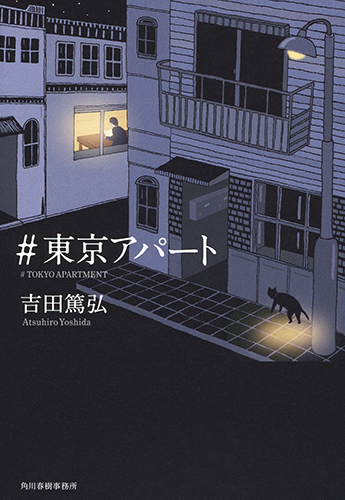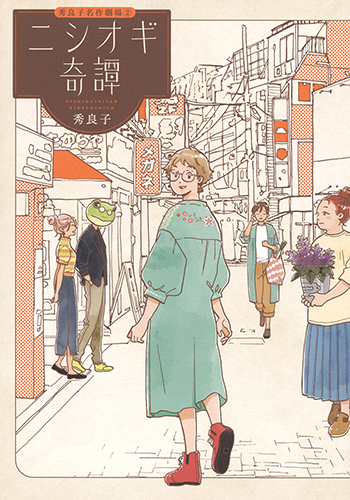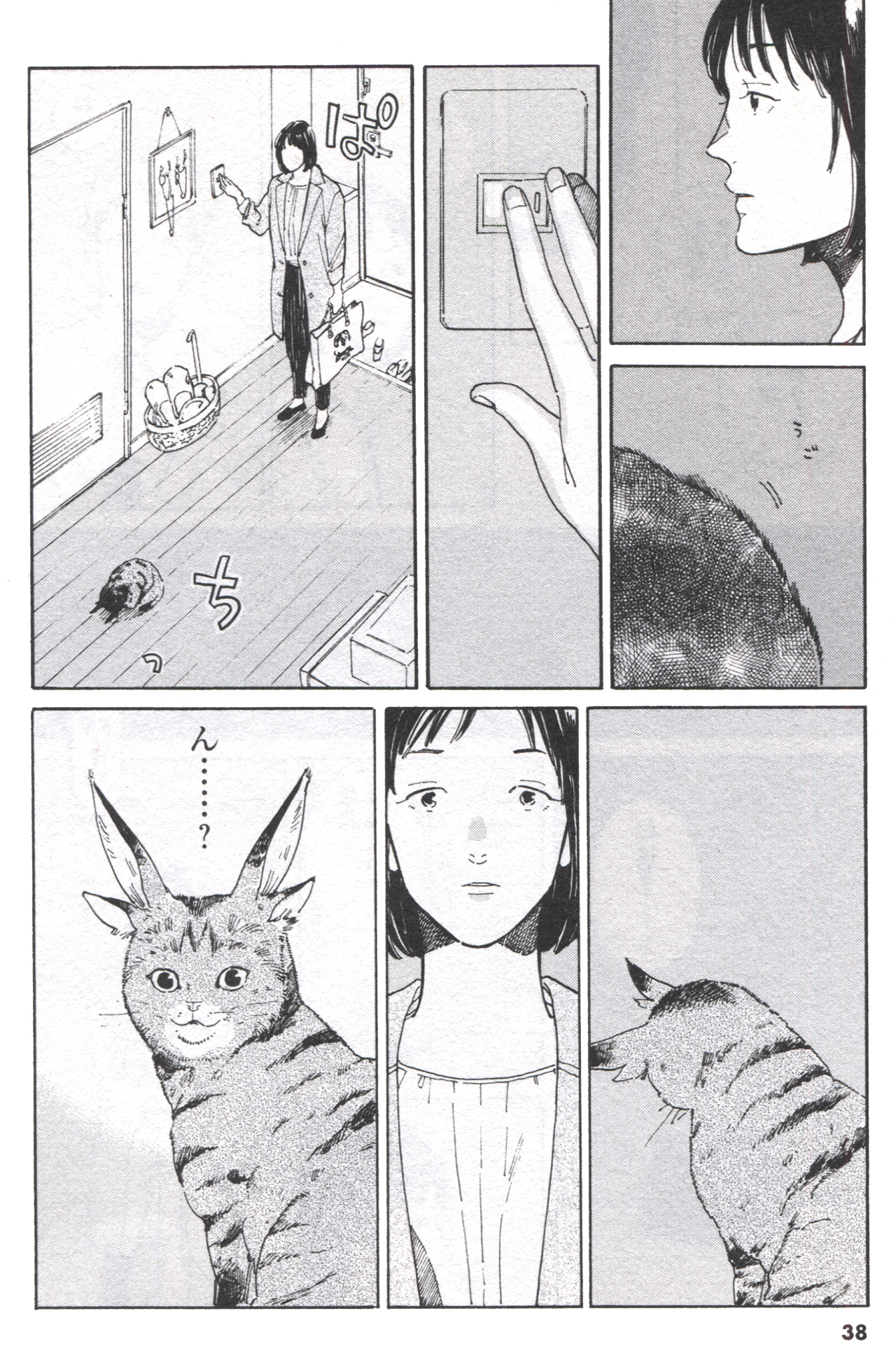
Sympathy Tower Tokyo

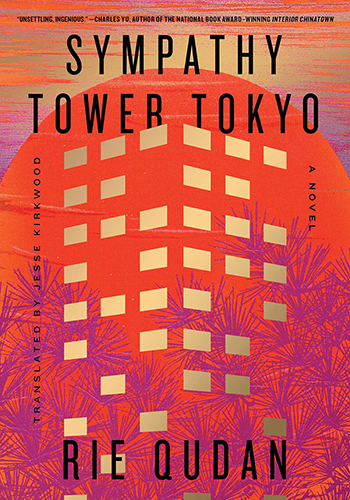
Rie Qudan’s short novel Sympathy Tower Tokyo, which was awarded an Akutagawa Prize in 2023, is a story about language, generative AI, and the culture war discourse surrounding the construction of a fictional prison facility in a high-rent area of Tokyo’s Shinjuku district. 

Sara Machina is an artist and architect who wants to win the bid to design and build the eponymous “Sympathy Tower Tokyo,” a prison right in the middle of metropolitan Tokyo that will operate according to a utopian vision of providing state-mandated shelter to “homo miserabilis,” or people driven by economic precarity to commit crimes because they had no other options, Les Misérables style.

The main problem, in Sara’s eyes, is the name of the building, which is written in English and a mouthful to pronounce: Shinpashii Tawaa Toukyou. It’s also somewhat meaningless, Sara reflects, as are a number of other politically correct English terms that have replaced native Japanese expressions. Amusingly, she provides a list that includes examples such as negurekuto (neglect), which has replaced the formal term ikuji hōki (child abandonment) in public discourse.

Most of these loanword expressions don’t really change the meaning or public perception of the concept itself, but some do. “Homo miserabilis” is one such (fictional) example, having replaced the word hanzaisha, meaning “criminal.” Which is all well and good, Sara admits, but she still can’t envision a structure called “Sympathy Tower Tokyo.” If the building were to have a name that was more euphonic in Japanese, that would be a different story.

An appropriate name is provided by a beautiful young man who goes by “Takt,” a loanword from German used for an orchestra conductor’s baton. Takt became Sara’s casual boyfriend after she saw him through the display window of a luxury fashion store in Aoyama and point-blank asked him out; and, despite the difference in their ages, he does genuinely care for her.

While Sara frets over the intricacies of language, Takt has no qualms about using AI-built, the novel’s version of ChatGPT, to address any questions he might have. Despite his casual use of AI to understand the world and communicate with other people, Takt naturally and organically comes up with the expression Tōkyō-to Dōjō-tō (Tokyo City Sympathy Tower), which rolls off the tongue “like a spell from Harry Potter” and turns out to be exactly the inspiration Sara needs. 

Sara’s design wins, and the tower is built on prime real estate for everyone to see. It is, she says, “the answer to the question posed by Zaha Hadid’s Olympic Stadium.” 

Sara narrates the first and fifth chapters of the novel, while Takt narrates the second and fourth. The third chapter belongs to Max Klein, an American journalist covering Japan who’s gone freelance after being accused of making racist cultural generalizations. Takt is charmed by Max and begins adopting his speech patterns, while Sara (bless her heart) is mainly concerned about Max being fat and stinky and sweaty.

Max himself is a budget version of Hunter S. Thompson who seems to want to “tell it like it is” but unfortunately doesn’t possess the political acumen to make it as a mainstream reporter. In particular, Max is frustrated by what he sees as the tendency of Japanese officials (and Japanese people in general) to use smooth and politically correct language to mask their actual views and agenda.

While Max’s tirade is admittedly gauche, it seems to partially echo the author’s own views regarding excessive linguistic masking, which she expressed succinctly in an interview with The Guardian (here):  

“There are people all around you who you would never think hold discriminatory views but actually do hold those views. A lot of Japanese people, on the surface, they know how to act in a way that makes them seem welcoming of diversity. And this discrepancy between what people think on the inside and what they say is a very distinctive feature.”

In other words, language is political, but the degree to which “correct” language can shape or reshape society is debatable. This question calls to mind the online conversations in 2022 surrounding Tetsuya Yamagami, the man who assassinated Shinzō Abe and attracted immediate widespread sympathy. While the murder itself was shocking, Yamagami’s motives were faultless. How, then, would it be appropriate to talk about him? Is someone like Yamagami truly a “criminal,” or rather a “homo miserabilis”? Regardless, the language we use to refer to people who commit crimes doesn’t change the fact that we feel compelled to incarcerate them, “Sympathy Tower Tokyo” though their prison may be. 

Sara Machina was the victim of an assault that was never punished or even acknowledged, and she can’t quite reconcile herself to rhetorical towers built with politically correct language. Max goes five steps farther and expresses open disdain for the sort of wokeness that dictates that people who caused so much suffering to others aren’t properly treated like criminals but are instead allowed to live rent-free in a gorgeous luxury tower.

In the middle is Takt, the son of a high-profile “homo miserabilis” who ultimately decides to become a PR representative for the tower. Perhaps because he’s so used to consulting AI-built, his speech soon becomes just as smooth and beautiful as his face. When he begins to write about Sara Machina’s architectural genius, however, he finds that AI is insufficient, yet he can find no words in himself. This is fine with Sara, who (relatably) doesn’t wish to be perceived after becoming the target of sustained abuse on social media. 

The plot summary I’ve given here doesn’t begin to do justice to the actual conflict of Sympathy Tower Tokyo, which revolves almost entirely around language. Both English-language and Japanese-language journalists have made a big deal about how “a portion of this award-winning novel was written by ChatGPT,” but this description is painfully misleading. When characters in the novel engage with AI-built, the program’s text was in fact generated by AI, as is appropriate. Although Qudan never has her viewpoint characters make a definitive statement about LLMs, the “smoothness” of machine-generated text is positioned as a mirror to the sort of “politically correct” language used by public officials to disguise and downplay critical issues in contemporary Japanese society.  

In any case, Jesse Kirkwood’s translation is brilliant, and I very much appreciate the brief and informative “Translator’s Note” at the beginning of the book. Also, for what it’s worth, though the diegetic AI-built text may have been generated by an LLM, I didn’t get the sense that it was translated by one. If there’s any criticism to be directed at Sympathy Tower Tokyo, it’s that its emotional core is ephemeral and difficult to pin down. Perhaps ironically, the characters aren’t sympathetic; rather, their role is to serve as viewpoints along a spectrum of opinion. Still, Sympathy Tower Tokyo is a remarkably playful and intellectually stimulating book, and you can’t help but admire Qudan’s boldness in standing up and speaking to the current moment of culture war discourse.

Lost Souls Meet Under a Full Moon

Lost Souls Meet Under a Full Moon brings together five interconnected short stories about people seeking to contact the dead. Though this book falls firmly into the category of “relaxing” fiction, it’s more plot-driven than most, and it distinguishes itself through its worldbuilding, especially its willingness to test the parameters of its magic system.

The central character of the novel is a handsome and stylishly dressed teenage “go-between” named Ayumi who can facilitate meetings between the living and the dead. The catch is that a person can only have one of these meetings in their lifetime, and each dead person is only allowed to return once. 

This is why the choice of the focal character of the first chapter, “The Rule of the Idol,” is so unusual. Manami asks the go-between to connect her with, of all people, a performer named Saori who made her living as a tv personality appearing on various talk shows and quiz games. When Manami was at the lowest point in her life, alone in Tokyo and bullied by her coworkers, she had a random encounter with Saori, who encouraged her to get back on her feet. Manami wants to use Saori’s death as an opportunity to thank her personally, which she never would have been able to do while Saori was still alive.

The third chapter, “The Rule of the Best Friend,” is far less wholesome. A first-year high school student named Arashi wants to be cast into leading roles in the plays performed by her school’s drama club, and she’s not shy about making her intentions known. Her biggest supporter is her best friend Misono, who joins the drama club in solidarity. Misono’s introverted grace has an alluring appeal that Arashi overlooks in her brash ambition, and she ends up losing a starring role to her best friend.

Arashi takes this poorly and stops talking to Misono. She assumes this will be a punishment, but she quickly realizes that her friendship was holding Misono back from achieving her own dreams. When Misono dies in a cycling accident, Arashi desperately wants to apologize, but she hasn’t yet developed the maturity to say what really needs to be said. I have to admit that I was surprised by the final meeting between the two friends, which is steeped in a complexity otherwise absent in these stories, and “The Rule of the Best Friend” ended up being my favorite part of the book.

In the final chapter, “The Rule of the Go-Between,” we see the characters from the previous stories from Ayumi’s perspective as he goes on his own journey during the process of inheriting the role of go-between from his elderly grandmother. Ayumi’s parents died under mysterious circumstances when he was a child, and his grandmother has carried a sense of guilt for years. Unlike his unfortunate classmate Arashi, however, Ayumi is able to break the barrier of silence and offer comfort and closure to his grandmother while they’re both still alive.

Despite a few brief moments of darkness, Lost Souls Meet Under a Full Moon presents little emotional challenge to the reader. There are very few subversive or self-reflective elements in these stories, and the characters occasionally behave like two-dimensional constructs who act solely in service to the plot. This isn’t a bad thing, of course. Lost Souls moves quickly and follows its internal logic so impeccably that the reader’s suspension of disbelief is never broken. As a result, each of the chapters is great fun to read.

Mizuki Tsujimura has taken the five-chapter cozy fiction formula and polished it to a high sheen. As far as the genre goes, Lost Souls Meet Under a Full Moon is as good as it gets, largely thanks to the author’s willingness to explore the more nuanced implications of the stories’ premise. Yuki Tejima’s translation is lovely and uses a light touch to bring the energy of Tsujimura’s prose to English-language readers. I’d recommend Lost Souls Meet Under a Full Moon to anyone looking for a good comfort read, not to mention a welcome reminder of the importance of saying what needs to be said while you’re still alive.

Until I Meet My Husband

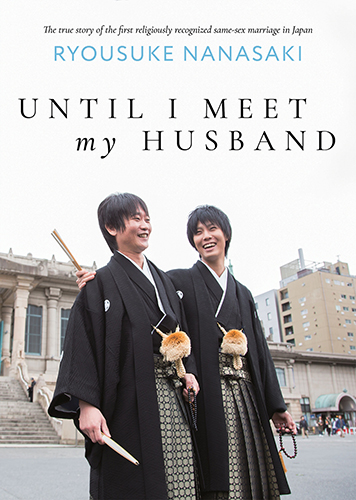
Until I Meet My Husband is a collection of short autobiographical essays by Ryousuke Nanasaki, an activist who established LGBT Community Edogawa in 2015 and a wedding planning company called Juerias LGBT Wedding in 2016, both of which contributed to Tokyo’s Edogawa ward officially recognizing same-sex partnership by issuing marriage certificates.

Nanasaki lays out his motivations for becoming an activist toward the end of the book, but the majority of his essays are humorous stories about life and love. As Nanasaki explains in the final chapter, “In Place of an Afterword,” he wants readers to understand the “raw, uncut truth” of queer identity, which is that gay people experience happiness and make mistakes like everyone else.

As a result of Nanasaki’s honesty, the essays in Until I Meet My Husband are immensely entertaining and compulsively readable. Many of the stories will be familiar to queer Millennials, from receiving a stern lecture from a well-meaning teacher in elementary school to dating other closeted queer kids in high school to falling a little too hard for your first serious partner as an adult. Nanasaki leans hard into friendship drama, relationship drama, and family drama, but he’s so funny and good-natured that you can’t help but support him through his misadventures.

Molly Lee’s translation is pitch perfect, conveying the confidence and enthusiasm of Nanasaki’s voice in natural English that’s a pleasure to read. Along with the original essay collection, Seven Seas has also released the manga adaptation, which features dreamy artwork by BL manga author Yoshi Tsukizuki

Memento Bento

Memento Bento is a 65-page chapbook created by the Italian artist Alessandra Criseo. The chapbook, which is structured like an annotated sketchbook, chronicles Criseo’s trip to Japan with her partner Andreas in April and May of 2014. Over the course of two and a half weeks, the pair visited Tokyo, Kyoto, Nara, and Yokohama.

At the time, Criseo was working in London as a freelance character designer and concept illustrator for video game development studios. Criseo’s primary interest in Japan lay in its culture of cuteness, and the pages of Memento Bento are filled with sketches of clothing, characters, and street fashion. This fascination with cuteness is supplemented by photos of cute food, such as strawberry-themed pastries and the popular Tokyo Banana souvenir cakes.

Despite her stay in the popular tourist destinations of Kyoto and Nara, Criseo cares less about traditional Japanese architecture and handicrafts than she does about common urban cityscapes and mundane everyday objects. “I love taking the train. [It’s] one of the pleasures of life, especially in a country with such pretty houses as this one,” she writes next to an ink drawing of herself sketching on a commuter train.

Along with the urban tangle of telephone poles and power lines, Criseo is also fascinated by vending machines, instant ramen packaging, toilets, umbrellas, disposable cameras, and the uniquely non-aerodynamic shapes of domestic Japanese automobiles. Having submerged herself in the visual clutter of Japan, Criseo writes that she’s not looking forward to returning to the “boring and gray” monotony of London.

The heterodox and chaotic aesthetic often decried by older observers of Japan is a source of fascination and delight for Criseo. As an artist and professional designer, Criseo has translated her study of Japanese commercial design to her own clothing and stationery, which she distributes through her independent label, Mezzolume.

When I wrote about Ryōko Nagara’s recent manga about the local material culture of Sapporo (here), I was reminded of how many visual representations of Japan created by Europeans (such as Onibi: Diary of a Yokai Ghost Hunter) often emphasize “Shōwa retro” objects and spaces. In a time when the speed and productivity demanded by neoliberal capitalism leave many people anxious and exhausted, there’s a certain appeal to old and “useless” things, which artists like Criseo present as visually charming and emotionally compelling.

If you’re interested, you can order an English-language edition of Memento Bento (here), and you can follow Alessandra Criseo on Instagram (here).

Higashi Tokyo Machi Machi

Keita Katsushika’s manga Higashi Tōkyō Machi Machi (東東京区区) is a leisurely walking tour of East Tokyo. As suggested by their pen name, the artist lives in Tokyo’s Katsushika Ward, which is known for the retro ambiance of its Shibamata district and its green and pleasant riverside walking paths. Keita Katsushika is keen to show the reader the quiet charm of the area while exploring the depth of its history and the diversity of its communities.

Higashi Tōkyō Machi Machi follows the adventures of three focal characters. 21yo Sarah is a college student majoring in Urban Studies, and 8yo Selam is the daughter of an Ethiopian immigrant who runs a small restaurant near her university. While Sarah and Selam are out on a walk one afternoon, they meet 13yo Haruta, a homeschooled student pursuing his interest in Tokyo’s history. The friendship between these three characters is sweet and uncomplicated, and their personalities facilitate different approaches to urban exploration.

The trio’s first walk together takes them to the Tokyo Skytree, where they’re able to look out over the neighborhood while studying a reproduction of an Edo-period artwork that depicts the region as it appeared in the past. Another adventure takes them to the former site of the Venice Market, a postwar black market that was created by laying boards over a drainage canal. Since then, a normal street was built over the water, and the area hosts a number of stores and restaurants catering to Tokyo’s immigrant populations. If you’re interested in the history of the Venice Market, you can check out a two-page preview of this section of the manga (here).

All three characters were born and raised in Japan, and no one ever treats them with anything less than kindness and respect. As Sarah writes in the opening to her senior thesis, the formerly depopulated areas of Northeast Tokyo have gradually become home to many immigrant communities, who have revitalized the neighborhoods where they settle. Instead of resenting the growth of their communities, many older residents are happy to share their knowledge and memories with curious young people.

For what it’s worth, this portrayal of gregarious retirees is true to my own experiences walking around Tokyo with friends. Whether you’re a visitor or a long-term resident, it doesn’t matter what your face looks like or how you dress. As long as you’re willing to listen, there will always be people willing to share their stories. The manga’s scenes of immigrant community gatherings are equally warm and friendly. It’s lovely to see the diversity of people and life experiences in Tokyo shown as what it really is – not as a social issue to be discussed when something bad happens, but rather as a normal and pleasant aspect of everyday life. 

In many ways, Higashi Tōkyō Machi Machi reminds me of Kiyohiko Azuma’s manga Yotsuba&!, which follows the wholesome everyday adventures of a translator, his friends, and the young girl he adopted abroad. Just as in Yotsuba&!, the art of Higashi Tōkyō Machi Machi places simple and stylized characters into meticulously detailed backgrounds, thus helping the reader feel immersed in the cityscape of Tokyo and its suburbs.

The main difference is that Keita Katsushika’s manga is dense with text and reads more like a collection of illustrated essays than a story. Thankfully, the writing follows the standard shōnen manga convention of glossing the kanji with their hiragana pronunciations. As you might imagine, this is especially helpful with place names.

I’d recommend Higashi Tōkyō Machi Machi to anyone who’s interested in the history and culture of Tokyo. If you’ve read Jorge Almazán’s study Emergent Tokyo and are curious about how the urban design principles Almazán charted in West Tokyo neighborhoods have been adapted to the older neighborhoods in the east of the city, this manga was published for you specifically. Higashi Tōkyō Machi Machi is a treasure, and it’s a joy to explore Tokyo alongside its characters.

A Hundred Years and a Day

In October 2024, Matt Alt published an article in Aeon titled “The Joy of Clutter.” Instead of decrying the unsightliness of visual complexity, Alt argues that clutter has its own unique beauty, “an ecstatic, emergent complexity, born less from planning than from organic growth, from the inevitable chaos of lives being lived.”

Alt’s essay is illustrated with photos contributed by Lee Chapman, who captures evocative images of the chaotic interiors of tiny family-owned restaurants located in shopping arcades lined with shuttered storefronts. Chapman’s photos coincide with a trend on social media that expresses nostalgia for the Japan of the late twentieth century, with posts often tagged as “Shōwa Retro.”

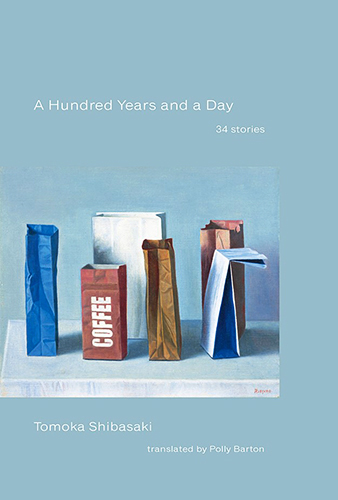
Tomoka Shibasaki’s A Hundred Years and a Day delights in the aesthetic of gentle decline exemplified by Shōwa Retro, and the 34 stories in the collection express nostalgia for people and places left behind in the past. Shibasaki invites the reader to walk through depopulated residential neighborhoods and stroll along abandoned shopping arcades. Half-empty cityscapes are dotted with buildings filled with clutter. Aging adults sift through the belongings of their deceased parents. Siblings who’ve drifted apart make clumsy attempts to reconnect by alluding to half-forgotten memories. Students study and then discard the small artifacts of the people who came before them.

Even reading through the book’s Table of Contents is like flipping through a card catalog in an old library, with each story’s title being a concise description of its premise. To give an example, the first story is titled:

“One summer during a long rainy spell, student number one from class one and student number one from class two discover mushrooms growing in a flower bed next to a covered walkway at their school; two years after leaving school they bump into each other, but after that, ten years pass, twenty years pass, and they don’t meet again”

“One summer” is a translucently beautiful piece of writing with imagery so clean and clear that I could almost feel the seasonal humidity on my skin. The story conveys the delicate specificity of a single moment captured in time. The moment dissipates and disperses as the world moves on, but the memory lingers.

An intriguing play on this theme is in the nineteenth story…

“I feel like I want to see the places that someone else saw, he said; I like thinking about places I’ve been to once but no longer know how to get to, or places that you can only access at certain times, I feel like there must be some way of visiting the places that exist only in people’s memories”

…which is about a woman who travels to a small seaside town to give a presentation at an academic conference. While walking back from the local shrine, she has a brief conversation with a child who will be the last ever student to graduate from the municipality’s junior high school. Years later, the child (now grown) encounters an artistic diorama that recreates a fictional version of their hometown that appeared in an old novel written by the academic’s deceased mother. While studying the artwork, this person (referred to by the story as “the last child”) is surprised by the liveliness of the reconstructed memory:

The last child crouched down and peered into the alley running between the wooden houses. It looked a lot like the alleyways that they knew from their childhood. They felt as though it was a path they’d been down before. As the last child was still staring down the passage, a cat ran across the alleyway where the stone steps were. The last child gasped in surprise, and stood up. A cicada flew in through the window, attached itself to the wall, and began to screech.

“I feel like I want to see” is a wandering ramble across time and memory, but most of the vignettes in A Hundred Years and a Day are much more focused on the history of a specific place. One of my favorites is the twenty-second story…

“A man opens a café in a shopping arcade, dreaming that it will become like the jazz café he used to frequent as a student; the café stays open for nearly thirty years, then closes down”

…which, despite the title, is about the young woman who takes over the original café by the university. The interior of the café is almost comically outdated, as are the records left behind by the previous owner. The new owner isn’t familiar with the musicians whose posters still hang on the walls. Regardless, the café is still lively, and the new owner finds herself thinking, at the end of the story, that “this is what I wanted to do.”

If I had to guess, I’d say that the reason why this sort of Shōwa Retro story has such a strong appeal is because it rejects the performative glossiness of mass media while embracing the beauty of real, everyday settings. The aesthetic also disrupts the modern myth that progress is not just desirable, but inevitable. Things don’t always get “better,” Shibasaki demonstrates, nor do endings always happen with a bang. 

A cursory reading might suggest that Shibasaki is trafficking in low-effort cultural nostalgia, but I don’t think that’s the case. The imagery presented by each story in A Hundred Years and a Day feels very deliberate, like it’s smashing a smartphone screen with a hammer. This is fiction to be enjoyed slowly, and I appreciate the contemplative space Shibasaki has opened for the reader.

When discussing the texture of Shibasaki’s writing, it’s important to acknowledge the artistry of Polly Barton’s English translation. Japanese literary writing is notorious for its nested sentence structure, which can feel unintentionally Proustian if translated literally. It takes a keen eye and a delicate touch to understand whether Japanese sentences are interminably lengthy because the language is simply written like that; or whether a sentence like one of Shibasaki’s story titles is a deliberate stylistic choice. Barton has done truly amazing work with A Hundred Years and a Day at a sentence-by-sentence level, allowing the reader to enjoy Shibasaki’s distinctive style while still maintaining a casual, conversational tone.

Most of the stories in A Hundred Years and a Day occupy fewer than ten pages, and they read like accounts passed from one person to another by word of mouth. Spending time with this collection feels like calling an elderly relative and listening to them talk about a restaurant closing in your old neighborhood, or about how they saw someone that you once knew as a child in the newspaper. There’s no real beginning or end to the stories, nor is there any discernible sense of structure. Still, the theme of human connection runs through Shibasaki’s work like a gentle current, drawing the reader forward along on the steadily flowing stream of time.

I’d like to extend my gratitude to Stone Bridge Press, which provided an advance review copy of this book. A Hundred Years and a Day will be published on February 25, 2025. You can learn more and read a preview on the book’s webpage (here).

Kanda Gokurachō Shokunin Banashi

The first volume of Akihito Sakaue’s manga Kanda Gokurachō Shokunin Banashi, which won the Tezuka Osamu New Creator Prize in 2024, collects five stand-alone short stories about the everyday lives of artisans during the Edo Period. As might be expected from a manga about craftsmanship, Sakaue devotes meticulous care and attention to creating an accurate visual depiction of the tools and techniques used in these traditional arts. 

Shokunin Banashi opens with a twelve-page account of a day in the life of a carpenter who creates and repairs wooden buckets. Although the work may seem unglamorous, the skill involved is readily apparent. An additional layer of accuracy lies in the fact that this story’s star craftsperson is female, as were many of the artisans who kept Edo period society functioning.

The next two stories feature a blacksmith who specializes in swords and an indigo dyer who dreams of creating her own fabric pattern designs. My favorite of these opening stories is the fourth, which follows a young but talented seamster who sews and binds the edges of tatami mats. Along with the rest of his team, he’s been hired to replace the tatami in a high-end establishment in the Yoshiwara red light district. The courtesans are impressed by the craftsman’s skill with his hands, but he remains focused on his craft and maintains an appropriate professional distance. Once he’s finished the job, however, he allows himself to be a little flattered. This is a cute story that’s also very sympathetic to the craft of the women who work in Yoshiwara.

The three-chapter story in the second half of the volume is a workplace drama about a company of contractors who specialize in laying plaster walls. This is intense physical labor that requires a good eye, a steady hand, and careful group coordination. The leader of the team, Chōshichi, is an undisputed master of her craft, but a new recruit, Jinsaburō, soon learns that there’s trouble among the ranks of her subordinates. A master craftsman himself, Jinsaburō supports Chōshichi during the construction of a townhouse. For the reader, this is a marvelous opportunity to get an inside look at each stage of how these houses were built.

I’d recommend Shokunin Banashi to anyone who enjoyed Fumi Yoshinaga’s Ōoku series, especially for the high quality of its historical representation and the subtlety of its human drama. I might also recommend Shokunin Banashi to any illustrator who’s interested in studying hands depicted in a variety of positions while manipulating all sorts of specific tools. The art in Shokunin Banashi is something special, as is the physical book itself, which was designed to be a beautiful object.

Edited to add: This manga has been licensed by Yen Press as Neighborhood Craftsmen: Stories from Kanda’s Gokura-chou. Excellent!

Kamimachi

Machiko Kyō’s Kamimachi (かみまち) was serialized from June 2019 to December 2022 and published as a two-volume graphic novel in August 2023. The story follows four homeless teenage girls who find themselves at a privately run youth shelter called Kami No Ie (“Family of God”) in the Tokyo suburbs.

Although he initially seems kind and welcoming, the middle-aged man who runs this shelter is a sexual predator, and he has assaulted and murdered one of his young charges prior to the beginning of the story. The ghost of this young woman, in the form of a Christian angel, helps the girls find the courage to escape the Kami No Ie shelter.

Each of the four main characters in Kamimachi has become homeless after escaping a toxic home environment.

Uka is the only child of a single mother who projects her loneliness and frustrated ambitions onto her daughter. The story begins as Uka leaves home and seeks shelter by means of a roomshare app. After a number of awkward situations, Uka comes to the attention of a group of men who use the app to recruit sex workers. These men force Uka into a situation in which she’s expected to trade a night at a short-term rental space for sex. She breaks out of the apartment and wanders the streets of Tokyo before finding herself at the Kami No Ie shelter.

Uka’s closest friend at the shelter, Nagisa, has been sexually abused by her stepfather for years. She finally flees from home after her mother witnesses one of these assaults and turns away in disgust.

Arisa was raised as a television idol by a single mother. After her mother’s sudden death in an accident, Arisa is given to the care of a talent manager who steals her inheritance and financial assets, leaving her destitute.

Yō is one of five siblings. She’s so neglected by her family and bullied by her brothers that she finds it preferable to sleep in subway stations. Eventually she stops returning home altogether.  

For each of these young women, Tokyo becomes a wilderness whose anonymous open spaces serve as a refuge from the enclosed interiors where they’re coerced into enduring abuse. Kyō draws indoor scenes using small panels with blank backgrounds, and these scenes often feature close-ups of the characters’ faces in moments of distress. Meanwhile, Kyō depicts outdoor scenes with large panels that frame the characters with trees and buildings. The expansive outdoor settings often serve as the stage for small moments of kindness and emotional clarity.

In Chapter Three, for example, Uka flees into the night after an attempted sexual assault at a roomshare apartment. After her escape, she wanders through the rain with nothing but the clothes on her back. Out of context, the rainy cityscape may seem bleak, but the large panels filled are a visual relief after the oppressively small and claustrophobic panels that depict the apartment.

One of the anonymous figures passing in the rain, whom the reader later learns is Yō, stops beside Uka to give her an umbrella. Page 71 opens with a close-up of Yō’s extended hand before spreading into an open panel in which Uka and Yō stand at the center of a composition framed by misty buildings and puddles on the concrete. The two small figures reaching out to one another are enclosed in a soft curtain of rain, and the sense of relief at being a part of a larger world is palpable.  

Chapter Seven contains a similar scene in which the open sky and background cityscape suggest freedom from the violence that occurs behind closed doors. Nagisa, who’d encountered Uka in a roomshare arrangement, takes Uka’s discarded uniform and attends school in her place. One of Uka’s former classmates approaches Nagisa, offers to share her lunch, and asks that Nagisa talk with her on the roof. Nagisa initially tries to be normal, showing the girl photos of her mother and stepfather’s new infant daughter.

During this scene, the panels become progressively smaller until Nagisa finally admits the truth about having left her family. The shift to a full-page panel depicting the city’s jumble of buildings spreading under the open sky signals Nagisa’s admission that something has to change. This moment also serves as the catalyst for Uka’s classmate to begin searching for her missing friend, a decision that ultimately results in Uka’s rescue from the Kami No Ie shelter.

The openness of Tokyo cityscapes in these scenes suggests that the sort of hidden abuse endured by these young women needs to be brought into the open and exposed to the light of public scrutiny. Along those lines, I can’t help but feel that Kyō’s depictions of outdoor spaces in Kamimachi also reflect the artist’s emotional response to the Covid pandemic. For people in precarious situations, being physically stuck inside often exacerbated the experience of feeling trapped within oppressive social systems.

As an artist who documented the pandemic years through evocative illustrations posted to Instagram, Kyō’s project is not simply to depict the beauty of architecture and greenery within the city, but also to comment on the importance of open outdoor “third places” for young people suffering from social pressure and economic strain. Kamimachi doesn’t provide easy solutions, but it’s cathartic to see the issue of youth precarity brought out into the open air. 

Machiko Kyō is a prolific and award-winning artist whose illustration collections have been celebrated by The Comics Journal (here). If you’re interested in reading more about the artist’s work, I published a short essay on her 2013 graphic novel Cocoon – whose animated adaptation is scheduled to premiere on NHK in Summer 2025 – on Women Write About Comics (here). Here’s hoping that English-language readers will be able to experience Kyō’s compelling and thought-provoking work in the near future.

Mornings With My Cat Mii

Cats are adorable creatures, it’s true. It’s also true that they’re a little magical. Unfortunately, the experience of caring for a cat isn’t all sunshine and rainbows, and there’s a lot of cleaning involved. Mayumi Inaba’s autobiographical essay collection Mornings With My Cat Mii is a beautifully written attempt to capture the not-always-rosy reality of sharing your space with a cat while doing your best to manage your life as a human.

In the summer of 1977, Inaba follows the cries that drift in through her window and discovers a ball of fluff stuck at the top of a fence along the bank of the Tamagawa River in western Tokyo. Since it’s freezing outside, she takes the kitten home. Inaba names her “Mimi,” or “Mii” for short, after her constant crying. Despite her precarious childhood, Mii goes on to live for almost twenty years, accompanying the author through major developments in her personal life and career.     

Mayumi Inaba (1950-2014) worked in a number of creative industries while publishing stories, essays, and poetry. The opening essays in Mornings With My Cat Mii are about the milestones in Inaba’s life as she divorces her husband in Osaka to focus on her career in Tokyo. As time passes, Inaba begins to devote more attention to her friendships and psychological wellbeing, a shift in priorities represented by her growing love for Mii.

Mornings With My Cat Mii is far from wholesome, however. Inaba is nothing if not honest about the vicissitudes of life. Sometimes you and your partner grow distant. Sometimes you get kicked out of your house by your landlord. Sometimes people abandon animals. And sometimes you have to bear witness to your pet’s slow decline toward death.

A major element of Inaba’s commitment to honesty are her raw descriptions of the mess of keeping an animal in your house. Sometimes, for example, your entire apartment is going to smell like cat urine. Sometimes you have to scrub puke out of the carpet. Sometimes you have to extract your cat’s feces with your own hands.

Regardless, Inaba always finds a silver lining and an interesting story to tell. I especially enjoyed her essay “The Pet Sitter,” which provides an intriguing glimpse into the thriving industry of petcare services in Japan while digging its heels into the silliness of celebrity pet therapists. I also love “The Winter Break,” which describes a trip Inaba took to the countryside with her sister so Mii could touch grass and frolic in nature. The essay “Moving House” stands out as a playful description of a typical day in young Mii’s life in Inaba’s old house in the west Tokyo suburbs, which were still filled with pockets of nature in the 1970s.

Each essay is less than ten pages long, and most of them feature several verses of a poem as a postscript. Ginny Tapley Takemori has done a marvelous job translating Inaba’s poetry. Just be aware that some of these poems might make you a bit misty-eyed, especially if you’re feeling sentimental about the death of a pet of your own.

I’m generally not a fan of Japanese cat books, but Mornings With My Cat Mii isn’t bubblegum pop about how all of life’s problems can be magically solved by a cat. Rather, this is messy and honest nonfiction about the hardships of pursuing a creative career as a single woman. Still, Inaba manages to find moments of sweetness in life, which she generously shares with the reader in her soft and shining prose.

Emergent Tokyo

Emergent Tokyo: Designing the Spontaneous City is a fascinating study of urban space augmented by a wealth of photographs and illustrations. Jorge Almazán convincingly argues that, instead of being designed from the top down, Tokyo’s distinctive cityscape emerged from history and opportunity.

Almazán focuses on five distinguishing characteristics of Tokyo, from the famous zakkyo “mixed-use” highrise buildings that line the main boulevards to the dense shopping areas that crowd the bays between support columns under elevated train tracks. Each feature of Tokyo’s cityscape is illuminated by three case studies that are meticulously documented and analyzed.

My favorite chapter is about the narrow and winding ankyo streets of West Tokyo, which were built on top of old canals and have gradually become pedestrian oases. The most famous is Harajuku’s Mozart-Brahms Lane, the chill and ambient twin to Takeshita Street. As in the case of Mozart-Brahms Lane, ankyo streets have often become communal backyards for neighborhoods with flashier public faces.    

I especially appreciate the Conclusion section, in which Almazán demonstrates that corporate-led urbanism has created unwelcoming and visually unappealing spaces that have none of the vibrancy of the more organic spaces fostered by collectives formed by homeowners and small business managers. While urban planning is still necessary, Almazán argues, emergent communities should not be stifled. 

Emergent Tokyo isn’t a book for tourists, but I imagine it will be of interest to anyone who’s curious about urban design. Also, although some of the more academic text might fly above the heads of small children, I think Emergent Tokyo would be a wonderful book to give a kid. The illustrations and diagrams are truly fantastic, and they’re so immersive that I found myself disappearing into the details as I imagined walking through the Tokyo gorgeously laid out across the pages.