Nishiogi Kitan

Nishi Ogikubo is a stop on the JR Chuo Line that runs through central Tokyo and out into the western suburbs. The neighborhood, known as “Nishiogi” to its residents, is right next door to Kichijōji, a trendy area filled with small restaurants, cafés, antique stores, art galleries, and beautiful green parks. Like Kichijōji, Nishiogi has an artsy and laid-back vibe…

…but it doesn’t exist. Not officially, anyway. So how do you get there? According to anonymous forum posts, if you take the Chuo local train that stops at every station, every so often it will stop at Nishi Ogikubo. If you choose to get off at the station that doesn’t exist, however, perhaps you shouldn’t be surprised by the people you encounter there!

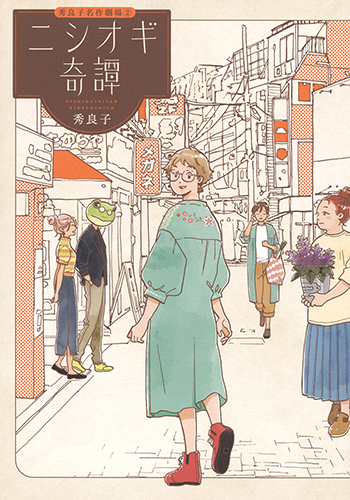
Hideyoshico’s 2025 manga Nishiogi Kitan (Strange Tales of Nishiogi) collects seven stories about a fictional neighborhood where anything can happen. Despite the oddness of some of the residents, Nishiogi is chill and pleasant, and the neighborhood is a lovely place to spend time.

The second story in the collection, Mayonaka no hōmonsha (Late-night Visitor), is a great introduction to everyday life in Nishiogi. While walking home one night, an office worker named Kurata realizes that a cat is following her. It’s not like any cat she’s ever seen, but it seems to have taken a shine to her. She brings the cat home and names it Ohagi. Ohagi’s appearance changes every day, but the most noticeable shifts occur when Kurata is forced to stay late at the office.
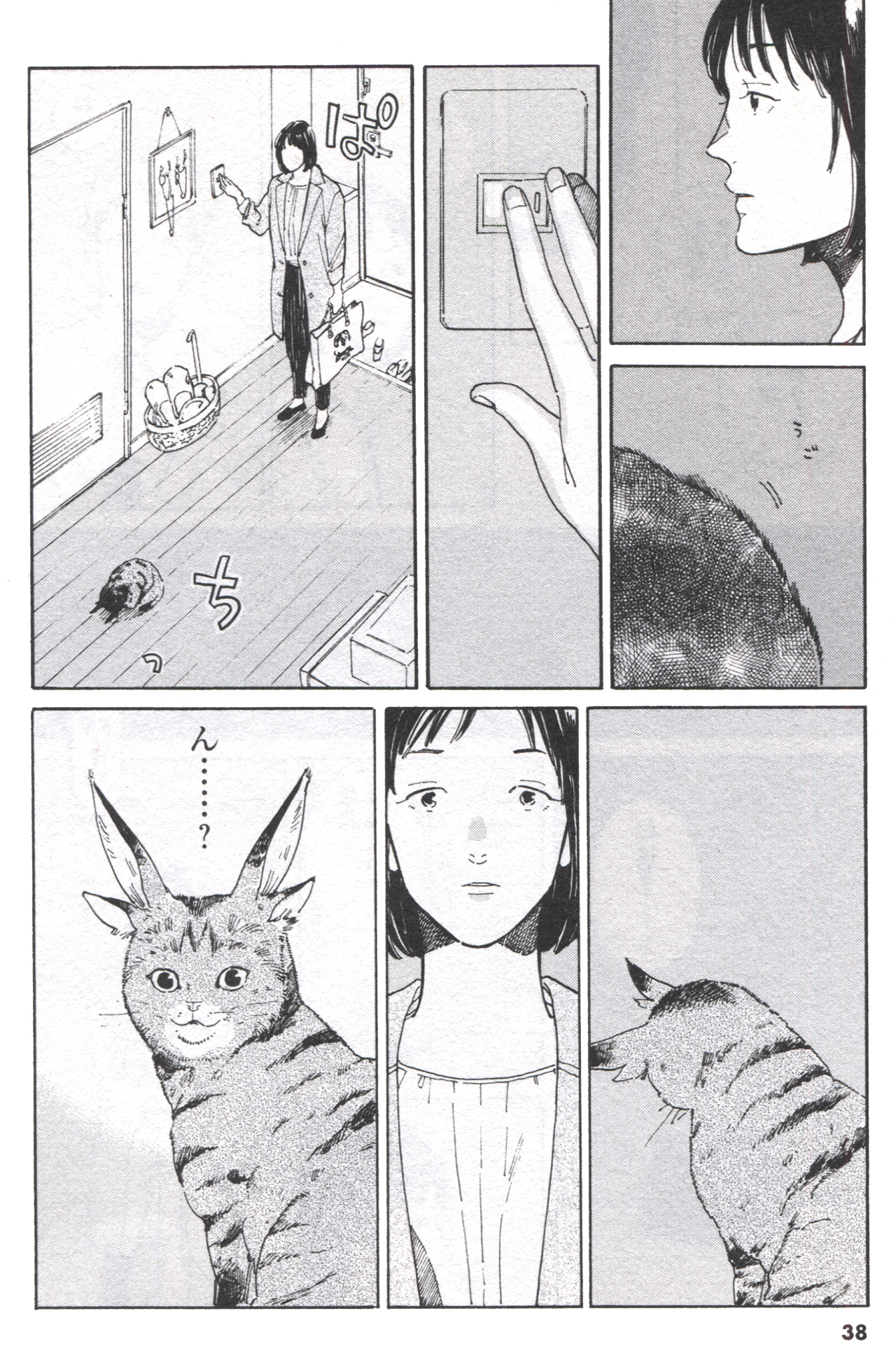
When Kurata returns especially late one night, she finds her potted plant overturned and all sorts of leaves scattered across the floor. Hiding under her bedcovers is a big fat tanuki.

Kurata realizes that Ohagi has been exhausting itself while trying too hard to be something it’s not, and this causes her to realize that she’s more than a little tired herself. The next time her boss asks her to work late, she politely tells him that she has a pet at home to take care of, and that he can do the work himself. When given more love and attention, Ohagi becomes a little better at taking the shape of a cat… sort of.

Back in the day, Hideyoshico used to draw dōjinshi fancomics based on Yotsuba&!, and there are hints of the same themes in the collection’s fourth story, Natsu no ie (Summer House). While walking the family dog one afternoon, a young boy passes an abandoned house rumored to be haunted. As the dog frolics in the overgrown yard, an unkempt man eats instant noodles on the porch. Though the man claims to be a ghost, the boy doesn’t believe him, and the two become friends. The reader can never be entirely sure if the man isn’t in fact a ghost, but this is a very sweet and charming story.

Because I love urban legends about cursed apartments in Tokyo, I’m a big fan of the story “New Heights Nishiogi Apt. 202,” in which a young musician befriends a horrorterror straight out of a Junji Ito manga. The man’s apartment may be haunted, but the rent is cheap, and the eldritch entity is a companionable and considerate flatmate, all things considered. This story isn’t about the man learning to accept his flatmate’s “difference,” as he doesn’t seem to mind that at all, but rather about him learning to respect the spirit’s feelings and boundaries despite his difficulties understanding someone who can’t communicate in human language. 
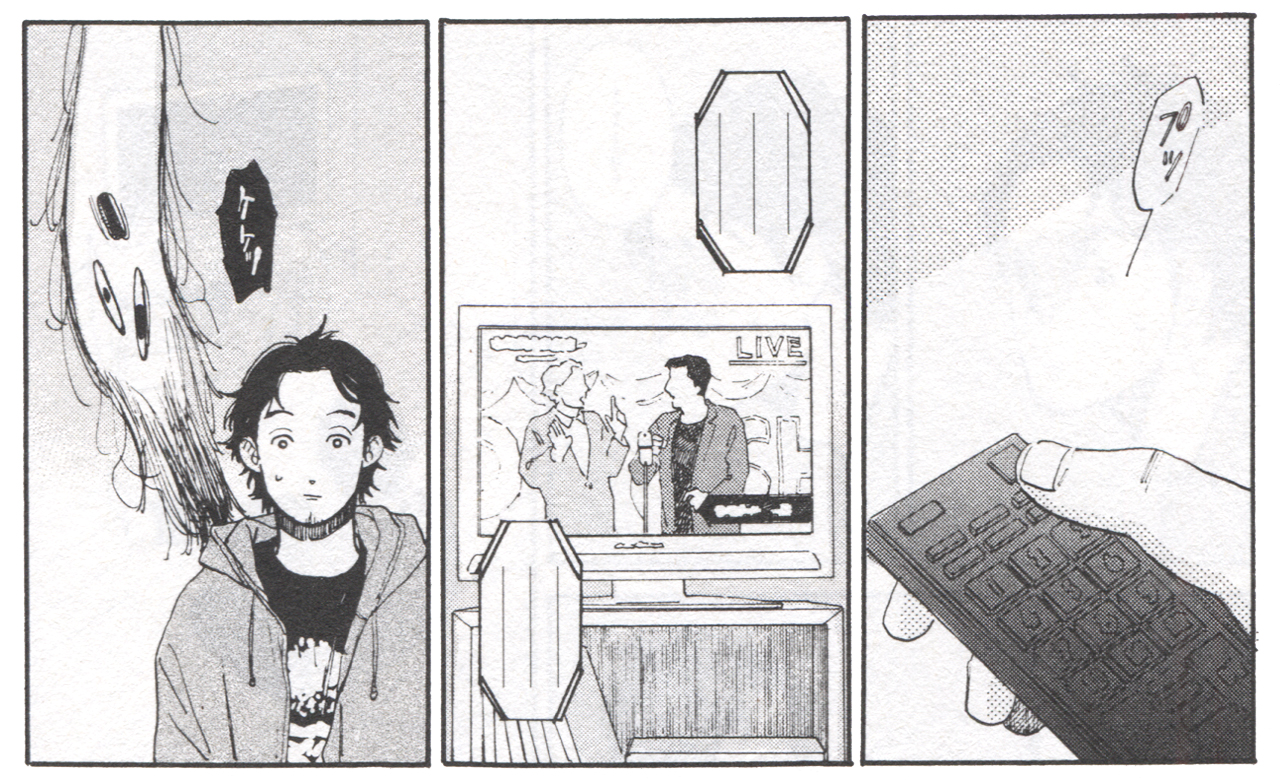
Hideyoshico is a veteran BL manga artist, and traces of the standard mid-2010s BL illustration style occasionally surface in Nishiogi Kitan. All of the adult male characters are attractive, and I’m not complaining. There’s a wider visual range in the female characters, who seem a bit more grounded in reality, and I’m also impressed by how the artist has portrayed the cluttered interiors and alleyways of West Tokyo. Some of the background architecture is traced (which is 100% valid), but most of the ambience is hand-drawn and lovely to see on the page.

Each story in Nishiogi Kitan is perfectly paced according to a four-part narrative structure, which makes the collection easily approachable despite its array of out-of-the-ordinary scenarios. Though not saccharine by any means, Hideyoshico’s tone is unflaggingly good-natured, and the good humor of the characters is contagious. Though the themes of the stories in Nishiogi Kitan don’t shy away from darkness and nuance, the collection is a weird but warm ray of sunshine.

The Night Parade of One Hundred Demons

The Night Parade

Title: The Night Parade of One Hundred Demons
Author: Matthew Meyer
Publication Year: 2012
Publisher: Amazon CreateSpace
Pages: 224

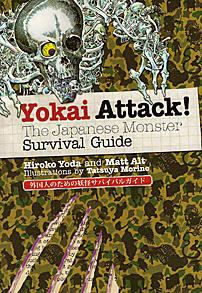
The Night Parade of One Hundred Demons, which began its life as a Kickstarter project, collects roughly four dozen entries on various yōkai, which are accompanied by lavish full-color illustrations. Both the pictures and the text are by Matthew Meyer, an artist heavily influenced by Japanese prints. Meyer has lived in a rural town in Fukui prefecture since 2007, and, as he explains on his Kickstarter page, he has been collecting and translating local folklore for years. There are a number of other books on yōkai available for digital download (such as Matt Alt and Hiroko Yoda’s fantastic Yokai Attack!), but what The Night Parade does especially well is to add regional color and variety to Japanese legends of supernatural creatures that may already be familiar to many Japanophiles.

Compiled in such a way as to resemble an illustrated bestiary, The Night Parade is divided into several sections, which include “In the Wilds,” “Out on the Town,” and “In the House.” The book includes entries on yōkai that appear frequently in popular media, such as the kappa, the kirin, the kitsune, the tanuki, and the yuki onna, as well as many lesser-known creatures, such as the bake kujira (an enormous ghostly whale), the jorōgumo (a man-eating spider), and the nuppepō (a flabby, stinky lump of flesh that lives in temple graveyards), and the nopperabō (who looks and acts like an ordinary person but has no face). Each entry contains information on the diet and appearance of these yōkai, their behavior, their interactions with human beings, and the various forms they may take, as well variations on and translations of their names.

Many of the entries are also peppered with interesting information about the historical and cultural contexts of these creatures. For example, the entry on the takanyūnō, or “tall priest,” contains a special section on why suffixes relating to Buddhism and Buddhist priests are so common in the names of yōkai. (Apparently, it’s not so much a connection to religion as it is a certain wariness regarding traveling priests, or at least strangers dressed as traveling priests.) The entry on the kerakera onna, a gigantic “cackling woman” who haunts the alleyways of red light districts and hounds men into their graves with her incessant laughter, alludes to the tendency in Japanese folklore to grant great power to long-lived things, whether they be cats (which become neko mata) or eating utensils (which become tsukumogami), and surmises that prostitutes who managed to live into middle age may well have become yōkai, an interesting conjecture that leaves the mind to wonder about what such a bit of folklore might correspond to in a less numinous context.

Meyer has published his work through Amazon’s CreateSpace program, which offers both print and digital versions of the collection. I can’t offer an opinion of the physical copy of The Night Parade, but the digital edition is beautifully formatted, and its images are of extremely high quality. Although the book is relatively kid-friendly, it includes frank (although far from explicit) references to prostitution and human sexuality. Most of the images are stylized as colorful and cute or understated and eerie, but a few (such as the illustration of the ubume, a spirit of a woman who has died during childbirth) may be too intense for younger readers. My honorary nieces and nephews have been delighted by pictures like the illustration of the onryō, a vengeful ghost who is depicted as a pale shrieking woman bleeding from her eyes, but discretion might be advised for more sensitive children.

Meyer has recently launched a successful Kickstarter project for a second collection, titled The Hour of Meeting Evil Spirits, so expect another excellent illustrated bestiary from him soon!

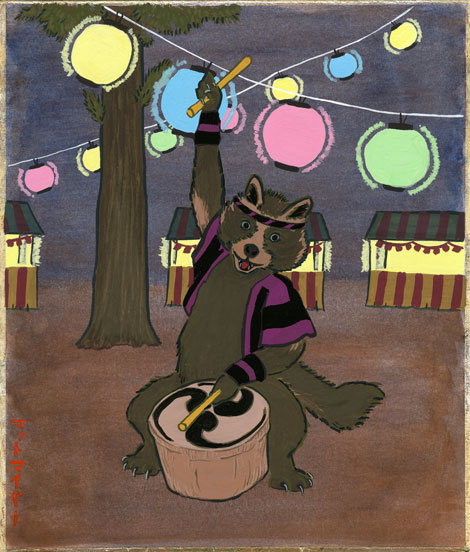
Matthew Meyer - Tanuki

Yokai Attack!

yokai-attack

Title: Yokai Attack! The Japanese Monster Survival Guide
Authors: Hiroko Yoda and Matt Alt
Illustrations: Morino Tatsuya (森野達弥) 
Publication Year: 2008 (America)
Publisher: Kodansha International
Pages: 191

I was absolutely certain that I was not going to like Yokai Attack. I had fully expected it to be a boring and poorly organized mishmash of folklore, citations, and half-baked interpretation along the lines of Borges’s The Book of Imaginary Beings. But the illustrations for this book were commissioned from Morino Tatsuya, a famous apprentice of Mizuki Shigeru (a manga-ka known especially for his manga Hakaba no Kitarō, which was adapted into multiple versions of the anime franchise Ge Ge Ge no Kitarō), so I decided to give it a shot, despite the silly cover.

To my immense surprise, I fell in love with Yokai Attack right from the book’s dedication to Lafcadio Hearn and his wife, which I found apt and also quite touching. It is clear from the first few paragraphs of the preface that the authors have done their research and are extremely knowledgeable on the subject matter. In fact, the “Yokai Resources” section at the end of the book, with its extensive bibliography, is almost worth the price of the entire book itself for people interested in yōkai. Alt and Yoda draw on wide range of materials, from Nō plays to Edo-period collections of woodblock prints to Yoda’s memories of the ghost stories she heard as a child, to bring together about thirty-five detailed, four-page profiles of Japanese ghosts and goblins.

The joy of this book is not its wealth of information, however, but rather the lucid and witty style in which the information is presented. Alt and Toda obviously enjoy what they do, and they make sure their readers are just as amused as they are. I don’t mean to say that Yokai Attack is condescending or facetious; rather, the writing is exuberant and filled with small, good-natured jokes that make it a pleasure to read. The format and organization of the book are reader-friendly as well, and the captions, panels, and side notes are enjoyable and not distracting.

Yokai Attack seems to be targeted towards an audience of all ages, with perhaps a movie rating of “PG.” Although instances of people (or other strange and inappropriate things) getting eaten are directly referenced with much glee, all mention of grotesque violence and sexual activity has been struck from the text. This is something of a shame, as I’m sure the writers ran across enough upsetting and salacious material to fill another couple of books, but I suppose it’s for the best, as it will allow this gem of a book to reach a wider audience.

The one qualm I have with Yokai has nothing to do with the authors but rather with the publisher. Kodansha International, true to its Japanese origins, is known for going out of its way to publish beautiful books. It seems that it has shortchanged Alt, Yoda, and especially Morino by being only half full-color. Although the first two pages of each yōkai entry are full-color, the second two are not, and the publisher seemed to give up around page 145, when the full-color pages end. Since this book is beautifully formatted and filled with interesting images, I can’t even begin to imagine why Kodansha would cut corners like this. I am so disappointed in them! Such a fine book deserves better.

Another thing that bothers me is that I have not seen this book in bookstores anywhere – not even Kinokuniya in New York. Kodansha should get on the PR train and market Yokai Attack as a manga, so that it will be shelved with manga and reach its target audience. I kind of want to go to Kodansha and throw something at them for being so willfully ignorant.

But three cheers for Hiroko Yoda and Matt Alt! Yokai Attack is a wonderful book, and I highly recommend it to anyone interested in Japan in any capacity whatsoever.