
Strange Houses is a four-part horror mystery novel about houses with strange and uncanny floor plans.
Each of the four chapters takes the form of a series of conversations between the narrator, their architect friend, and various people who have been involved with the houses. The first three chapters explore three different houses with extra rooms and inexplicable gaps in the walls. These explorations are liberally illustrated with diagrams in which certain sections of the floor plan are highlighted and annotated to clarify the text.
Each of these stories is like a locked room mystery. Over the course of the chapter, the narrator’s architect friend performs a close reading of a floor plan while gradually building a theory concerning what sort of upsetting behavior that type of strange space might enable.
In the final chapter, it’s revealed that these houses are connected to an old and wealthy family with a terrible secret. I have to admit that I found this situation highly improbable, so much so that it comes off as almost cartoonish. The author is great at architectural walkthroughs but skimps on the character development, which contributes to the conclusion of the book feeling somewhat hollow. Still, there’s a lot of fuel for the reader’s imagination, and fans of gothic horror will have a lot to play with here.
I flew through Strange Houses and loved every page. The speculative conversations between characters are easy to follow; and, thanks to the diagrams, the spaces are easy to visualize. I enjoyed the slow build of the overarching mystery, and the revelations about the bizarre family at the center of the strangeness were beyond anything I expected.
It’s worth noting that the first story in Strange Houses was originally written as a script for a twenty-minute video on YouTube, which you can find with English subtitles (here). There’s also a manga adaptation, which has been scanlated and is available to read (here). And finally, I’d like to share a more substantial review of the original Japanese book that was posted on one of my favorite blogs (here).
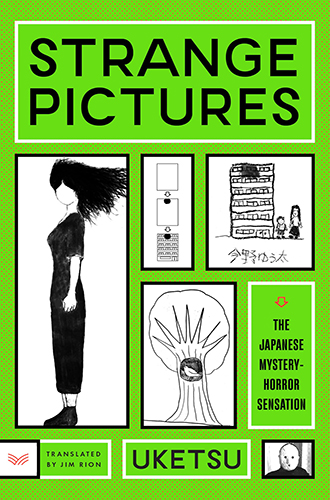
I tend to think that Uketsu’s earlier novel Strange Pictures (which I reviewed here) is somewhat more successful as a work of fiction with three-dimensional characters whose bad behavior stems from understandable motives. In comparison, Strange Houses feels more like a puzzle box than a novel. Strange Houses is less a character-driven story than it is an imaginative architectural mystery, but its eerie atmosphere and clever narrative structure make it a fascinating read for fans of speculative horror and uncanny design.
 Contemporary Japanese Literature