Sympathy Tower Tokyo

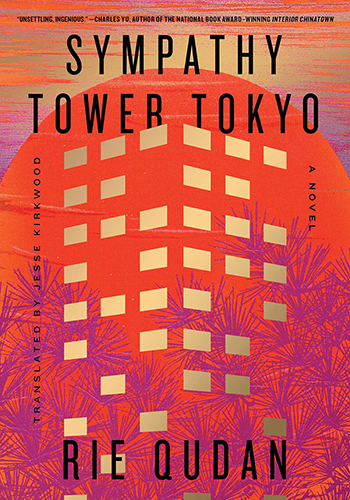
Rie Qudan’s short novel Sympathy Tower Tokyo, which was awarded an Akutagawa Prize in 2023, is a story about language, generative AI, and the culture war discourse surrounding the construction of a fictional prison facility in a high-rent area of Tokyo’s Shinjuku district. 

Sara Machina is an artist and architect who wants to win the bid to design and build the eponymous “Sympathy Tower Tokyo,” a prison right in the middle of metropolitan Tokyo that will operate according to a utopian vision of providing state-mandated shelter to “homo miserabilis,” or people driven by economic precarity to commit crimes because they had no other options, Les Misérables style.

The main problem, in Sara’s eyes, is the name of the building, which is written in English and a mouthful to pronounce: Shinpashii Tawaa Toukyou. It’s also somewhat meaningless, Sara reflects, as are a number of other politically correct English terms that have replaced native Japanese expressions. Amusingly, she provides a list that includes examples such as negurekuto (neglect), which has replaced the formal term ikuji hōki (child abandonment) in public discourse.

Most of these loanword expressions don’t really change the meaning or public perception of the concept itself, but some do. “Homo miserabilis” is one such (fictional) example, having replaced the word hanzaisha, meaning “criminal.” Which is all well and good, Sara admits, but she still can’t envision a structure called “Sympathy Tower Tokyo.” If the building were to have a name that was more euphonic in Japanese, that would be a different story.

An appropriate name is provided by a beautiful young man who goes by “Takt,” a loanword from German used for an orchestra conductor’s baton. Takt became Sara’s casual boyfriend after she saw him through the display window of a luxury fashion store in Aoyama and point-blank asked him out; and, despite the difference in their ages, he does genuinely care for her.

While Sara frets over the intricacies of language, Takt has no qualms about using AI-built, the novel’s version of ChatGPT, to address any questions he might have. Despite his casual use of AI to understand the world and communicate with other people, Takt naturally and organically comes up with the expression Tōkyō-to Dōjō-tō (Tokyo City Sympathy Tower), which rolls off the tongue “like a spell from Harry Potter” and turns out to be exactly the inspiration Sara needs. 

Sara’s design wins, and the tower is built on prime real estate for everyone to see. It is, she says, “the answer to the question posed by Zaha Hadid’s Olympic Stadium.” 

Sara narrates the first and fifth chapters of the novel, while Takt narrates the second and fourth. The third chapter belongs to Max Klein, an American journalist covering Japan who’s gone freelance after being accused of making racist cultural generalizations. Takt is charmed by Max and begins adopting his speech patterns, while Sara (bless her heart) is mainly concerned about Max being fat and stinky and sweaty.

Max himself is a budget version of Hunter S. Thompson who seems to want to “tell it like it is” but unfortunately doesn’t possess the political acumen to make it as a mainstream reporter. In particular, Max is frustrated by what he sees as the tendency of Japanese officials (and Japanese people in general) to use smooth and politically correct language to mask their actual views and agenda.

While Max’s tirade is admittedly gauche, it seems to partially echo the author’s own views regarding excessive linguistic masking, which she expressed succinctly in an interview with The Guardian (here):  

“There are people all around you who you would never think hold discriminatory views but actually do hold those views. A lot of Japanese people, on the surface, they know how to act in a way that makes them seem welcoming of diversity. And this discrepancy between what people think on the inside and what they say is a very distinctive feature.”

In other words, language is political, but the degree to which “correct” language can shape or reshape society is debatable. This question calls to mind the online conversations in 2022 surrounding Tetsuya Yamagami, the man who assassinated Shinzō Abe and attracted immediate widespread sympathy. While the murder itself was shocking, Yamagami’s motives were faultless. How, then, would it be appropriate to talk about him? Is someone like Yamagami truly a “criminal,” or rather a “homo miserabilis”? Regardless, the language we use to refer to people who commit crimes doesn’t change the fact that we feel compelled to incarcerate them, “Sympathy Tower Tokyo” though their prison may be. 

Sara Machina was the victim of an assault that was never punished or even acknowledged, and she can’t quite reconcile herself to rhetorical towers built with politically correct language. Max goes five steps farther and expresses open disdain for the sort of wokeness that dictates that people who caused so much suffering to others aren’t properly treated like criminals but are instead allowed to live rent-free in a gorgeous luxury tower.

In the middle is Takt, the son of a high-profile “homo miserabilis” who ultimately decides to become a PR representative for the tower. Perhaps because he’s so used to consulting AI-built, his speech soon becomes just as smooth and beautiful as his face. When he begins to write about Sara Machina’s architectural genius, however, he finds that AI is insufficient, yet he can find no words in himself. This is fine with Sara, who (relatably) doesn’t wish to be perceived after becoming the target of sustained abuse on social media. 

The plot summary I’ve given here doesn’t begin to do justice to the actual conflict of Sympathy Tower Tokyo, which revolves almost entirely around language. Both English-language and Japanese-language journalists have made a big deal about how “a portion of this award-winning novel was written by ChatGPT,” but this description is painfully misleading. When characters in the novel engage with AI-built, the program’s text was in fact generated by AI, as is appropriate. Although Qudan never has her viewpoint characters make a definitive statement about LLMs, the “smoothness” of machine-generated text is positioned as a mirror to the sort of “politically correct” language used by public officials to disguise and downplay critical issues in contemporary Japanese society.  

In any case, Jesse Kirkwood’s translation is brilliant, and I very much appreciate the brief and informative “Translator’s Note” at the beginning of the book. Also, for what it’s worth, though the diegetic AI-built text may have been generated by an LLM, I didn’t get the sense that it was translated by one. If there’s any criticism to be directed at Sympathy Tower Tokyo, it’s that its emotional core is ephemeral and difficult to pin down. Perhaps ironically, the characters aren’t sympathetic; rather, their role is to serve as viewpoints along a spectrum of opinion. Still, Sympathy Tower Tokyo is a remarkably playful and intellectually stimulating book, and you can’t help but admire Qudan’s boldness in standing up and speaking to the current moment of culture war discourse.

Toward a Gameic World

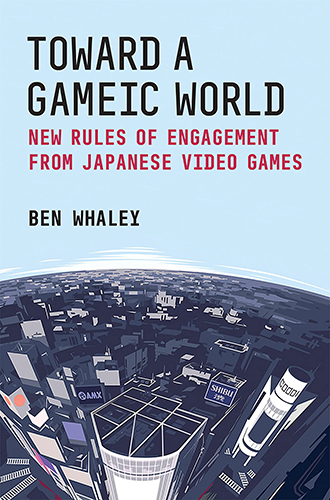
Ben Whaley’s 2023 monograph Toward a Gameic World: New Rules of Engagement from Japanese Video Games presents four case studies of how the virtual narratives of Japanese video games encourage engagement with social and political issues in the real world. Drawing on Katherine Isbister’s 2016 How Games Move Us: Emotion by Design, as well as a wealth of other recently published work in the burgeoning field of Game Studies, Whaley positions “engagement” as one of the primary means by which a video game conveys its message to the player.

“As I use it in this book,” Whaley explains in the Introduction, “‘engagement refers to a game’s capacity to evoke actual feelings of overcoming, guilt, complicity, or shared connection from a fictional experience of trauma.” The resulting study is not only a fascinating reading of key texts in the emerging canon of Japanese video games, but also a convincing argument for how Japanese games are able to engage transcultural audiences in political concerns ranging from youth precarity to environmental disasters.

The first chapter, “Limited Engagement,” asks interesting and culturally relevant questions about the politics of representing disaster in its discussion of the conversation surrounding the Disaster Report series of action-adventure games. Representations of apocalypse are often critiqued as being “disaster porn” meant to titillate viewers, but this chapter offers an alternate interpretation of the effects that experiencing such stories can have on individual players, as well as broader currents of historical memory.

“If mass-scale disasters conveyed in newspaper photos and YouTube videos represent collective narratives that run the risk of flattening the individual victims and individual narratives,” Whaley writes, “then video games like Disaster Report offer players the potential to rebuild some of this context by hearing lost voices, inhabiting lost bodies, and experiencing lost narratives, if only in virtual space.” In other words, the player engagement demanded by video games can serve as a means of presenting environmental disasters not as an abstract concept, but as a personally meaningful concern. The controversial Disaster Report series of games thus facilitates empathy for real-life survivors while also providing an education on disaster preparedness and survivor outreach.

The book’s fourth chapter, “Connective Engagement,” focuses on how social connections are modeled by the networked gameplay elements of The World Ends With You, a 2007 RPG set in an urban fantasy version of Shibuya. The game’s protagonist is a socially isolated teenager who suffers from depression and seems well on his way to becoming a hikikomori. While it’s easy enough to tell a story about a young person finding friendship, it’s much harder to break out of a toxic spiral of isolation in real life. The narrative of The World Ends With You acknowledges this challenge, and its gameplay cleverly models what this process actually entails.

Whaley demonstrates that, in addition to helping socially withdrawn players feel seen and recognized, the game’s networked features have the potential to encourage players to actively seek out other people in physical space, as wireless connections between Nintendo DS consoles are meaningfully rewarded within the world of the game. With its sensitive cultural study, this chapter is an antidote to sensationalistic accounts of mental health in Japan, as well as a welcome contribution to the ongoing scholarship concerning how online engagement in the communities surrounding networked games can positively affect the mental health of young people (and not-so-young people) who would otherwise feel alienated and alone.

Where the empathy of this book falls short is in the second chapter’s discussion of the 2011 visual novel / puzzle game Catherine. Catherine is a deeply misogynistic and openly transphobic video game, and critical responses to its story and characters have been mixed. While Catherine’s almost comically misogynistic treatment of its cisgender female characters is questionably open to argument and interpretation, the way the game handles a prominent transgender character is unequivocally hateful and extremely distressing. It’s therefore odd to see Catherine presented as a model of empathy.

My recommendation to readers would be to skip this chapter entirely. The author isn’t writing with malice; rather, it can often take many years to research, assemble, and publish an academic book, and scholarship that felt fresh a decade ago sometimes ages poorly. I will admit that I’ve occasionally found myself in a similar situation when I look back at my own work. This is simply the danger of writing about contemporary political issues, but it’s no reason not to create scholarship that’s relevant to the current moment.

Without sacrificing the quality of its research, Toward a Gameic World is accessible to general-audience video game fans interested in sustained critical analysis. (I didn’t mention the book’s third chapter in this review, but Metal Gear Solid fans are in for a special treat.) The book is also accessible to scholars who know little about video games but want to incorporate them into their classes. I think the first chapter on depictions of environmental disasters, “Limited Engagement,” would make an especially excellent reading for undergraduates. Whaley also offers many strong examples of how to integrate online conversations into academic literature reviews and textual analysis.

Toward a Gameic World takes the serious cultural topics addressed in a key selection of video games and, with sensitivity and grace, transforms their analysis into a surprisingly entertaining and enjoyable discussion. One might even say that it’s quite an engaging read.

First Love

Rio Shimamoto’s 2018 novel First Love is a psychological mystery about a beautiful college student who has been arrested for the murder of her adoptive father. Although it tackles serious themes, this story is compulsively readable. All of the characters bring emotional baggage to the table, and Shimamoto teases out the reader’s sympathy as each of their histories is revealed.

Yuki Makabe is a clinical psychologist who specializes in parenting and childcare. She’s ambitious, and she’s on the verge of making a career transition to media appearances and popular audience articles. When Yuki’s brother-in-law, Kasho, is assigned to the high-profile case of Kanna Hijiriyama, a college student accused of killing her father, he asks Yuki to help him interview the young woman in order to ascertain her motive. Yuki’s prospective editor at a major publisher, a friendly young man named Tsuji, asks her to write about the case, so she agrees.

Yuki is happily married to an internationally famous photographer who supports her career by shouldering the majority of the responsibilities involved in the care of their son. Despite her loving relationship with her husband, Yuki has a troubled past with Kasho that neither of them is willing to discuss. While she and Tsuji work together on Kanna’s case, Yuki must navigate her strained relationship with Kasho, who is very charming but a bit of an asshole.

Kanna presents Yuki with another set of challenges. To begin with, Kanna can’t explain why she wanted to hurt her father, or even whether she intended to hurt him in the first place. But, if she never meant to attack him, what was she doing with a knife? To make matters more complicated, one of Kanna’s college boyfriends gives an interview to a tabloid magazine and says that Kanna went crazy after they broke up. Even Kanna’s own mother claims the young woman is crazy.

Yuki is convinced that Kanna is far from “crazy,” but the truth of the matter is elusive. Kanna is traumatized by the death of her father, and Yuki quickly realizes that the young woman’s trauma is much more extensive.

Based on the title of the novel and the relationship between Kanna and the person she may or may not have killed, a reader might suspect that there is underage incest involved. I hope I can be forgiven for spoiling the story by saying that, thankfully, this is not the case. Regardless, Kanna didn’t have a happy home life as a child. 

I’m afraid that some readers may find Kanna frustrating, but her portrayal feels extremely realistic to me. I definitely knew people like this in high school and college. Generally speaking, these girls (and occasionally boys) were intelligent and competent, but they had a habit of saying whatever they needed to say to diffuse an awkward situation. 

This behavior wasn’t “lying” or “being dishonest” so much as it was a manifestation of fawning, an alternative to the “fight or flight” response that’s common in young people who live in hostile home situations. Instead of fighting their parents or running away from home, “well-behaved” children and teenagers will contort their speech, emotions, and understanding of reality to ease tension. Issues often arise when this behavior carries over to romantic and professional relationships that would benefit from honesty.

Although this element of the story isn’t presented as a mystery to be solved, Yuki is confronted with the issue of whether Kanna truly consented to sex with two of the key romantic partners in her life. I can completely understand how the men involved might have understood Kanna’s words and behavior as expressing consent, but I also understand how Kanna could later admit that sex isn’t what she wanted, and that she was just going along with what was expected. As the author demonstrates, Kanna’s inability to understand her own boundaries is directly related to the emotional abuse she endured as a child.

Shimamoto doesn’t lean into an overtly feminist message, but there are multiple points in the story when Yuki comes into contact with the sort of ambient misogyny that might compel a vulnerable young person like Kanna to second-guess her own emotions and sense of self-worth. At the beginning of the novel, for example, Yuki reflects on a conversation between a male television producer and his younger female colleague that she overheard as she entered the studio.

As I was getting my makeup done, I examined my own features: not bad, but not particularly beautiful either. A face with no distinctive features. The only thing that stood out was my collarbone, protruding above my shirt.

I’d met that male producer several times previously, but he’d never once made eye contact with me. There were men like that everywhere in the television industry – men who wouldn’t engage in conversation with women they’d give less than an eight out of ten on looks. Men who thought nobody would notice this behavior. Or maybe they just thought it didn’t matter. These were men who had never suffered a single setback in their lives.

This is the sort of observation that, while eminently relatable to many people, would have Yuki called crazy if she spoke it out loud. It’s not “misogyny” or “sexism” if the male producer isn’t doing anything wrong, right? It’s not like he actually said anything offensive to Yuki, or to his younger colleague. This man’s behavior is rancid, but no one will ever call him out on it. Yuki has a supportive family and professional colleagues who aren’t human garbage, so she can cope. But what about Kanna, who hasn’t yet found a support network to replace her abusive family?

What Shimamoto criticizes in First Love are the gendered aspects of a social system that allows toxic men to flourish. First Love doesn’t offer easy solutions, but Shimamoto demonstrates that we can all be allies in pushing back.

Yuki’s husband is a prince from start to finish, and her editor Tsugi is able to see what happened to Kanna with clear eyes while re-evaluating his own perspective and never apologizing for the bad behavior of other men. Kanna’s defense lawyer Kasho has issues of his own due to childhood abuse at the hands of his mother, but he’s an adult who is capable of realizing his limitations – which is why he arranges for a series of meetings between Yuki and Kanna in the first place.

Without spoiling too much of the plot, First Love connects the stories of a number of characters who begin to question their past behavior in light of Kanna’s upcoming trial, and Shimamoto helps the reader to sympathize with these characters even when they behave badly. The point is not that men are evil or that women are innocent victims. Rather, it’s important to extend empathy instead of overlooking questionable behavior.

Putting the social relevance of the novel’s themes aside, First Love is a fun book to read. I got sucked into the story immediately. Like Yuki, I was instantly intrigued by the mystery presented by the death of Kanna’s father. Kasho’s defense argument during Kanna’s trial felt like a major revelation unfolding before my eyes, and I admire how carefully Shimamoto laid each brick in the wall. Louise Heal Kawai’s translation is featherlight and flawless and sets the tone perfectly.

I’d recommend First Love not just to fans of mystery and suspense, but to any reader interested in a compelling character drama that offers a number of different perspectives on family, mental health, and the darker aspects of everyday interactions that often go overlooked.

Ico: Castle in the Mist

Title: Ico: Castle in the Mist
Japanese Title: イコ:霧の城 (Iko: Kiri no shiro)
Author: Miyabe Miyuki (宮部 みゆき)
Translator: Alexander O. Smith
Publication Year: 2011 (America); 2004 (Japan)
Publisher: Haikasoru
Pages: 400

When people complain about sexism in video games, they’re not complaining just to start a fight or to prove that they’re on the right side of the social justice movement. The sexism in many games is not only unnecessary but also detracts from the player’s enjoyment of the game. For example, when I played the original Tomb Raider game for the Playstation, I remember being frustrated at Lara’s inability to navigate certain terrain and thinking this wouldn’t be a problem if she were wearing pants. A better example might be Metroid: Other M, in which your female player-character (a veteran soldier who has already saved the world multiple times) can’t use even the most insignificant of her abilities until given permission to do so by her male commanding officer in a gameplay paradigm that has to be one of the most frustrating I have ever encountered. This sort of sexism is dangerous precisely because it is so frustrating. Instead of hating the (male) developers who imposed such ridiculous limitations on the female protagonist, the player’s frustration at these limitations instead causes him to hate the female protagonist herself.

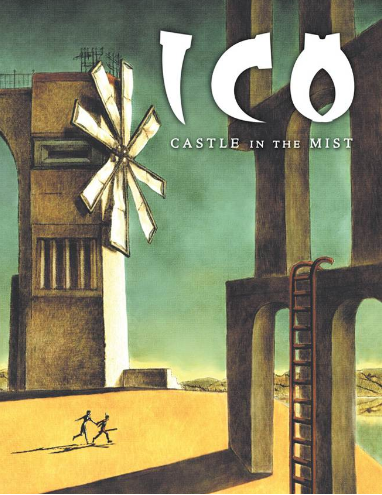
It is for this reason that I despise Ico: Castle in the Mist, a short puzzle platformer released for the Playstation 2 in 2004 that was received with almost universal acclaim. In this game, you are Ico, a boy with mysterious horns who is mysteriously dumped in a mysterious castle in which he mysteriously encounters a mysterious young woman named Yorda. As Ico, your job is to find your way out of the castle while simultaneously rescuing Yorda. Considering that Yorda (a) has lived in the castle for a very long time and (b) is magic, this shouldn’t be too difficult of a feat. Unfortunately, Yorda also (c) either can’t or won’t communicate with Ico and (d) is almost entirely passive. Ico quite literally must lug Yorda around like an inarticulate sack of meat, and the main challenge of the game is not for Ico to navigate his way through the castle but rather for Ico to bully and cajole Yorda over and around obstacles while she remains both vulnerable and inscrutable. If the player, as Ico, wanders off on his own for a moment, Yorda is besieged by shadow monsters that she will not attempt to ward off or escape in any way. Ico is a truly beautiful game that creates a hauntingly atmospheric experience through its graphics, music, and gameplay, but it is difficult to make it through the game’s roughly eight hour playtime without hurling obscenities at Yorda for being so useless. Sexism is thus built into the gameplay mechanics, and I remember thinking that Ico would have been a lot more fun if Yorda had actually done something instead of passively allowing herself to be rescued by a younger male hero.

When I heard that the novelization of Ico would be released in North America, I was really excited. I thought that Miyabe Miyuki, who writes about awesome female detectives and manages to create a strong yet believable female protagonist in The Book of Heroes, would be able to do something interesting with Yorda, or at least to make her more of a subject than an object. Thankfully, she succeeds – at least to an extent.

Like the game on which it’s based, Miyabe’s novelization is the story of Ico, a thirteen-year-old boy with horns who is exiled from his village and dumped at the Castle in the Mist by a group of soldiers. In the otherwise empty castle Ico finds Yorda, who is suspended in a hanging cage covered by thorns. Ico wakes Yorda and then extracts her from her cage, resolving to rescue her from her imprisonment in the castle. Yorda doesn’t speak Ico’s language and in any case doesn’t seem particularly interested in communicating with him, but her touch can open certain magical doors through which Ico needs to pass. Furthermore, Ico’s body is filled with light and energy whenever he holds Yorda’s hand, so he quickly develops an attachment to her.

As Ico and Yorda progress through the castle, Ico begins to see Yorda’s memories of her life before the castle was reduced to its current state. Through these memories, it becomes clear that Yorda’s mother, the queen of the castle, is the “daughter” of the Dark God. In ages past, Yorda’s mother used her power to keep outsiders away from her kingdom, mainly by turning them into stone. She also kept her own people within her country’s borders by means of an enchantment that kept their hearts and minds peaceful. Convinced that other nations coveted the beauty, wealth, and material prosperity of her kingdom, Yorda’s mother would hold a tournament every three years to bring the world’s mightiest warriors into her castle to compete for glory. The winner of these tournaments would teach the latest military technology to her soldiers – and then secretly be turned to stone. The tournament of Yorda’s sixteenth year brought a horned warrior, a servant of the Light God, to the tournament, and his interactions with Yorda led the kingdom to its current state of timeless abandonment. Ico’s job is thus to unravel the mysteries of the past in order to ascertain how to defeat the queen once and for all, after which he will presumably be able to escape with Yorda in tow.

Miyabe’s novel is divided into four parts. The first part details Ico’s life before he was taken to the castle and thereby provides information concerning the greater world in which the story takes place. The second part describes Ico’s adventures in the castle before Yorda begins communicating with him through her memories. The third part tells the history of the castle from Yorda’s perspective, and the fourth part follows Ico through his final confrontation with the evil queen. As Miyabe jokes in her introduction, her novelization isn’t meant to be a walkthrough for the game, and the first and third sections are almost entirely her own invention. Miyabe adds layers of depth to game’s characters and creates a handful of her own characters, who manage to be interesting and engaging despite only being onstage for small portions of the novel. Miyabe also renders the ending of the story slightly less ambiguous.

This is all well and good, but how does a puzzle platforming game translate into prose? Mainly, I suppose, in the way one might expect, though descriptive passages:

The thought put Ico at ease. Maybe if we can get down to those doors, we can get outside. The only problem was, there didn’t seem to be any way to get from the top of the bridge on the second floor down to the floor of the great hall. What stairs he could see went up to the ceiling, not down to the floor below, forming a sort of catwalk that seemed without purpose.

Besides such descriptions of setting, there is also a great deal of running, jumping, climbing, flailing at shadow monsters with a stick, and holding Yorda’s hand.

If the reader can successfully visualize what Miyabe is describing, then her descriptive passages, which form the bulk of the two sections from Ico’s perspective, create a sense of adventure and awe. If the reader is too engrossed in figuring out the mysteries of the castle to slow down and mentally picture the landscape Miyabe is describing, then these passages can come off as clunky and annoying. My sympathies tend to lie with the latter reader, especially if that reader has never played the game; trying to describe the visual aesthetics of the Castle in the Mist is like trying to describe an Escher painting. The game Ico is all about the atmosphere created by its visual and auditory elements, and a purely textual medium will never be able to capture that atmosphere, no matter how hard it tries.

What text can do, and what text can do well, is characterization, and it seems to me that the lion’s share of the game’s atmosphere is conveyed in the novel by Ico’s perceptions of and interactions with Yorda. Just as the castle is architecturally majestic and full of mysteries, Yorda is physically beautiful and conceals secrets upon secrets beneath her silent exterior. For example:

Ico glanced at her. She did not look sad or even frightened. Nor did she smile or seem engaged with the world around her at all. Though she was right next to him, and he could look directly into her face, he felt like she was standing on the other side of a veil.

Here’s another example:

The girl turned to him and to his surprise, she smiled faintly. She’s beautiful. He thought her smile looked like a flower in full bloom, swaying gently in a forest breeze, sending its petals out to drift on the wind. He could almost smell the flower’s perfume on her breath.

Here’s yet another example:

Filled with hope, Ico looked into Yorda’s eyes. He felt like he was looking into an hourglass, trying to pick through the grains of truth buried there long ago. He hadn’t found anything yet, but the warmth of Yorda’s hands in his told him that he was getting close.

Yorda is thus delicate and mysterious, and her main function as a character is to reflect the emotions Ico projects onto her. Because this novel is a work of young adult fiction, Ico is exceptionally pure of heart, and – perhaps as a result – Yorda is as well. What Ico is about, at its core, is the bravery of two children challenging the old, the impure, and the monstrous. For me, the main problem with Ico and Yorda is that, although purity of heart is inspiring, it is also somewhat boring. The evil queen is far more interesting. At a certain point I stopped caring about Ico and his youthful hope and good intentions and started waiting for the next appearance of the queen, who is the only halfway intelligent and rational character in the entire novel.

For example, unlike Ico’s caretakers, who tell him nothing, the queen respects her daughter enough to explain to her what she is doing and her motivation for doing it. The queen’s explanations are always pragmatic and hint at a lifetime of experience. The following passage, for example, is how the queen justifies to Yorda why the two of them never leave the castle:

“Beauty is a high and noble thing. Thus are men enchanted by it and seek it out. But those who desire you also desire our lands. I must keep you hidden so that you do not entice or enchant them – because, my dearest, while your beauty holds the power to command the actions of a few men, it does not bestow the ability to govern.

“It is the same for me. The land I govern is the most wealthy and beautiful of all the lands that divide this vast continent. They crave it, as they crave me. From their slavering jaws and their multifarious schemes have I escaped many times. All to protect myself and my beautiful domain, blessed by the Creator. You, who were born into the world as the lone daughter of the queen, have noble blood and noble beauty, thus must you bear my burdens.”

Judging from what happens in the rest of the novel (which I will not spoil), and judging from the way that Ico, his horned ancestor, and everyone in between has treated Yorda and her mother, the queen is not incorrect. Unfortunately, because the queen is a sexually mature and politically powerful older woman, she is EVIL and therefore cannot be reasoned with or redeemed but must be DEFEATED. The final battle between the queen and Ico is somewhat disappointing, as the queen is made to lay aside her primary weapons – her intelligence and wit – in order to fight boss-battle style with attacks that are easily deflected in a room filled with obstacles that deflect them.

The moral of the story seems to be that inarticulate yet delicately beautiful and innocent younger women are good (for men) and that brilliant and powerful mature women are EVIL (to men).

At least, that is the moral of the second and fourth sections of the novel, which are told from Ico’s perspective and closely follow the plot of the video game. The first and third sections are much more interesting and open-ended. The first section is, in my option, a superlatively excellent example of fantasy world building that establishes setting, mythology, history, and worldview through its characters instead of in spite of them. The third section, which is told from Yorda’s perspective, is an almost archetypal story of innocence awakening to experience as Yorda begins to question and investigate the world around while realizing the consequences of her own actions on the lives of others. By the end of the third section, Yorda has become a powerful queen in her own right…

…before we switch back to Ico’s perspective, in which Yorda is a helpless and naive young girl once more. Although this is jarring, it is also necessary. The game Ico is so deeply sexist that, in order for Miyabe to subvert this misogyny, she would have to abandon her goal of novelization. If Yorda were an active agent and not a passive victim, the events leading up to the final battle and the battle itself would not be possible. Good must triumph over evil in a decisive showdown; and, as everyone who has ever played a video game knows, such a task is the man’s job. This is why I complain about I sexism. Not only is it frustrating and unnecessary; it also tends to diminish from the overall quality of the work in which it appears.

Despite all this, Ico is a fun read. Miyabe is a good writer, and Smith has produced an excellent translation (as always). The plot and character conventions are fairly characteristic of mainstream young adult fiction, and I can imagine that younger readers would really enjoy this book, which is exactly the right length and complexity for the 7-12 demographic. It goes without saying that fans of the game will love the novelization, which does its very best to convey everything that was fun and intriguing about the original work. Fans of video games in general might also enjoy the book, which is an interesting experiment in adaptation. As for adult readers who are looking for archetypes represented in a deep and multilayered fantasy, however, I think there are much better books to spend an afternoon reading.