Tokyo Apartment

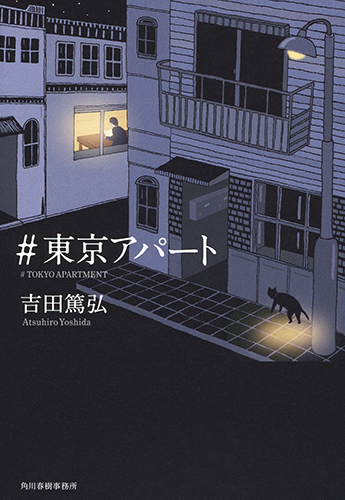
Atsuhiro Yoshida’s 2025 short fiction collection #Tokyo Apartment brings together 21 stand-alone stories about people living in and around Tokyo. The characters are usually living on their own, almost always in retro buildings removed from the city center. There’s very little wealth or glamor in these stories, but their protagonists nevertheless manage to become swept up in the magic of a densely populated megacity.  

A representative story is Tokage-shiki gomuin kaisha (“Lizard-style rubber stamp company”), whose narrator recalls a time when he lived in a building that was once famous for being the largest apartment complex in Japan. The building had multiple floors of businesses, and the narrator worked at one of them as an apprentice to an artisan who took commissions for document signature seals. While dining at his favorite pubs in the same building, the narrator grew friendly with a woman who also worked there. He courted her by sending letters to her apartment – which was naturally in the same building. This story perfectly captures the flavor of the comfortably chaotic retro spaces of the old business/residential complexes of West Tokyo.

Not all of the stories are so cozy, however. Sutorei kuriketto (“Stray cricket”) is about a young man with no money, no friends, and no real prospects for finding a decent job. For the time being, he washes dishes in a small diner. He doesn’t have much room in his life for hobbies, but every night he brings back scrabs of cabbage to feed to a cricket that has entered his tiny apartment through a ventilation shaft. While listening to the cricket chirp in the darkness, the narrator is inspired to help the tiny creature find its way back outside. He might have nowhere to go in his own life, but at least the cricket can be happy and free.

Many of the stories end on a more ambiguous note. In Heya o kimeta hi (“The day we decided on an apartment”), two single fathers become online friends as they swap stories and advice with one another. In time, they become real-life friends and begin sharing childcare responsibilities. They mutually arrive at the conclusion that their lives would be easier if they lived in the same apartment building, so they hire a realtor to find a suitable property. There’s something about this sort of housing decision that feels final, however, and this causes the two dads to wonder if they’re really ready to take such a momentous step into the beginning of middle age.

For the most part, the stories in #Tokyo Apartment are fairly mundane, but there are occasional touches of magical realism. In Yūrei no denwa (“Ghost telephone”), the character Moriizumi returns from Yoshida’s novel Goodnight, Tokyo. Moriizumi manages a service that helps people dispose of their old telephones, which often have too much sentimental value to throw away. In a conversation with a crow who makes nightly visits to her balcony, Moriizumi reflects on how analog technology can feel haunted by the ghosts of people with whom our connections have faded. The crow, who is a connoisseur of the unused objects people dispose of on their balconies, agrees with Moriizumi but prefers to focus on making new connections.

A word I often see in reviews of Atsuhiro Yoshida’s writing is yomi-yasui, or “easy to read.” Yoshida has spent more than a decade carefully cultivating a light and precise writing style, and #Tokyo Apartment is indeed a relaxed and chill reading experience. It’s entertaining to encounter such a wide range of variations on the theme of “apartments in Tokyo,” especially since the narrative voices of these stories are so distinct – which is no mean feat when accomplished within the simplicity of the author’s characteristic style.

As an aside, I might recommend the stories of #Tokyo Apartment to people studying Japanese language. Any one of them might be good for inclusion on the syllabus of an upper-level Japanese language class. In particular, the first and final stories of the collection are short, amusing, and easy to understand from context clues, and I imagine that either of them would be a nice treat for anyone just starting to read Japanese fiction.

Nishiogi Kitan

Nishi Ogikubo is a stop on the JR Chuo Line that runs through central Tokyo and out into the western suburbs. The neighborhood, known as “Nishiogi” to its residents, is right next door to Kichijōji, a trendy area filled with small restaurants, cafés, antique stores, art galleries, and beautiful green parks. Like Kichijōji, Nishiogi has an artsy and laid-back vibe…

…but it doesn’t exist. Not officially, anyway. So how do you get there? According to anonymous forum posts, if you take the Chuo local train that stops at every station, every so often it will stop at Nishi Ogikubo. If you choose to get off at the station that doesn’t exist, however, perhaps you shouldn’t be surprised by the people you encounter there!

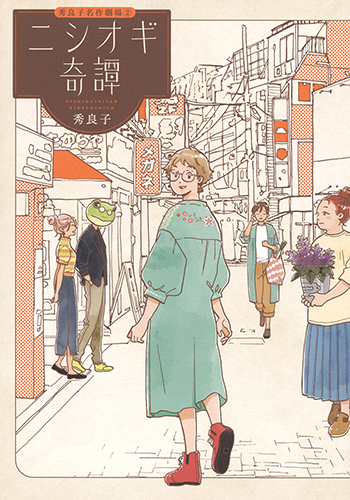
Hideyoshico’s 2025 manga Nishiogi Kitan (Strange Tales of Nishiogi) collects seven stories about a fictional neighborhood where anything can happen. Despite the oddness of some of the residents, Nishiogi is chill and pleasant, and the neighborhood is a lovely place to spend time.

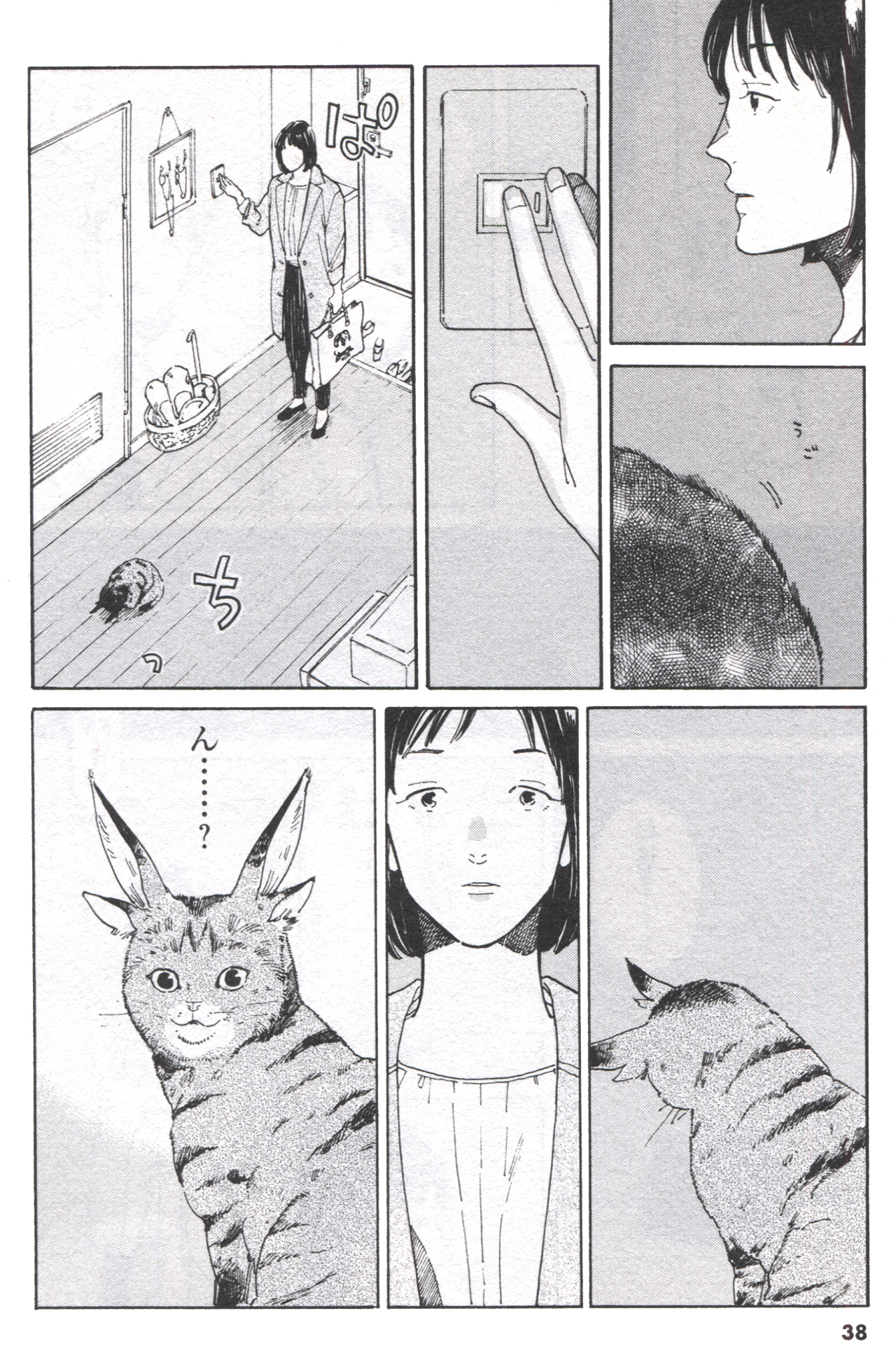
The second story in the collection, Mayonaka no hōmonsha (Late-night Visitor), is a great introduction to everyday life in Nishiogi. While walking home one night, an office worker named Kurata realizes that a cat is following her. It’s not like any cat she’s ever seen, but it seems to have taken a shine to her. She brings the cat home and names it Ohagi. Ohagi’s appearance changes every day, but the most noticeable shifts occur when Kurata is forced to stay late at the office.

When Kurata returns especially late one night, she finds her potted plant overturned and all sorts of leaves scattered across the floor. Hiding under her bedcovers is a big fat tanuki.

Kurata realizes that Ohagi has been exhausting itself while trying too hard to be something it’s not, and this causes her to realize that she’s more than a little tired herself. The next time her boss asks her to work late, she politely tells him that she has a pet at home to take care of, and that he can do the work himself. When given more love and attention, Ohagi becomes a little better at taking the shape of a cat… sort of.

Back in the day, Hideyoshico used to draw dōjinshi fancomics based on Yotsuba&!, and there are hints of the same themes in the collection’s fourth story, Natsu no ie (Summer House). While walking the family dog one afternoon, a young boy passes an abandoned house rumored to be haunted. As the dog frolics in the overgrown yard, an unkempt man eats instant noodles on the porch. Though the man claims to be a ghost, the boy doesn’t believe him, and the two become friends. The reader can never be entirely sure if the man isn’t in fact a ghost, but this is a very sweet and charming story.

Because I love urban legends about cursed apartments in Tokyo, I’m a big fan of the story “New Heights Nishiogi Apt. 202,” in which a young musician befriends a horrorterror straight out of a Junji Ito manga. The man’s apartment may be haunted, but the rent is cheap, and the eldritch entity is a companionable and considerate flatmate, all things considered. This story isn’t about the man learning to accept his flatmate’s “difference,” as he doesn’t seem to mind that at all, but rather about him learning to respect the spirit’s feelings and boundaries despite his difficulties understanding someone who can’t communicate in human language. 

Hideyoshico is a veteran BL manga artist, and traces of the standard mid-2010s BL illustration style occasionally surface in Nishiogi Kitan. All of the adult male characters are attractive, and I’m not complaining. There’s a wider visual range in the female characters, who seem a bit more grounded in reality, and I’m also impressed by how the artist has portrayed the cluttered interiors and alleyways of West Tokyo. Some of the background architecture is traced (which is 100% valid), but most of the ambience is hand-drawn and lovely to see on the page.

Each story in Nishiogi Kitan is perfectly paced according to a four-part narrative structure, which makes the collection easily approachable despite its array of out-of-the-ordinary scenarios. Though not saccharine by any means, Hideyoshico’s tone is unflaggingly good-natured, and the good humor of the characters is contagious. Though the themes of the stories in Nishiogi Kitan don’t shy away from darkness and nuance, the collection is a weird but warm ray of sunshine.

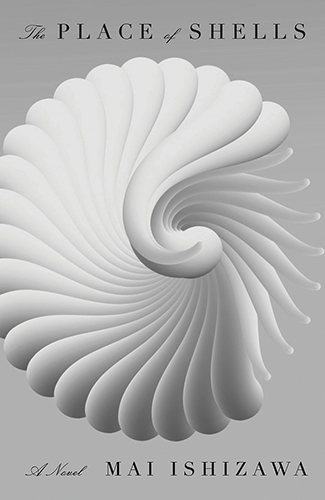
The Place of Shells

Mai Ishizawa’s short novel The Place of Shells, which was awarded an Akutagawa Prize in 2021, follows a Japanese woman pursuing her PhD research in European art history at a university in the German town of Göttingen. For a year and a half, she’s shared an apartment with a fellow grad student named Agatha, as well as Agatha’s dog Hector.

Around the late-summer Obon festival, when the spirits of the dead visit the world of the living, the narrator talks to her old classmate Sawata, who studied art history with her as an undergrad at a university in Sendai and currently works as a museum curator. Over Skype, Sawata tells her that their friend Nomiya will be visiting Göttingen for a brief period. This is odd, the narrator admits, as Nomiya disappeared during the March 2011 tsunami and has been presumed dead for nine years.

Nomiya’s sudden appearance isn’t the only strange thing happening in Göttingen. One of the town’s landmarks is its Planetenweg, where memorials representing the sun and planets are placed according to scale. Now that Pluto is no longer a planet, however, its memorial has been sighted in odd places, seemingly at random. In addition, Agatha’s dog Hector has been digging up mysterious bits of rubbish in the forest, and each discarded item is connected to the secret memories of the people in the narrator’s circle of friends. To make matters even more bizarre, the narrator painlessly begins to grow a set of human teeth on her back.

The Place of Shells doesn’t really have a plot, and none of these surreal occurrences are mysteries to be solved. Instead, the narrator reflects on the nature of memory as she comes to terms with the March 2011 tsunami and what she lost in the disaster, as best illustrated by this passage toward the end:

What I had been afraid of was the distortions of memory caused by emotions and the passing of time. That was where forgetting began. What my feet had felt as they went tramping around that seaside town, the scenes my eyes had taken in, the smell of the sea that rushed into my nose – these memories didn’t remain with me as raw sensations, but morphed into a distant narrative. That oblivion concealed more than just the dead who hadn’t returned to land.

As the narrator comes to terms with the constructed nature of her memories of trauma, she encounters a number of ghosts that manifest in cozy apartments and relaxed strolls through the beautiful German town. For most of us, the ghosts of the past have little to do with darkness or shadows; rather, they walk casually beside us during the day. While giving the reader a beautiful environment to explore through careful and attentive prose, Ishizawa encourages reflection on grief as refracted through the passage of time.

I’d also like to mention an aspect of this novel that was immensely appealing to me personally. For various reasons, my frame of intellectual reference is skewed away from Europe, and I’ve always wanted someone who doesn’t assume a thorough knowledge of Christianity to teach me about Western art history. The Japanese narrator (and, I suppose, the academic author speaking through her) presents an accessible discussion of her research on German artistic portrayals of Christian saints that I found fascinating. The Place of Shells is a meditation on art as much as it is on memory, and I feel as though I gained a more grounded and relatable perspective on the sort of medieval European art that I always passed by without understanding in museums.

In doing a bit of research of my own, I realized that each of the women in the narrator’s circle of friends has a connection to her saintly namesake that Ishizawa communicates through imagery both mundane and fantastic. Over the course of the story, the narrator makes something of a pilgrimage through overlapping systems of symbols in a way that mirrors her own academic study of religious art. If a reader were to draw a map of these symbols, I imagine that the constellations would be quite dense, but I found it satisfying simply to follow that narrator’s meanderings without imposing a definitive sense of meaning.

Mai Ishizawa reminds me of Yoko Ogawa in her ability to create a subtle sense of atmosphere through mundane descriptions of calm and lovely places that gradually become eerie through an accumulation of otherworldly imagery. I’m also reminded of the quiet and gentle surreality of Haruki Murakami’s 1982 novel A Wild Sheep Chase, especially in terms of the narrator’s time in the woods and proximity to historical palimpsests overlaid onto daily life.

The Place of Shells is a slow novel to be savored. A spiraling shell is an apt analogy for the style of narration, which only gradually approaches its central theme through ever-smaller circles. Ishizawa’s writing, which Polly Barton has translated with pitch-perfect clarity, is gorgeous and well worth taking a page at a time as the reader, like the narrator, softly explores a world made beautiful and strange through art and memory. 

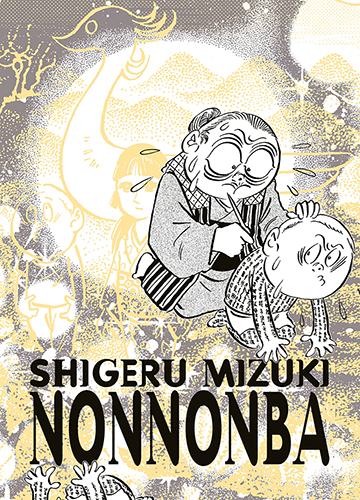
NonNonBa

Shigeru Mizuki was one of the twentieth century’s most prolific and influential manga artists. Today he’s known primarily for documenting the culture and folklore of his childhood in rural western Japan. The single-volume graphic novel NonNonBa, originally published in 1992, is perhaps Mizuki’s most accessible work, as well as a fantastic gateway into the study of indigenous Japanese religion and folklore.

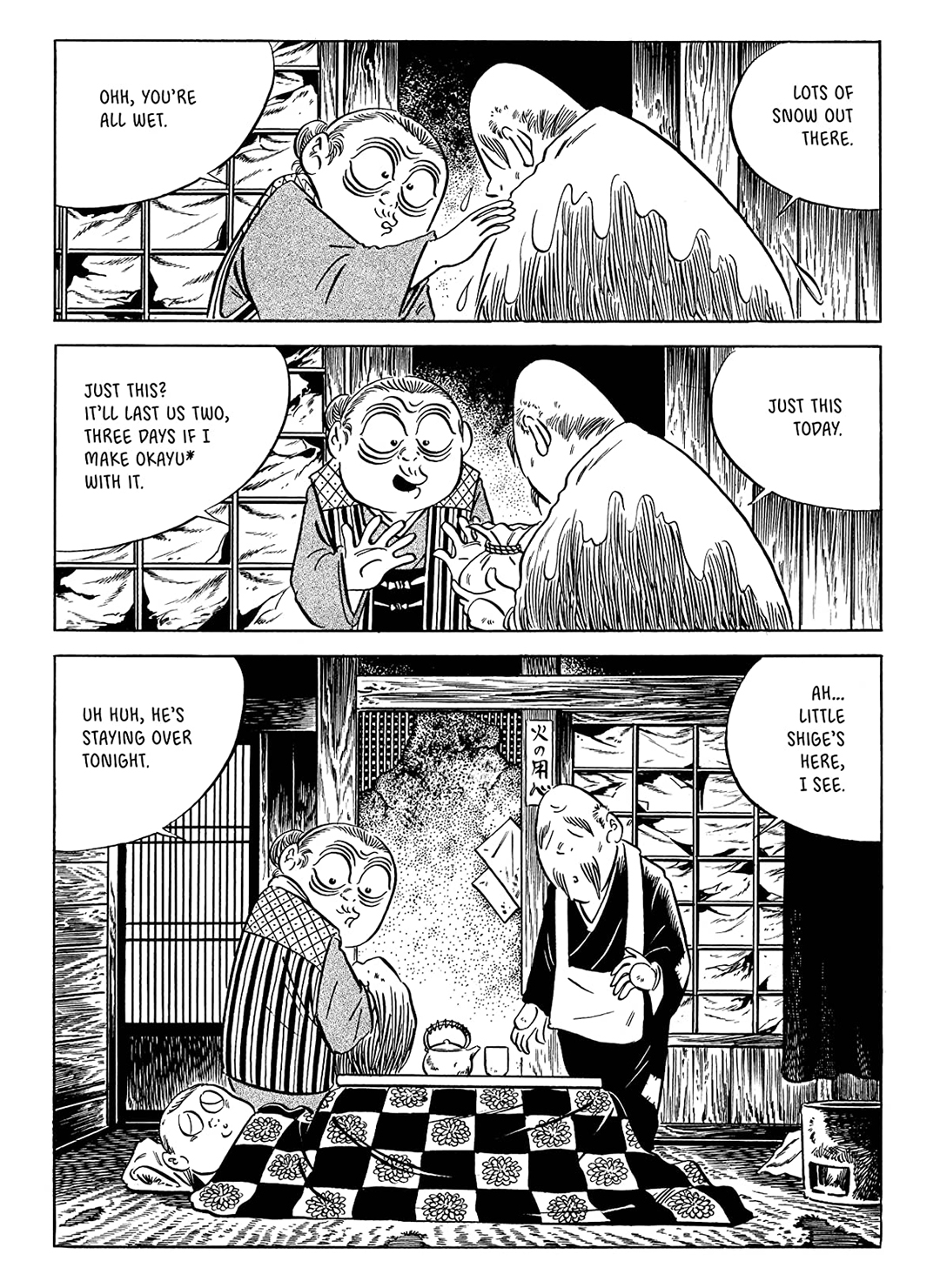
NonNonBa tells a coming-of-age story about the artist’s childhood relationship with an elderly family friend, the poor but kind Nonnonba of the title. Nonnonba is a repository of local folklore, and she sincerely believes in yokai, a term that refers to any number of species of Japanese fantastical creatures. The world of NonNonBa is indeed populated with yokai, but the manga is primarily a realistic account of life during the early 1930s.

NonNonBa opens with an introduction to the coastal town of Sakaiminato in the Kansai-region prefecture of Tottori. Despite being a port on the East Sea, the town wasn’t wealthy, and most houses remained unchanged from the nineteenth century. Mizuki’s family was relatively comfortable, and he lived with his mother, his two brothers, and his father, who worked at a bank but had creative ambitions and operated a small cinema on the side. Nonnonba was occasionally employed by the family to help with housework and childcare, as she was by several families in town. 

The artist, who goes by the name of Shige, is a mediocre student but deeply fascinated by the natural world, often bringing home strange objects like animal bones in order to study and draw them. When he’s not at his desk, Shige plays at being a soldier in the “boy army” that roams around the town and beach staging pretend wars with other roving bands of children.  

Shige’s uncomplicated boyhood is disrupted by Chigusa, a cousin from Osaka who is sent to Sakaiminato to recover from tuberculosis. Nonnonba cares for Chigusa while she’s bedridden, and the girl is just as interested in Nonnonba’s yokai stories as Shige is himself. The two become friends, and Shige is heartbroken when his cousin succumbs to her illness. He begins drawing in earnest, no longer as invested in the boy army as he once was.

After losing Chigusa, Nonnonba begins working for a family from the city that has moved into a house rumored to be haunted. She’s charged with the care of Miwa, a young girl who lives in the family’s house and seems to be able to see and hear yokai. Shige believes the girl is a victim of human trafficking, which seems highly likely given the number of other young girls who have passed through the house. Regardless, there’s not much he can do about this as a young boy.

As he develops a close friendship with Miwa, Shige matures, and he understands that growing up isn’t growing away from yokai, but rather realizing that the stories of these creatures are part of a much larger world. Despite their flaws, Shigeru’s mother and father are both portrayed sympathetically, as are his brothers and friends. NonNonBa overflows with sympathy and compassion, gently poking fun at the characters while also encouraging the reader to see them in their best light.  

Despite being published more than thirty years ago, NonNonBa doesn’t feel dated. The stylizations of Mizuki’s artwork are timeless, and his character designs are clean and fresh. The high quality of Jocelyne Allen’s translation contributes to the contemplative yet entertaining tone of the story, whose episodes move briskly but never feel cartoonish. 

Through Mizuki’s sensitive storytelling and evocative artwork, NonNonBa celebrates how folklore inspires imagination and facilitates resilience in the face of loss and change. Despite the occasionally heavy subject matter, this graphic novel is accessible to readers of all levels, and I imagine it would be a fantastic text to spark discussion about history, family, and folklore in the classroom.

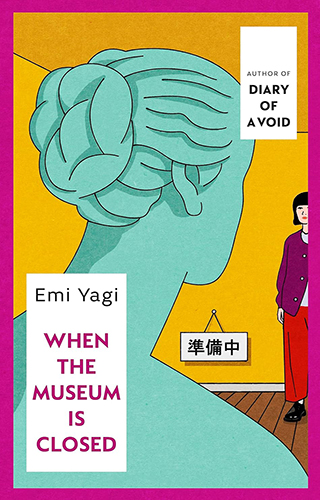
When the Museum Is Closed

Emi Yagi’s 2023 novel When the Museum Is Closed is a refreshing work of magical realism about a shy young woman who falls in love with a statue of Venus. The twist is that the statue loves her back, and – even more miraculous! – their love story has a happy ending.

Rika is a recent college graduate who works in the freezer department of a warehouse for processed food. She sees this as the perfect job for three reasons. First, she never has to talk to anyone. Second, she can take pre-prepared food home from her job, so she rarely has to cook. And third, an invisible yellow raincoat suddenly appeared over her clothing in elementary school, and she’s found it almost impossible to remove in public. The heavy vinyl fabric keeps her body temperature high, but that’s not a problem in an industrial freezer.

The only variation in Rika’s days comes from her part-time job. Once a week, Rika takes the bus to a local museum to have an hour of conversation with a statue of Venus. Venus only speaks Latin, but Rika enjoys a freedom with the dead language that she’s never found in Japanese. Though Rika is shy at first, she and Venus become friends, and they eventually fall in love.

Unfortunately, there’s a bit of a situation with a man named Hashibami, the museum curator in charge of the statue. He wants Venus all to himself, and he never wants her to change – he doesn’t want her to learn modern languages, and he certainly doesn’t want her to learn about the world outside the museum.

Venus therefore makes a deal with Hashibami. If he can get Rika to fall in love with him, she’ll allow him to fire Rika from the conversation job. Regardless, Rika isn’t interested in men, nor does she allow Venus to push her away. What Rika wants is something else entirely, and her relationship with Venus has given her the courage to chase their mutual joy.

The fantastic elements of When the Museum Is Closed are presented as entirely mundane, and it’s easy to take them at face value. At the same time, the love story between Rika and Venus resonates at an allegorical level with the experience of having a queer crush on someone who’s friendly and flirtatious yet seemingly unattainable. It’s the crush you have on an older coworker, or the crush you have on an internet friend, or the crush you have on the gayest girl you’ve ever met who is, inexplicably, married to a man. It doesn’t really matter that Venus is a statue, as anyone who’s experienced queer longing can relate to Rika’s situation. At the same time, Emi Yagi’s Venus is animated by her own distinct personality and undeniably lovely.

I’m sure that When the Museum Is Closed could also be read as an allegory for how women tend to be treated in male-dominated artistic and curatorial spaces, but the story is far more concerned with Rika’s subjective experience of her own individual life. I especially enjoyed the subplot involving Rika’s friendship with her landlord, a quirky but kind elderly woman who needs home care assistance, and I appreciated the understanding Rika develops with the neglected young boy who lives next door. Though Rika’s invisible yellow raincoat is unique to her, she’s far from the only person carrying unseen baggage, and it’s not necessarily the case that this is a problem that needs to be fixed.

When the Museum Is Closed is a short but expertly paced novel that moves quickly yet still allows the reader enough time to appreciate each scene. Its premise is intriguing and well-executed, and Yuki Tejima’s delightful translation captures the author’s tone perfectly, both in Rika’s deadpan observations and Venus’s mature flirtations. Readers who enjoyed Emi Yagi’s novel Diary of a Void will be pleasantly surprised by When the Museum Is Closed, which features the same sharpness and clarity of writing augmented by lovely moments of sweetness.

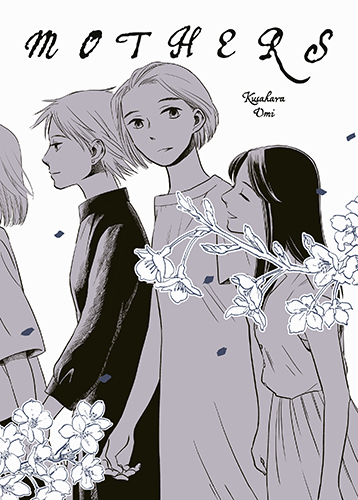
Mothers

Mothers, released by Glacier Bay Books in April 2023 after a successful Kickstarter campaign, collects twelve one-shot manga stories about small but significant moments of kindness enacted in uncommon ways.

Umi Kusahara’s work is accented by touches of the fantastic but grounded in a reality that doesn’t pull its punches. These stories are particularly concerned with grieving and the emotional impact of loss, which is represented delicately but without sentimentality.

In the piece that lends its title to the collection, “Mothers,” two women visit the hospital beds of two teenagers who have only barely survived a horrible car crash. Each woman has a complicated relationship with the patient she visits, but they find sympathy and support in the connection they create with each other. As in the other stories in the collection, the catharsis lies in the moment of clarity when the characters can be finally honest with themselves about what they want and what will make their lives worth living.

Umi Kusahara originally self-published these short manga as dōjinshi, and it’s wonderful to see an American publisher uplifting noncommercial indie work that doesn’t fit into established genres. All of the titles in the Glacier Bay Books catalog are worth checking out, but I’m especially fond of Mothers, which I continually find myself returning to. Kusahara’s shōjo-inspired artwork is a lovely source of inspiration, and it’s a joy to bask in the sweetness of her worldview.

Glacier Bay Books is currently running a crowdfunding campaign for Fall 2025. The campaign will run until September 11, and this is a great way to check out and preorder their upcoming indie manga titles.

薬指の標本

Yōko Ogawa’s 1994 book Kusuriyubi no Hyōhon (薬指の標本) brings together two novellas that feel spiritually akin to The Memory Police, which was originally published in the same year. Like The Memory Police, the two novellas in Kusuruyubi no Hyōhon are set in a seemingly normal world haunted by a sense that something important has vanished. These stories are about ordinary people who come into contact with pockets of magic whose mundanity belies their deep strangeness.

The narrator of the first story, Kusuriyubi no Hyōhon, has moved to the suburbs after losing a portion of her ring finger in an industrial accident. While walking through the neighborhood, she encounters a handwritten “help wanted” sign taped to the front door of a “specimen museum” (標本室) operating in a building that once served as a dormitory during the postwar period. With no connections and no other job prospects, the young woman interviews for and accepts a position as a receptionist.

It’s not entirely clear what exactly the museum’s “specimens” are, and their method of manufacture is a mystery. Regardless, anyone is welcome to bring an object representing a traumatic experience to the museum, where it will be registered, cataloged, and preserved. Through each object’s transformation into a specimen, the pain of its associated memories disappears.

The narrator becomes the focus of the intense gaze and possessive interest of the artist who creates these specimens. Though she loves him, he forbids her to enter his underground workshop. Given the apparent disappearance of the people who requested that specimens be made from parts of their own bodies, the narrator can’t help but wonder what would happen if she entered the artist’s forbidden underground chamber and asked him to work his magic on what remains of her severed ring finger.

The narrator of the second story, Rokkakkei no Kobeya (六角形の小部屋), is a nurse at a large hospital where she recently ended a serious relationship with one of the doctors. She becomes fascinated by two middle-aged women she encounters in the locker room of a local sports club; and, with little else to occupy herself during the long winter evenings, she trails them to a semi-abandoned danchi housing complex.

One of these women, Midori, operates an odd service in the former apartment manager’s office. The “Katari Kobeya” (語り小部屋) is a small, self-contained room with six soundproof walls. Anyone who enters this room can speak to their heart’s content, thereby relieving themselves of the psychological burden of their secrets.

The narrator has no secrets to speak of, but she becomes friendly with Midori and her handsome son. In order for the magic of the Katari Kobeya to remain effective, however, it can’t remain in one place for long. If the narrator comes too close to this strange liminal space, she runs the risk of another heartbreak.

In her monograph The Pleasures of Metamorphosis, Lucy Fraser describes Ogawa’s stories as having a fairytale-like quality, and this is certainly true of the two novellas in this book. In Rokkakkei no Kobeya, the narrator follows two women through the trees of a snowy park at night and thereby finds herself in a warm and comforting sanctuary that can be found only by those in need. Meanwhile, Kusuriyubi no Hyōhon has echoes of Bluebeard, with an older man forbidding an inexperienced young woman from entering a special room in his gothic mansion.

In addition to the subtle inclusion of fairytale tropes, the ethereal quality of Ogawa’s writing is partially due to what Elena Giannoulis, in her article “The Encoding of Emotions in Ogawa Yōko’s Works,” calls the writer’s “mood tableaux.” Giannoulis argues that Ogawa generally doesn’t reveal much below the surface of her characters’ placid demeanors, nor do her characters go out of their way to offer psychologically perceptive commentary on the world around them. Instead, Ogawa creates a “mood” by describing what the narrator perceives with their senses. By thus crafting a vivid picture of a setting unimpeded by value judgments, Ogawa invites the reader to associate their own feelings with the cinematic tableaux they see in their mind’s eye.

Giannoulis’s argument makes perfect sense to me, especially in relation to Kusuriyubi no Hyōhon. I find the texture of Ogawa’s writing to be similar to the visual style of Hirokazu Kore’eda, who allows the camera to linger on the small details of his characters’ environment while the characters themselves remain silent. These settings tend to be mundane in the extreme, and Kore’eda luxuriates in the interiors of older structures that have become dirty and dilapidated. As in Kore’eda’s films, the combination of nostalgia and neglect lends a subtle touch of pathos to the quiet drama of Ogawa’s stories.

Kusuriyubi no Hyōhon is a meditation not on what has vanished, necessarily, but rather on what remains behind. In these two novellas, Ogawa speaks to the dignity of people, places, and objects that are in danger of being forgotten. No one would notice if anything in Ogawa’s stories disappeared – but she has noticed, and now the reader has noticed, too. Still, though there’s a certain tonal warmth and narrative coziness to Kusuriyubi no Hyōhon, Ogawa never allows the reader to relax. As in any fairytale, there’s always a sense of danger, as well as the intriguing strangeness of half-remembered liminal spaces.

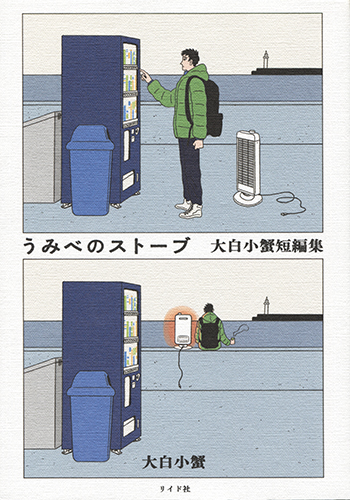
うみべのストーブ

Umibe no Stove (うみべのストーブ), originally published in 2022, is a collection of seven short manga stories by Kogani Ōshiro. In a surprising but well-deserved turn of fate, the collection was listed as the #1 women’s title in the 2024 edition of the Kono Manga ga Sugoi! (“This Manga Is Awesome”) series of mass-market reference books. Ōshiro’s magical realist stories are difficult to categorize, but what they share is a gentle and bittersweet appreciation for the small challenges and victories of growing older and moving on. 

The title story is about a man named Sumio whose girlfriend breaks up with him on her birthday. Left alone in the apartment they once shared, Sumio huddles next to the space heater and cries. The space heater takes pity on him and reveals that it can talk. It suggests that they go to the beach together, a trip Sumio never made with his girlfriend. Sumio agrees and spends the night sitting on a concrete embankment overlooking the ocean as he talks with the space heater and finally accepts the fact that his girlfriend isn’t coming back. Even though it’s unplugged, the space heater keeps him warm by sharing its memories of happier times.

The second story, 雪子の夏 (Yukiko no natsu), is about a trucker who encounters a Yuki Onna while stuck in traffic on a snowy night. The childlike yōkai doesn’t particularly want to kill the trucker; and, after they talk for a bit, she reveals that it’s her dream to see summer fireworks. The trucker invites the Yuki Onna to share her apartment until summer, at which point she can use her refrigerated cargo space to take her guest to see a summer festival. While watching the fireworks explode in the night sky, the Yuki Onna is so overjoyed that snow begins to fall.

My favorite of the stories, 海の底から (Umi no soko kara), is about a young woman named Fukatani who always dreamed of being a professional novelist. Her two friends from college both managed to become published authors after they graduated, but Fukatani lost her motivation to write after starting an office job. During a late-night drinking session, Fukatani’s friends ask her if she’d really be happy never writing another story, but she doesn’t know what to say. She used to love writing, but she just hasn’t felt any inspiration recently.

Later, Fukatani’s boyfriend comforts her, saying that there’s no rush for her to begin writing again. After college, he explains, she found herself standing at the base of a pyramid on the bottom of the sea. She’s been working to climb each step – finding a job, paying off student loans, and so on – but when she gets to the top and rises above the surface of her ocean of worries, she’ll be able to feel the wind of creativity again. This sounds like a silly analogy, but the way Ōshiro illustrates the process of coming up for air is remarkably cool and refreshing.

Something I love about Umibe no Stove is the non-commercial quality of Ōshiro’s visual style. Admittedly, the art of some of the stories feels a bit amateurish, but I find this charming. Even when Ōshiro’s drawings are unpolished, her sense of sequential art is unflaggingly excellent. Her use of panels in Umi no soko kara, for instance, creates a lovely sense of space during the protagonist’s conversation with her boyfriend. Even if Ōshiro’s drawings aren’t always technically precise, her manga still has incredible emotional impact.

I want to recommend this book to manga fans interested in a more indie style of Japanese comics, perhaps along the lines of the graphic novels published by Western presses like Fantagraphics and Drawn & Quarterly. Umibe no Stove may seem unassuming on the surface, but this manga is something special.

As an aside: if you’re looking for something similar that’s been translated into English, I’d like to recommend Natsujikei Miyazaki’s short story collection And the Strange and Funky Happenings of One Day. It’s weird, it’s fun, and the indie manga publisher Glacier Bay Books has done an amazing job with the translation and editing.

The City and Its Uncertain Walls

In The City and Its Uncertain Walls, Haruki Murakami returns to an earlier era of his writing. Although ostensibly set in the present, there’s a timeless quality to this story and its characters, who move through their lives entirely offline and largely cut off from contemporary society. In both the setting and scenario, Murakami borrows heavily from his own twentieth-century fiction, making The City and Its Uncertain Walls feel like more of a pastiche than an original work.

The first section of the novel alternates between the narrator’s recollections of the past and his descriptions of a low-fantasy dreamscape of the eponymous walled city. In the real world, the narrator recounts the progression of his teenage romance with a girl who eventually revealed that she was suffering from severe depression before sending a farewell letter and disappearing from his life. In the dream world, the adult narrator enters the walled city the girl once built from her imagination and encounters a ghost of her sixteen-year-old self.

At an almost detail-by-detail level of fidelity, the walled city is lifted directly from the “End of the World” segments of Murakami’s 1985 novel Hard-Boiled Wonderland and the End of the World, while the bittersweet teenage romance is strongly reminiscent of his 1987 novel Norwegian Wood.

This was a slow opening for me, as it’s territory Murakami has covered many times before. Perhaps a different reader might have a different impression; but, since I’ve already read Norwegian Wood and Hard-Boiled Wonderland and the End of the World many times during the past two decades, I often found myself skimming through this section.

The story becomes somewhat more interesting in the second section, when the forty-year-old narrator wakes from the dream of the walled city, leaves his job at a book distribution company, and moves to a small town in the mountains of Fukushima prefecture to manage a privately owned library. The narrator is welcomed by the former head librarian, a gentle elderly man named Mr. Koyasu. With the support of the library staff, the quiet days pass pleasantly enough, but there’s something strange about Mr. Koyasu, who seems to come from nowhere as he pleases before returning to nothing at the end of his visits.

In many ways, this second section feels like a retread of Murakami’s 2017 novel Killing Commendatore, whose narrator undergoes a similar midlife crisis and moves to a small town in the mountains. There are also echoes of the rural library in Shikoku that serves as the setting for the last half of the 2002 novel Kafka on the Shore. Thankfully, this section doesn’t exhibit the same fidelity of borrowing as the first, and I was intrigued by the gradual reveals concerning Mr. Koyasu’s life and interest in the narrator.

Toward the end of the second section, it seems the plot will finally move forward when the narrator is introduced to one of the library’s most faithful patrons, a teenage boy on the autism spectrum. The boy knows about the walled town, and he wants the narrator to take him there. Unfortunately, this is when the story begins to lose its threads, and it falls apart into a tangle of long conversations in which characters repeat the same information without actually saying anything. Even at the abstract metafictional level of Murakami’s beloved “symbols” and “metaphors,” the ending feels rushed and unsatisfying.

In his “Afterword,” Murakami explains that he began The City and Its Uncertain Walls during the pandemic as a return to a story of the same title that he originally published in 1980. I understand the drive to return to familiar themes in order to view them from unexplored angles, but the problem with this novel is that there’s nothing new or different in its approach. If I were feeling cynical, I might even say that The City and Its Uncertain Walls feels as though it’s been assembled as something of a “Best of Murakami” album intended to market the author’s work to new readers.

I enjoyed the experience of reading The City and Its Uncertain Walls, but it didn’t resonate with me emotionally. More than anything, this book inspires nostalgia for Murakami’s earlier novels. Given the story’s refusal to address any social, political, or cultural developments since 1980, I’d say that “nostalgia” is probably going to be its main appeal for many readers. There’s value to seeking shelter in the imagination as a defense against the demands of neoliberal capitalism, but The City and Its Uncertain Walls has nothing to do with resistance; this is pure self-indulgence. As in the walled city of the narrator’s dreams, nothing much happens here, and time passes comfortably but without meaning.

室外機室

室外機室 collects four gorgeously illustrated magical realist stories drawn by an otherwise unpublished artist who goes by Chome. The stories transport the reader to a reality slightly removed from our own as each of the mundane protagonists catches a small glimpse of a hidden world.

I immediately fell in love with this collection from the opening pages of the first story, Tsugiho, in which a woman attends a large comic convention and finds a self-published minicomic that turns out to be brilliant despite its nondescript cover. The comic doesn’t seem to be documented anywhere online, so the woman starts writing a description. Her project quickly spirals out of control, however, as the pages of the small book seem to change each time she reads it. In the end, the woman’s essay transforms into an original illustrated short story, which she self-publishes and takes to the same comic convention where she found the mysterious comic that inspired her.

Speaking personally, I couldn’t describe the process of creative inspiration more accurately if I tried. What begins as a relatively straightforward act of casual appreciation can easily turn into something that has almost no relation to the original work at all, often to such an extent that the source is entirely forgotten by the end. In addition, it’s not always the case that creative inspiration comes from “the great works” of art and literature, as smaller and more specific stories can create a powerful sense of resonance and creative motivation even despite being unacknowledged by the broader culture. It’s nothing short of amazing that Tsugiho captures this aspect of creativity so perfectly in just twenty pages. 

The two middle stories are thought experiments that are far more beautifully executed than they have any right to be. In 21g no bōken (which illustrates the manga’s front cover), a young woman dies and finds that her ghost is able to go anywhere and do anything. This story is primarily an excuse to illustrate the joy of absolute freedom of movement, but the ending is quite touching. Meanwhile, Konshin takes place almost entirely in a woman’s bedroom as she sits at her desk and listens to a strange radio broadcast from a parallel universe in which history has developed in an entirely different direction. The strength of this story lies in its writing, but the uncanniness of the broadcast is augmented by the visual coziness of the woman’s apartment.

The fourth and final story, Chika tosho tankenshō, is a seventy-page graphic novella that blew me away with its creativity and charm. A young woman doing research at the library drops her eraser, which bounces into the crack of a panel at the bottom of a bookshelf. The woman opens the panel to find a staircase. To the woman’s surprise, there’s an enormous library complex underground, but something about it is decidedly strange. The staff is wearing traditional Japanese clothing, and none of the books have titles. The young woman quickly arrives at the conclusion that this isn’t a place she’s supposed to be, but can she escape without being caught by the librarians? And what are all the mysterious books?     

If I had the power to snap my fingers and make any manga appear in a licensed English translation, Shitsugai Kishitsu would be at the top of the list. This short story collection is a hidden treasure that easily stands its ground with the experimental but gorgeously polished work of emerging creators published by small presses like Silver Sprocket and Peow, and I could see any of these minicomics being released in the line-up of the ShortBox Comics Fair. Whoever the mysterious Chome may be, they’re creating brilliant and accessible comics that deserve an appreciative international audience.