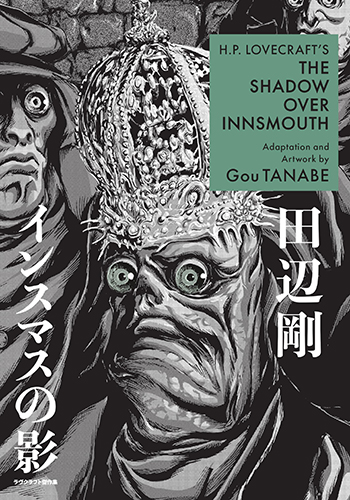
The Shadow Over Innsmouth is a gothic horror story in four acts. A college student on a self-guided architectural tour of New England takes an inexpensive bus that stops over in the isolated port town of Innsmouth. The student explores the town, and an elderly resident tells him about a wealthy sea captain who made an unholy bargain with ocean-dwelling fishpeople generations ago. The student is forced to stay in the town overnight, and the town’s hidden half-human residents chase him from his hotel. After successfully escaping Innsmouth, the student begins to question his own family lineage.
The writing in Lovecraft’s original 1931 novella can be difficult to parse, and the xenophobia of the narrative isn’t attractive to contemporary eyes. Regardless, this is an extremely influential story in the field of speculative fiction, with adaptations ranging from Alan Moore’s strikingly upsetting graphic novella Neonomicon to the ruined Fishing Hamlet of Bloodborne, not to mention countless stage plays, radio dramas, television episodes, indie films, video games, tabletop games, and even delightfully bizarre Christmas songs. Many of these adaptations, though excellent, assume a familiarity with the original that may not exist in an audience that isn’t already embedded in the speculative fiction fandoms of the twentieth century.
If you’re curious about Lovecraft’s work but put off by his prose, Dark Horse’s release of Gou Tanabe’s manga adaptation is an artistic marvel presented with an excellent translation in a handsomely published single volume.
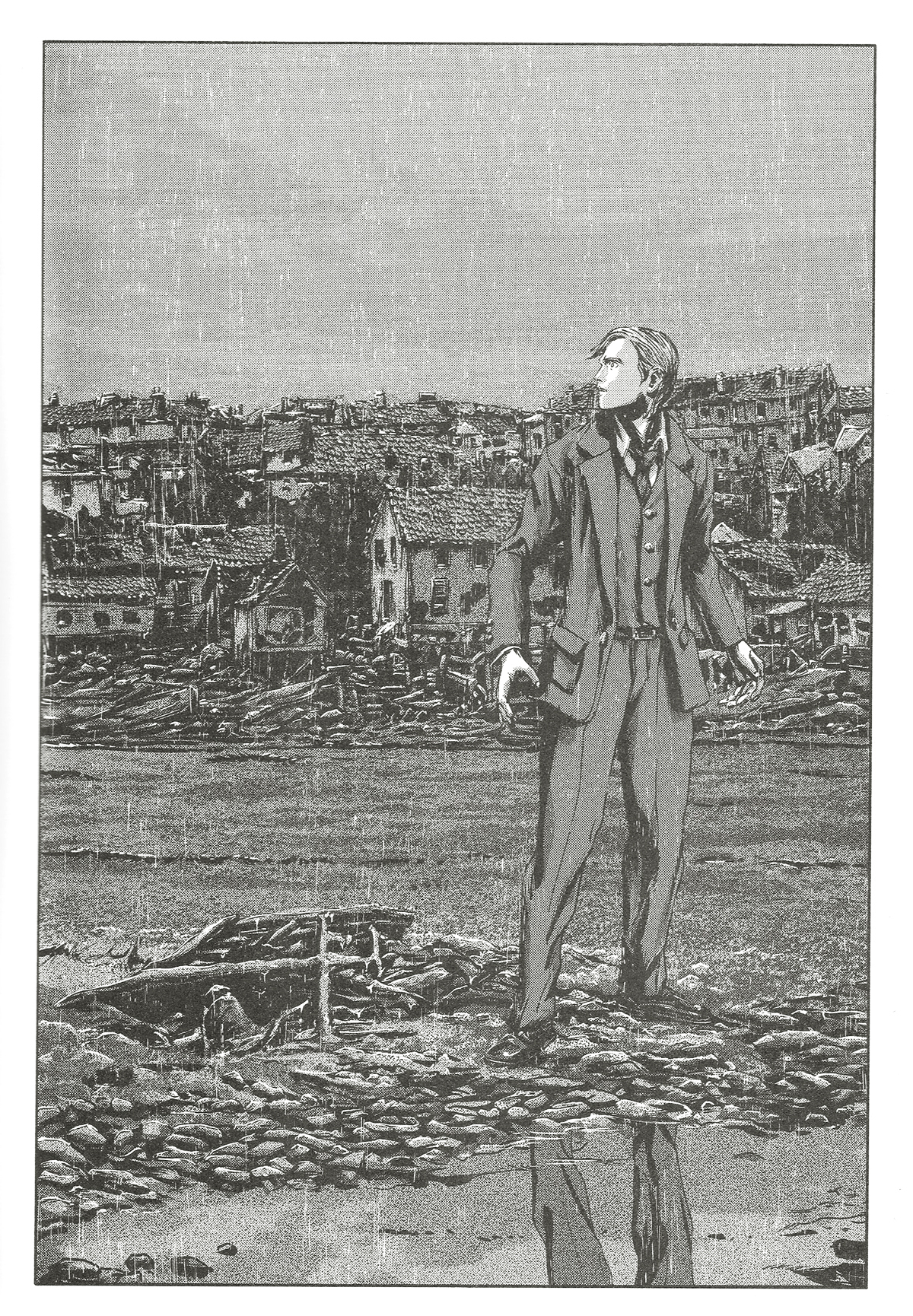
Tanabe’s adaptation of The Shadow Over Innsmouth brings the story to life with the distinctive visual language of horror manga while maintaining as much accuracy to the original as possible. Just like the story’s protagonist, Tanabe is fascinated by the architecture of the rotting Massachusetts town. The immaculately detailed cityscapes that sprawl across the pages encourage immersion into the horror of social and moral decay. Moreover, whereas Lovecraft only hints at what lies underwater, Tanabe is gleefully explicit in his depictions of throngs of fishpeople so horrific they’d make even Guillermo del Toro uncomfortable.
Tanabe’s The Shadow Over Innsmouth succeeds not only as a faithful retelling but also as a standalone work of gothic horror. By pairing Lovecraft’s oppressive atmosphere with his own meticulous draftsmanship, Tanabe bridges the gap between early twentieth-century weird fiction and contemporary horror manga. The manga adaptation of The Shadow Over Innsmouth preserves the unsettling allure of the original while offering both longtime fans and newcomers an invitation to experience Innsmouth’s decayed splendor in disturbingly compelling detail.

 Contemporary Japanese Literature