Maru Ayase’s short magical realist novel The Forest Brims Over is about a young woman named Rui whose husband is a famous writer. Fed up with the words her husband puts in her mouth in his fiction, Rui swallows a handful of seeds that sprout from her body, gradually turning her into a forest.
Despite its fantastic premise, the story is firmly grounded in the psychological realism of the authors and editors who treat women as nothing more than literary symbols to be exploited for sales and awards. In the first four chapters, Rui’s transformation inspires significant shifts in the lives of the people in her husband’s literary circle. In the fifth and final chapter, we finally get to see Rui’s own perspective, and it’s brilliant.
I sympathize with Rui, whose every word is stolen from her by the literary professionals who conspire to confine her existence to a page of pulped paper. If Rui can’t speak in the language of the cultural elite, she’ll find another way of expressing herself, and the vast and mysterious array of life she produces is infinitely more vibrant than her husband’s formulaic literary fiction.
Rui’s husband may have the privilege of publishing award-winning books made of dead wood, but she is the roots and the leaves and the flowers and the wind. The Forest Brims Over is much more subtle and nuanced than perhaps I’m making it seem, but I personally found it joyful and liberating to be reminded that there’s much more room to grow outside the walls built by literary gatekeepers.
Tomoko is only twelve years old when she loses her father to cancer. To learn to support herself, Tomoko’s mother attends a dressmaking school in Tokyo, where she lives in a student dorm. From 1972 to 1973, Tomoko is sent to live with her aunt in Ashiya, an upscale suburb between Osaka and Kobe. Her uncle is the president of an international soft drink company, and his house is extravagantly large and quite grand. Tomoko’s cousin Mina lives a charmed life marred only by her asthma, which is serious enough to necessitate frequent hospital visits.
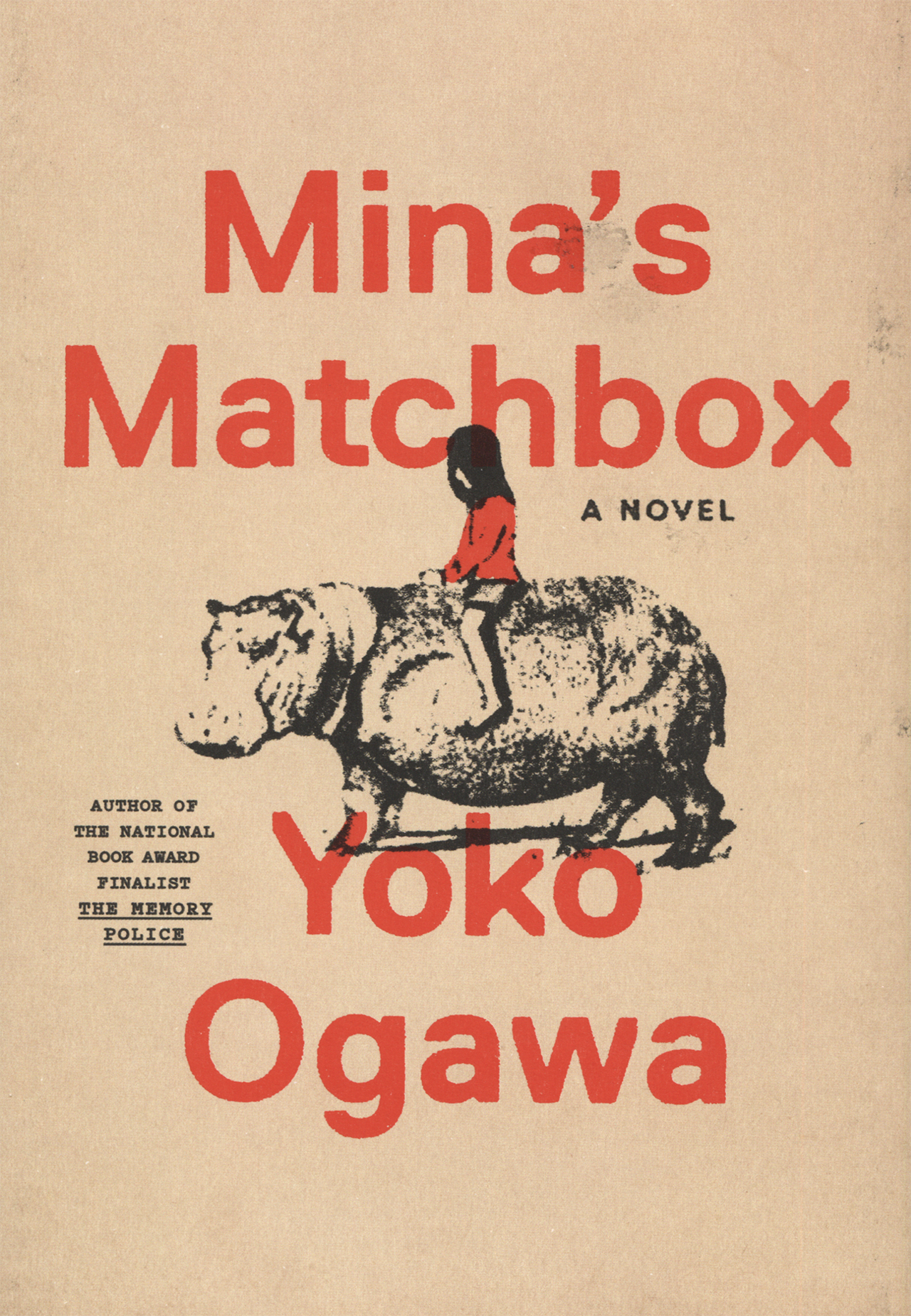
Mina’s grandmother Rosa emigrated from Germany in 1916, and the family’s house is filled with beautiful things, from foreign furniture and luxurious cosmetics to exotic Christmas paraphernalia to a room covered in Islamic tiles and used for a holistic health treatment called “light bathing.” Perhaps the most intriguing thing about the house is Mina’s pet, an aging Liberian pygmy hippopotamus named Pochiko who carries Mina to school every morning. The household is managed by Yone-san, an elderly woman who is ostensibly Rosa’s maid but can more properly be called her companion and life partner.
Tomoko’s aunt is attractive, elegant, and kind. Her uncle is handsome, friendly, and good-natured. The family’s groundskeeper and driver, Kobayashi, is a sweet and patient man whom everyone loves. The entire family welcomes Tomoko with style and grace, and she quickly becomes fast friends with Mina. The opening chapters of Mina’s Matchbox unfold almost like a Studio Ghibli movie, and I couldn’t help envisioning the characters in the style of When Marnie Was There.
To add to the magical atmosphere, Mina is thoroughly charming. She reads well above the level of a sixth grader and asks Tomoko to check out books from the local library like Yasunari Kawabata’s House of the Sleeping Beauties and Katherine Mansfield’s The Garden Party. Mina conveys her comments on these books to Tomoko, who shares them with the gentle young librarian she fancies.
Meanwhile, Mina has a crush on a deliveryman for her father’s company who drops by the house every week. During each visit, he gives Mina interesting matchboxes that he picks up on his rounds. Inspired by the graphics printed on the boxes, she writes short stories on paper that she uses to adorn the inside of the small containers she uses to store her collection. These stories are often fables about animals or other small creatures, and Tomoko loves them.
Mina’s Matchbox is a Yoko Ogawa novel, so it goes without saying that all is not well. Quiet tensions flow underneath the family’s beautiful surface, which is marred by the infidelity of Tomoko’s handsome uncle. To give herself a sense of purpose, Tomoko’s aunt combs through magazines searching for typos so that she’ll have an excuse to send letters of complaint. Mina’s older brother writes to the family from Switzerland but never mentions his father. In her devotion to Rosa, Yoneda-san almost never leaves the house and is frightened by everything outside of her immediate sphere of influence.
Nothing bad happens, and this definitely isn’t the sort of novel where the sick child dies. I hope it’s not a spoiler to say that both Mina and Tomoko go on to live happy lives. Aside from subtle but meaningful character development, Mina’s Matchbox doesn’t have much in the way of plot.
Regardless, this isn’t a slow novel. The pacing is excellent, and I finished the book quickly. In fact, I would have liked to spend more time with it. Every sentence is perfect, and each paragraph is a joy. Despite the child protagonists, Mina’s Matchbox has all the nuance of an adult perspective and steadfastly refuses to engage in melodrama. Reading this novel is like sitting outside and enjoying the sunshine on a warm spring day, and it’s a pleasure to follow the gradual progression of the small stories surrounding Mina and Tomoko as recounted in Ogawa’s impeccable prose.
Takehiro Fukunaga’s 1954 novel Flowers of Grass is considered to be a classic of postwar Japanese fiction, and it’s the sort of book that I imagine many people envision when they think of “literature.” The main narrator is Shiomi, an intelligent but sad young man who’s deeply concerned with spiritual and philosophical matters. As the novel opens, Shiomi has opted to undergo a risky operation at a tuberculosis care facility. Knowing that he won’t survive, he leaves a handwritten account of his life before the war, when he loved and lost both a male classmate and that classmate’s sister.
If one reads Flowers of Grass “straight,” Shiomi is a passionate but pure-hearted young man who has a tendency to fall in love with the idealistic versions of people he creates in his head instead of the actual people themselves. If you’re me, however, it feels much more natural to read Shiomi as a closeted gay man who has an intense sexual crush on a fellow member of his high school archery club but feels obligated to transfer his affection to the boy’s sister once he enters college. Despite being a devout Christian, the sister loves the apostatic Shiomi and twice attempts to initiate a sexual relationship, but Shiomi finds himself unable to reciprocate her physical attraction.
Perhaps this is just my own personal bias, but I also picked up an element of homosexual attraction between Shiomi and the narrator of the novel’s frame story, a fellow patient at the tuberculosis sanitarium. In my reading of Flowers of Grass, the burgeoning romantic relationship between Shiomi and the frame narrator goes a long way toward answering the novel’s opening question: Why does Shiomi decide to undergo a dangerous operation that’s almost certain to be fatal? Essentially, Shiomi has decided to commit suicide, and the point of the testament he leaves behind is to explain why. The answer is complicated, but I get the feeling that Shiomi’s inability to come to terms with his queer sexuality is not inconsequential.
Putting the matter of sexuality aside, the bulk of Flowers of Grass is set during the late 1930s and early 1940s, and the story is of historical interest for its clear and unapologetic stance against the aggression of the Japanese imperial state. Shiomi is eventually drafted, and I think the author intends him to serve as a representative symbol of a typical Japanese soldier in that he really, really wasn’t cut out for the army. No sane military organization would want someone like Shiomi to be a soldier, but the Japanese Imperial Army was not sane.
The two love stories at the core of Flowers of Grass are intriguing, as is the mystery posed in its opening section. Unfortunately, the beginning of the novel is somewhat dull and meandering, and it takes an inordinately long time for the story to find its feet. In particular, your mileage may vary regarding how many dozens of pages of teenagers discussing philosophy you’re willing to wade through. Flowers of Grass requires patience, but it rewards thought and reflection.
As an aside, this novel was translated by Royall Tyler, who is famous for his translation of The Tale of Genji. I was curious about what Royall Tyler is up to these days, and I was amazed and delighted to find that he’s retired from academia to manage a llama farm. I highly recommend checking out his website (here), which is the most charming and wholesome thing I’ve encountered on the internet in a long time.
Shinya Tanaka’s prizewinning novella Cannibals is a harrowing story of how poverty enables a cycle of abuse and assault. The writing and translation are beautiful, but the book is often difficult to read.
In the brutally hot summer of 1988, a 17-year-old boy named Toma is forced to confront the blood he’s inherited from his father, who beats his stepmother and sleeps with various women in their working-class neighborhood along the banks of a polluted river.
To his disgust, Toma realizes that he, too, receives gratification from physical violence, and he struggles to process what this means. Meanwhile, tensions at home threaten to reach a breaking point when Toma’s stepmother confides that she intends to leave his father.
The neighborhood river is never far from the story, and Tanaka’s virtuoso description of its eventual flood is incredible; the violence of the rushing waters is a necessary cleansing and catharsis.
The damage caused by the flood also serves to deny any complacency with violence that the reader may have developed through identification with the narrator. Still, I can’t help but feel that perhaps the author may have taken this violence too far for my own taste, especially as a reader who tends to be critical of how visceral depictions of assault often obfuscate thematic resonance through shock.
Cannibals is a prime example of what feminist scholar Chizuko Ueno has termed “men’s literature” (as opposed to the more commonly used expression “women’s literature”), which delves into specifically gendered issues that may not by sympathetic to a wider audience. The problem I once had with books like Cannibals is that there were so many of them in translation, especially in relation to the exclusion of similarly disturbing stories written by women. Now that there’s a greater diversity of Japanese fiction in English translation, it’s easier to read something like Cannibals on its own terms instead of seeing the explicit misogyny of the characters as a reflection of the implicit sexism of the publishing industry.
In the end, I think Cannibals might be better suited to a college-level literature class than pleasure reading, at least for most people. Without the context of the masculinity narrative of the 1980s that Tanaka is pushing back against in a frankly heroic style, there’s a danger of Cannibals coming off as almost voyeuristic of working-class poverty and sexual violence. Regardless, I appreciate this novella, and I’m grateful it’s been skillfully translated and lovingly published in a beautiful paperback edition with a striking cover design.
Yōko Ogawa’s 2022 collection 掌に眠る舞台 contains eight stories connected by the broad theme of “stages.” Some stories are about the world of performing arts, while others take an abstract approach. Ogawa isn’t concerned with glamour, but rather the strangeness of the stage after the spotlights go out.
One of my favorite stories is ユニコーンを握らせる, which is about an actress whose sole performance was cancelled. She lives alone in her old age, comforting herself by repeating lines from a play that never made it past rehearsals. As always, Ogawa’s gentle portrayal of loneliness is exquisitely observed. With each tiny detail of the woman’s apartment, Ogawa paints a portrait of someone who can’t escape her fantasies of a past that never existed.
I also enjoyed いけにえを運ぶ犬, in which a young boy repeatedly stages a performance of enjoying a specific book at a traveling bookseller’s cart for the sole benefit of the bookseller’s dog, who watches the children to prevent theft. This is a story about poverty and negligence and the fear of being forgotten, but Ogawa nevertheless captures the magic of what it’s like to fantasize about books as a kid.
For me, the standout story was ダブルフォルトの予言, which is about a woman who lives in an empty storage room on an upper floor of the Imperial Theater in Tokyo. This woman’s job is to absorb all the bad luck of the performers on stage, sort of like an inverse Phantom of the Opera. Instead of an extravagant man who lives in the sewers and aggressively causes trouble, she’s a plain and boring woman who lives the attic and passively prevents accidents. At least, that’s what she says of herself, but what’s she really doing in the theater attic? And why is the narrator visiting her so often?
Something I’ve always loved about Ogawa’s writing is the lucid clarity of her language, but the style of 掌に眠る舞台 is much richer and denser than that of the author’s earlier work. Instead of being like icebergs, these stories are more like mazes. You have to take your time getting to the center, which is fine by me. It’s always a pleasure to spend time wandering through Ogawa’s signature uncanny spaces.
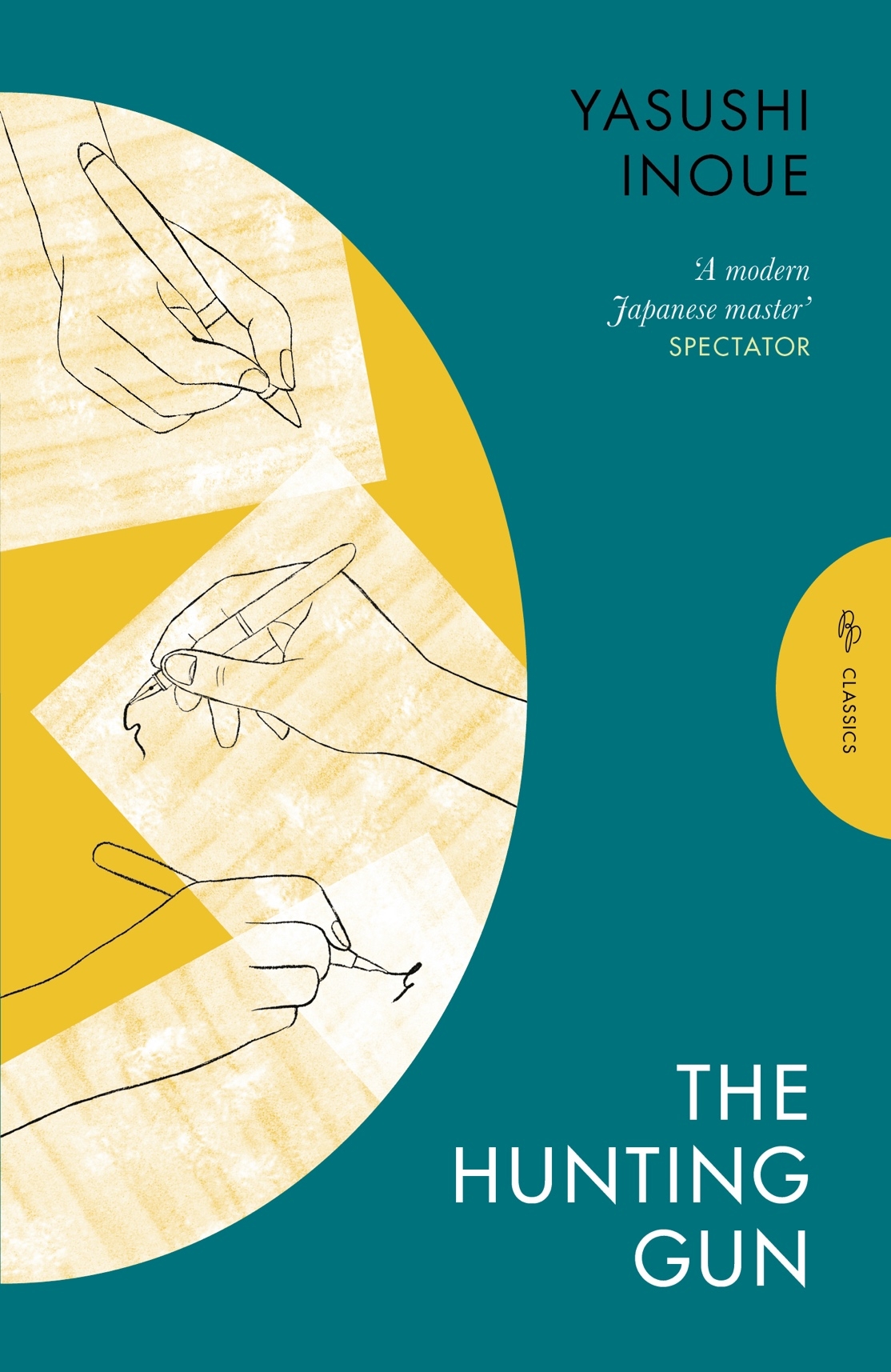
Yasushi Inoue’s epistolary novella The Hunting Gun tells the story of a man’s extramarital affair through three letters: one from his daughter, one from his wife, and one from the woman he loved. The man himself is largely unimportant and provides little more than the frame story. Instead, the three female characters take center stage as they describe the complexities and compromises of their lives and emotions.
My favorite character is the man’s wife, a cultured intellectual who always knew her husband was having an affair. One of the primary reasons she stayed in the marriage was her affection for his mistress, who happens to be her beautiful and elegant older cousin Saiko. Once Saiko passes away after a long illness, the wife unapologetically ditches the husband to pursue her art (and, presumably, her younger lovers) in a villa in the mountains. Good for her.
The Hunting Gun was originally published in 1949, but it reads like the literature of the Victorian era. The eloquence of the three women’s letters is striking, as are the emotional contortions employed by the characters to avoid upsetting the status quo. The choices the three women make are almost comically irrational and counterproductive, but I couldn’t help sympathizing with them.
Michael Emmerich’s 2014 translation has an expansive sense of flow that stands in pleasing contrast to the style of earlier translations. Emmerich’s translation reminds me of nothing so much as the fluent but subtle monologues of Jane Austen (albeit with more than a hint of Brontë melodrama). There are other ways to read this classic of Japanese literature, but I’m grateful for the updated translation provided by Pushkin Press’s handsome stand-alone edition.
Nanae Aoyama’s novella A Perfect Day to Be Alone chronicles a year in the life of a young woman named Chizu who moves in with an elderly relative named Ginko after her mother accepts a teaching position in China.
Aoyama deftly captures the reality of a relationship between a flighty 20-year-old girl and a mature 71-year-old woman. There are no heart-to-heart talks or life lessons, just a lot of sitting around and chatting about nothing in particular.
Chizu breaks up with one boyfriend and starts a casual relationship with another, but this relationship goes nowhere. The same could be said of Chizu’s job at a kiosk at a suburban train station. Aside from a vague desire to save money, Chizu has no goals or ambitions.
Rather, the story is completely interstitial, a chapter between chapters of Chizu’s life. A Perfect Day to Be Alone brought me back into my own 20-year-old headspace with an immediacy that would be difficult to achieve through a story with more of a plot.
Nothing happens in A Perfect Day to Be Alone, but I enjoyed getting to know Chizu and Ginko, whose characters are sketched out and then defined with subtle touches. I appreciate the opportunity to spend time in their company, which is supremely chill and relaxing.
Mieko Kanai’s Mild Vertigo is a slice-of-life novella whose short length belies its Proustian ambitions. The narrator, a housewife living in an apartment in the Tokyo suburbs with her husband and two young sons, engages in extended meditations on her home, family, friends, neighborhood, and place in the world.
I don’t use the word “Proustian” lightly, as Kanai’s prose requires patience and concentration to read and appreciate. The endless sentences gallop and sprawl across pages, sweeping the reader along in a flow of thought and sensation that transcends time and place as the narrator’s focus wanders. This is no breezy stream-of-consciousness nonsense, however, as each sentence is exquisitely crafted and brilliantly translated by Polly Barton.
As with Proust, there’s a certain comfort and emotional satisfaction in the act of paying such close attention to the mundane details of daily life, but Kanai’s narrator has a strong sense of irony. Gendered double standards aren’t a primary concern of this novel by any means, but an underlying frustration still shapes the narrator’s relationships and observations on what it means to be a housewife.
Mild Vertigo (originally published in 2002) doesn’t set out to upset or challenge the reader in the same way as much of Kanai’s earlier writing, but it nevertheless operates with an absolute lack of sentimentality that I find extremely refreshing, especially on the more literary end of the “slice of life” genre. Due to the dense nature of Kanai’s prose, it took me a surprisingly long time to read this short book, but I wouldn’t have it any other way.
Life Ceremony collects twelve short narrative thought experiments about the taboos governing social customs. These stories are playful, intriguing, and marvelously well-written, but this book might not be for everyone. In this review I’ll discuss cannibalism in a relatively light tone that approximates the tone of the collection itself, so please take care if you’re squeamish about food or human remains.
The opening story, “A First-Rate Material,” is an excellent introduction to the themes of the collection. In a world very much like our own, human bodies are not burned after death, but recycled. Human bones become pieces of jewelry, human teeth and nails become the ornaments hanging from chandeliers, and human skin is used to upholster sofas. The young woman who narrates the story is proud of her luxurious human hair sweater, but her fiancé finds clothing and furniture made of human materials to be weird and upsetting. The narrator promises to respect his wishes, but things come to a head (so to speak) when they visit his mother’s house. Before his father passed away, he requested that his skin be made into a veil for his son’s bride to wear during the wedding ceremony.
Even if you’re okay with this thought experiment so far, the story starts to become disturbing when Murata describes, in great detail, what this veil looks like, as well as how the skin of an elderly man’s corpse feels against the narrator’s own living skin. The narrator’s fiancé pretends to be fine with the veil in order to appease his mother, but he’s clearly in shock during the drive home. The reader can’t help but sympathize with both the narrator and her fiancé. Are human bodies not beautiful? Is it not disrespectful to burn our loved ones, or to allow them to rot? In the end, is there any real difference between human skin and animal skin? On the other hand, the idea of wearing human skin is undeniably creepy.
This cognitive dissonance is upsetting, as Murata intends it to be. The gap between subjective perceptions and social expectations forms the core of each of the stories in Life Ceremony. Some of these stories have a gentle and almost fairytale-like quality, but some of them hit hard.
The title story, “Life Ceremony,” provides the purest expression of this cognitive dissonance in its levelheaded consideration of cannibalism. In the near future, the traditional family system is no longer relevant. Few people choose to get married or live together, so the state subsidizes pregnancy and runs community childcare centers for the babies produced by unattached mothers. Many of these babies are conceived at “life ceremonies,” which are funerals in which the bodies of the dead are prepared as a lively and joyous feast that’s open to the community. A life ceremony is considered a success if people pair off during the party in order to conceive children.
The narrator, Maho, isn’t particularly interested in pregnancy or life ceremonies, a view she shares with her male coworker Yamamoto. Maho and Yamamoto are drinking buddies who enjoy a close platonic friendship, and they occasionally discuss how weird it is that both eating human bodies and unromantic insemination used to be considered taboo when they were younger. This story seems like another playful thought experiment until Yamamoto dies in a sudden accident. His family asks Maho to help prepare his body for his life ceremony, at which point the matter of human cannibalism becomes much more concrete and tactile.
Murata has a lot of fun as she parodies the wholesome tone of recipe blogs and lifestyle magazines during a prolonged and detailed description of the preparation of human flesh for culinary consumption. This seems like it would be creepy – and it sort of is – but Murata does an excellent job of normalizing the practice. By the end of the story, many readers will have inadvertently entered a headspace of accepting Maho’s world as completely natural. A series of events that would culminate in a disturbing ending in any other story somehow read as surprisingly sweet and touching.
“Life Ceremony” is a virtuoso performance, and Murata makes it seem effortless. I want to acknowledge the skill of the translator, Ginny Tapley Takemori, in making the text feel so light and natural. Many of the words involving food preparation in English are quite visceral, so it’s a remarkable accomplishment to present the reader with the same clean lightness of the original Japanese text. Despite the occasionally disturbing subject matter, the imagery in the stories of Life Ceremony is never explicitly graphic, and Tapley Takemori’s translation skillfully conveys both the smoothness and the hidden depths of Murata’s prose.
Life Ceremony is a treasure trove of oddities, and each story is strange and fascinating in its own unique way as Murata invites the reader to question the logic of how we interact with the world and understand ourselves as social creatures. Each of the stories is just the right length to be read in one sitting, but the implications of Murata’s provocative thought experiments linger long after the last page.
Author: Yumiko Kurahashi (倉橋由美子) Translator: Atsuko Sakaki Publisher: M. E. Sharpe Publication Year: 1997 Pages: 159
Yumiko Kurahashi was a member of the generation of female writers whose work began appearing in the early 1960s. She continued writing into the 1990s, by which time she had produced a number of collections of short stories. Kurahashi is notable for her absurdist imagination, as well as the cleverness with which she blends multiple literary traditions from Noh drama to Greek tragedy.
The Woman with the Flying Head was published in 1997 by the academic press M. E. Sharpe (which has since been incorporated into Routledge) and collects eleven stories that were originally published between 1963 and 1989. Some of these stories are playful, and some are creepy, but all are fiercely intellectual reflections on both carnal and creative desires.
There’s a fair amount of taboo sexuality in these stories, including incest and bestiality, not to mention sexual entrapment and murder. It’s important for the reader to understand that these stories are explorations of concepts and ideas, not mimetic representations of three-dimensional characters. In the opening story, “The Extraterrestrial,” why do a brother and sister have sex with the alien that hatched out of the egg that mysteriously appeared in their bedroom one morning? It doesn’t matter; what matters is the experimental space generated by the scenario.
You can have a lot of fun with Kurahashi’s stories once you accept the author’s writing on its own terms. If you’re the sort of person who enjoys close reading and analysis, there’s a lot to read and analyze. It’s also entirely possible to enjoy the stories as sex comedies and interpersonal dramas constructed on a scaffolding of absurdist thought experiments. Kurahashi has won numerous literary awards for her work, and this collection is prefaced with a serious and thoughtful introduction by the translator, but “supernatural sci-fi erotic dark comedy” is probably the most accurate label to apply to the author’s distinctive genre of fiction.
The intellectualism attributed to Kurahashi partially stems from her references to a wide range of world mythologies. Although her narrators tend to be terrible and problematic men, the real stars of the show are the demonic women who torment them. Far from being symbols of female resistance or empowerment, the majority of Kurahashi’s female characters are demons in the traditional sense. They are to be feared and abhorred instead of admired, and they tend to reflect the anxieties of a patriarchal society even as they playfully mock fears regarding female sexuality.
The demon in the 1985 story “The Witch Mask” takes the form of a Noh mask that has been passed down as an heirloom in the narrator’s family. This style of mask, the horned hannya, is used to represent women who have turned into demons after succumbing to powerful emotions. The narrator’s mask is particularly frightening because its hunger literally consumes its victims with desire.
The male narrator of the story is fully aware of the danger of the mask, but the cursed object still captivates him. He places the mask on the face of each of his lovers and watches their bodies writhe as it consumes them. He refers to his obsession with the beautiful mask as “an irresistible desire” before finally applying it to the face of his fiancée, whom he loves dearly. He attempts to justify this murderous act by confessing that he “was haunted by an idea – the call of the demon… the desire to put the witch mask on a beautiful face.”
“House of the Black Cat” is also about a hungry demon. This demon alternates in shape between a regular-sized housecat and a human-sized catwoman. The cat in its humanoid form is strangely alluring to the story’s human protagonist, Keiko, as she watches it go about its day in a video made by her husband’s friend Kamiya. The video becomes pornographic as the cat “devours” her human partner, who bears a strong resemblance to Kamiya himself. It seems that Kamiya disappeared shortly after lending Keiko’s husband the video. Although Keiko is never able to conclusively determine his fate, she suspects that the cat killed him so that she could feed him to her children, four black kittens. “House of the Black Cat” is about forbidden sexuality; but, as is the case with many of Kurahashi’s stories, it’s also about the creative drives that inspire artists to test the boundaries of consensus reality.
The stories collected in The Woman with the Flying Head are strange, fantastic, and thought-provoking. Kurahashi’s writing is filled with vivid imagery and suggestive symbolism that blend together to create fantasies that are both horrible and darkly fascinating. A decent comparison might be Patricia Highsmith’s Little Tales of Misogyny, or perhaps even Jorge Luis Borges’s Labyrinths, but Kurahashi’s voice is absolutely unique. I always find myself returning to The Woman with the Flying Head every October for Halloween, but these creepy little stories are perfect for whenever you want to take a step back from the grind of mundane reality to channel some playfully demonic energy.





 Contemporary Japanese Literature