がらんどう

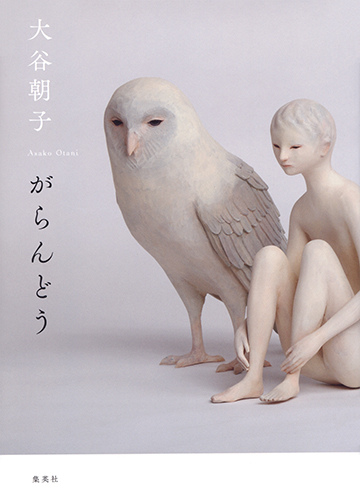
Asako Ōtani’s novella Garandō (がらんどう), which won the 46th Subaru Literary Prize in 2023, follows two 40yo women as they settle into a cozy life as adult flatmates.

Hirai recently moved in with her friend Suganuma, who suggested that they live together so they can afford a nicer apartment. The two women met as adults through their shared fandom of the boy band KI Dash, and they managed to remain friends during the pandemic despite drifting away from their other friends and family members.   

Hirai works in an office, while Suganuma is a self-employed artist who uses a 3D printer to create custom memorial figurines of her clients’ deceased pets. The two women share chores and meals, sometimes cooking for each other and sometimes going out to eat. Although they’re not romantically involved, they often fall asleep together in the living room while watching KI Dash performances on DVDs that they play on an old PlayStation 2.

When Suganuma’s star idol suddenly marries an adult video actress, Hirai takes her flatmate to the beach for a breakup vacation. Afterward, Suganuma begins dating a married man she met at the hotel bar. Hirai is jealous but understands that this is simply the way of the world.

In resignation, Hirai signs up for a dating app, but this goes poorly. Her lack of success is partially because she’s aggressively targeted by someone involved in a multi-level marketing scam, but it’s mostly because Hirai is about as asexual and aromantic as someone can be. She has a vague aspiration of having a child one day, but is that really what she wants?

For Hirai’s birthday, Suganuma ends her relationship with the sleazy married man and uses her 3D printer to manufacture a baby as a gift for her flatmate. The story closes in much the same place it began, with the two women happy and secure in one another’s company. The title of the novella, Garandō, means “empty,” and it most directly refers to the hollow centers of Suganuma’s 3D-printed figurines. This title might at first be taken to refer to the relationship between Hirai and Suganuma as well, but their friendship is anything but hollow.

Because really, what’s to stop two adult women from spending their lives happily together as flatmates? Why do two people need to be married or related in order for it to be “normal” for them to live together? Is your life really “empty” if you don’t get married and have children?

More than anything, Garandō reminds me of Banana Yoshimoto’s bestselling 1988 novel Kitchen, which presents alternate models of modern families while comforting the reader that, even if you’re not “normal,” life is still well worth living. Granted, Hirai and Suganuma are older than the characters in Kitchen, and they’re not living in the lap of Japan’s bubble-era luxury. In addition, Ōtani’s writing style is relatively sardonic and dry, especially when compared to the bubblegum pop of Kitchen. Still, Garandō is a positive story about two weirdos who manage to find happiness. Even if their lives don’t follow the standard model, they’re doing okay.

At a slim 112 pages, Garandō is a quick read. Ōtani has a wonderful sense of pacing, juxtaposing scenes of comfort inside the home with scenes of (highly relatable) social awkwardness in the outside world. I really enjoyed this book, which pulls off something I appreciate – the normalization of “difference” without resorting to sentimentality or melodrama.

What Ōtani demonstrates in this meticulously crafted novella is that people like Hirai and Suganuma are less uncommon than you might think, and that’s cool. And honestly, given that a house and a nuclear family have become distant dreams for many of us, why not join them? 

Someone to Watch Over You

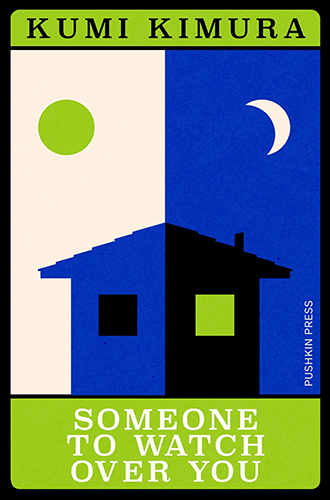
Kumi Kimura’s 2021 novella Someone to Watch Over You is a subtly unnerving story about the strangeness of the Covid pandemic.

46yo Tae lives alone in her deceased parents’ house in a small town in northern Japan. She formerly worked as a middle school teacher, but she left the job after the death of one of her students. Now she lives on her inherited savings while leaving the house as infrequently as she possibly can.

Tae’s solitary lifestyle is unaffected by the onset of the Covid pandemic, but the “stay home” orders were followed by three unpleasant incidents in quick succession. An older man who’d just retired is found dead in an apartment on Tae’s street, and someone paints graffiti on the front wall of Tae’s house. Tae also receives an odd message from the father of the deceased student on her answering machine. These three incidents blend together into a paranoid fantasy that convinces Tae that she’s being stalked.

After a handyman named Shinobu treats Tae with kindness while cleaning her bathroom drain, Tae asks him to guard her house. Shinobu, who desperately needs the cash, readily agrees. During the pandemic, he’s been forced to live in the garden shed of his parents’ house, which is currently occupied by his brother’s family. Shinobu’s sister-in-law won’t talk to him, and his niece is weird and creepy in a way particular to young teenage girls.

Tae eventually asks Shinobu to move into her house so he can keep watch full-time, but this arrangement is supremely awkward. Both Tae and Shinobu are deeply damaged people, and Tae’s insistence on maintaining social distancing rules inside her own home stunts the development of any sort of friendly relationship between them. By the end of the novel, the reader wonders if Shinobu is any better off at Tae’s house than he would have been living rough.

To speak personally, a sudden change in employment forced me to scramble to move to a different city in April 2020. Due to social distancing, I had no opportunity to form and renew social connections, and the following two years were intense and unpleasant.

Someone to Watch Over You doesn’t reflect my individual circumstances, but it perfectly conveys the sense of displacement and alienation I experienced during the pandemic. It’s validating to see this sort of surreal experience taken seriously, especially since I definitely wasn’t alone in having a bad time during the lockdowns. I don’t think it’s healthy to dwell in past trauma; but, at the same time, the cultural expectation to pretend that all of this didn’t happen four years ago can sometimes feel maddening.

The back cover of Someone to Watch Over You promises “an unlikely connection” and asks if Tae and Shinobu can “become one another’s refuge,” thus suggesting the possibility of a heart-warming conclusion to the story. This does not happen, not by a long shot. While I fear that some readers may be disappointed by the weirdness of the ending, I appreciate that the author didn’t pull her punches. The Covid pandemic was indeed strange and unpleasant, and Someone to Watch Over You is one of the truest fictional accounts of the pandemic I’ve encountered.

Someone to Watch Over You is well-written and carefully translated, and I found myself fascinated by the dysfunctional characters and pulled along by the downward momentum of their story. This disturbing little book is compelling in its use of the pandemic as a stage for exploring the darker mysteries of mundane life, and I admire how Kimura revisits this particular moment of history without the comforting lens of nostalgia.

A Hundred Years and a Day

In October 2024, Matt Alt published an article in Aeon titled “The Joy of Clutter.” Instead of decrying the unsightliness of visual complexity, Alt argues that clutter has its own unique beauty, “an ecstatic, emergent complexity, born less from planning than from organic growth, from the inevitable chaos of lives being lived.”

Alt’s essay is illustrated with photos contributed by Lee Chapman, who captures evocative images of the chaotic interiors of tiny family-owned restaurants located in shopping arcades lined with shuttered storefronts. Chapman’s photos coincide with a trend on social media that expresses nostalgia for the Japan of the late twentieth century, with posts often tagged as “Shōwa Retro.”

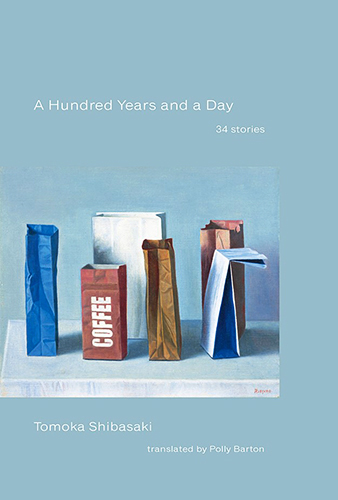
Tomoka Shibasaki’s A Hundred Years and a Day delights in the aesthetic of gentle decline exemplified by Shōwa Retro, and the 34 stories in the collection express nostalgia for people and places left behind in the past. Shibasaki invites the reader to walk through depopulated residential neighborhoods and stroll along abandoned shopping arcades. Half-empty cityscapes are dotted with buildings filled with clutter. Aging adults sift through the belongings of their deceased parents. Siblings who’ve drifted apart make clumsy attempts to reconnect by alluding to half-forgotten memories. Students study and then discard the small artifacts of the people who came before them.

Even reading through the book’s Table of Contents is like flipping through a card catalog in an old library, with each story’s title being a concise description of its premise. To give an example, the first story is titled:

“One summer during a long rainy spell, student number one from class one and student number one from class two discover mushrooms growing in a flower bed next to a covered walkway at their school; two years after leaving school they bump into each other, but after that, ten years pass, twenty years pass, and they don’t meet again”

“One summer” is a translucently beautiful piece of writing with imagery so clean and clear that I could almost feel the seasonal humidity on my skin. The story conveys the delicate specificity of a single moment captured in time. The moment dissipates and disperses as the world moves on, but the memory lingers.

An intriguing play on this theme is in the nineteenth story…

“I feel like I want to see the places that someone else saw, he said; I like thinking about places I’ve been to once but no longer know how to get to, or places that you can only access at certain times, I feel like there must be some way of visiting the places that exist only in people’s memories”

…which is about a woman who travels to a small seaside town to give a presentation at an academic conference. While walking back from the local shrine, she has a brief conversation with a child who will be the last ever student to graduate from the municipality’s junior high school. Years later, the child (now grown) encounters an artistic diorama that recreates a fictional version of their hometown that appeared in an old novel written by the academic’s deceased mother. While studying the artwork, this person (referred to by the story as “the last child”) is surprised by the liveliness of the reconstructed memory:

The last child crouched down and peered into the alley running between the wooden houses. It looked a lot like the alleyways that they knew from their childhood. They felt as though it was a path they’d been down before. As the last child was still staring down the passage, a cat ran across the alleyway where the stone steps were. The last child gasped in surprise, and stood up. A cicada flew in through the window, attached itself to the wall, and began to screech.

“I feel like I want to see” is a wandering ramble across time and memory, but most of the vignettes in A Hundred Years and a Day are much more focused on the history of a specific place. One of my favorites is the twenty-second story…

“A man opens a café in a shopping arcade, dreaming that it will become like the jazz café he used to frequent as a student; the café stays open for nearly thirty years, then closes down”

…which, despite the title, is about the young woman who takes over the original café by the university. The interior of the café is almost comically outdated, as are the records left behind by the previous owner. The new owner isn’t familiar with the musicians whose posters still hang on the walls. Regardless, the café is still lively, and the new owner finds herself thinking, at the end of the story, that “this is what I wanted to do.”

If I had to guess, I’d say that the reason why this sort of Shōwa Retro story has such a strong appeal is because it rejects the performative glossiness of mass media while embracing the beauty of real, everyday settings. The aesthetic also disrupts the modern myth that progress is not just desirable, but inevitable. Things don’t always get “better,” Shibasaki demonstrates, nor do endings always happen with a bang. 

A cursory reading might suggest that Shibasaki is trafficking in low-effort cultural nostalgia, but I don’t think that’s the case. The imagery presented by each story in A Hundred Years and a Day feels very deliberate, like it’s smashing a smartphone screen with a hammer. This is fiction to be enjoyed slowly, and I appreciate the contemplative space Shibasaki has opened for the reader.

When discussing the texture of Shibasaki’s writing, it’s important to acknowledge the artistry of Polly Barton’s English translation. Japanese literary writing is notorious for its nested sentence structure, which can feel unintentionally Proustian if translated literally. It takes a keen eye and a delicate touch to understand whether Japanese sentences are interminably lengthy because the language is simply written like that; or whether a sentence like one of Shibasaki’s story titles is a deliberate stylistic choice. Barton has done truly amazing work with A Hundred Years and a Day at a sentence-by-sentence level, allowing the reader to enjoy Shibasaki’s distinctive style while still maintaining a casual, conversational tone.

Most of the stories in A Hundred Years and a Day occupy fewer than ten pages, and they read like accounts passed from one person to another by word of mouth. Spending time with this collection feels like calling an elderly relative and listening to them talk about a restaurant closing in your old neighborhood, or about how they saw someone that you once knew as a child in the newspaper. There’s no real beginning or end to the stories, nor is there any discernible sense of structure. Still, the theme of human connection runs through Shibasaki’s work like a gentle current, drawing the reader forward along on the steadily flowing stream of time.

I’d like to extend my gratitude to Stone Bridge Press, which provided an advance review copy of this book. A Hundred Years and a Day will be published on February 25, 2025. You can learn more and read a preview on the book’s webpage (here).

Mimi ni sumu mono

Yoko Ogawa’s 2024 short story collection Mimi ni sumu mono (耳に棲むもの) is about quiet endings and the unremarked deaths of small things. The tone of these five stories ranges from gentle and elegiac to genuinely shocking.

I’d like to begin with the latter, as Kyō wa kotori no hi (今日は小鳥の日) is one of the most subtle yet surprising horror stories I’ve read in some time. The nameless narrator of this story addresses the reader directly as she welcomes us to the annual gathering of the Small Bird Brooch Society. Small bird brooches can be made in a variety of ways, she explains, but she crafts hers using the real beaks and talons of dead birds. There’s something truly sublime about watching their tiny bodies decay, she muses.

The narrator then explains how her predecessor, the first president of the Society, met his untimely end. His death involves the still-living bodies of small birds, but I dearly wish it did not. After recounting one of the more gruesome scenes I’ve encountered in literary fiction, the narrator cheerfully invites the reader to sit down and enjoy the banquet. She then points out a few notable members of the Society, each of whom has their own method of constructing small bird brooches. Perhaps you, dear reader, will feel right at home in their company.

The collection’s final story, Senkōsho to rappa (選鉱場とラッパ), is about a young boy who lives with his mother in the company housing of a rural ore processing plant. His mother works both the day shift and the night shift at the plant’s cafeteria, leaving him to his own devices. During the summer festival at a local shrine, the boy becomes enamored with a toy bugle offered as a prize at a carnival game. Without any money to play, he’s reduced to lurking at the corner of the tent and praying that, if he can’t win the bugle, then no one else does either.

The next day, the boy takes out his frustration on a stray dog begging for scraps near the back entrance of the cafeteria where his mother works. He kicks the poor animal so hard that he ruptures its stomach, and it dies. Later he returns to the festival, where he witnesses the sudden death of the old woman running the carnival game. He steals the bugle in the confusion and returns home only to realize that the toy is nothing more than cheap plastic that has been spraypainted gold. In his shame, the boy buries the bugle in a closet, just as he buried the dog he killed between the roots of an old tree.

Still, as he sits on the apartment balcony while waiting for his mother to come home, the boy fashions constellations from the lights of the processing plant and imagines the songs he would play in their honor if his bugle were real.

Mimi ni sumu mono reminds me of Ogawa’s first work to appear in English translation, The Diving Pool (2008). Although it’s difficult to classify these stories as “horror,” they’re all subtly but effectively unsettling. When we’re exposed to the small cruelties that hide in the hearts of normal people, we begin to see reflections of their inner darkness in the details of the world that surrounds them. Ogawa’s characters are people who have lost their sense of belonging. The world has moved on without them, leaving a quiet air of desperation and neglect in its wake.

Mimi ni sumu mono is twenty-first century gothic fiction at its finest, but it’s not all bleak. Like the boy in Senkōsho to rappa and the president of the Small Bird Brooch Society, Ogawa remains fascinated by the beauty that gleams through the horrors. At 132 pages, Mimi ni sumu mono is relatively slim, but I believe this collection’s brevity is to its credit. The book is like an art gallery that encourages the reader to take their time with each piece, lingering as long as they like without any pressure to rush forward.

Mimi ni sumu mono was written in collaboration with Koji Yamamura, an Academy Award nominated animator. Yamamura created the companion piece My Inner Ear Quartet, which is described as “a literary VR animated film with an interactive storyline” on its page on Steam (here). This interactive animation was showcased at a number of international animation festivals and won several awards in Japan and abroad. As Yamamura’s animation requires a VR headset to view, I can’t offer any comments, but its trailer on YouTube (here) and the expanded excerpt (here) suggest that Yamamura was successful in capturing the eerie tone and uncanny beauty of Ogawa’s stories.

とんこつ Q&A

とんこつ Q&A collects four stories by Natsuko Imamura, the author of The Woman in the Purple Skirt. Each of these stories is built on a cute and wholesome premise that develops in a dark and strange direction.

The title story is about a woman with social anxiety who creates a written script to help her navigate her job as a server at a small diner called Tonkotsu. Her efforts are aided by the recently widowed owner and his young son, who teaches the narrator to speak in Osaka dialect like his late mother.

The narrator’s script gradually expands beyond professional dialogue into everyday pleasantries, and she ultimately becomes a ghostwriter for the diner owner’s new wife. This scenario seems like a perfect set-up for a sweet and gentle romantic comedy, but it gradually becomes more disturbing as the narrator cheerfully crafts the diner owner’s new wife into a living doll.  

The three other stories in the collection are about middle school bullies whose punishment is far worse than their crime, an aggressively clueless wife who gets away with murder, and a very sketchy coworker. Imamura’s prose is smooth but cuts like a knife, and the situations she crafts are never what they seem. I wouldn’t say that these stories have twist endings, necessarily, but the way their wholesome coziness slowly sinks into social horror is fascinating to watch.

Nails and Eyes

Kaori Fujino’s Nails and Eyes collects a novella and two short stories whose crystal-clear prose is darkened by the shadow of creeping psychological horror. The theme of family lies at the heart of these stories, especially as it intersects with the fear that those closest to us may deliberately choose not to see obvious but unpleasant truths.

In the third story, “Minute Fears,” a woman named Mika plans to attend the wedding reception of a college friend. Since she’s started a family, Mika has rarely gone out on her own, and she’s been looking forward to the party. Her son Daiki begs her not to go, as he’s been disturbed by an urban legend surrounding a ghost rumored to haunt the local playground. After a brief struggle with Daiki, who doesn’t want to be left alone, Mika goes to the reception late and leaves early. When she comes home, Daiki confesses his fear of the ghost, and Mika resolves to take him to the playground herself to prove that the urban legend isn’t true.

Whether the ghost exists is left to the reader’s imagination. Instead, the true horror lies in the image of Mika dragging her terrified son into the night. Or perhaps, if your sympathies lie elsewhere, the horror is hidden in the homebound years that Mika has had to endure in order to care for her child while her friends enjoy their lives and careers in the outside world. 

The second story, “What Shoko Forgets,” is equally ambiguous yet just as disturbing. After a mild stroke, Shoko has been living in an elder care facility for almost half a year. Her family visits regularly, and she receives ample attention from the staff. A polite and energetic young man named Kawabata is especially gentle, and he seems to have a special fondness of Shoko.

There’s something strange about Kawabata’s behavior after dark, however; and, for some reason, Shoko finds herself thinking about sex in a way she hasn’t for years. It’s possible that there might be a connection between Kawabata and the man Shoko imagines lying next to her at night, but both her eyesight and her memory have grown hazy. In any case, it’s no use trying to explain her muddled thoughts about the situation to her daughter or granddaughter, who so kindly come to visit a forgetful old woman.

The collection’s centerpiece novella, “Nails and Eyes,” is narrated from the perspective of a young girl who lost her mother to an unexplained incident. Her father brings home his younger lover, and the narrator addresses this woman directly through the story. She recounts the minute details of the woman’s life, from her affair with a bookstore owner to her obsession with the home décor blog once maintained by the narrator’s mother.

The narrator also describes her own behavior as a child who has clearly been traumatized by her mother’s suicide but largely ignored by the adults in her life. The narrator refuses to be anywhere near the balcony where her mother died, and she sits in the corners of the apartment gnawing at her nails, which become serrated and sharp. To her credit, the woman responsible for the child’s care makes a clean break with her lover and begins to take a more active interest in her charge’s welfare. This change of heart comes too late, however, and the story ends with an incredibly upsetting psychological break.

To be clear: if you have phobias related to eyes and/or fingernails, this book might not be for you. 

At 140 pages, Nails and Eyes is easy to breeze through, especially in Kendall Heitzman’s smooth and weightless translation. Still, Fujino’s fiction rewards time and attention, as well as repeated readings. There are layers to her deceptively simple prose, and any one of these stories has the potential to generate multiple lines of speculation. Nails and Eyes is a fascinating and disquieting collection that will be appreciated by readers who enjoy literary short horror fiction like Yoko Ogawa’s Revenge and Mariana Enriquez’s Things We Lost in the Fire.

Idol, Burning

Rin Usami’s Idol, Burning is only 115 pages long, but this masterfully translated literary novella paints a vibrant portrait of a young woman’s search for community in online fandom.

School has always been tough for Akari, whose dyslexia makes writing Chinese characters by hand extremely difficult. Akari has no problem typing, however, and she pours all of her energy into a fanblog devoted to her oshi Masaki, an actor and member of a popular boy band. During the summer, Akari works as many shifts as she can pick up at her part-time job so that she can buy Masaki’s merch and attend his concerts.

Akari’s world begins to fall apart when Masaki punches an overeager fan, thus becoming the target of intense social media discourse. Akari, who has found friendship and personal fulfilment in her fandom, can’t help but take this abuse personally. To make matters worse, when she returns to high school, she’s informed that she’s failed her junior year.

Usami is unflinching in her portrayal of online cultures, and she’s refreshingly honest about the adverse effects that flamewars can have on vulnerable people seeking support in fandom communities. Akari is never presented as pathological, and the members of her family offer support despite not really understanding the life she leads online. If there’s a villain in this story, it’s the Japanese education system, which refuses to accommodate Akari’s learning style while constantly pressuring her to “try harder.”  

Usami’s writing shines during the quiet scenes of loneliness Akari experiences as she watches her communities crumble apart in real time. While it’s easy to mock the intensity of pop star fandom, Akari’s story helps the reader to understand how the power of a dream can keep a teenager moving forward, especially when they feel that their paths are limited in the offline world. Akari is a beautifully unique and well-realized character, but her failed attempts to find meaning and belonging carry much broader implications concerning how Japanese society views difference and disability.    

The English translation of the book includes short essays by the author and her translator Asa Yoneda, as well as short statements from the cover designer (surrealist photographer Delaney Allen) and the illustrator (comic artist Leslie Hung). The novel’s story stands on its own, but it’s a pleasure to read about the inspirations of the writers and artists who brought it to life.

Asa: The Girl Who Turned into a Pair of Chopsticks

Natsuko Imamura’s Asa: The Girl Who Turned into a Pair of Chopsticks collects three short literary thought experiments that go to strange places. Each of the characters is missing something essential, and where that lack ultimately leads them is impossible for the reader to predict.

Asa, the eponymous “girl who turned into a pair of chopsticks,” has trouble getting other people to accept any sort of food that she’s touched with her hands. Meanwhile, Nami, the “Girl Who Wanted to Get Hit (and Eventually Succeeded),” is strangely unable to be touched by other people at all. Asa’s quest to understand what makes other people perceive her as unclean has fantastic consequences that become humorous in their absurdity, while Nami’s desire to be touched sinks her into a dark mire of self-harm.

In my favorite of the three stories, the protagonist of “A Night to Remember” claims to have spent fifteen years laying around and doing nothing after graduating from school. This woman is so lazy, in fact, that she spends the majority of the story casually slipping across the ontological boundary that separates human and animal. If “A Night to Remember” were a story about a cat, it would be super cute, but the narrator is definitely a person. The resulting uncanniness is superb.

It’s fitting that the collection’s Afterword is contributed by Sayaka Murata, the author of Convenience Store Woman and Life Ceremony. “These stories give the reader another way of seeing,” Murata writes, “transfiguring what you should be seeing, and sometimes contaminating it.” Like Murata, Imamura refuses to allow the reader to take “common sense” for granted. The stories in The Girl Who Turned into a Pair of Chopsticks thereby offer a glimpse into a strange world where socially acceptable normality doesn’t apply. Imamura’s visions are playfully surreal, occasionally upsetting, and never boring.

ハンチバック

Saō Ichikawa’s ハンチバック (Hunchback), which won the prestigious Akutagawa Prize for emerging writers, is about a woman with a congenital spinal condition who lives in a group home and posts her secret desires and frustrations on Twitter. It’s an amazing story and a brilliant piece of writing.

The protagonist, Shaka Izawa, has been provided for by her wealthy parents. Although she doesn’t need the money, Shaka works as a freelance writer, mainly penning reviews for stores and restaurants she’ll never be able to visit in person. She also writes explicit erotica, a selection of which opens the novella.

Hunchback is written in a playful and accessible style, but it asks serious questions about disability. Why shouldn’t Shaka create erotica? Why shouldn’t she experience desire? Why shouldn’t she have sex? These questions become less abstract when one of Shaka’s caretakers discovers her secret writing account, and she presents him with a proposition – she’ll pay him to have sex with her.

I was so intrigued by Shaka’s story that I read Hunchback (which is ninety pages long) in one sitting. Ichikawa’s description of the daily life of someone with severe mobility impairments is honest yet compassionate, and her anger at Japanese society’s ingrained ableism is powerful and resonant.

The Forest Brims Over

Maru Ayase’s short magical realist novel The Forest Brims Over is about a young woman named Rui whose husband is a famous writer. Fed up with the words her husband puts in her mouth in his fiction, Rui swallows a handful of seeds that sprout from her body, gradually turning her into a forest.

Despite its fantastic premise, the story is firmly grounded in the psychological realism of the authors and editors who treat women as nothing more than literary symbols to be exploited for sales and awards. In the first four chapters, Rui’s transformation inspires significant shifts in the lives of the people in her husband’s literary circle. In the fifth and final chapter, we finally get to see Rui’s own perspective, and it’s brilliant.

I sympathize with Rui, whose every word is stolen from her by the literary professionals who conspire to confine her existence to a page of pulped paper. If Rui can’t speak in the language of the cultural elite, she’ll find another way of expressing herself, and the vast and mysterious array of life she produces is infinitely more vibrant than her husband’s formulaic literary fiction.

Rui’s husband may have the privilege of publishing award-winning books made of dead wood, but she is the roots and the leaves and the flowers and the wind. The Forest Brims Over is much more subtle and nuanced than perhaps I’m making it seem, but I personally found it joyful and liberating to be reminded that there’s much more room to grow outside the walls built by literary gatekeepers.