薬指の標本

Yōko Ogawa’s 1994 book Kusuriyubi no Hyōhon (薬指の標本) brings together two novellas that feel spiritually akin to The Memory Police, which was originally published in the same year. Like The Memory Police, the two novellas in Kusuruyubi no Hyōhon are set in a seemingly normal world haunted by a sense that something important has vanished. These stories are about ordinary people who come into contact with pockets of magic whose mundanity belies their deep strangeness.

The narrator of the first story, Kusuriyubi no Hyōhon, has moved to the suburbs after losing a portion of her ring finger in an industrial accident. While walking through the neighborhood, she encounters a handwritten “help wanted” sign taped to the front door of a “specimen museum” (標本室) operating in a building that once served as a dormitory during the postwar period. With no connections and no other job prospects, the young woman interviews for and accepts a position as a receptionist.

It’s not entirely clear what exactly the museum’s “specimens” are, and their method of manufacture is a mystery. Regardless, anyone is welcome to bring an object representing a traumatic experience to the museum, where it will be registered, cataloged, and preserved. Through each object’s transformation into a specimen, the pain of its associated memories disappears.

The narrator becomes the focus of the intense gaze and possessive interest of the artist who creates these specimens. Though she loves him, he forbids her to enter his underground workshop. Given the apparent disappearance of the people who requested that specimens be made from parts of their own bodies, the narrator can’t help but wonder what would happen if she entered the artist’s forbidden underground chamber and asked him to work his magic on what remains of her severed ring finger.

The narrator of the second story, Rokkakkei no Kobeya (六角形の小部屋), is a nurse at a large hospital where she recently ended a serious relationship with one of the doctors. She becomes fascinated by two middle-aged women she encounters in the locker room of a local sports club; and, with little else to occupy herself during the long winter evenings, she trails them to a semi-abandoned danchi housing complex.

One of these women, Midori, operates an odd service in the former apartment manager’s office. The “Katari Kobeya” (語り小部屋) is a small, self-contained room with six soundproof walls. Anyone who enters this room can speak to their heart’s content, thereby relieving themselves of the psychological burden of their secrets.

The narrator has no secrets to speak of, but she becomes friendly with Midori and her handsome son. In order for the magic of the Katari Kobeya to remain effective, however, it can’t remain in one place for long. If the narrator comes too close to this strange liminal space, she runs the risk of another heartbreak.

In her monograph The Pleasures of Metamorphosis, Lucy Fraser describes Ogawa’s stories as having a fairytale-like quality, and this is certainly true of the two novellas in this book. In Rokkakkei no Kobeya, the narrator follows two women through the trees of a snowy park at night and thereby finds herself in a warm and comforting sanctuary that can be found only by those in need. Meanwhile, Kusuriyubi no Hyōhon has echoes of Bluebeard, with an older man forbidding an inexperienced young woman from entering a special room in his gothic mansion.

In addition to the subtle inclusion of fairytale tropes, the ethereal quality of Ogawa’s writing is partially due to what Elena Giannoulis, in her article “The Encoding of Emotions in Ogawa Yōko’s Works,” calls the writer’s “mood tableaux.” Giannoulis argues that Ogawa generally doesn’t reveal much below the surface of her characters’ placid demeanors, nor do her characters go out of their way to offer psychologically perceptive commentary on the world around them. Instead, Ogawa creates a “mood” by describing what the narrator perceives with their senses. By thus crafting a vivid picture of a setting unimpeded by value judgments, Ogawa invites the reader to associate their own feelings with the cinematic tableaux they see in their mind’s eye.

Giannoulis’s argument makes perfect sense to me, especially in relation to Kusuriyubi no Hyōhon. I find the texture of Ogawa’s writing to be similar to the visual style of Hirokazu Kore’eda, who allows the camera to linger on the small details of his characters’ environment while the characters themselves remain silent. These settings tend to be mundane in the extreme, and Kore’eda luxuriates in the interiors of older structures that have become dirty and dilapidated. As in Kore’eda’s films, the combination of nostalgia and neglect lends a subtle touch of pathos to the quiet drama of Ogawa’s stories.

Kusuriyubi no Hyōhon is a meditation not on what has vanished, necessarily, but rather on what remains behind. In these two novellas, Ogawa speaks to the dignity of people, places, and objects that are in danger of being forgotten. No one would notice if anything in Ogawa’s stories disappeared – but she has noticed, and now the reader has noticed, too. Still, though there’s a certain tonal warmth and narrative coziness to Kusuriyubi no Hyōhon, Ogawa never allows the reader to relax. As in any fairytale, there’s always a sense of danger, as well as the intriguing strangeness of half-remembered liminal spaces.
がらんどう

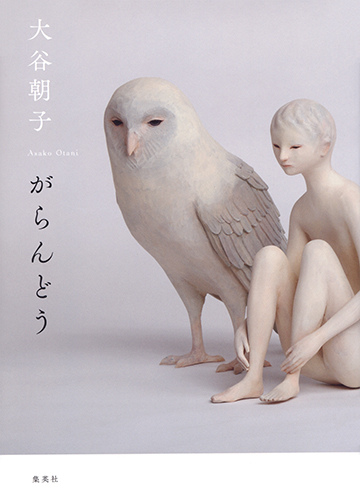
Asako Ōtani’s novella Garandō (がらんどう), which won the 46th Subaru Literary Prize in 2023, follows two 40yo women as they settle into a cozy life as adult flatmates.

Hirai recently moved in with her friend Suganuma, who suggested that they live together so they can afford a nicer apartment. The two women met as adults through their shared fandom of the boy band KI Dash, and they managed to remain friends during the pandemic despite drifting away from their other friends and family members.   

Hirai works in an office, while Suganuma is a self-employed artist who uses a 3D printer to create custom memorial figurines of her clients’ deceased pets. The two women share chores and meals, sometimes cooking for each other and sometimes going out to eat. Although they’re not romantically involved, they often fall asleep together in the living room while watching KI Dash performances on DVDs that they play on an old PlayStation 2.

When Suganuma’s star idol suddenly marries an adult video actress, Hirai takes her flatmate to the beach for a breakup vacation. Afterward, Suganuma begins dating a married man she met at the hotel bar. Hirai is jealous but understands that this is simply the way of the world.

In resignation, Hirai signs up for a dating app, but this goes poorly. Her lack of success is partially because she’s aggressively targeted by someone involved in a multi-level marketing scam, but it’s mostly because Hirai is about as asexual and aromantic as someone can be. She has a vague aspiration of having a child one day, but is that really what she wants?

For Hirai’s birthday, Suganuma ends her relationship with the sleazy married man and uses her 3D printer to manufacture a baby as a gift for her flatmate. The story closes in much the same place it began, with the two women happy and secure in one another’s company. The title of the novella, Garandō, means “empty,” and it most directly refers to the hollow centers of Suganuma’s 3D-printed figurines. This title might at first be taken to refer to the relationship between Hirai and Suganuma as well, but their friendship is anything but hollow.

Because really, what’s to stop two adult women from spending their lives happily together as flatmates? Why do two people need to be married or related in order for it to be “normal” for them to live together? Is your life really “empty” if you don’t get married and have children?

More than anything, Garandō reminds me of Banana Yoshimoto’s bestselling 1988 novel Kitchen, which presents alternate models of modern families while comforting the reader that, even if you’re not “normal,” life is still well worth living. Granted, Hirai and Suganuma are older than the characters in Kitchen, and they’re not living in the lap of Japan’s bubble-era luxury. In addition, Ōtani’s writing style is relatively sardonic and dry, especially when compared to the bubblegum pop of Kitchen. Still, Garandō is a positive story about two weirdos who manage to find happiness. Even if their lives don’t follow the standard model, they’re doing okay.

At a slim 112 pages, Garandō is a quick read. Ōtani has a wonderful sense of pacing, juxtaposing scenes of comfort inside the home with scenes of (highly relatable) social awkwardness in the outside world. I really enjoyed this book, which pulls off something I appreciate – the normalization of “difference” without resorting to sentimentality or melodrama.

What Ōtani demonstrates in this meticulously crafted novella is that people like Hirai and Suganuma are less uncommon than you might think, and that’s cool. And honestly, given that a house and a nuclear family have become distant dreams for many of us, why not join them? 

She and Her Cat

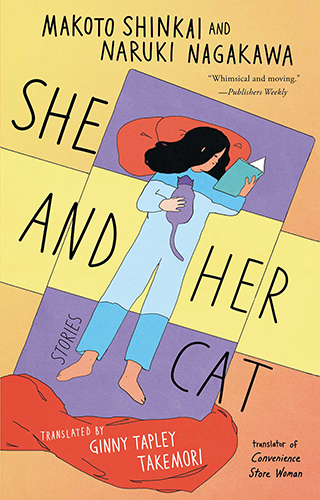
She and Her Cat collects four interlinked short stories about women and their cats. Though these stories are bittersweet, their gentleness is a source of comfort and encouragement.

The stories in She and Her Cat were written by Naruki Nakagawa, who’s mainly known as a screenwriter for science fiction anime from the mid 2000s, and the concept is based on the 1999 short indie film (which you can watch on YouTube here) created by the international superstar anime director Makoto Shinkai. I think it’s fair to say that the original short film is a representative example of the iyashikei “comfort” genre of anime, which Patrick Lum describes as “designed to be as comfy and mellow as can be.” This book, which Nakagawa wrote in his late forties, similarly uses young female characters to create a sense of living in a world where a brighter future is always possible.

The first story is a direct adaptation of Shinkai’s original short animation. A young office worker named Miyu brings home a kitten who’s been left outside in the rain in a disintegrating cardboard box. Miyu is growing apart from both her boyfriend and her best friend, and she feels as though she’s no longer able to understand the nuances of other people’s feelings. Thankfully, her new cat Shiro loves her unconditionally, and he’ll always be there for her.

The second story is about an art student who can’t find the motivation to apply to a university-level Fine Arts program, and the third is about an aspiring manga artist who was unable to make her debut and became a hikikomori after the death of her writer, who also happened to be her childhood friend. Both women find the courage to pull themselves out of their depression and take the first few steps forward – with the help of their cats, of course.

In the last story, a childless middle-aged woman finds herself alone after caring for her husband’s parents only to be left by her husband himself. As she gets older, so too does the boss of the neighborhood stray cats, and she ends up adopting him. Around the same time, her nephew has a quiet breakdown at his first job out of college, and the woman ends up sheltering him too. In return, he eagerly learns the non-corporate life skills she shares, and he naturally begins to help her manage the household. While it’s always rewarding to nurture a mutually loving and beneficial relationship with a cat, this story reminds the reader that kindness can exist between humans as well.

The narrative viewpoint of these stories alternates between the cats and their human companions. When the cats aren’t expressing their undying love for the human ladies in their lives, they’re off on their own adventures in the neighborhood, doing as cats do. Even more than the human characters, the cats have strong personalities and know what they’re about.

Comforting Japanese books about cats are currently enjoying a small cultural moment, and She and Her Cat is among the best of them. As you might expect from a book written by a professional screenwriter, each “scene” is fairly short, which makes for a quick and engaging read. Nagakawa maintains the distinctive narrative voice associated with Makoto Shinkai’s films, and Ginny Tapley Takemori conveys this straightforward gentleness perfectly in translation. In the English edition, each story is prefaced by a gorgeous full-page illustration by Rohan Eason, which only adds to the book’s charm. Exactly like the creatures it celebrates, She and Her Cat is light, nimble, and filled with character. 

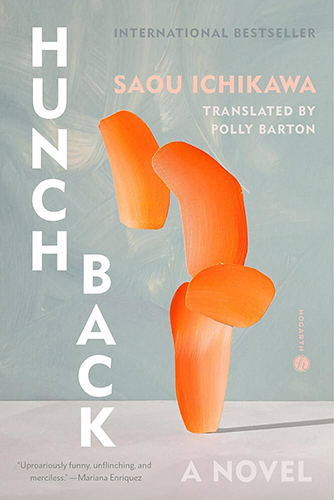
Hunchback

Saou Ichikawa’s 2023 novella Hunchback is a striking work of fiction and a major contribution to the literature of disability. Ichikawa’s brutally honest depiction of her disabled protagonist’s physicality is magnetically compelling and thrusts the reader into a world where the conveniences of the able-bodied cannot be taken for granted.  

Shaka is a resident of Group Home Ingleside, a private care facility established by her wealthy parents. Shaka owns the facility, and she collects income from several rental properties in the investment portfolio she’s inherited. In addition, she’s sitting on a trust fund so large that it has to be distributed across several banks.

Despite her wealth, Shaka’s disability confines her to a small studio apartment. While working on a PhD in Disability Studies, Shaka amuses herself by vent-posting on Twitter in between sessions of writing hardcore pornography. She donates her income to the food banks that serve unhoused people, sometimes directly and sometimes in the form of bulk orders of seasoning. Even homeless people deserve food that tastes good, she reasons.

Even as she emphasizes with the disadvantaged, Shaka describes the reality of her own physicality in painstaking detail. Because of muscular atrophy, she’s unable to breathe on her own. Due to social distancing during Covid, leaving the care facility is out of the question. Her PhD coursework is entirely online, and she digitizes academic texts with the aid of a book scanner, as it’s impossible for her to hold heavy books for long periods of time.

And why shouldn’t we have digital copies of books, Shaka demands. When the literati bemoan the digitalization of the written word, who does that benefit, exactly? Shaka’s litany of complaints against the ableism of academia is one of the many currents of anger that drive Hunchback forward. Shaka’s anger breaches the surface at regular intervals, forcing the reader to think critically about the entrenched ableism of the world many of us take for granted.

Despite being engaged in a life of the mind, Shaka has one dream – to become pregnant and then get an abortion. While she’s not particularly interested in the fantasy sex she narrates in her shallow and disposable smut stories, there’s something about the particular physicality and “human-ness” of pregnancy that she finds intriguing.

A golden opportunity falls into Shaka’s hands when a young male caretaker named Tanaka reveals that he’s been stalking her on Twitter and secretly reading her erotic fiction. Unfortunately, Tanaka is the worst sort of incel. Not only can he not get a girlfriend, he only became a caretaker because he couldn’t cut it in the corporate world. In his eyes, he’s just as failed by society as Shaka – who, he snaps, enjoys wealth most people could never dream of.

Out of mutual hatred, Shaka and Tanaka orchestrate a tryst. As you might imagine, it doesn’t end well. Suffice it to say that, if you’re looking for an uplifting message, you won’t find it here.

The end of Hunchback mirrors its beginning, with a prolonged description of a sexual encounter. The book’s closing scene is ostensibly narrated by Tanaka’s sister, who takes on a sense of personal responsibility for her brother’s crime of murdering a disabled woman in a care facility by literally choking her to death with his cum. 

I can’t help but suspect that this is once again Shaka writing erotica, albeit with a slightly more literary bent. The scenario is still improbable, but now she’s writing more for herself, fleshing out the characters (so to speak) by imbuing them with personalities and backstories.

Her encounter with Tanaka may have been an abject failure, but Shaka still desires “human” experiences and contact with the broader world. After all, writing – even writing erotica – is about so much more than coming up with a story and posting it online. Shaka never becomes a softer or kinder person, nor would I want her to. What she gains is motivation to be more present in the outside world as she sharpens her insight and hones her craft. 

Ichikawa writes based on her own experience as a disabled person, and Shaka’s voice is focused, specific, and driven. Shaka’s narration pulls the reader through the story with sharp observations and darkly comedic drama, and the steady forward momentum is just as entertaining as it is compelling. In many ways, Hunchback reminds me of Convenience Store Woman, and I’d recommend this book to readers who are receptive to unexpected charm and aren’t afraid to have their comfortable perceptions of reality challenged.

May You Have Delicious Meals

Junko Takase’s 2022 novella May You Have Delicious Meals is a small human drama about workplace bullying. It’s also a critique of Japanese corporate culture that simultaneously pokes holes in the iyashikei “comfort” reading meant to help people deal with stress. Contrary to what bestselling Japanese novels about cats and coffee shops would have you believe, it turns out that lovingly prepared homemade food cannot, in fact, fix a toxic workplace environment.

Ashikawa is a sweet young woman who transferred to a branch office in Saitama, a suburb of Tokyo, after facing harassment at her previous post. Due to her lingering trauma, Ashikawa has requested a reasonable accommodation – that she not be expected to work overtime. To make up for the inconvenience to her coworkers, she regularly brings homemade desserts to share with the office.

Ashikawa is not the hero of this story. In fact, her perspective is entirely absent.

The majority of the novella is narrated from the point of view of Nitani, Ashikawa’s secret boyfriend. Nitani has allowed Ashikawa to latch onto him, but he has no respect for her at all. He hates sweet food, and he thinks Ashikawa’s baking hobby is annoying. The only reason he tolerates her is because she seems like the sort of attractive and agreeable woman that a man in his position should be dating.

Nitani is friendly with an older female colleague named Oshio. Oshio resents Ashikawa, whom she feels gets special treatment. Why should Ashikawa have a lighter workload and be spared stressful job responsibilities just because she bakes cookies?

During a late-night drinking session, Nitani and Oshio decide to bully Ashikawa, resolving to throw away her desserts uneaten in trash cans that everyone can see. Oshio gives up on this bullying fairly early on, but she still ends up taking the blame when other people at the office surreptitiously start to join in. No one ever suspects Nitani, least of all Ashikawa herself.

I get the feeling that Penguin might be attempting to market May You Have Delicious Meals as a social comedy, but this is misleading. All of the characters are unpleasant, and the situation is deeply awkward. Takase’s story contains sharp social critique, but it’s not funny. Perhaps this novella might be described as cringe comedy, except without the comedy; it’s just cringe.

Nitani is a piece of work, and I hate him. He’s super gross. If you’ve ever worked in an office, you’ve probably encountered this exact type of guy – someone who hates women but still expects them to sleep with him. Takase’s portrayal of this species of greasy slimebag is immaculate.  

Oshio is much more relatable. Even though she’s not the primary viewpoint character, I still feel that this is her story. Oshio is critical of Japanese workplace culture, but she grits her teeth and deals with the unpleasantness of overtime, useless paperwork, angry phone calls, and branch office transfers. If she weren’t doing the work, she reasons, it would be unfair to the person forced to pick up her slack. Still, her coworkers aren’t her family, and she resents Ashikawa for cluelessly attempting to blur the necessary line between personal and professional.   

In the end, Oshio has the right of it. No matter how friendly a workplace pretends to be, the pretense of comradery isn’t going to stop the bullying and scapegoating that arise from stress and overwork. The ice-cold “fuck all y’all” speech Oshio gives at the end of the book isn’t quite theatrical enough to be cathartic, but still. Good for her.

Meanwhile, Ashikawa’s “happy ending” is chilling. I’m sure that circumstances seem rosy from her perspective. The person whom she assumes is the office bully has been vanquished, and her romantic relationship with her coworker is openly acknowledged by everyone in the office. Since the reader has seen these developments through Nitani’s hateful eyes, however, we’re painfully aware that Ashikawa is delusional about how the people around her actually feel.

May You Have Delicious Meals is the polar opposite of feel-good books about food and friendship. Reading Junko Takase’s prickly little workplace drama makes you feel awful, and that’s the point. It’s bleak, it’s disheartening, and it’s a brilliant piece of writing. I have nothing but appreciation for May You Have Delicious Meals, which is a much-needed antidote to the mindlessness and absurdity of the current trend of cutesy Japanese comfort novels.

Nails and Eyes

Kaori Fujino’s Nails and Eyes collects a novella and two short stories whose crystal-clear prose is darkened by the shadow of creeping psychological horror. The theme of family lies at the heart of these stories, especially as it intersects with the fear that those closest to us may deliberately choose not to see obvious but unpleasant truths.

In the third story, “Minute Fears,” a woman named Mika plans to attend the wedding reception of a college friend. Since she’s started a family, Mika has rarely gone out on her own, and she’s been looking forward to the party. Her son Daiki begs her not to go, as he’s been disturbed by an urban legend surrounding a ghost rumored to haunt the local playground. After a brief struggle with Daiki, who doesn’t want to be left alone, Mika goes to the reception late and leaves early. When she comes home, Daiki confesses his fear of the ghost, and Mika resolves to take him to the playground herself to prove that the urban legend isn’t true.

Whether the ghost exists is left to the reader’s imagination. Instead, the true horror lies in the image of Mika dragging her terrified son into the night. Or perhaps, if your sympathies lie elsewhere, the horror is hidden in the homebound years that Mika has had to endure in order to care for her child while her friends enjoy their lives and careers in the outside world. 

The second story, “What Shoko Forgets,” is equally ambiguous yet just as disturbing. After a mild stroke, Shoko has been living in an elder care facility for almost half a year. Her family visits regularly, and she receives ample attention from the staff. A polite and energetic young man named Kawabata is especially gentle, and he seems to have a special fondness of Shoko.

There’s something strange about Kawabata’s behavior after dark, however; and, for some reason, Shoko finds herself thinking about sex in a way she hasn’t for years. It’s possible that there might be a connection between Kawabata and the man Shoko imagines lying next to her at night, but both her eyesight and her memory have grown hazy. In any case, it’s no use trying to explain her muddled thoughts about the situation to her daughter or granddaughter, who so kindly come to visit a forgetful old woman.

The collection’s centerpiece novella, “Nails and Eyes,” is narrated from the perspective of a young girl who lost her mother to an unexplained incident. Her father brings home his younger lover, and the narrator addresses this woman directly through the story. She recounts the minute details of the woman’s life, from her affair with a bookstore owner to her obsession with the home décor blog once maintained by the narrator’s mother.

The narrator also describes her own behavior as a child who has clearly been traumatized by her mother’s suicide but largely ignored by the adults in her life. The narrator refuses to be anywhere near the balcony where her mother died, and she sits in the corners of the apartment gnawing at her nails, which become serrated and sharp. To her credit, the woman responsible for the child’s care makes a clean break with her lover and begins to take a more active interest in her charge’s welfare. This change of heart comes too late, however, and the story ends with an incredibly upsetting psychological break.

To be clear: if you have phobias related to eyes and/or fingernails, this book might not be for you. 

At 140 pages, Nails and Eyes is easy to breeze through, especially in Kendall Heitzman’s smooth and weightless translation. Still, Fujino’s fiction rewards time and attention, as well as repeated readings. There are layers to her deceptively simple prose, and any one of these stories has the potential to generate multiple lines of speculation. Nails and Eyes is a fascinating and disquieting collection that will be appreciated by readers who enjoy literary short horror fiction like Yoko Ogawa’s Revenge and Mariana Enriquez’s Things We Lost in the Fire.

Idol, Burning

Rin Usami’s Idol, Burning is only 115 pages long, but this masterfully translated literary novella paints a vibrant portrait of a young woman’s search for community in online fandom.

School has always been tough for Akari, whose dyslexia makes writing Chinese characters by hand extremely difficult. Akari has no problem typing, however, and she pours all of her energy into a fanblog devoted to her oshi Masaki, an actor and member of a popular boy band. During the summer, Akari works as many shifts as she can pick up at her part-time job so that she can buy Masaki’s merch and attend his concerts.

Akari’s world begins to fall apart when Masaki punches an overeager fan, thus becoming the target of intense social media discourse. Akari, who has found friendship and personal fulfilment in her fandom, can’t help but take this abuse personally. To make matters worse, when she returns to high school, she’s informed that she’s failed her junior year.

Usami is unflinching in her portrayal of online cultures, and she’s refreshingly honest about the adverse effects that flamewars can have on vulnerable people seeking support in fandom communities. Akari is never presented as pathological, and the members of her family offer support despite not really understanding the life she leads online. If there’s a villain in this story, it’s the Japanese education system, which refuses to accommodate Akari’s learning style while constantly pressuring her to “try harder.”  

Usami’s writing shines during the quiet scenes of loneliness Akari experiences as she watches her communities crumble apart in real time. While it’s easy to mock the intensity of pop star fandom, Akari’s story helps the reader to understand how the power of a dream can keep a teenager moving forward, especially when they feel that their paths are limited in the offline world. Akari is a beautifully unique and well-realized character, but her failed attempts to find meaning and belonging carry much broader implications concerning how Japanese society views difference and disability.    

The English translation of the book includes short essays by the author and her translator Asa Yoneda, as well as short statements from the cover designer (surrealist photographer Delaney Allen) and the illustrator (comic artist Leslie Hung). The novel’s story stands on its own, but it’s a pleasure to read about the inspirations of the writers and artists who brought it to life.

Asa: The Girl Who Turned into a Pair of Chopsticks

Natsuko Imamura’s Asa: The Girl Who Turned into a Pair of Chopsticks collects three short literary thought experiments that go to strange places. Each of the characters is missing something essential, and where that lack ultimately leads them is impossible for the reader to predict.

Asa, the eponymous “girl who turned into a pair of chopsticks,” has trouble getting other people to accept any sort of food that she’s touched with her hands. Meanwhile, Nami, the “Girl Who Wanted to Get Hit (and Eventually Succeeded),” is strangely unable to be touched by other people at all. Asa’s quest to understand what makes other people perceive her as unclean has fantastic consequences that become humorous in their absurdity, while Nami’s desire to be touched sinks her into a dark mire of self-harm.

In my favorite of the three stories, the protagonist of “A Night to Remember” claims to have spent fifteen years laying around and doing nothing after graduating from school. This woman is so lazy, in fact, that she spends the majority of the story casually slipping across the ontological boundary that separates human and animal. If “A Night to Remember” were a story about a cat, it would be super cute, but the narrator is definitely a person. The resulting uncanniness is superb.

It’s fitting that the collection’s Afterword is contributed by Sayaka Murata, the author of Convenience Store Woman and Life Ceremony. “These stories give the reader another way of seeing,” Murata writes, “transfiguring what you should be seeing, and sometimes contaminating it.” Like Murata, Imamura refuses to allow the reader to take “common sense” for granted. The stories in The Girl Who Turned into a Pair of Chopsticks thereby offer a glimpse into a strange world where socially acceptable normality doesn’t apply. Imamura’s visions are playfully surreal, occasionally upsetting, and never boring.

ハンチバック

Saō Ichikawa’s ハンチバック (Hunchback), which won the prestigious Akutagawa Prize for emerging writers, is about a woman with a congenital spinal condition who lives in a group home and posts her secret desires and frustrations on Twitter. It’s an amazing story and a brilliant piece of writing.

The protagonist, Shaka Izawa, has been provided for by her wealthy parents. Although she doesn’t need the money, Shaka works as a freelance writer, mainly penning reviews for stores and restaurants she’ll never be able to visit in person. She also writes explicit erotica, a selection of which opens the novella.

Hunchback is written in a playful and accessible style, but it asks serious questions about disability. Why shouldn’t Shaka create erotica? Why shouldn’t she experience desire? Why shouldn’t she have sex? These questions become less abstract when one of Shaka’s caretakers discovers her secret writing account, and she presents him with a proposition – she’ll pay him to have sex with her.

I was so intrigued by Shaka’s story that I read Hunchback (which is ninety pages long) in one sitting. Ichikawa’s description of the daily life of someone with severe mobility impairments is honest yet compassionate, and her anger at Japanese society’s ingrained ableism is powerful and resonant.

Diary of a Void

Diary of a Void is about a woman in her mid-thirties who lies about being pregnant and decides to run with it. Emi Yagi’s short novel isn’t quite a comedy, but it’s sharp and insightful and a lot of fun to read.  

Shibata is a relatively normal person whose hobbies include going to live shows and drinking with friends. She works at a small distribution company that specializes in cardboard paper cores. Even though she’s been working at the company for a few years, her male colleagues still expect her to handle menial jobs such as making coffee and distributing mail. These chores are especially annoying when she’s trying to complete her actual work by a deadline, and she often ends up staying at the office until late in the evening.

Shibata is a full-time salaried employee, but her colleagues treat her like a part-time “office lady” simply because she happens to be female. She finally snaps when her manager stops by her desk and interrupts her to ask that she clear the dirty coffee cups from a meeting room. Why can’t the men in her office take their own coffee cups to the kitchen, Shibata wonders. If the manager has enough time to pester her, why can’t he pick up the cups himself? Why can’t he ask one of her junior colleagues?

After her manager bothers her about cleaning the cups one too many times, Shibata tells him that she’d prefer not to. The smell of cigarettes in the meeting room makes her nauseous, she says, because she’s pregnant. Not only does her manager take this statement seriously, but everyone in Shibata’s office suddenly starts treating her like a human being instead of a servant. She therefore decides to keep the lie going, a decision that seems less like a malicious falsehood and more of a reasonable survival strategy.

Despite the novel’s title, it’s hard to think of Shibata’s imagined pregnancy as a “void.” She applies for a maternity badge and keeps a pregnancy diary in order to lend credence to her story, but she’s not lying to herself. What Shibata is doing is finally leaving work early enough to cook dinner instead of scrounging for leftovers from the nearly-empty shelves of a late-night supermarket. She makes time for get-togethers with friends and subscribes to Amazon Prime to catch up on all the movies she’s always wanted to watch. She treats herself to nice meals on the weekends, and she makes friends at a local “mommy aerobics” class to stay in shape.  

During the day, Shibata has an easier time at work, where her colleagues have finally started to make the effort to share the office chores. At night, she goes on long walks and reflects on her life and what it might mean to be a mother. Toward the end of the novel, Shibata encounters a friend from her aerobics class who has taken to walking with her sleepless infant late at night in order to prevent the baby from making noise. This exhausted woman delivers a cri de coeur about the state of motherhood in Japan, and every single word she says is true. I won’t spoil Shibata’s response, but it’s very good.

The author’s depiction of Japanese workplace culture is fascinating in its specificity while still being relatable to anyone who’s suffered through an office job, and the reader doesn’t have to be female to appreciate Shibata’s frustration with gendered double standards, which put the male characters in a number of awkward situations as well. In the end, Shibata isn’t a sage or a saint – she’s still the sort of morally dubious person who would lie about being pregnant. Some of Shibata’s takes on social issues aren’t great, and she occasionally comes off as unfairly judgmental, but her realness keeps her grounded as a narrator.

Save for a few choice depictions of clueless men at Shibata’s office and equally clueless expectant mothers, Diary of a Void isn’t particularly satirical or comedic, but nor is it heavy or depressing. Like Shibata herself, the reader occasionally has to run with the story of a fake pregnancy without asking too many questions. Still, Diary of a Void is an interesting journey with a fun ending. The novel resists sentimentality at every turn, and I found it gratifying that no life lessons are learned by Shibata or anyone else. Shibata is a great character, but the reader is the one who experiences a major change in perspective. Translators David Boyd and Lucy North convey Shibata’s dry wit and merciless observations with pitch-perfect tone and style, and the closing line is an absolute banger.