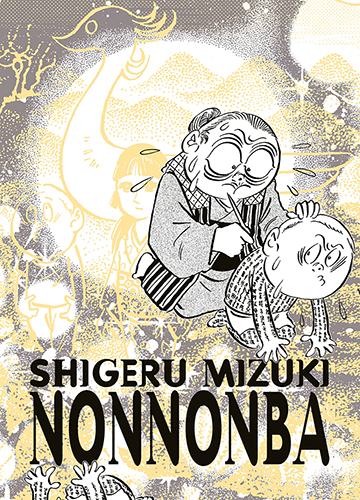
NonNonBa

Shigeru Mizuki was one of the twentieth century’s most prolific and influential manga artists. Today he’s known primarily for documenting the culture and folklore of his childhood in rural western Japan. The single-volume graphic novel NonNonBa, originally published in 1992, is perhaps Mizuki’s most accessible work, as well as a fantastic gateway into the study of indigenous Japanese religion and folklore.

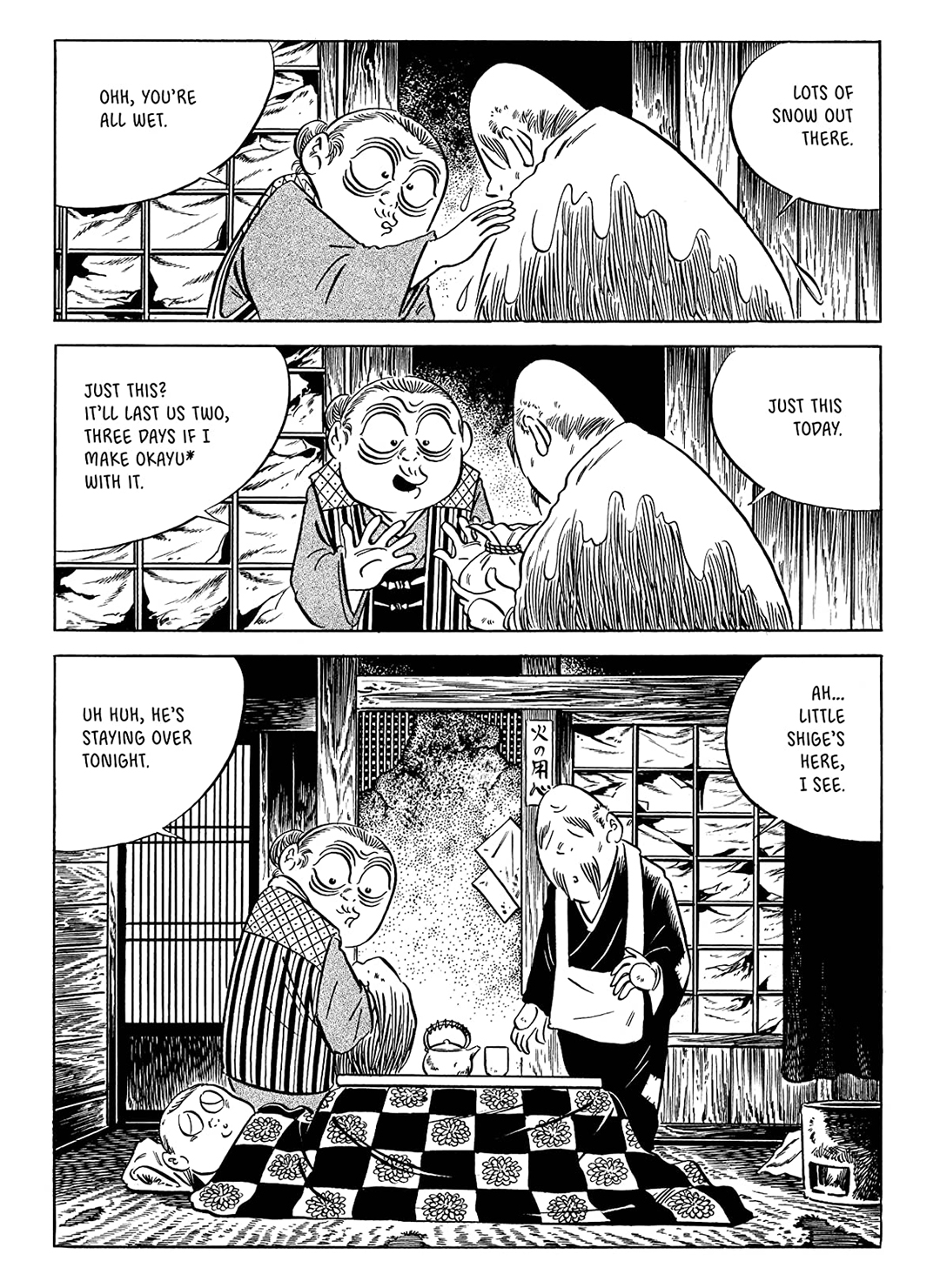
NonNonBa tells a coming-of-age story about the artist’s childhood relationship with an elderly family friend, the poor but kind Nonnonba of the title. Nonnonba is a repository of local folklore, and she sincerely believes in yokai, a term that refers to any number of species of Japanese fantastical creatures. The world of NonNonBa is indeed populated with yokai, but the manga is primarily a realistic account of life during the early 1930s.

NonNonBa opens with an introduction to the coastal town of Sakaiminato in the Kansai-region prefecture of Tottori. Despite being a port on the East Sea, the town wasn’t wealthy, and most houses remained unchanged from the nineteenth century. Mizuki’s family was relatively comfortable, and he lived with his mother, his two brothers, and his father, who worked at a bank but had creative ambitions and operated a small cinema on the side. Nonnonba was occasionally employed by the family to help with housework and childcare, as she was by several families in town. 

The artist, who goes by the name of Shige, is a mediocre student but deeply fascinated by the natural world, often bringing home strange objects like animal bones in order to study and draw them. When he’s not at his desk, Shige plays at being a soldier in the “boy army” that roams around the town and beach staging pretend wars with other roving bands of children.  

Shige’s uncomplicated boyhood is disrupted by Chigusa, a cousin from Osaka who is sent to Sakaiminato to recover from tuberculosis. Nonnonba cares for Chigusa while she’s bedridden, and the girl is just as interested in Nonnonba’s yokai stories as Shige is himself. The two become friends, and Shige is heartbroken when his cousin succumbs to her illness. He begins drawing in earnest, no longer as invested in the boy army as he once was.

After losing Chigusa, Nonnonba begins working for a family from the city that has moved into a house rumored to be haunted. She’s charged with the care of Miwa, a young girl who lives in the family’s house and seems to be able to see and hear yokai. Shige believes the girl is a victim of human trafficking, which seems highly likely given the number of other young girls who have passed through the house. Regardless, there’s not much he can do about this as a young boy.

As he develops a close friendship with Miwa, Shige matures, and he understands that growing up isn’t growing away from yokai, but rather realizing that the stories of these creatures are part of a much larger world. Despite their flaws, Shigeru’s mother and father are both portrayed sympathetically, as are his brothers and friends. NonNonBa overflows with sympathy and compassion, gently poking fun at the characters while also encouraging the reader to see them in their best light.  

Despite being published more than thirty years ago, NonNonBa doesn’t feel dated. The stylizations of Mizuki’s artwork are timeless, and his character designs are clean and fresh. The high quality of Jocelyne Allen’s translation contributes to the contemplative yet entertaining tone of the story, whose episodes move briskly but never feel cartoonish. 

Through Mizuki’s sensitive storytelling and evocative artwork, NonNonBa celebrates how folklore inspires imagination and facilitates resilience in the face of loss and change. Despite the occasionally heavy subject matter, this graphic novel is accessible to readers of all levels, and I imagine it would be a fantastic text to spark discussion about history, family, and folklore in the classroom.
うみべのストーブ

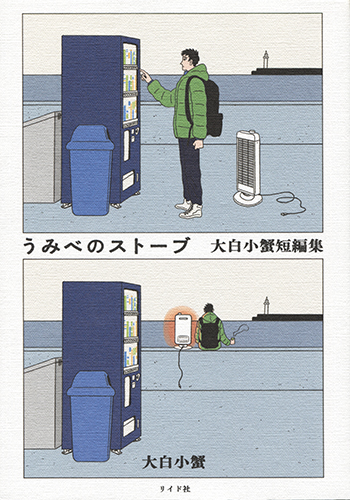
Umibe no Stove (うみべのストーブ), originally published in 2022, is a collection of seven short manga stories by Kogani Ōshiro. In a surprising but well-deserved turn of fate, the collection was listed as the #1 women’s title in the 2024 edition of the Kono Manga ga Sugoi! (“This Manga Is Awesome”) series of mass-market reference books. Ōshiro’s magical realist stories are difficult to categorize, but what they share is a gentle and bittersweet appreciation for the small challenges and victories of growing older and moving on. 

The title story is about a man named Sumio whose girlfriend breaks up with him on her birthday. Left alone in the apartment they once shared, Sumio huddles next to the space heater and cries. The space heater takes pity on him and reveals that it can talk. It suggests that they go to the beach together, a trip Sumio never made with his girlfriend. Sumio agrees and spends the night sitting on a concrete embankment overlooking the ocean as he talks with the space heater and finally accepts the fact that his girlfriend isn’t coming back. Even though it’s unplugged, the space heater keeps him warm by sharing its memories of happier times.

The second story, 雪子の夏 (Yukiko no natsu), is about a trucker who encounters a Yuki Onna while stuck in traffic on a snowy night. The childlike yōkai doesn’t particularly want to kill the trucker; and, after they talk for a bit, she reveals that it’s her dream to see summer fireworks. The trucker invites the Yuki Onna to share her apartment until summer, at which point she can use her refrigerated cargo space to take her guest to see a summer festival. While watching the fireworks explode in the night sky, the Yuki Onna is so overjoyed that snow begins to fall.

My favorite of the stories, 海の底から (Umi no soko kara), is about a young woman named Fukatani who always dreamed of being a professional novelist. Her two friends from college both managed to become published authors after they graduated, but Fukatani lost her motivation to write after starting an office job. During a late-night drinking session, Fukatani’s friends ask her if she’d really be happy never writing another story, but she doesn’t know what to say. She used to love writing, but she just hasn’t felt any inspiration recently.

Later, Fukatani’s boyfriend comforts her, saying that there’s no rush for her to begin writing again. After college, he explains, she found herself standing at the base of a pyramid on the bottom of the sea. She’s been working to climb each step – finding a job, paying off student loans, and so on – but when she gets to the top and rises above the surface of her ocean of worries, she’ll be able to feel the wind of creativity again. This sounds like a silly analogy, but the way Ōshiro illustrates the process of coming up for air is remarkably cool and refreshing.

Something I love about Umibe no Stove is the non-commercial quality of Ōshiro’s visual style. Admittedly, the art of some of the stories feels a bit amateurish, but I find this charming. Even when Ōshiro’s drawings are unpolished, her sense of sequential art is unflaggingly excellent. Her use of panels in Umi no soko kara, for instance, creates a lovely sense of space during the protagonist’s conversation with her boyfriend. Even if Ōshiro’s drawings aren’t always technically precise, her manga still has incredible emotional impact.

I want to recommend this book to manga fans interested in a more indie style of Japanese comics, perhaps along the lines of the graphic novels published by Western presses like Fantagraphics and Drawn & Quarterly. Umibe no Stove may seem unassuming on the surface, but this manga is something special.

As an aside: if you’re looking for something similar that’s been translated into English, I’d like to recommend Natsujikei Miyazaki’s short story collection And the Strange and Funky Happenings of One Day. It’s weird, it’s fun, and the indie manga publisher Glacier Bay Books has done an amazing job with the translation and editing.

Kamimachi

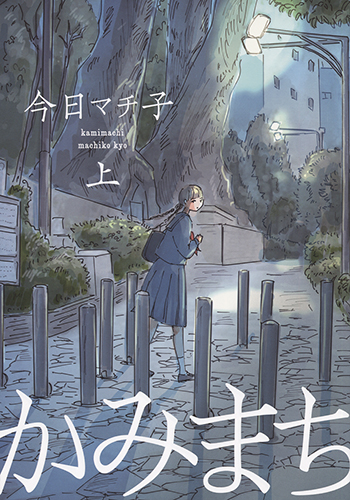
Machiko Kyō’s Kamimachi (かみまち) was serialized from June 2019 to December 2022 and published as a two-volume graphic novel in August 2023. The story follows four homeless teenage girls who find themselves at a privately run youth shelter called Kami No Ie (“Family of God”) in the Tokyo suburbs.

Although he initially seems kind and welcoming, the middle-aged man who runs this shelter is a sexual predator, and he has assaulted and murdered one of his young charges prior to the beginning of the story. The ghost of this young woman, in the form of a Christian angel, helps the girls find the courage to escape the Kami No Ie shelter.

Each of the four main characters in Kamimachi has become homeless after escaping a toxic home environment.

Uka is the only child of a single mother who projects her loneliness and frustrated ambitions onto her daughter. The story begins as Uka leaves home and seeks shelter by means of a roomshare app. After a number of awkward situations, Uka comes to the attention of a group of men who use the app to recruit sex workers. These men force Uka into a situation in which she’s expected to trade a night at a short-term rental space for sex. She breaks out of the apartment and wanders the streets of Tokyo before finding herself at the Kami No Ie shelter.

Uka’s closest friend at the shelter, Nagisa, has been sexually abused by her stepfather for years. She finally flees from home after her mother witnesses one of these assaults and turns away in disgust.

Arisa was raised as a television idol by a single mother. After her mother’s sudden death in an accident, Arisa is given to the care of a talent manager who steals her inheritance and financial assets, leaving her destitute.

Yō is one of five siblings. She’s so neglected by her family and bullied by her brothers that she finds it preferable to sleep in subway stations. Eventually she stops returning home altogether.  

For each of these young women, Tokyo becomes a wilderness whose anonymous open spaces serve as a refuge from the enclosed interiors where they’re coerced into enduring abuse. Kyō draws indoor scenes using small panels with blank backgrounds, and these scenes often feature close-ups of the characters’ faces in moments of distress. Meanwhile, Kyō depicts outdoor scenes with large panels that frame the characters with trees and buildings. The expansive outdoor settings often serve as the stage for small moments of kindness and emotional clarity.

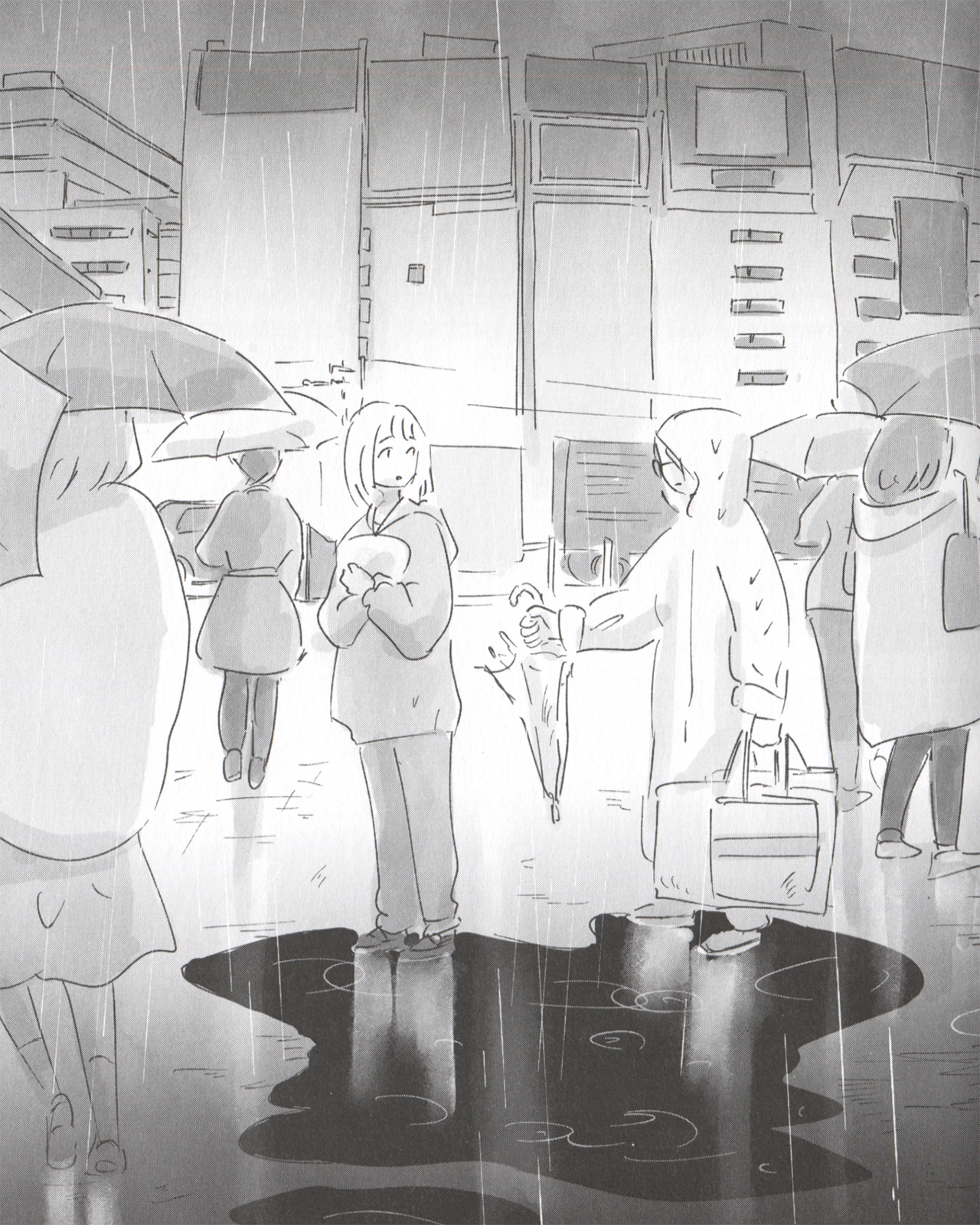
In Chapter Three, for example, Uka flees into the night after an attempted sexual assault at a roomshare apartment. After her escape, she wanders through the rain with nothing but the clothes on her back. Out of context, the rainy cityscape may seem bleak, but the large panels filled are a visual relief after the oppressively small and claustrophobic panels that depict the apartment.

One of the anonymous figures passing in the rain, whom the reader later learns is Yō, stops beside Uka to give her an umbrella. Page 71 opens with a close-up of Yō’s extended hand before spreading into an open panel in which Uka and Yō stand at the center of a composition framed by misty buildings and puddles on the concrete. The two small figures reaching out to one another are enclosed in a soft curtain of rain, and the sense of relief at being a part of a larger world is palpable.  

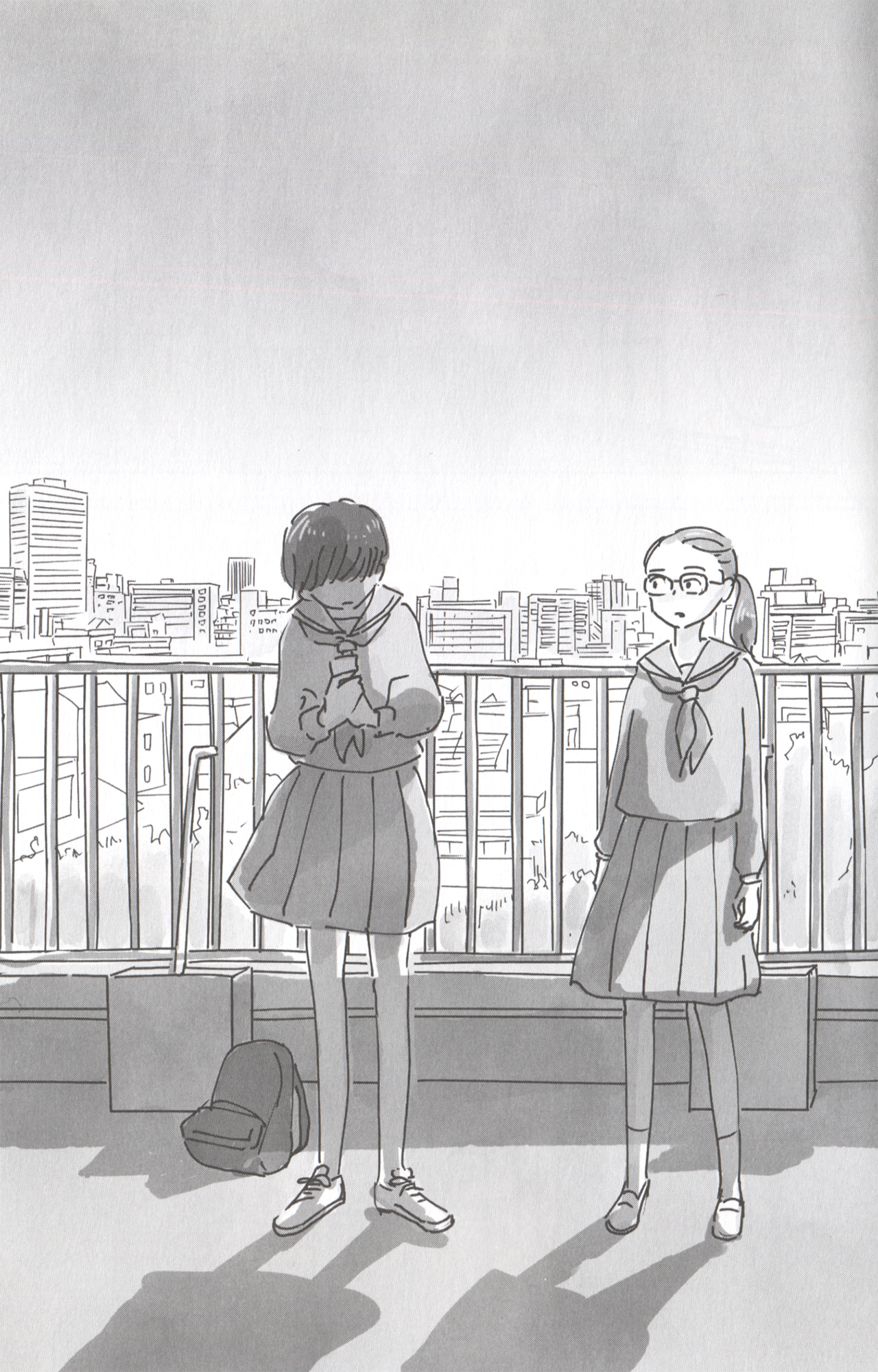
Chapter Seven contains a similar scene in which the open sky and background cityscape suggest freedom from the violence that occurs behind closed doors. Nagisa, who’d encountered Uka in a roomshare arrangement, takes Uka’s discarded uniform and attends school in her place. One of Uka’s former classmates approaches Nagisa, offers to share her lunch, and asks that Nagisa talk with her on the roof. Nagisa initially tries to be normal, showing the girl photos of her mother and stepfather’s new infant daughter.

During this scene, the panels become progressively smaller until Nagisa finally admits the truth about having left her family. The shift to a full-page panel depicting the city’s jumble of buildings spreading under the open sky signals Nagisa’s admission that something has to change. This moment also serves as the catalyst for Uka’s classmate to begin searching for her missing friend, a decision that ultimately results in Uka’s rescue from the Kami No Ie shelter.

The openness of Tokyo cityscapes in these scenes suggests that the sort of hidden abuse endured by these young women needs to be brought into the open and exposed to the light of public scrutiny. Along those lines, I can’t help but feel that Kyō’s depictions of outdoor spaces in Kamimachi also reflect the artist’s emotional response to the Covid pandemic. For people in precarious situations, being physically stuck inside often exacerbated the experience of feeling trapped within oppressive social systems.

As an artist who documented the pandemic years through evocative illustrations posted to Instagram, Kyō’s project is not simply to depict the beauty of architecture and greenery within the city, but also to comment on the importance of open outdoor “third places” for young people suffering from social pressure and economic strain. Kamimachi doesn’t provide easy solutions, but it’s cathartic to see the issue of youth precarity brought out into the open air. 

Machiko Kyō is a prolific and award-winning artist whose illustration collections have been celebrated by The Comics Journal (here). If you’re interested in reading more about the artist’s work, I published a short essay on her 2013 graphic novel Cocoon – whose animated adaptation is scheduled to premiere on NHK in Summer 2025 – on Women Write About Comics (here). Here’s hoping that English-language readers will be able to experience Kyō’s compelling and thought-provoking work in the near future.

Hoshikuzu Kazoku

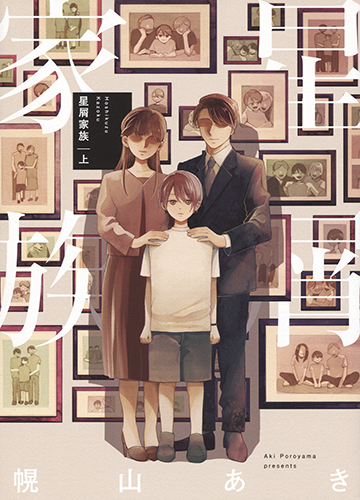
Hoshikuzu Kazoku (星屑家族) is a two-volume graphic novel set in an alternate universe where parents are required to obtain a license to raise children. To qualify for a license, a prospective family is asked to undergo an audition with a homestay student. This auditor, who is often an orphan raised in a government-run facility, evaluates the family’s fitness by deliberately behaving badly and provoking difficult situations. 

An auditor who goes by Hikari is assigned to Daiki and Chisa Hirokawa, a young couple who live on the grounds of a Shinto shrine. During their initial interview, Daiki surprises Hikari by openly requesting that their family be denied a childrearing license. Daiki claims to be happy living with his wife as a couple, and he shares his suspicions that Chisa doesn’t actually want children. With that out of the way, Daiki says, the three of them can enjoy the homestay visit without any pressure or expectations.             

Chisa and Daiki genuinely seem to be happy together, but Hikari soon notices that Chisa is the target of a longstanding prejudice held by people in the neighborhood. Chisa’s mother killed her father when she was a child, and she’s been ostracized ever since. Along with her foster father, who once managed the shrine, Daiki was the only person who was kind to her. Now that she and Daiki have married and set up a household at the shrine, Chisa feels trapped within a community she can’t escape. Why, then, does she want a child so badly? And is it Hikari’s place to get involved?

Hoshikuzu Kazoku is a high-stakes family drama that presents a moral conundrum with no easy solutions. If the government creates regulations to ensure a well-ordered society, what happens to the people whose lives are more complicated than the provisions allowed by the legal code? If there’s room for flexibility in the bureaucratic system that enforces the law, who should have the right to grant exceptions? And more specifically, in a country witnessing its birth rate decline in response to the disintegration of community support structures, what are the limits of government intervention?

Even putting such questions aside, Hoshikuzu Kazoku is compelling by virtue of its problematic yet still sympathetic characters. Hikari, Daiki, and Chisa each bring loads of emotional baggage to the table, but they do their best to communicate to the limited extent of their abilities. Despite their many flaws and the odds against them, I wanted these characters to be happy.

Aki Poroyama’s writing, dialogue, and pacing are all excellent, and the visual language of the manga serves to set the mood and create dramatic impact. I wasn’t familiar with the work of this artist, and I was amazed by the polish of this graphic novel. I’d recommend Hoshikuzu Kazoku to mature readers looking for socially conscious speculative fiction driven by complicated human stories.