The Place of Shells

Mai Ishizawa’s short novel The Place of Shells, which was awarded an Akutagawa Prize in 2021, follows a Japanese woman pursuing her PhD research in European art history at a university in the German town of Göttingen. For a year and a half, she’s shared an apartment with a fellow grad student named Agatha, as well as Agatha’s dog Hector.

Around the late-summer Obon festival, when the spirits of the dead visit the world of the living, the narrator talks to her old classmate Sawata, who studied art history with her as an undergrad at a university in Sendai and currently works as a museum curator. Over Skype, Sawata tells her that their friend Nomiya will be visiting Göttingen for a brief period. This is odd, the narrator admits, as Nomiya disappeared during the March 2011 tsunami and has been presumed dead for nine years.

Nomiya’s sudden appearance isn’t the only strange thing happening in Göttingen. One of the town’s landmarks is its Planetenweg, where memorials representing the sun and planets are placed according to scale. Now that Pluto is no longer a planet, however, its memorial has been sighted in odd places, seemingly at random. In addition, Agatha’s dog Hector has been digging up mysterious bits of rubbish in the forest, and each discarded item is connected to the secret memories of the people in the narrator’s circle of friends. To make matters even more bizarre, the narrator painlessly begins to grow a set of human teeth on her back.

The Place of Shells doesn’t really have a plot, and none of these surreal occurrences are mysteries to be solved. Instead, the narrator reflects on the nature of memory as she comes to terms with the March 2011 tsunami and what she lost in the disaster, as best illustrated by this passage toward the end:

What I had been afraid of was the distortions of memory caused by emotions and the passing of time. That was where forgetting began. What my feet had felt as they went tramping around that seaside town, the scenes my eyes had taken in, the smell of the sea that rushed into my nose – these memories didn’t remain with me as raw sensations, but morphed into a distant narrative. That oblivion concealed more than just the dead who hadn’t returned to land.

As the narrator comes to terms with the constructed nature of her memories of trauma, she encounters a number of ghosts that manifest in cozy apartments and relaxed strolls through the beautiful German town. For most of us, the ghosts of the past have little to do with darkness or shadows; rather, they walk casually beside us during the day. While giving the reader a beautiful environment to explore through careful and attentive prose, Ishizawa encourages reflection on grief as refracted through the passage of time.

I’d also like to mention an aspect of this novel that was immensely appealing to me personally. For various reasons, my frame of intellectual reference is skewed away from Europe, and I’ve always wanted someone who doesn’t assume a thorough knowledge of Christianity to teach me about Western art history. The Japanese narrator (and, I suppose, the academic author speaking through her) presents an accessible discussion of her research on German artistic portrayals of Christian saints that I found fascinating. The Place of Shells is a meditation on art as much as it is on memory, and I feel as though I gained a more grounded and relatable perspective on the sort of medieval European art that I always passed by without understanding in museums.

In doing a bit of research of my own, I realized that each of the women in the narrator’s circle of friends has a connection to her saintly namesake that Ishizawa communicates through imagery both mundane and fantastic. Over the course of the story, the narrator makes something of a pilgrimage through overlapping systems of symbols in a way that mirrors her own academic study of religious art. If a reader were to draw a map of these symbols, I imagine that the constellations would be quite dense, but I found it satisfying simply to follow that narrator’s meanderings without imposing a definitive sense of meaning.

Mai Ishizawa reminds me of Yoko Ogawa in her ability to create a subtle sense of atmosphere through mundane descriptions of calm and lovely places that gradually become eerie through an accumulation of otherworldly imagery. I’m also reminded of the quiet and gentle surreality of Haruki Murakami’s 1982 novel A Wild Sheep Chase, especially in terms of the narrator’s time in the woods and proximity to historical palimpsests overlaid onto daily life.

The Place of Shells is a slow novel to be savored. A spiraling shell is an apt analogy for the style of narration, which only gradually approaches its central theme through ever-smaller circles. Ishizawa’s writing, which Polly Barton has translated with pitch-perfect clarity, is gorgeous and well worth taking a page at a time as the reader, like the narrator, softly explores a world made beautiful and strange through art and memory. 

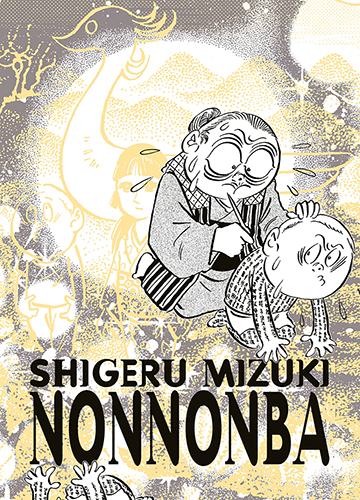
NonNonBa

Shigeru Mizuki was one of the twentieth century’s most prolific and influential manga artists. Today he’s known primarily for documenting the culture and folklore of his childhood in rural western Japan. The single-volume graphic novel NonNonBa, originally published in 1992, is perhaps Mizuki’s most accessible work, as well as a fantastic gateway into the study of indigenous Japanese religion and folklore.

NonNonBa tells a coming-of-age story about the artist’s childhood relationship with an elderly family friend, the poor but kind Nonnonba of the title. Nonnonba is a repository of local folklore, and she sincerely believes in yokai, a term that refers to any number of species of Japanese fantastical creatures. The world of NonNonBa is indeed populated with yokai, but the manga is primarily a realistic account of life during the early 1930s.

NonNonBa opens with an introduction to the coastal town of Sakaiminato in the Kansai-region prefecture of Tottori. Despite being a port on the East Sea, the town wasn’t wealthy, and most houses remained unchanged from the nineteenth century. Mizuki’s family was relatively comfortable, and he lived with his mother, his two brothers, and his father, who worked at a bank but had creative ambitions and operated a small cinema on the side. Nonnonba was occasionally employed by the family to help with housework and childcare, as she was by several families in town. 

The artist, who goes by the name of Shige, is a mediocre student but deeply fascinated by the natural world, often bringing home strange objects like animal bones in order to study and draw them. When he’s not at his desk, Shige plays at being a soldier in the “boy army” that roams around the town and beach staging pretend wars with other roving bands of children.  

Shige’s uncomplicated boyhood is disrupted by Chigusa, a cousin from Osaka who is sent to Sakaiminato to recover from tuberculosis. Nonnonba cares for Chigusa while she’s bedridden, and the girl is just as interested in Nonnonba’s yokai stories as Shige is himself. The two become friends, and Shige is heartbroken when his cousin succumbs to her illness. He begins drawing in earnest, no longer as invested in the boy army as he once was.

After losing Chigusa, Nonnonba begins working for a family from the city that has moved into a house rumored to be haunted. She’s charged with the care of Miwa, a young girl who lives in the family’s house and seems to be able to see and hear yokai. Shige believes the girl is a victim of human trafficking, which seems highly likely given the number of other young girls who have passed through the house. Regardless, there’s not much he can do about this as a young boy.

As he develops a close friendship with Miwa, Shige matures, and he understands that growing up isn’t growing away from yokai, but rather realizing that the stories of these creatures are part of a much larger world. Despite their flaws, Shigeru’s mother and father are both portrayed sympathetically, as are his brothers and friends. NonNonBa overflows with sympathy and compassion, gently poking fun at the characters while also encouraging the reader to see them in their best light.  

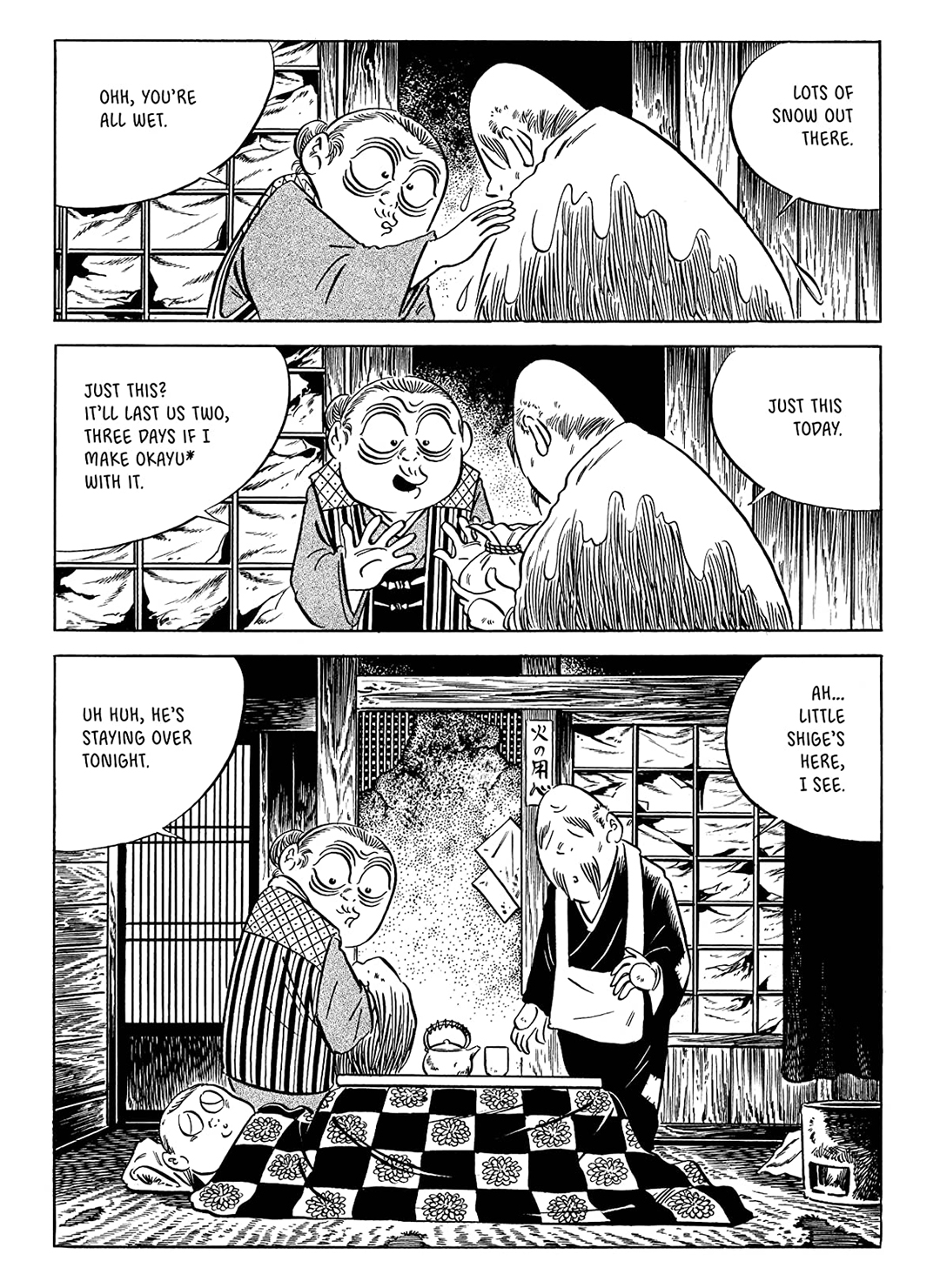
Despite being published more than thirty years ago, NonNonBa doesn’t feel dated. The stylizations of Mizuki’s artwork are timeless, and his character designs are clean and fresh. The high quality of Jocelyne Allen’s translation contributes to the contemplative yet entertaining tone of the story, whose episodes move briskly but never feel cartoonish. 

Through Mizuki’s sensitive storytelling and evocative artwork, NonNonBa celebrates how folklore inspires imagination and facilitates resilience in the face of loss and change. Despite the occasionally heavy subject matter, this graphic novel is accessible to readers of all levels, and I imagine it would be a fantastic text to spark discussion about history, family, and folklore in the classroom.

Lost Souls Meet Under a Full Moon

Lost Souls Meet Under a Full Moon brings together five interconnected short stories about people seeking to contact the dead. Though this book falls firmly into the category of “relaxing” fiction, it’s more plot-driven than most, and it distinguishes itself through its worldbuilding, especially its willingness to test the parameters of its magic system.

The central character of the novel is a handsome and stylishly dressed teenage “go-between” named Ayumi who can facilitate meetings between the living and the dead. The catch is that a person can only have one of these meetings in their lifetime, and each dead person is only allowed to return once. 

This is why the choice of the focal character of the first chapter, “The Rule of the Idol,” is so unusual. Manami asks the go-between to connect her with, of all people, a performer named Saori who made her living as a tv personality appearing on various talk shows and quiz games. When Manami was at the lowest point in her life, alone in Tokyo and bullied by her coworkers, she had a random encounter with Saori, who encouraged her to get back on her feet. Manami wants to use Saori’s death as an opportunity to thank her personally, which she never would have been able to do while Saori was still alive.

The third chapter, “The Rule of the Best Friend,” is far less wholesome. A first-year high school student named Arashi wants to be cast into leading roles in the plays performed by her school’s drama club, and she’s not shy about making her intentions known. Her biggest supporter is her best friend Misono, who joins the drama club in solidarity. Misono’s introverted grace has an alluring appeal that Arashi overlooks in her brash ambition, and she ends up losing a starring role to her best friend.

Arashi takes this poorly and stops talking to Misono. She assumes this will be a punishment, but she quickly realizes that her friendship was holding Misono back from achieving her own dreams. When Misono dies in a cycling accident, Arashi desperately wants to apologize, but she hasn’t yet developed the maturity to say what really needs to be said. I have to admit that I was surprised by the final meeting between the two friends, which is steeped in a complexity otherwise absent in these stories, and “The Rule of the Best Friend” ended up being my favorite part of the book.

In the final chapter, “The Rule of the Go-Between,” we see the characters from the previous stories from Ayumi’s perspective as he goes on his own journey during the process of inheriting the role of go-between from his elderly grandmother. Ayumi’s parents died under mysterious circumstances when he was a child, and his grandmother has carried a sense of guilt for years. Unlike his unfortunate classmate Arashi, however, Ayumi is able to break the barrier of silence and offer comfort and closure to his grandmother while they’re both still alive.

Despite a few brief moments of darkness, Lost Souls Meet Under a Full Moon presents little emotional challenge to the reader. There are very few subversive or self-reflective elements in these stories, and the characters occasionally behave like two-dimensional constructs who act solely in service to the plot. This isn’t a bad thing, of course. Lost Souls moves quickly and follows its internal logic so impeccably that the reader’s suspension of disbelief is never broken. As a result, each of the chapters is great fun to read.

Mizuki Tsujimura has taken the five-chapter cozy fiction formula and polished it to a high sheen. As far as the genre goes, Lost Souls Meet Under a Full Moon is as good as it gets, largely thanks to the author’s willingness to explore the more nuanced implications of the stories’ premise. Yuki Tejima’s translation is lovely and uses a light touch to bring the energy of Tsujimura’s prose to English-language readers. I’d recommend Lost Souls Meet Under a Full Moon to anyone looking for a good comfort read, not to mention a welcome reminder of the importance of saying what needs to be said while you’re still alive.

ツミデミック

Michi Ichiho’s Tsumidemic (ツミデミック), which won the prestigious Naoki Prize for popular fiction in 2024, collects six stories about the atmospheric strangeness of the Coronavirus pandemic. While everyone’s attention was focused elsewhere, Ichiho wonders, what sort of intriguingly antisocial behavior might have been enabled by isolation?

The opening story, Chigau hane no tori (違う羽の鳥), has all the grim fascination of a viral urban legend. Yūto moved to Tokyo only to drop out of college, and now he works as a barker for a bar in Shinjuku. Unfortunately, business isn’t going well due to the pandemic. During another eerily quiet night, Yūto sees someone he knew back from middle school in Osaka, Nagisa Inoue. This is a shock, as Nagisa is supposed to have committed suicide by jumping onto the train tracks. As she and Yūto get drinks together, Nagisa explains her devious plot to flee from the grasp of her overbearing mother, which was far from a victimless crime. Yūto is no saint himself, and he inadvertently reveals why he immediately recognized someone he never talked to when they were classmates.

Romansu (ロマンス☆) is about a bored housewife named Yuri who develops a serious online gambling addiction of an unusual nature. Yuri hasn’t been able to find a new job since she left her previous position to give birth to her daughter, and the pandemic isn’t helping. She channels her frustration into a food delivery app called Miideri, which she treats like a gacha game. Will the person who makes her next delivery be one of the handsome men rumored to be employed by the service? While gambling on the slim possibility that a prince will arrive at her door bearing a bag from McDonald’s, Yuri attracts the unwanted attention of an unhinged delivery driver who has read exactly the wrong message into her frequent orders.

Rinkō (憐光) is narrated by the ghost of a high school student named Yui who, strangely enough, can’t recall how she died. Having materialized back into the world fifteen years after her death, Yui finds herself confused and alienated by the loneliness of the Tokyo streets and train stations during the pandemic. She therefore returns home to her mother’s house in the country. Her arrival coincides with a memorial visit from her friend Tsubasa, who is accompanied by their old homeroom teacher, Sugita. As Yui eavesdrops on their conversation, she learns that she died after mysteriously falling into a river during a rainstorm. Sugita knows what Yui was doing and where she was going, and Tsubasa wants him to know that she knows, too.

The collection takes a slightly more positive turn in the fourth story, Tokubetsu enkosha (特別縁故者), in which Kyōichi, the unemployed and impecunious father of a young son, attempts to weasel himself into the good graces of an elderly man whom he suspects is a money hoarder. Kyōichi, an affable himbo who has no business scamming anyone out of money, volunteers for the daily task of picking up a takeout lunch from one of the many bentō stores in the neighborhood. The old man knows exactly why Kyōichi approached him, and he resents him for not pursuing his ambition to enter the food service industry. Harsh words are exchanged; but, when push comes to shove, even a relationship built on ulterior motives is better than living alone as an elderly shut-in during a pandemic.

Shukufuku no uta (祝福の歌) is about a happily married middle-aged man facing a new direction in his life. Despite being a high school student, his daughter is pregnant, and she intends to keep the baby. Meanwhile, the man’s mother seems to be entering the permanent brain fog of senile dementia. His daughter, who has been gossiping with the other mothers in her grandmother’s apartment building, gets the sense that there’s something else going on. With any luck, it’s a problem that can actually be solved.

Sazanami Drive (さざなみドライブ) follows the IRL meetup of five people who connected on Twitter after their lives were disrupted by the pandemic. As they drive out to the country in a minivan, they share their stories of abandonment and alienation. Little do they know that one of their number has a secret agenda. He’ll do whatever it takes to disrupt the group’s grim plan for the trip – and hopefully save their lives in the process.

As indicated by the book’s title, the two themes guiding this collection are “crime” and “the pandemic.” Each of the characters is hiding something, and the reader never knows where anyone’s true intentions lie. Michi Ichiho, who began her writing career as an author of BL romance novels, isn’t unduly focused on creating mimetic fiction, and the scenarios are improbable at best. Still, the twist at the end of each story is a lot of fun, and the fantastical plot elements accurately convey the feeling of just how weird and unreal everything felt during the pandemic.

It appears that the English-language publication rights for this collection are currently up for grabs (more info here). Tsumidemic is a fast-paced and emotionally cathartic book, and it would benefit from a tone-sensitive translation that renders Ichiho’s dialogue-filled writing into snappy, Stephen King style prose. I hope someone picks it up.

The God of Nishi-Yuigahama Station

Takeshi Murase’s linked short story collection The God of Nishi-Yuigahama Station is about four people who lost members of their family in a tragic train derailment. For a year after the accident, the ghost train still makes its fatal run at midnight, giving those who grieve its passengers an opportunity to speak to the loved ones they lost.

The God of Nishi-Yuigahama Station is meant to make the reader cry, and it does so primarily through its improbably melodramatic situations. This short book is relatively light reading, and the level of catharsis it allows you to experience will depend on your tolerance for sentimentality.

Still, as far as this type of fiction goes, I enjoyed The God of Nishi-Yuigahama Station much more than similar titles (such as Toshikazu Kawaguchi’s Before the Coffee Gets Cold). Murase’s stories are grounded in the social realities of contemporary Japan, and the characters are messy and complicated enough to be interesting.

My favorite story is “To My Father, I Say,” which is about a young man named Sakamoto who leaves his rural hometown to work at a large finance corporation after graduating from a prestigious university in Tokyo. Sakamoto is forced to attend mandatory drinking sessions after work, and he’s bullied by his supervisor. He’s tired all the time, and his relationship with his girlfriend has gone stale. Meanwhile, he’s ignoring the calls from his father, who comes from a humble background.

Sakamoto finally snaps and quits his job, but he can’t bring himself to tell his family as his living conditions grow more precarious. Thankfully, he gets a second chance to talk to his father on the ghost train, which is the exact opportunity he needs to reevaluate his life and goals.     

Like a lot of contemporary Japanese popular fiction aimed at young adults in their twenties, The God of Nishi-Yuigahama Station is brutally honest about the emotional damage caused by bullying, which can extend far beyond grade school. Like other authors, Murase doesn’t shy away from stating that the main problem lies with the people who tolerate this behavior, while the solution is for one brave person to step up and offer support to the target.

This is an important and wholesome message, of course, but it’s a little depressing to me that this support can only exist in the form of a magical ghost train. Then again, the purpose of The God of Nishi-Yuigahama Station is not to offer deep insights and critique, but rather to make the reader cry and feel gratitude for their own family and friends. And who knows? This might just be the support you need.

Where the Wild Ladies Are

Author: Aoko Matsuda (松田 青子)
Japanese Title: おばちゃんたちのいるところ (Obachan-tachi no iru tokoro)
Translator: Polly Barton
Publication Year: 2016 (Japan); 2020 (United States)
Publisher: Soft Skull Press
Pages: 271

Where the Wild Ladies Are collects seventeen short stories about the everyday lives of ghosts, demons, and yōkai in contemporary Japan. Although all of these stories are a bit strange, their tone is light and comedic, and all the hauntings are consensual.

My favorite story in the collection is “Quite a Catch,” which is about a young woman named Shigemi who has found herself in a romantic relationship with the ghost of a skeleton she inadvertently pulled out of the Tama River in Tokyo while fishing with a friend. The ghost, Hina-chan, appears outside of Shigemi’s apartment to thank her for dredging her bones from the riverbed. Shigemi is alarmed at first, but before long she and Hina-chan are chatting while watching television, not to mention bathing and sleeping together. Hina-chan’s nightly visits are a best-case scenario for the narrator, who has always wanted companionship without having to live with a spouse or roommate.

As the story notes in the back of the book explain, “Quite a Catch” is based on the comedic folktale Kotsutsuri (Skeleton Fishing) about a man who, after having heard a friend’s story about being thanked by the beautiful ghost of a drowned skeleton, goes to the river in an attempt to snare himself a supernatural girlfriend of his own but ends up fishing up the skeleton of the villain of a famous kabuki play.

Other stories in the collection feature other well-known figures from Japanese drama, lore, and legends narrated from unusual perspectives. “On High,” for example, is about a ghostly princess who haunts the beautiful hilltop Himeji Castle while it’s in the process of undergoing extensive renovations in the name of “historic preservation.” Meanwhile, “Enoki” is narrated by a sacred tree that is both frustrated and amused by the humans who insist on praying to it for various blessings, while “A Fox’s Life” is about a woman who’s been told she resembles a fox so often that she finally decides to go up into the mountains and become one.

“Smartening Up” is the first story in the collection, and it’s an excellent introduction to the author’s playful voice as she expresses the central theme of learning to embrace your weirdness and imperfections. The narrator begins the story obsessed with the darkness of her hair, spending a considerable amount of time and money on hair removal treatments while wishing she were born blond. On returning home after a rigorous session at an aesthetic salon one evening, she finds her aunt waiting for her in her apartment. This is something of a surprise, as her aunt had committed suicide in the wake of a failed love affair. Even more shocking, this aunt tells the narrator that she knows all about how she’s come to hate her appearance after being dumped. There’s nothing wrong with her hair, her aunt insists, especially since the fault lies with the piece of trash who cheated on her. The aunt assures her that her black hair is gorgeous, and that there’s no need for her to feel gross and ugly.

This story is loosely based on the Dōjōji legend, specifically the kabuki play Musume Dōjōji (The Maid of Dōjō Temple). The original story, in which a lustful woman is spurned by a celibate monk and turns into a giant snake to pursue him, is almost laughably misogynistic. The kabuki version, on the other hand, celebrates the woman’s serpentine transformation as an act of beauty and magic, with the dancer twirling in a robe that shines silver with the gorgeous gleam of scales.

The narrator’s aunt reminds her of the time they saw this play together and then admits that she’s still figuring out what her own secret power is. As the narrator considers the matter, she realizes that her own power is indeed in her hair. She begins eating hair-fortifying foods like liver and seaweed, helping her hair to become as monstrous and powerful as the snakes commanded by Medusa. She hides her demonic hair during the day but allows it to come out at night, brushing it to a high sheen and thinking about what sort of special skills she will learn in the future as she grows more comfortable wielding her magical power.

This may sound sentimental and a bit self-helpy, but the tone is actually very tongue-in-cheek and down to earth. The narrative voice, which is expertly captured through Polly Barton’s translation, is highly engaging. Many of the stories in Where the Wild Ladies Are were inspired by rakugo comedic storytelling, which is meant to be a bit salty and ridiculous. A set of brief notes concerning sources and inspirations is provided at the end of the book, but it’s absolutely not necessary to be familiar with the original legends to appreciate and enjoy the stories in the collection.

Although many of the stories in Where the Wild Ladies Are revolve around the theme of supernatural female empowerment, there’s no man-hating here – far from it. There are plenty of interesting male characters, including a time-traveling and dimension-hopping wizard who was inadvertently roped into the job and decided, like any good salaryman, just to stick with it. Although the reader doesn’t figure this out until late in the collection, all of the stories are loosely linked, with the various male and female characters managing to get along with each other in relative harmony.

Between the creative contemporary re-imaginings of folklore, the strong female friendships, the queer monster romance, and the general disdain for boring office jobs and awful bosses, the target audience of Where the Wild Ladies Are is specifically me, and I feel very seen and catered to. Still, Where the Wild Ladies Are should resonate with a broad readership. I suspect that a lot of anime fans and yōkai enthusiasts will be highly entertained by the collection, and the stories will appeal to anyone of any gender who enjoys clever comedy about how wild it is to live in the modern world.

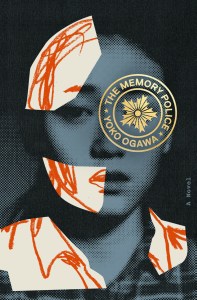
The Memory Police

The Memory Police
Japanese Title: 密やかな結晶 (Hisoyaka na kesshō)
Author: Yoko Ogawa (小川 洋子)
Translator: Stephen Snyder
Publication Year: 1994 (Japan); 2019 (United States)
Publisher: Pantheon Books
Pages: 274

The Memory Police is set on an island isolated from the rest of the world. The island is large enough to support a hospital, a university, and even a publishing company, but its community is small enough for people to be able to gather together for significant events. Like her parents before her, the narrator has lived on this island her entire life, and she takes its idiosyncrasies for granted.

The narrator’s island is cozy, with lovely bakeries and gardens. No one seems worried about money, and the narrator is able to live in a comfortable house despite the fact that the only work she does is to write novels that, by her own admission, no one reads. The narrator focuses her attention on the small details of everyday life, and it’s only gradually that the peacefulness and nostalgia of the narrative begin to unravel.

Every so often an object will “disappear.” Almost overnight, whatever has disappeared will vanish not just from the world, but from everyone’s memory as well. It’s not entirely clear how or why this works, but no one questions it. In some instances, such as perfume and photographs, the objects that disappear must be discarded, usually by means of being ritually thrown into a river or incinerated. In other cases, such as when the concept of “fruit” disappears, all the fruit on the island literally falls from the trees to the ground. Once something disappears, all perception of it disappears as well, and people aren’t able to recognize something that’s disappeared even if they’re looking at it. Even idiomatic expressions change, as with “to hit two creatures with one stone” after birds disappear. The world of the narrator is limited, but her attention to detail is precise, so even small disappearances take on an emotional weight for the reader.

Some people don’t lose their memories, however, and this is where the eponymous memory police come in. This is also where the novel becomes dystopian, with midnight arrests, people suddenly going missing, families fleeing, and all records of these incidents buried deep within an impenetrable bureaucracy. The narrator’s mother, who worked as a sculptor and kept a variety of disappeared objects hidden in a cabinet, was an early casualty of the memory police, leaving the narrator an orphan.

The narrator gradually realizes that her editor is also immune to disappearances, and she resolves to keep him safe by concealing him in a sealed room in the basement of her house while his pregnant wife flees to a rural area north of town, ostensibly for the sake for her health. As her editor continues to read and comment on the narrator’s manuscript in secret, an intimacy develops between them, which is reflected in the strange and surreal excerpts from her novel interspersed throughout the main story.

As the novel progresses, the rate of disappearances increases, an alarming trend that is exacerbated by environmental disaster. At the end of the story, the concept of “disappearances” is followed to its logical conclusion in an undeniably disturbing yet surprisingly soft and gentle manner.

The Memory Police is dystopian horror fiction reminiscent of The Handmaid’s Tale, but it’s also a meditation on the ghosts that quietly follow us without ever attracting our notice. There may be no memory police in the real world, but we still forget things all the time, and we forget them so thoroughly that we don’t even realize we’ve forgotten them. The narrator is just as susceptible to these small disappearances as everyone else, but what sets her apart is that she understands the value of remembering and the importance of preservation. By maintaining a diversity of small narratives, the larger narrative represented by the memory police – namely, that which is not productive must be aggressively forgotten – can be resisted. The novel works on multiple levels as historical and political allegory, but it’s also universal and deeply personal.

The Memory Police was originally published in 1994, but it feels contemporary, fresh, and relevant. There are no specific cultural markers in the text, and most character names are abbreviated as single letters, a device that confers an air of timelessness to the story. This novel is therefore accessible to a broad general audience with no knowledge of Japan, and the translation is gorgeous. The Memory Police is brilliant and extraordinary, and it refuses to be forgotten.

Onibi: Diary of a Yokai Ghost Hunter

Onibi: Diary of a Yokai Ghost Hunter
Artists: Atelier Sentō (Cécile Brun and Olivier Pichard)
Translator: Marie Velde
Publication Year: 2016 (France); 2018 (United States)
Publisher: Tuttle
Pages: 128

This story was inspired by one of our trips to Niigata, during the fall of 2014. We dedicate it to the people we’ve met there. They welcomed us with overwhelming generosity and helped us discover the region and its secrets. Some of these people will appear in this book. We hope they will enjoy it.

This paragraph prefaces Onibi, a diary-style graphic novel written and drawn by Cécile Brun and Olivier Pichard, who work together as a creative team called Atelier Sentō. In the late summer and fall of 2014, Brun and Pichard were able to spend ten weeks living in the small village of Saruwada thanks to the efforts of Kosuke and Sumie Baba, who run a small restaurant and international guesthouse called Margutta 51. At the beginning of their stay, Brun and Pichard bought a toy Polaroid camera from a man who assured them that it could photograph spirits, so they went out ghosthunting. Onibi is the result of their travels and conversations.

Along with a short prologue and epilogue, Onibi has seven chapters, each of which chronicles a local legend related to the yōkai of Niigata prefecture in northern Japan. A few of Brun and Pichard’s excursions were facilitated by the proprietors of Margutta 51, who introduced them to people with stories to share. Some of their encounters happened completely by chance, however, and most don’t play out as expected. In the second chapter, for example, Brun and Pichard take the train to a small village to find a creature called “Buru Buru-kun,” but they find that the old forest where it’s said to live has been cut down to make room for rice fields. In the seventh chapter, Brun and Pichard visit Osorezan, a temple located in the caldera of an active volcano where the world of the living and the world of the dead are believed to meet. They misplace their ghost camera as they explore the strange landscape surrounding the temple, but the conversations they have with their fellow pilgrims make the journey worthwhile.

I especially enjoyed the fourth chapter, “Mountain’s Shadow,” which is about the pair’s chance encounter with a man who gives them a walking tour of Yahiko. The village is famous for its fall foliage, but it’s deserted during the week. After taking in the sights, Brun and Pichard step into a small udon restaurant, where they’re approached by a man who offers to tell them about the local yōkai. He takes them to a large tree in town and then up a hill to a mountainside temple, after which they embark on a hiking trail through the woods. Instead of taking the tram down the mountain once it gets dark, they decide to walk, and they hear strange noises in the trees as they descend. This episode is enhanced by its visual appeal as the color palette shifts from the brown of the restaurant interior to the gold of the afternoon sunlight in the village to the blue of the forest twilight.

The comic artwork in Onibi is gentle and warm, with a gorgeous color palette and a pleasing compositional balance on each page. The humans who appear in the book are distinctive without coming off as caricatures, and the landscapes, townscapes, and interiors are striking. Brun and Pichard devote special attention to natural and artificial lighting and weather conditions, making the reader feel almost as if they’re walking right alongside the artists as the summer shifts into fall. Tuttle has released a beautiful Kindle edition of the book, but I highly recommend the print version, which allows the reader to appreciate the details and textures of the artwork.

Although it hints at some fairly dark themes, Onibi is more atmospheric than spooky, and it should be suitable for people of all ages. If I were teaching a class about Japanese folklore (and Onibi makes me dearly want to teach such a class), I think the graphic novel might serve as an interesting companion to Marilyn Ivy’s Discourses of the Vanishing, especially its chapter on Osorezan. Even for people with no background knowledge of Japan, Onibi is a fascinating exploration of a beautiful part of the world, as well as a lovely introduction to the people who live there – and the supernatural creatures who might just coexist with them.

Apparitions

Title: Apparitions: Ghosts of Old Edo
Author: Miyuki Miyabe (宮部 みゆき)
Translator: Daniel Huddleston
Publication Year: 2000 (Japan); 2013 (United States)
Publisher: Haikasoru
Pages: 265

Apparitions: Ghosts of Old Edo is a collection of nine supernatural stories set in the Edo period (1603-1868), a historical era of relative peace that preceded Japan’s modernization. The author, Miyuki Miyabe, is known outside of Japan for her fantasy and suspense novels, but she also writes historical fiction informed by her love of the city of Tokyo.

Apparitions is a difficult book to break into, especially for someone who doesn’t have a great deal of background knowledge about Japan. Although the six-page thematic introductory essay by Masao Higashi situates Miyabe’s historical fiction within the tradition of Western horror, each of the stories in this collection is thoroughly suffused with what might be termed Japanese cultural odor. While this is far from a bad thing, the jumble of geographic and personal names that Miyabe employs to add color to her stories won’t carry the same narrative weight for most readers of this translation as it would for someone more familiar with the cultural and historical context she references.

The opening story, “A Drowsing Dream of Shinjū,” provides a good example of how these references work to create a sense of atmosphere – or, for many readers, may simply be strange and confusing. After the end of the Kyōhō era, in the fourth year of Bunka, a boy named Ginji is “sent off to work at a cotton wholesaler called the Daikoku’ya, in Tōri Setomono-chō” by an older man at the Mannen’ya, an employment agency “located in Ōdenma-chō Block 1” that places apprentices in the wholesale businesses “that dotted the way from Ōdenma-chō and the surrounding area on through Muromachi, Takara-chō, Suruga-chō, and Nihonbashitōri-chō” (18). Miyabe uses the names of these emperor reigns, businesses, and neighborhoods as a shorthand to create a sense of time and place. Unfortunately for those of us not already well versed in Edo-period historical fiction, this type of highly specific allusion is largely unaccompanied by any sort of explanation. As a result, to someone who isn’t a specialist in the Edo period, the stories in Apparitions can seem rather dry.

Even the broader cultural allusions that Miyabe uses to add flavor to her stories are only mentioned in passing without any sort of elaboration. To return to “A Drowsing Dream of Shinjū,” the premise of the story is that the fourteen-year-old protagonist Ginji is employed by Tōichirō, the son of the prosperous cotton wholesale business Daikoku’ya, to run errands, some of which involve carrying messages to Tōichirō’s various girlfriends. Meanwhile, the 21-year-old Tōichirō wants his family’s business to start selling tea towels printed with monogatari moyō, or scenes from literary romances such as The Tale of Genji. His father tells him that this is a bad idea, as such items have come to be associated with real-world cases of shinjū, or double suicide, in which several pairs of lovers tied their hands together with these towels so that they would have a greater likelihood of drowning when they jumped into a river.

One thing leads to another, and when Tōichirō gets married he moves his mistress O-Haru to the neighborhood of Ōshima-mura, which “was on the other side of the Ōkawa River, on past Fukagawa” (34). On being sent to O-haru’s villa one afternoon, Ginji arrives to find it empty, and as he dozes off in the foyer he dreams that he sees the lifeless bodies of Tōichirō and O-haru deeper inside the house, their wrists bound with a monogatari moyō tea towel.

To anyone familiar with Japanese drama, “A Drowsing Dream of Shinjū” is redolent of numerous other stories involving the ghosts of star-crossed lovers appearing in forgotten and out-of-the-way places. It’s precisely because Miyabe is confident in her reader’s familiarity with such ghost stories in the Noh, Bunraku, and Kabuki theatrical traditions, however, that she doesn’t go out of her way to deepen the eerie atmosphere by means of other literary devices. Perhaps a Western equivalent of this might be naming a character Horatio and thereby expecting the reader to associate him with chilly Scandinavian sea winds and dead princes without otherwise supplying the character with any personality traits. Unfortunately, Miybe’s allusions may pass entirely over the heads of unfamiliar readers.

Although two or three of the stories in Apparitions are strong enough to stand on their own, the book isn’t so much a collection of accounts of individual people and the ghosts they leave behind as it is a cumulatively growing narrative about the city of Edo itself. If the reader can tough out an initial sense of disorientation, however, the geography of the city and the character of its people gradually begin to take shape with each successive story.

That being said, the strongest pieces in the collection need no contextualization. In my favorite story, “The Oni in the Autumn Rain,” an older woman speaks to a younger woman and offers sound and canny advice that transcends time and place. Moreover, the cleverness of the surprise ending to the story, in which it is revealed that the circumstances of this conversation are not what they seemed, needs no cultural background knowledge to be appreciated.

I use another of the more accessible stories in the collection, “Cage of Shadows,” as one of the readings in my “Tokyo Stories in Japanese Fiction” seminar. “Cage of Shadows” serves as an excellent starting point for a discussion of Edo period fiction, as it evokes the themes and tone of popular stories from the eighteenth century while still employing conventions relating to psychologically astute characterization and linear plot progression that contemporary readers have come to take for granted. As an added bonus, the imagery of the story is deliciously grotesque, and the way it ends is downright creepy.

Overall, it’s difficult to recommend Apparitions to a casual thrill seeker; but, for a patient reader, allowing the stories enough time to build a gradual atmosphere of strangeness at the margins of human activity is akin to watching twilight deepen into darkness as an evening fog rises from the ground. Many readers may find themselves lost in the maze of foreign words and names; but, if you’re interested in Japanese ghost stories and looking for a nice collection of original and historically grounded horror fiction with lovely Gothic undertones, then Miyuki Miyabe has summoned a delightfully eerie group of ghosts.

The Graveyard Apartment

the-graveyard-apartment

Title: The Graveyard Apartment
Japanese Title: 墓地を見おろす家 (Bochi o miorosu ie)
Author: Koike Mariko (小池 真理子)
Translator: Deborah Boliver Boehm
Publication Year: 2016 (America); 1988 (Japan)
Publisher: Thomas Dunne Books
Pages: 325

Kano Misao and her husband Teppei have found the perfect apartment. It’s quiet and spacious with southern exposure, and it’s in a new, modern building. Sure, this building happens to be right next door to a graveyard, but it’s the 1980s, and the pleasant proximity to an open green space outweighs any sort of silly superstitious stigma. The only problem is that strange things always seem to be happening in the basement. It might be that the building is haunted, but why? And what would the ghosts want from Misao and Teppei?

Like many other haunted house stories, The Graveyard Apartment is, at its heart, a family drama. Misao and Teppei are happy together with their five-year-old daughter Tamao and their dog Cookie, but the bright little family is trailed by the dark shadow of Teppei’s first wife Reiko, who was driven to suicide by her husband’s affair with Misao. When the stress of the paranormal activity in their new apartment places stress on Misao and Teppei’s relationship, the fault lines of their marriage begin to crack. The novel opens inauspiciously with the death of Tamao’s pet bird Pyoko, who the girl claims now visits her in dreams. Misao and Teppei’s disagreement over how to handle their daughter’s insistence on the reality of the supernatural is the first of many arguments, which gradually escalate over the course of the story.

The Graveyard Apartment is not The Shining, however, and the ghosts troubling the family are not manifestations of buried psychosexual traumas – they are, most assuredly, actual vengeful spirits. The horror of the novel derives from the fact that, despite the lingering guilt over Reiko’s suicide, the malice of the building’s ghosts could not be directed at a more normal and easygoing family. If a sweet young mother and fledgling illustrator like Misao can find herself trapped in a claustrophobic basement while unknown things approach unseen in the darkness, it could happen to anyone.

It turns out that the apartment building is a remnant of a failed development project from the 1960s that would have resulted in an underground shopping plaza connecting the basements of several office and residence buildings to the local train station. The neighborhood temple resisted this development and refused to sell or subdivide its land, however, and so the tunnel under the graveyard was left unfinished, with the Kanos’ building the only part of the project that came to fruition. The link between the temple graveyard and the ghosts in the basement is extremely tenuous (especially since the point of Buddhist funerary rites is to pacify angry spirits), but the haunting can be more easily understood as the consequences of the era high economic growth, which has finally started to claim victims as the bubble economy begins to collapse in on itself.
The Kanos were led to believe that they could have it all – Teppei could divorce his old-fashioned wife and marry for love, Misao could have both a child and a freelance career in a creative field, and they could find a reasonably priced apartment in a convenient location to house their happy family. It had to be too good to be true, right?

Originally published in 1988, The Graveyard Apartment is a reflection of the anxieties concerning the optimistic consumerism of the 1980s, in which an ideal middle-class lifestyle was widely considered to be glossy and attainable as the magazines Misao illustrates. Although the real threat to families ended up being overinflated property values, Koike’s ghosts are creepy enough on their own even without any sort of economic allegory, and the end of the novel is genuinely disturbing. The Graveyard Apartment is a satisfying slow burn of a haunted house story perfectly suited to its setting in Tokyo, and I highly recommend it to my fellow fans of horror fiction.

( Review copy provided by Thomas Dunne Books. )