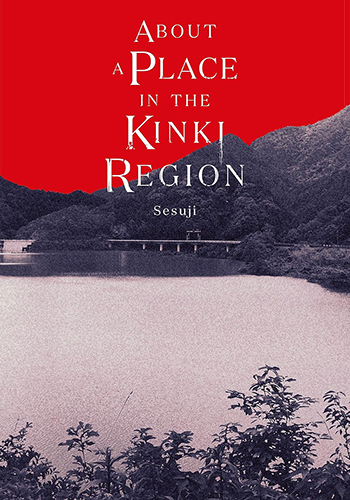
About a Place in the Kinki Region, originally published in 2023, is a horror novel assembled from roughly two dozen short stories presented in various formats, from magazine articles to interviews to YouTube video transcripts to reproductions of forum posts. These materials have been collected by the pseudonymous author, Sesuji, with minimal editorial comment, supposedly in an effort to locate someone who has mysteriously disappeared.
I should probably note here at the beginning that the actual author, an online horror writer who has published under the name Sesuji, is male. The diegetic character Sesuji is female, and it’s the character I’ll be referring to in this review.
Sesuji, a freelance writer living in Tokyo, has been contacted by her friend Ozawa, a junior editor at a publisher that produces a magazine devoted to the paranormal. Though the magazine has stopped putting out regular issues, it occasionally releases special issues, and Ozawa has been tasked with publishing one of these special issues on a very low budget. After combing through the magazine’s archives, he decides to create a collection of older articles that all pertain to a certain place in the Kinki region, the geographic area surrounding Osaka and extending south into the heavily forested Kii Peninsula.
This “certain place” is the location of numerous spooky legends and strange sightings, most of which can be categorized according to several distinct themes. There’s a ghost called Mashiro-san that calls out to children from the mountain forest, as well as a creepy playground game of the same name. There are abandoned buildings tagged with unsettling sticker graffiti, an alarming number of suicides, and perhaps even a creepy New Age cult as well.
Various sources suggest that the more supernatural incidents might be the work of a god whose shrine has fallen into disrepair due to rural depopulation, but it gradually becomes apparent that something much weirder is going on. In order to get to the bottom of the mystery, Ozawa visited the place himself to investigate, but now he’s gone missing. Sesuji therefore asks the reader: Is it possible that you could examine the material he collected and help her find him?
About a Place in the Kinki Region begins as a relatively straightforward collection of articles but eventually starts to experiment with its format in interesting ways. A standout piece is a short story called “Waiting.” This story is first presented as it was published in a magazine and then followed by its original rough draft, which contains a number of odd details that aren’t strictly relevant to the plot but may present clues regrading Ozawa’s disappearance.
Partially due to the author’s experiments with format, and partially due to the sheer variation of situations and narrators, nothing about this book feels repetitive. The careful sense of pacing creates a subtle sense of structure and generates narrative tension, gradually revealing the stakes of the story while pulling the reader into the mystery at hand.
I’m a big fan of “archival horror” narrative podcasts like Archive 81 and The Magnus Archives. I love how these stories simulate the experience of research while conveying the joy of discovering an intriguing rabbit hole. About a Place in the Kinki Region is a fantastic expression of this genre, inspiring the reader to dig ever deeper for a long-buried truth hidden within layers of secrets.
In addition, I enjoyed being an armchair tourist in this “certain place,” which is gifted with natural beauty and an intriguing local culture. If any vengeful revenants or neglected god-demons are searching for someone to spirit away to a mountain forest on the Kii Peninsula, I volunteer myself. I hear the evening twilight is especially magical… and even the ghosts have good internet access, apparently.
The translator, Michael Blaskowsky, has done an excellent job creating a distinct set of narrative voices across a range of tones and styles, from campy to lyrical to journalistic to point-blank horror. The book’s designer and editor at Yen Press, Andy Swist and Emma McClain, have done a marvelous job as well, engineering an unobtrusive flow of stories while occasionally adding small creative touches. I apologize for spoiling the surprise, but the book includes a secret set of illustrations in a semi-hidden section in the back, and it’s extremely cursed.
It’s also worth mentioning that About a Place in the Kinki Region was adapted into a movie released in August 2025 (here’s a mirror of the region-locked trailer on Reddit), but I haven’t yet seen any information about a global release outside of the film festival circuit, unfortunately.
In the years following the pandemic, I’ve encountered a number of “textual found footage” horror novels by Japanese authors capitalizing on the recent boom in YouTube creepypasta videos. Many of these books are very silly, but About a Place in the Kinki Region is surprisingly well-structured and entertaining. I’m happy this book been published in translation, and I hope my fellow archive horror fans enjoy its collection of unsettling little treasures as much as I do.
 Contemporary Japanese Literature