Swallows

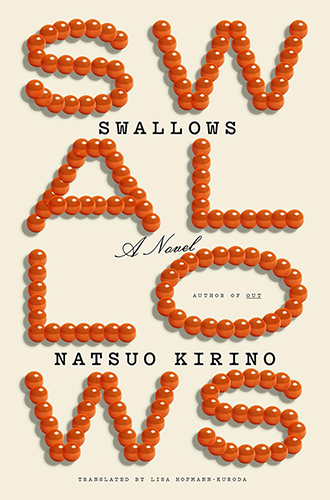
Natsuo Kirino’s 2022 novel Swallows follows an impoverished young woman who becomes a surrogate birthmother for a high-performing couple on the cusp of middle age.

Riki works a full-time temp job as a receptionist at a general hospital, but she can only barely make rent in an aging apartment building in Tokyo. Her parents back in Hokkaido don’t have any money, and she’s completely on her own after leaving a toxic romantic relationship. Her best friend at work, Teru, isn’t doing much better, especially not with an unreliable boyfriend who pressures her to do sex work on the side so she can pay the interest on his debts. 

To raise money, Teru registers to sell her eggs under the auspices of a Japan-based fertility service, and she attempts to persuade Riki to join her. Riki is tired of eating bargain convenience store food, wearing third-hand Uniqlo clothing she buys online, and being harassed by the shitty men who live in her garbage apartment building – so she agrees.

Riki’s application attracts the interest of a company representative who thinks she’d be the perfect fit for a married couple looking for a surrogate birthmother, Motoi and Yuko Kusaoke. Riki has doubts about this situation, which is only dubiously legal to begin with, but the Kusaokes offer her a life-changing amount of money. Once Riki has signed a contract, the husband, Motoi, becomes overbearing in his need to control Riki’s private life; and, to spite him, she has casual sex before receiving his sperm. When she becomes pregnant with twins, she can’t be entirely sure that Motoi is the father. To make matters even more complicated, Yuko feels more sympathy for Riki than she does for her husband, and she’s considering ending the marriage.

Swallows is more suspenseful than you might suspect. Who is the father of the children? Will Motoi and Yuko separate? Will Riki carry the pregnancy to term? And, if she does… what then?

Despite its strong forward momentum, the narrative pacing of Swallows is uneven. The story takes a while to get going, and the opening in particular feels like a series of political talking points in an essay about economic precarity in contemporary Japan, especially in relation to young women. Moreover, perhaps because the author is using the characters to present an argument, they seem to change their position every time a new circumstance arises. While it’s fair to harbor ambiguous feelings about a major life decision, this back-and-forth drags down the middle third of the novel, which feels about fifty pages too long.

Still, Kirino isn’t wrong about the challenges facing young women in Japan, nor is she exaggerating the absurdities surrounding fertility treatments and procedures. I’ve been watching these discussions evolve in academic circles for the past decade, and it’s cathartic to see Kirino come out swinging as she demonstrates the effects that abstract political policies can have on real people. Even as someone who doesn’t live in Japan and isn’t interested in pregnancy, I was still captivated by the human drama played out on the stage of individual lives.

For me, the star character of Swallows is Ririko, Yuko’s friend who works as a professional artist specializing in erotic shunga paintings. Ririko is asexual, aromantic, and only interested in sex as a visual motif in her art. As such, her perspective on romance and pregnancy feels original and refreshing, especially in contrast to the constant waffling of the other characters. 

In addition, the scenes with Ririko are where Lisa Hoffmann-Kuroda’s translation shines especially brightly, as Ririko’s rough language (especially concerning sex) is humorous and colorful without ever stumbling into the realm of coarse or cringe.

Ririko’s family owns a small suburban hospital, and she operates a studio on the property. After Yuko introduces her to the now-pregnant Riki, Ririko invites her to live in the hospital while doing light part-time work as her administrative assistant. This portion of the novel is almost utopian, as Riki is cared for in her pregnancy by what is essentially a commune – a community of (mostly elderly) people who provide companionship and support while Riki does untaxing but important work in exchange for room, board, and a small salary. 

I really enjoyed this part of Swallows not just because of the warm and cozy vibes (by which I mean the fourth-act narrative cooldown necessary to heighten the impact of the fifth-act narrative resolution), but also because I appreciate that Kirino offers a practical and viable solution to the very real issues pertaining to economic precarity that dissuade so many women from even considering pregnancy.

Swallows might be an interesting book to pair with Sayaka Murata’s novel Vanishing World; but, without getting into why Vanishing World’s treatment of pregnancy and Japan’s demographic shift is so disappointing, I have to admit that I infinitely prefer Kirino’s speculative but still grounded application of utopian imagination.

Even if you’re not interested in the topic of pregnancy in Japan, you might be surprised by how much suspense the author manages to generate with the question of whether or not the protagonist will carry her pregnancy to term. Swallows isn’t one of Kirino’s most plot-focused or psychologically astute novels, perhaps, but I still flew through this book, which keeps the reader guessing until the literal last page. Which is fantastic, by the way. Good for her.

The Woman Dies

The Woman Dies presents 52 pieces of flash fiction by Aoko Matsuda, the author of the short story collection Where the Wild Ladies Are. Each of Matsuda’s small but sparkling stories responds to various aspects of pop culture in clever and surprising ways.

Characteristic of Matsuda’s idiosyncratic approach to the flotsam of contemporary culture is “Hawai’i,” which imagines a heaven for clothes that were thrown away because they did not spark joy. The heaven enjoyed by an unworn sweater sounds like a lovely time of relaxing by the pool while, in the sky, “not far from the rainbow, the pair of skinny jeans owned in similar shades was paragliding together with the dress once worn to a friend’s wedding and never again.”

At the same time, the over-the-top language Matsuda uses to describe this paradise hints at how ridiculous it is to ascribe any sort of teleological meaning to consumerist excess. Still, if this is the world we find ourselves in, why not imagine a heaven where even a discarded sweater is allowed to have a happy ending?

While the topics covered in The Woman Dies are varied, many of the stories playfully confront gender issues in popular media. One of the more intriguing of such stories is “The Android Whose Name Was Boy,” which Matsuda writes “evolved from my thoughts about Neon Genesis Evangelion,” a classic sci-fi anime from 1995 that does indeed inspire thoughts about gender. 

The eponymous android, whose name is in fact “Boy,” begins its life by setting out on an adventure. Over the course of the five-page story, it does its best to disrupt narrative conventions regarding young male characters. Challenging and unending though this task might be, “the android whose name is Boy, developed to heal the wounds of those hurt by boys hurt in the past, is on the move once more.”

While “The Android Whose Name Was Boy” is open to a diversity of interpretations, other stories in the collection are overtly feminist. In “The Purest Woman in the Kingdom,” a prince takes it upon himself to seek out a woman who has never been touched by a man. After a great deal of searching, he finally finds and marries one such woman. On their wedding night, she karate chops him into oblivion. This woman has never been touched by a man; and, thanks to her training and skill in martial arts, she never will be. Absolute queen behavior.

Most of the stories in The Woman Dies are relatively lighthearted, but “The Masculine Touch” (by far my favorite piece in the collection) is out for blood. This story flips the script on gender, casting male writers as delicate greenhouse flowers who need to be supported because sometimes – every so often – their work has cultural and economic value. Matsuda doesn’t pull her punches:

The more radical of the male novelists wrote articles about this turn of events for male magazines, declaring this the beginning of the Male Era. They bolstered their arguments with examples of the other times when the masculine touch had effected changes like this one, thus arguing for men’s continued progress in all areas of society.

“The Masculine Touch” responds to a painfully specific way of talking about female writers and artists in Japan, and I imagine that people in other contexts can relate to frustrations regarding how the publishing industry fetishizes “queer writers,” or “writers of color,” or any number of people whose humanity is compressed into marketing-friendly categories.

Unfortunately, other pieces in the collection lack this specificity. Though we’re all familiar with the trope of fridging female characters, the title story, “The Woman Dies,” is a bit too broad to resonate. Though it’s easy to sympathize with the sentiment underlying “The Woman Dies,” readers may find themselves simply shrugging and moving on. Flash fiction tends to be hit or miss, but this collection offers an array of stories to choose from, and it achieves an admirable balance between heavy hitters and palette cleansers.

The Woman Dies is remarkably cohesive as a collection. There’s a lovely rhythm and flow to the stories, and it’s just as entertaining to read the book in one sitting as it is to dip in and out at your leisure. Matsuda’s writing is sharp and self-aware, and she uses brevity as a weapon to puncture the absurdities of gender, media, and modern life. It’s a pleasure to read her work in Polly Barton’s translation, which is quick and lively and showcases an incredible range of tone and style that’s pure literary pop.

First Love

Rio Shimamoto’s 2018 novel First Love is a psychological mystery about a beautiful college student who has been arrested for the murder of her adoptive father. Although it tackles serious themes, this story is compulsively readable. All of the characters bring emotional baggage to the table, and Shimamoto teases out the reader’s sympathy as each of their histories is revealed.

Yuki Makabe is a clinical psychologist who specializes in parenting and childcare. She’s ambitious, and she’s on the verge of making a career transition to media appearances and popular audience articles. When Yuki’s brother-in-law, Kasho, is assigned to the high-profile case of Kanna Hijiriyama, a college student accused of killing her father, he asks Yuki to help him interview the young woman in order to ascertain her motive. Yuki’s prospective editor at a major publisher, a friendly young man named Tsuji, asks her to write about the case, so she agrees.

Yuki is happily married to an internationally famous photographer who supports her career by shouldering the majority of the responsibilities involved in the care of their son. Despite her loving relationship with her husband, Yuki has a troubled past with Kasho that neither of them is willing to discuss. While she and Tsuji work together on Kanna’s case, Yuki must navigate her strained relationship with Kasho, who is very charming but a bit of an asshole.

Kanna presents Yuki with another set of challenges. To begin with, Kanna can’t explain why she wanted to hurt her father, or even whether she intended to hurt him in the first place. But, if she never meant to attack him, what was she doing with a knife? To make matters more complicated, one of Kanna’s college boyfriends gives an interview to a tabloid magazine and says that Kanna went crazy after they broke up. Even Kanna’s own mother claims the young woman is crazy.

Yuki is convinced that Kanna is far from “crazy,” but the truth of the matter is elusive. Kanna is traumatized by the death of her father, and Yuki quickly realizes that the young woman’s trauma is much more extensive.

Based on the title of the novel and the relationship between Kanna and the person she may or may not have killed, a reader might suspect that there is underage incest involved. I hope I can be forgiven for spoiling the story by saying that, thankfully, this is not the case. Regardless, Kanna didn’t have a happy home life as a child. 

I’m afraid that some readers may find Kanna frustrating, but her portrayal feels extremely realistic to me. I definitely knew people like this in high school and college. Generally speaking, these girls (and occasionally boys) were intelligent and competent, but they had a habit of saying whatever they needed to say to diffuse an awkward situation. 

This behavior wasn’t “lying” or “being dishonest” so much as it was a manifestation of fawning, an alternative to the “fight or flight” response that’s common in young people who live in hostile home situations. Instead of fighting their parents or running away from home, “well-behaved” children and teenagers will contort their speech, emotions, and understanding of reality to ease tension. Issues often arise when this behavior carries over to romantic and professional relationships that would benefit from honesty.

Although this element of the story isn’t presented as a mystery to be solved, Yuki is confronted with the issue of whether Kanna truly consented to sex with two of the key romantic partners in her life. I can completely understand how the men involved might have understood Kanna’s words and behavior as expressing consent, but I also understand how Kanna could later admit that sex isn’t what she wanted, and that she was just going along with what was expected. As the author demonstrates, Kanna’s inability to understand her own boundaries is directly related to the emotional abuse she endured as a child.

Shimamoto doesn’t lean into an overtly feminist message, but there are multiple points in the story when Yuki comes into contact with the sort of ambient misogyny that might compel a vulnerable young person like Kanna to second-guess her own emotions and sense of self-worth. At the beginning of the novel, for example, Yuki reflects on a conversation between a male television producer and his younger female colleague that she overheard as she entered the studio.

As I was getting my makeup done, I examined my own features: not bad, but not particularly beautiful either. A face with no distinctive features. The only thing that stood out was my collarbone, protruding above my shirt.

I’d met that male producer several times previously, but he’d never once made eye contact with me. There were men like that everywhere in the television industry – men who wouldn’t engage in conversation with women they’d give less than an eight out of ten on looks. Men who thought nobody would notice this behavior. Or maybe they just thought it didn’t matter. These were men who had never suffered a single setback in their lives.

This is the sort of observation that, while eminently relatable to many people, would have Yuki called crazy if she spoke it out loud. It’s not “misogyny” or “sexism” if the male producer isn’t doing anything wrong, right? It’s not like he actually said anything offensive to Yuki, or to his younger colleague. This man’s behavior is rancid, but no one will ever call him out on it. Yuki has a supportive family and professional colleagues who aren’t human garbage, so she can cope. But what about Kanna, who hasn’t yet found a support network to replace her abusive family?

What Shimamoto criticizes in First Love are the gendered aspects of a social system that allows toxic men to flourish. First Love doesn’t offer easy solutions, but Shimamoto demonstrates that we can all be allies in pushing back.

Yuki’s husband is a prince from start to finish, and her editor Tsugi is able to see what happened to Kanna with clear eyes while re-evaluating his own perspective and never apologizing for the bad behavior of other men. Kanna’s defense lawyer Kasho has issues of his own due to childhood abuse at the hands of his mother, but he’s an adult who is capable of realizing his limitations – which is why he arranges for a series of meetings between Yuki and Kanna in the first place.

Without spoiling too much of the plot, First Love connects the stories of a number of characters who begin to question their past behavior in light of Kanna’s upcoming trial, and Shimamoto helps the reader to sympathize with these characters even when they behave badly. The point is not that men are evil or that women are innocent victims. Rather, it’s important to extend empathy instead of overlooking questionable behavior.

Putting the social relevance of the novel’s themes aside, First Love is a fun book to read. I got sucked into the story immediately. Like Yuki, I was instantly intrigued by the mystery presented by the death of Kanna’s father. Kasho’s defense argument during Kanna’s trial felt like a major revelation unfolding before my eyes, and I admire how carefully Shimamoto laid each brick in the wall. Louise Heal Kawai’s translation is featherlight and flawless and sets the tone perfectly.

I’d recommend First Love not just to fans of mystery and suspense, but to any reader interested in a compelling character drama that offers a number of different perspectives on family, mental health, and the darker aspects of everyday interactions that often go overlooked.

A Woman of Pleasure

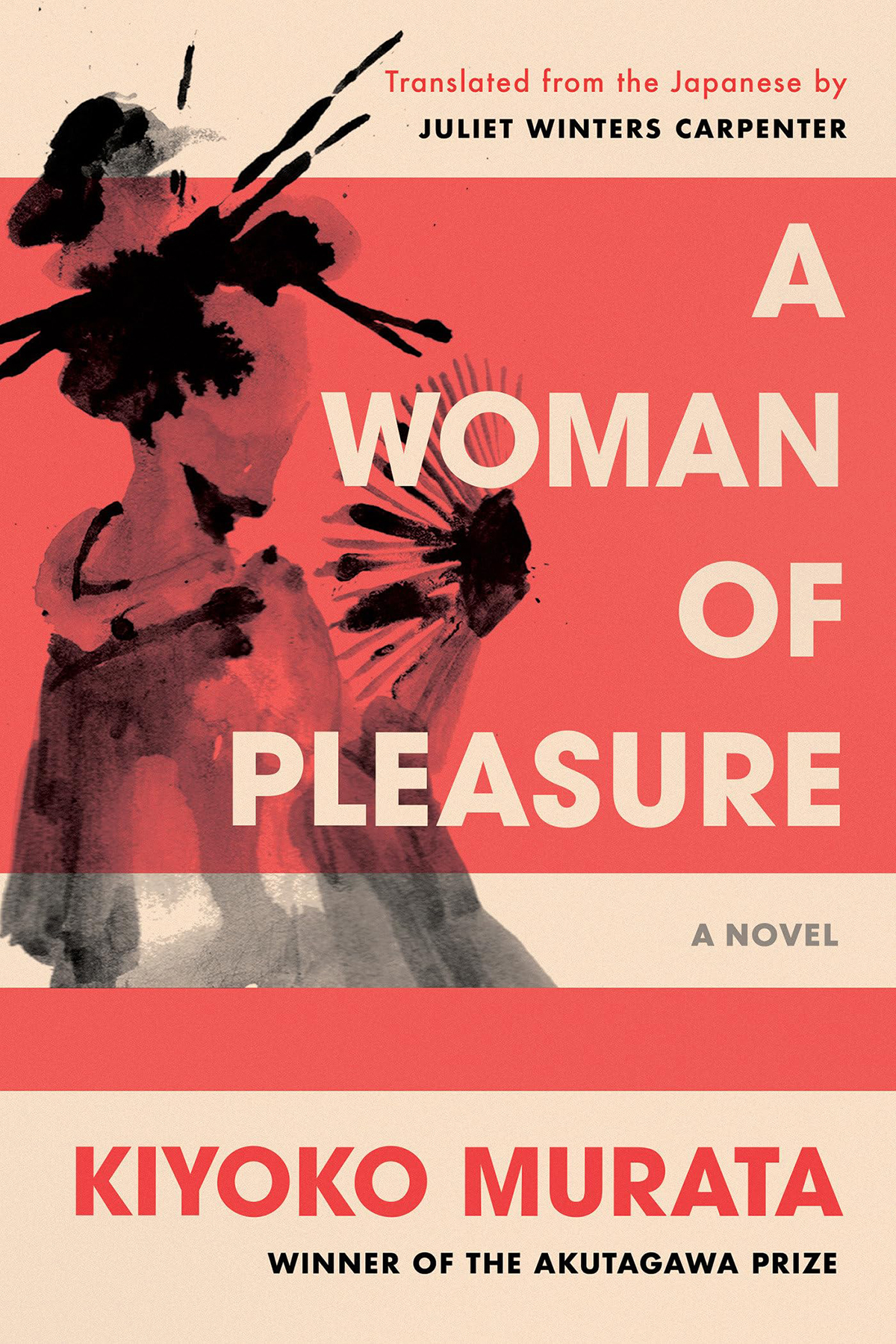
Kiyoko Murata’s A Woman of Pleasure is a feminist novel about the self-liberation of Japanese sex workers in the early twentieth century. It’s also a vibrant window into a different world and a true pleasure to read. Murata’s work has won almost every major Japanese literary prize, and Juliet Winters Carpenter has crafted a beautiful translation of her writing.

A Woman of Pleasure is set in 1903 in the adult entertainment district of Kumamoto, where the fifteen-year-old Ichi has been sold by her impoverished family to a high-ranking brothel. While she apprentices under a senior geisha, Ichi also attends literacy classes run by a retired entertainer named Tetsuko.

Ichi’s honest yet playful diary entries are interspersed between third-person accounts of her everyday life, the mundanity of which comprises the bulk of the novel. Despite the unfairness of her situation, Murata portrays Ichi with sympathy and dignity, as well as with a welcome touch of light humor.  

While the last fifty pages of the book describe how the women at Ichi’s establishment decide to exercise their legal right to leave, the majority of the story explains – very gently – why they would choose to do so. For a contemporary reader, there’s a lot to be upset about, but Murata never degrades her characters or their agency in shaping the course of their lives.

A Woman of Pleasure reminds me a great deal of Jun’ichiro Tanizaki’s classic novel The Makioka Sisters. Despite several startling and high-tension incidents, the book doesn’t have much of a plot. This is to its benefit, I think, as what’s interesting about Ichi’s story would be ruined by melodrama. Murata’s project is first and foremost to celebrate the essential humanity of the women who lived in a different era, but she also presents a compelling demonstration of how normal, ordinary people are capable of powerful political action.

Manazuru

Title: Manazuru
Japanese Title: 真鶴 (まなづる)
Author: Kawakami Hiromi (川上弘美)
Translator: Michael Emmerich
Publication Year: 2010 (America); 2006 (Japan)
Publisher: Counterpoint
Pages: 218

To return to the issue of sexism in literature (hopefully for the last time before laying it temporarily to rest), I think that, even as a book written by a man should not be automatically dismissed as sexist, so should a book written by a woman not be lauded simply because it was written by a woman. Take Manazuru, for instance. I love Kawakami Hiromi. For example, I think her 1998 collection of short stories, Kami-sama, was an imminently enjoyable exercise in magical realism, successful not only in its popular appeal but also in its critical reception. Her 1996 debut novel, Hebi o fumu, easily deserved all of the attention (like the Akutagawa Prize) that it won. Manazuru, on the other hand, is just plain boring.

The premise of the novel seems promising. Its protagonist is a writer named Kei, who lives in Tokyo with her mother and teenaged daughter. Her husband vanished twelve years ago, and now Kei finds herself inexplicably drawn to the seaside town of Manazuru. She is lead not only by her intuition but also by the ghost of a woman who occasionally appears and has conversations with her, albeit in a mostly antagonistic and cryptic way. Even though Kei is having an affair with a married man, she is still haunted by the memory of her husband, and she believes the key to his disappearance lies somewhere in Manazuru. Meanwhile, her daughter starts spending more and more time outside of the house, finally running away to meet someone whose identity she will not reveal. From this description, it would seem that several mysteries are afoot, each as compelling as the next.

Unfortunately, Manazuru is not the least bit interested in resolving any of these mysteries. What happened to Kei’s husband? We never find out. Who is the ghost that follows Kei around? We never find out. Who did the daughter run away with? We never find out. Answers are suggested in Kei’s garbled stream of consciousness narration, but then they are just as quickly dismissed. Did Kei kill her husband? Is the ghost that follows her around her husband’s dead lover? Did Kei’s daughter meet the ghost of her father? Maybe… But probably not.

In Manazuru’s defense, its plot is not its raison d’être. Its focus instead lies in the depiction of the mind of its protagonist in all of its complexity and confusion. Kei does not seem to know what she wants but is still searching for something, all the while immaculately and poetically detailing her experiences of drifting through life. Her thoughts give weight and meaning to the mundane, and she turns activities like riding the train into an art. Most of the novel is concerned with the details of her everyday life, like putting away her family’s winter clothes with her mother:

Handling so many different fabrics, heavy clothes, light clothes, makes my palms feel silky. I rise quietly, take the folded material from here to there. Bend down, lay it in a box. Fabric brushing against fabric, making the merest sound. Two women, one getting on in years, one starting to get on in years, pacing among the fabrics. With the tips of my fingers, I tear off the paper tag the cleaners stapled to the label last year. Replace the paper that lines the drawer, fold the old paper, throw it out. Straighten the new paper in the drawer, pile in the different materials, layer upon layer.

The same attention to style and detail is carried over into more dramatic moments, such as when Kei wanders around Manazuru, lead by a ghost in the middle of a storm. Such a narrative style drains such scenes of any sense of urgency, however, especially since Kei never seems to accomplish anything. The back of the book describes the novel as “a meditation on memory – a profound, precisely delineated exploration of the relationships between lovers and family members.” Indeed, if you’re into contemplative prose about the love and family lives of women, I suppose it doesn’t get much better than Manazuru.

Even if the front of the book didn’t declare it a “Recipient of the 2010 Japan-U.S. Friendship Commission Prize for the Translation of Japanese Literature,” I think I still might have gotten the feeling that this book was published because of its close proximity to the stereotype of Japanese women’s writing: meandering novellas about the feelings of women who pay more attention than is absolutely necessary to flowers, plants, and the changing seasons. Kawakami has written work that is playful, creative, and fiercely intelligent. I wonder, then, why such a very very serious and very very emotional and very very “literary” (in a very, very outdated sense of the word) book of hers is the first to appear in English translation. Michael Emmerich is a brilliant translator, as always; but, after his 2009 translation of Matsuura Rieko’s wonderfully subversive The Apprenticeship of Big Toe P, I feel that his talent has been somewhat wasted with a boring and rather vacuous book like Manazuru.

To return to the issue of fiction and gender, I was thinking about creating a new category for my reviews: “Women Writers.” However, reading Manazuru has convinced me that a writer should not be judged according to his or her gender; and, furthermore, that the reification of the gender of an author is not something I particularly wish to engage in and perpetuate. For the time being, then, I am going to hold off on the creation of this category and allow female writers to stand on equal ground with their male counterparts without being branded as “Women Writers” and having to bear all the cultural baggage that comes with the label.