Mothers

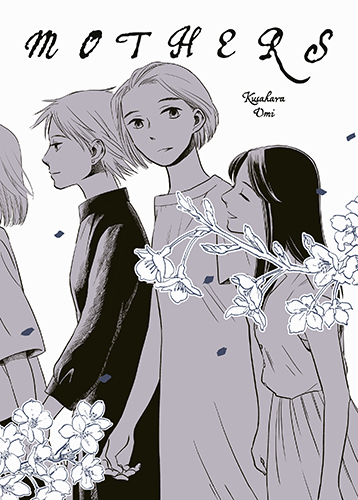
Mothers, released by Glacier Bay Books in April 2023 after a successful Kickstarter campaign, collects twelve one-shot manga stories about small but significant moments of kindness enacted in uncommon ways.

Umi Kusahara’s work is accented by touches of the fantastic but grounded in a reality that doesn’t pull its punches. These stories are particularly concerned with grieving and the emotional impact of loss, which is represented delicately but without sentimentality.

In the piece that lends its title to the collection, “Mothers,” two women visit the hospital beds of two teenagers who have only barely survived a horrible car crash. Each woman has a complicated relationship with the patient she visits, but they find sympathy and support in the connection they create with each other. As in the other stories in the collection, the catharsis lies in the moment of clarity when the characters can be finally honest with themselves about what they want and what will make their lives worth living.

Umi Kusahara originally self-published these short manga as dōjinshi, and it’s wonderful to see an American publisher uplifting noncommercial indie work that doesn’t fit into established genres. All of the titles in the Glacier Bay Books catalog are worth checking out, but I’m especially fond of Mothers, which I continually find myself returning to. Kusahara’s shōjo-inspired artwork is a lovely source of inspiration, and it’s a joy to bask in the sweetness of her worldview.

Glacier Bay Books is currently running a crowdfunding campaign for Fall 2025. The campaign will run until September 11, and this is a great way to check out and preorder their upcoming indie manga titles.

Dragon Goes House-Hunting

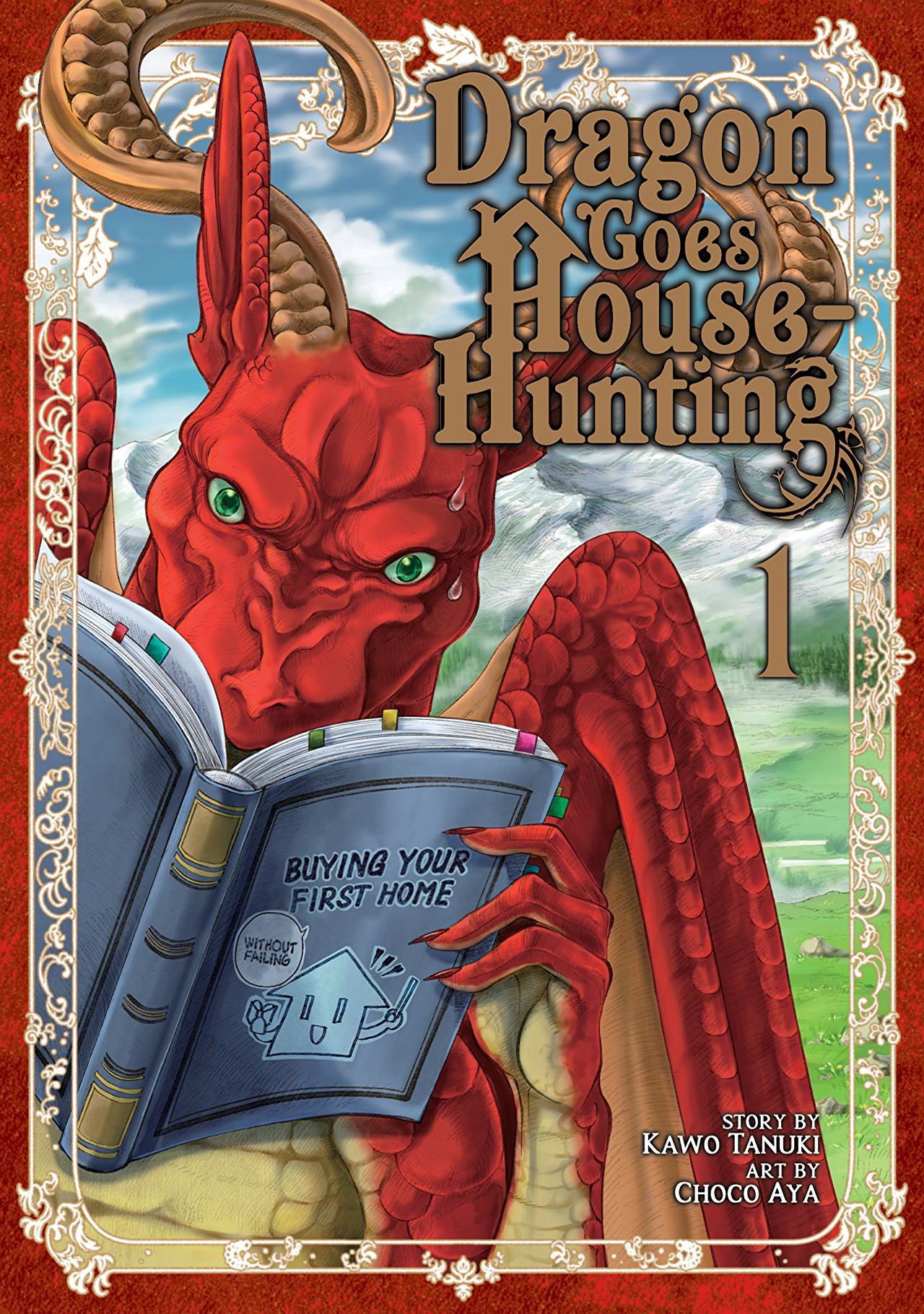
Earlier this year, Seven Seas released the tenth and final volume of Kawo Tanuki and Choco Aya’s fantasy series Dragon Goes House-Hunting. This manga follows the misadventures of a gentle but cowardly dragon named Letty and his real estate agent Dearia, a massively powerful and inhumanly beautiful dark wizard. Letty is searching for a comfortable house that will accommodate his size while also protecting him from the pesky adventurers trying to hunt him for crafting materials. While Letty pictures himself in a cozy cottage, Dearia encourages him to be more pragmatic and dungeon-minded.

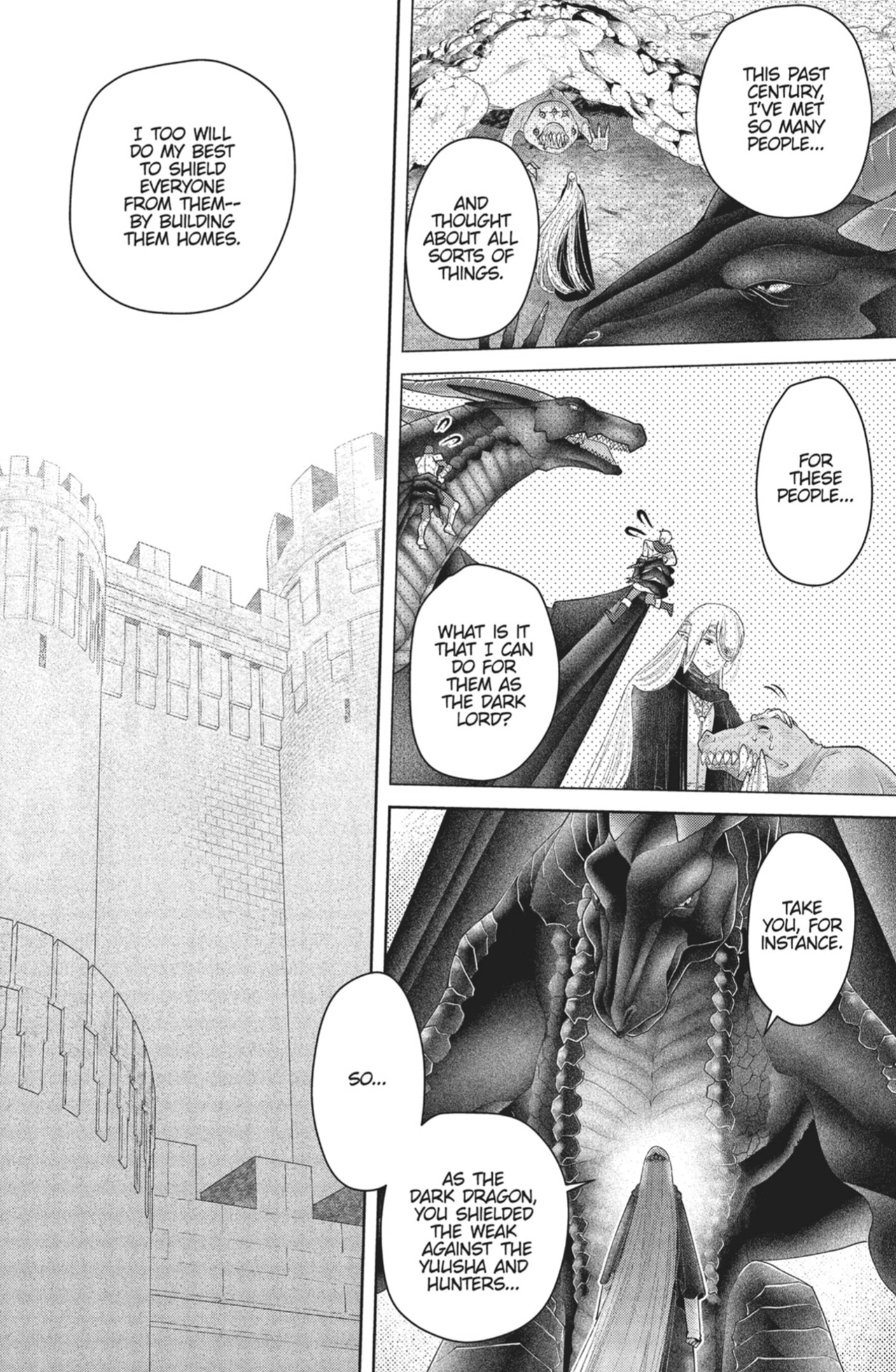
What makes Dragon Goes House-Hunting stand out in the “slice-of-life fantasy” genre is the consistently high quality of its art, which references the detailed monster designs from video game manuals of the 1990s while still feeling fresh and contemporary. For video game fans especially, it’s quite entertaining to look at dungeon design from the perspective of the monsters, who are just trying to make it through the day without being harassed by heroes. The manga’s situational humor is gentle and sweet, but each volume still managed to surprise me with at least three or four devilishly sharp jokes.

Perhaps the easiest way to describe Dragon Goes House-Hunting is to say that it’s the high fantasy version of the wholesome yakuza comedy The Way of the Househusband. Like The Way of the Househusband, Dragon Goes House-Hunting is designed to be accessible to all ages, but it will resonate most strongly with readers old enough to have some experience with real estate (even if that experience is limited to looking for a student apartment). For a more action-oriented and kid-friendly take on the concept of “building homes for monsters,” I’d also like to recommend the ongoing shōnen series Soara and the House of Monsters, which is a gorgeously creative celebration of fantasy architecture.  

Screenshot

室外機室

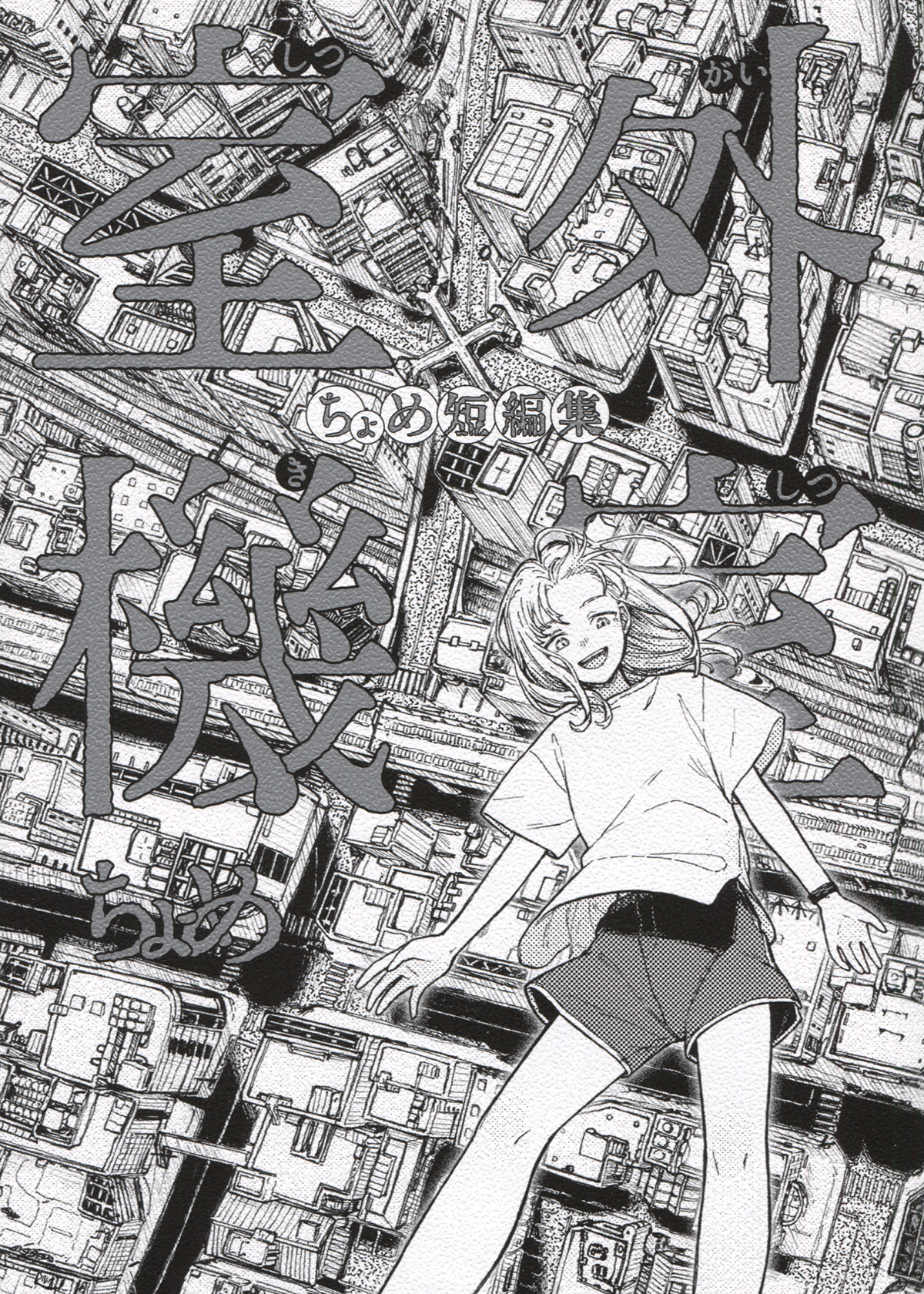
室外機室 collects four gorgeously illustrated magical realist stories drawn by an otherwise unpublished artist who goes by Chome. The stories transport the reader to a reality slightly removed from our own as each of the mundane protagonists catches a small glimpse of a hidden world.

I immediately fell in love with this collection from the opening pages of the first story, Tsugiho, in which a woman attends a large comic convention and finds a self-published minicomic that turns out to be brilliant despite its nondescript cover. The comic doesn’t seem to be documented anywhere online, so the woman starts writing a description. Her project quickly spirals out of control, however, as the pages of the small book seem to change each time she reads it. In the end, the woman’s essay transforms into an original illustrated short story, which she self-publishes and takes to the same comic convention where she found the mysterious comic that inspired her.

Speaking personally, I couldn’t describe the process of creative inspiration more accurately if I tried. What begins as a relatively straightforward act of casual appreciation can easily turn into something that has almost no relation to the original work at all, often to such an extent that the source is entirely forgotten by the end. In addition, it’s not always the case that creative inspiration comes from “the great works” of art and literature, as smaller and more specific stories can create a powerful sense of resonance and creative motivation even despite being unacknowledged by the broader culture. It’s nothing short of amazing that Tsugiho captures this aspect of creativity so perfectly in just twenty pages. 

The two middle stories are thought experiments that are far more beautifully executed than they have any right to be. In 21g no bōken (which illustrates the manga’s front cover), a young woman dies and finds that her ghost is able to go anywhere and do anything. This story is primarily an excuse to illustrate the joy of absolute freedom of movement, but the ending is quite touching. Meanwhile, Konshin takes place almost entirely in a woman’s bedroom as she sits at her desk and listens to a strange radio broadcast from a parallel universe in which history has developed in an entirely different direction. The strength of this story lies in its writing, but the uncanniness of the broadcast is augmented by the visual coziness of the woman’s apartment.

The fourth and final story, Chika tosho tankenshō, is a seventy-page graphic novella that blew me away with its creativity and charm. A young woman doing research at the library drops her eraser, which bounces into the crack of a panel at the bottom of a bookshelf. The woman opens the panel to find a staircase. To the woman’s surprise, there’s an enormous library complex underground, but something about it is decidedly strange. The staff is wearing traditional Japanese clothing, and none of the books have titles. The young woman quickly arrives at the conclusion that this isn’t a place she’s supposed to be, but can she escape without being caught by the librarians? And what are all the mysterious books?     

If I had the power to snap my fingers and make any manga appear in a licensed English translation, Shitsugai Kishitsu would be at the top of the list. This short story collection is a hidden treasure that easily stands its ground with the experimental but gorgeously polished work of emerging creators published by small presses like Silver Sprocket and Peow, and I could see any of these minicomics being released in the line-up of the ShortBox Comics Fair. Whoever the mysterious Chome may be, they’re creating brilliant and accessible comics that deserve an appreciative international audience.

Tower Dungeon

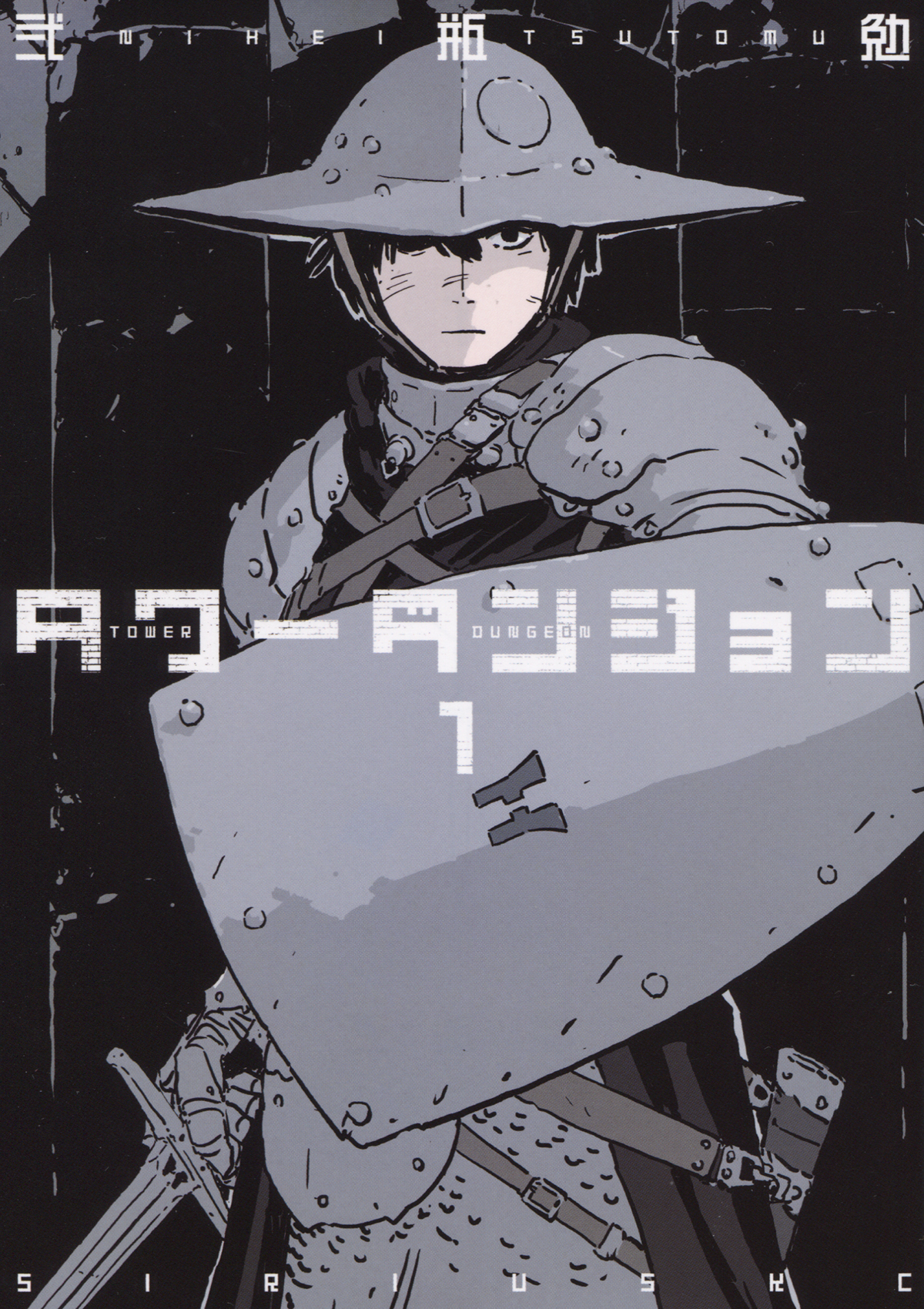
Tsutomu Nihei’s newest manga series, Tower Dungeon, is a grim and grisly dark fantasy about a small team of knights attempting to rescue a princess from an evil wizard at the top of the mysterious Dragon Tower.

This purposefully bog-standard fantasy premise is a bait-and-switch for the actual story, which is as brutal and fiercely imaginative as any of Nihei’s sci-fi dystopias. Instead of being set in the claustrophobic cable-choked interior of a spaceship, the visual space of Tower Dungeon is filled with vaulted ceilings and crumbling stone walls, but Nihei still dazzles the reader with labyrinthine passageways and an awe-inspiring sense of scale. 

Nihei’s signature body horror is on full display in Tower Dungeon, which is populated by the shambling undead, grotesque human graftings, uncanny automatons, and abject abominations. Even when they’re not monstrous, I love the designs of Nihei’s heavily armored knights.

There’s a bit of fanservice, sort of? But not really, and I’m not complaining. If I had to guess, I’d say that Nihei has a crush on Malenia, the deadly woman warrior from Elden Ring, but don’t we all.

The pacing of Tower Dungeon is excellent, and the action sequences are balanced by downtime and light banter that doesn’t try too hard to be funny. The characters offer very little exposition, but the background setting is intriguing. Given my experience with Nihei’s previous manga series, I’m not expecting the story to coalesce into any sort of cohesive plot, but I’m happy to join this strange journey wherever it leads.

I think, honestly, that Tower Dungeon is the Dark Souls manga I always wanted. I hope it gets an English translation soon!

Sailor Moon and Femininity

It would be many years before I would understand that femininity, the practice of femininity, and the fetishization of femininity degrades all women. That femininity is not a “choice” when the alternative is derision, ridicule, workplace sanctions, or ostracization. That femininity is a set of degrading behaviors that communicates one’s level of commitment to male authority and women’s oppression. That femininity is coerced appeasement, regardless of how successfully it is now marketed to young women as feminism.

So says Jill Twisty at her blog I Blame the Patriarchy.

I agree with her. So much has been written on this topic that I don’t need to be convinced that such a statement is true.

But… What if there were no men?

Or what if men existed, but simply weren’t that important? What if we didn’t live in a patriarchy? What if we didn’t live in a world where men are assumed to be the standard normative subjects and the ultimate bearers of political, legal, social, economic, religious, and sexual power? What if “femininity” didn’t need to be defined according to its deviations from “masculinity” (which connotes maturity, power, authority, and rationality), and what if “femininity” weren’t something to be performed for a presumed audience of men (and women who wield a male gaze)? Would femininity still be perceived as a submission to oppressive phallocentric interests?

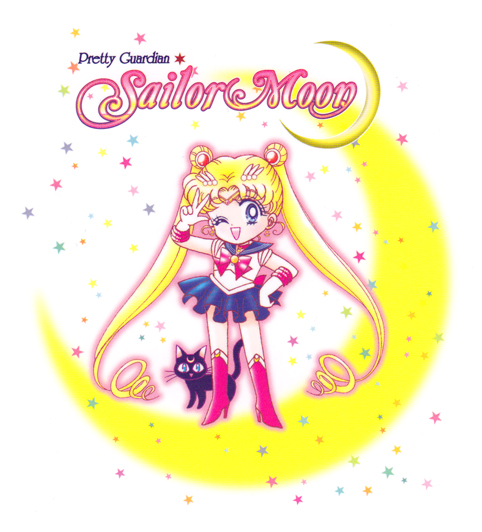
These questions form the core of why the manga Sailor Moon is so fascinating to me. A story about women, created by a woman, edited by a woman, written for a popular female audience, and enthusiastically embraced by an adult female fandom, Sailor Moon is an example of a homosocial female space in which women can talk about women and femininity without having to worry about what men are thinking.

Because the early volumes of the series are about young girls – and beautiful young girls (bishōjo) at that – their reception has not always been feminist-positive, however. For example, in his monograph Beautiful Fighting Girl, psychologist and cultural theorist Saitō Tamaki discusses the anime version of Sailor Moon as a prime example of why the “beautiful girl” trope appeals so much to men. In America, cinema scholar Susan Napier and anthropologist Anne Allison both take issue with the series, finding it a stale mash-up of tropes characteristic of the mahō shōjo (magical girl) genre as it has existed since the mid-seventies. Both scholars also view the anime series in particular as catering to a male audience eager for sexual titillation. Napier, for instance, finds the Sailor Scouts “lacking in psychological depth,” while Allison finds it troubling that the “girl heroes tend to strip down in the course of empowerment, becoming more, rather than less, identified by their flesh,” a trademark visual feature of Sailor Moon that “feeds and is fed by a general trend in Japan toward the infantilization of sex objects.”

Unfortunately, these evaluations do not take into account the female fans of the series, who seem to be less interested in the sexual aspects of the short-skirted female warriors and more eager to identify with the empowered femininity they represent. These fans are also willing to tolerate the weak characterization in the opening volumes of the series in order to enjoy the opportunities presented later in the story for the female heroes to develop their individual talents, personalities, and bonds with each other. In Sailor Moon, the female heroes begin as girls, but they gradually mature into capable and competent young women who must shoulder great responsibility and make difficult choices, usually without the support or interference of men.

To celebrate the recent North American release of a new translation of the Sailor Moon manga, an eighteen-year-old blogger on LiveJournal wrote of the series that:

[Sailor Moon] is a world where femininity is not something to be ashamed of, it’s the source of POWER. The girls don’t use their pretty clothes and jewels and compacts as playthings to impress men – these things are all weapons against evil, and powerful ones. They declare themSELVES pretty, needing approval from no one. Our hero possesses all the typical “chick” attributes – emotional, tearful, forgiving, loving, nurturing – and she uses these attributes to triumph and kick ass. She burns monsters alive with the purity of her love, sends out supersonic waves that shake the villains down when she bursts into tears, and her friendship and forgiveness is the most effective superpower one could ask for. The “girly” emotions and affectations are not something to be ashamed of or suppressed, but the source of the power these girls wield. They don’t have to imitate guy heroes at all or act “masculine” to be taken seriously – girliness is just as powerful.

Although someone like Saitō might see Sailor Moon as nothing more than a smorgasbord of tropes that can be endlessly combined and recombined to suit any male fetish, and although prominent critics such as Napier and Allison echo his reading, female readers find something entirely different in the series: they see a group of young women who fight not for the approval of a father or a boyfriend (or a male reader), but rather to achieve their own goals and ambitions. Moreover, they learn that being female isn’t something to be ashamed of; and, according to later developments in the series, neither is homosexuality or a transgendered identity.

Far from regurgitating the tropes of the magical girl genre, Sailor Moon creator Takeuchi Naoko overturned the conventions of both shōjo romance for girls and bishōjo fantasy for boys. Furthermore, the female fans of Sailor Moon aren’t invested in the series merely in order to lose themselves in fantasy (and spin-off merchandise), but rather because they find that the series empowers them to combat real-world problems directly related to the assumption that young women and the femininity associated with them exist only to please men. The fantasy created by Sailor Moon is not an escape from the gendered conventions and restrictions of reality, but rather a safe space in which these aspects of reality can be tested and challenged. Perhaps this is why Sailor Moon has appealed to so many women outside of its target demographic, and perhaps this is why it has appealed to so many boys and men as well.

If you haven’t read Sailor Moon, the Kodansha Comics re-release is beautifully published and contains a wealth of translation and cultural notes that help make sense of the story and characters. The first two or three volumes of the series can come off as a bit childish; but, as the characters grow and mature, the story does as well. If you’re a girl or a guy, or if you’re a serious manga reader or don’t read many manga at all, Sailor Moon is worth reading simply for the experience of entering a world in which femininity is indeed ” is not something to be ashamed of” but instead “the source of POWER.” The manga is also an excellent introduction to an alternative realm of discourse (common in Japanese manga and spreading to Western comics – partially due to the influence of Sailor Moon) in which female writers and artists can tell their own stories without really worrying about how men are reading and looking at them.

If you’re intrigued, check out the Sailor Moon Manga Moveable Feast hosted by Sean Gaffney’s at A Case Suitable for Treatment over on Manga Bookshelf.
Gate 7

Title: Gate 7
Artist: CLAMP
Publication Year: 2011
Publisher: Shūeisha
Pages: 180 (per volume)

There is a haiku by Bashō that goes something like “even in Kyoto, I miss Kyoto” (Kyō nite mo kyō natsukashi ya hototogisu). I love Kyoto, and I think I know what Bashō was talking about. Kyoto is a special place. The food is delicious, the city is filled with countless shrines and temples, all sorts of interesting historical stories happened in Kyoto, the tea and vegetables grown just outside of Kyoto are amazing, there’s a vibrant nightlife catering to the students who come to the city’s numerous universities, tons of artists and craftsmen make their homes in Kyoto, and the local sake is out of this world.

Almost every grade-school student in Japan gets dragged on a class trip to Kyoto at least once, and even adults make pilgrimages to Kyoto to see the sights (especially during the spring and fall, when the cherry blossoms and maple leaves are at their best). Since Kyoto is only about two hours away from Tokyo by bullet train, the city also has a reputation as a good place to go for romantic getaways and weekend partying. Kyoto is totally awesome, and almost everyone in Japan has been there at least once, so it’s always been surprising to me that there aren’t more manga set there. CLAMP’s new fantasy series Gate 7, however, is like a love song to the ancient capital.

Gate 7’s teenage protagonist, Takamoto Chikahito, is just as much in love with Kyoto as I am, but he has somehow managed to make it almost all the way up to high school without having ever been there. He saves up enough money to make a solo visit to see the sites; but, on his very first trip to a famous Kyoto shrine called Kitano Tenmangū, he is suddenly transported onto a magical battlefield. Chikahito witnesses a beautiful young warrior with an enormous sword defeat a strange creature before passing out. He wakes in a house near the shrine, where he is attended by the child, named Hana, and her two older companions, Sakura and Tachibana. Sakura, a kind-hearted and cheerful young man involved in the world of geisha and maiko, and Tachibana, a serious and sullen college student, discuss how strange it is that Chikahito was able to enter the magical realm. Tachibana then attempts to erase Chikahito’s memory but fails. In the final coup of strangeness, the androgynous Hana kisses Chikahito and tells him that s/he’ll be waiting.

At the beginning of the second chapter (actually the first chapter, as the previous chapter is considered a “prelude”), Chikahito has somehow been transferred to a high school in Kyoto. As soon as he gets off the train that has brought him to the city, he sets off for a famous soba restaurant, where by chance he encounters Hana, who is as happy to see him as s/he is to eat bowl after bowl of noodles. Chikahito is soon dragged into another magical fight with Hana, in which it is revealed that all creatures are affiliated with either light (陽) or darkness (陰). Sakura is affiliated with darkness, Tachibana is affiliated with light, and Hana, for some mysterious reason, can fight using the power of either. By the end of the day, Chikahito finds himself invited to live with the trio in a traditional Kyoto townhouse in the Ura-Shichiken district (the hidden side of the Kami-Shichiken neighborhood around Kitano Tenmangū), an invitation which he ends up accepting, to his own consternation. It turns out that, during their first meeting, Hana had cast a spell on Chikahito that would cause him to return to the Ura-Shichiken.

The second and third chapters of the volume develop this fantasy version of Kyoto a bit further. The reader learns, for example, that major historical figures have been reincarnated in our own time, and that these personages are battling over both the position of head of their respective families and the possession of the legendary familiar spirits called “oni” that are connected to these positions. Chikahito also learns that Hana unique in not being affiliated with light or darkness, and that he is special in the same way. Furthermore, he can see oni, which normal humans cannot. In other words, there’s a lot going on behind the scenes in Kyoto that most people don’t know about, and Chikahito has somehow found himself right in the middle of a conflict spanning hundreds of years and multiple dimensions.

Gate Seven moves quickly through both plot points and battle scenes, but I found it to be a perfect balance between an action-oriented title like Tsubasa: Reservoir Chronicle and an exposition-oriented title like xxxHolic. Backgrounds, dialog bubbles, and movement between panels are all handled effectively and artistically. The character designs are appealing and seem to be drawn from a wide range of CLAMP styles, such as those on display in series like Legal Drug and Kobato. Veteran readers of CLAMP’s work should find themselves right at home:

Chikahito is appealing as a hapless yet loveable protagonist, much like Hideki from Chobits. Also reminiscent of Chobits is the character Hana, who occupies a strange liminal position between ontological dualities. Is Hana a boy or a girl? Is s/he a child or an adult? Is s/he a person or a pet? Is s/he innocent and weak or completely in command of the situation? Is s/he even remotely human?

There is a lot of magic and mystery contained between the pages of Gate 7, as well as some interesting historical revisionism. The series plays with questions such as: What if Buddhist magic (妙法), as well as the principles underlying Taoist divination and geomancy, were real? What if the Shinto gods were real? What if the major figures of Japanese history were somehow more than human?

The city of Kyoto, with its temples and shrines and traditional houses and narrow alleys and delicious soba restaurants, provides a pitch-perfect backdrop to the story. At the end of the volume is a section called “Wandering Around Kyoto” (ぶらり京めぐり), which provides addresses, websites, and other information about the real locations visited by the characters. Dark Horse has the North American rights to the manga, and I hope they’ll include lots of Kyoto trivia (as well as historical and cultural information) in their own translation notes when they release the first volume this October. Gate 7 is shaping up to be a good story, and it’s interesting just as much for its setting and its take on history as it is for its fights and its handsome male characters.