First Love

Rio Shimamoto’s 2018 novel First Love is a psychological mystery about a beautiful college student who has been arrested for the murder of her adoptive father. Although it tackles serious themes, this story is compulsively readable. All of the characters bring emotional baggage to the table, and Shimamoto teases out the reader’s sympathy as each of their histories is revealed.

Yuki Makabe is a clinical psychologist who specializes in parenting and childcare. She’s ambitious, and she’s on the verge of making a career transition to media appearances and popular audience articles. When Yuki’s brother-in-law, Kasho, is assigned to the high-profile case of Kanna Hijiriyama, a college student accused of killing her father, he asks Yuki to help him interview the young woman in order to ascertain her motive. Yuki’s prospective editor at a major publisher, a friendly young man named Tsuji, asks her to write about the case, so she agrees.

Yuki is happily married to an internationally famous photographer who supports her career by shouldering the majority of the responsibilities involved in the care of their son. Despite her loving relationship with her husband, Yuki has a troubled past with Kasho that neither of them is willing to discuss. While she and Tsuji work together on Kanna’s case, Yuki must navigate her strained relationship with Kasho, who is very charming but a bit of an asshole.

Kanna presents Yuki with another set of challenges. To begin with, Kanna can’t explain why she wanted to hurt her father, or even whether she intended to hurt him in the first place. But, if she never meant to attack him, what was she doing with a knife? To make matters more complicated, one of Kanna’s college boyfriends gives an interview to a tabloid magazine and says that Kanna went crazy after they broke up. Even Kanna’s own mother claims the young woman is crazy.

Yuki is convinced that Kanna is far from “crazy,” but the truth of the matter is elusive. Kanna is traumatized by the death of her father, and Yuki quickly realizes that the young woman’s trauma is much more extensive.

Based on the title of the novel and the relationship between Kanna and the person she may or may not have killed, a reader might suspect that there is underage incest involved. I hope I can be forgiven for spoiling the story by saying that, thankfully, this is not the case. Regardless, Kanna didn’t have a happy home life as a child. 

I’m afraid that some readers may find Kanna frustrating, but her portrayal feels extremely realistic to me. I definitely knew people like this in high school and college. Generally speaking, these girls (and occasionally boys) were intelligent and competent, but they had a habit of saying whatever they needed to say to diffuse an awkward situation. 

This behavior wasn’t “lying” or “being dishonest” so much as it was a manifestation of fawning, an alternative to the “fight or flight” response that’s common in young people who live in hostile home situations. Instead of fighting their parents or running away from home, “well-behaved” children and teenagers will contort their speech, emotions, and understanding of reality to ease tension. Issues often arise when this behavior carries over to romantic and professional relationships that would benefit from honesty.

Although this element of the story isn’t presented as a mystery to be solved, Yuki is confronted with the issue of whether Kanna truly consented to sex with two of the key romantic partners in her life. I can completely understand how the men involved might have understood Kanna’s words and behavior as expressing consent, but I also understand how Kanna could later admit that sex isn’t what she wanted, and that she was just going along with what was expected. As the author demonstrates, Kanna’s inability to understand her own boundaries is directly related to the emotional abuse she endured as a child.

Shimamoto doesn’t lean into an overtly feminist message, but there are multiple points in the story when Yuki comes into contact with the sort of ambient misogyny that might compel a vulnerable young person like Kanna to second-guess her own emotions and sense of self-worth. At the beginning of the novel, for example, Yuki reflects on a conversation between a male television producer and his younger female colleague that she overheard as she entered the studio.

As I was getting my makeup done, I examined my own features: not bad, but not particularly beautiful either. A face with no distinctive features. The only thing that stood out was my collarbone, protruding above my shirt.

I’d met that male producer several times previously, but he’d never once made eye contact with me. There were men like that everywhere in the television industry – men who wouldn’t engage in conversation with women they’d give less than an eight out of ten on looks. Men who thought nobody would notice this behavior. Or maybe they just thought it didn’t matter. These were men who had never suffered a single setback in their lives.

This is the sort of observation that, while eminently relatable to many people, would have Yuki called crazy if she spoke it out loud. It’s not “misogyny” or “sexism” if the male producer isn’t doing anything wrong, right? It’s not like he actually said anything offensive to Yuki, or to his younger colleague. This man’s behavior is rancid, but no one will ever call him out on it. Yuki has a supportive family and professional colleagues who aren’t human garbage, so she can cope. But what about Kanna, who hasn’t yet found a support network to replace her abusive family?

What Shimamoto criticizes in First Love are the gendered aspects of a social system that allows toxic men to flourish. First Love doesn’t offer easy solutions, but Shimamoto demonstrates that we can all be allies in pushing back.

Yuki’s husband is a prince from start to finish, and her editor Tsugi is able to see what happened to Kanna with clear eyes while re-evaluating his own perspective and never apologizing for the bad behavior of other men. Kanna’s defense lawyer Kasho has issues of his own due to childhood abuse at the hands of his mother, but he’s an adult who is capable of realizing his limitations – which is why he arranges for a series of meetings between Yuki and Kanna in the first place.

Without spoiling too much of the plot, First Love connects the stories of a number of characters who begin to question their past behavior in light of Kanna’s upcoming trial, and Shimamoto helps the reader to sympathize with these characters even when they behave badly. The point is not that men are evil or that women are innocent victims. Rather, it’s important to extend empathy instead of overlooking questionable behavior.

Putting the social relevance of the novel’s themes aside, First Love is a fun book to read. I got sucked into the story immediately. Like Yuki, I was instantly intrigued by the mystery presented by the death of Kanna’s father. Kasho’s defense argument during Kanna’s trial felt like a major revelation unfolding before my eyes, and I admire how carefully Shimamoto laid each brick in the wall. Louise Heal Kawai’s translation is featherlight and flawless and sets the tone perfectly.

I’d recommend First Love not just to fans of mystery and suspense, but to any reader interested in a compelling character drama that offers a number of different perspectives on family, mental health, and the darker aspects of everyday interactions that often go overlooked.
Hoshikuzu Kazoku

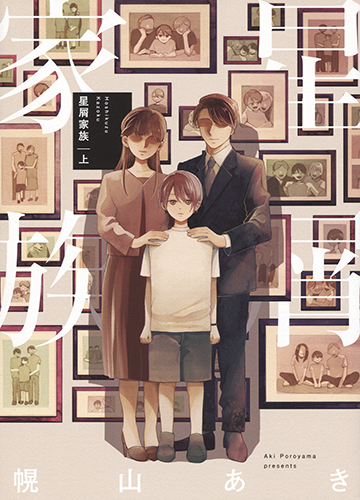
Hoshikuzu Kazoku (星屑家族) is a two-volume graphic novel set in an alternate universe where parents are required to obtain a license to raise children. To qualify for a license, a prospective family is asked to undergo an audition with a homestay student. This auditor, who is often an orphan raised in a government-run facility, evaluates the family’s fitness by deliberately behaving badly and provoking difficult situations. 

An auditor who goes by Hikari is assigned to Daiki and Chisa Hirokawa, a young couple who live on the grounds of a Shinto shrine. During their initial interview, Daiki surprises Hikari by openly requesting that their family be denied a childrearing license. Daiki claims to be happy living with his wife as a couple, and he shares his suspicions that Chisa doesn’t actually want children. With that out of the way, Daiki says, the three of them can enjoy the homestay visit without any pressure or expectations.             

Chisa and Daiki genuinely seem to be happy together, but Hikari soon notices that Chisa is the target of a longstanding prejudice held by people in the neighborhood. Chisa’s mother killed her father when she was a child, and she’s been ostracized ever since. Along with her foster father, who once managed the shrine, Daiki was the only person who was kind to her. Now that she and Daiki have married and set up a household at the shrine, Chisa feels trapped within a community she can’t escape. Why, then, does she want a child so badly? And is it Hikari’s place to get involved?

Hoshikuzu Kazoku is a high-stakes family drama that presents a moral conundrum with no easy solutions. If the government creates regulations to ensure a well-ordered society, what happens to the people whose lives are more complicated than the provisions allowed by the legal code? If there’s room for flexibility in the bureaucratic system that enforces the law, who should have the right to grant exceptions? And more specifically, in a country witnessing its birth rate decline in response to the disintegration of community support structures, what are the limits of government intervention?

Even putting such questions aside, Hoshikuzu Kazoku is compelling by virtue of its problematic yet still sympathetic characters. Hikari, Daiki, and Chisa each bring loads of emotional baggage to the table, but they do their best to communicate to the limited extent of their abilities. Despite their many flaws and the odds against them, I wanted these characters to be happy.

Aki Poroyama’s writing, dialogue, and pacing are all excellent, and the visual language of the manga serves to set the mood and create dramatic impact. I wasn’t familiar with the work of this artist, and I was amazed by the polish of this graphic novel. I’d recommend Hoshikuzu Kazoku to mature readers looking for socially conscious speculative fiction driven by complicated human stories. 

Mina’s Matchbox

Tomoko is only twelve years old when she loses her father to cancer. To learn to support herself, Tomoko’s mother attends a dressmaking school in Tokyo, where she lives in a student dorm. From 1972 to 1973, Tomoko is sent to live with her aunt in Ashiya, an upscale suburb between Osaka and Kobe. Her uncle is the president of an international soft drink company, and his house is extravagantly large and quite grand. Tomoko’s cousin Mina lives a charmed life marred only by her asthma, which is serious enough to necessitate frequent hospital visits.

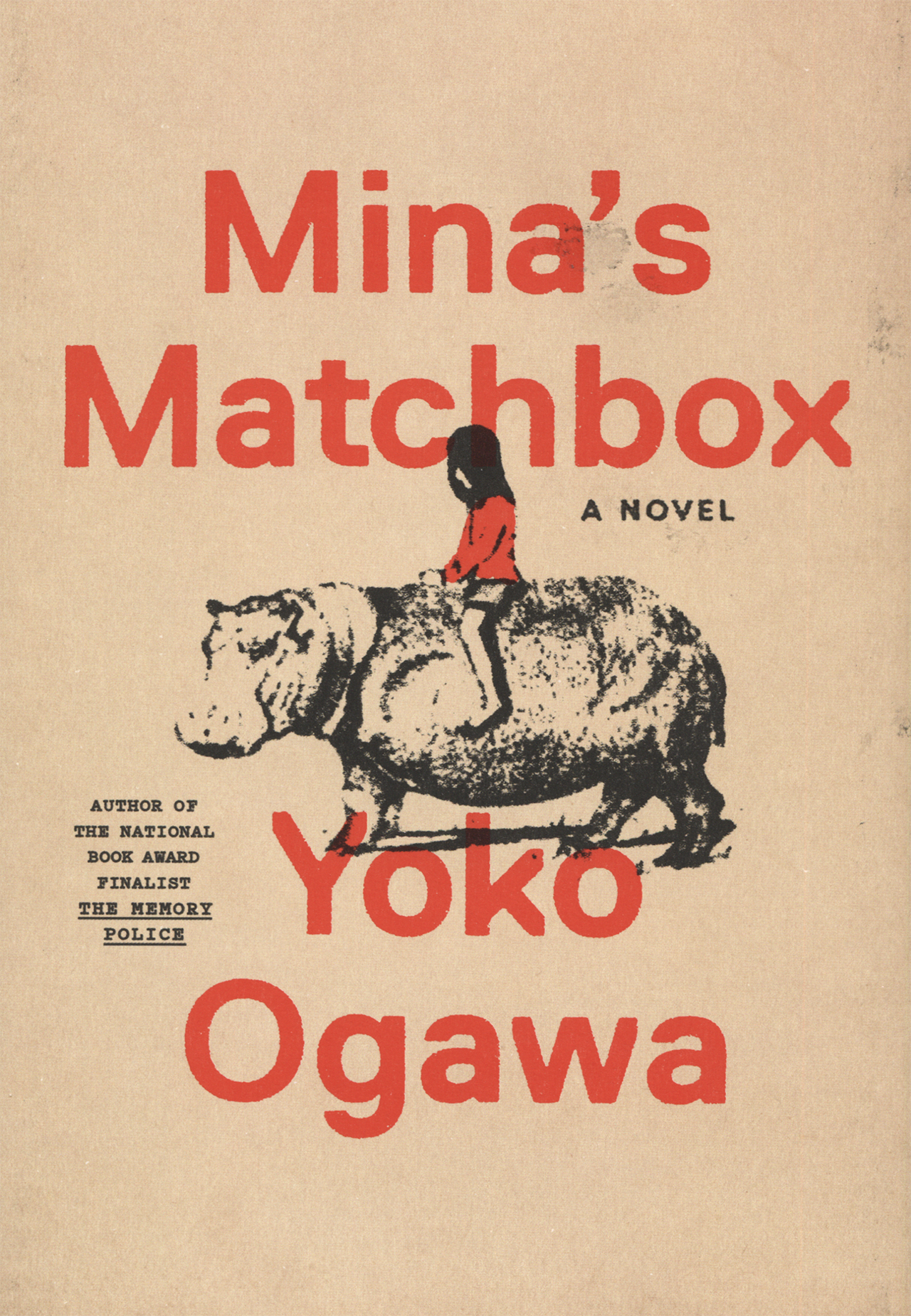
Mina’s grandmother Rosa emigrated from Germany in 1916, and the family’s house is filled with beautiful things, from foreign furniture and luxurious cosmetics to exotic Christmas paraphernalia to a room covered in Islamic tiles and used for a holistic health treatment called “light bathing.” Perhaps the most intriguing thing about the house is Mina’s pet, an aging Liberian pygmy hippopotamus named Pochiko who carries Mina to school every morning. The household is managed by Yone-san, an elderly woman who is ostensibly Rosa’s maid but can more properly be called her companion and life partner.

Tomoko’s aunt is attractive, elegant, and kind. Her uncle is handsome, friendly, and good-natured. The family’s groundskeeper and driver, Kobayashi, is a sweet and patient man whom everyone loves. The entire family welcomes Tomoko with style and grace, and she quickly becomes fast friends with Mina. The opening chapters of Mina’s Matchbox unfold almost like a Studio Ghibli movie, and I couldn’t help envisioning the characters in the style of When Marnie Was There.

To add to the magical atmosphere, Mina is thoroughly charming. She reads well above the level of a sixth grader and asks Tomoko to check out books from the local library like Yasunari Kawabata’s House of the Sleeping Beauties and Katherine Mansfield’s The Garden Party. Mina conveys her comments on these books to Tomoko, who shares them with the gentle young librarian she fancies.

Meanwhile, Mina has a crush on a deliveryman for her father’s company who drops by the house every week. During each visit, he gives Mina interesting matchboxes that he picks up on his rounds. Inspired by the graphics printed on the boxes, she writes short stories on paper that she uses to adorn the inside of the small containers she uses to store her collection. These stories are often fables about animals or other small creatures, and Tomoko loves them.

Mina’s Matchbox is a Yoko Ogawa novel, so it goes without saying that all is not well. Quiet tensions flow underneath the family’s beautiful surface, which is marred by the infidelity of Tomoko’s handsome uncle. To give herself a sense of purpose, Tomoko’s aunt combs through magazines searching for typos so that she’ll have an excuse to send letters of complaint. Mina’s older brother writes to the family from Switzerland but never mentions his father. In her devotion to Rosa, Yoneda-san almost never leaves the house and is frightened by everything outside of her immediate sphere of influence.

Nothing bad happens, and this definitely isn’t the sort of novel where the sick child dies. I hope it’s not a spoiler to say that both Mina and Tomoko go on to live happy lives. Aside from subtle but meaningful character development, Mina’s Matchbox doesn’t have much in the way of plot.  

Regardless, this isn’t a slow novel. The pacing is excellent, and I finished the book quickly. In fact, I would have liked to spend more time with it. Every sentence is perfect, and each paragraph is a joy. Despite the child protagonists, Mina’s Matchbox has all the nuance of an adult perspective and steadfastly refuses to engage in melodrama. Reading this novel is like sitting outside and enjoying the sunshine on a warm spring day, and it’s a pleasure to follow the gradual progression of the small stories surrounding Mina and Tomoko as recounted in Ogawa’s impeccable prose.

The Adventures of Duan Surk: Witches’ Forest

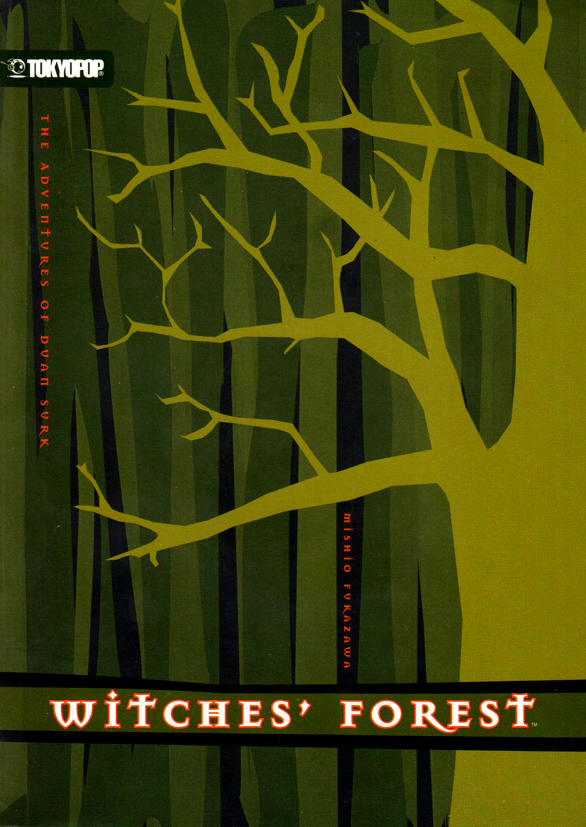
Witches' Forest

Title: The Adventures of Duan Surk: Witches’ Forest
Japanese Title: デュアン・サーク ― 魔女の森
(Duan Sāku: Majo no mori)
Author: Fukazawa Mishio (深沢 美潮)
Illustrations: Otokita Takao (おときた たかお)
Translator: Catherine Barraclough
Publication Year: 2006 (America); 1996 (Japan)
Publisher: Tokyopop
Pages: 328

This book is kind of stupid. It’s a mess of tropes and clichés liberally borrowed from the early Zelda and Final Fantasy games written in a style aimed at the lowest common denominator. There is no depth to the story, the characters, or the writing. Witches’ Forest is a light novel, and it reads like a light novel: shallow, superficial, and disposable by design.

Nonetheless, I think Witches’ Forest is an interesting and important book, especially in translation. Before I explain why, allow me to give a brief plot summary.

Duan Surk is an orphan in a world plagued not only by vicious man-eating monsters but also by war. He was raised in a small town by his brother Gaeley, a hale young man who took on various odd jobs to order to be able to provide medicine and care for the sickly Duan. The young Duan makes up for his lack of physical strength with an inquisitive mind; and, by the time he is fourteen, Gaeley is confident enough in Duan’s ability to make it in the world that he himself decides to leave the town in order to become a soldier. Gaeley is everything to Duan, so the young Duan decides to become a fighter like his brother. Duan fails the physical portion of the initial test of the Adventurer’s Club guild, but the army will take anyone, so off to the army he goes. After spending a year as a cook’s assistant, Duan returns to camp after spending the day gathering ingredients only to find his entire battalion vanished into thin air, leaving only empty tents and smoldering fires behind. He straps on a sword and rushes into a nearby forest with a vague plan of rescue in mind, but the forest is enchanted, and Duan soon finds himself hungry, lost, and in dire peril.

This is where we find our hero at the beginning of Witches’ Forest, but Duan soon stumbles upon two traveling companions: Olba October, a battle-hardened veteran adventurer in his twenties, and Agnis R. Link, a sixteen-year-old sorcerer with a penchant for fire magic who may or may not be a princess in disguise. Both of these characters are trying to get to the mansion at the heart of the forest, wherein two witches are said to dwell. Olba wants treasure, and Agnis wants revenge. Before they can reach the witches, however, they must brave the dangers of the surrounding forest and the traps set up in and around the house itself.

The adventures of the trio are solidly structured upon a foundation of RPG tropes and gameplay mechanics. Agnis is the perky refugee, Olba is the jaded older guy, and Duan is just about every main player-protagonist to ever appear in a JRPG. The characters randomly encounter monsters drawn directly from D&D dungeon master guides, and they earn experience points when they defeat these monsters. Their Adventurer Cards keep track of their experience points, and, when they earn enough, they gain a level. They are equipped with a full arsenal of Zelda items, from the port-o-lant (which “uses low-cost solid fuel made of Zora oil”) to the coily coily rope (“the definitive version of the hooked rope”), and Agnis in particular has to worry about running out of MP (“magic points,” or magical energy). The trio is accompanied by a flying baby dragon/fire lizard that can talk and use low-level healing spells and is somehow fuzzy despite being reptilian. The only thing the party doesn’t have is a bag of holding, as they’re constantly lugging their adventure gear around with them and getting into petty arguments over who has to carry what.

One of the most engaging parts of Witches’ Forest is Agnis’s backstory, which involves a heartbroken yet politically ambitious stepmother who sinks to Cersei Lannister depths of dastardly scheming. Within this family drama, characters change and grow and are faced with problems that have no obvious solutions. For the most part, though, the novel focuses on the three main characters running around and hitting things with swords and spells. Each of these battles requires some minor element of strategy but is relatively brief. Sentences are short and declarative. Each paragraph contains about three to six sentences. There are no anime-style illustrations, but the text is interspersed with various material drawn from its fantasy world, such as copies of the characters’ Adventurer Cards, advertisements for magical items, and overworld and dungeon maps. At the end of the book is a three-page bestiary of monsters that appear in the story, which is illustrated in a style highly reminiscent of mid-1990s fantasy anime like Record of the Lodoss War or Magic Knight Rayearth.

Witches’ Forest feels extremely dated, which makes sense, as popular culture has moved on in the almost twenty years since the book first came out in 1996. What makes the novel interesting is that it captures the spirit of its age so well. Neon Genesis Evangelion aired during the fall season of 1995 and ended up drastically changing the playing field; but, before that, many popular anime for the young adult demographic were based on light novels such as Slayers and Irresponsible Captain Tylor, which are just as goofy as they are epic. The humor, the fighting, the yelling, the zany adventures, and the group of ridiculously disorganized young people resolving volatile political stalemates entirely by accident are all strongly reminiscent of the anime of the time. It goes without saying that all of this media is closely connected to the themes and stylistic conventions of video games before they made the leap to the 32-bit era. In this way, Witches’ Forest is like a time capsule from a bygone era.

Tokyopop’s release of this book in translation also calls to mind the cultural atmosphere in the United States of a little less than ten years ago. Excitement over Japanese entertainment media such as anime, manga, and video games was almost visibly swelling as new anime conventions popped up every year and bookstores devoted an ever-increasing amount of shelf space to manga. The spark of interest in young adult fiction kindled by the Harry Potter books had leaped into a blazing inferno with the sudden popularity of the Twilight series, and the teenage demographic was on fire in terms of marketing value. Tokyopop was licensing one manga series after another, Viz Media was using its profits as capital to test new markets, and even the mighty Hachette Publishing Group was launching a new imprint devoted to all things manga. Tokyopop had begun to translate light novels, and certain titles, such as Yoshida Sunao’s Trinity Blood series and Ono Fuyumi’s Twelve Kingdoms series, were proving popular with crossover audiences. 2006, the year that Witches’ Forest was published in translation, was the absolute peak of the anime and manga industry in the United States (at least in terms of sales numbers). The market was diversifying and had the support of major retail chains, complaints about internet piracy and entitled fans were few and far between, and it seemed as if anything was possible.

As I wrote at the beginning of this review, Witches’ Forest isn’t written for those seeking a multilayered story, beautiful language, or thematic and allusive depth. Instead, it’s meant to be a quick and enjoyable read, and it serves its purpose admirably. As such, it’s a perfect representative of the literary medium of light novels. The market for light novels in Japan is relatively large, so books like the Duan Surk series, which aren’t particularly brilliant or original, can still thrive and reach a large audience. In the United States, however, the publishing market is tough and the market for young adult novels in translation is infinitely tougher. The crazy manga boom of the last decade was thus necessary for something like Witches’ Forest to appear on bookstore shelves.

Witches’ Forest is therefore an interesting cultural artifact that serves as a window into both the Japan of the 1990s and the United States of the 2000s. Its value as a tangible index of pop lit history aside, the novel is a lot of fun to read, especially for fans of video games and anime. For an older readers, the experience of reading the book may evoke a certain sense of nostalgia, while a younger reader might be able to enjoy the “what was old is new again” thrill of encountering tropes and narrative patterns that now fall slightly outside of the mainstream.

There are four books in the Duan Surk series, and all of them are available in English translation from Tokyopop. Although used copies can be found through various distributors, the best way to get your hands on new copies of all of the books in the series is through the anime retailer The Right Stuf, which is a treasure trove of out-of-print light novels in translation.

The Makioka Sisters

Title: The Makioka Sisters
Japanese Title: 細雪 (Sasameyuki)
Author: Tanizaki Jun’ichirō (谷崎潤一郎)
Translator: Edward G. Seidensticker
Publication Year: 1948 (Japan); 1957 (America)
Publisher: Vintage International
Pages: 530

In his introduction to Shimazaki Tōson’s The Broken Commandment (破壊), translator Kenneth Strong lists Tanizaki’s The Makioka Sisters as one of the five most famous works of Japanese literature in the West (along with Kawabata’s Snow Country, Sōseki’s Kokoro, Abe’s Woman of the Dunes, and Mishima’s Temple of the Golden Pavilion). Strong wrote this essay in 1972, and, since then, I would say that Naomi has replaced The Makioka Sisters as the Tanizaki text that is most frequently taught. The formation of national identity in the pre-war period is a hot topic in Japan-focused scholarship these days, especially when the evils of modernity are represented by a sexy young woman. Regardless, The Makioka Sisters is still an excellent novel.

As the English title suggests, the novel is about four sisters who live in a suburb of Osaka. Tsuruko and Sachiko, the two older sisters, are married, but the two younger sisters, Yukiko and Taeko, are not, and therein lies the main conflict of the novel. Eldest sister Tsuruko moves to Tokyo after her husband gets transferred, so the task of marrying off third sister Yukiko falls to second sister Sachiko and her (Tanizaki stand-in) husband Teinosuke, who remain in Osaka. The problem is that they can’t find a suitable husband for the shy traditional beauty, who has entered her thirties under the shadow of rebellious youngest sister Taeko, who cares nothing for the family’s reputation.

After Tsuruko and her family move to Tokyo, they all but disappear from the story, which is fine, since the author has more than enough material to work with concerning the three sisters who stay behind. Each of the three is an interesting and fully developed personality in her own right, and they have plenty of floods, illnesses, and secret love affairs to keep them busy. Taeko especially falls into the role of Tanizaki’s trademark femme fatale, with her modern clothing, flirtatious attitude, lies, ridiculous expenditures, and so on. Although the reader can’t help but share her sisters’ attitude of frustration towards her, Taeko adds spice to the novel and generally drives the plot forward.

Not that the novel has much of a plot. Nothing grand happens, no one important dies, no major secrets are revealed, and all conflicts are eventually resolved to everyone’s satisfaction. Instead of focusing on dramatic action, Tanizaki has instead created a world within his novel and invited the reader to visit it for five hundred pages. Although I wasn’t able to read the book for long stretches at a time, I was happy with its length and would have even been happy if it were longer. Even though the story takes place during the opening years of the Pacific War, the characters occupy a comfortable environment rich with detail, culture, and tradition. In other words, this is a novel not to be enjoyed for its forward impetus but rather for its description of a family outing to Kyoto to see the cherry blossoms. Any fan of traditional Japanese culture, and especially the tension between tradition and the modern lifestyle, should enjoy this novel – there’s a reason why an earlier generation of Japan scholars considered The Makioka Sisters to be one the defining works of modern Japanese literature.

The Housekeeper and the Professor

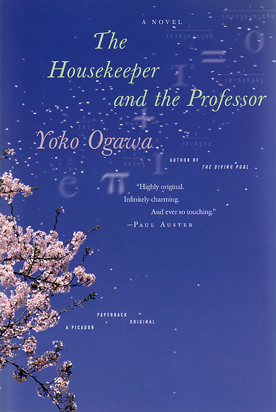
The Housekeeper and the Professor

Title: The Housekeeper and the Professor
Japanese Title: 博士の愛した数式
Author: Ogawa Yōko (小川洋子)
Translator: Stephen Snyder
Publication Year: 2009 (America); 2003 (Japan)
Publisher: Picador
Pages: 180

Yay! I’m so happy! Finally, another Ogawa Yōko translation! Ogawa Yōko is one of the most interesting writers working in Japan right now, and her popularity only increases with each passing year. A recent search on Amazon.fr yielded more than a dozen translations of Ogawa’s work into French, and I understand that there are just as many translations of her books into German. I feel a little jealous, but, in any case, it’s better to have two books in English than none at all. Ogawa’s prose is hyper-intelligent yet subtle, and her narratives are very Raymond Carver: very simple at first glance, but oh what wonders lurk under the surface. As he did in The Diving Pool, veteran translator Stephen Snyder renders Ogawa’s Japanese into lucid yet multilayered English.

I consider The Housekeeper and the Professor to be close to the perfect “Japanese” novel. There is a bit of drama, but it is notable only for its understatement, and there is almost no plot to speak of; the novel simply ends when one of the main characters dies. The character development is what keeps the narrative going; and, in fact, it’s actually hard to put down. Quite simply, a single mother, who works as a housekeeper to make ends meet, is given an assignment by her agency to take care of a retired math professor, who lives in a small house by himself at the edge of his family’s property. The catch is that the professor’s short-term memory only lasts for eighty minutes. Despite this, the housekeeper manages to establish a good relationship with the professor, whose abbreviated life is enriched by his two great passions, math and baseball. When the professor learns that his housekeeper has a son who must wait for her return from work alone at home, he insists that she brings the boy with her to his house. The professor bonds with the housekeeper’s son over their mutual interest in baseball, and both the boy and his mother come to share an appreciation for numbers and equations with the professor. And that’s it, at least on the surface.

Under the surface, there are a significant number of interesting yet unstated relationships that will intrigue the reader, as well as an implicit question concerning the constantly developing meaning of family in postmodern society. The professor’s mini-lectures on prime numbers, amicable numbers, perfect numbers, and so on are actually quite interesting, as is the way that the old man uses number games to deal with the stress and awkwardness caused by his memory disorder. Just as the housekeeper and her son come to place a great value on these numbers and number games, the reader cannot help but start to see numbers as protagonists of sorts, or at least as oblique symbols concerning the relationship of human beings to one another. Really, like The Diving Pool before it, The Housekeeper and the Professor is good literature and a good read, and Picador has ensured that the paperback as a physical object is quite beautiful as well. I can’t recommend this book enough. Go get it! And, if you haven’t read The Diving Pool yet, go get that one, too!