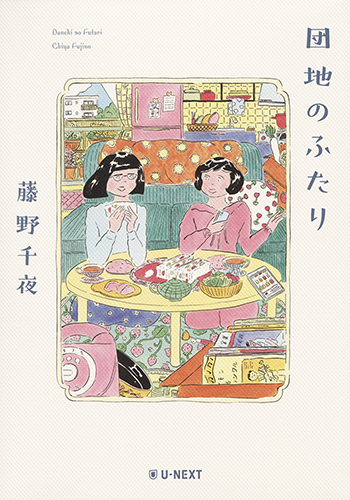
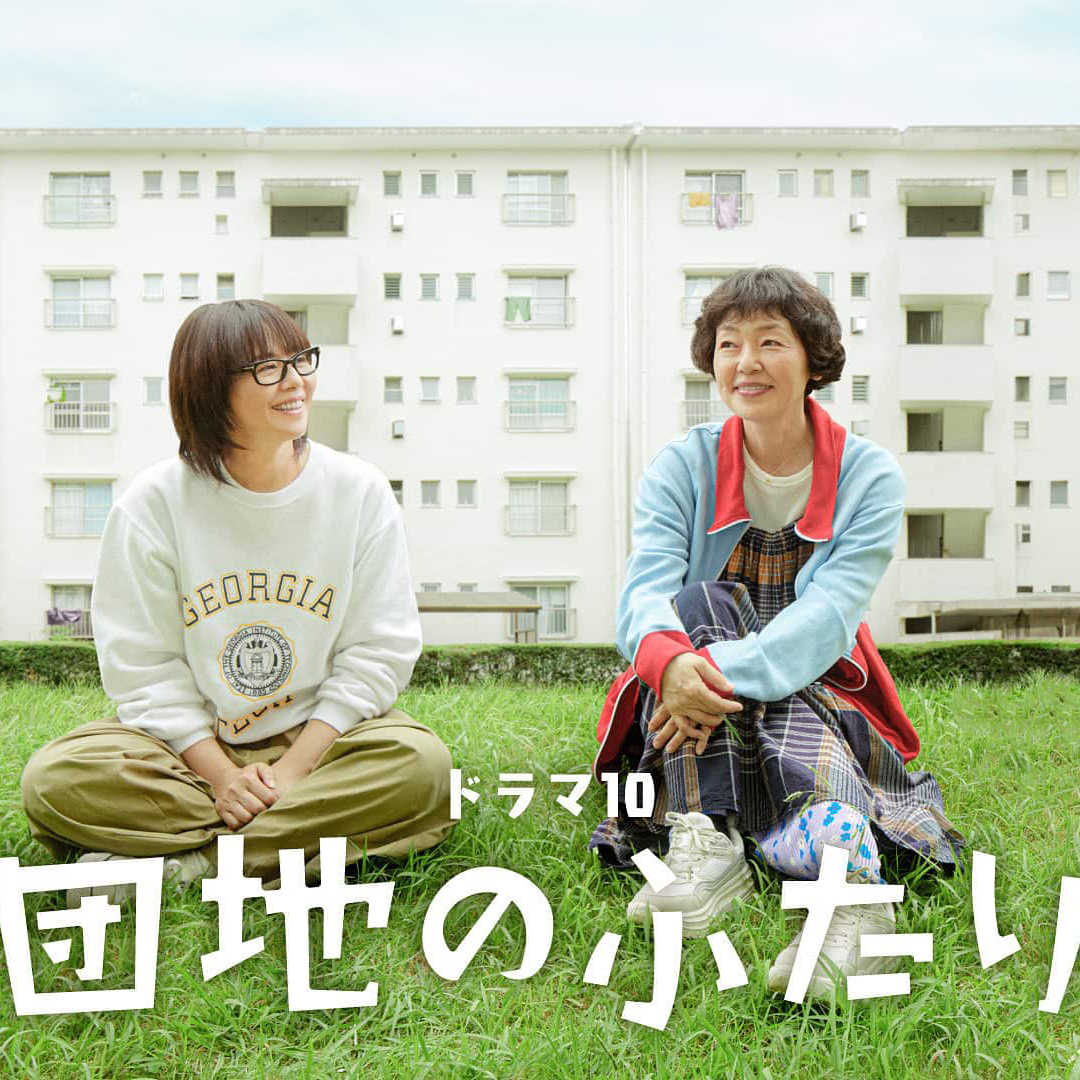
Chiya Fujino’s 2022 novella 団地のふたり(Danchi no futari) chronicles the daily lives of two 55yo women who were childhood friends and still live in the same danchi apartment building.
Natsuko Sakurai is an illustrator whose once-popular art style is no longer in demand. To make ends meet, she sells nostalgic items like old toys and sheet music collections on online auctions, and she’s also become extremely proficient at cooking on a budget.
Noe Ota has returned to her childhood home after getting divorced. Though she was once hailed as a prodigy, gendered harassment prevented her from succeeding in academia, and she now works part-time as a lecturer at a university.
Instead of dwelling on their faded ambitions, Natsuko and Noe find comfort in the low-stakes routines of midlife. They fix window screens for elderly neighbors, collect twentieth-century memorabilia to sell online, and share conversations over Natsuko’s home-cooked dinners.
Chiya Fujino has transformed the slightly dilapidated retro danchi apartment complex into a warm and friendly community. None of the women who live there feel the need to update their lives; they’re just happy to enjoy the pleasures of a low-pressure lifestyle in a charming old building.
This five-chapter novella feels very light and breezy, and I get the feeling that it’s aimed at readers in their 20s and 30s looking for an alternative to sky-high Tokyo rents. Instead of an overarching plot, the book features a series of loosely connected episodes, allowing the reader to dip into Natsuko and Noe’s slice-of-life adventures at their leisure.
団地のふたり was adapted into an NHK television drama in 2024, and a manga version has been serialized since April 2026. Apparently a story about happily single women being friends while enjoying the benefits of beautiful and affordable housing is quite popular! Who would have thought?
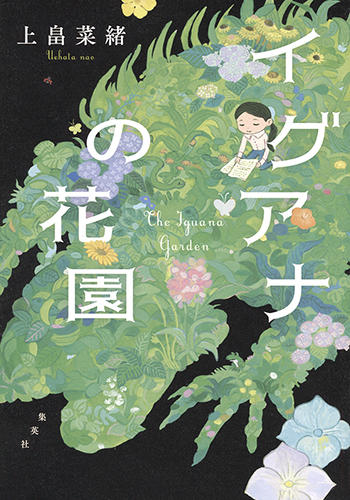
The Iguana Garden (イグアナの花園) is the second novel by Nao Uehata, whose 2020 magical realist story しゃもぬまの島 (Shamonuma Island) won the Subaru New Writer Award with high praise from Miyuki Miyabe. In The Iguana Garden, as in Uehata’s debut novel, a young woman who is able to speak with animals navigates a difficult relationship with her family. Instead of a mythical creature like the shamonuma, however, the protagonist of The Iguana Garden talks with her pet iguana as she hesitates on the border of adulthood.
Misono Yatsuguchi has a strange ability – she can hear the voices of small animals, especially reptiles. Though she feels at home in the garden of her family’s sprawling estate, she has trouble talking with other people. Misono’s father, a botanist who teaches at the local university, encourages her interest in the natural world and introduces her to his fellow professors, who befriend her and share their research.
When Misono’s father dies of a sudden heart attack, she’s left alone with her mother, an heiress who has inherited her family’s ikebana traditions along with their wealth. Misono’s mother is just as bad at connecting with people as Misono herself, so she unofficially adopts one of her ikebana students, a girl in high school named Tsubame, to act as her assistant. Tsubame moves into the estate and becomes something like an older sister to Misono.
Misono tries to make friends with the other girls in her elementary school class, but they find her lack of emotional expression creepy and begin bullying her in an attempt to provoke a response. When their pranks reach a point that Misono finally finds unacceptable, she resolves never to make friends again.
After these opening chapters, the story begins in earnest. Misono is a graduate student studying animal behavioral science at the university where her father once taught. She’s moved out of her mother’s estate and lives in a small atelier that her father once used to house his botanical samples and garden. Misono has remodeled the space as an open terrarium for her fully grown pet iguana, Sono, with whom she shares easygoing subverbal conversations.
The calm of Misono’s quiet life is shattered when her mother abruptly announces that she has terminal cancer. In the year she has left to live, she wants Misono to get married.
For someone like Misono, who reads as asexual and on the autism spectrum, dating is nothing less than a disaster waiting to happen. In distress, Misono allows herself to be taken to a post-seminar drinking session, where she gets blackout drunk and ends up inviting a friendly but financially strapped student named Kinoshita – who goes by Kiki – to live with her in the atelier. Kiki doesn’t mind the cramped space, or the free-roaming iguana, or even Misono’s personality quirks. In exchange for room and board, Kiki says, she’ll help Misono navigate the challenges of dating.
What follows is a semi-comedic gauntlet of mishaps that, more than anything, validate Misono’s asexuality and justify her prioritization of non-romantic relationships, especially with other women like Tsubame and Kiki. During this process, Misono ends up reconnecting with a childhood acquaintance who tells her that his secondhand experience with Misono’s bullying inspired him to become a teacher specializing in the education of neurodivergent children.
Throughout the story, Sono the iguana offers commentary and wise advice. While I was reading, I wondered whether Sono was actually speaking, or whether Misono had created the persona of Sono as a trauma response to her father’s death.
At the end of the novel, Misono’s mother reveals that she can also hear the voices of animals, and that her demand for Misono to get married came from a private conversation with Sono, who wanted to create a catalyst for her human to learn how to connect with other people. Whether Misono’s mother is telling the truth is open to interpretation, but the result is the same – Misono manages to find her community, understand her parents, and figure out what she wants to do with her life without having to worry about romance or marriage.
It’s all very wholesome, honestly. I’m usually not a fan of sentimental stories, but the end of The Iguana Garden genuinely warmed my heart. “All the women become friends and no one gets married and no one has to worry about money and everyone lives happily ever after” is a good ending, all things considered.
I feel like there might be a bit too much trauma (and supremely awkward dates) in The Iguana Garden for this book to be considered “cozy fiction,” but I also feel like this novel is probably the closest to cozy cat fiction that you can get for all the girls who like dinosaurs instead of cats. The author never explicitly identifies Misono as asexual or on the autism spectrum, thereby avoiding the tricky issues of labels and identity politics, but all the classic markers are there for readers who understand them. Personally speaking, I was happy simply to watch a young woman like Misono find friendship and acceptance, but I imagine that readers who see aspects of themselves in Misono will appreciate the advocacy and allyship that the author offers with this story.
Putting all of that aside, The Iguana Garden combines the fantasy of being comfortably wealthy and living in a beautiful plant-filled atelier with the tension of wondering what will happen with Misono’s mother, who initially seems cold and unapproachable but gradually becomes more sympathetic as Tsubame helps Misono learn more about her late father. Sono the iguana, who comes off as a cranky but kind-hearted old lady, is a lot of fun, and Kiki radiates pure charisma as her good sense and good humor keep the story moving forward. Through it all, Nao Uehata delights in descriptions of the verdant nature and healthy plants that surround the characters.
The Iguana Garden is a beautiful book, and I’d love to see it translated (ideally along with Uehata’s debut novel Shamonuma Island). I feel like this story reflects something that a lot of pro-diversity advocates have been saying for a long time, namely, that “difference” doesn’t necessarily have to be subversive. Given all the bestselling cozy cat fiction in the world, it’s wonderful to see the nonconformist iguana girl find a similarly comfortable place for herself. She deserves a happy ending too!
Banana Yoshimoto’s landmark 1988 novella Kitchen once inspired a great deal of heated discussion as a miserable chain of respected literary critics dismissed it as shallow and frivolous. Haters gonna hate, but I loved Kitchen when I first discovered it in high school, and I still think it’s a beautiful book that’s well worth reading.
After her parents died in a car accident, Mikage Sakurai was raised by her grandmother, who suddenly passes away when Mikage is in college. Now Mikage feels that she has well and truly become an orphan, and she doesn’t know what to do.
Yuichi Tanabe, a young man who was friendly with Mikage’s grandmother, invites her to stay with him and his mother at their apartment while she gets her life sorted out. Though Mikage has never met either of these people, Yuichi’s kindness is exactly what she needs, and she’s so stressed out and dispirited that she takes him up on his offer.
The apartment turns out to be gorgeous – it’s bright and sunny and spacious, and also outfitted with a thoroughly modern kitchen and a giant sofa that Mikage immediately falls in love with. Yuichi’s mother Eriko is just as friendly and charming as she is beautiful, and Mikage instantly feels at home. Though she knows she’ll have to leave eventually, she makes the best of her time in a warm and comfortable space in the care of two lovely people.
Eriko is clearly the star of this story, especially as she relates her own experience of loss to Mikage. Yuichi’s mother was the only woman she would ever love, she says, and she didn’t know what to do when her wife died after a long illness. She felt like the only reasonable course of action was to take on the role of “mother” by changing her name, getting surgery, and becoming a woman herself. She still misses Yuichi’s birthmother, but life goes on, and she couldn’t be happier. As Mikage describes Eriko at the end of the story:
Her hair rustled, brushing her shoulders. There are many days when all the awful things that happen make you sick at heart, when the path before you is so steep that you can’t bear to look. Not even love can rescue a person from that. Still, enveloped in the twilight coming from the west, there she was, watering the plants with her slender, graceful hands, in the midst of a light so sweet it seemed to form a rainbow in the transparent water she poured.
Kitchen is full of similar passages in which Mikage takes in the beauty of her surroundings while reflecting on her feelings. These moments are refreshingly light, and it’s as if the writing is washing over you in a gentle shower. Yoshimoto says that her goal is to create precisely this sense of peace, writing in her Afterword to Kitchen that “I know no greater happiness than that it may have cheered you, even a little.”
Kitchen includes a continuation of the story, “Full Moon,” which begins with Eriko’s murder. Mikage has gotten back on her feet, moved out of the Tanabes’ apartment, and become an assistant to a celebrity chef. Now that tragedy has visited Yuichi, it’s her turn to comfort him.
Mikage is comforted and supported by Chika, a transwoman who has taken over the cabaret club that Eriko managed. Chika helps Mikage to understand that, despite being disowned by her family, Eriko lived a full life, and she encourages Mikage to find her own happiness with Yuichi. Chika’s advice feels like the central thesis of Yoshimoto’s writing: the world can be dark and confusing, so you have to actively create your own sanctuary alongside the people you love.
All of this feels very much like shōjo manga created for teenagers, from the quiet and nonsexual love story between Mikage and Yuichi to the way that everyone seems to sparkle. The normalization of queer identity also has its roots in shōjo manga, as does the mundanity of the supernatural events depicted in “Moonlight Shadow,” the short companion story included at the end of the book. Yoshimoto’s language is filled with onomatopoeia and other cute expressions that feel directly lifted from manga, so much so that Megan Backus’s natural-feeling English translation is a genuine miracle.
If you’re not in the target demographic for Kitchen, it would make sense that Yoshimoto’s manga-inspired style of writing might not resonate with you. And that’s okay! Lord knows that there are enough works of literary fiction written by and for older adult men.
When I discovered Kitchen as a teenager, though, this book was definitely for me. In fact, it felt like the first book I’d encountered that took me seriously as a person. Having run the gauntlet of Ernest Hemmingways and William Faulkners and John Steinbecks in my high school English classes, I felt extremely alienated by fiction as a medium. I can’t even begin to describe what an amazing stroke of good fortune it was to find that Banana Yoshimoto had reached out with her writing and spoken to me specifically.
It’s not an exaggeration to say that the pop culture of the 1990s and early 2000s was a toxic slurry of homophobia and misogyny. In that sort of cultural environment, the independent young women and kind men and gentle queer sexuality of Kitchen were nothing short of revolutionary. I’m sure it was easy for older male literary critics to say that Yoshimoto’s writing was empty pablum, but it was something else entirely for me to encounter my first fictional depiction of gay adults who were treated as real human beings instead of stupid jokes or beleaguered minorities.
It felt like a revelation to see people being openly gay and also completely normal, and it would be disingenuous to say that this realization wasn’t political. Banana Yoshimoto showed me the rainbow, and sure, it was magical. How could it not be? But also, when I put this book down, I felt like I’d gained a sense of identity and purpose. When Chika tells Mikage that you have to fight for a world that accepts you, I took that advice to heart.
I was far from alone in being moved by this story. Kitchen was an instant bestseller in Japan, and it went on to gain fame overseas during the 1990s. In the 2000s and 2010s, Banana Yoshimoto enjoyed a degree of international recognition on the same level as Haruki Murakami. And she deserved it. She still does, honestly. I may have aged away from Kitchen, but that doesn’t mean I don’t respect it immensely.
Admittedly, Mikage sometimes seems as though she lives in a different world, and it can occasionally be a bit painful to look back on the prosperity and optimism of the 1980s. Still, Kitchen feels as fresh as the day it was written, and maybe you’re exactly the person who needs to read it now.
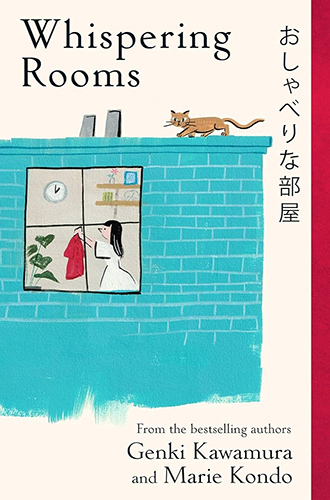
Whispering Rooms, a collaboration between Marie Kondo and the popular “cozy cat fiction” author Genki Kawamura, collects seven stories about a fictionalized version of Kondo named Miko who helps her clients tidy their belongings and sort out the problems in their lives.
The original versions of these stories were serialized in the Yomiuri Shimbun, a conservative print newspaper whose readership is an average of approximately one million years old. Despite its adult audience, this book is written at a third-grade reading level.
Though the writing style is simple, the problems faced by Miko’s clients are relatively serious. An older client wants to reconnect with her grown children before she dies, for instance, and a younger client is desperately trying to escape the shadow of her overbearing and hypercritical mother.
The most heartbreaking story is about a middle-aged man who became a hoarder after his divorce. He can’t bear to change anything about the house his wife and son once occupied, and he buys things online to fill the empty space. Tidying won’t change his personality or repair his relationship with his son, but it’s a start.
I suspect that this book’s target readers aren’t potential clients, but rather family members who have noticed a problem with a relative and need a concrete solution. If you’re struggling with a complicated family issue, it makes sense that intellectually challenging literary fiction won’t help – but perhaps accessible cozy fiction will.
If nothing else, I love the idea of Marie Kondo as a fictional character. Honestly I think her next adventure should be to use her tidying superpowers to solve mysteries. Or maybe she can commit some crimes herself! After all, if someone in the house doesn’t spark joy…
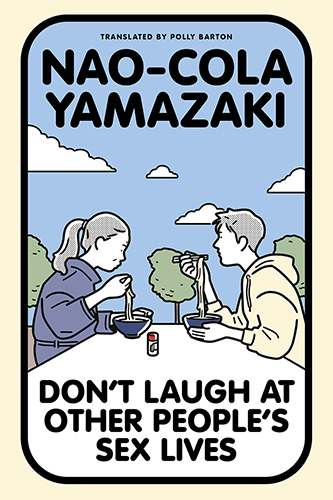
Nao-Cola Yamazaki’s prizewinning debut novella Don’t Laugh at Other People’s Sex Lives is a bittersweet love story that, to be fair, is mostly sweet. There’s not much depth here, and that’s okay.
An art school student named Isogai has a crush on his painting instructor, a woman on the verge of middle age named Yuri. Partially on her invitation, he initiates a love affair. Their relationship is destined to end, but it’s nice while it lasts.
In real life, this sort of relationship isn’t a great idea for any number of reasons. In the romantic fantasy spun by Yamazaki, there are zero consequences, and Isogai and Yuri gently help each other realize fundamental truths about themselves so they can grow as people.
Yuri is something of a space cadet who moves according to her own mysterious whims, and her husband is a kind and loving man who gives Yuri the space she needs and supports her endeavors – even her affair. Meanwhile, Isogai is a sensitive young man straight out of a shōjo manga. He cries, he journals to process his feelings, and he notices whether women moisturize their elbows. He never gets angry or makes demands, and he accepts all of Yuri’s decisions with compassion.
Don’t Laugh at Other People’s Sex Lives reminds me of the worldview often expressed in Banana Yoshimoto’s novels: while the world at large is difficult and imperfect, it’s possible for two people to create a small refuge in the space between them. This novella was first published in 2004 during the cultural fallout of the severe economic recession of the 1990s, and I imagine that Yamazaki’s playful pen name and gentle writing style would have felt very refreshing and wholesome at the time.
As someone closer to the character Yuri’s age, this story was a bit too starry-eyed for me personally, but I imagine that its light humor, appealing characters, and (mostly) happy ending will be a source of comfort to readers looking for a short but sweet escape from the pressures of the real world in the form of cozy fiction.
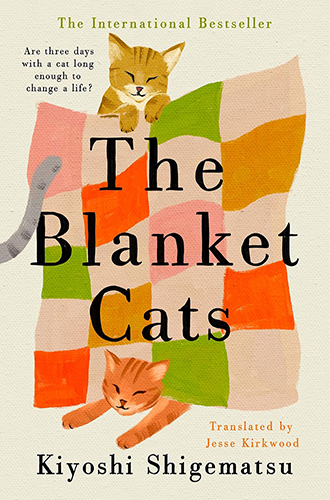
Kiyoshi Shigematsu’s The Blanket Cats collects seven stories about the clients of a service that rents cats for a period of three days. What I appreciate about these stories is that their human protagonists are messy people who are clearly the villain of someone else’s life. Will three days with a cat fix them? Probably not, to be honest, but it’s still a nice fantasy to imagine that a brief experience of caring for an animal could completely change someone’s perspective.
“The Cat in the Passenger Seat” is a frequent companion of Taeko, a woman on the verge of retirement who often rents this particular cat to accompany her on trips away from Tokyo. With no family to support her through a recent diagnosis of a serious illness, Taeko has decided to splurge on one final vacation. As for where the money has come from, it’s fair to say that Taeko is on the run from more than her worries about the future. She’s always done the right thing and made sacrifices for everyone else, so she might as well be selfish for once, right? Thankfully, Taeko’s cat companion helps her see beyond her immediate problems.
“The Cat with No Tail” is chosen by Koji, a boy in middle school whose growing pains have resulted in the first major crisis of his life. Instead of being bullied, he’s the one doing the bullying. Well, sort of. Koji tolerated an annoying classmate all throughout elementary school; and, now that he’s in a new environment, he finally found the courage to tell this kid to leave him alone. Unfortunately, he didn’t express himself in the most diplomatic way, and his former classmate was so distraught that he made a serious attempt at self-harm and almost died. That’s a wild thing to happen to a twelve-year-old, and Koji processes his guilt by talking to the cat, who responds by showing the emotions that Koji has been suppressing.
“The Cat Who Knew How to Pretend” is rented by Hiromi, a young woman who needs a stand-in for her family’s recently deceased pet in order to fool her grandmother, who’ll be visiting her parents’ house one final time before they entrust her to a facility that specializes in caring for patients living with cognitive decline. To ensure that the visit goes smoothly, Hiromi also asks her boyfriend to attend a family dinner even though she’s on the verge of breaking up with him. It’s all well and good for the cat to pretend that everything is fine, but Hiromi realizes that the time has come for her to be open and honest about what she wants.
I recently encountered the term “joyslop” as an appellation for low-effort entertainment media, and The Blanket Cats is joyslop if I’ve ever seen it. Psychological realism isn’t a concern in these stories, nor is animal welfare. Just so everyone is on the same page, “renting” an animal to any customer who walks through the door isn’t a great idea to begin with, and cats can’t be trained to accommodate different companions in the way that certain other domestic animals can. I apologize for being crude, but I imagine that the reality of a rental service like this would be cat piss everywhere. Still, The Blanket Cats is pure fantasy, like YA fiction for adults. It’s joyslop.
I’ve been thinking about the purpose served by The Blanket Cats and other cozy cat books, and I suspect their appeal probably extends a little deeper than simple guilty-pleasure reading. To varying degrees, the short stories collected in these books address fairly serious social issues such as, for example, dealing with school bullying as a parent or growing old without a social safety net. Books like The Blanket Cats provide a way to playact various scenarios from the comfort of your armchair – again, like YA fiction for adults.
I’m tempted to take this line of reasoning a few steps farther into social analysis and argue that the popularity of bestselling cat books might have something to do with the decline of “traditional” news media like print newspapers, morning radio broadcasts, and nightly news programs. I get the sense that, back when this sort of media was more widely consumed, journalists could provide authoritative editorial opinions of social issues, thus creating consensus and catharsis. In other words, a serious issue exists, but someone is talking about, and therefore someone must be doing something about it.
Now that our consumption of news is so fragmented, who knows what to think? People are still looking for an editorial voice to trust, and I feel like this is partially what’s behind the success of books like The Blanket Cats. The fantasy of these non-confrontational stories about normal people dealing with hot-topic social issues isn’t necessarily that a cat is going to fix you in three days, but rather that these systemic issues can be fixed, because someone is talking about them. All things considered, The Blanket Cats is much easier to consume than, say, a political podcast hosted by wealthy kids in Brooklyn or a series of inflammatory diatribes posted to YouTube.
In any case, I’d like to express my appreciation for the translator, Jesse Kirkwood, who has found himself a lovely (and hopefully fruitful) niche in translating and localizing this sort of fiction, often through the charming vernacular of light Briticisms. This style of casual prose in Japanese requires no small amount of skill to render into the sort of English suited for a mass-market bestseller. I’ve been following Kirkwood’s work since his translation of A Perfect Day to Be Alone, and I’m always impressed.
If you’re in the market for cozy cat fiction, The Blanket Cats has more of a bite than the usual fare, but it’s still sweet and hopeful. This book hopes you’re doing okay. If you’re reading this review, I hope you’re doing okay too. After all, there’s definitely a place for joyslop in the world, and there’s no shame in needing a cat and blanket sometimes.
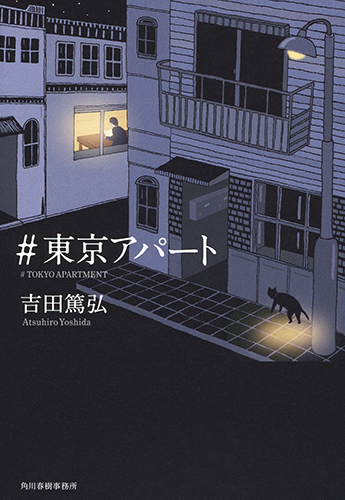
Atsuhiro Yoshida’s 2025 short fiction collection #Tokyo Apartment brings together 21 stand-alone stories about people living in and around Tokyo. The characters are usually living on their own, almost always in retro buildings removed from the city center. There’s very little wealth or glamor in these stories, but their protagonists nevertheless manage to become swept up in the magic of a densely populated megacity.
A representative story is Tokage-shiki gomuin kaisha (“Lizard-style rubber stamp company”), whose narrator recalls a time when he lived in a building that was once famous for being the largest apartment complex in Japan. The building had multiple floors of businesses, and the narrator worked at one of them as an apprentice to an artisan who took commissions for document signature seals. While dining at his favorite pubs in the same building, the narrator grew friendly with a woman who also worked there. He courted her by sending letters to her apartment – which was naturally in the same building. This story perfectly captures the flavor of the comfortably chaotic retro spaces of the old business/residential complexes of West Tokyo.
Not all of the stories are so cozy, however. Sutorei kuriketto (“Stray cricket”) is about a young man with no money, no friends, and no real prospects for finding a decent job. For the time being, he washes dishes in a small diner. He doesn’t have much room in his life for hobbies, but every night he brings back scrabs of cabbage to feed to a cricket that has entered his tiny apartment through a ventilation shaft. While listening to the cricket chirp in the darkness, the narrator is inspired to help the tiny creature find its way back outside. He might have nowhere to go in his own life, but at least the cricket can be happy and free.
Many of the stories end on a more ambiguous note. In Heya o kimeta hi (“The day we decided on an apartment”), two single fathers become online friends as they swap stories and advice with one another. In time, they become real-life friends and begin sharing childcare responsibilities. They mutually arrive at the conclusion that their lives would be easier if they lived in the same apartment building, so they hire a realtor to find a suitable property. There’s something about this sort of housing decision that feels final, however, and this causes the two dads to wonder if they’re really ready to take such a momentous step into the beginning of middle age.
For the most part, the stories in #Tokyo Apartment are fairly mundane, but there are occasional touches of magical realism. In Yūrei no denwa (“Ghost telephone”), the character Moriizumi returns from Yoshida’s novel Goodnight, Tokyo. Moriizumi manages a service that helps people dispose of their old telephones, which often have too much sentimental value to throw away. In a conversation with a crow who makes nightly visits to her balcony, Moriizumi reflects on how analog technology can feel haunted by the ghosts of people with whom our connections have faded. The crow, who is a connoisseur of the unused objects people dispose of on their balconies, agrees with Moriizumi but prefers to focus on making new connections.
A word I often see in reviews of Atsuhiro Yoshida’s writing is yomi-yasui, or “easy to read.” Yoshida has spent more than a decade carefully cultivating a light and precise writing style, and #Tokyo Apartment is indeed a relaxed and chill reading experience. It’s entertaining to encounter such a wide range of variations on the theme of “apartments in Tokyo,” especially since the narrative voices of these stories are so distinct – which is no mean feat when accomplished within the simplicity of the author’s characteristic style.
As an aside, I might recommend the stories of #Tokyo Apartment to people studying Japanese language. Any one of them might be good for inclusion on the syllabus of an upper-level Japanese language class. In particular, the first and final stories of the collection are short, amusing, and easy to understand from context clues, and I imagine that either of them would be a nice treat for anyone just starting to read Japanese fiction.
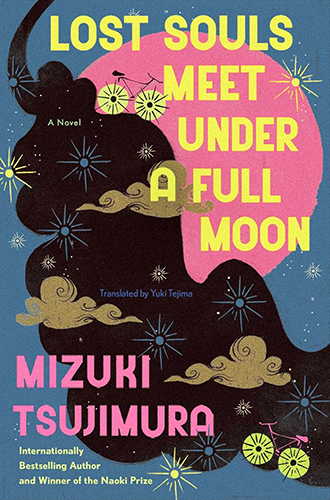
Lost Souls Meet Under a Full Moon brings together five interconnected short stories about people seeking to contact the dead. Though this book falls firmly into the category of “relaxing” fiction, it’s more plot-driven than most, and it distinguishes itself through its worldbuilding, especially its willingness to test the parameters of its magic system.
The central character of the novel is a handsome and stylishly dressed teenage “go-between” named Ayumi who can facilitate meetings between the living and the dead. The catch is that a person can only have one of these meetings in their lifetime, and each dead person is only allowed to return once.
This is why the choice of the focal character of the first chapter, “The Rule of the Idol,” is so unusual. Manami asks the go-between to connect her with, of all people, a performer named Saori who made her living as a tv personality appearing on various talk shows and quiz games. When Manami was at the lowest point in her life, alone in Tokyo and bullied by her coworkers, she had a random encounter with Saori, who encouraged her to get back on her feet. Manami wants to use Saori’s death as an opportunity to thank her personally, which she never would have been able to do while Saori was still alive.
The third chapter, “The Rule of the Best Friend,” is far less wholesome. A first-year high school student named Arashi wants to be cast into leading roles in the plays performed by her school’s drama club, and she’s not shy about making her intentions known. Her biggest supporter is her best friend Misono, who joins the drama club in solidarity. Misono’s introverted grace has an alluring appeal that Arashi overlooks in her brash ambition, and she ends up losing a starring role to her best friend.
Arashi takes this poorly and stops talking to Misono. She assumes this will be a punishment, but she quickly realizes that her friendship was holding Misono back from achieving her own dreams. When Misono dies in a cycling accident, Arashi desperately wants to apologize, but she hasn’t yet developed the maturity to say what really needs to be said. I have to admit that I was surprised by the final meeting between the two friends, which is steeped in a complexity otherwise absent in these stories, and “The Rule of the Best Friend” ended up being my favorite part of the book.
In the final chapter, “The Rule of the Go-Between,” we see the characters from the previous stories from Ayumi’s perspective as he goes on his own journey during the process of inheriting the role of go-between from his elderly grandmother. Ayumi’s parents died under mysterious circumstances when he was a child, and his grandmother has carried a sense of guilt for years. Unlike his unfortunate classmate Arashi, however, Ayumi is able to break the barrier of silence and offer comfort and closure to his grandmother while they’re both still alive.
Despite a few brief moments of darkness, Lost Souls Meet Under a Full Moon presents little emotional challenge to the reader. There are very few subversive or self-reflective elements in these stories, and the characters occasionally behave like two-dimensional constructs who act solely in service to the plot. This isn’t a bad thing, of course. Lost Souls moves quickly and follows its internal logic so impeccably that the reader’s suspension of disbelief is never broken. As a result, each of the chapters is great fun to read.
Mizuki Tsujimura has taken the five-chapter cozy fiction formula and polished it to a high sheen. As far as the genre goes, Lost Souls Meet Under a Full Moon is as good as it gets, largely thanks to the author’s willingness to explore the more nuanced implications of the stories’ premise. Yuki Tejima’s translation is lovely and uses a light touch to bring the energy of Tsujimura’s prose to English-language readers. I’d recommend Lost Souls Meet Under a Full Moon to anyone looking for a good comfort read, not to mention a welcome reminder of the importance of saying what needs to be said while you’re still alive.