
Memento Bento is a 65-page chapbook created by the Italian artist Alessandra Criseo. The chapbook, which is structured like an annotated sketchbook, chronicles Criseo’s trip to Japan with her partner Andreas in April and May of 2014. Over the course of two and a half weeks, the pair visited Tokyo, Kyoto, Nara, and Yokohama.
At the time, Criseo was working in London as a freelance character designer and concept illustrator for video game development studios. Criseo’s primary interest in Japan lay in its culture of cuteness, and the pages of Memento Bento are filled with sketches of clothing, characters, and street fashion. This fascination with cuteness is supplemented by photos of cute food, such as strawberry-themed pastries and the popular Tokyo Banana souvenir cakes.
Despite her stay in the popular tourist destinations of Kyoto and Nara, Criseo cares less about traditional Japanese architecture and handicrafts than she does about common urban cityscapes and mundane everyday objects. “I love taking the train. [It’s] one of the pleasures of life, especially in a country with such pretty houses as this one,” she writes next to an ink drawing of herself sketching on a commuter train.
Along with the urban tangle of telephone poles and power lines, Criseo is also fascinated by vending machines, instant ramen packaging, toilets, umbrellas, disposable cameras, and the uniquely non-aerodynamic shapes of domestic Japanese automobiles. Having submerged herself in the visual clutter of Japan, Criseo writes that she’s not looking forward to returning to the “boring and gray” monotony of London.
The heterodox and chaotic aesthetic often decried by older observers of Japan is a source of fascination and delight for Criseo. As an artist and professional designer, Criseo has translated her study of Japanese commercial design to her own clothing and stationery, which she distributes through her independent label, Mezzolume.
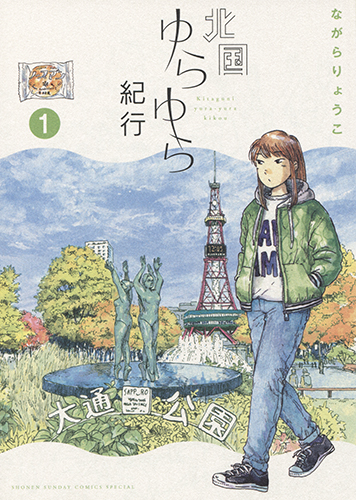
When I wrote about Ryōko Nagara’s recent manga about the local material culture of Sapporo (here), I was reminded of how many visual representations of Japan created by Europeans (such as Onibi: Diary of a Yokai Ghost Hunter) often emphasize “Shōwa retro” objects and spaces. In a time when the speed and productivity demanded by neoliberal capitalism leave many people anxious and exhausted, there’s a certain appeal to old and “useless” things, which artists like Criseo present as visually charming and emotionally compelling.
If you’re interested, you can order an English-language edition of Memento Bento (here), and you can follow Alessandra Criseo on Instagram (here).
 Contemporary Japanese Literature